Frozen Vegetables in a Skillet
Quick, easy, healthy, and budget-friendly! Frozen vegetables cooked in a skillet is the kind of recipe that becomes a lifesaver whenever you need a tasty, wholesome side in a hurry. They're especially welcome in early spring, when you're craving a little extra color and nutrition on the plate.


Cooking method
-
Step 1:
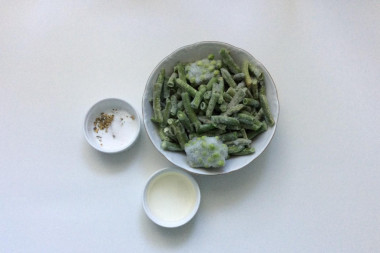
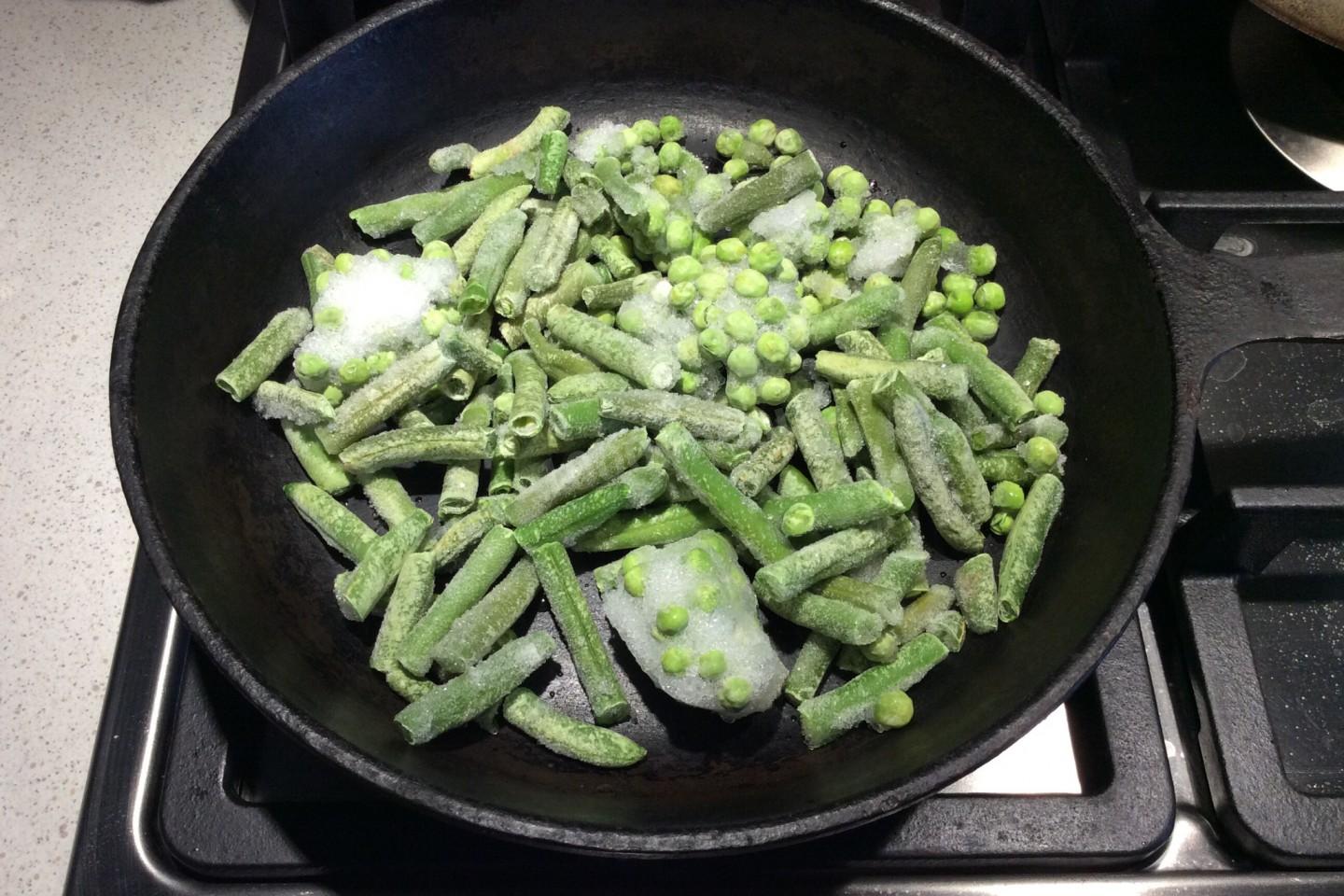
How do you cook frozen vegetables in a skillet? Gather your ingredients. There's really not much prep involved — you don't even need to thaw the vegetables. I'm using green beans and green peas, but absolutely any vegetable medley will work.
-
Step 2:
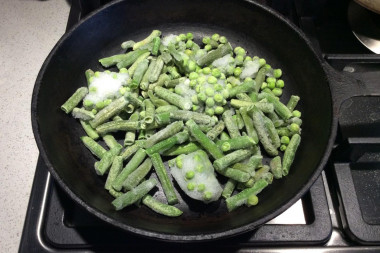
Set a skillet over medium heat and add the frozen vegetables straight from the freezer. Let them sit for about five minutes, stirring now and then, until they start to thaw.
-
Step 3:
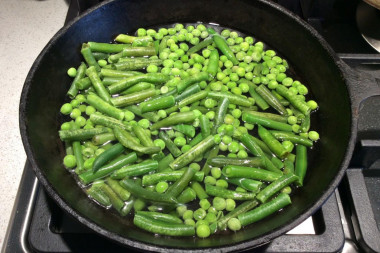
Pour a little boiling water into the skillet — just enough to come about halfway up the vegetables, not to cover them.
-
Step 4:
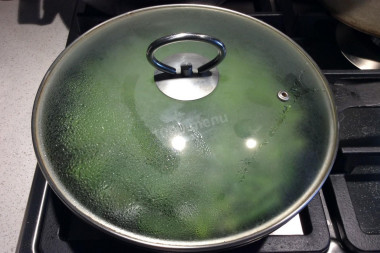
Cover the skillet and let the vegetables simmer over medium heat until the liquid has fully evaporated. This usually takes 5–10 minutes, depending on how much you're cooking.
-
Step 5:
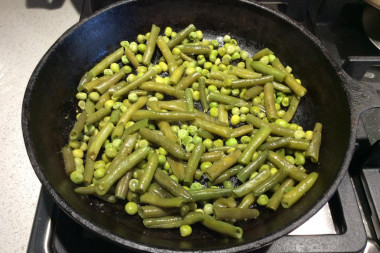
Once almost no liquid remains, add the oil, season with salt, and add spices to taste — I used herbes de Provence. Stir and cook for another couple of minutes, stirring occasionally. Done! Serve and enjoy!



- With the huge selection in most supermarkets today, you can buy frozen vegetables either bagged or loose by weight. Loose ones let you look them over before buying. To check a bagged product, first make sure the packaging is intact — it shouldn't be puffed up. Squeeze the bag: if you feel large clumps, the vegetables were likely thawed and refrozen, so it's best to pass on those (my peas are a little guilty of this). There are many ways to cook frozen vegetables. Most often they're simply boiled, then drained and tossed with oil. Keep in mind they cook faster than fresh vegetables. They're also great steamed — again, no need to thaw first. And if you don't own a steamer, this skillet method is a nice alternative, since the vegetables cook in just a minimum of liquid.
- Keep in mind that how you thaw ingredients has a big effect on the quality and flavor of the finished dish, so choose the right method for what you're making.
- Use an oil with a high smoke point for frying. Every oil is healthy only up to a certain temperature — its smoke point — beyond which it begins to burn and form harmful compounds, including carcinogens. Unrefined oils, with few exceptions, have a low smoke point: they contain many unfiltered organic particles that scorch quickly. Refined oils stand up to heat better and have a higher smoke point. For oven, skillet, or grill cooking, reach for a high-smoke-point oil — refined sunflower, olive, and grapeseed are among the most common.
- If you use a store-bought spice blend, read the label first. Many already contain salt, so account for that to avoid over-salting the dish.
Caloric content of the products possible in the composition of the dish
- Vegetable oil - 873 kcal/100g
- Salt - 0 kcal/100g
- Spices dry - 240 kcal/100g
- Frozen vegetables - 50 kcal/100g
Similar recipes
- Fast and tasty
- For breakfast
- Homemade dinner
- Side dishes
- Semi-finished products
- Spices seasonings spices
- Fats and oils
- Salt
- Dry spices
- Vegetable oil
- Frying
- In a frying pan
- Snack
- Dishes in 30 minutes
- Second lean dishes
- Frozen vegetables
- Low-calorie recipes
- Balanced nutrition
- Vegetarianism
- Lean table
- Recipes for lean dishes without butter