Scallop Salad
Gorgeous and colorful, with a bold, out-of-the-ordinary flavor! Scallop salad is a recipe that food lovers and fans of fine dining will appreciate — not just for its upscale ingredients, but for the vivid flavor that comes from a zesty, interesting dressing.

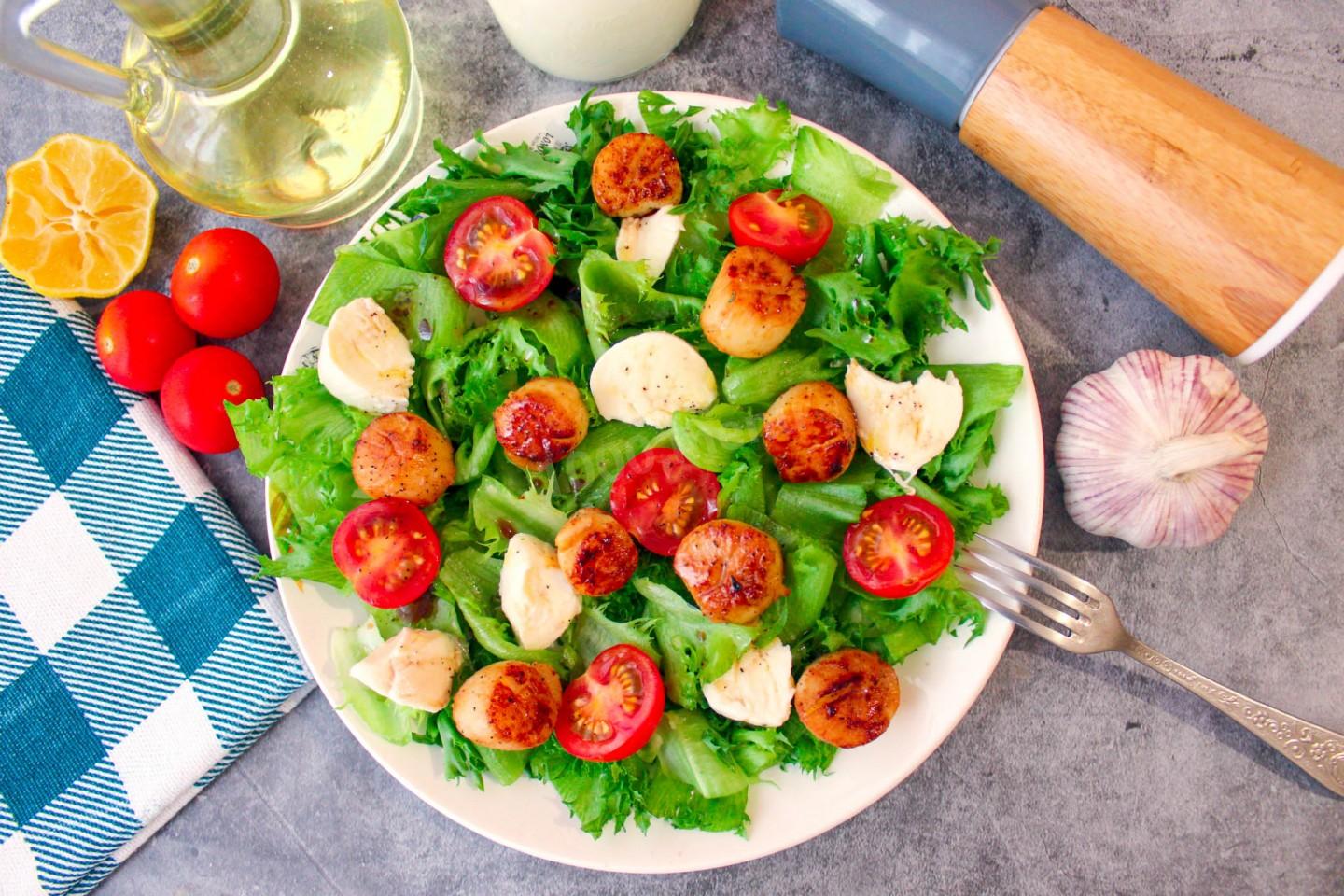
Cooking method
-
Step 1:
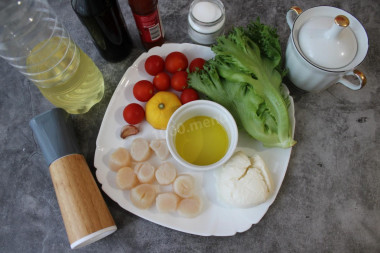
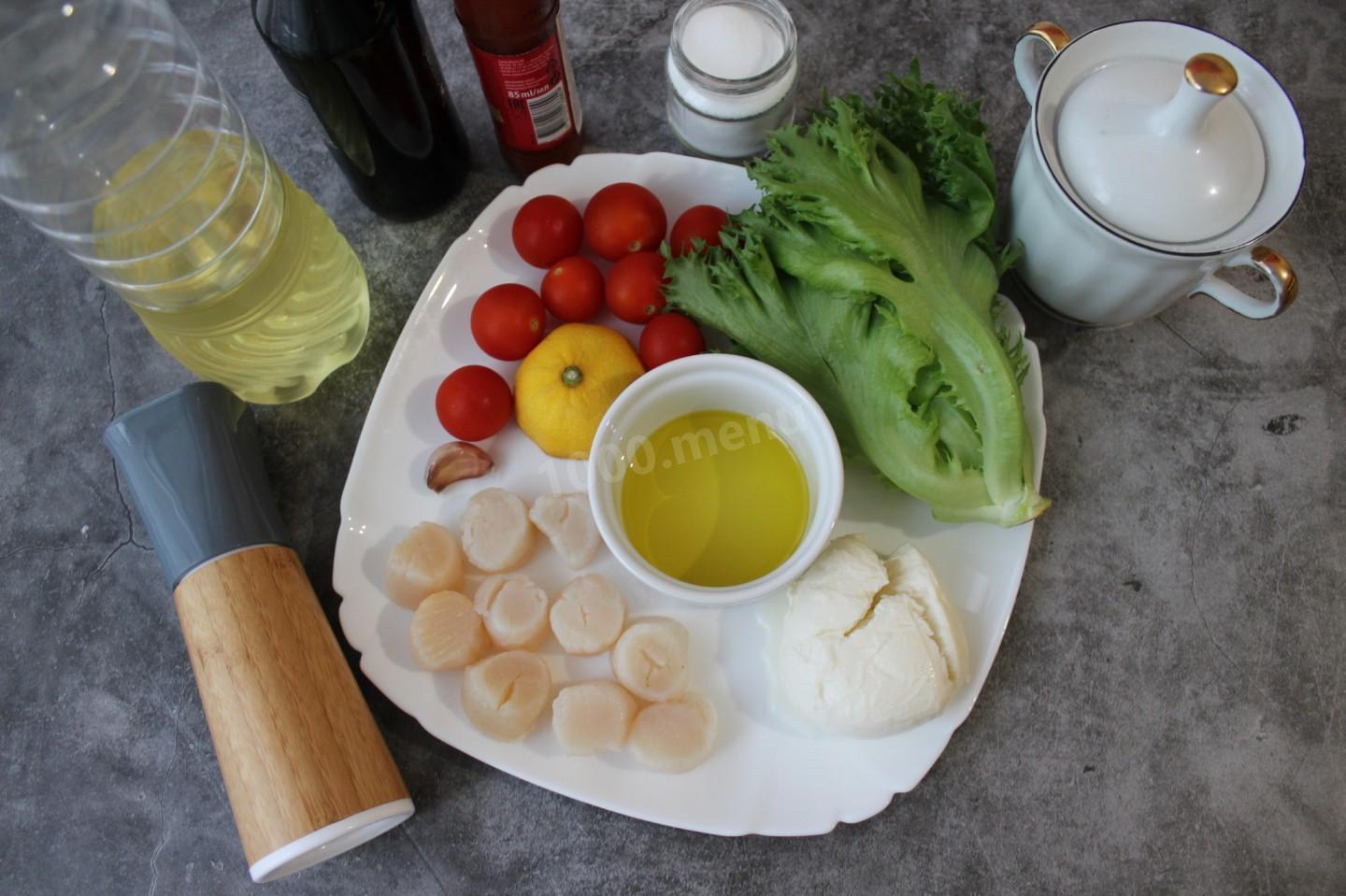
How do you make scallop salad? Gather your ingredients. If your scallops are frozen, thaw them before you begin — and never shock seafood with a sudden temperature change. Thawing them too fast can cause moisture loss, which makes the protein seize up and turns the delicate meat tough. So start by letting the scallops thaw in the refrigerator for a few hours.
-
Step 2:
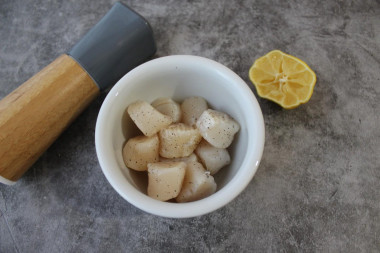
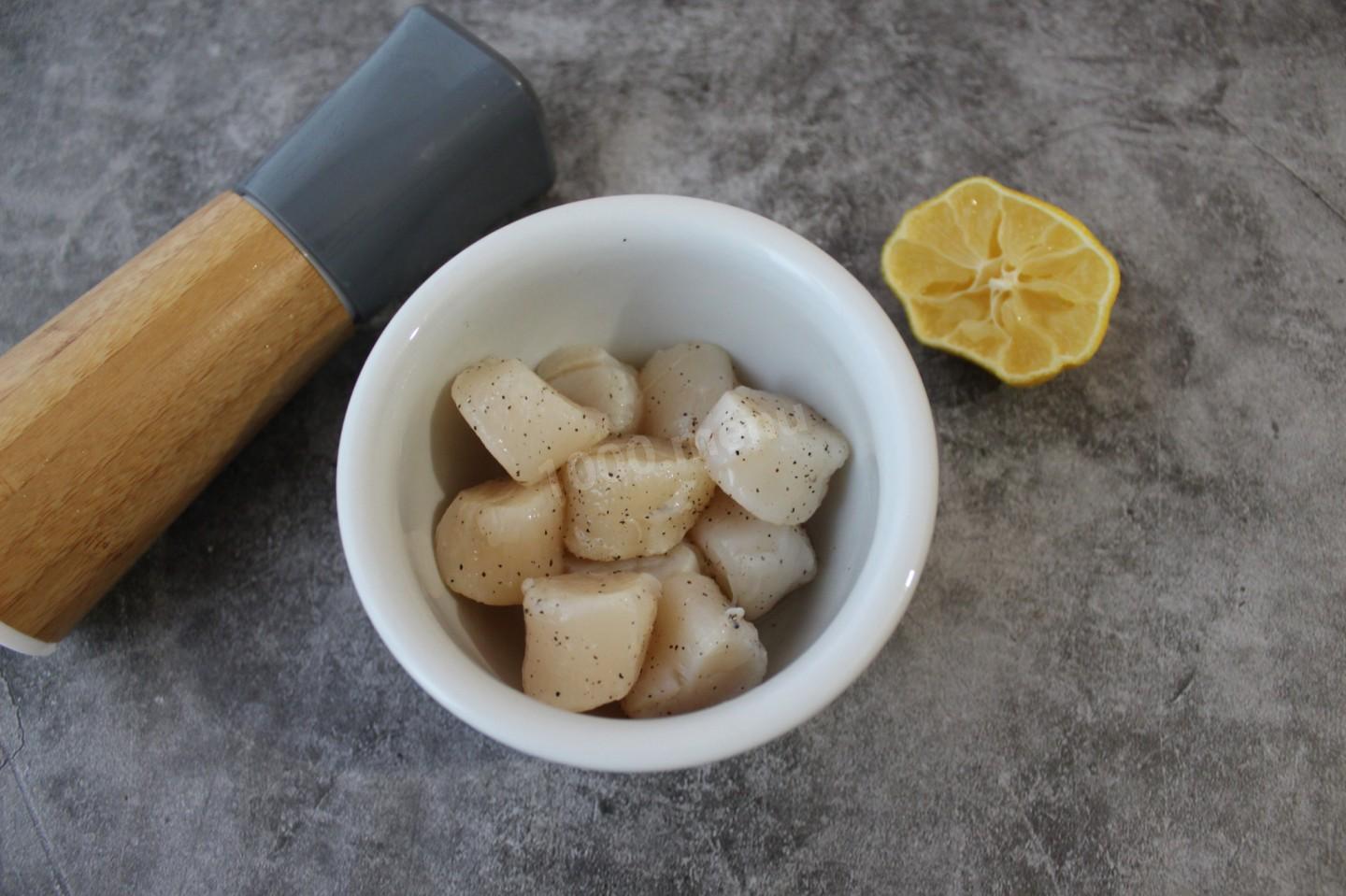
Rinse the thawed scallops and pat them dry on a paper towel. Put them in a bowl, sprinkle with lemon juice, and season with pepper and salt to taste. Toss gently so you don't damage the tender meat, and let them marinate for 20 minutes.
-
Step 3:
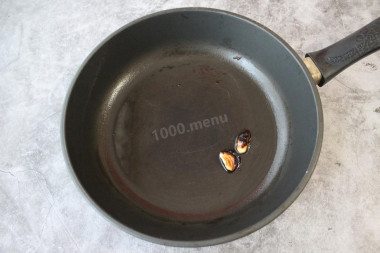
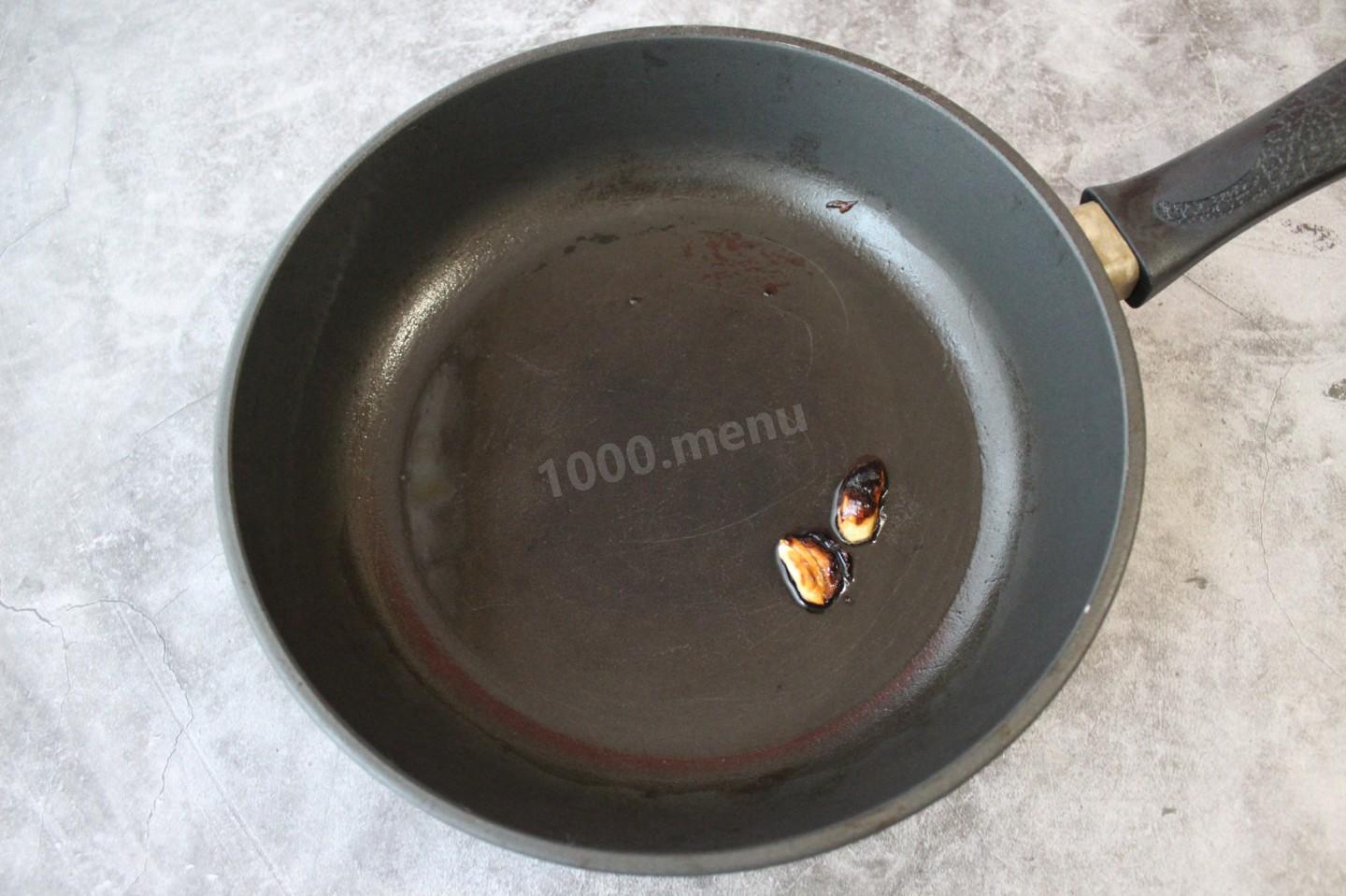
Crush the peeled garlic clove with the flat of a knife and fry it over low heat in a skillet with the heated vegetable oil. Cook for about 4 minutes to infuse the oil with garlic flavor, then discard the garlic.
-
Step 4:
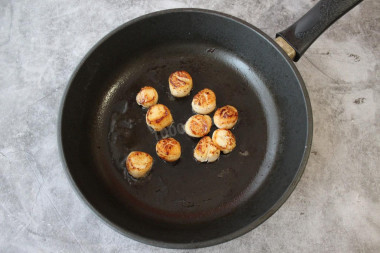
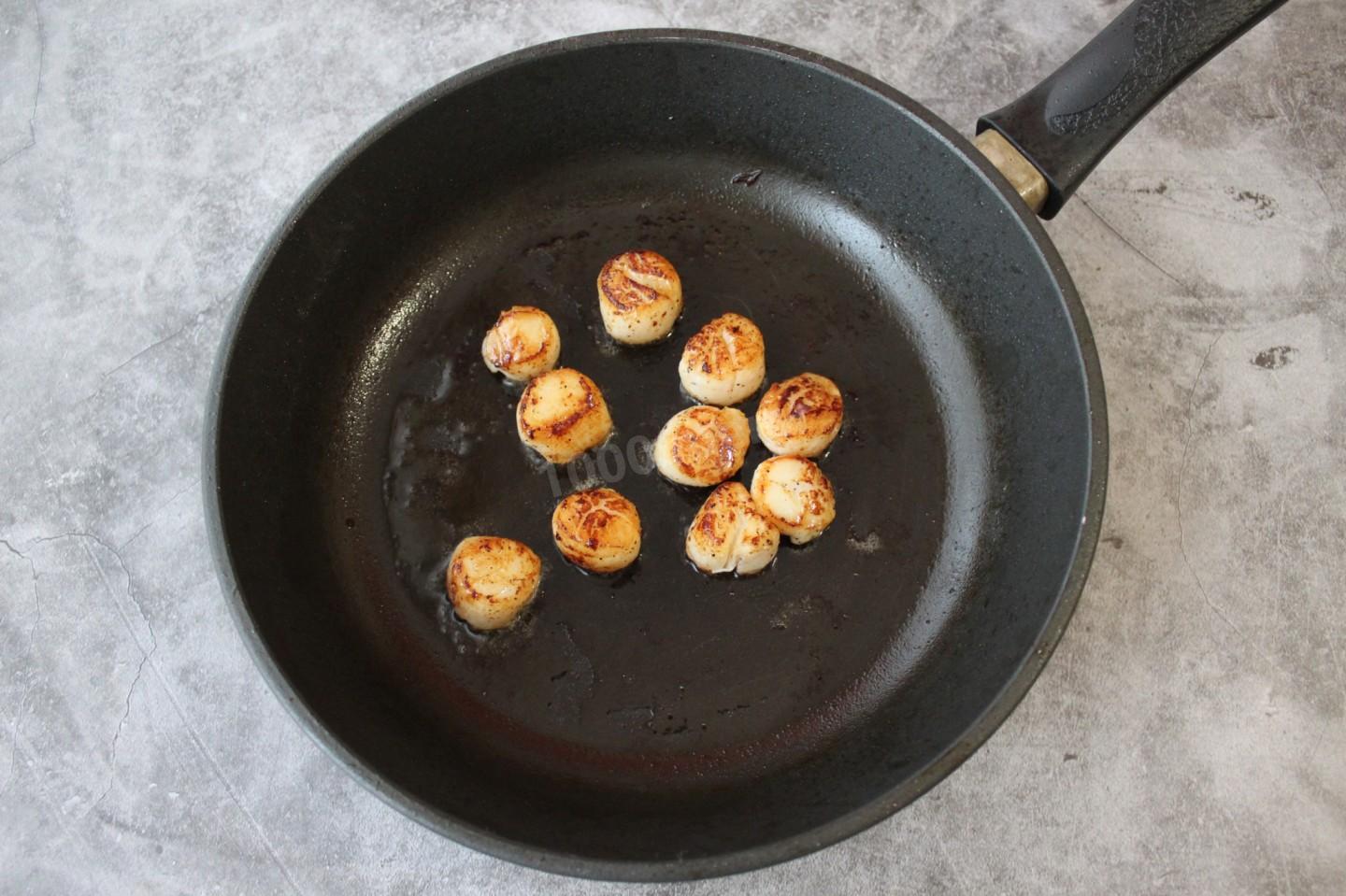
Add the scallops to the skillet with the fragrant oil and sear them over high heat on both sides. Scallop meat is tender, so it cooks quickly — about half a minute per side. Transfer the seared scallops to a clean plate and let them cool.
-
Step 5:
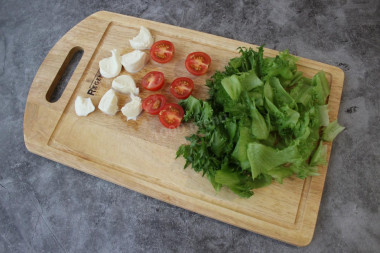
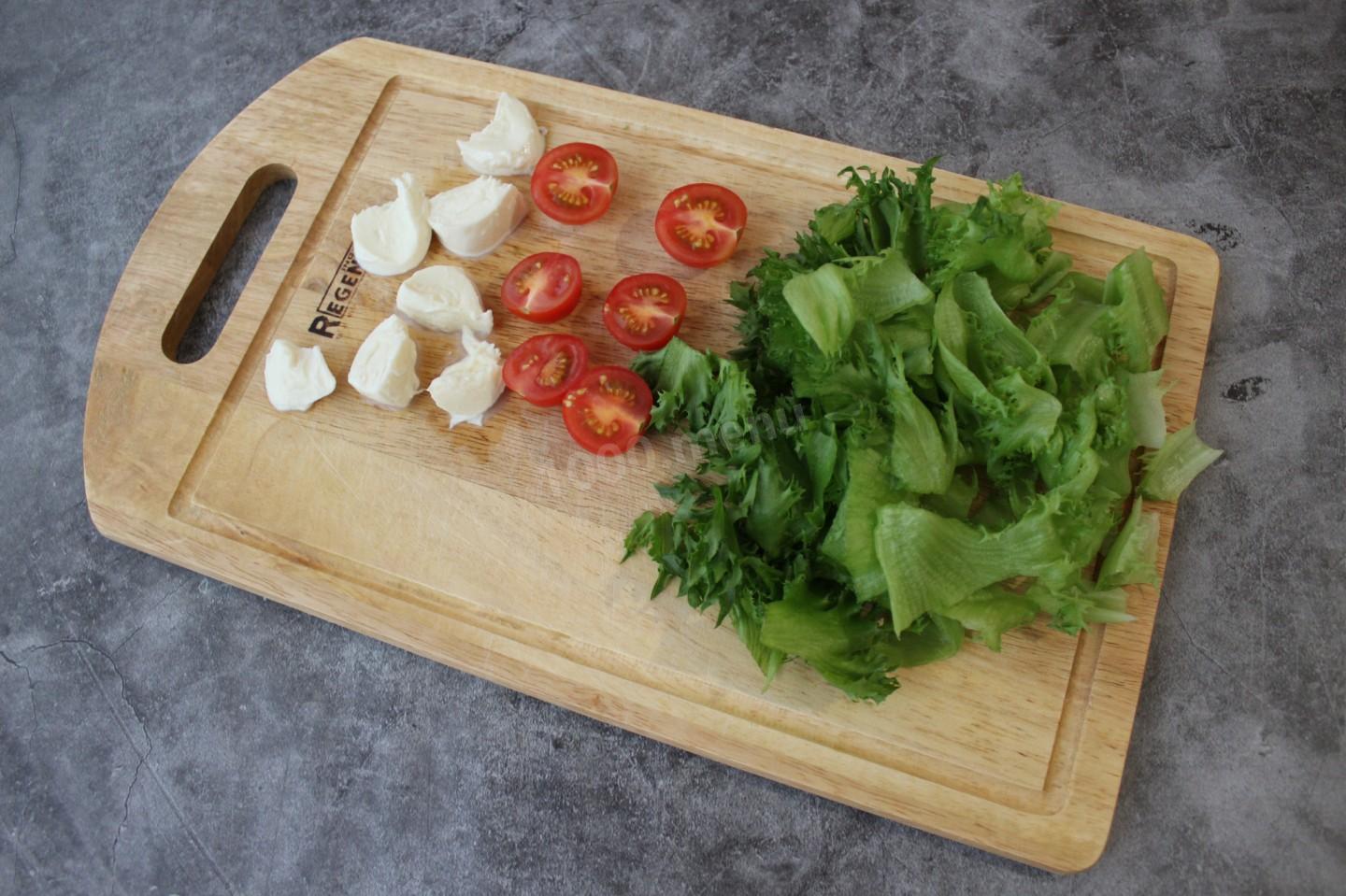
Wash and dry the lettuce well, then cut or tear it into pieces. Wash the cherry tomatoes and halve them. Cut the mozzarella into small pieces.
-
Step 6:
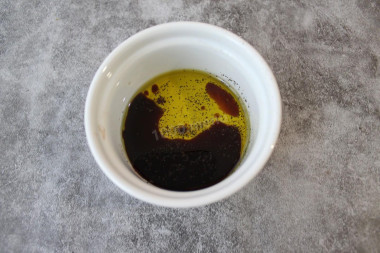
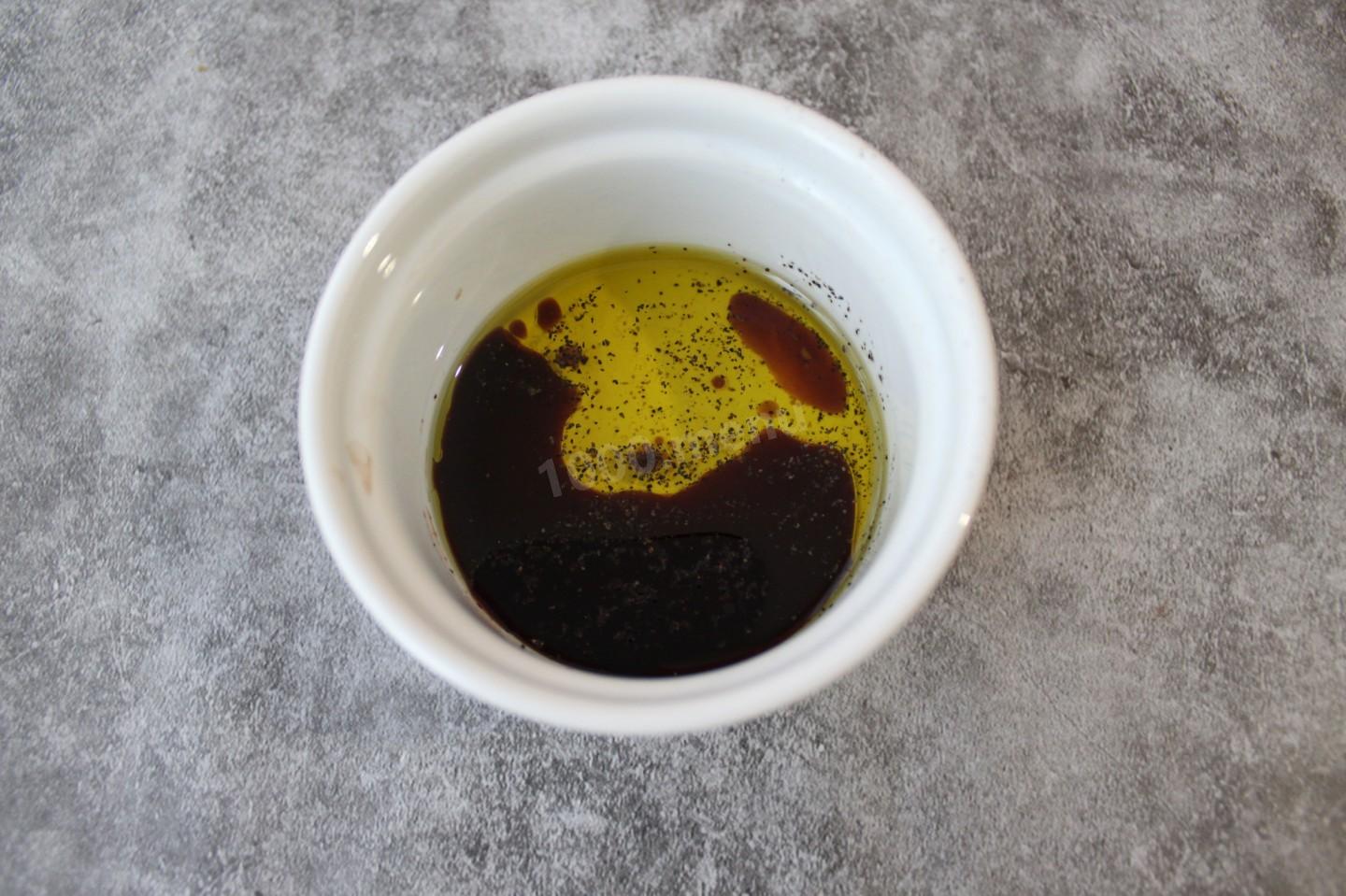
Make the dressing: in a small bowl, combine the olive oil, Tabasco, balsamic vinegar, sugar, ground black pepper, and salt. Whisk everything together.
-
Step 7:
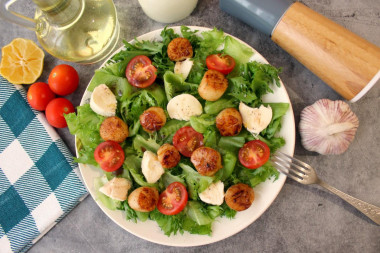
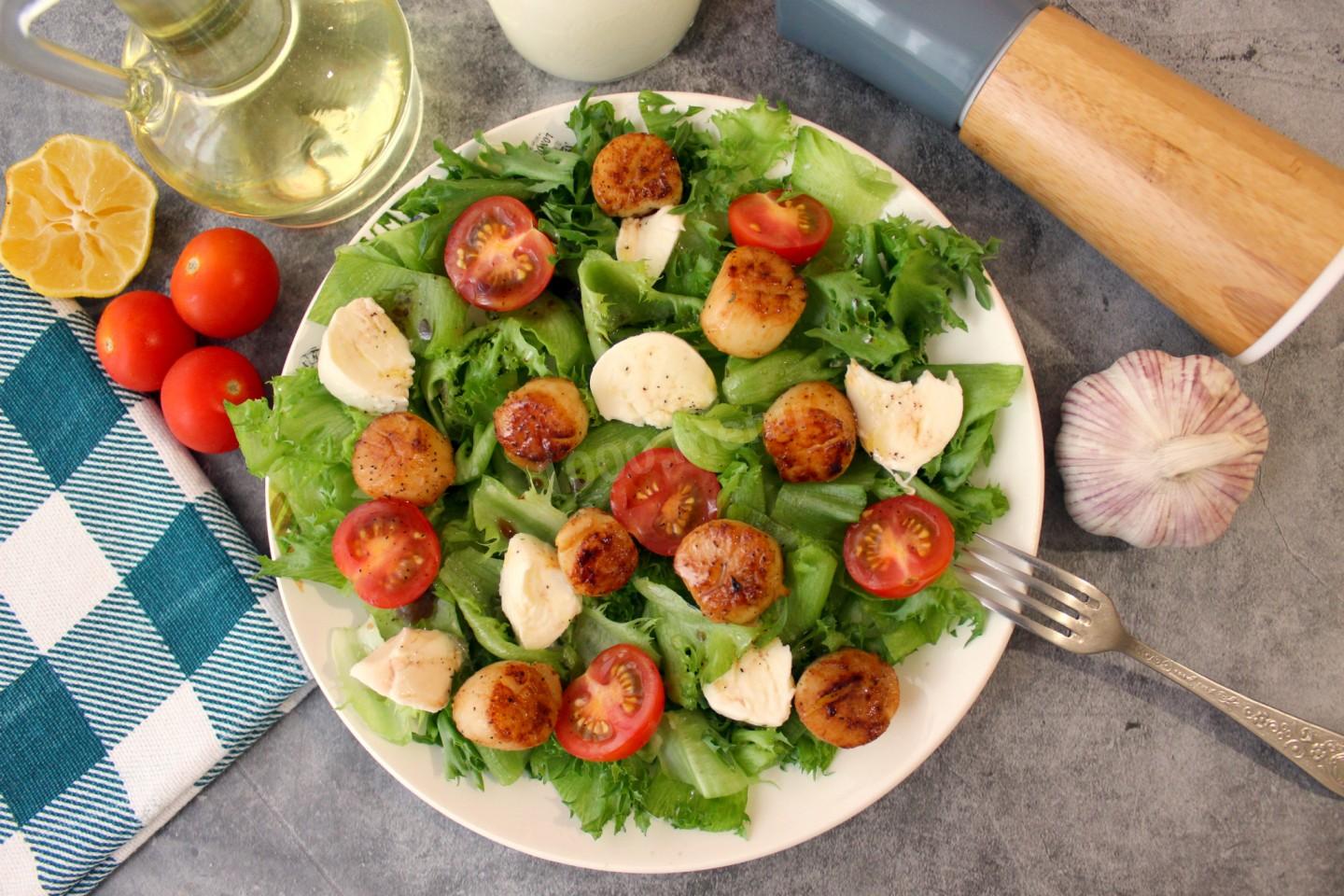
Assemble the salad: put the torn lettuce on a plate and top with the tomato halves, mozzarella, and seared scallops. Drizzle the dressing over the top. Serve right away, before the vegetables start to weep. Enjoy!
- Scallops are both delicious and good for you. They're full of easily digestible protein, iodine, and B vitamins. Thanks to their naturally occurring calcium, they rarely trigger allergies, so they're often included in the diets of children, older adults, and those who are ill.
- Since everyone's tolerance for salt, sweetness, heat, and acidity is different, always season to your own taste. If you're using a spice for the first time, go easy — some, like chili pepper, are easy to overdo.
- Use an oil with a high smoke point for frying. Every oil is only healthy up to its smoke point — the temperature at which it starts to burn and form harmful compounds. Unrefined oils, with rare exceptions, have a low smoke point and burn quickly. Refined oils hold up better to heat. If you're roasting, pan-frying, or grilling, reach for a high-smoke-point oil such as refined sunflower, olive, or grapeseed oil.
Caloric content of the products possible in the composition of the dish
- Garlic - 143 kcal/100g
- Ground black pepper - 255 kcal/100g
- Granulated sugar - 398 kcal/100g
- Sugar - 398 kcal/100g
- Vegetable oil - 873 kcal/100g
- Salt - 0 kcal/100g
- Lemon juice - 16 kcal/100g
- Olive oil - 913 kcal/100g
- Cherry tomatoes - 15 kcal/100g
- Mozzarella - 280 kcal/100g
- Balsamic vinegar - 88 kcal/100g
- Sea scallops - 88 kcal/100g
- Tabasco sauce - 12 kcal/100g
- Lettuce - 12 kcal/100g
Similar recipes

- Festive table
- Salads
- Semi-finished products
- Seafood
- Cheese
- Vegetables
- Sweet
- Spices seasonings spices
- Fats and oils
- Other
- Garlic
- Pepper
- Salt
- Vinegar
- Vegetable oil
- From juice
- Frying
- Marinating
- Eggless salad
- Salad with cheese
- Simple festive salads
- Vegetable salads
- Seafood salad
- Festive salads
- Valentine's day
- Sauce
- Shellfish
- Brine cheese
- From tomato
- Leaves lettuce
- No eggs
- Sugar