Beef steak in the oven
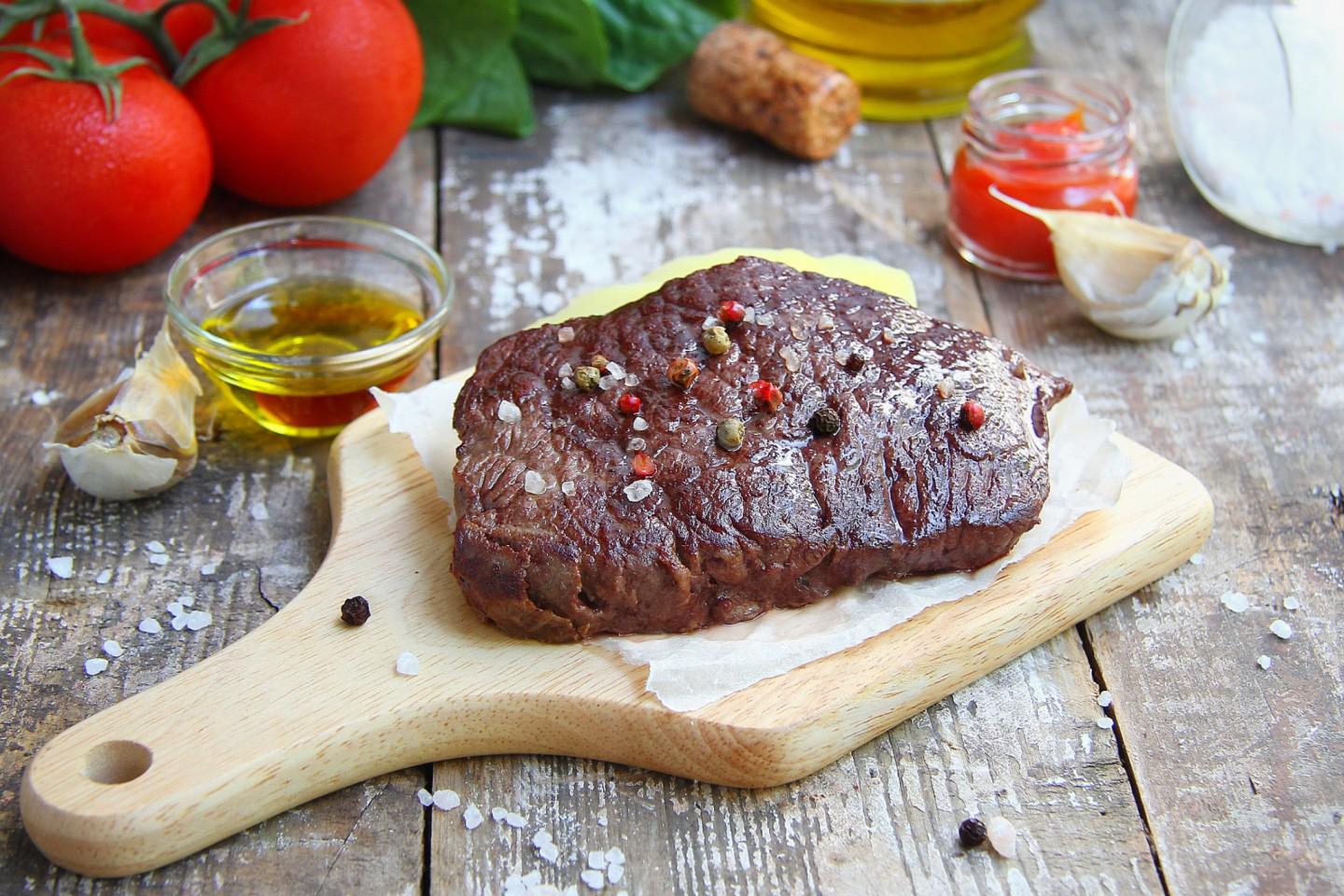
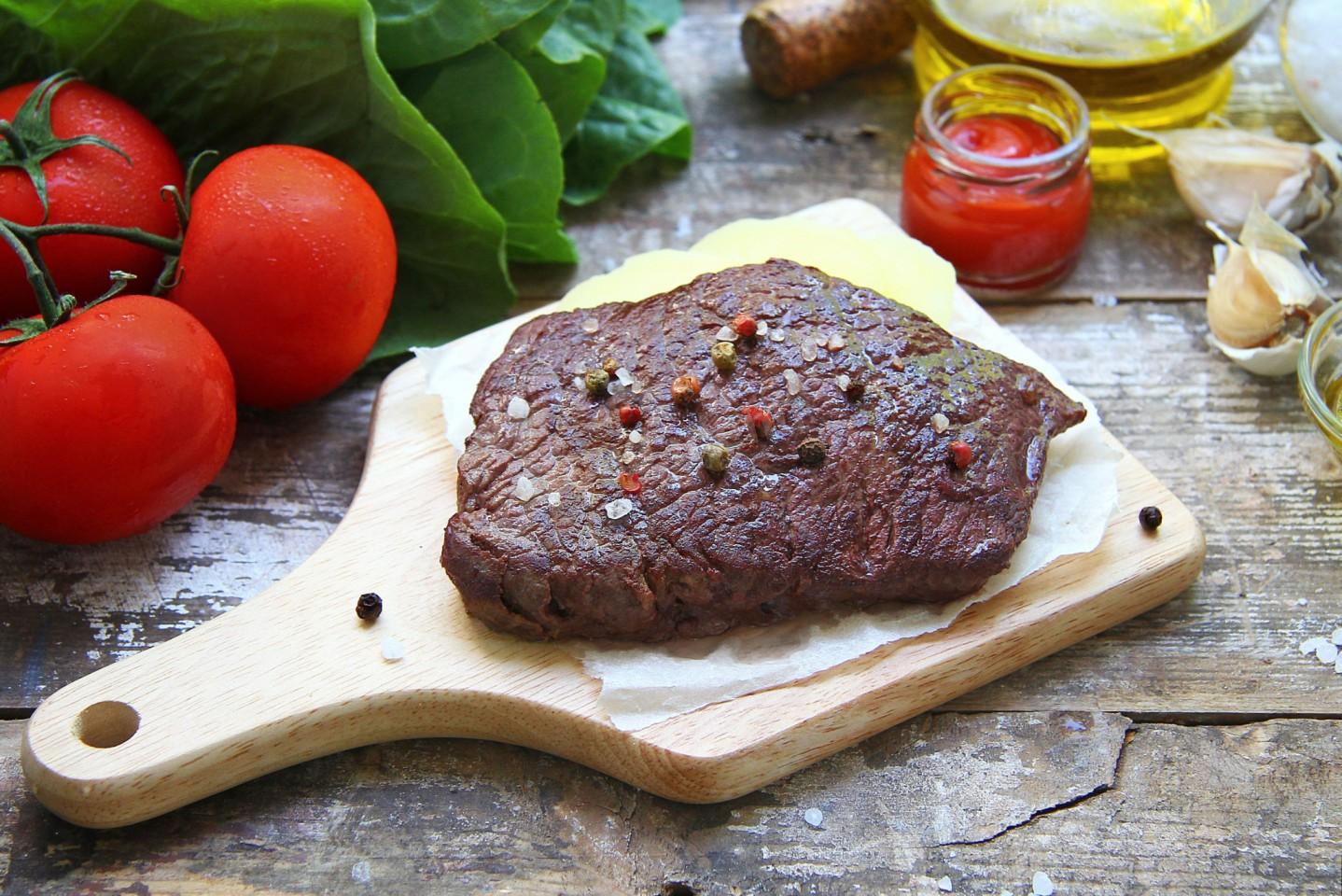
Just marbled beef, salt, and pepper—nothing extra! Eighty percent of your success comes down to choosing a good piece of marbled beef. The rest is technique: don't leave the steak in the oven too long. A little over five minutes of hands-on time, and a juicy steak is in the bag! Well, on the plate :)

Cooking method
-
Step 1:
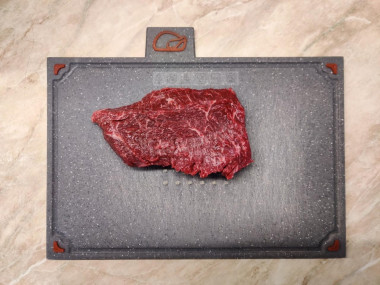
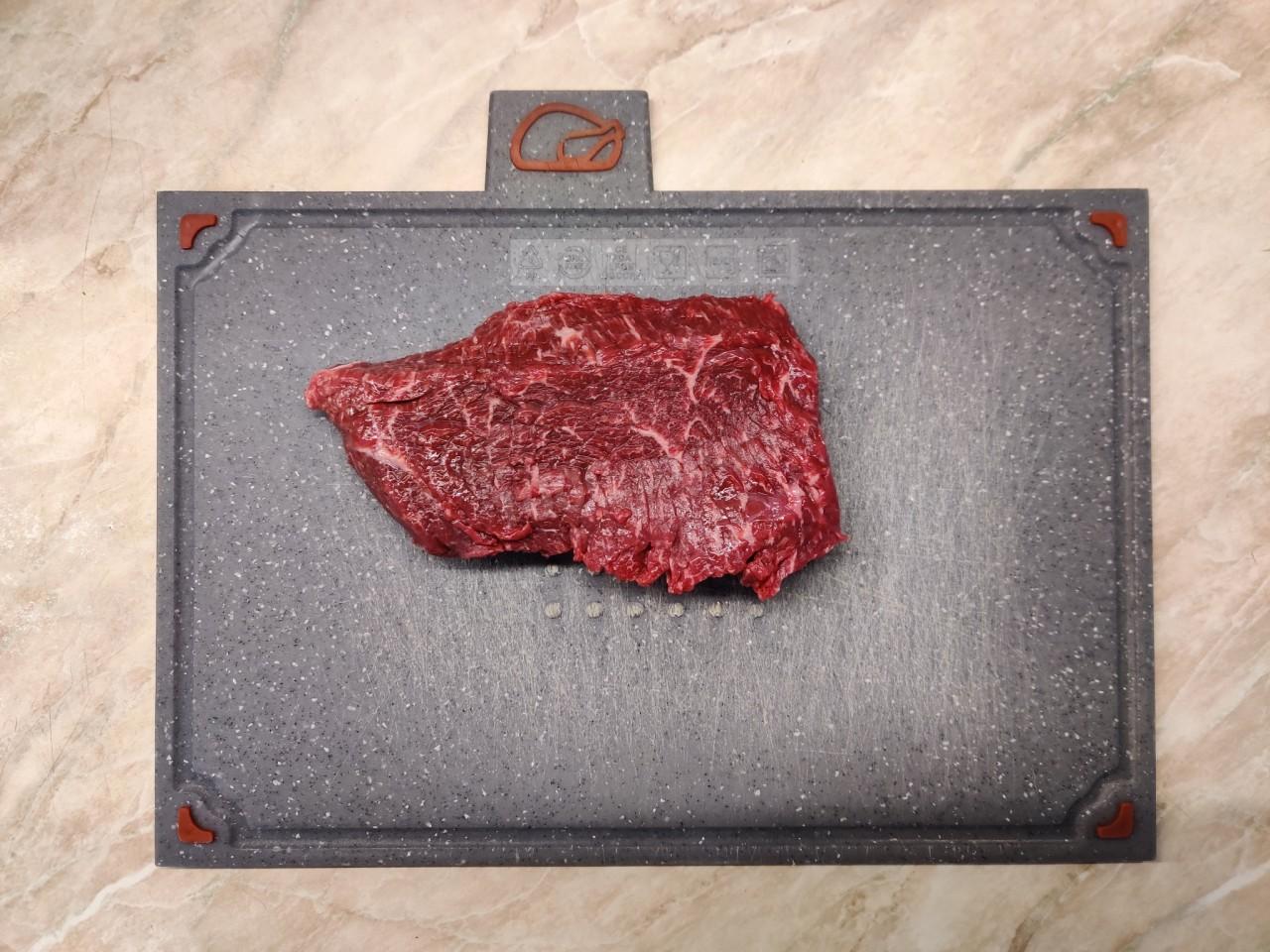
How do you roast a beef steak in the oven? For steaks I recommend only grain-fed beef with good marbling—that pattern of fat streaks running through the meat. The cut should be one suited to frying or roasting. The quality of the meat determines the result, anywhere from delight to complete letdown. If you have a whole piece of beef, cut the steak about 2 cm (3/4 inch) thick, and always across the grain. Have the meat at room temperature by the time you start cooking.
-
Step 2:
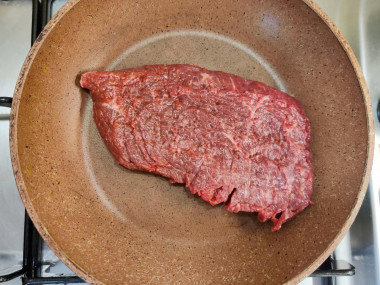
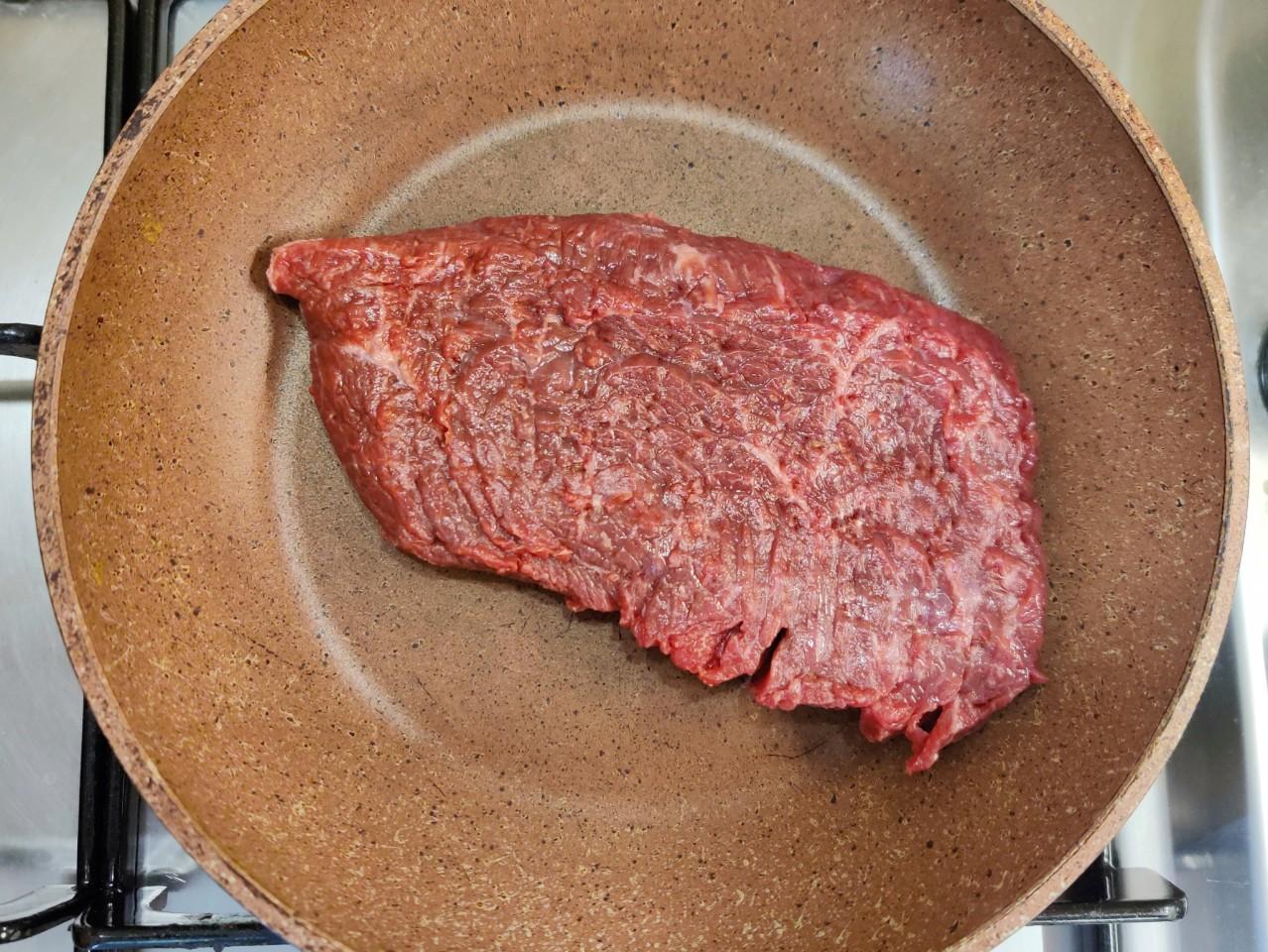
Heat a dry nonstick skillet (no oil) over high heat. Lay the steak in the pan and sear it for one minute over high heat.
-
Step 3:
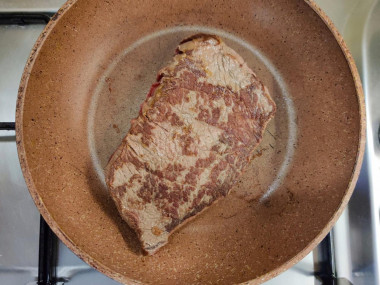
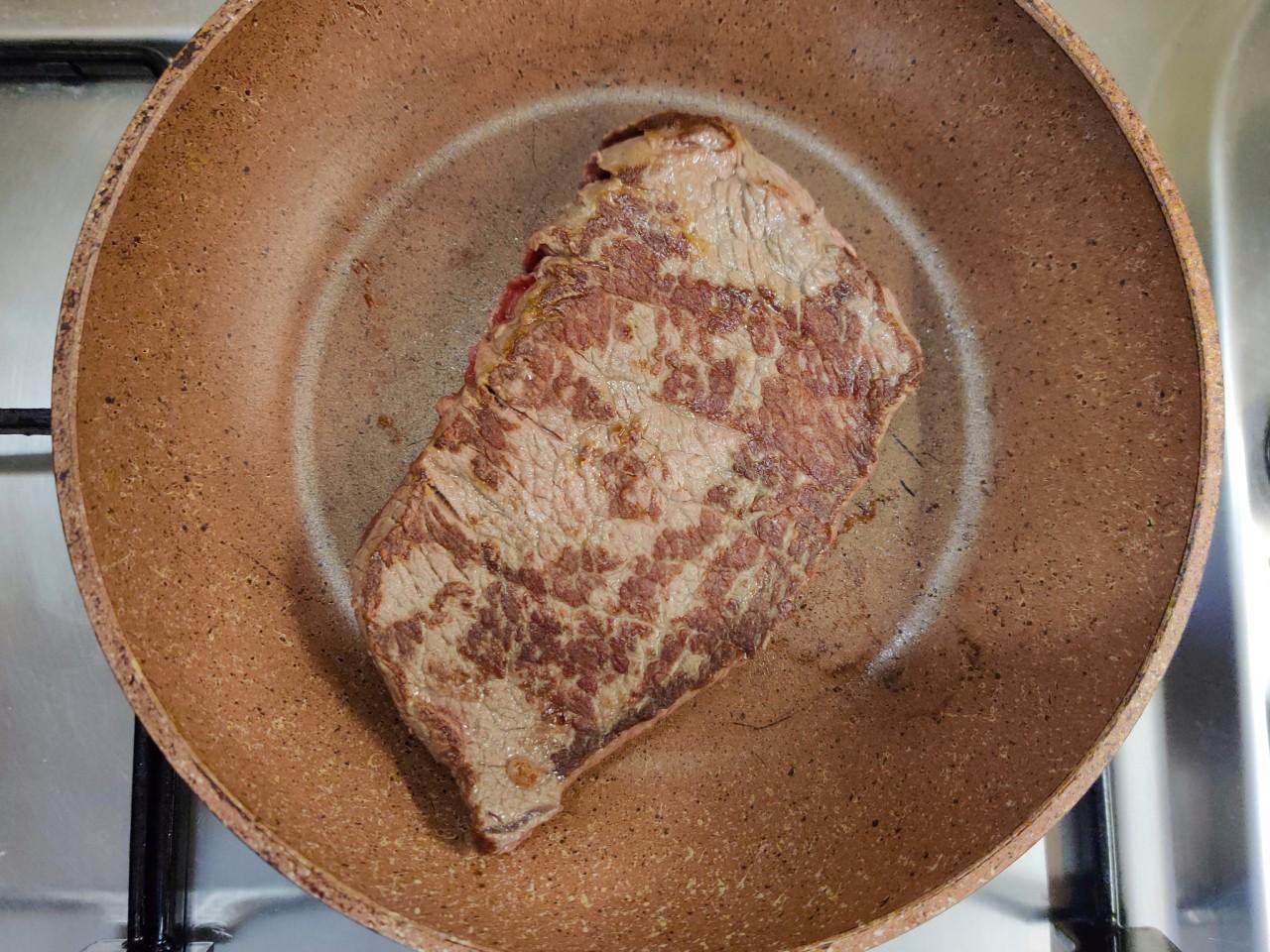
Then flip the steak and sear the other side for another minute. We're building a browned crust on the meat that will seal in all the juices and keep it from drying out later.
-
Step 4:
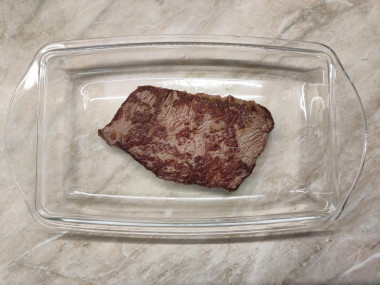
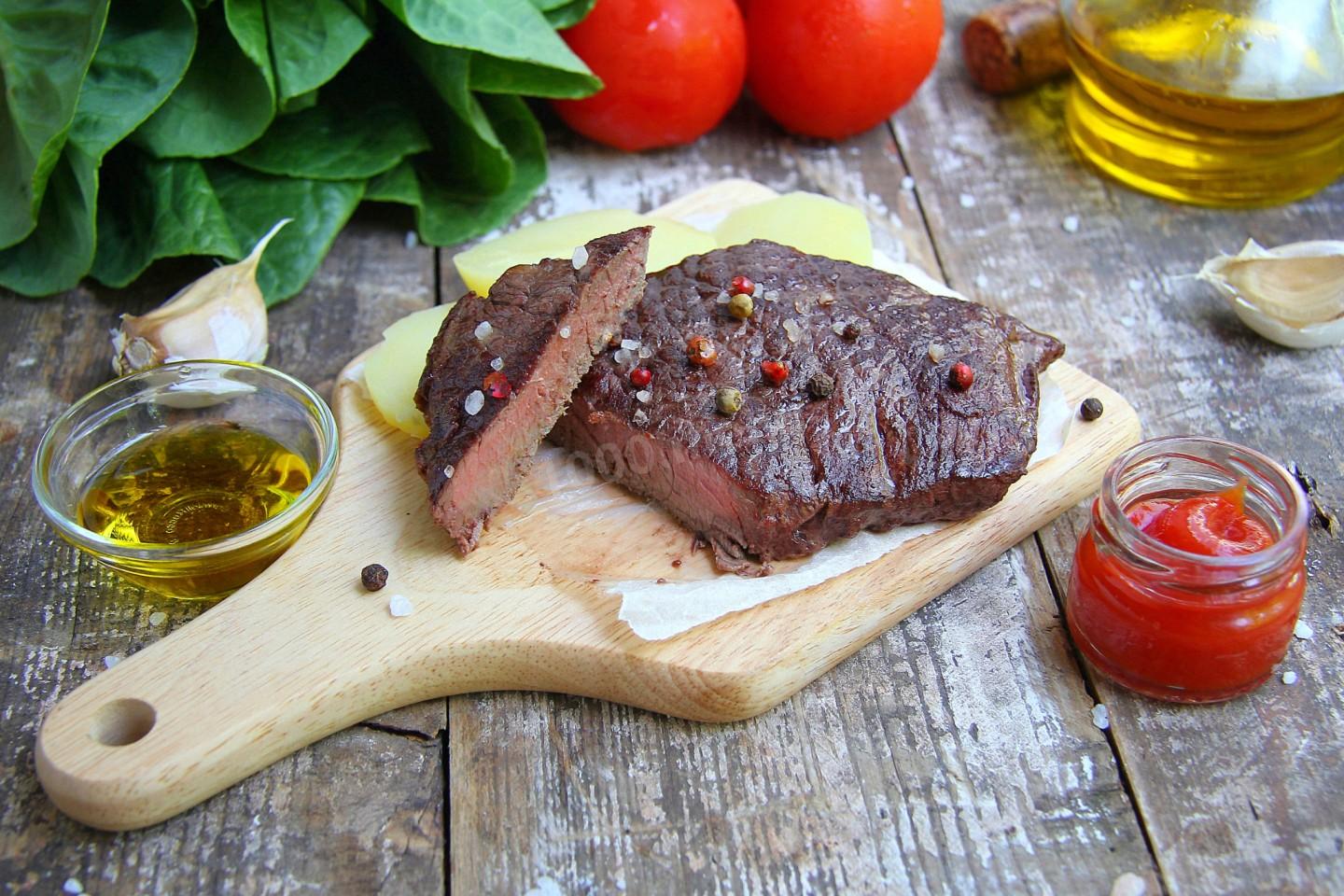
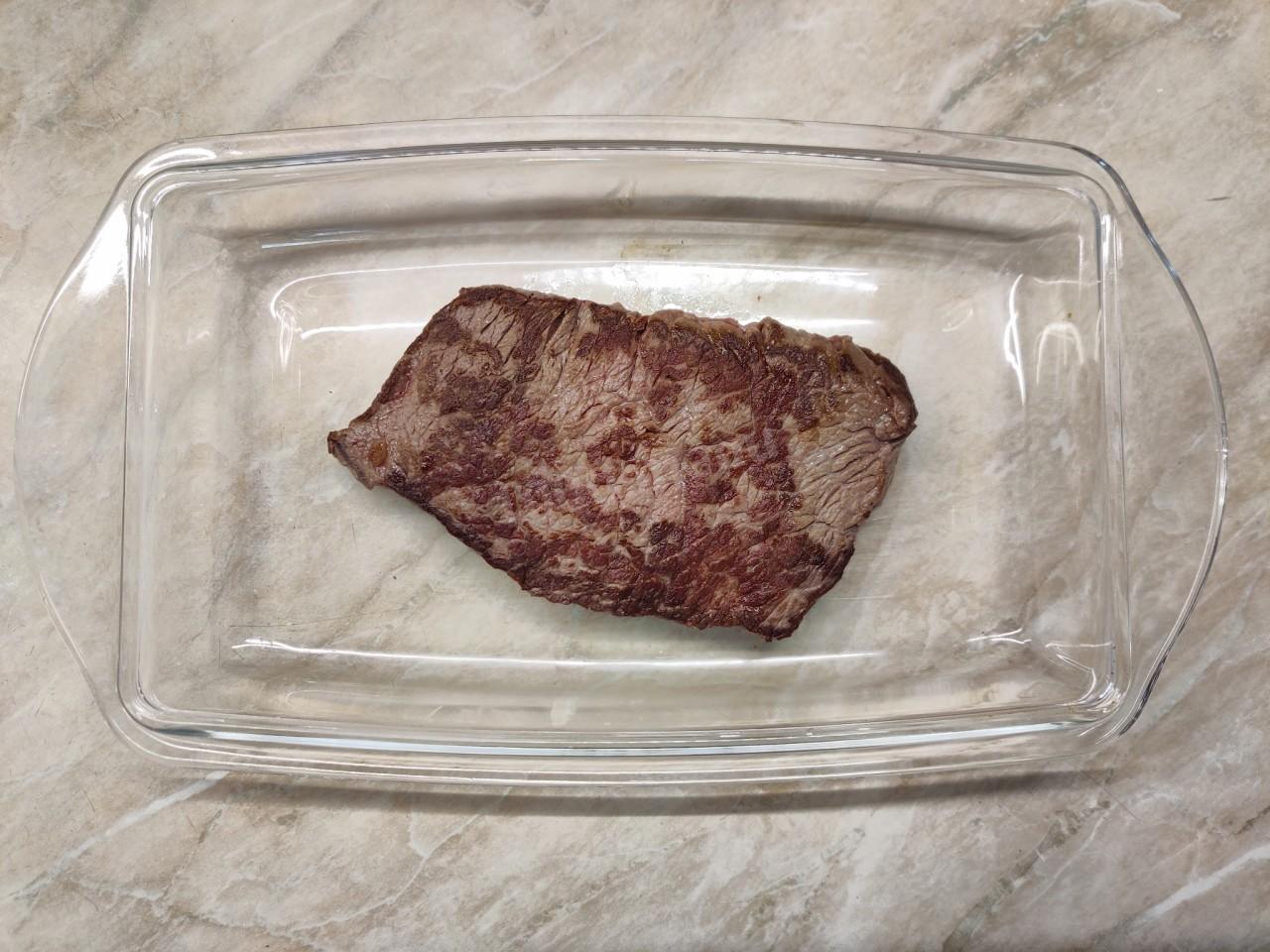
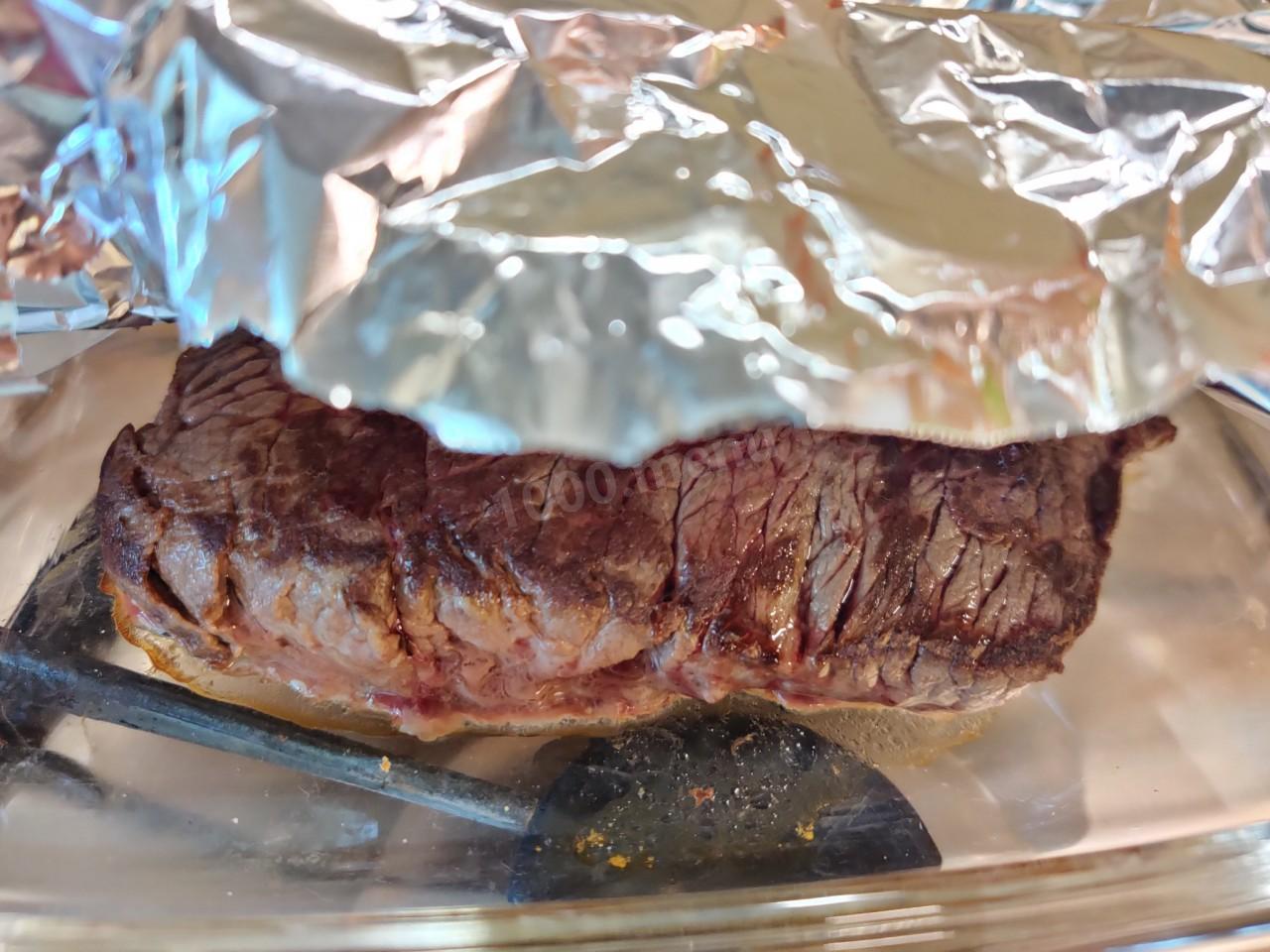
Transfer the steak to a rimmed baking sheet (or baking dish), without oiling it. Roast in an oven already preheated to 400°F (200°C) for five to ten minutes, depending on how you like your steak done. I left mine in for ten minutes and got my favorite medium, with light-pink juices inside.
-
Step 5:
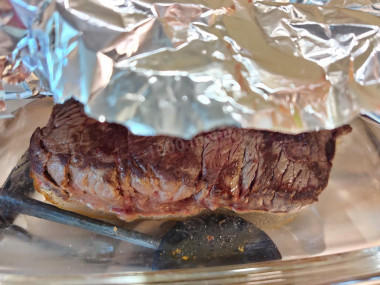
Once it's out of the oven, be sure to tent the steak with foil for about three minutes. This lets it rest and get ready to serve. Right before serving, season the steak with salt and pepper to taste. For steaks I use only coarse sea salt. The photo of the cut shows just how juicy my steak turned out! I think your guests will be pleased too ;)
- Serve the steak with your favorite tomato sauce. You can also make any side dish you like ahead of time. Steaks pair well with boiled potatoes, steamed broccoli with garlic butter, boiled green beans, grilled vegetables, and much more!
- If you're tempted to make a pork steak by this recipe, I have to warn you: leaving pork underdone is absolutely off-limits. It's just not done.
- Pork has only one degree of doneness—well done—that is, cooked all the way through until the juices run clear, or barely run at all. Unless, of course, you want to risk an encounter with the many microorganisms that live in undercooked pork...
- Remember the golden rule that world-class chefs live by: underdone is only acceptable for beef, veal, lamb, and duck, and for freshly caught tuna.
- Enjoy!
- Keep in mind that every oven is different. Your temperature and cooking time may differ from what's in the recipe. To make any roasted dish a success, brush up on how ovens behave!
- Oils are only healthy up to a certain temperature—the smoke point, where the oil starts to burn and forms toxic compounds, including carcinogens. For help choosing the right frying temperature and the best oil for the job (and which to skip altogether), read more here.
- Important! The wrong pan can ruin even the best recipe. For all the details on choosing the perfect pan for different dishes, read here.
Caloric content of the products possible in the composition of the dish
- Salt - 0 kcal/100g
- Ground hot pepper - 21 kcal/100g
- Marbled beef - 170 kcal/100g
Similar recipes




- Fast and tasty
- Festive table
- Homemade dinner
- National cuisine
- Second course
- Meat and meat products
- Spices seasonings spices
- Pepper
- Salt
- American cuisine
- Frying
- Oven roasting
- The second is fast and delicious
- Dishes in 30 minutes
- Steak
- Meat second course
- Recipes for March 8
- Meat in the oven
- Beef
- Meat for dinner
- No eggs
- Recipes for lean dishes without butter