Yeast-Free Lavash
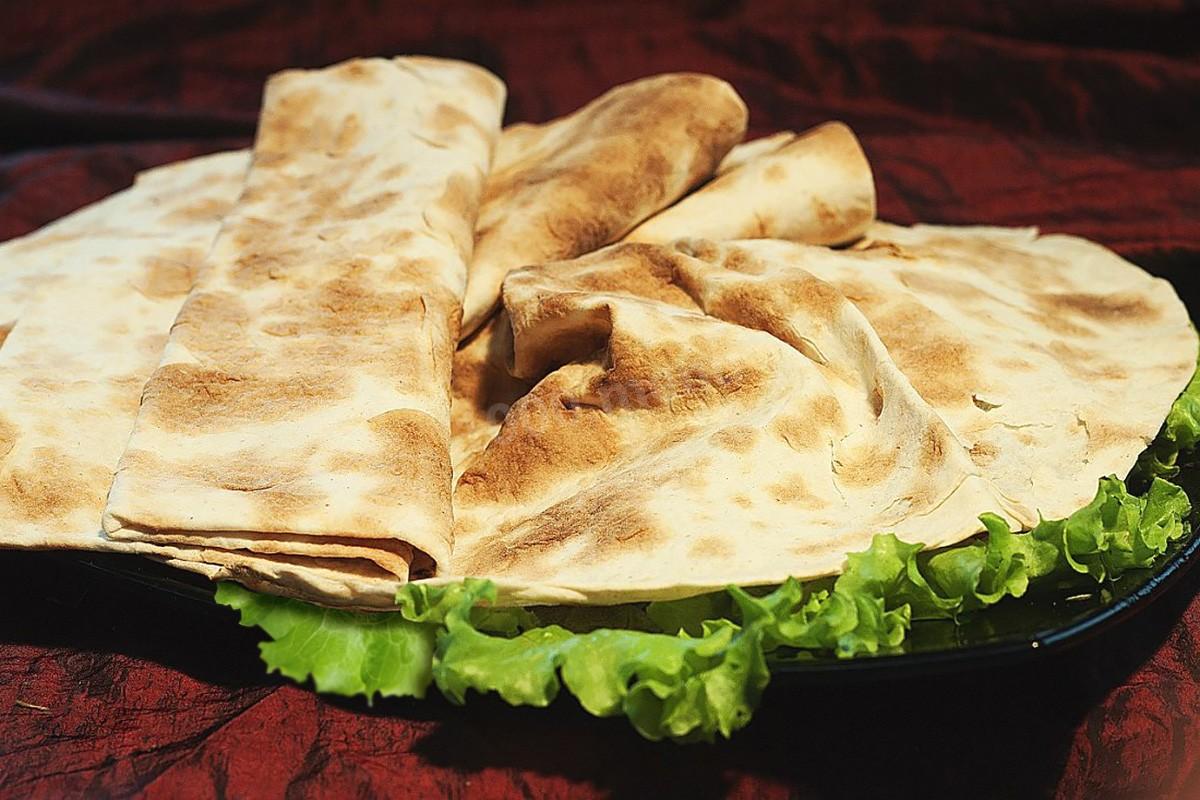
Learn to make real thin lavash flatbread! Yeast-free lavash comes out paper-thin. The key to great lavash is the flour above all — it should be good quality, a fine grade. Sifting matters too: sift the flour twice before kneading. And to keep the dough elastic so it won't tear, let it rest a while after kneading. Unleavened dough should never be soft — it's always firm and springy. Otherwise it's bound to tear when you roll it out thin.
Johanna
Recipe author
Yeast-Free Lavash
Nutrients and energy value of the composition of the recipe
By weight of the composition:
Proteins 13 %
7 g
Fats 13 %
7 g
Carbohydrates 74 %
40 g
247 kcal
GI:
0
/
0
/
100
- Lavash has won a lot of fans, and for good reason — it's tasty and endlessly versatile. Eat it with soups in place of bread, turn it into all kinds of snacks, or roll it up into wraps and layered pies. The good news: you don't have to buy it at the store, you can make it yourself at home — and homemade lavash is every bit as good. 1. Pour the water into a saucepan and bring it to a boil. Take it off the heat, stir the salt into the hot water until the crystals fully dissolve, and let it sit for 5 minutes to cool a little. 2. Sift the flour twice — three times is even better. Mound the sifted flour in a deep bowl, make a well in the center with your hand, pour in the vegetable oil and the hot salted water, and knead the dough. A stand mixer with dough hooks is the easiest way. 3. Knead with the mixer for 5-7 minutes, then keep kneading by hand for another 2-3 minutes. Don't rush this step — work the dough well. 4. Shape the finished dough into a ball, wrap it in plastic wrap, and let it rest about 20 minutes. It'll soften noticeably. 5. Divide the dough into eight equal pieces and roll each one out as thin as you can into a round. 6. Cook each round in a hot dry skillet (no oil) on both sides. Thin dough cooks fast, so don't step away from the stove. 7. As each lavash is done, lay it on a damp kitchen towel and cover it — this keeps the thin bread from drying out and getting brittle. You can also mist the sheets with clean water from a spray bottle instead of the towel, but always keep them covered. Enjoy, make all sorts of treats, and happy cooking!
Caloric content of the products possible in the composition of the dish
- Whole durum wheat flour fortified - 333 kcal/100g
- Whole durum wheat flour, universal - 364 kcal/100g
- Flour krupchatka - 348 kcal/100g
- Flour - 325 kcal/100g
- Vegetable oil - 873 kcal/100g
- Salt - 0 kcal/100g
- Water - 0 kcal/100g
Similar recipes
Related and additional categories: