Cottage Cheese–Stuffed Kefir Flatbreads
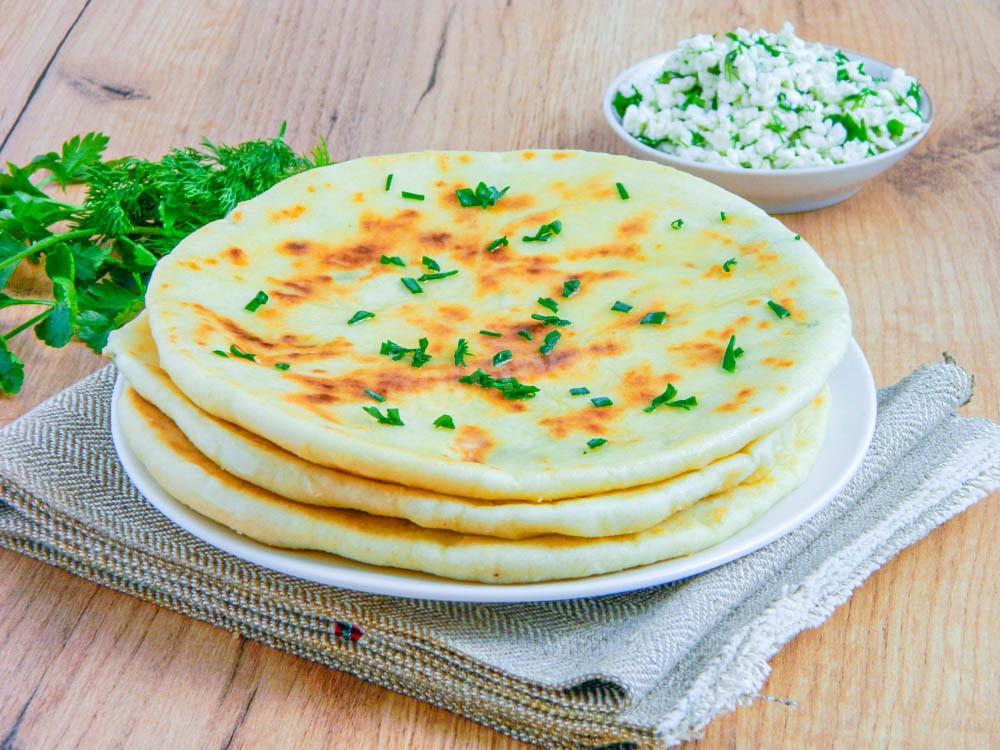
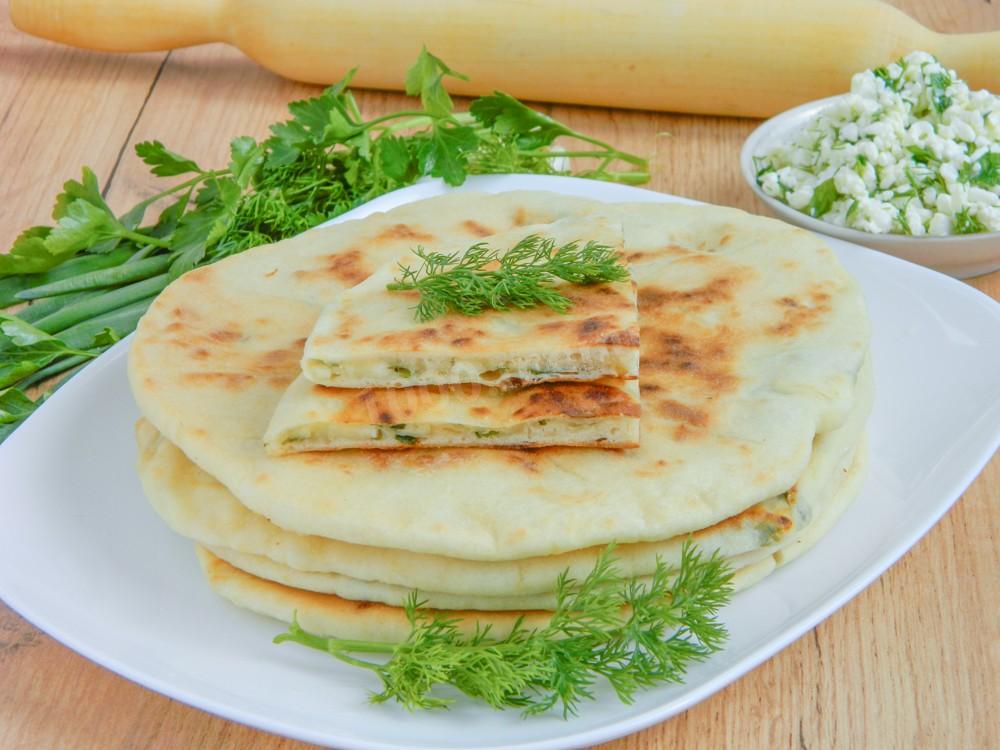
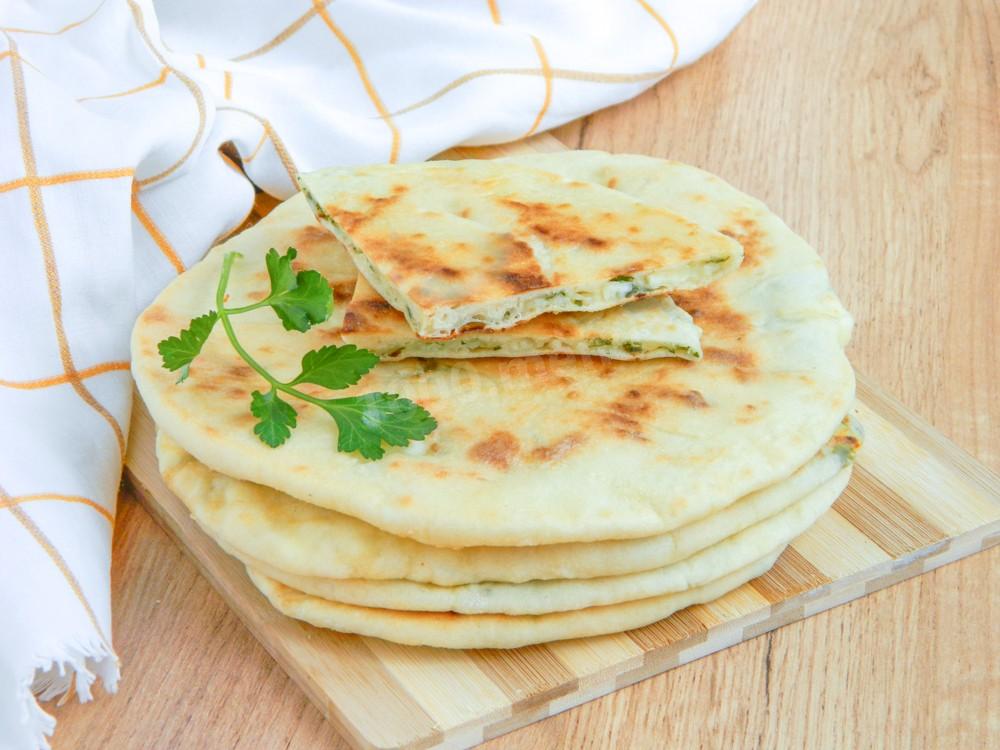
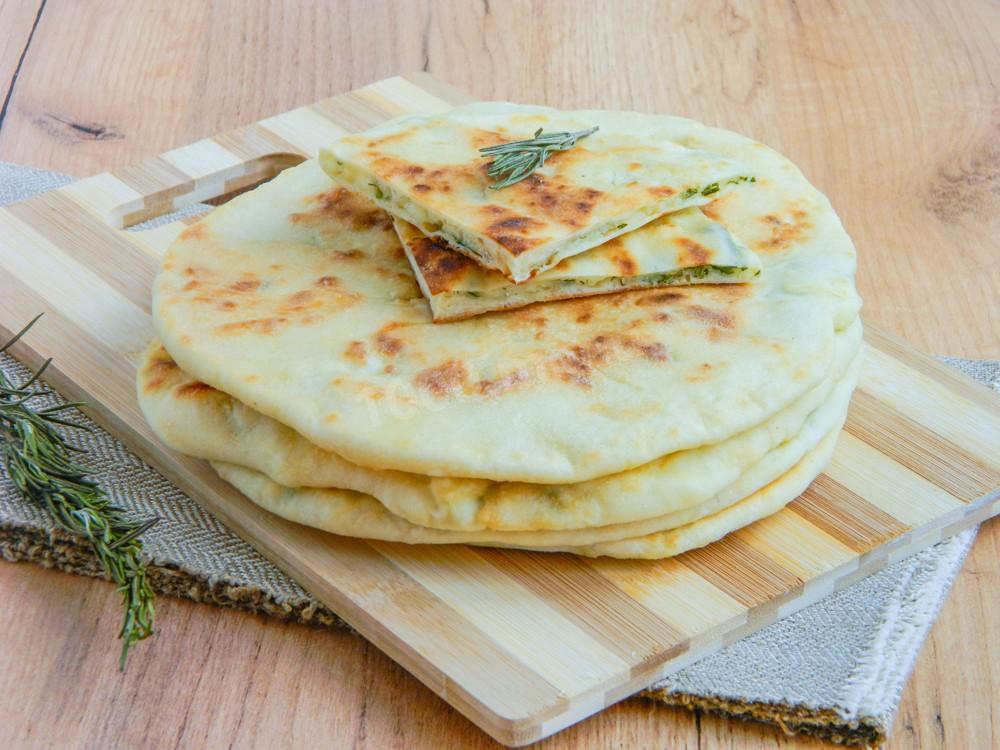
Fragrant, inviting, and delicious — a hit with the whole family. I love these skillet flatbreads with a cottage cheese filling because both the dough and the filling come together fast and fuss-free. And they vanish the moment they hit the table — the best compliment a cook can get!

Cooking method
-
Step 1:
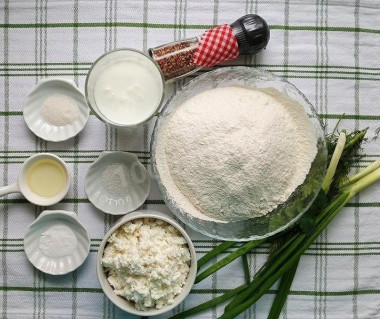
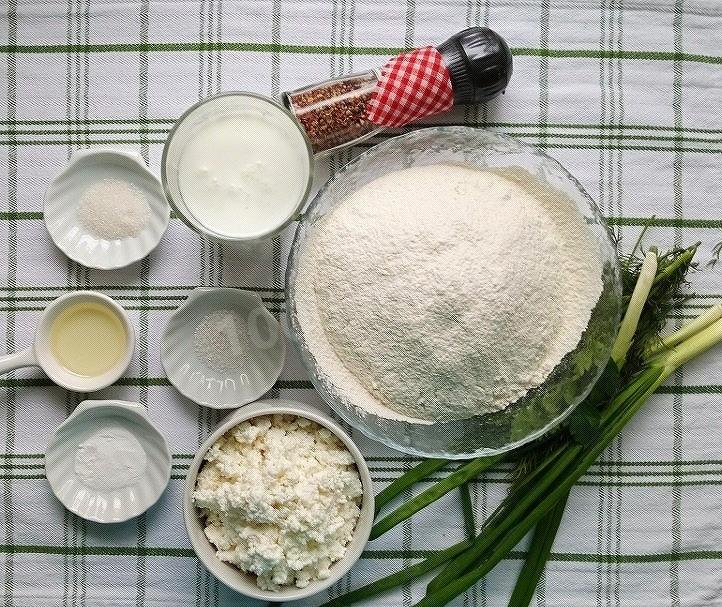
How do you make cottage cheese–stuffed kefir flatbreads? Gather your ingredients. The kefir can be any fat percentage — just take it out of the fridge ahead of time so it comes to room temperature. Sift the flour to aerate it and remove any lumps. For the filling, use fresh cottage cheese with at least 5% fat.
-
Step 2:
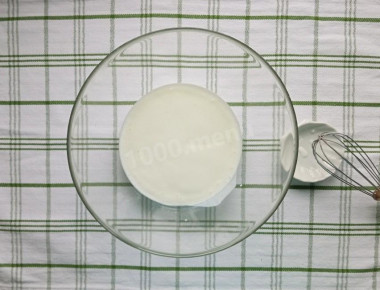
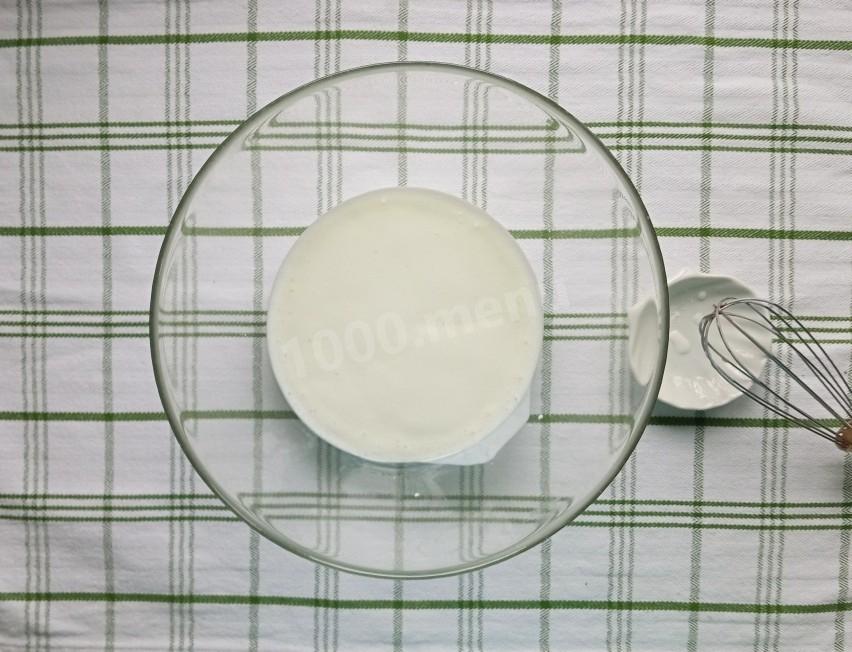
Start with the dough. Pour the room-temperature kefir into a deep bowl, stir in the baking soda, and let it sit for 5 minutes. In that time the soda reacts with the acid in the kefir, releasing gas that makes the dough lighter and softer.
-
Step 3:
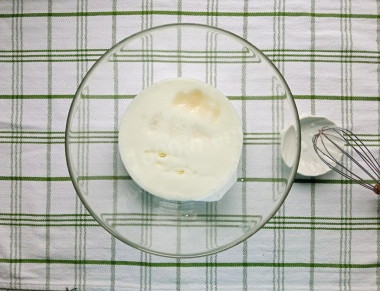
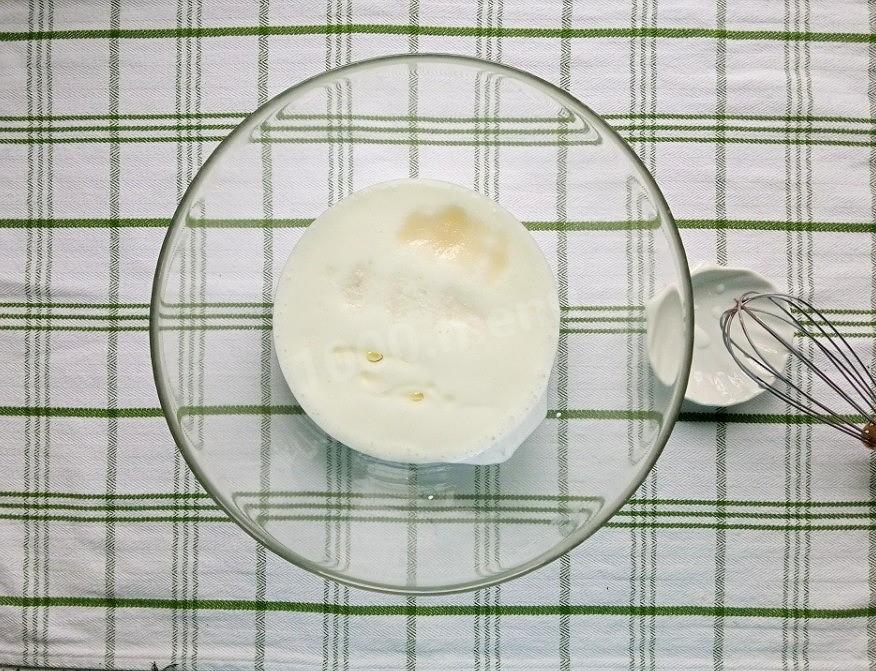
Add the salt, sugar, and vegetable oil to the bowl. Any oil you like works, but a neutral, odorless one is best. Stir the kefir mixture well until the salt and sugar fully dissolve.
-
Step 4:
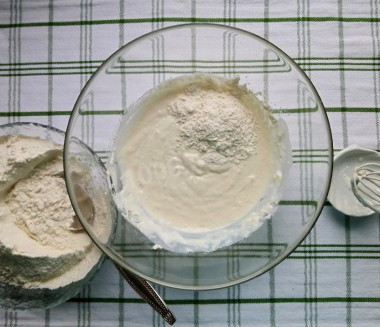
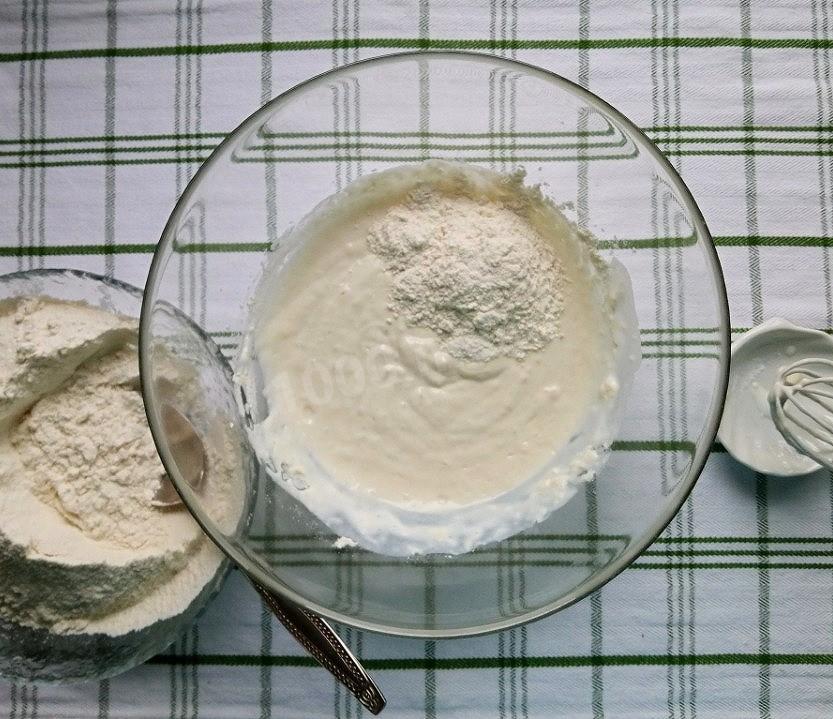
Now start working in the flour a little at a time. You can sift it right into the bowl or beforehand — sifted flour makes for lighter, fluffier dough. Set aside about 50 grams of flour for rolling out later.
-
Step 5:
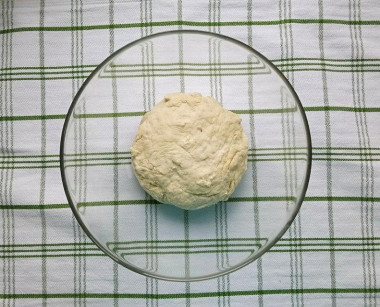
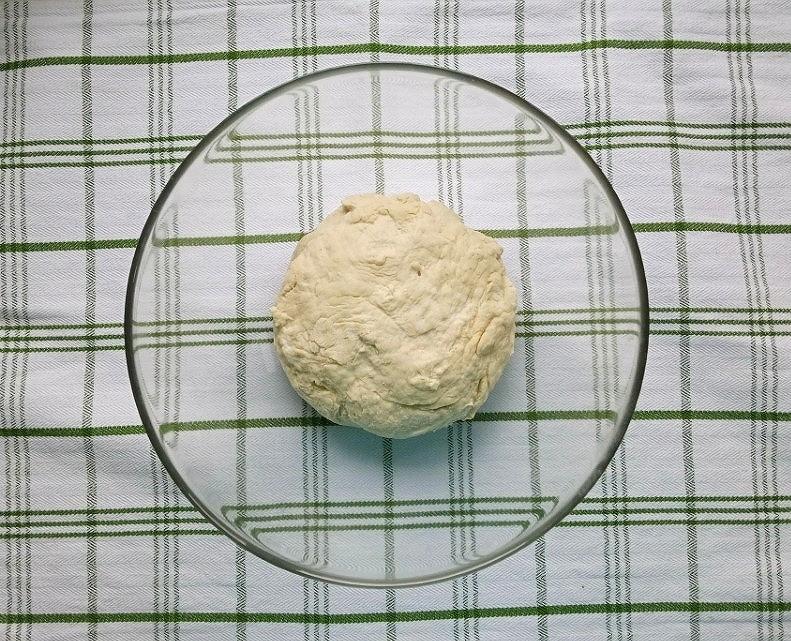
Start mixing the dough with a spoon, and once that gets tough, turn it out onto a lightly floured counter or board and knead by hand. Be ready to use more or less flour than the recipe calls for — go by the feel of the dough, not the exact amount. It should be smooth and soft. A little stickiness is fine.
-
Step 6:
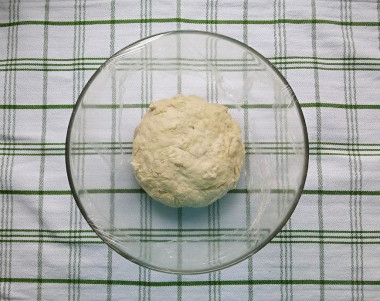
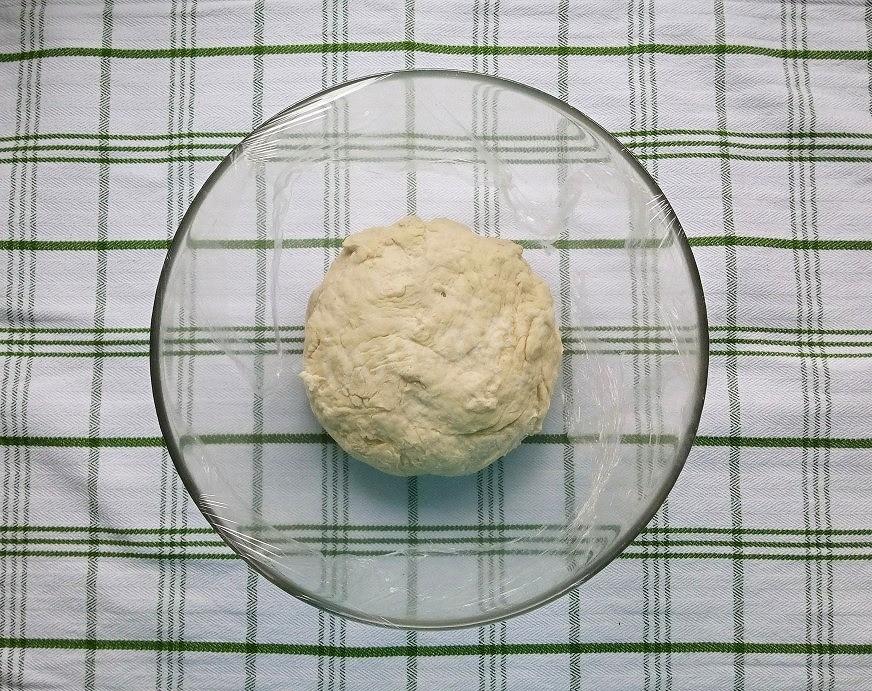
Put the dough in a bowl and cover it with a towel or plastic wrap so it doesn't dry out. Let it rest for 20 minutes — the gluten develops during this time, making the dough more elastic.
-
Step 7:
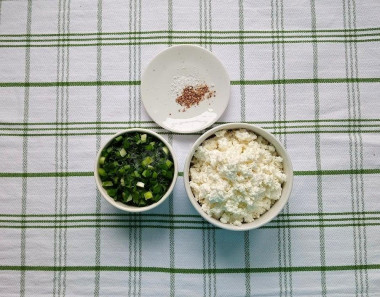
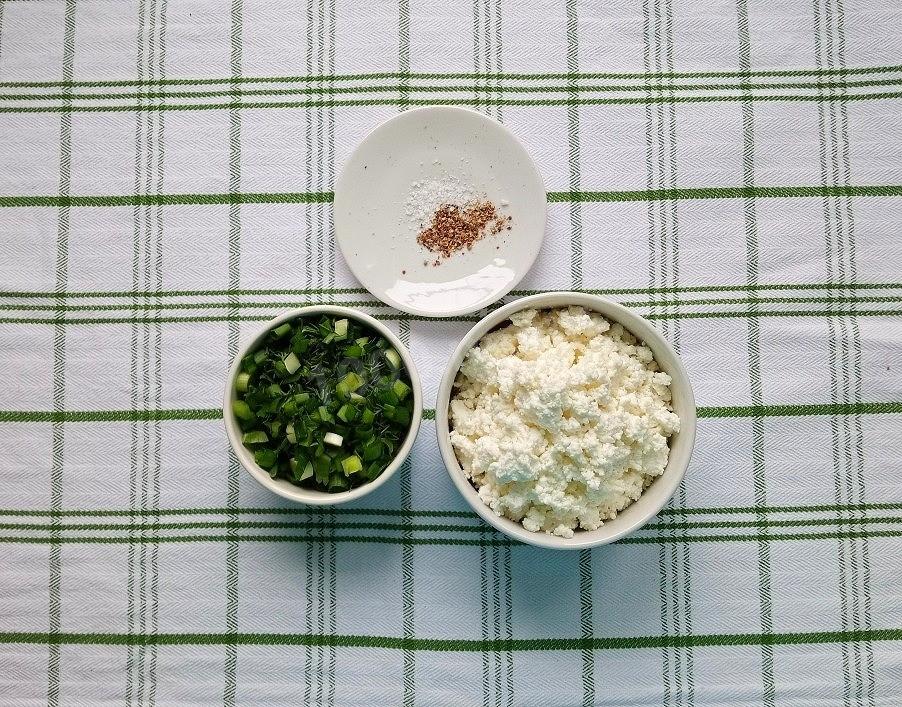
While the dough rests, make the filling. It's based on cottage cheese — avoid the very coarse, grainy kind, since large curds can tear the dough as you roll out the flatbreads. Wash and dry the herbs, then chop them finely. Use whatever herbs you have on hand; I went with a mix of dill, parsley, and green onion.
-
Step 8:
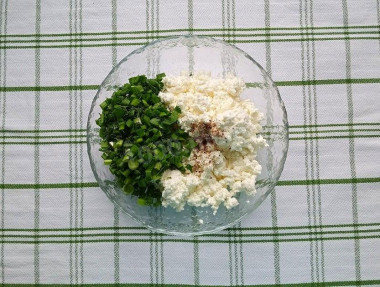
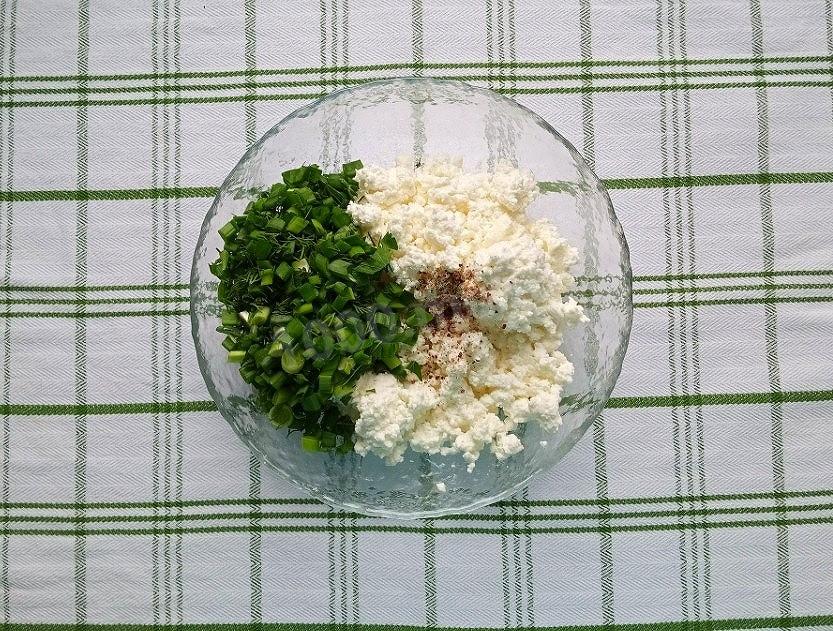
Put the cottage cheese and chopped herbs in a bowl, salt to taste, and add spices. I used freshly ground black pepper. Use your favorite spices or try something new — there's always room to experiment.
-
Step 9:
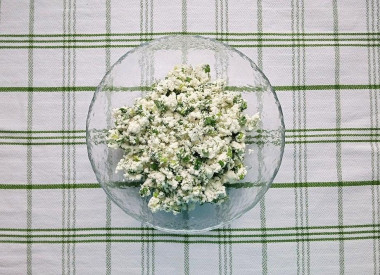
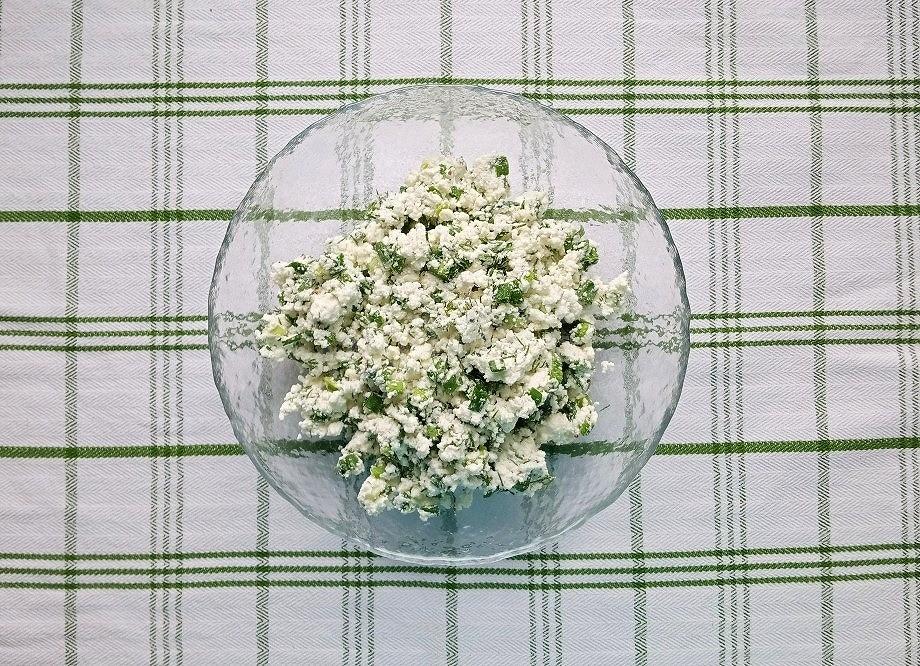
Mix thoroughly so the filling is uniform and the salt and spices are evenly distributed. The filling is ready.
-
Step 10:
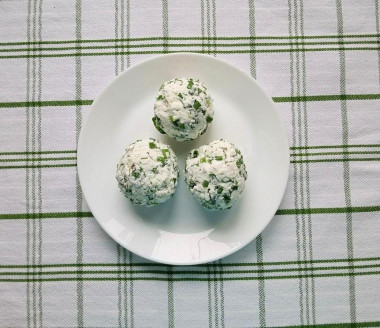
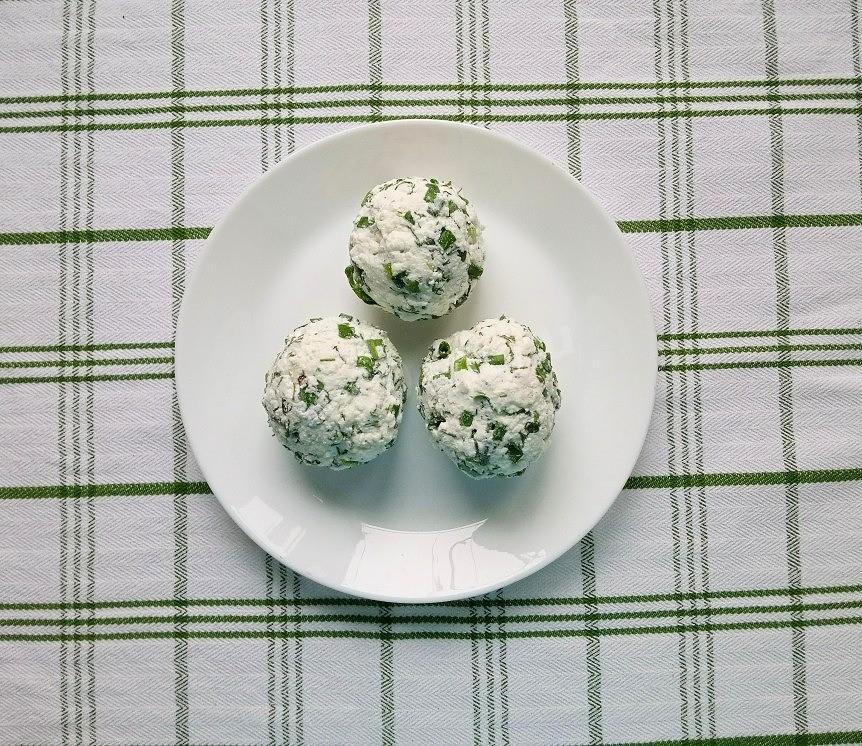
We're making three flatbreads, so divide the filling into three equal parts. I used a kitchen scale, but eyeballing it is fine. Roll each part into a ball — easy to do if the cottage cheese is moderately moist. If it doesn't hold together well, don't worry; it won't affect the final result.
-
Step 11:
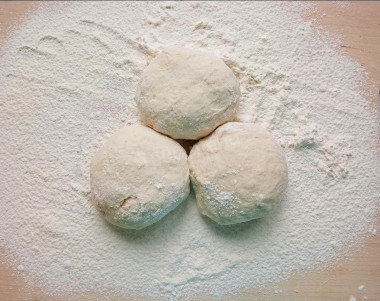
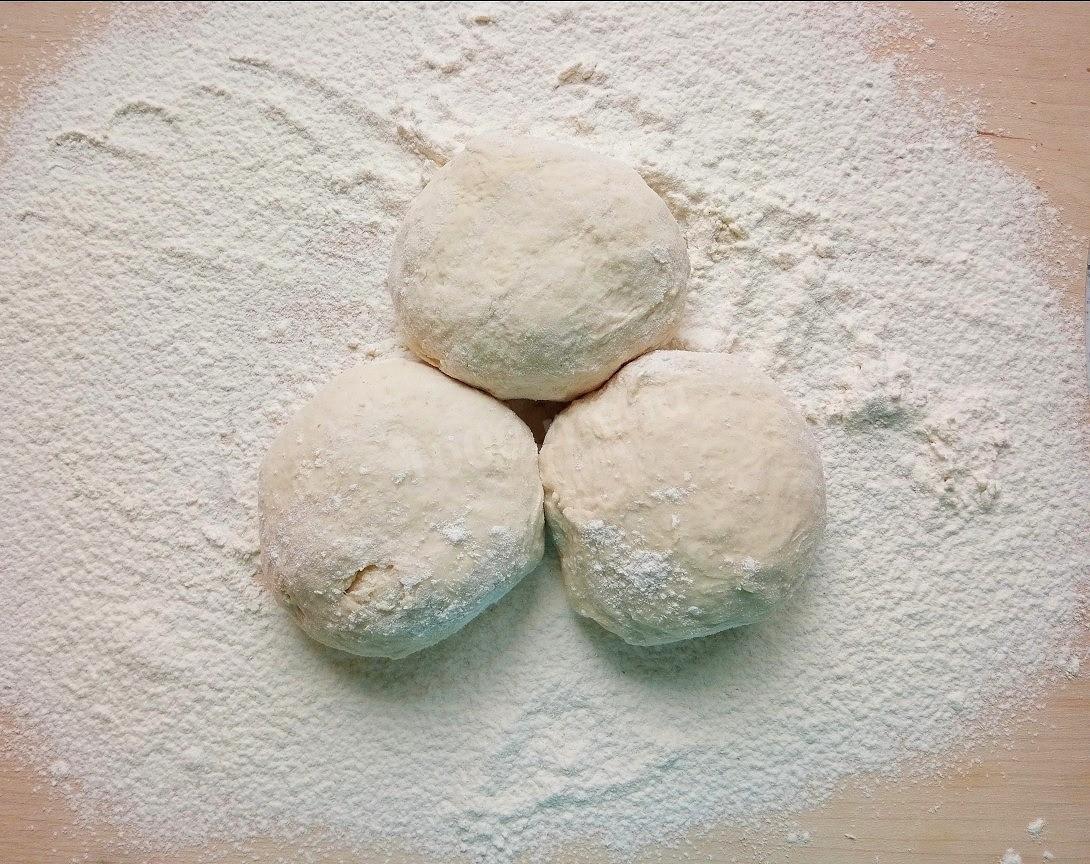
By now the dough has rested, the liquid has absorbed into the flour, the gluten has developed, and it's easy to work with. Punch it down, divide it into 3 equal parts, and roll each into a ball.
-
Step 12:
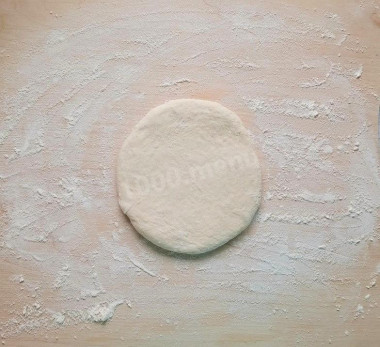
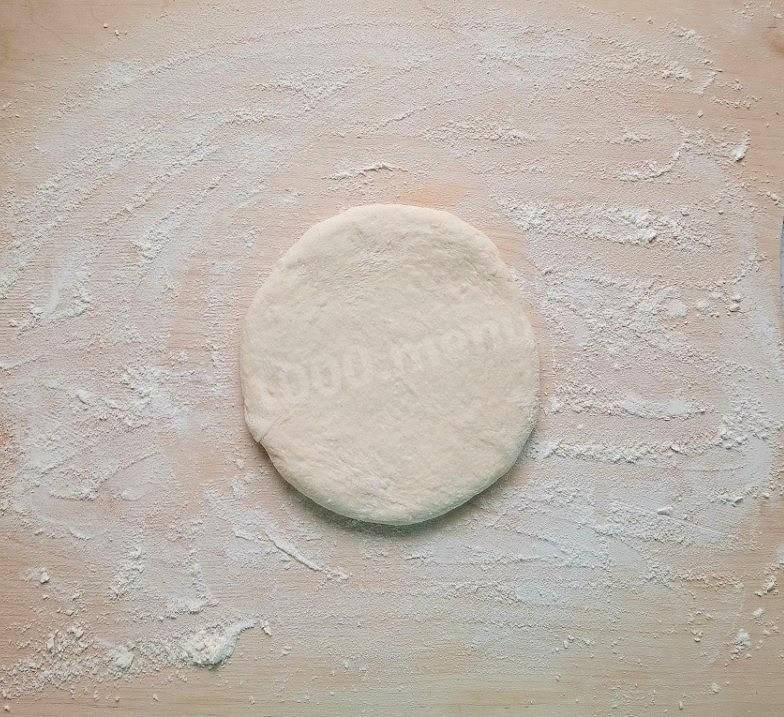
Take one ball and roll it out into a circle about 10 centimeters (4 inches) across. Dust the surface with flour if needed, but don't overdo it or the dough will toughen.
-
Step 13:
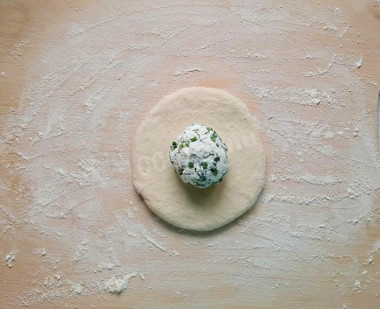
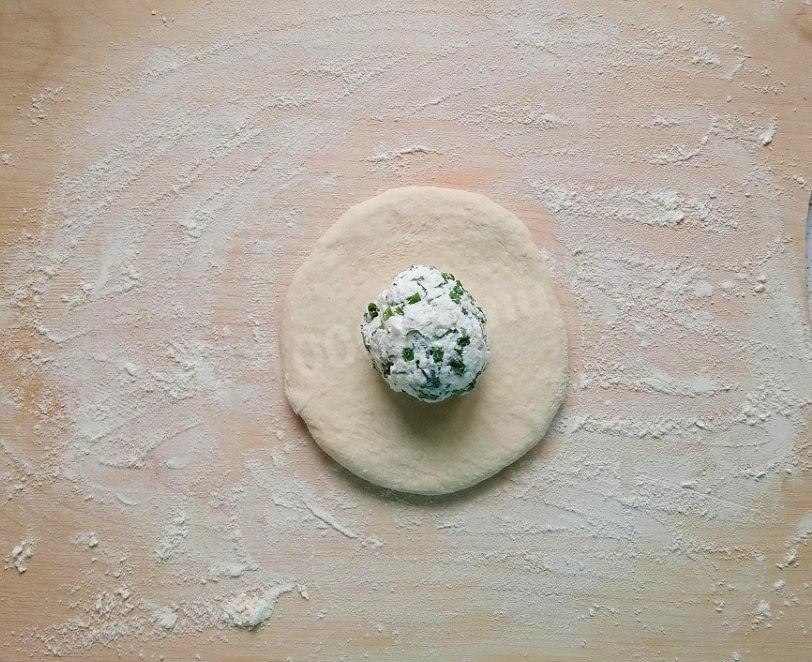
Place a ball of the cottage cheese filling in the center of the round.
-
Step 14:
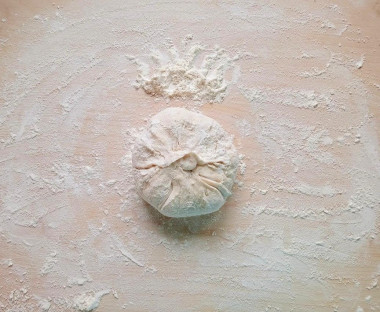
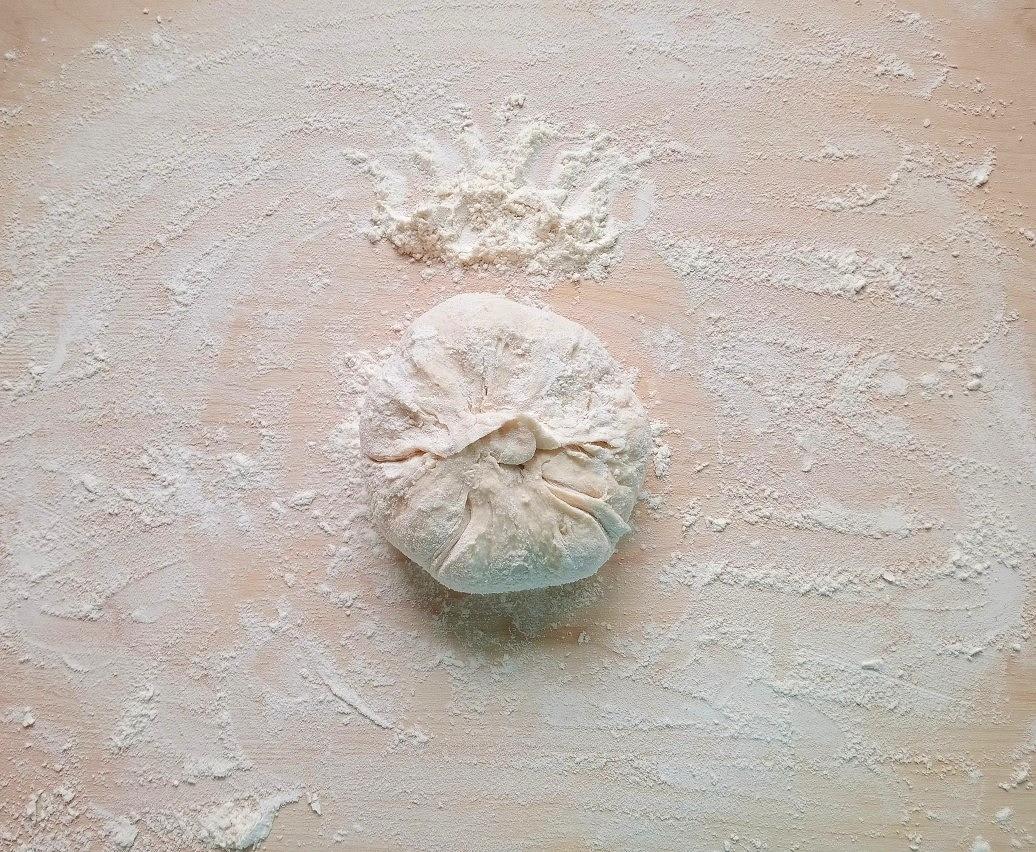
Wrap the dough up around the filling, gathering the edges together on top. Pinch them shut well so the filling doesn't escape as you roll it out.
-
Step 15:
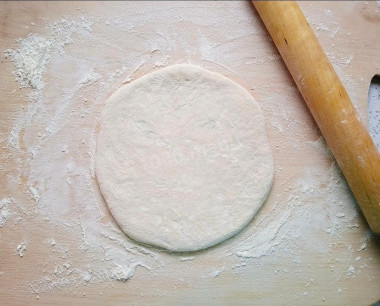
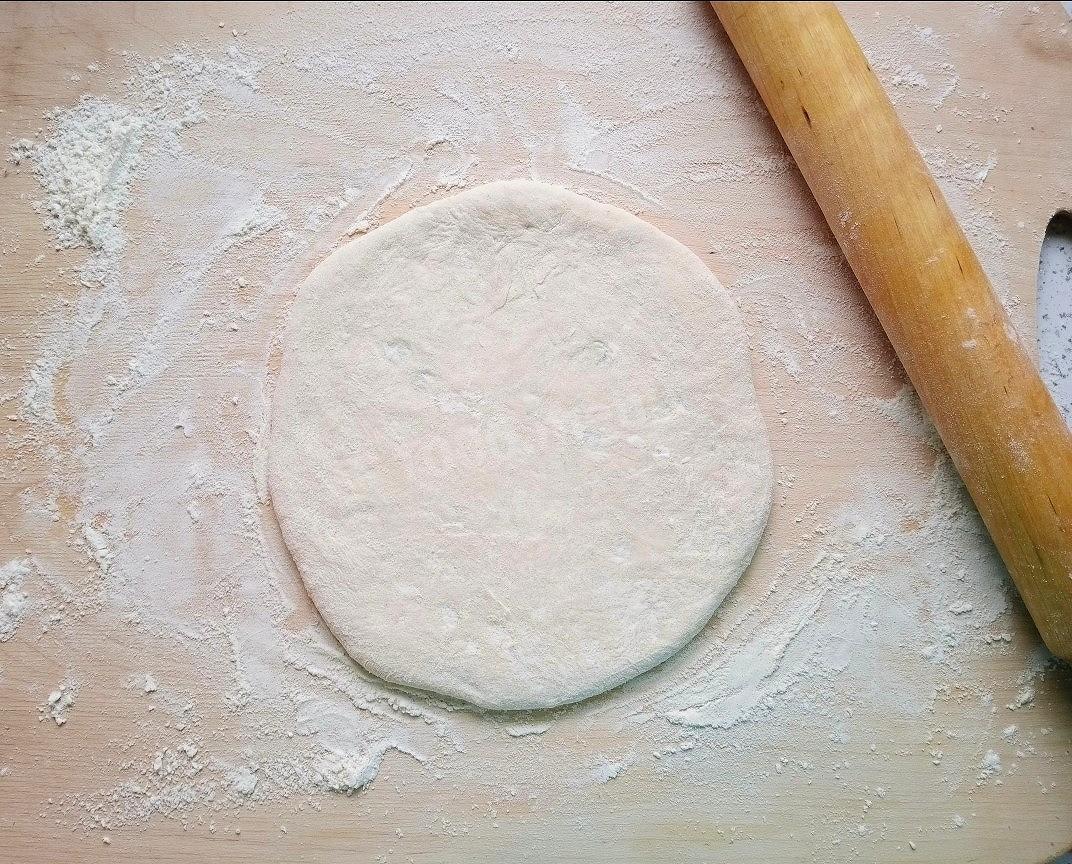
First gently flatten the ball with your hands into a round disk. Then roll it out with a rolling pin to about 20 centimeters (8 inches) across, being careful not to tear the dough.
-
Step 16:
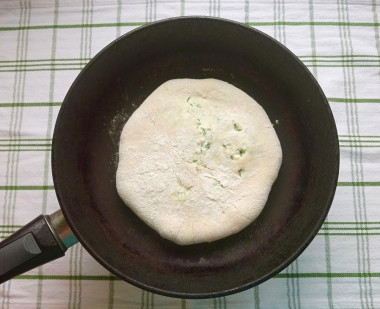
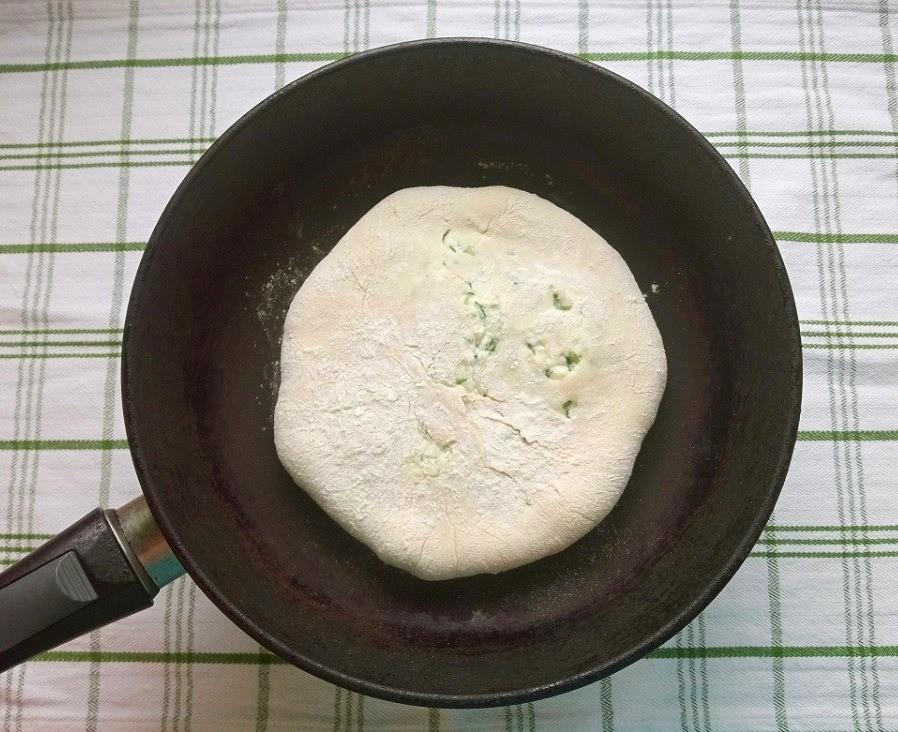
Set a skillet over medium heat and get it good and hot — no oil needed. I use a non-stick skillet so the flatbreads don't stick, but a regular one should work too. Lay the flatbread in and cook for about 3–5 minutes.
-
Step 17:
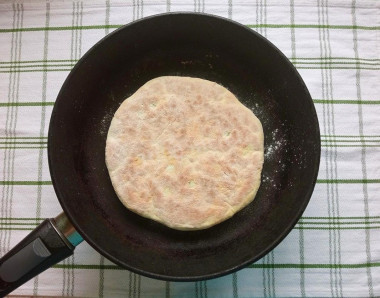
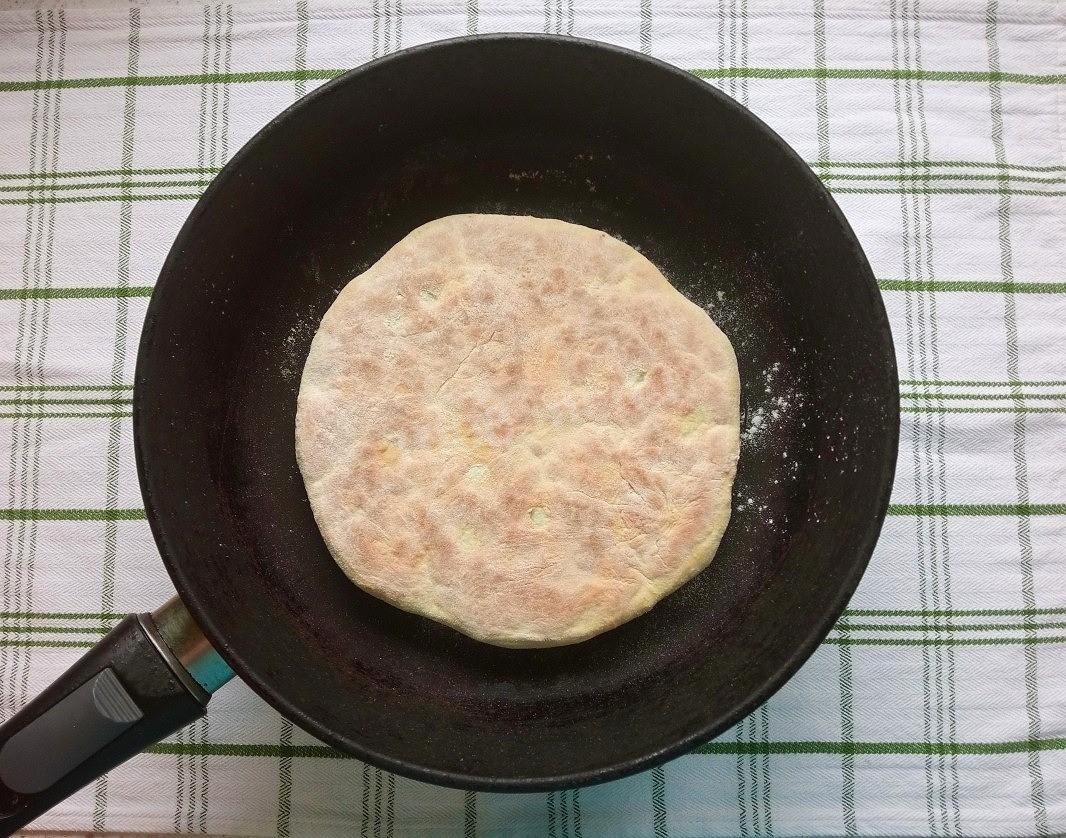
Flip the flatbread with a wide spatula and cook the other side another 3 minutes. Go by color rather than the clock: it should be golden and the dough cooked through, not raw.
-
Step 18:
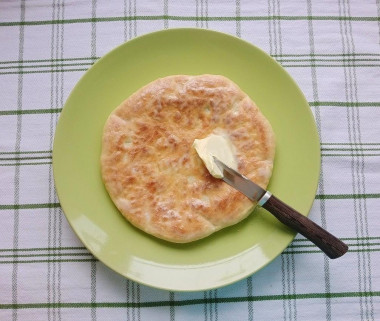
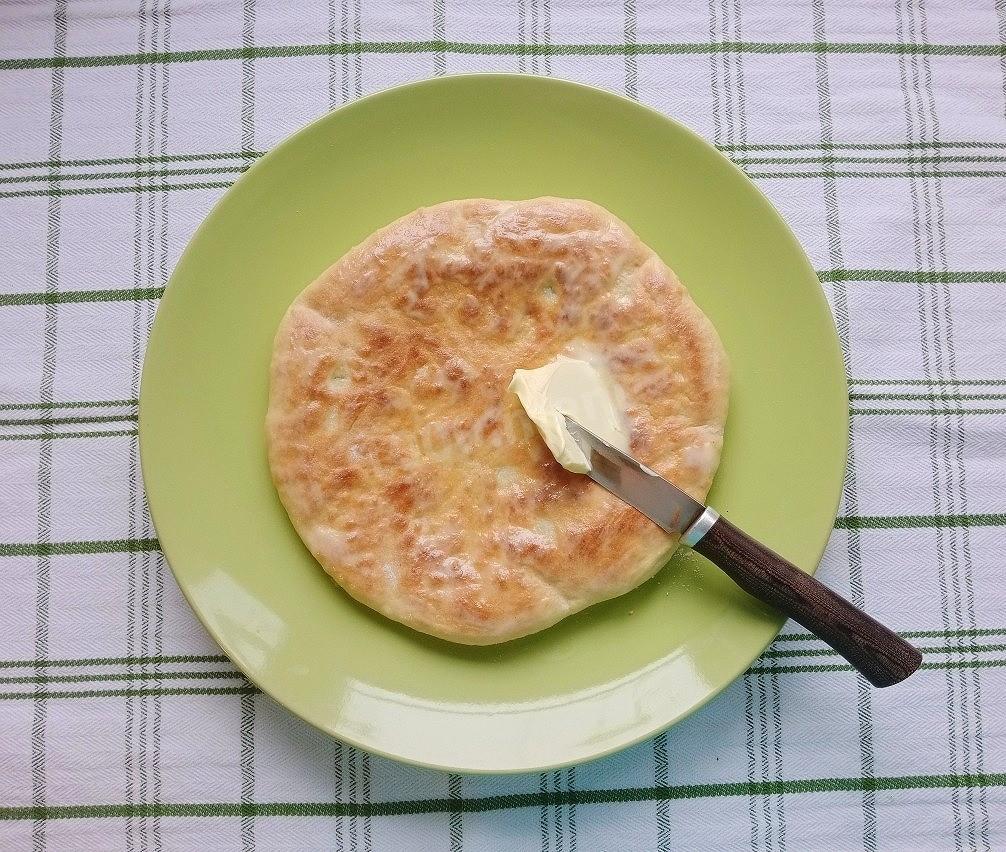
Transfer the finished flatbread to a large plate and, while it's still hot, brush the surface with butter. The crust turns soft and takes on a rich, buttery flavor.
-
Step 19:
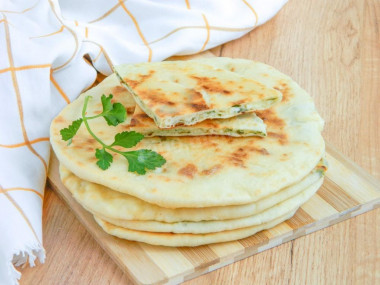
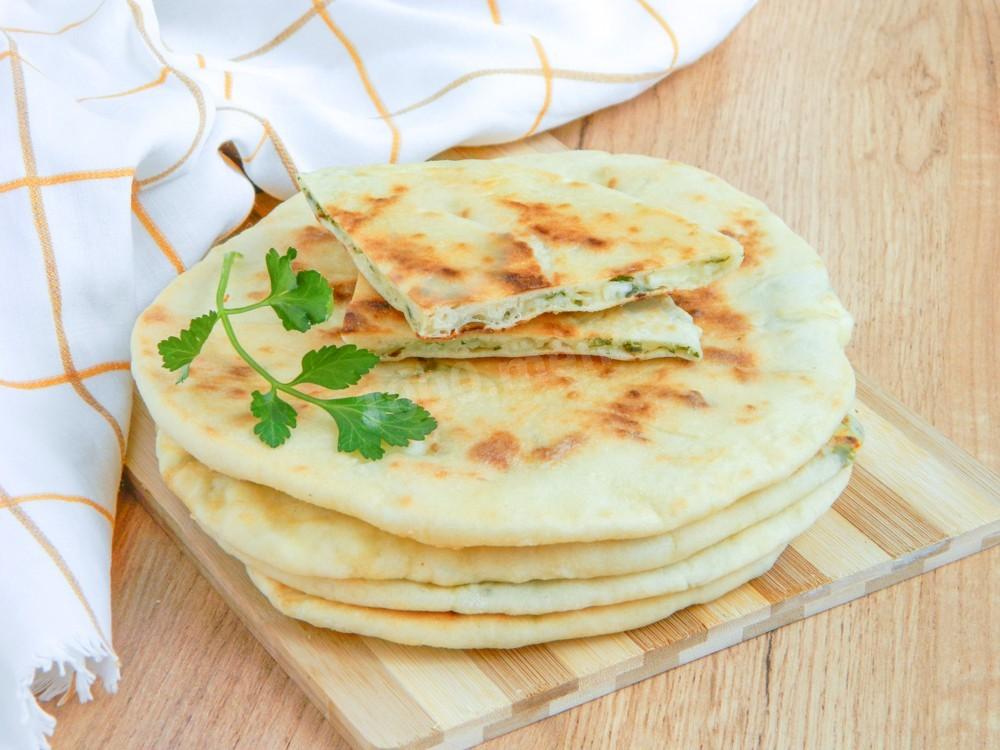
Cook the remaining flatbreads the same way, stacking them as you go. They come out light and airy with a tender filling. You can serve them in place of bread, but they're great on their own, too. Serve the cottage cheese flatbreads hot. Enjoy!
Caloric content of the products possible in the composition of the dish
- Cottage cheese of 40% fat content - 466 kcal/100g
- Cottage cheese of 20% fat content - 233 kcal/100g
- Cottage cheese of 18% fat content - 226 kcal/100g
- Cottage cheese of 10% fat content - 156 kcal/100g
- Low-fat cottage cheese - 75 kcal/100g
- Cottage cheese with sour cream - 260 kcal/100g
- Fruit cottage cheese - 147 kcal/100g
- Soft dietary cottage cheese - 170 kcal/100g
- Vitalinia cottage cheese - 64 kcal/100g
- Cottage cheese 'morning' ( 'danone') without sugar - 91 kcal/100g
- Cottage cheese - 156 kcal/100g
- Ground black pepper - 255 kcal/100g
- Granulated sugar - 398 kcal/100g
- Sugar - 398 kcal/100g
- Kefir fat - 62 kcal/100g
- Kefir of 1% fat content - 38 kcal/100g
- Low-fat kefir - 30 kcal/100g
- Kefir 'doctor beefy' 1,8% fat content - 45 kcal/100g
- Kefir 2.5% fat content - 53 kcal/100g
- Butter 82% - 734 kcal/100g
- Amateur unsalted butter - 709 kcal/100g
- Unsalted peasant butter - 661 kcal/100g
- Peasant salted butter - 652 kcal/100g
- Melted butter - 869 kcal/100g
- Vegetable oil - 873 kcal/100g
- Salt - 0 kcal/100g
- Wheat flour - 325 kcal/100g
- Fresh frozen soup greens in a package - 41 kcal/100g
- Greenery - 41 kcal/100g
- Baking soda - 0 kcal/100g
Similar recipes

- For breakfast
- Kitchen utensils
- Baking
- Dairy products
- Flour
- Sweet
- Spices seasonings spices
- Fats and oils
- Other
- Зелень
- Pepper
- Salt
- Vegetable oil
- Butter
- Baking soda
- Frying
- In a frying pan
- Cottage cheese pastries
- Baked on kefir
- Sweet pastry
- Yeast-free baking
- Unsweetened pastries
- Cottage cheese for breakfast
- Kefir
- Cottage cheese
- Wheat flour
- No eggs
- Vegetarianism
- Sugar