How to Freeze Apples for Winter
They taste like fresh when you cook with them! If you think freezing apples is hard, you're mistaken. Though it's best to prep them in different ways depending on how you plan to use them. That way both your compote and your baking will turn out great.



Cooking method
-
Step 1:
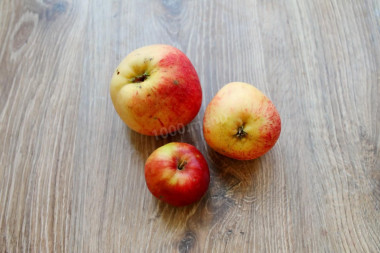
Pick your apples based on what you'll be freezing them for. Small and medium ones are great for baking, and large ones - like all the rest - for compote. Use firm apples with no signs of spoilage. Wash the fruit well and dry it.
-
Step 2:
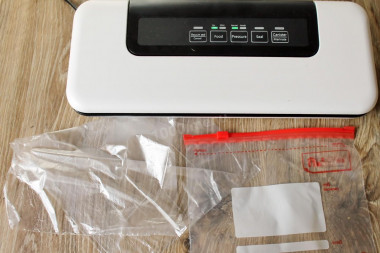
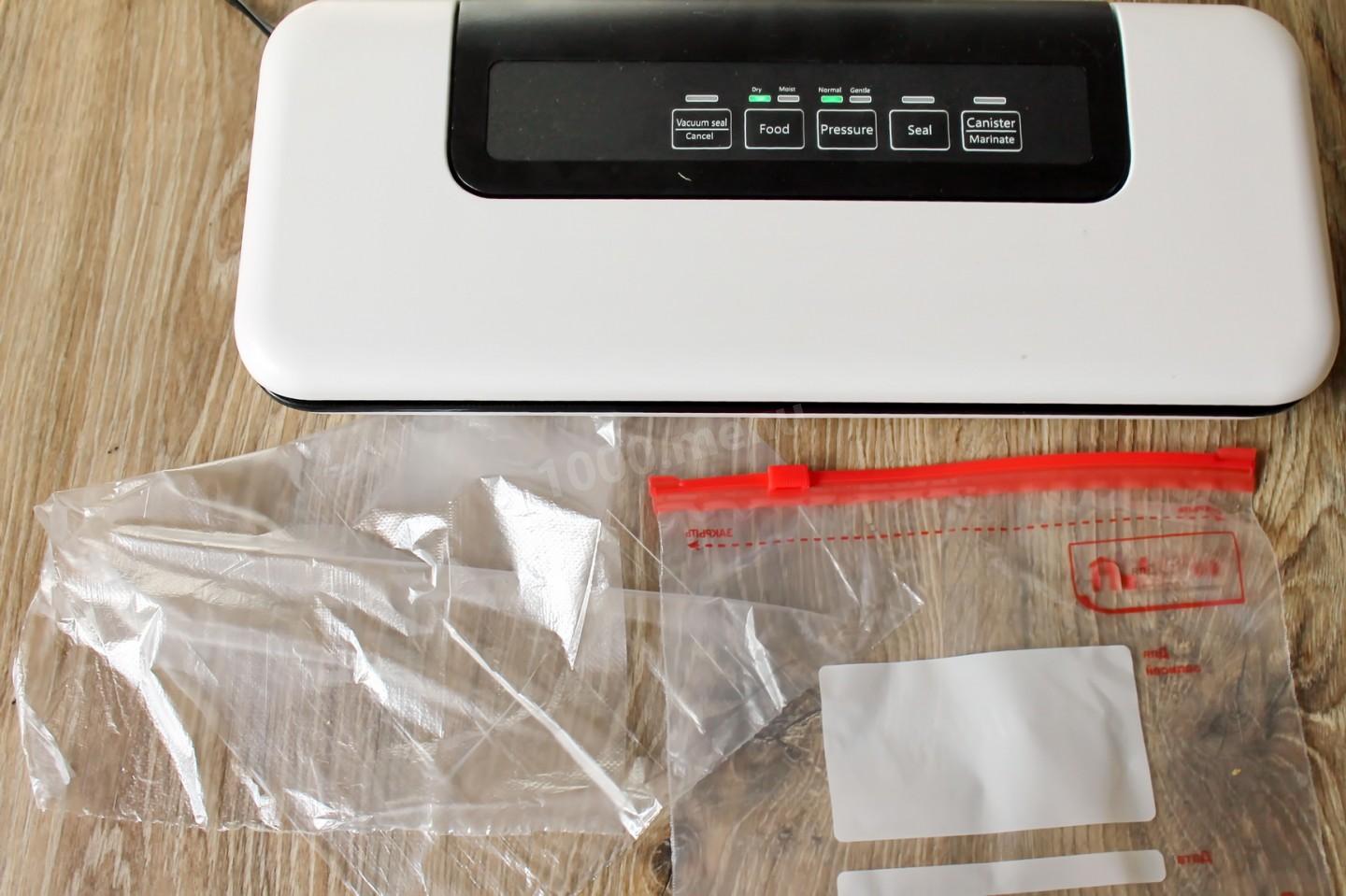
You can use regular bags to store frozen apples, but zip-lock bags or a vacuum sealer are best. I recommend buying even the simplest vacuum sealer for this - they're very easy to use, and the food keeps far longer and doesn't pick up each other's odors.
-
Step 3:
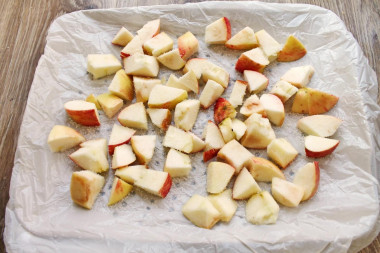
For compote, cut the apples into large wedges or cubes and remove the core. Line a baking sheet or flat dish with plastic wrap and lay them out in a single layer. If you have a lot, make several layers, separating each with plastic wrap.
-
Step 4:
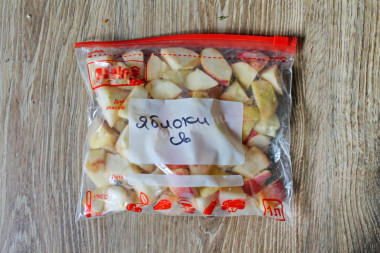
That way they won't stick together after freezing - they'll stay separate and pour easily into a bag. Put them in the freezer until fully frozen.
-
Step 5:
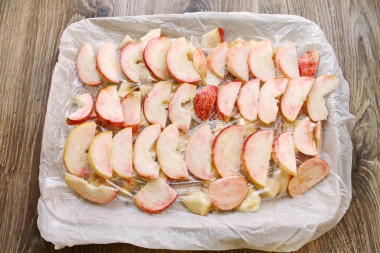
For apples you plan to bake with - in a charlotte, for example - cut them into quarters and remove the core. Cut them into wedges and lay them on a plastic-wrap-lined baking sheet in a single layer. If you like, sprinkle them with sugar on top. Put the apples in the freezer until frozen.
-
Step 6:
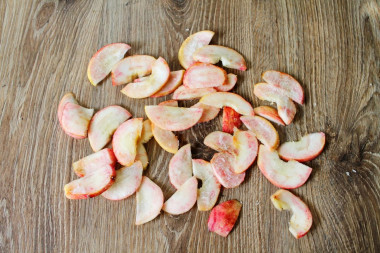
Once frozen, they slide right off the wrap.
-
Step 7:
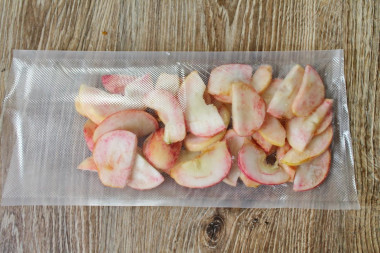
This preserve is best stored vacuum-sealed in a thin layer, since the apple slices are thin and will easily absorb foreign odors from the freezer.
-
Step 8:
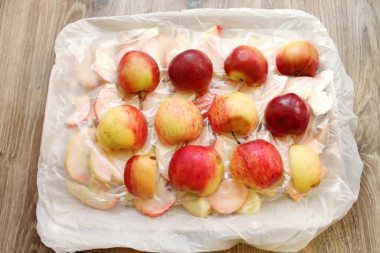
Sometimes baking calls for halves, so use small apples for freezing those. Cut them in half and carefully remove the core. Lay them cut-side down on the plastic wrap in a single layer and freeze.
-
Step 9:

Transfer the frozen halves to bags and put them in the freezer. I prefer to store them in vacuum bags.
-
Step 10:
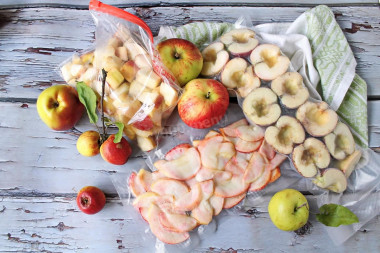
Happy and delicious preserving!



- You can use a sugar substitute instead of sugar.
- It's very handy to label packages of homemade frozen food with what's frozen and when (write in pencil, since pen ink can run). That way you'll know the shelf life for sure and can easily find what you need in a full freezer.
- To make sure your summer harvest delights you all through the cold season, read up on the basic rules, secrets, and tips for putting up food for the winter.
Caloric content of the products possible in the composition of the dish
- Apples - 47 kcal/100g
- Dried apples - 210 kcal/100g
- Canned apple mousse - 61 kcal/100g
- Granulated sugar - 398 kcal/100g
- Sugar - 398 kcal/100g