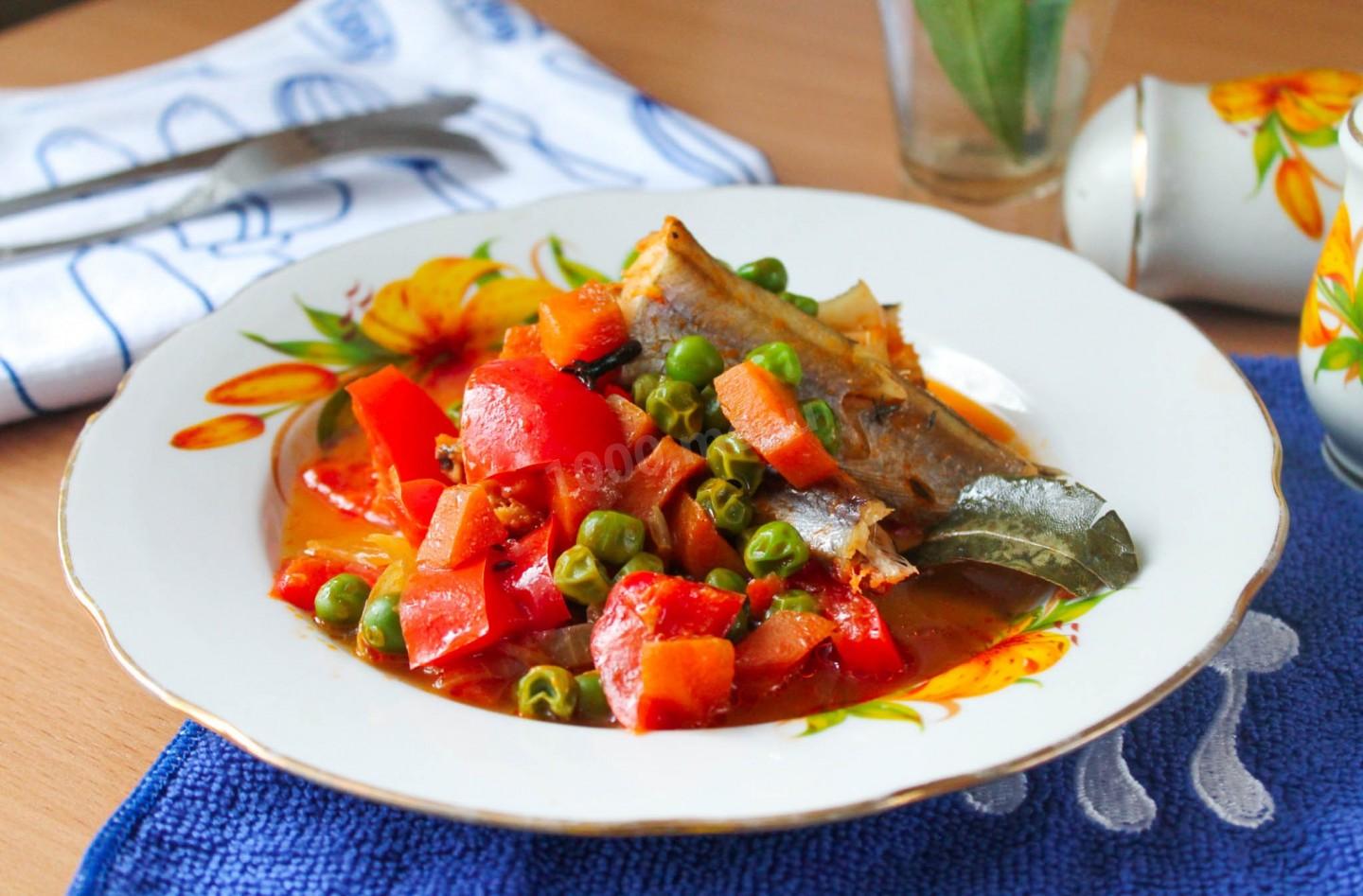
Stewed Fish with Vegetables
Simple, healthy, and light — perfect for the whole family! Fish stewed with vegetables is a tasty, satisfying everyday dinner. The vegetables make it colorful and bright, which only adds to its appeal. It's a great choice if you're eating clean or watching what you eat.

Cooking method
-
Step 1:
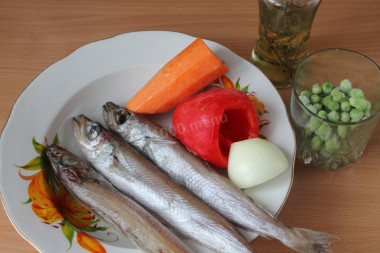
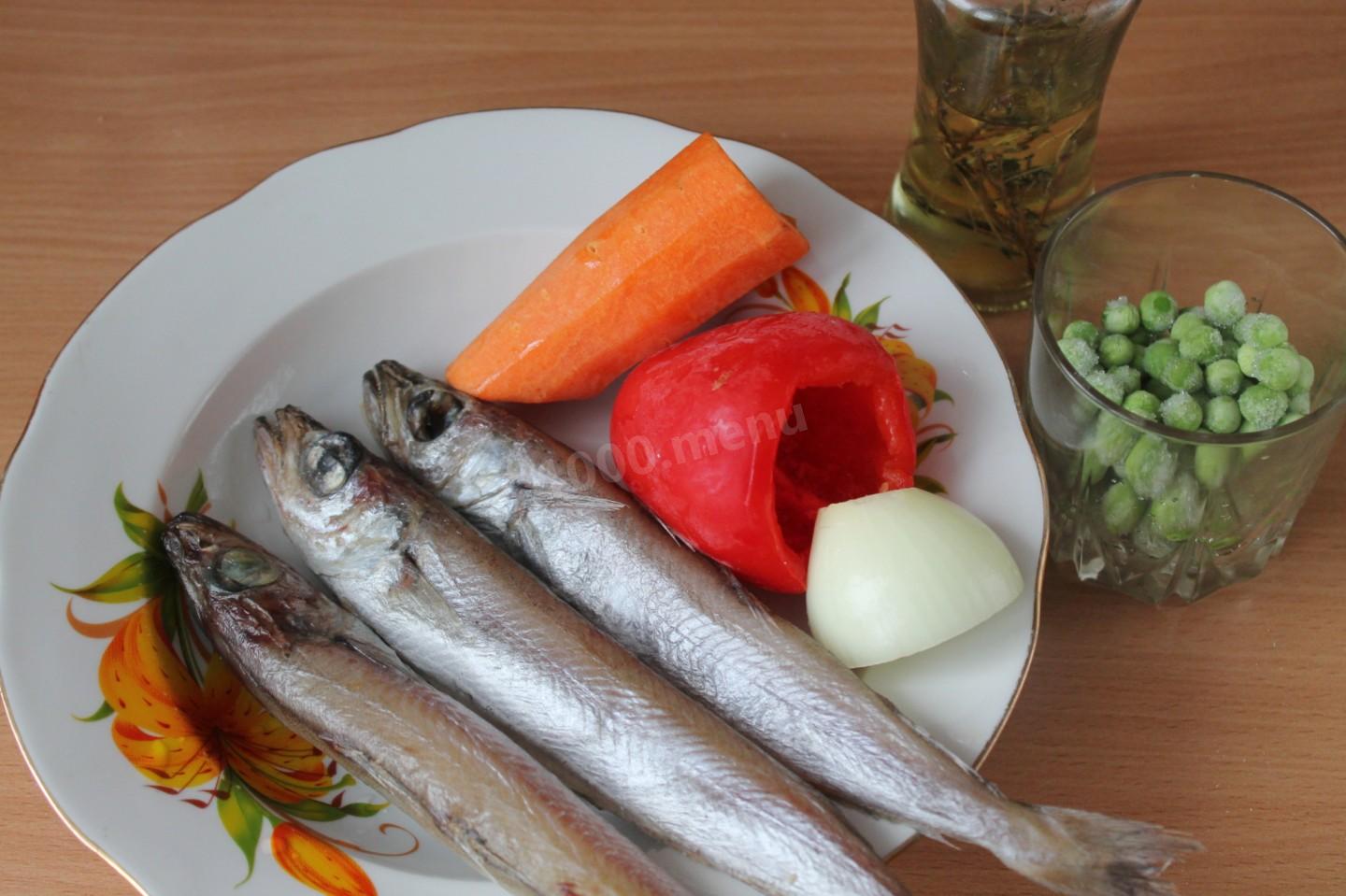
How do you stew fish with vegetables? Start by gathering your ingredients. I used whiting, but any other white ocean fish works just as well — pollock, cod, mackerel, or hake. It can be fresh or frozen; if frozen, thaw it first.
-
Step 2:
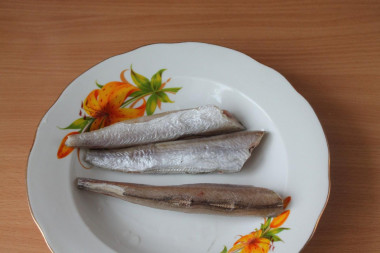
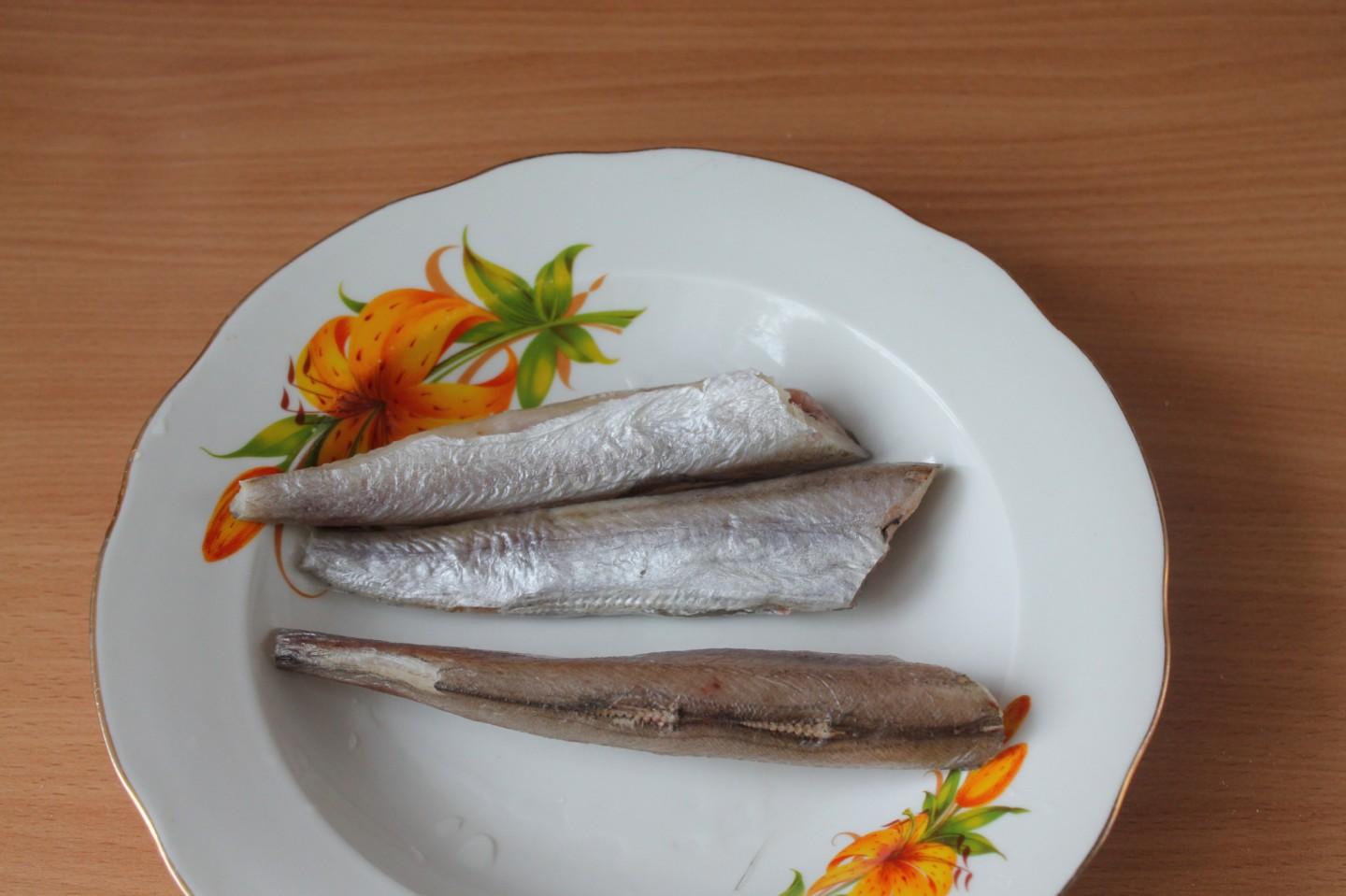
Clean the fish and remove the innards, then cut off the heads and fins if there are any. Be sure to scrape out the dark membrane inside the belly cavity — it can give the fish a bitter taste. Cut the fish into serving-size pieces.
-
Step 3:
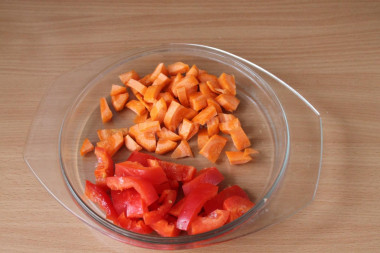
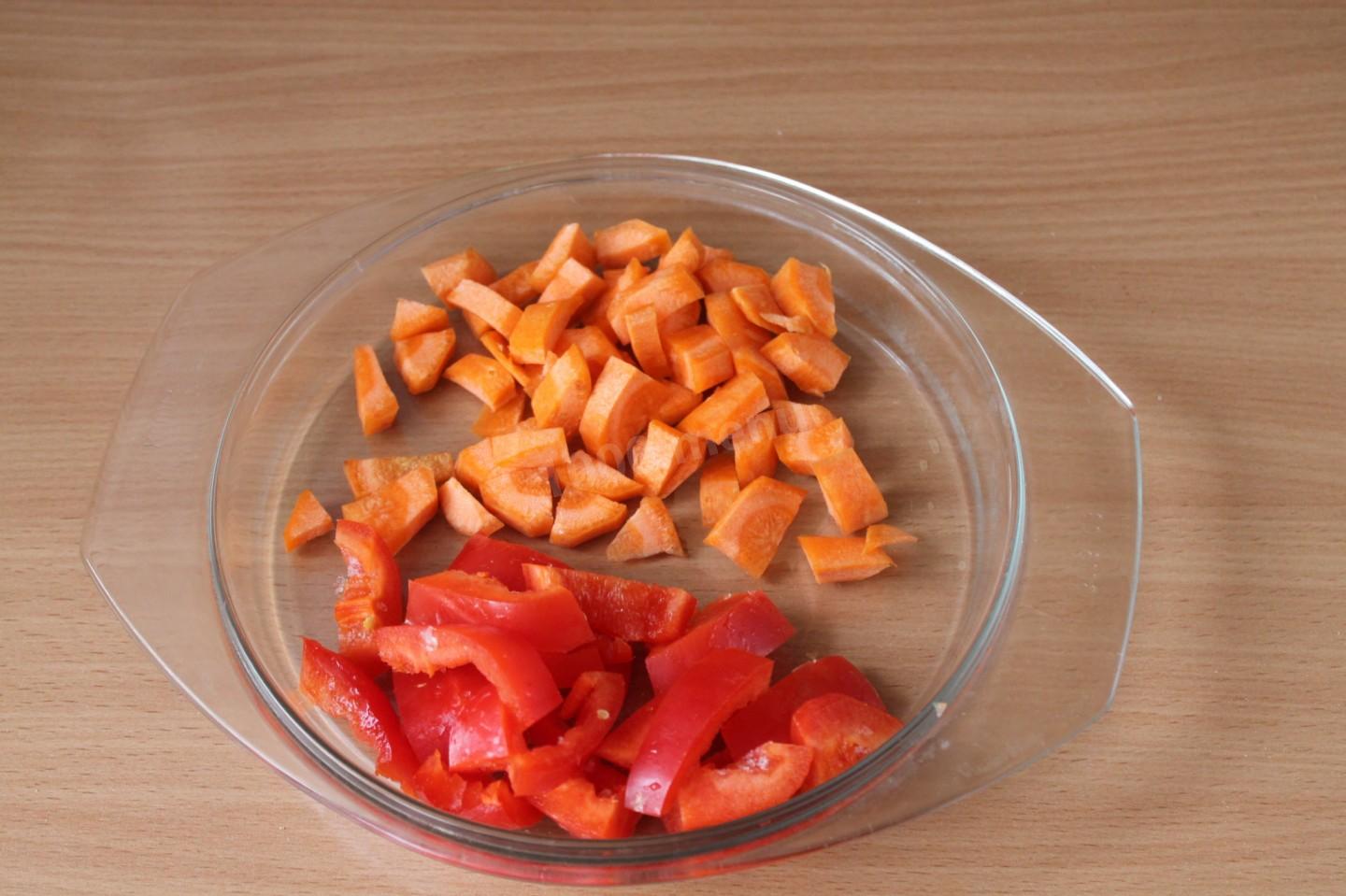
Wash and peel the vegetables well. Core the bell pepper and remove the seeds. Dice the carrot and onion, and slice the bell pepper into strips.
-
Step 4:
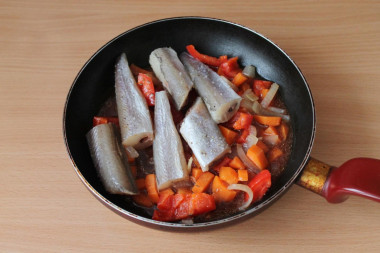
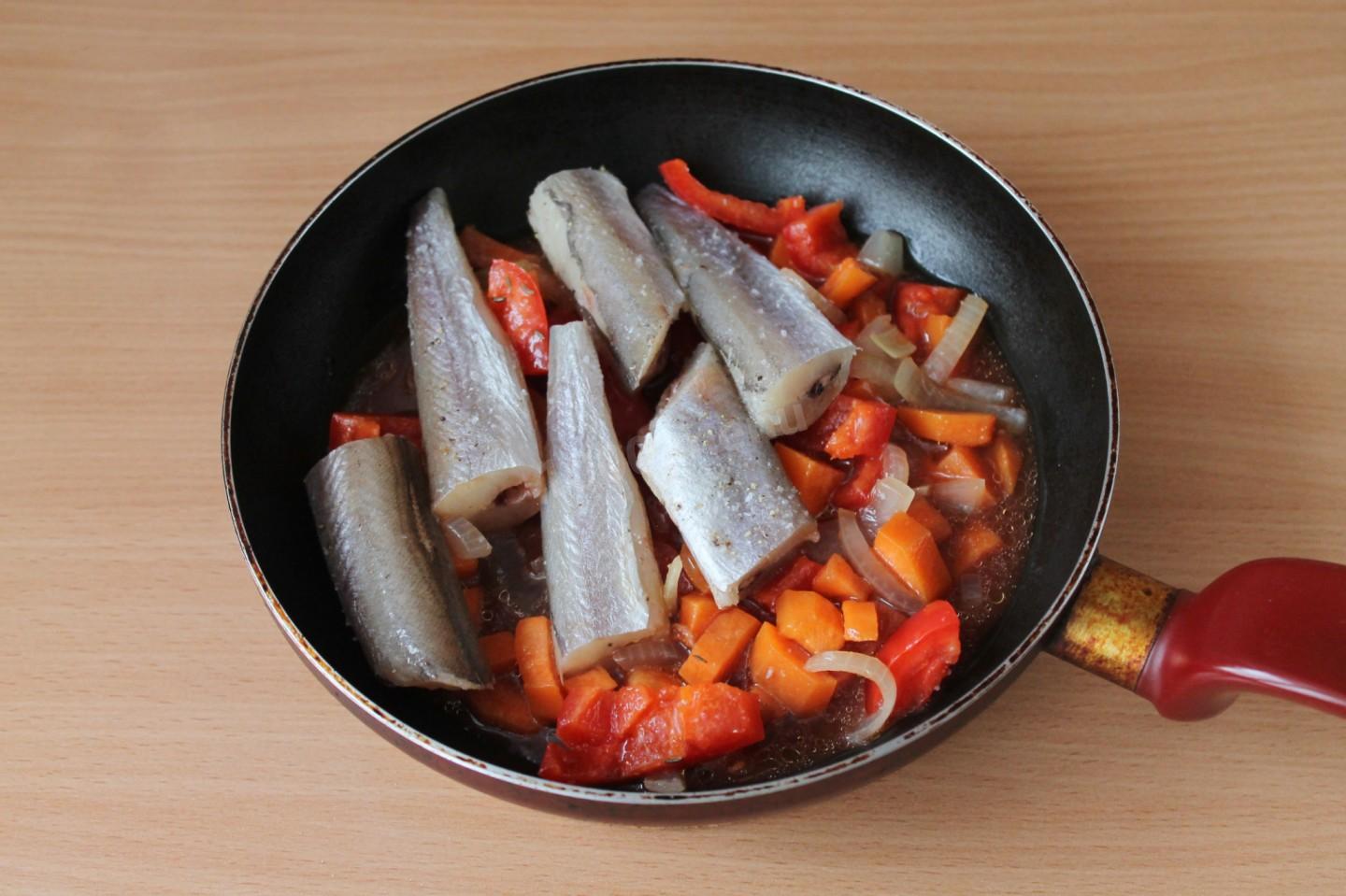
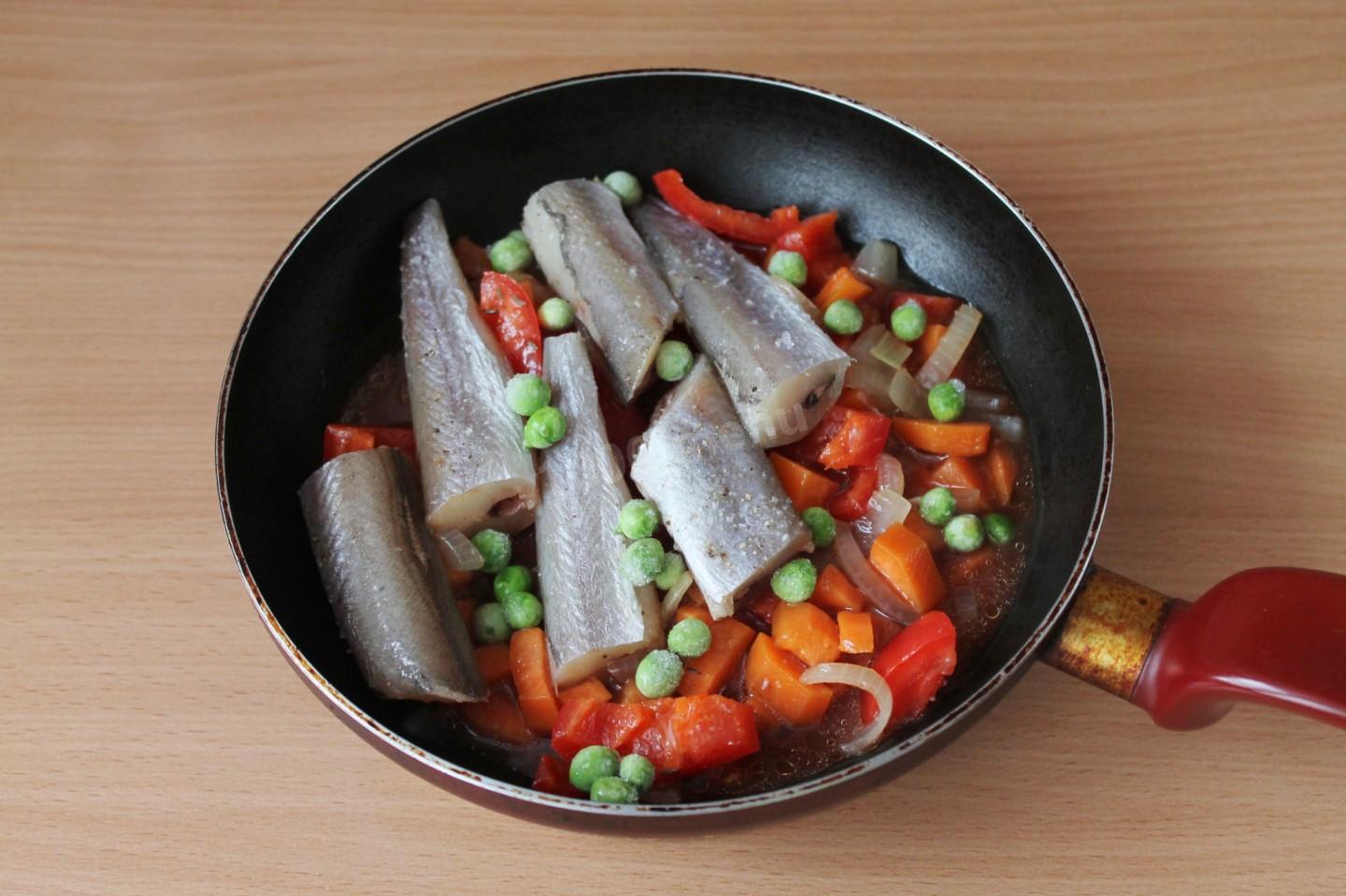
Heat the oil in a skillet. Over low heat, lightly sauté the onion for just a couple of minutes, then add the carrot and bell pepper. Stir and cook the vegetables together for another couple of minutes. Lower the heat, pour in the tomato juice, and stir. Lay the fish on top of the vegetable bed, then season with salt and pepper. Cover and simmer everything together for 15–20 minutes, depending on the size and type of fish.
-
Step 5:
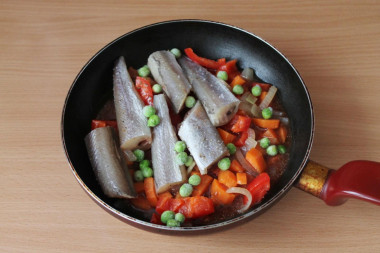
Right at the end, stir in the green peas. If you don't have fresh peas, canned ones work fine.
-
Step 6:
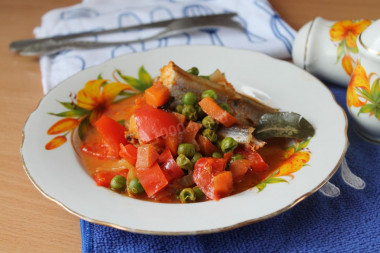
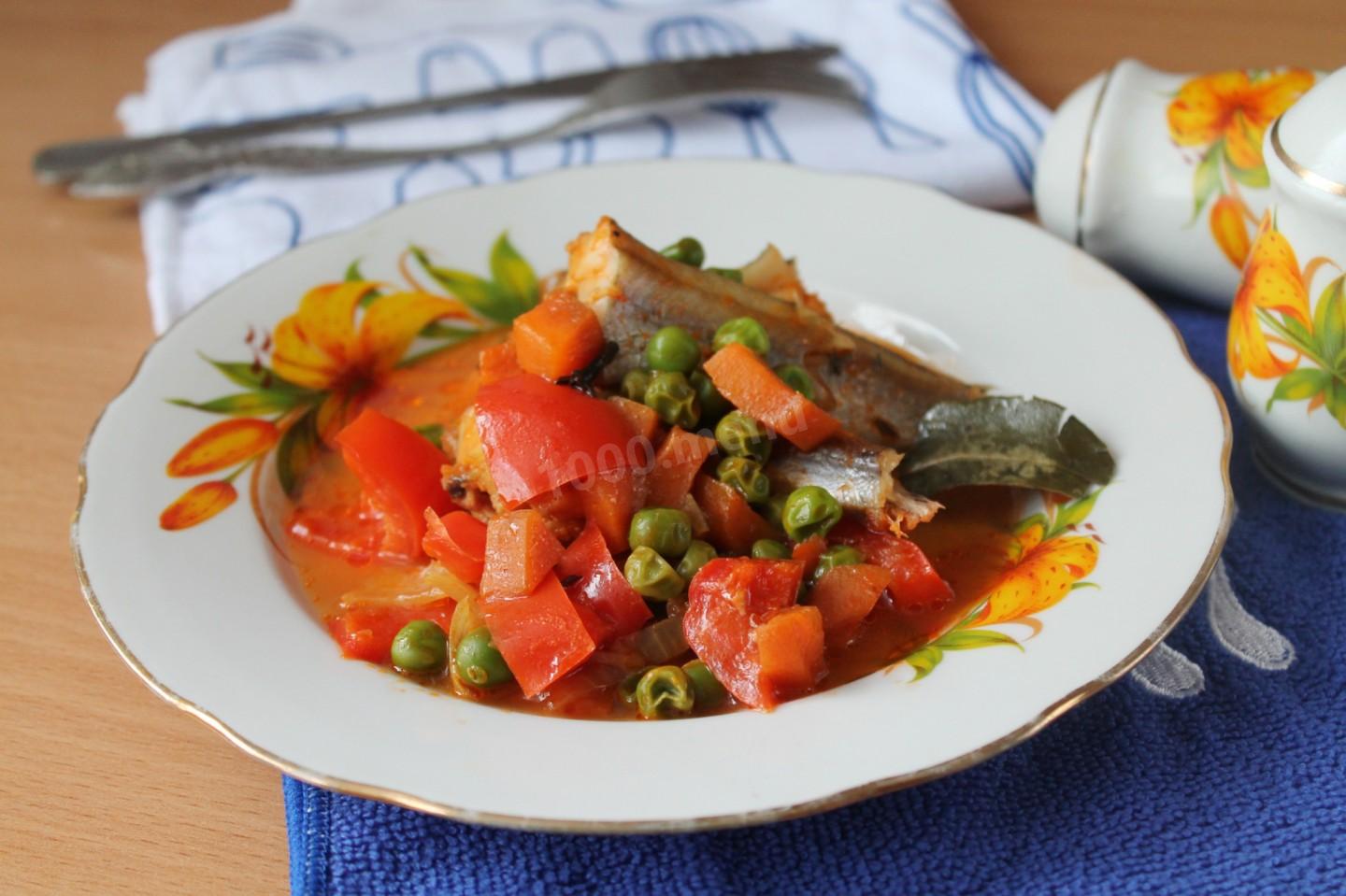
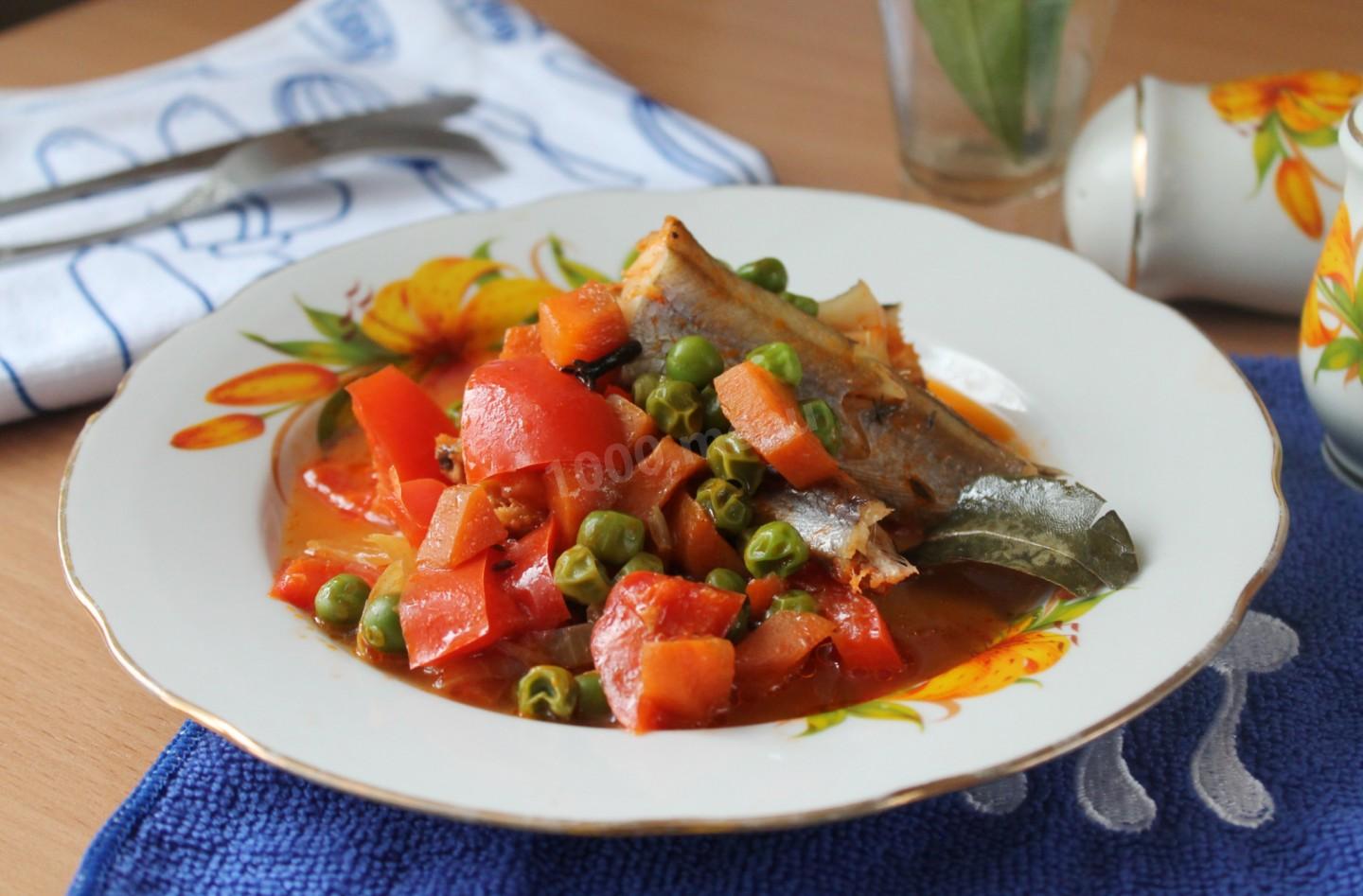
Serve the fish and vegetables hot. A side of mashed potatoes or rice pairs beautifully with it.
-
Step 7:
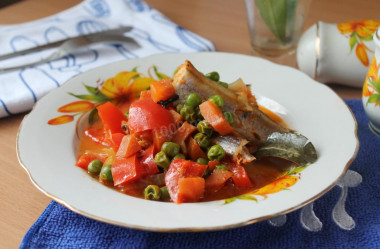
Enjoy your meal!
- Keep in mind that properly thawing your ingredients has a big impact on the quality and taste of the finished dish. Thaw fish slowly in the refrigerator whenever you can, rather than rushing it.
- Root vegetables clean up best with a brush or a stiff sponge under running water.
- Use an oil with a high smoke point for frying. Every oil is only good up to a certain temperature — its smoke point — beyond which it starts to burn and forms harmful compounds. Unrefined oils generally have a low smoke point because they contain unfiltered particles that scorch quickly, while refined oils tolerate heat better. If you're cooking in the oven, in a skillet, or on the grill, reach for a high-smoke-point oil such as refined sunflower, olive, or grapeseed.
Caloric content of the products possible in the composition of the dish
- Sweet pepper - 27 kcal/100g
- Carrots - 33 kcal/100g
- Dried carrots - 275 kcal/100g
- Boiled carrots - 25 kcal/100g
- Ground black pepper - 255 kcal/100g
- Fresh green peas - 280 kcal/100g
- Canned green peas - 55 kcal/100g
- Salt - 0 kcal/100g
- Onion - 41 kcal/100g
- Sunflower oil - 898 kcal/100g
- Refined sunflower oil - 899 kcal/100g
- Tomato juice - 21 kcal/100g
- Whiting - 72 kcal/100g
Similar recipes
- Fast and tasty
- Homemade dinner
- Children's recipes
- Second course
- Fish and seafood
- Vegetables
- Legumes
- Spices seasonings spices
- Fats and oils
- Other
- From peas
- Pepper
- Salt
- Vegetable oil
- From juice
- Stewing
- In a frying pan
- The second is fast and delicious
- Dishes in 30 minutes
- Fish second course
- Fish with vegetables
- Whiting
- From carrots
- From sweet pepper
- From onion
- No eggs
- Balanced nutrition
- Recipes for lean dishes without butter