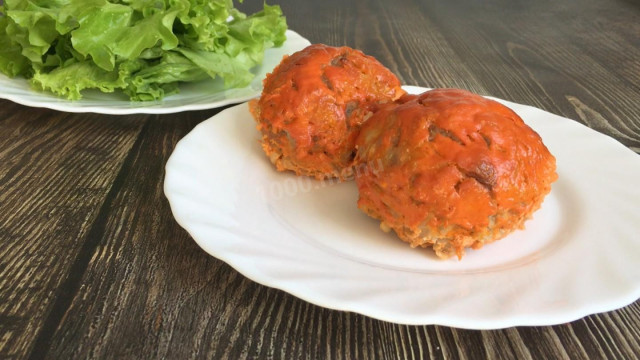
Meatballs in Sauce
Easy-to-make meatballs. A recipe for very tender, tasty meatballs in sauce. Thanks to the bread and rice in the mix, they're quite filling — I recommend serving them with vegetables.
nordia
Recipe author
Meatballs in Sauce
Nutrients and energy value of the composition of the recipe
By weight of the composition:
Proteins 20 %
8 g
Fats 54 %
22 g
Carbohydrates 27 %
11 g
276 kcal
GI:
18
/
82
/
0
- Rinse the rice in cold water. Put it in a small saucepan and add an equal amount of water (1:1). Set it over high heat. As soon as the water boils, turn the heat down to low, cover, and cook until done. Mix together the tomato paste, sour cream, and mayonnaise. Soak the roll in milk, squeeze it out lightly, and add it to the ground meat. Add the rice, salt, and pepper, and mix. Shape into balls. Pour the sauce over the meatballs. Bake for 40 to 45 minutes at 350°F (180°C). Meatballs — balls of ground meat that go by many names in cuisines all over the world — are considered one of Sweden's signature national dishes (Swedish meatballs). Besides meat, they can contain rice, bread, breadcrumbs, onion, various spices, and eggs. They're fried, baked, steamed, or simmered in sauce. A bit of history: dishes of ground meat or fish with various fillers, add-ins, and spices turn up in nearly every culture on earth, and in some countries they're a real tradition, like Swedish meatballs. The rice meatball is generally traced back to the Turkic dish "kufta" — a dried fruit tucked into a ball of ground meat and cooked in broth or sauce. Food historians believe the rice-meatball recipe traveled from Turkic cooking first to the Balkans, then to Austrian cuisine, and from there around the world, gradually changing and adapting to local tastes. The main thing that sets meatballs apart from cutlets is the addition of grains and vegetables. Besides the usual rice, they may include buckwheat, oats, potato, or dried fruit. Rice meatballs aren't breaded with crumbs, starch, or grated cheese — only rice or wheat flour is used. And they're most often not fried but stewed or baked in a thick, rich sauce, which they're then served in.
Caloric content of the products possible in the composition of the dish
- Whole cow's milk - 68 kcal/100g
- Milk 3.5% fat content - 64 kcal/100g
- Milk 3.2% fat content - 60 kcal/100g
- Milk 1.5% fat content - 47 kcal/100g
- Concentrated milk 7.5% fat content - 140 kcal/100g
- Milk 2.5% fat content - 54 kcal/100g
- Sour cream of 30% fat content - 340 kcal/100g
- Sour cream of 25% fat content - 284 kcal/100g
- Sour cream with 20% fat content - 210 kcal/100g
- Sour cream of 10 % fat content - 115 kcal/100g
- Sour cream - 210 kcal/100g
- Raw wild Rice - 353 kcal/100g
- Brown raw rice - 360 kcal/100g
- Boiled brown rice - 119 kcal/100g
- White fortified raw rice - 363 kcal/100g
- White fortified boiled rice - 109 kcal/100g
- White rice, steamed, with long grains raw - 369 kcal/100g
- Steamed white rice, boiled with long grains - 106 kcal/100g
- Instant dry rice - 374 kcal/100g
- Instant rice, ready to eat - 109 kcal/100g
- Fig - 344 kcal/100g
- Ground black pepper - 255 kcal/100g
- Salad mayonnaise of 50% fat content - 502 kcal/100g
- Light mayonnaise - 260 kcal/100g
- Provencal Mayonnaise - 624 kcal/100g
- Provencal mayonnaise - 627 kcal/100g
- Table mayonnaise - 627 kcal/100g
- Mixed minced meat - 351 kcal/100g
- Tomato paste - 28 kcal/100g
- Salt - 0 kcal/100g
- Dietary bun - 242 kcal/100g
- Diet bun on sorbitol - 266 kcal/100g
- Bun - 242 kcal/100g
Similar recipes
Related and additional categories:
- Children's recipes
- Second course
- Meat and meat products
- Dairy products
- Cereals and cereal products
- Bakery products
- Spices seasonings spices
- Fats and oils
- Other
- Wheat bread
- Pepper
- Salt
- Mayonnaise
- Stewing
- Oven roasting
- Meat second course
- Meat in the oven
- Minced meat
- Sour cream
- Milk
- No eggs
- Recipes for lean dishes without butter
- From rice