Sugar Fondant for Buns
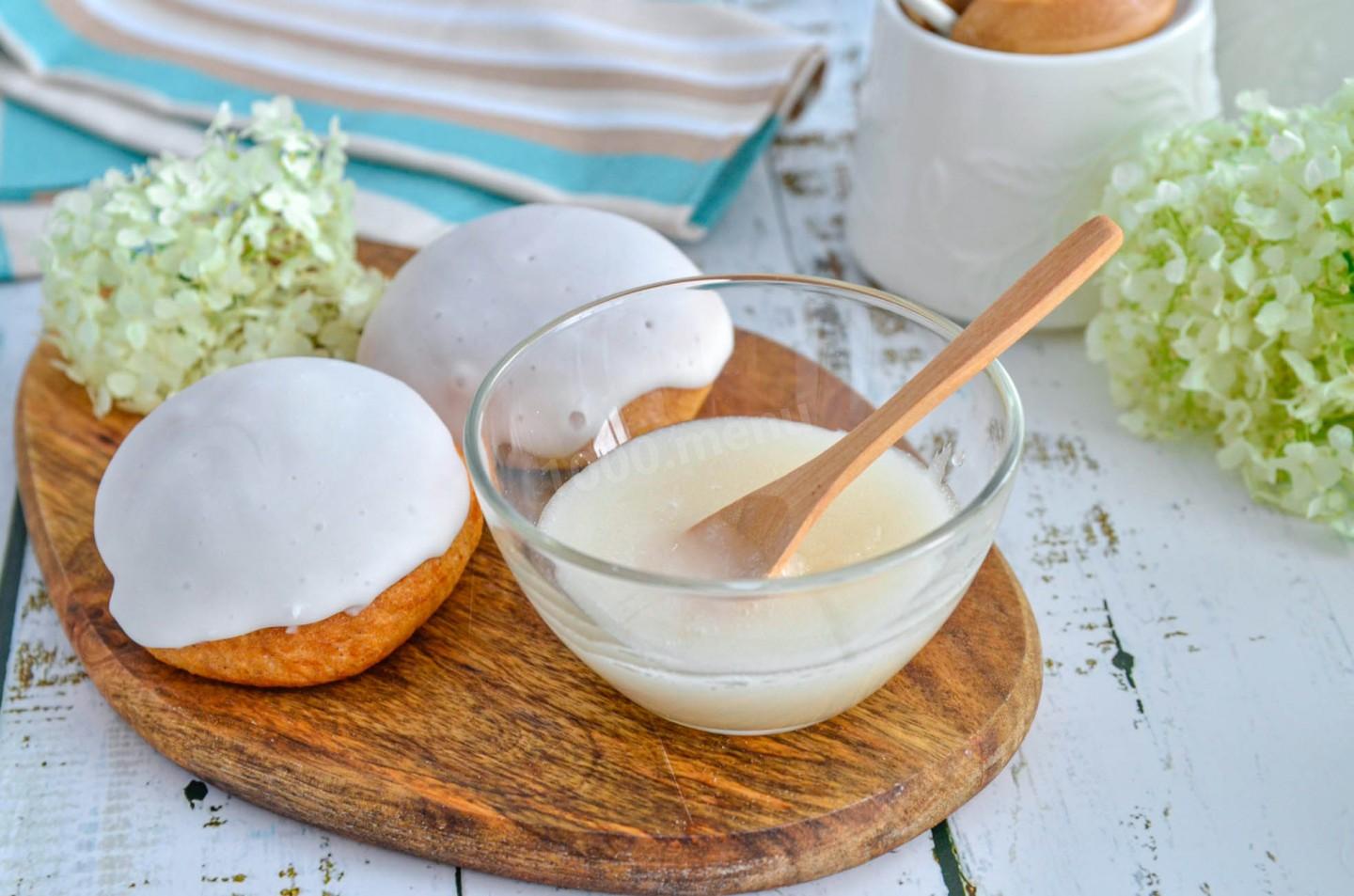
Beautiful, snow-white, made from simple ingredients! This sugar fondant for buns makes any baked good much tastier. Rum babas, shortbread pastries, and many Soviet-era cakes were glazed with exactly this kind of fondant. Making it at home is easy if you follow a few rules.

Cooking method
-
Step 1:
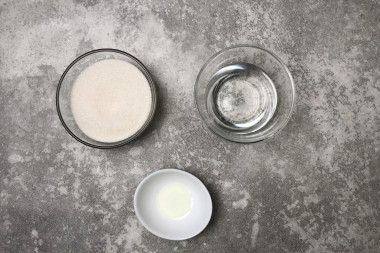
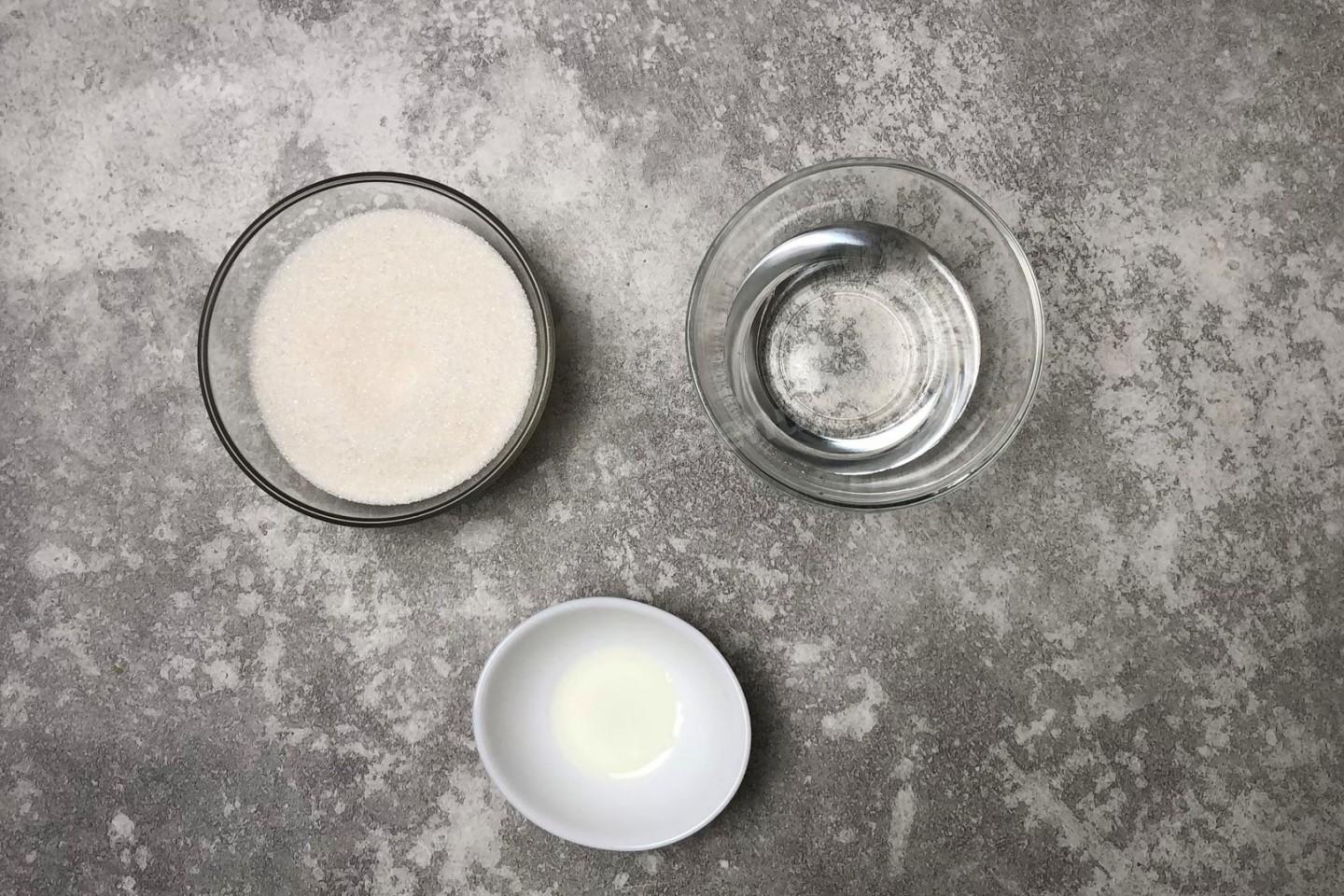
How do you make sugar fondant for buns? Gather the ingredients for the fondant. Weigh them on a scale — accuracy matters in this recipe. And it's better if you have a candy thermometer to measure the temperature of the syrup.
-
Step 2:
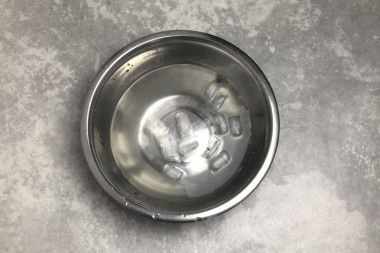
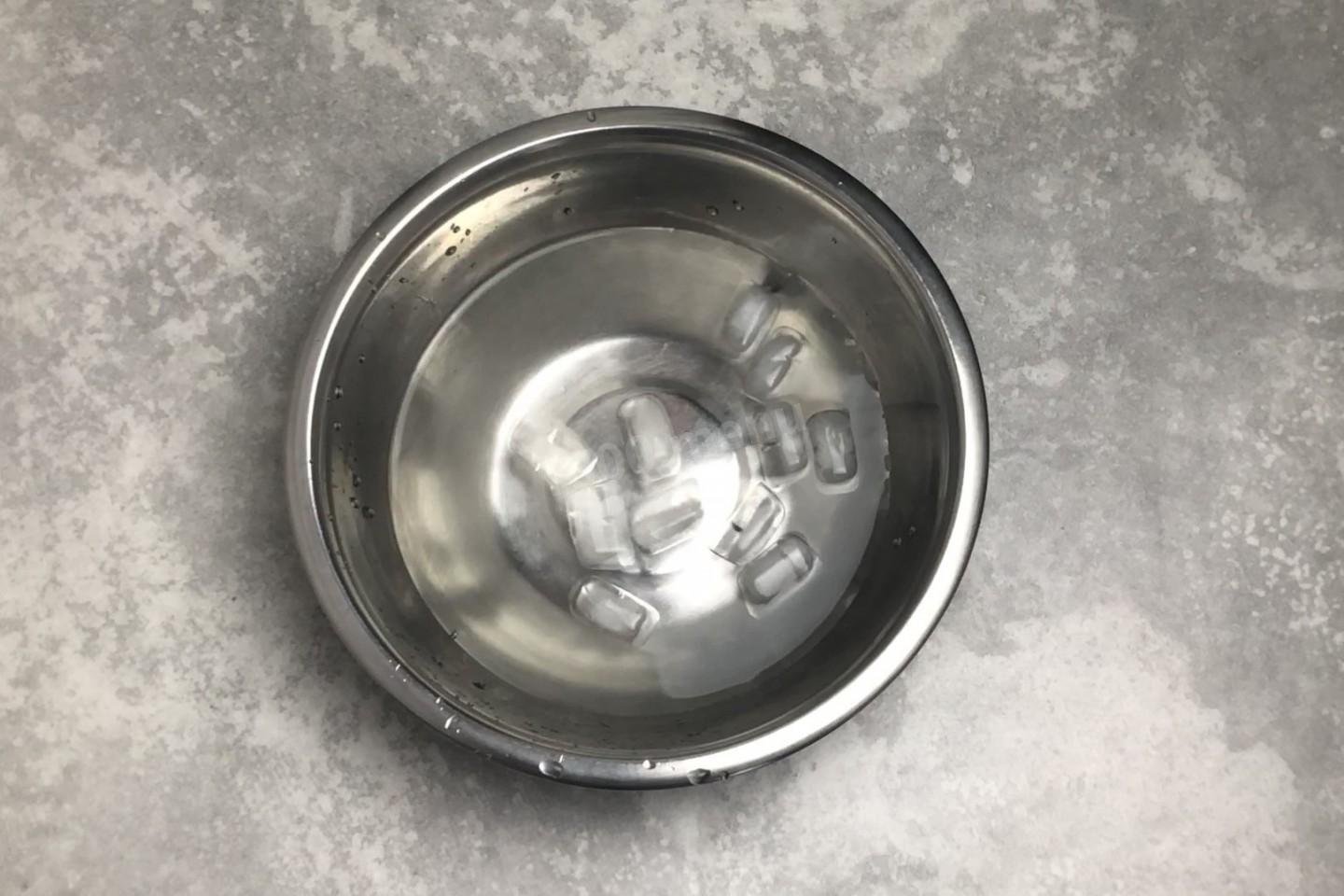
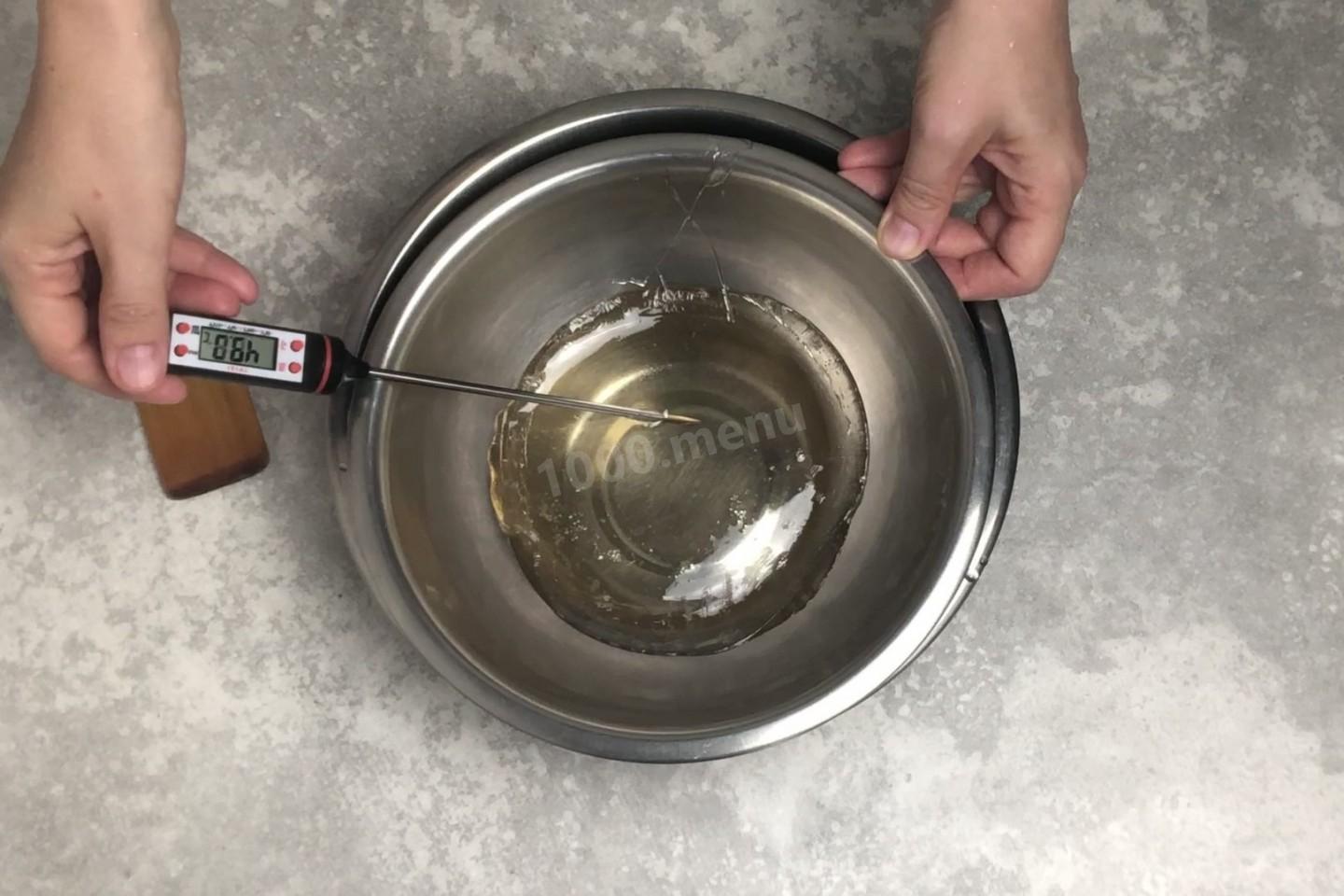
First, prepare the bowl you'll use to cool the sugar syrup. Since it cooks very fast, do this ahead of time. Pour cold water into a large bowl and add ice. Set a smaller bowl on top — you'll pour the finished syrup into it. Gauge the water level so it doesn't spill out of the bottom bowl.
-
Step 3:
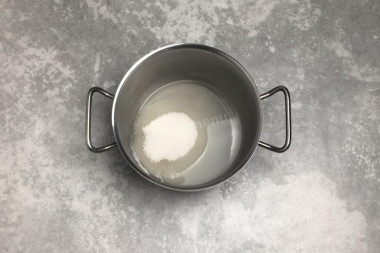
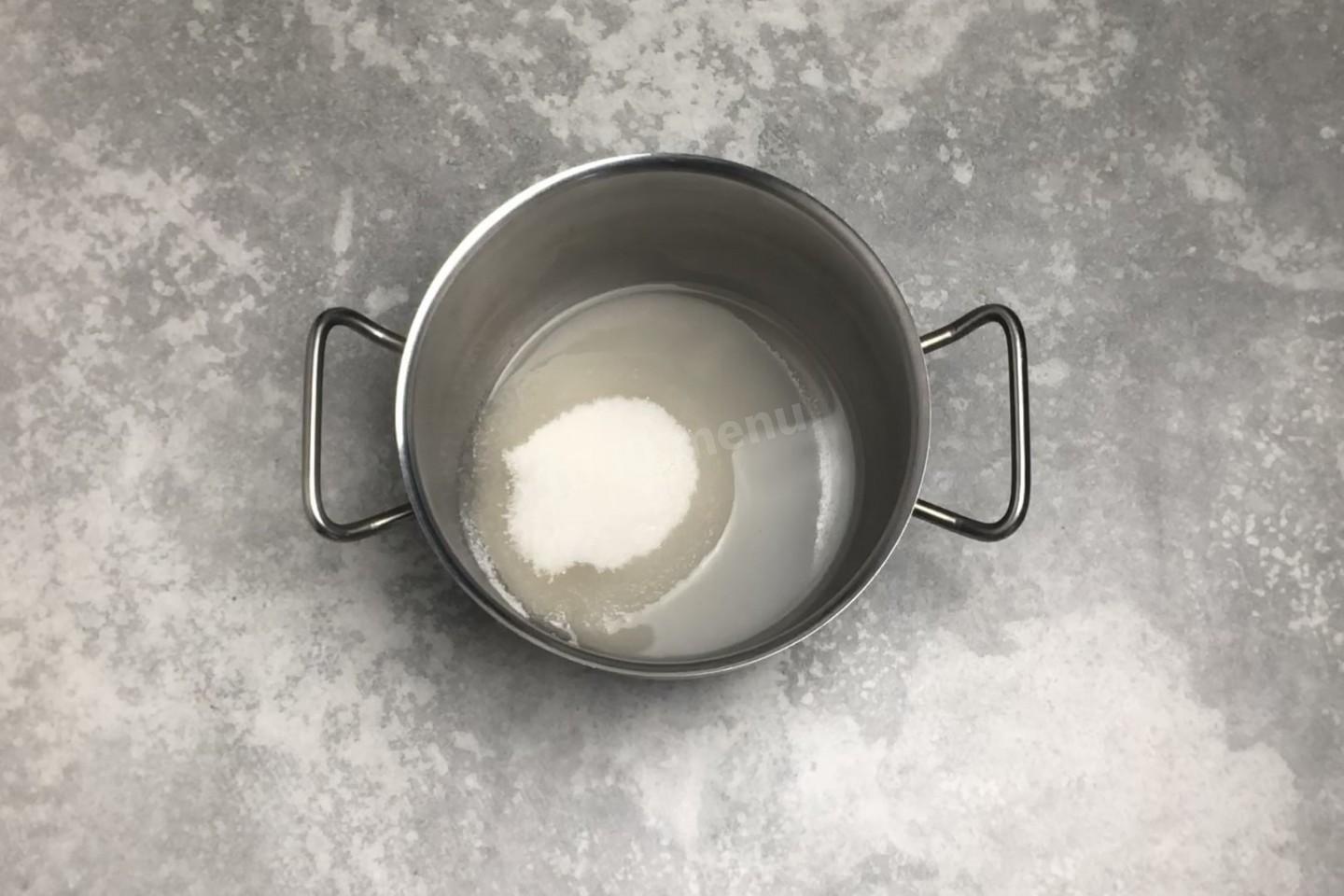
Fondant is a thick sugar syrup that is first boiled and then beaten until it crystallizes into fine crystals. Take a heavy-bottomed pot. Pour in the water and add all the sugar.
-
Step 4:
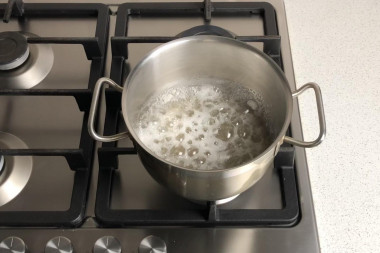
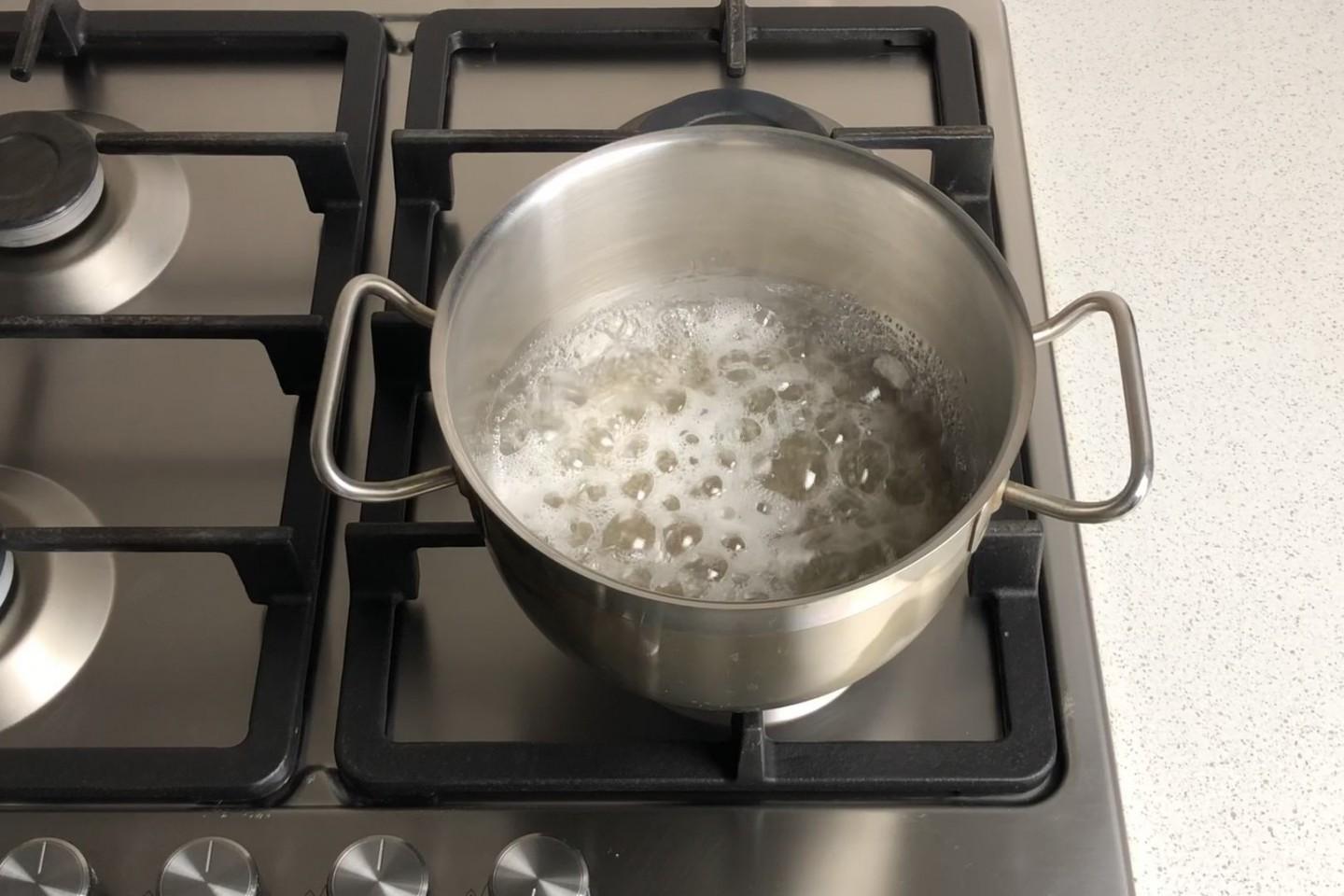
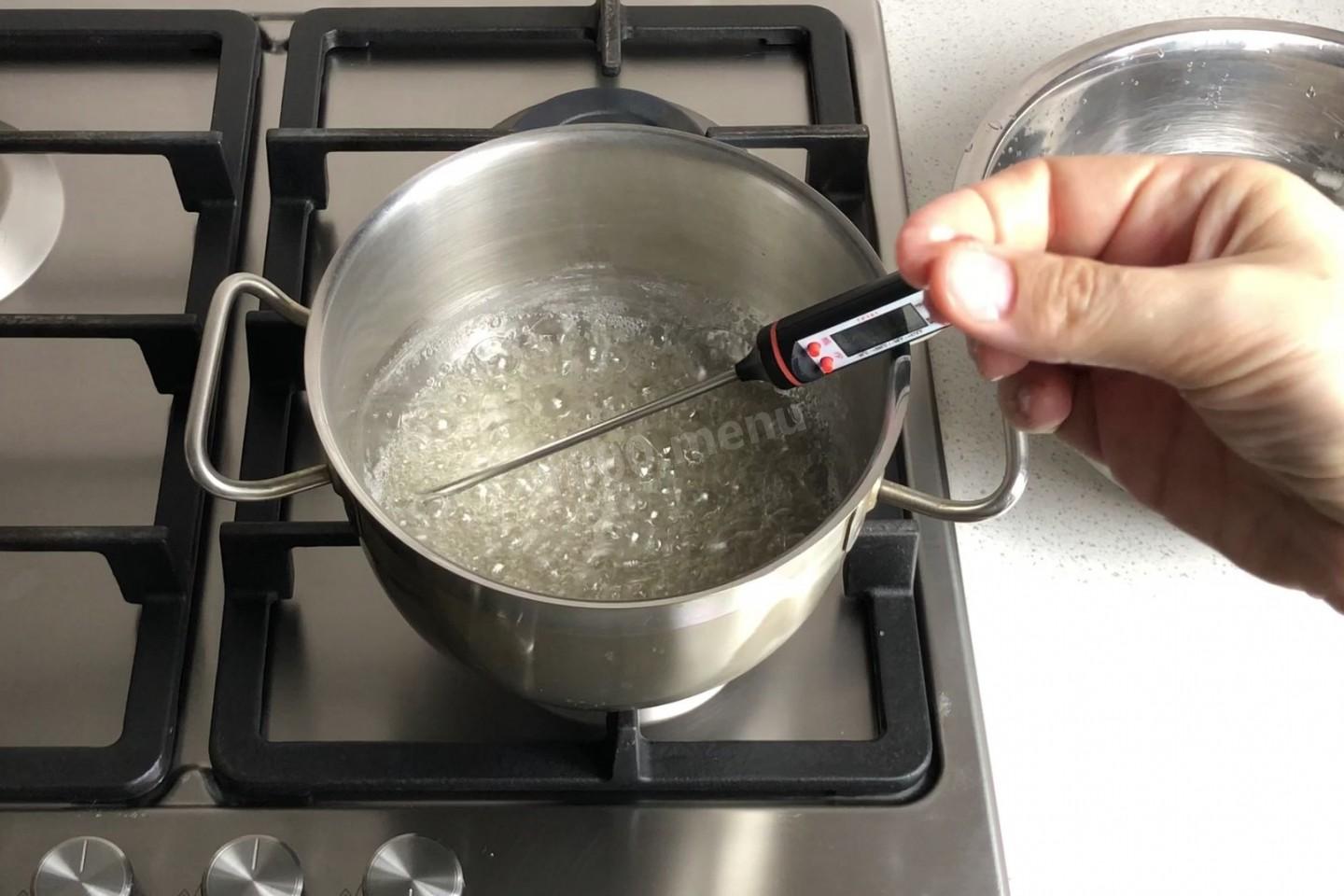
Put the pot of sugar over the heat. Keep the heat low. Stirring constantly, bring the syrup to a boil. The sugar should dissolve completely, so it's best to stir without stopping. Once the syrup boils, you can stop stirring.
-
Step 5:
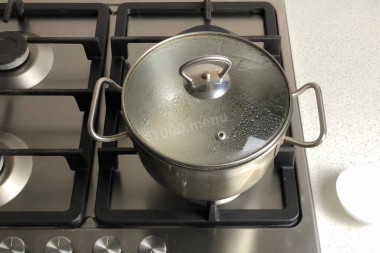
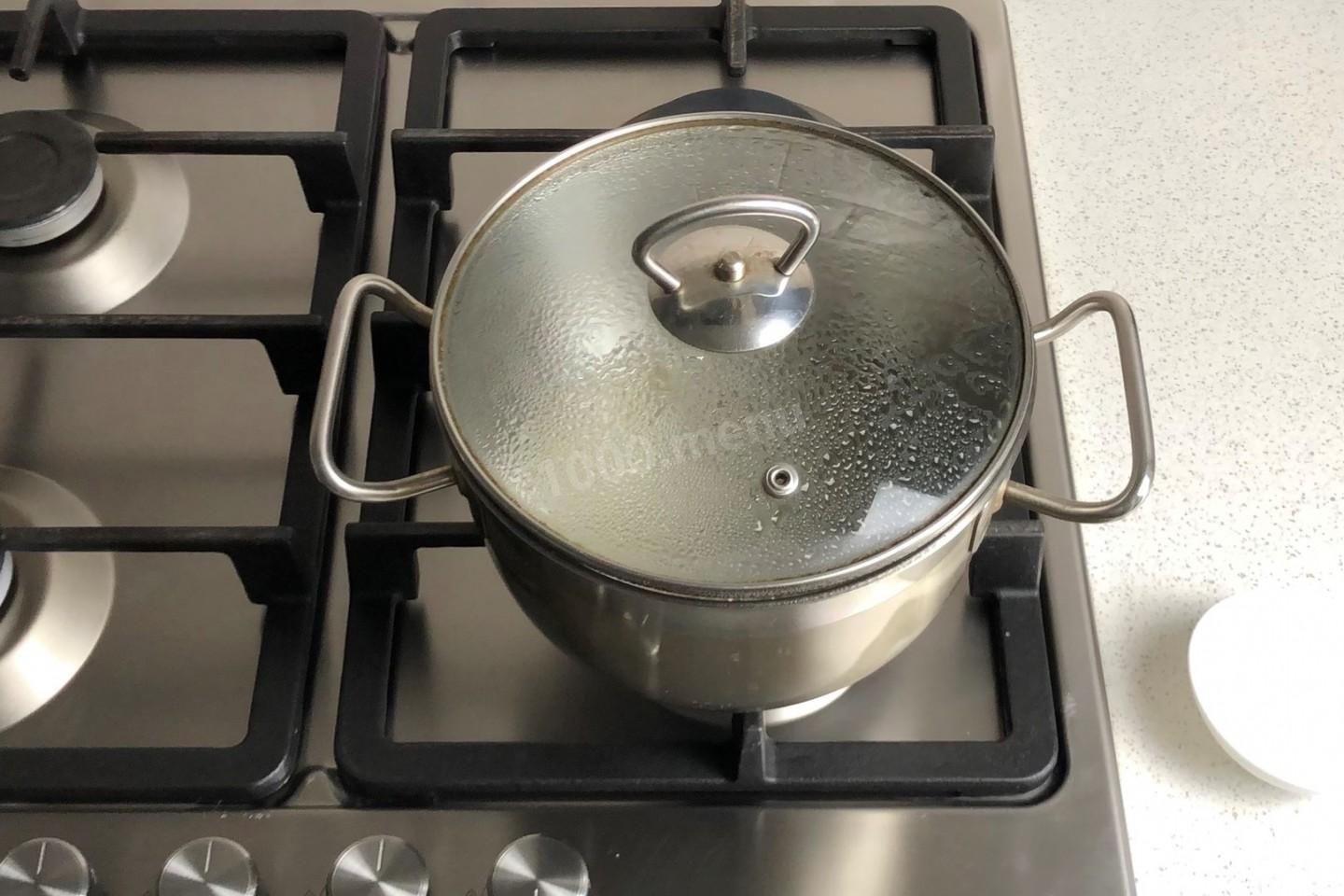
Cover the pot of boiling syrup with a lid and leave it like that for one minute. All the sugar stuck to the sides should melt off in the steam. This matters, because stray sugar grains keep the syrup from crystallizing properly — they become crystallization centers and grow into crystals that are too large. There's a more involved way too: turn off the heat and wash the leftover sugar off the sides with a wet brush.
-
Step 6:
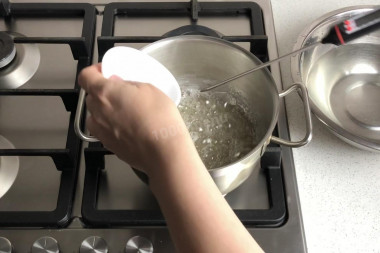
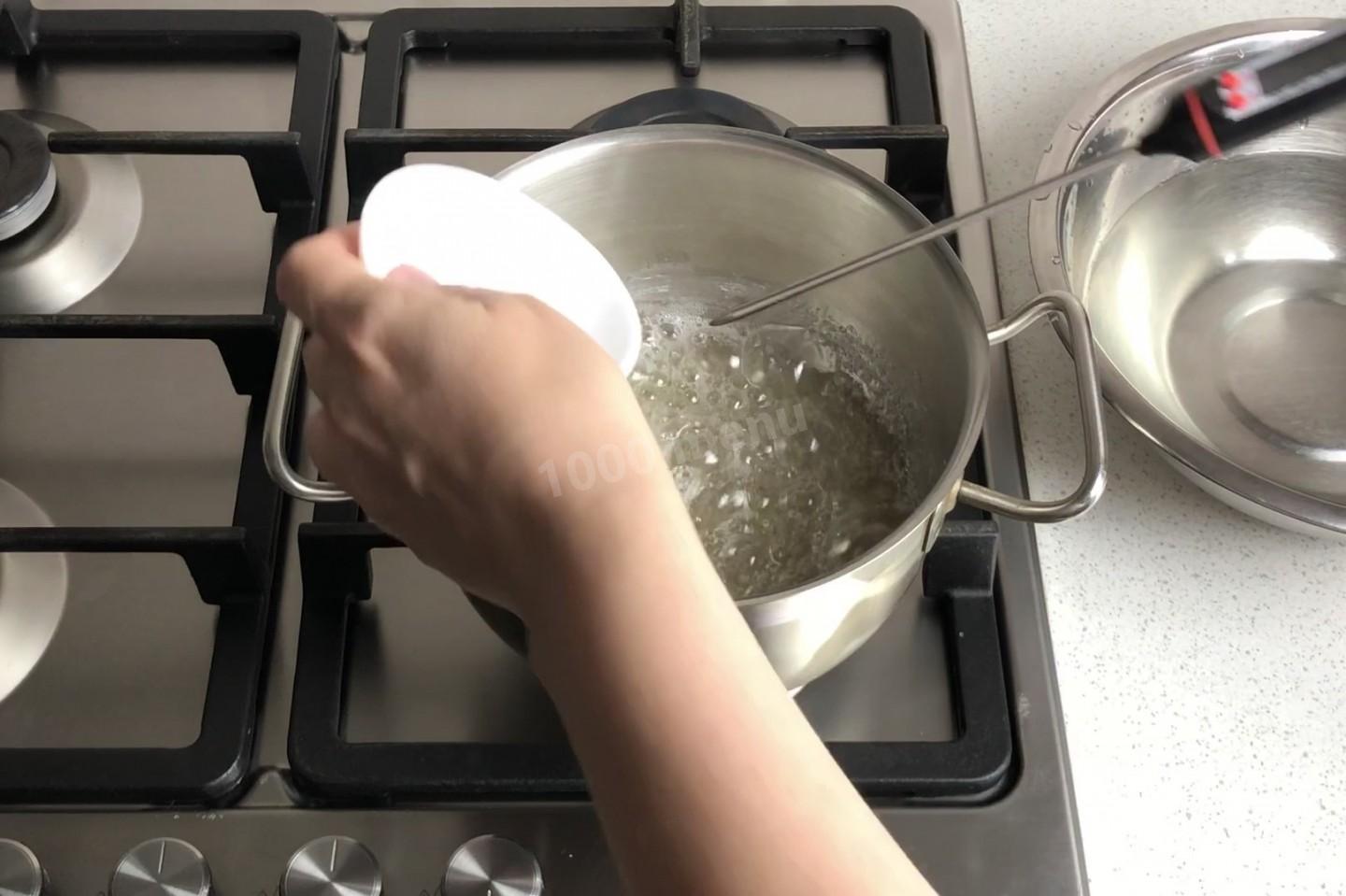
After a minute, lift the lid and put a candy thermometer in the pot. When the syrup reaches 106°C (223°F), pour in the lemon juice. It keeps the syrup from crystallizing while it cooks, so it crystallizes later, during beating. If you don't have a thermometer, go by time — it should take about 2 minutes after the boil.
-
Step 7:
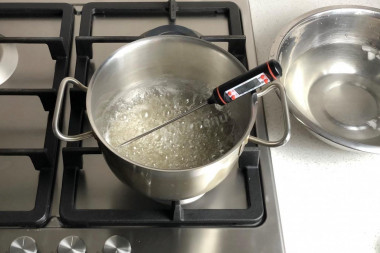
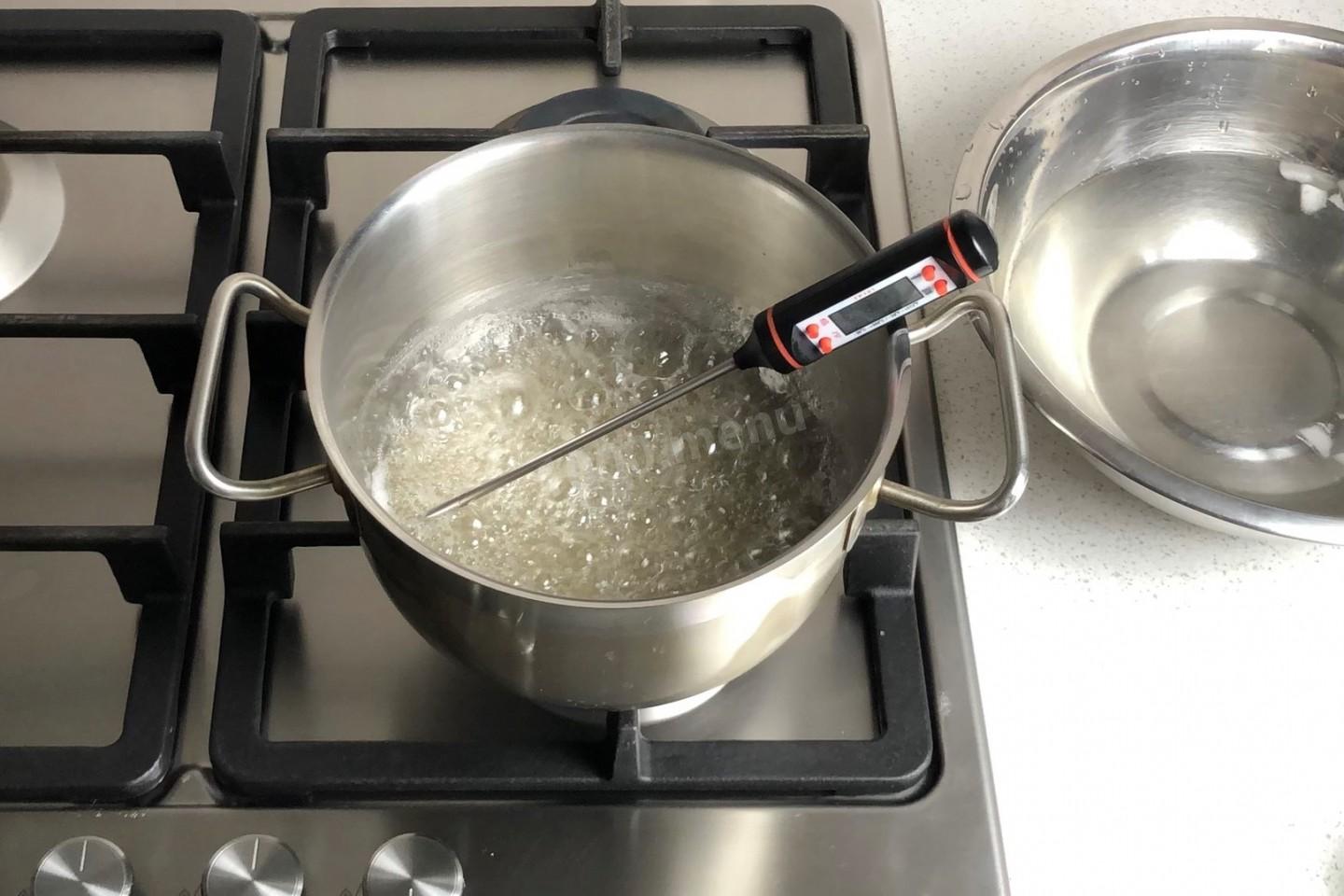
Keep cooking the syrup, watching the temperature. Set the bowl that's sitting in the cold water near the stove so it's ready to go.
-
Step 8:
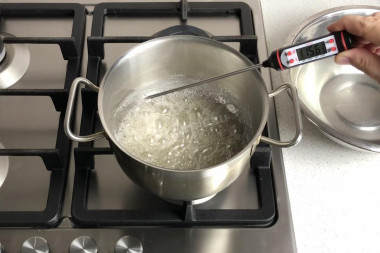
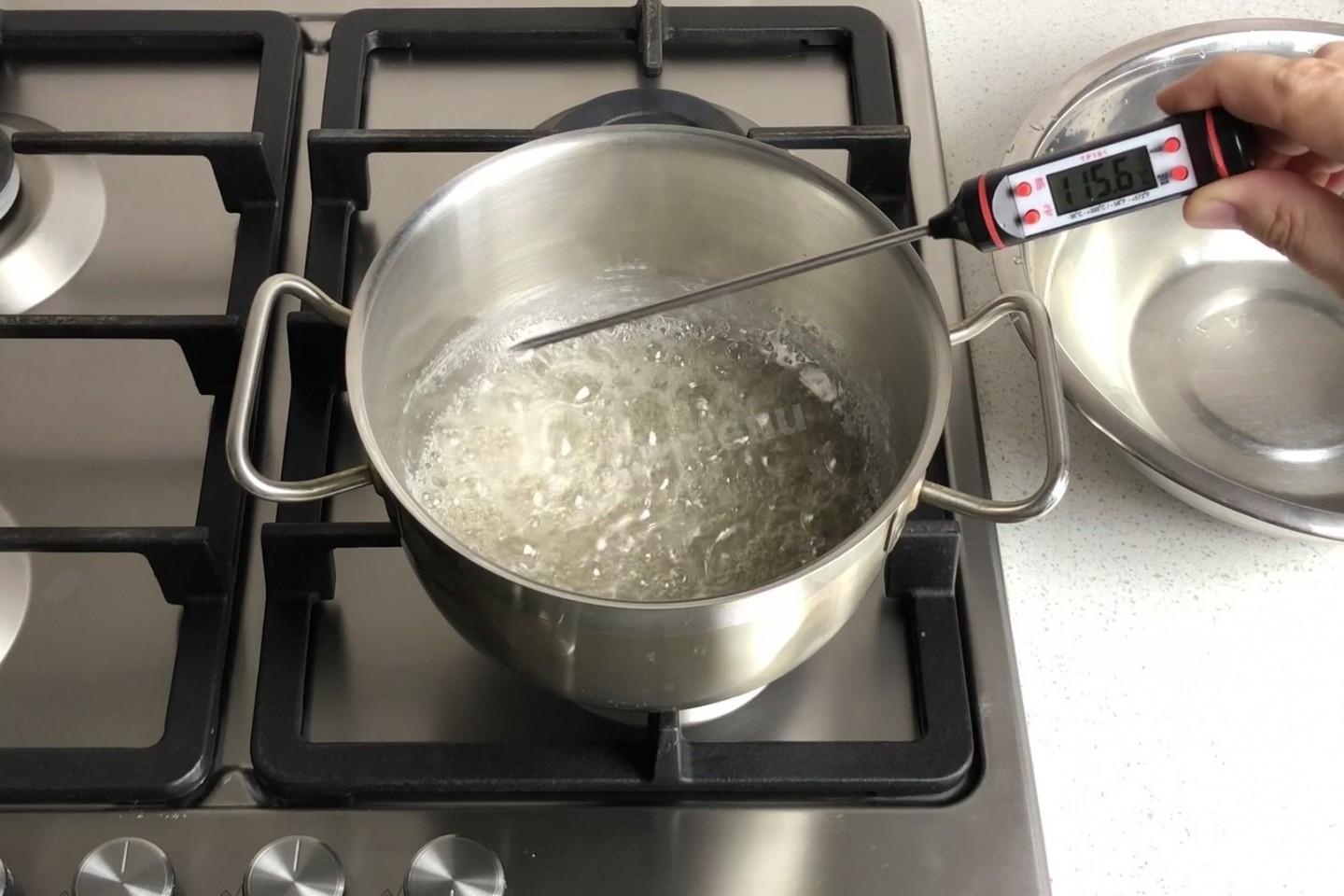
As soon as the syrup reaches 115–117°C (239–243°F), turn off the heat. Immediately pour the syrup into the bowl sitting in the bowl of cold water. This stops the cooking.
-
Step 9:
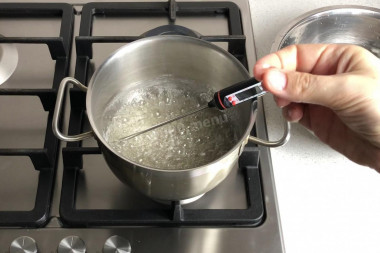
If you don't have a thermometer, do a soft-ball test. Scoop up a little syrup with a spoon and drop it into water. Take the set piece of syrup out of the water and press it between your fingers — it should be like a soft ball. Or go by time — it takes about 4 minutes from when it came to a boil.
-
Step 10:
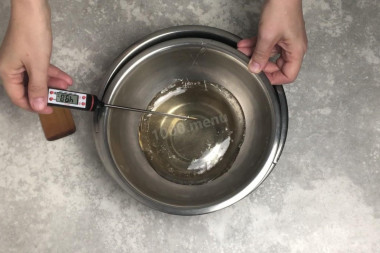
Cool the syrup to 40–50°C (105–120°F).
-
Step 11:
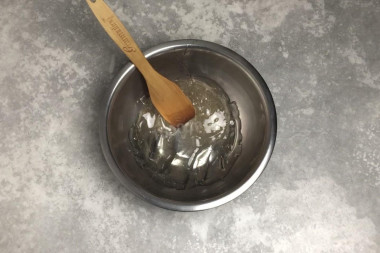
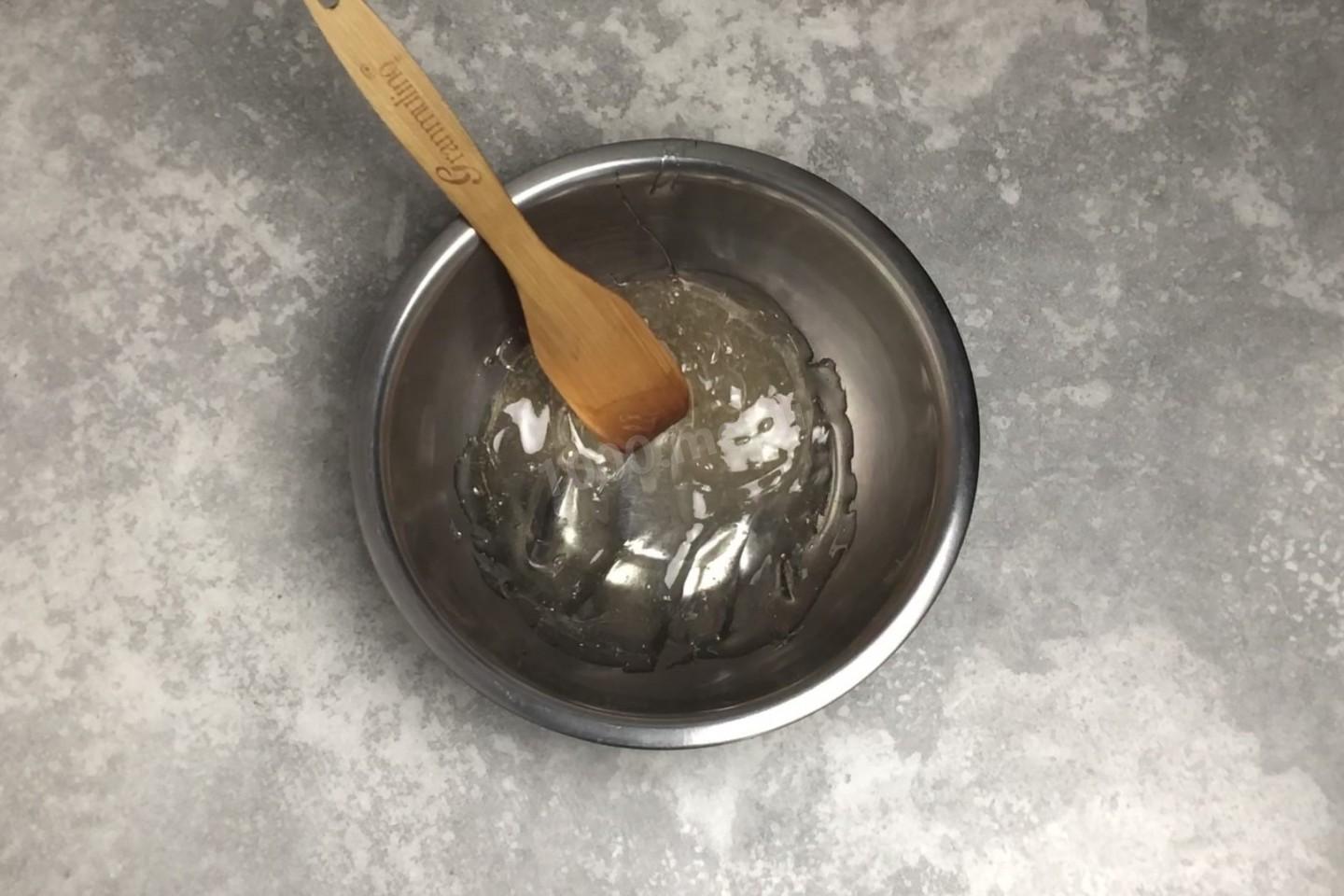
Start beating the syrup. Some people use a mixer, but I beat it with a wooden spatula. It's very important not to overbeat the syrup, or it can turn hard and brittle. That's harder to keep track of with a mixer — I had a bad experience. With the spatula it came out great, though it took some physical effort.
-
Step 12:
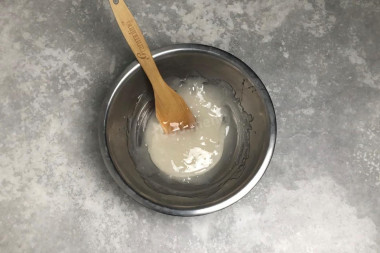
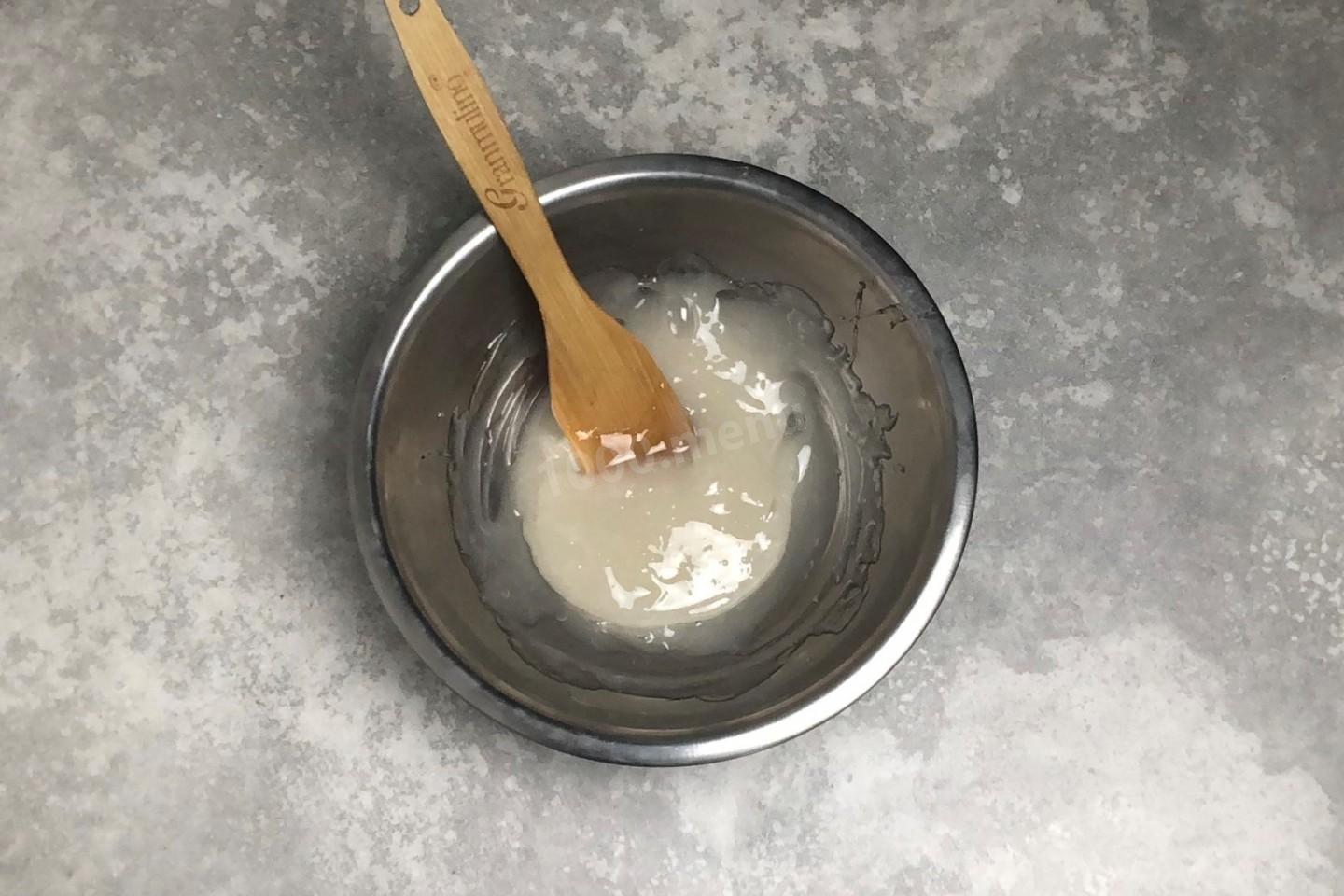
The syrup will gradually whiten and thicken while still staying pourable. That's the moment to stop — and glaze the buns. But this is a quick-fondant version. Done by the book, it should be beaten to the consistency of thick modeling clay and left to "ripen" for a day. The fondant will set hard, and to glaze pastries with it you'd have to melt it again.
-
Step 13:
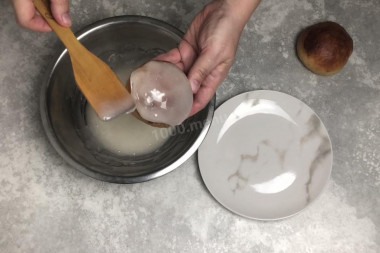
But you can glaze buns with this "quick" fondant too. Just dip the tops of the buns into the fondant and twist them in it, then spread the fondant with a spatula. Once it cools, the fondant sets and turns white.
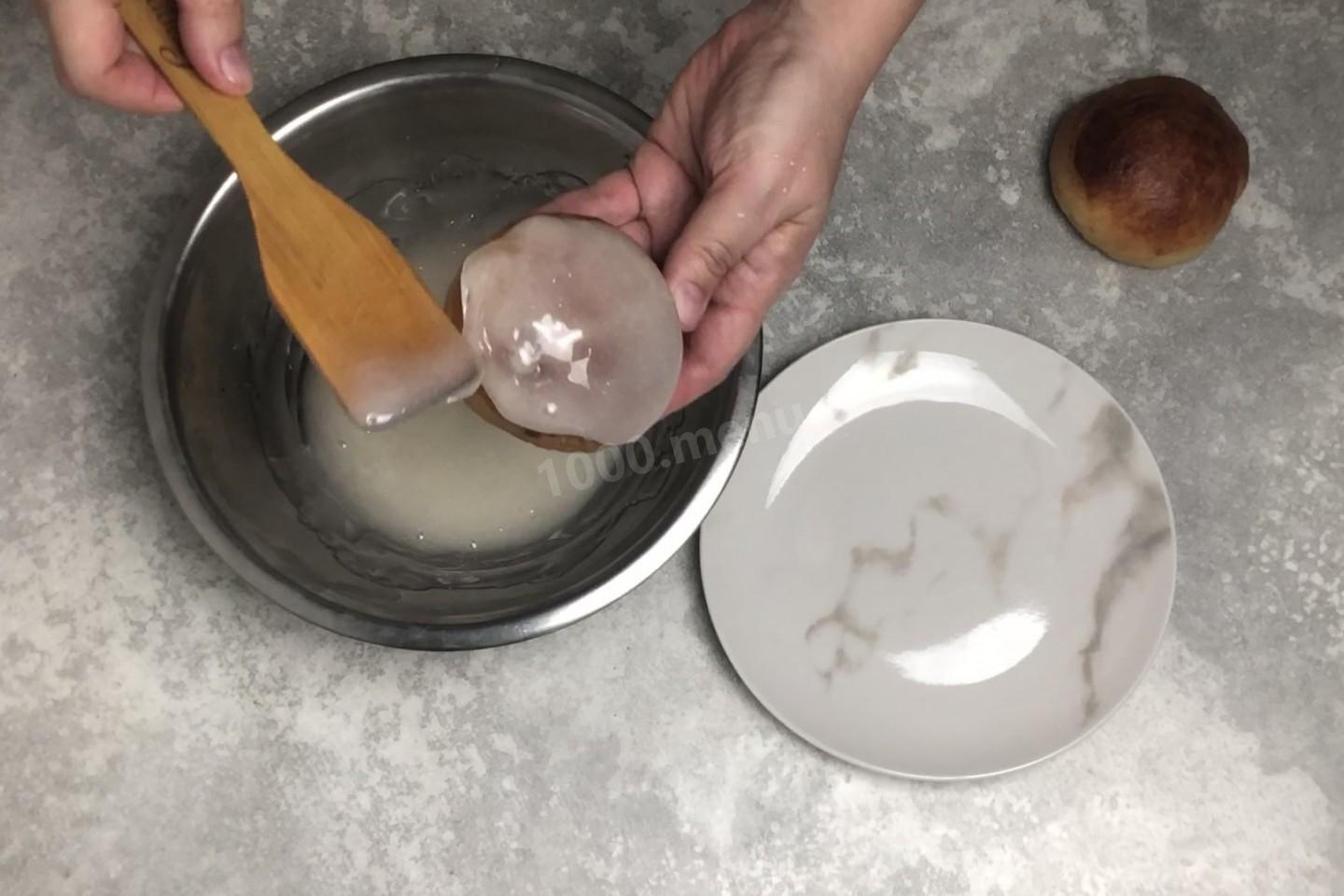
- This wasn't my first time making fondant — I learned from all my mistakes, and it came out perfectly! Still, it's better to make it with a thermometer, so it turns out right.
- For cooking it's best to use neutral-tasting filtered or bottled water. If you use tap water, keep in mind it can give the dish an unpleasant characteristic aftertaste.
Caloric content of the products possible in the composition of the dish
- Granulated sugar - 398 kcal/100g
- Sugar - 398 kcal/100g
- Water - 0 kcal/100g
- Lemon juice - 16 kcal/100g