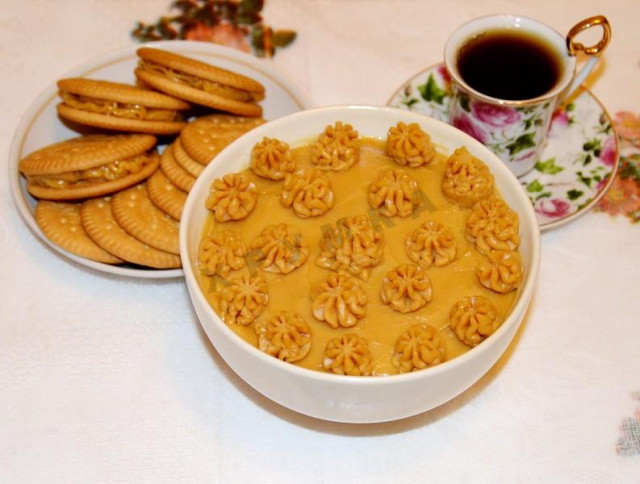
Souffle cream for cake
Beautiful, airy, melt-in-your-mouth, and absolutely delicious! This souffle cream for cake pairs wonderfully with all kinds of sponge layers and berry fillings. Cakes made with it come out very tender and light. The cream can be used not only between cake layers but also as a dessert on its own.


Cooking method
-
Step 1:
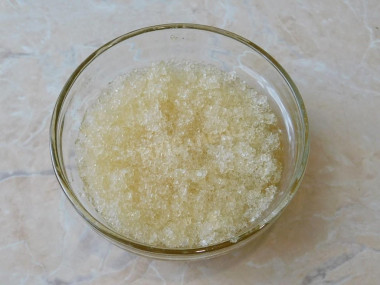
How do you make souffle cream for a cake? First, soak the gelatin in cold water and let it stand for about 20 minutes to bloom.
-
Step 2:
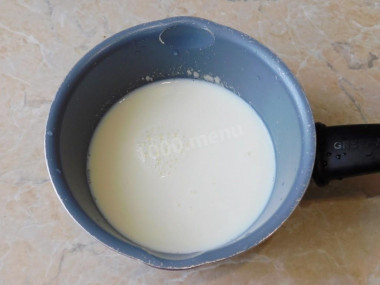
Separately, pour 200 grams of milk into a saucepan.
-
Step 3:
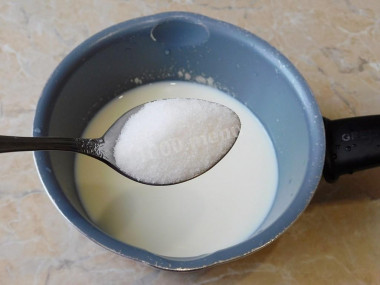
Add the sugar to it.
-
Step 4:
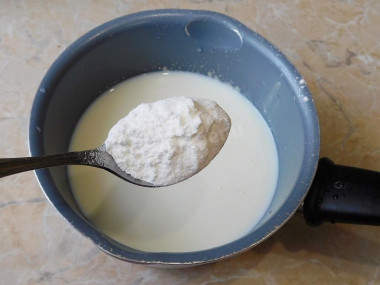
Stir in the cornstarch so there are no lumps. To do this, put the cornstarch in a separate cup and pour in a little milk. Stir the cornstarch and milk until smooth, and only then pour it into the saucepan of milk. Set the saucepan over low heat and bring it to a boil, stirring constantly. The milk will thicken as it heats.
-
Step 5:
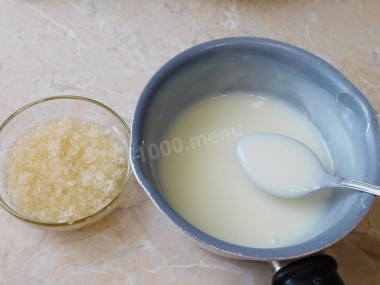
Add the bloomed gelatin to the thickened hot mixture.
-
Step 6:
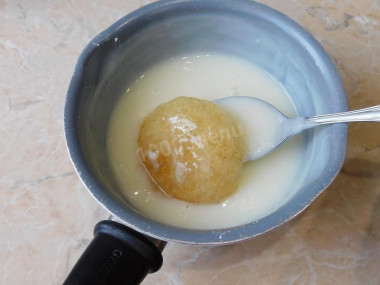
Stir well until it's completely dissolved.
-
Step 7:
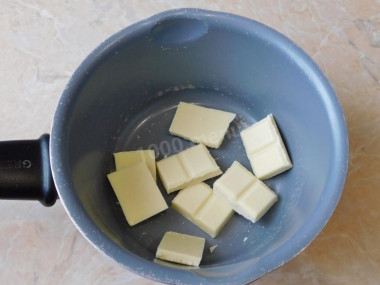
Put the broken-up white chocolate in a separate saucepan. Choose good-quality chocolate made with real cocoa butter.
-
Step 8:
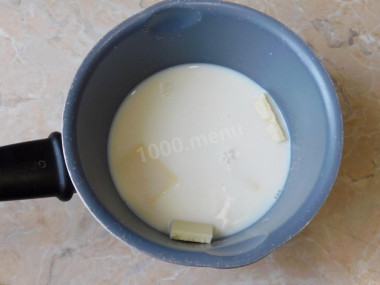
Add the remaining 150 grams of milk. Bring it to a boil over low heat and let the chocolate melt.
-
Step 9:
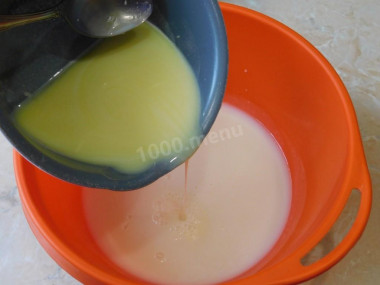
Then mix the two mixtures—the chocolate-and-milk one and the gelatin one—until smooth. Cool everything to room temperature.
-
Step 10:
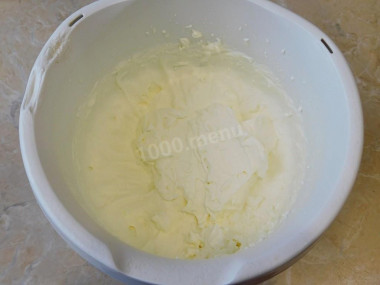
Next, whip the cream (be sure to chill it first). Combine the heavy cream (at least 33% fat) with the powdered sugar and whip it until fluffy. Don't whip it to stiff peaks, or it will be hard to fold into the cream.
-
Step 11:
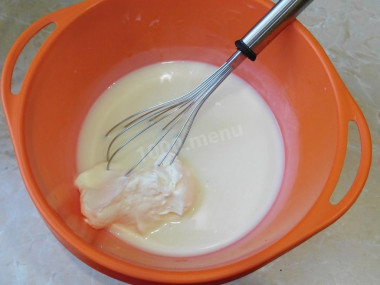
Add the whipped cream to the cooled gelatin mixture a little at a time, gently folding it in with a whisk.
-
Step 12:
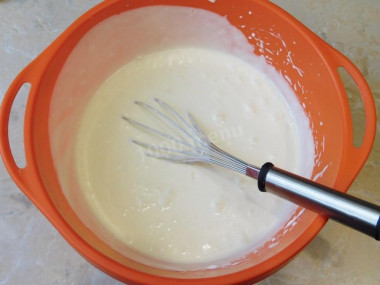
You should end up with an airy, thick, smooth mixture like this.
-
Step 13:
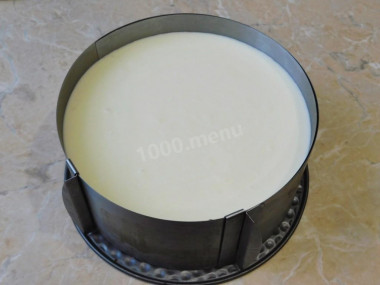
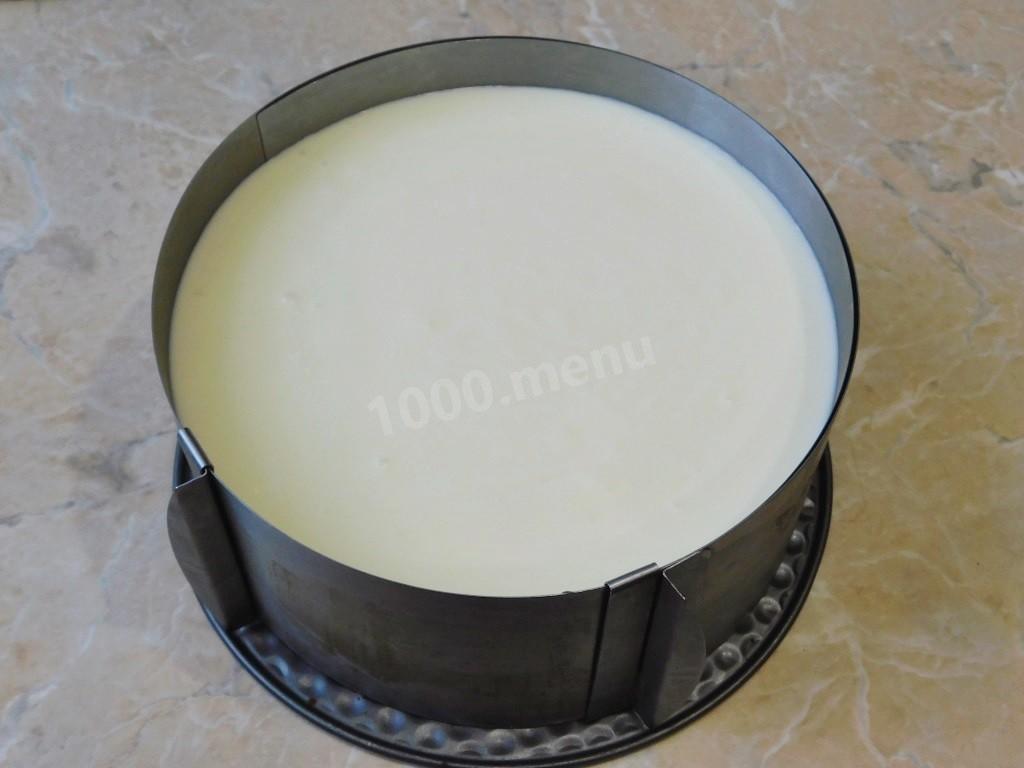
Pour the finished souffle cream into a cake pan. You can layer it with sponge cake or berry confit. Put the cake pan in the freezer or refrigerator for a few hours so the cream sets firmly.
-
Step 14:
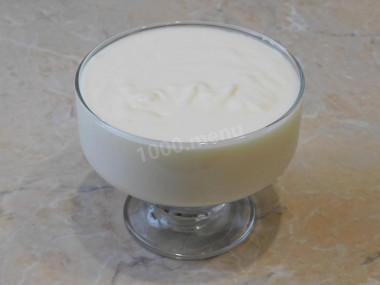
You can also use this mixture for individual desserts—spoon it into dessert glasses and chill them as well.
-
Step 15:
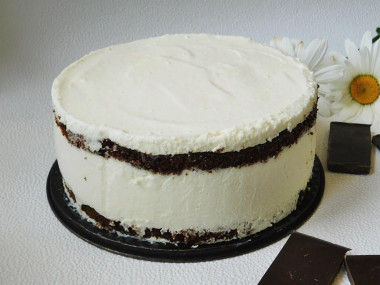
Once the cake has set, carefully run a knife around it to release it from the pan. You can simply decorate it with berries and serve, or pour a chocolate glaze over it—that's up to you. Enjoy it with your tea!




- How do you whip cream properly? It's important that the cream be high-fat, at least 33%. The bowl and the cream itself should be cold, so keep them in the refrigerator for at least 1–2 hours. Beat with a mixer on the lowest speed, gradually increasing it. How do you know when the cream is whipped enough? The creamy mass should hold its shape and not spread. At that point, stop whipping—otherwise the cream will turn to butter.
- Don't freeze the cream before whipping—otherwise it will separate as you whip and you'll end up with butter and whey! Buy only fresh, chilled cream for this.
- For a dish made with gelatin to turn out, always soak the gelatin first in cold boiled water—the colder the water, the better. Sheet gelatin can simply go into a bowl of water. Before soaking powdered gelatin, rinse the dish with cold water first so the granules don't stick to the bottom. It's important to pour the water over the powdered gelatin, not sprinkle the gelatin into the water—otherwise you'll get lumps. Then give the gelatin time to bloom (the exact time is on the package). Bloomed gelatin is heated to 160–175°F (70–80°C). It must never be brought to a boil! At 212°F (100°C) the mass turns stringy and viscous, the collagen protein breaks down, and the gelatin loses its setting power.
Caloric content of the products possible in the composition of the dish
- Whole cow's milk - 68 kcal/100g
- Milk 3.5% fat - 64 kcal/100g
- Milk 3.2% fat - 60 kcal/100g
- Milk 1.5% fat - 47 kcal/100g
- Concentrated milk 7.5% fat - 140 kcal/100g
- Milk 2.5% fat - 54 kcal/100g
- Granulated sugar - 398 kcal/100g
- Sugar - 398 kcal/100g
- Cornstarch - 320 kcal/100g
- Gelatin - 355 kcal/100g
- Water - 0 kcal/100g
- Cream 35% - 337 kcal/100g
- Cream 40% - 362 kcal/100g
- Vanillin - 288 kcal/100g
- Powdered sugar - 374 kcal/100g
- White chocolate - 554 kcal/100g