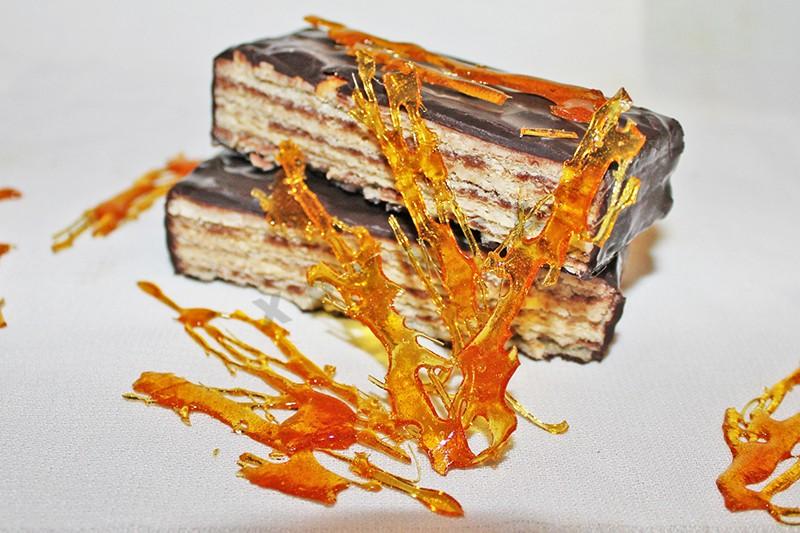
Caramel Decorations for Cakes and Pastries
Want to know how to decorate cakes and pastries in an original way? You've come to the right place! Caramel is a thick syrup made from sugar. Preparing it professionally calls for special tools and a cold work surface to pour the caramel onto, plus a stovetop that shows the heating temperature, since there are different kinds of caramel and each needs a different degree of heat.
But we'll be making caramel at home. Anyone who, as a child, melted down burnt sugar or made caramel figures shaped like little roosters, bunnies, and so on will easily pick up the process. Let's make caramel for decorating cakes and pastries.

Cooking method
-
Step 1:
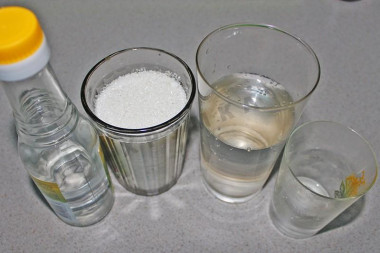
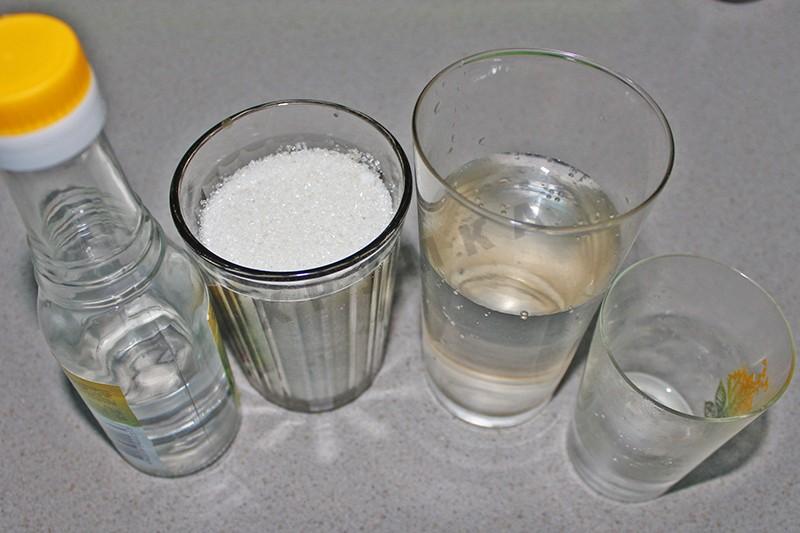
The ingredients.
-
Step 2:
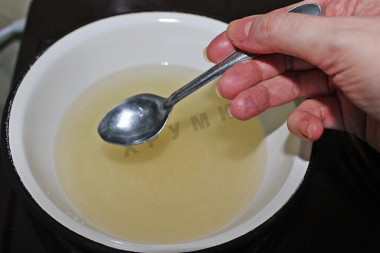
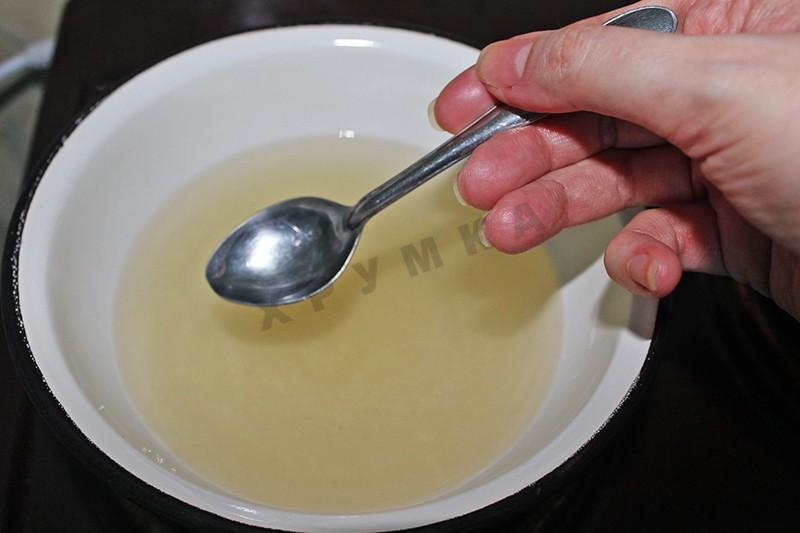
Use a heavy-bottomed pot. Measure the sugar and water at a ratio of 3 parts sugar to 1 part water. Pour the water over the sugar. Set it over the heat and warm it, stirring constantly, until the sugar dissolves.
-
Step 3:
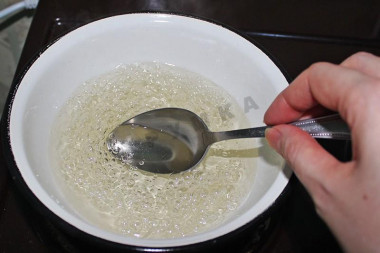
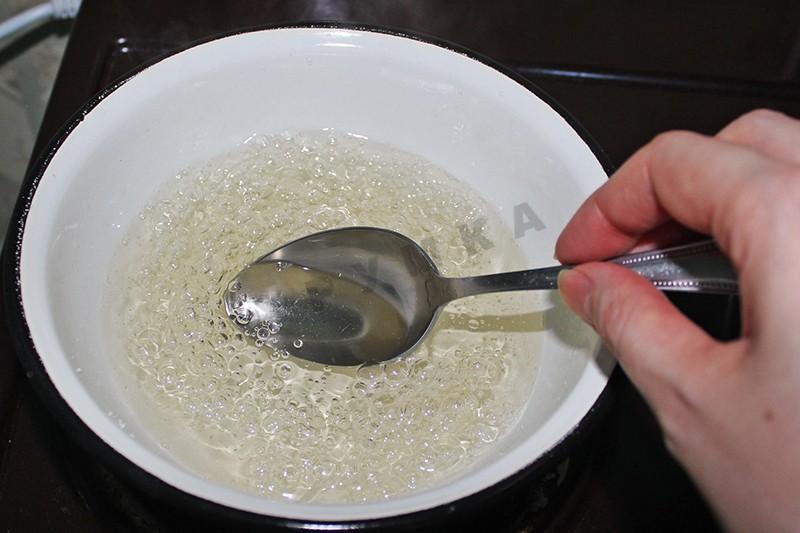
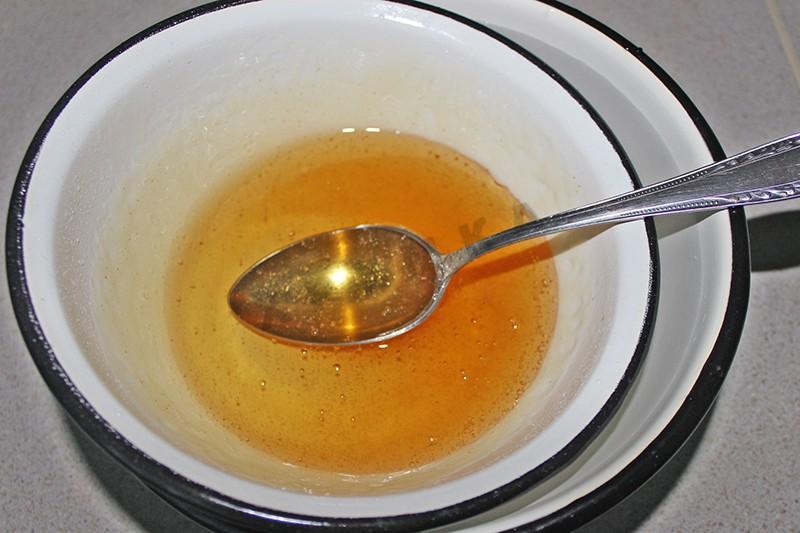
Then cook the syrup over low heat for about 10 minutes, until ready. The caramel will start to turn golden at the edges of the pot, so stir and watch it so the caramel doesn't burn.
-
Step 4:
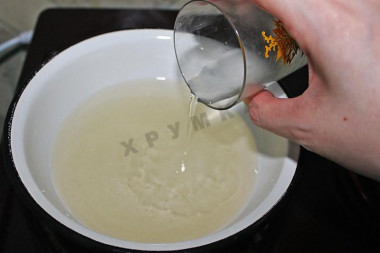
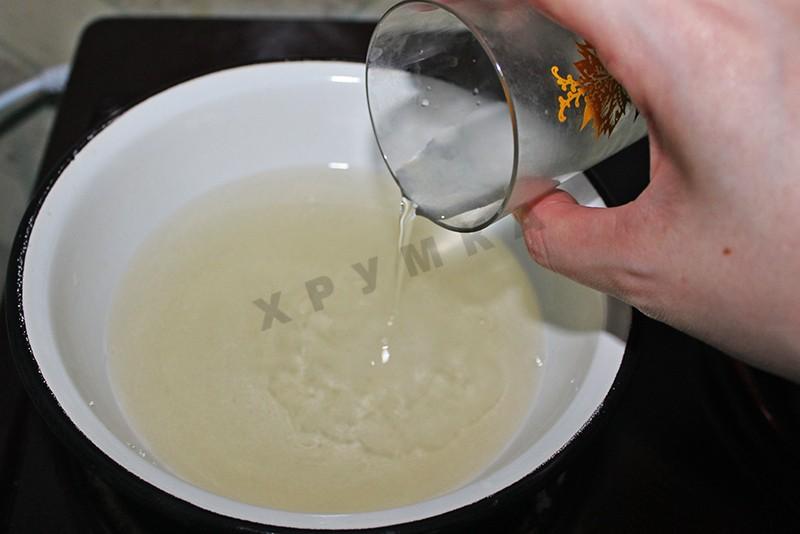
Add the vinegar essence, stir, then add the citric acid or fruit essence. This keeps the caramel from crystallizing as it cools, and adds flavor.
-
Step 5:
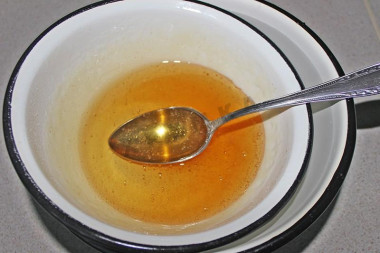
To stop the caramel from cooking further, lower the pot into cold water — carefully, so you don't get scalded by the steam. Then start piping with the caramel right away.
-
Step 6:
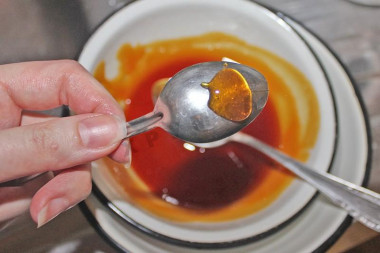
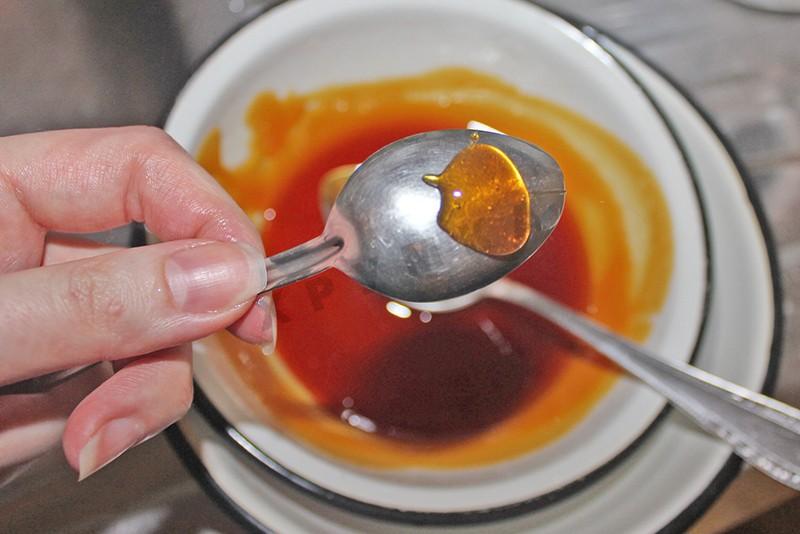
If you drop a bit of the finished caramel onto a spoon, it will set without spreading.
-
Step 7:
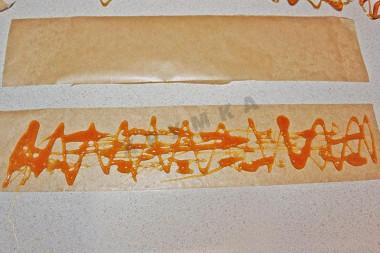
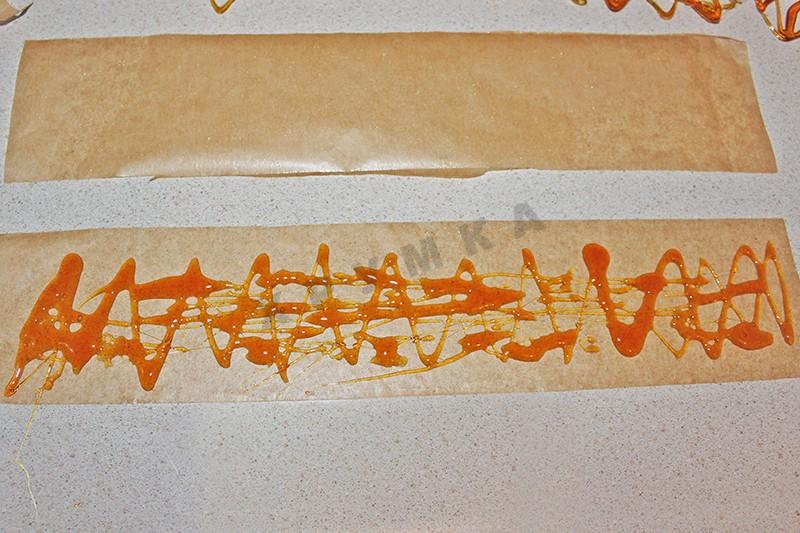
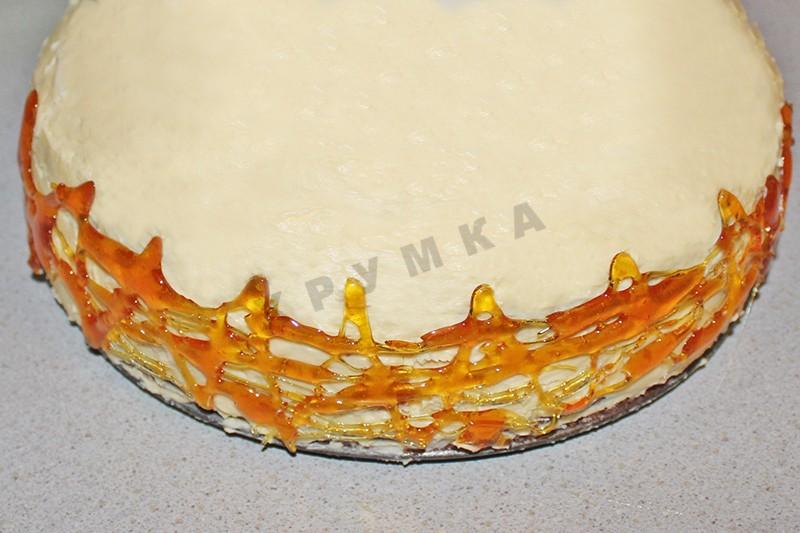
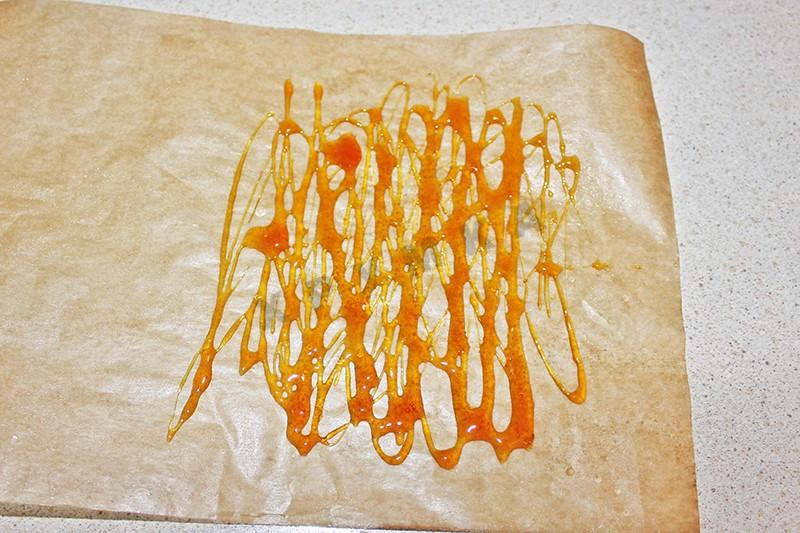
A caramel decoration for the sides of the cake. Measure the height of the cake and cut strips of parchment paper, brushing them with oil so the caramel releases easily. Scoop up caramel with a tablespoon and pipe a free-form lattice. While the caramel hasn't fully set, you can adjust it with the edge of a knife.
-
Step 8:
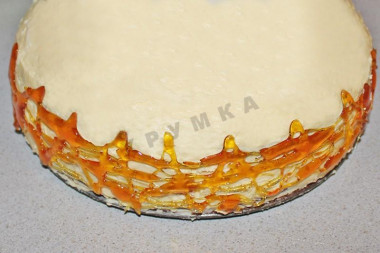
Then peel it off before it sets completely, and press it onto the frosting on the cake. Do this once the cake is already on its serving plate.
-
Step 9:
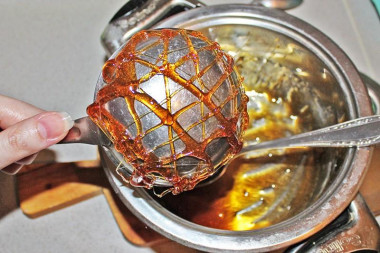
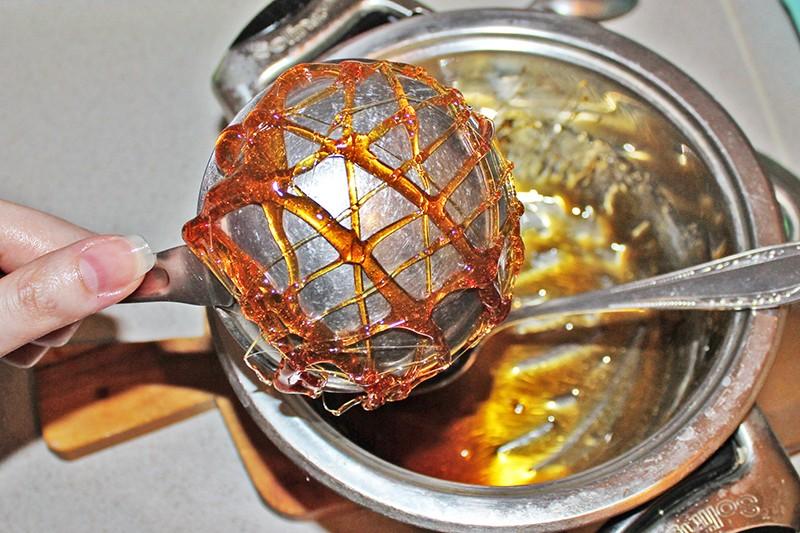
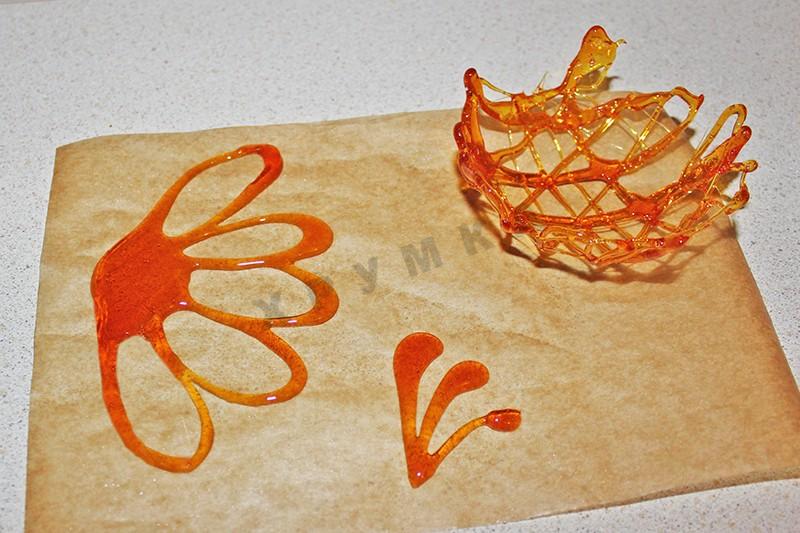
A caramel basket. You can shape a basket over any rounded object: a ladle, a grapefruit, or an orange. Grease the ladle with oil, scoop up caramel with a tablespoon and, holding it over the pot, pipe a lattice pattern. Thick lines first, then thin ones.
-
Step 10:
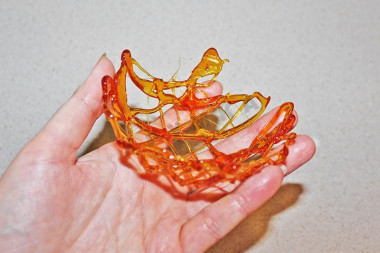
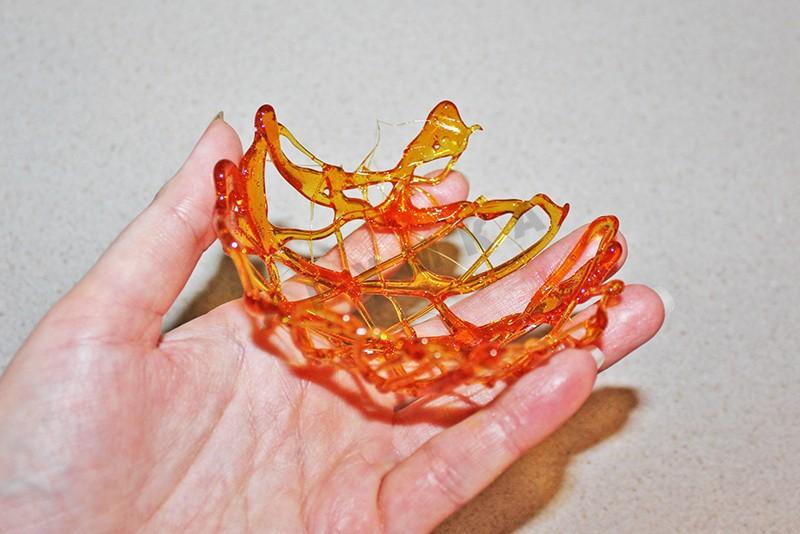
Once the caramel has cooled and hardened, just take hold of the basket and give it a twist with your palm, and it will release from the ladle.
-
Step 11:
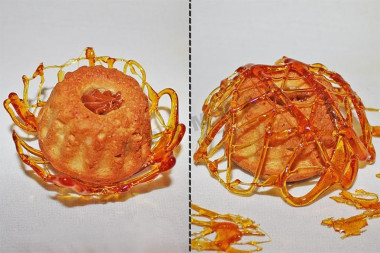
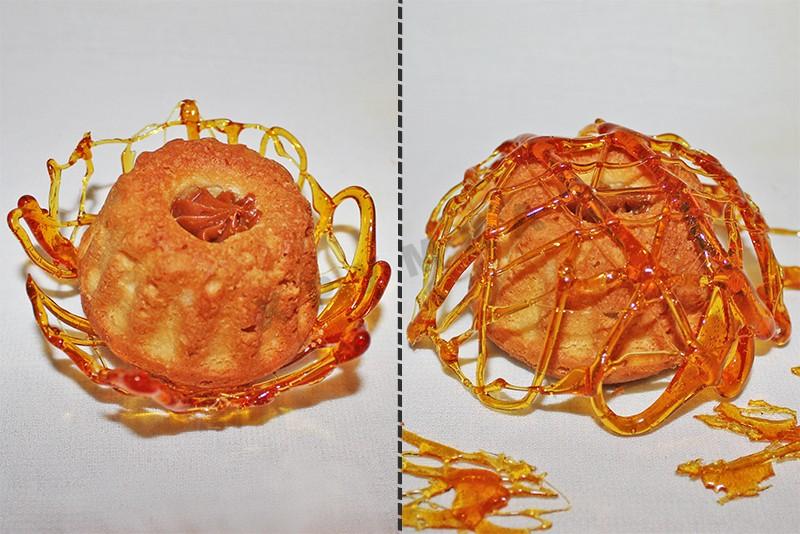
A caramel basket is perfect for serving dessert inside. Or you can use the basket like a dome, set over the middle of the cake, for example.
-
Step 12:
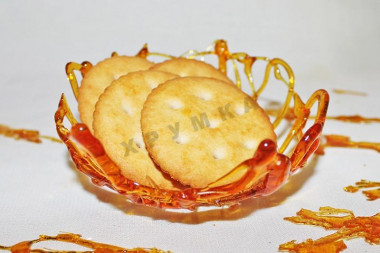
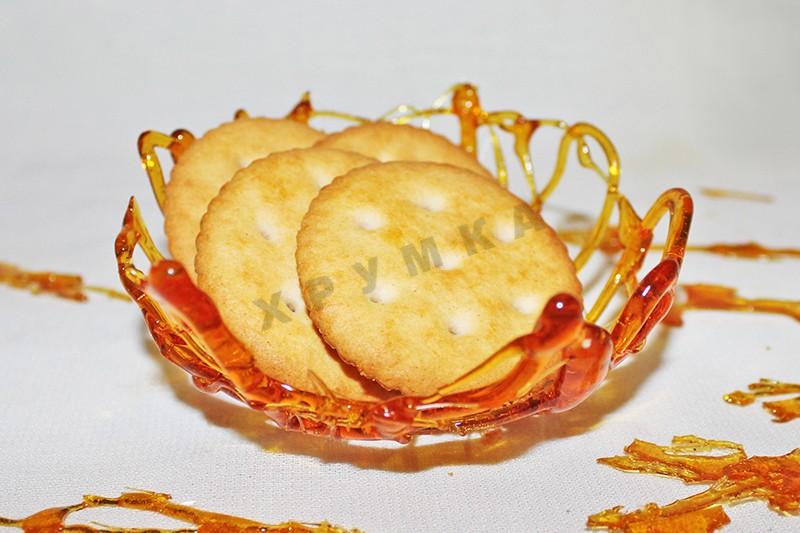
If you give the basket a solid bottom and pipe the rays out from there, you can serve scoops of ice cream or another non-crumbly dessert in it.
-
Step 13:
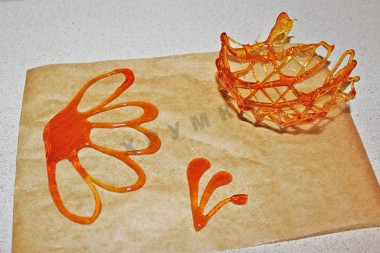
Piped caramel shapes. Draw shapes on parchment paper — swirls, flowers, hearts, for example. Then pipe caramel along the outline showing through from the other side. You can stand these shapes up in the frosting on cakes or use them to decorate pastries. From here there's endless room for your imagination.
-
Step 14:
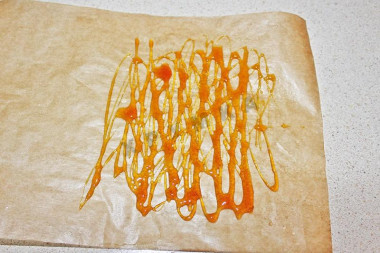
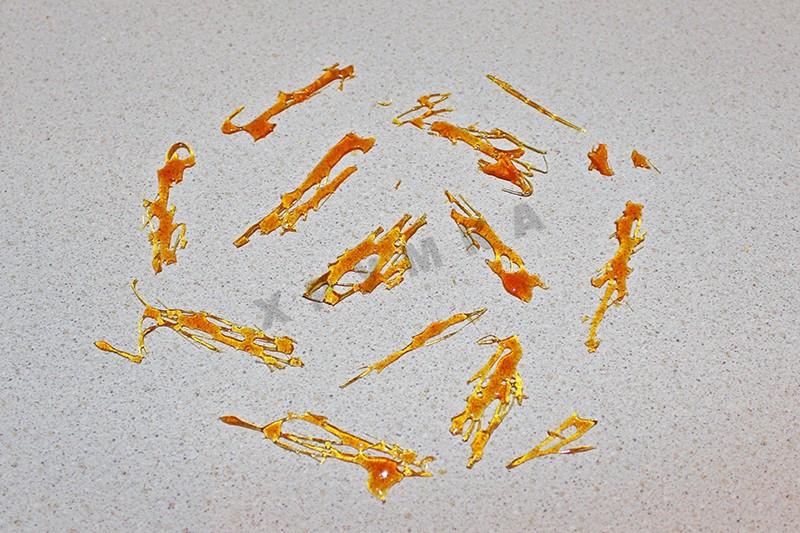
A caramel cobweb. On parchment paper, pipe caramel in random strokes.
-
Step 15:
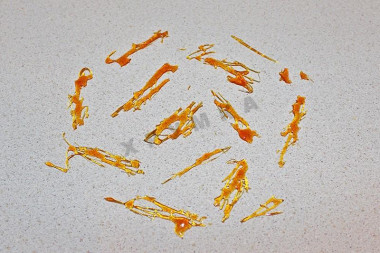
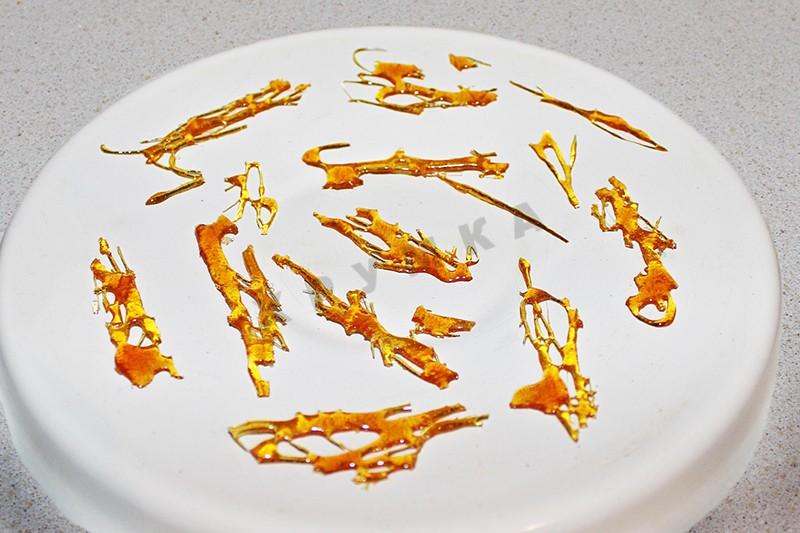
Once it's cool, gently break it into pieces.
-
Step 16:
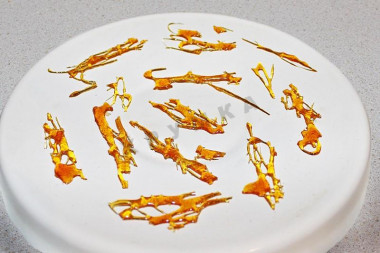
Decorate the top or sides of the cake with them.
-
Step 17:
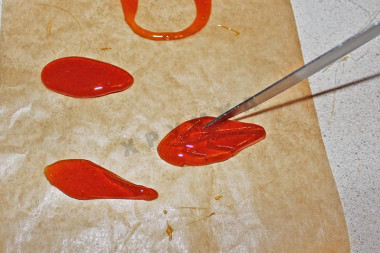
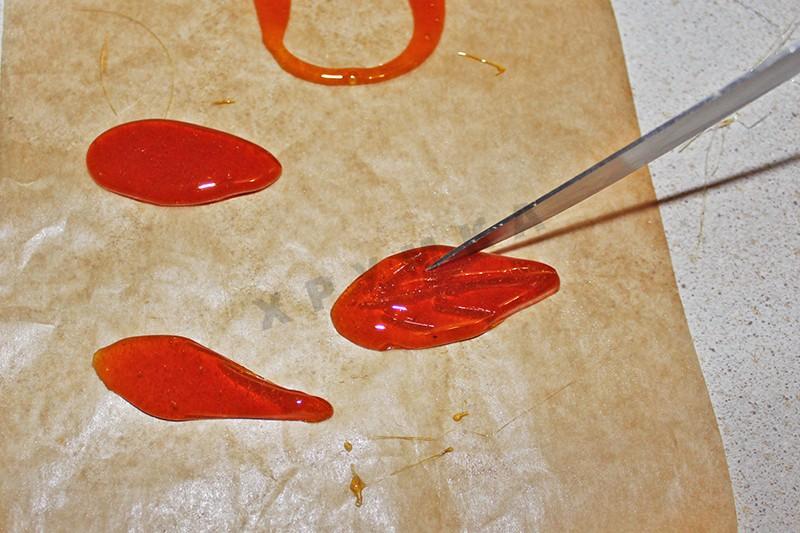
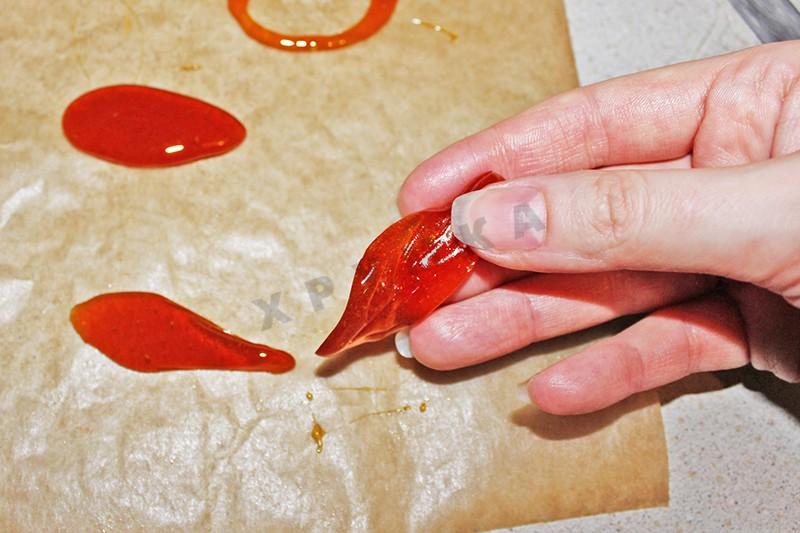
Caramel leaves. Pipe large caramel droplets, shape them into leaves with a knife by pressing in the sides of each drop, and while the caramel is still soft, score in the pattern of the veins.
-
Step 18:
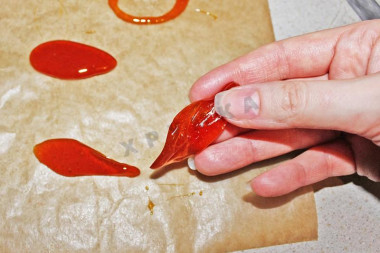
Then stretch and twist the leaf with your hands so it isn't flat. You can decorate a cake with the leaves, or make a stem out of caramel and attach the leaves to it. From caramel that has thickened but not yet set, you can pull out any shapes you like.
- Tips: When you're making the caramel, don't let anything distract you.
- Have all your extra tools and your patterned parchment paper ready in advance, since the caramel sets and thickens fast.
- Don't leave the caramel on the heat too long, or you'll scorch it and the flavor will turn bitter.
- If you didn't get to pipe in time and the caramel has thickened, just warm it over low heat and it will melt again.
- To clean caramel off your dishes, pour in some water and heat it up. The caramel will dissolve on its own, so you won't have to scrape it off. Or just fill the dish with water and leave it overnight — the caramel will dissolve by itself.
Caloric content of the products possible in the composition of the dish
- Granulated sugar - 398 kcal/100g
- Sugar - 398 kcal/100g
- Citric acid - 0 kcal/100g
- Water - 0 kcal/100g
- Vinegar essence - 11 kcal/100g