Vegetarian Pilaf with Chickpeas
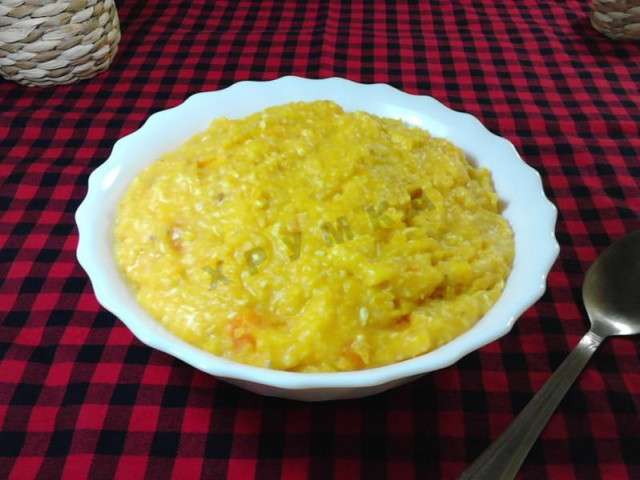
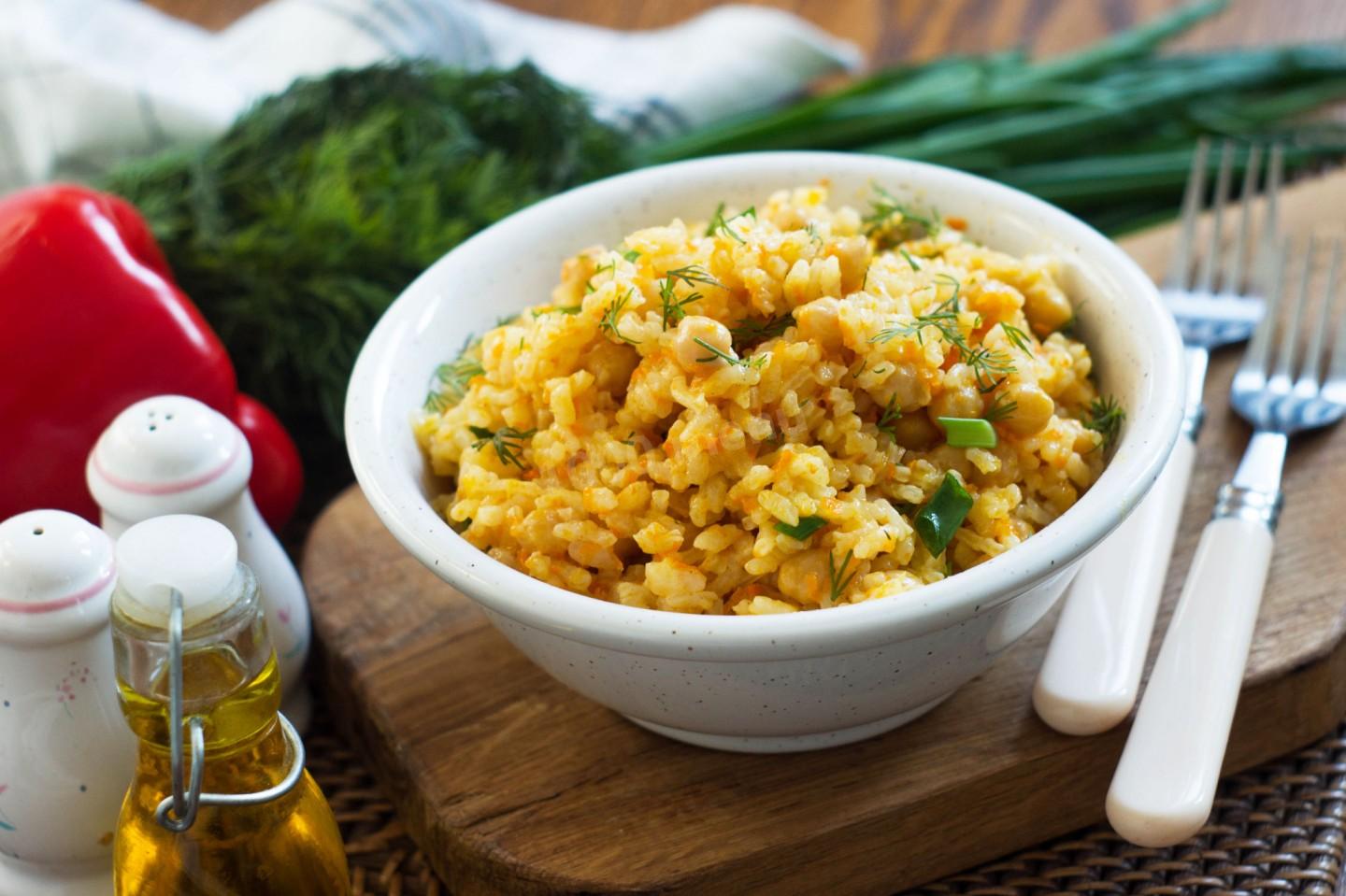
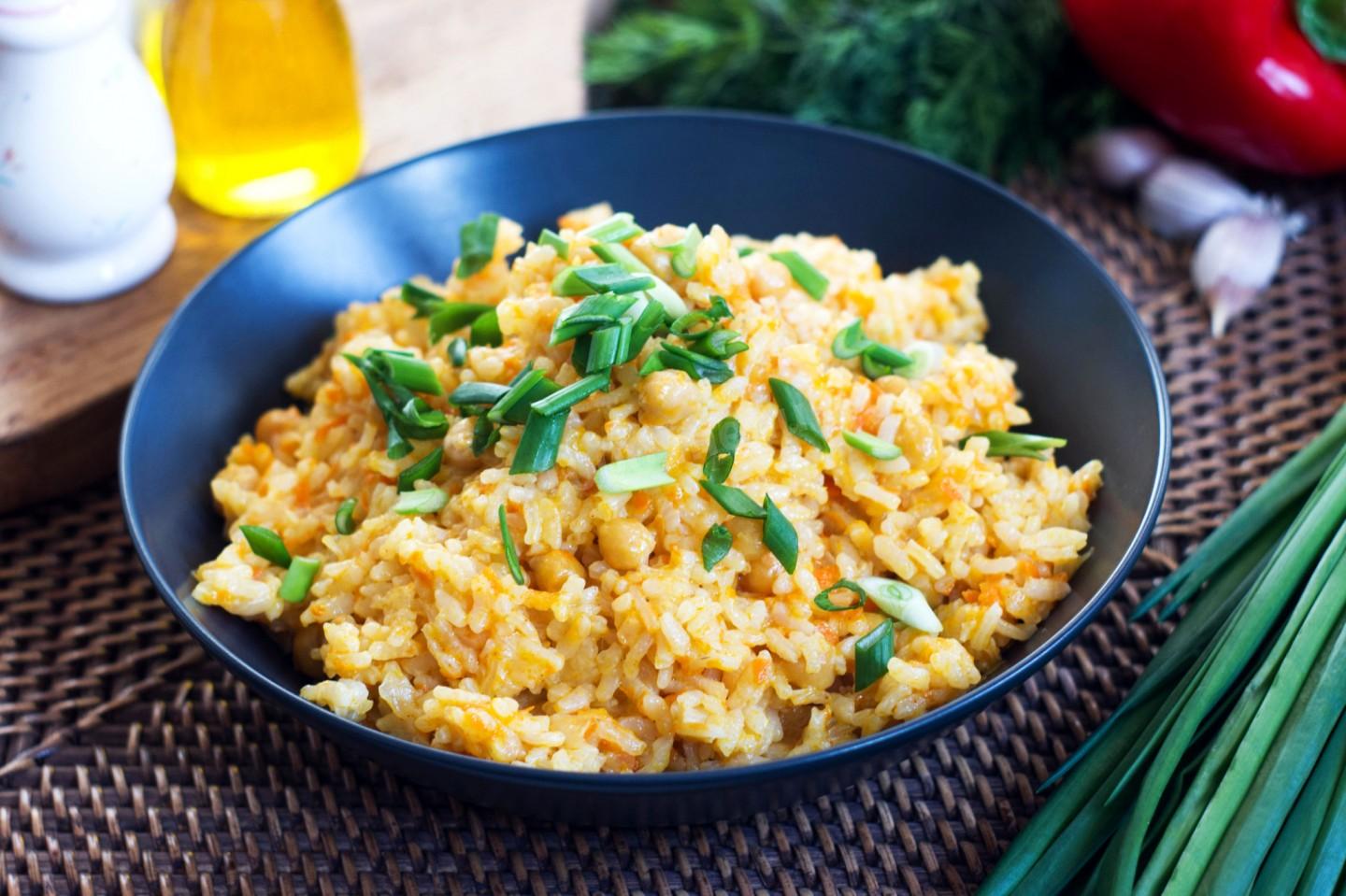
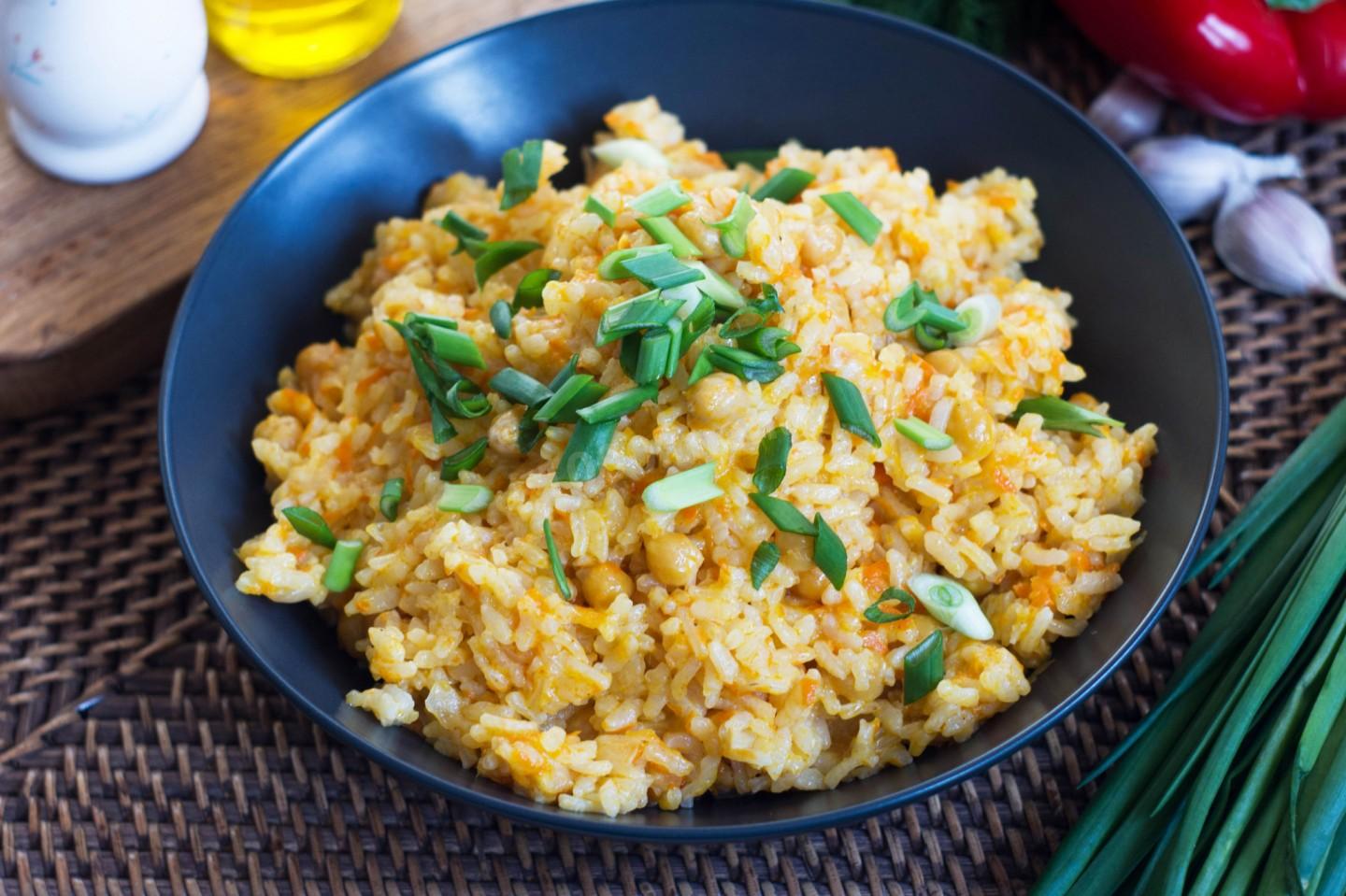
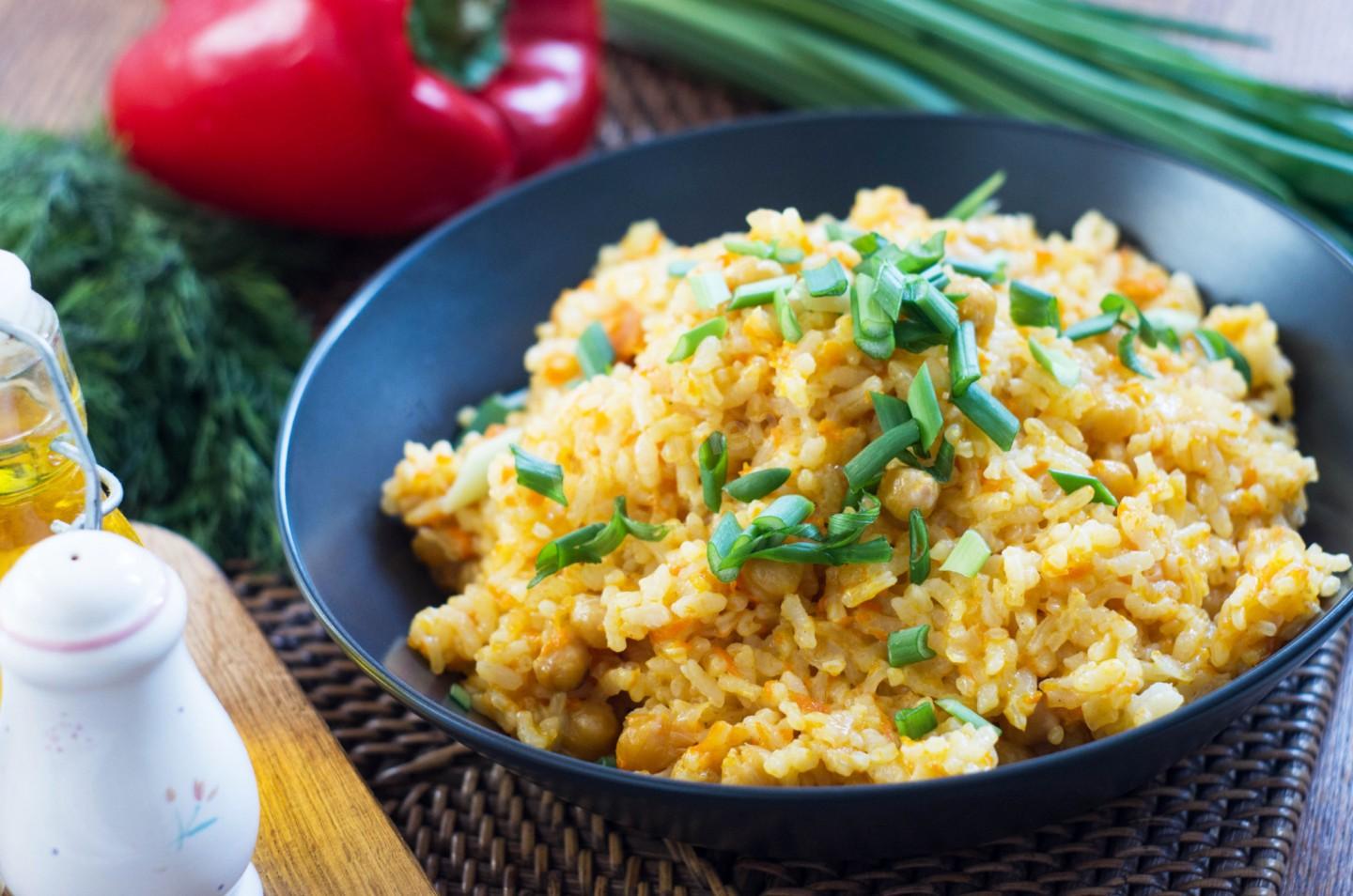
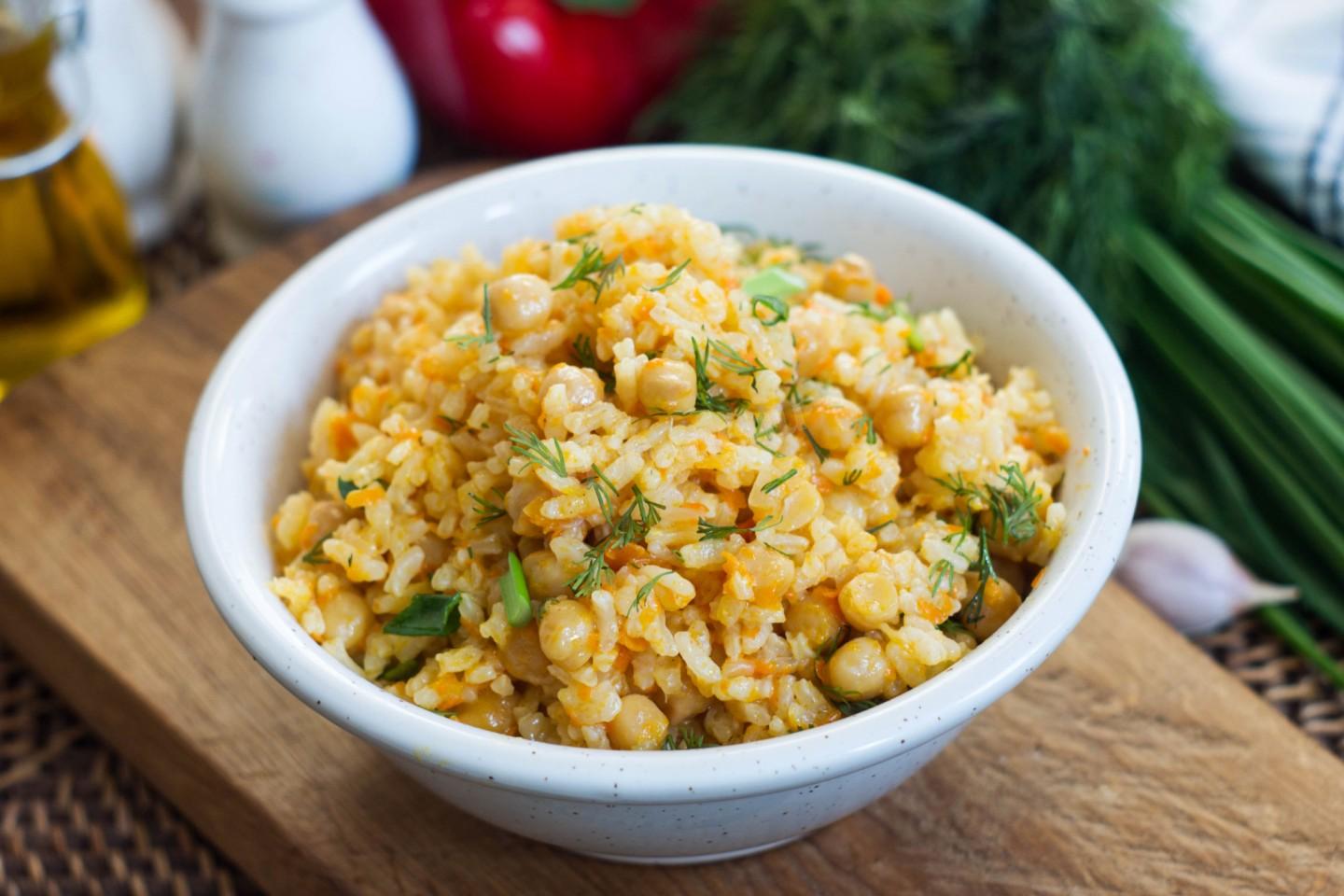
Tender chickpeas are the star of this vegetarian pilaf! A wonderful homemade dish built around nourishing chickpeas—filling and versatile. Serve it alongside all kinds of cold and hot appetizers, salads, fresh-cut vegetables, gravies, and sauces!

Cooking method
-
Step 1:
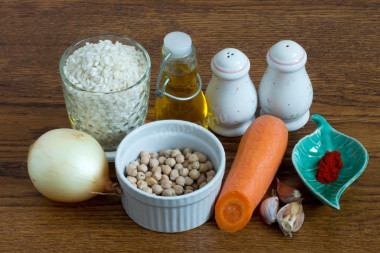
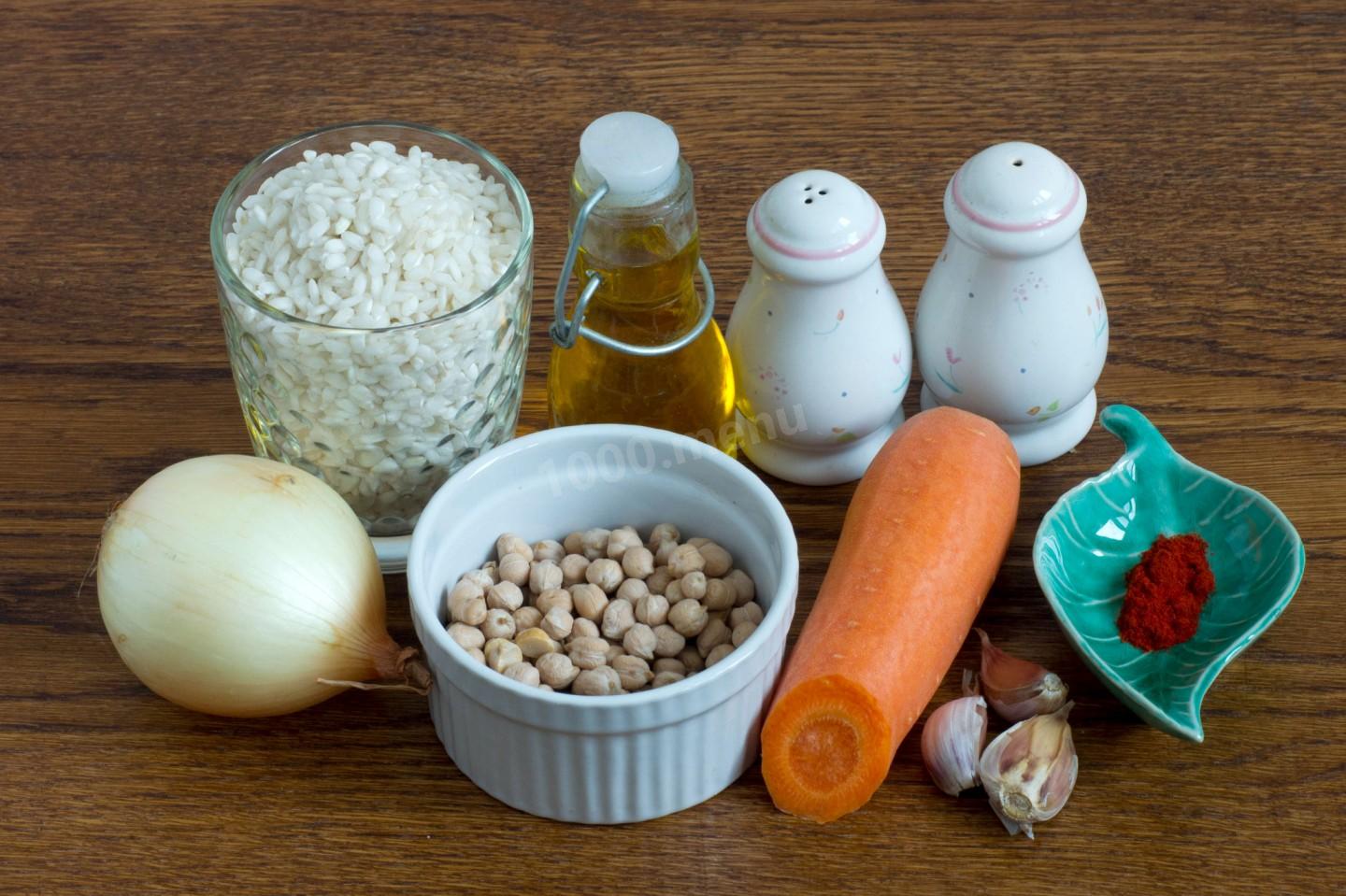
Gather everything you need for vegetarian chickpea pilaf: dried chickpeas, rice, carrot, onion, garlic, vegetable oil, water, salt, ground black pepper, and ground paprika (I used smoked paprika). I used short-grain rice, which to my taste makes the dish softer and juicier. You can swap the water for vegetable broth to give the pilaf a richer flavor.
-
Step 2:
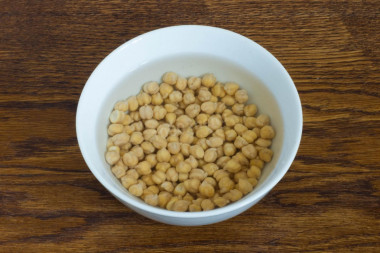
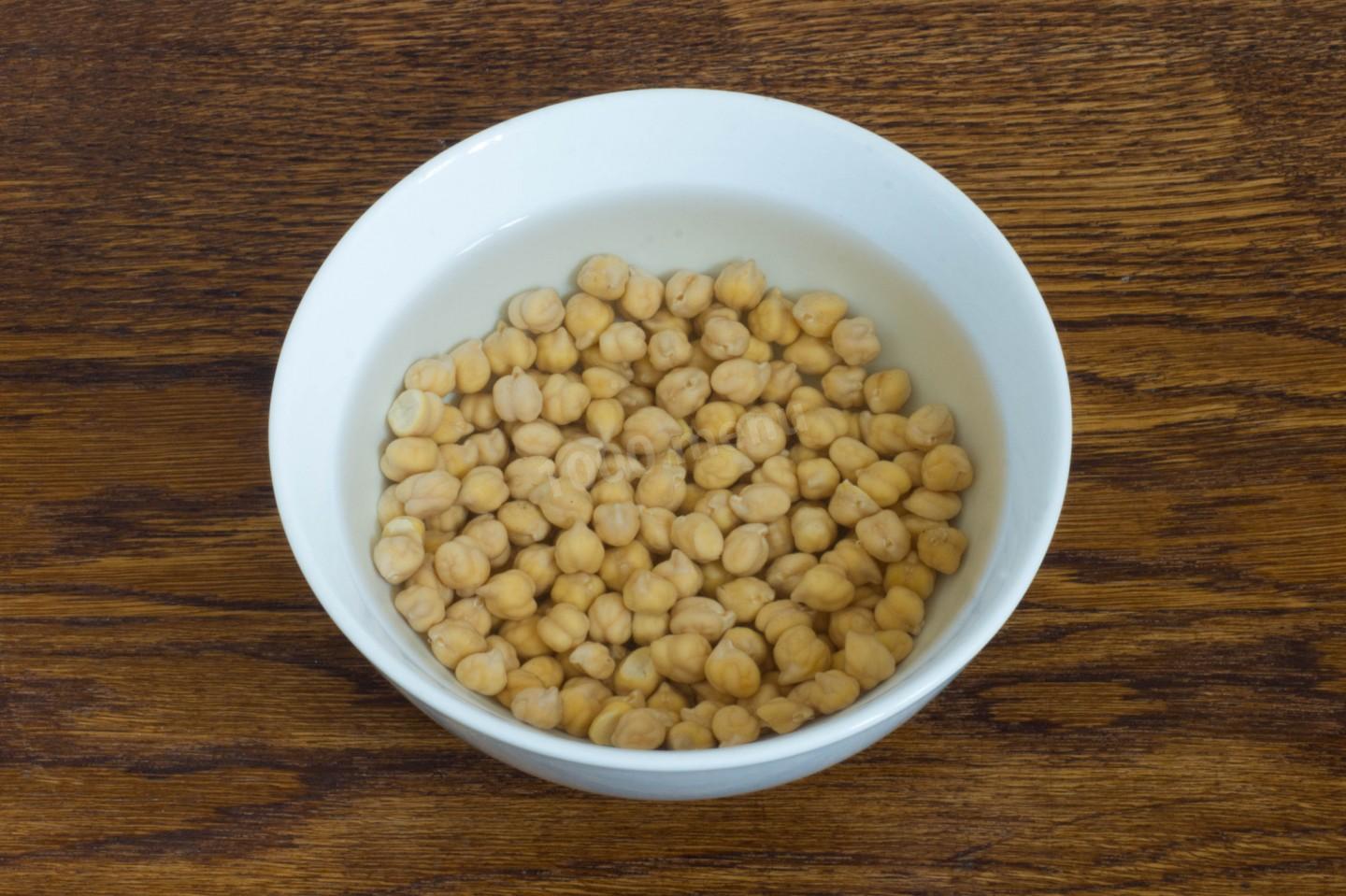
Cover the dried chickpeas with fresh water and leave them overnight to swell.
-
Step 3:
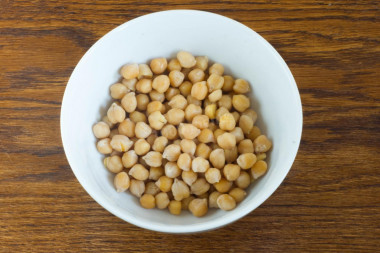
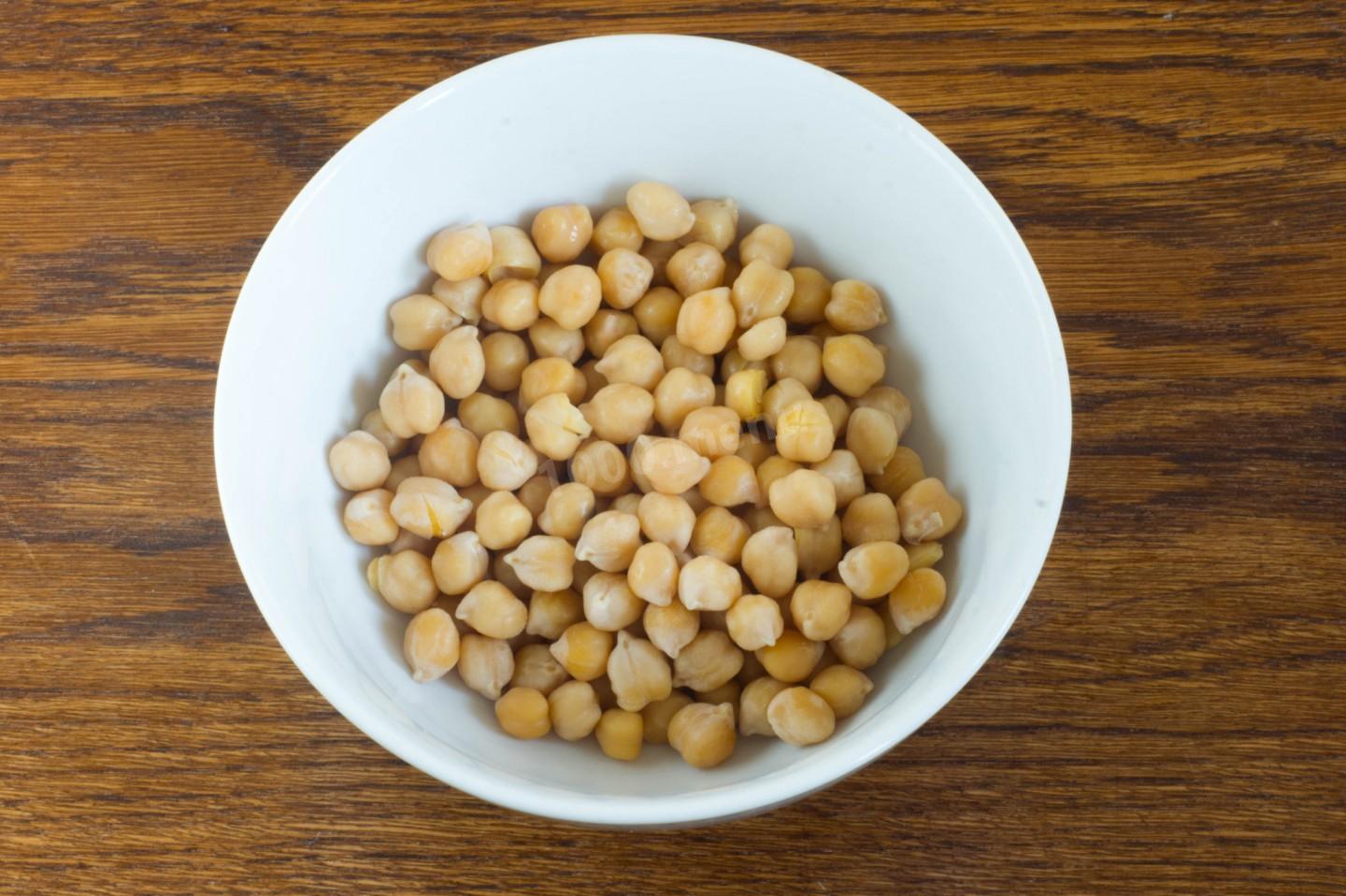
Rinse the soaked chickpeas, put them in a pot, cover with fresh water, and—once it boils and you've skimmed off the foam—cook for about 40–50 minutes. The chickpeas should be fully tender.
-
Step 4:
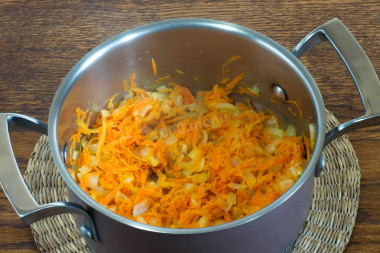
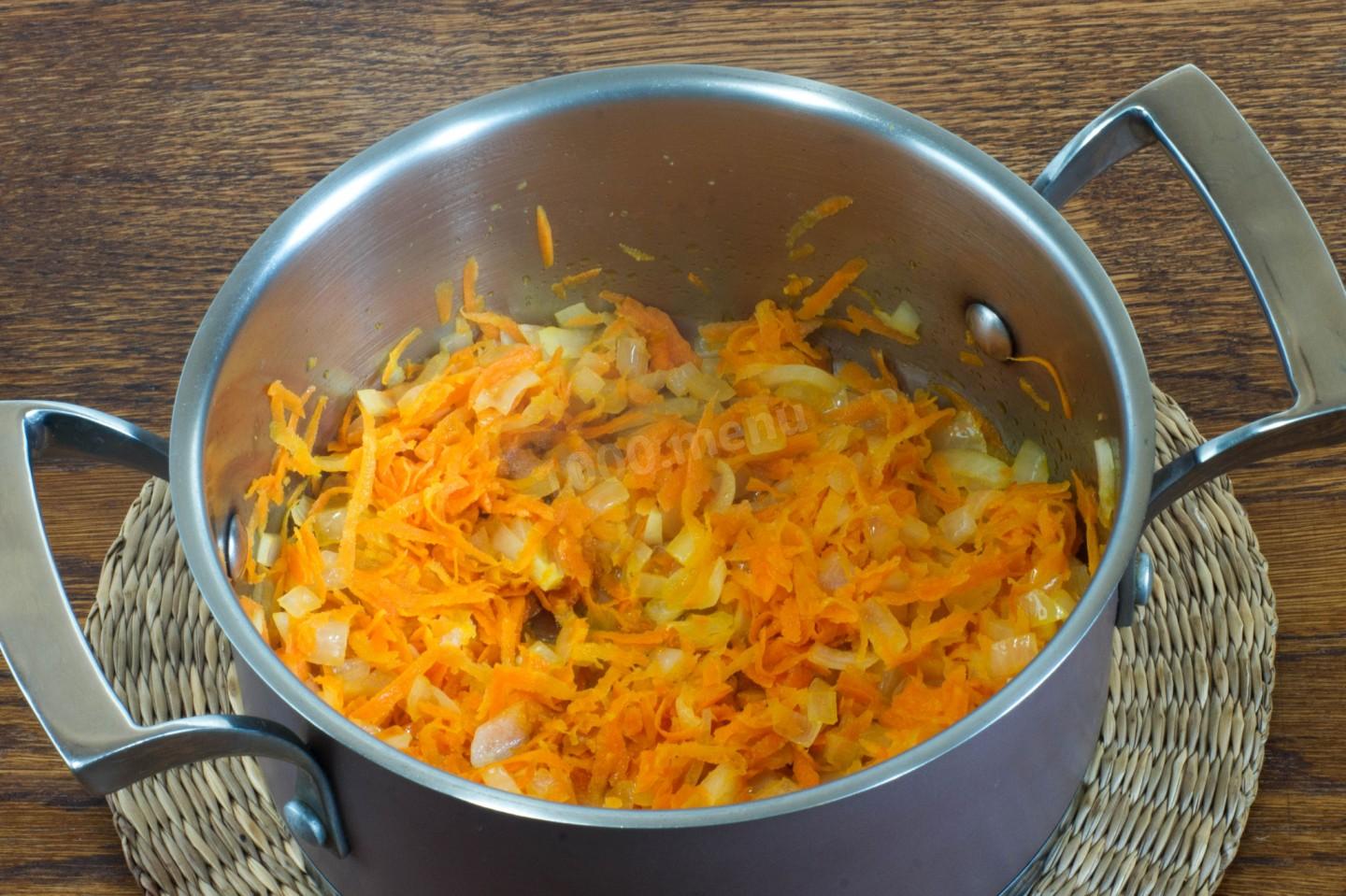
Grate the peeled carrot on the coarse holes of a grater, dice the peeled onion small, and finely chop the peeled garlic. Heat the vegetable oil in a heavy-bottomed pot and sauté the chopped vegetables over medium heat, stirring, until soft.
-
Step 5:
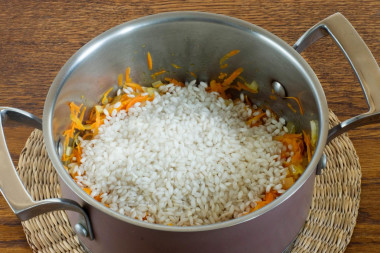
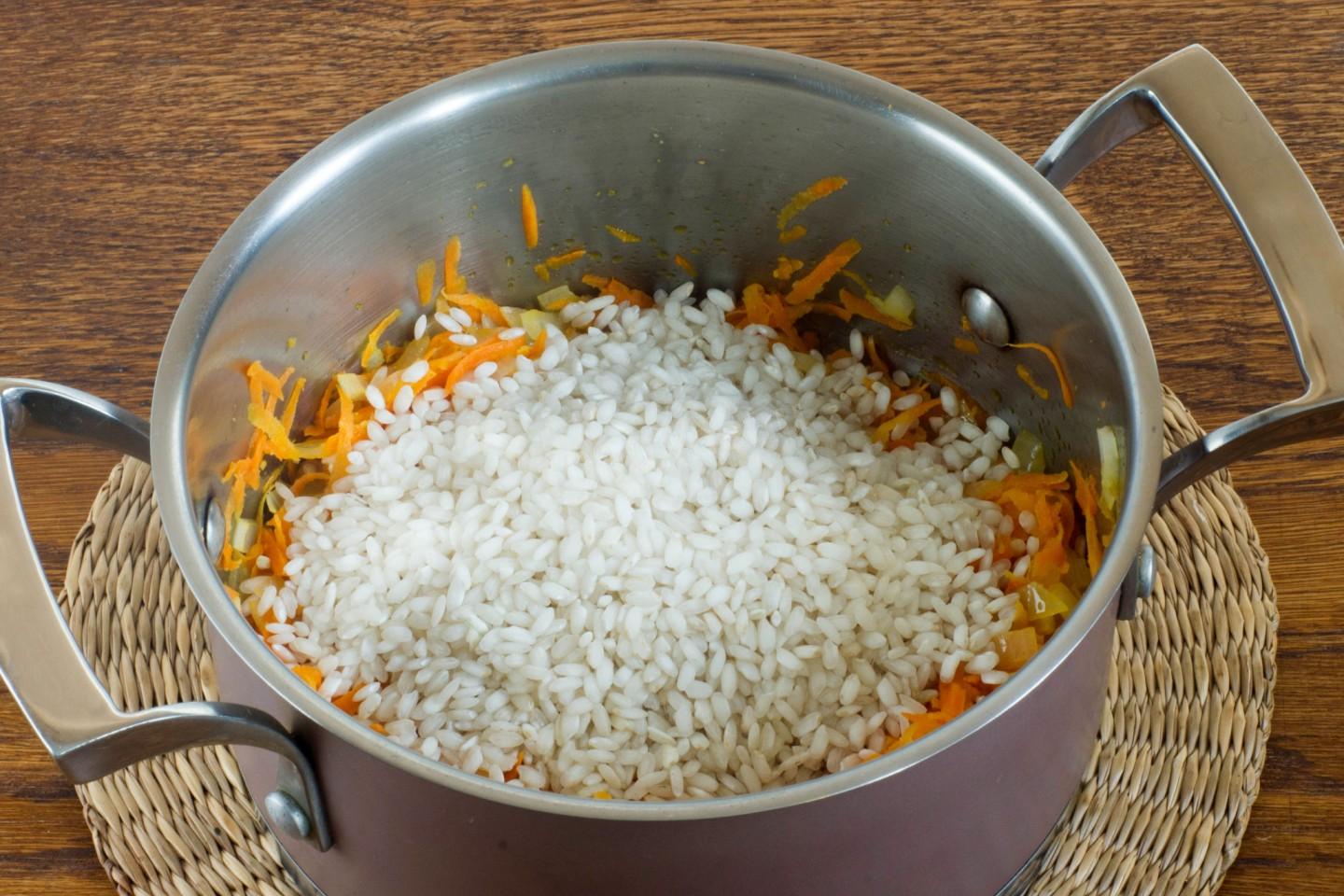
Add the rice to the pot, rinsing it first if needed.
-
Step 6:
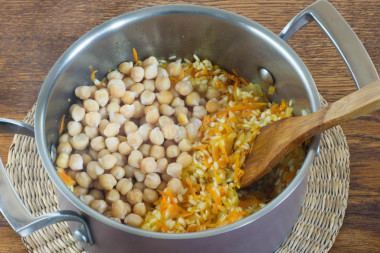
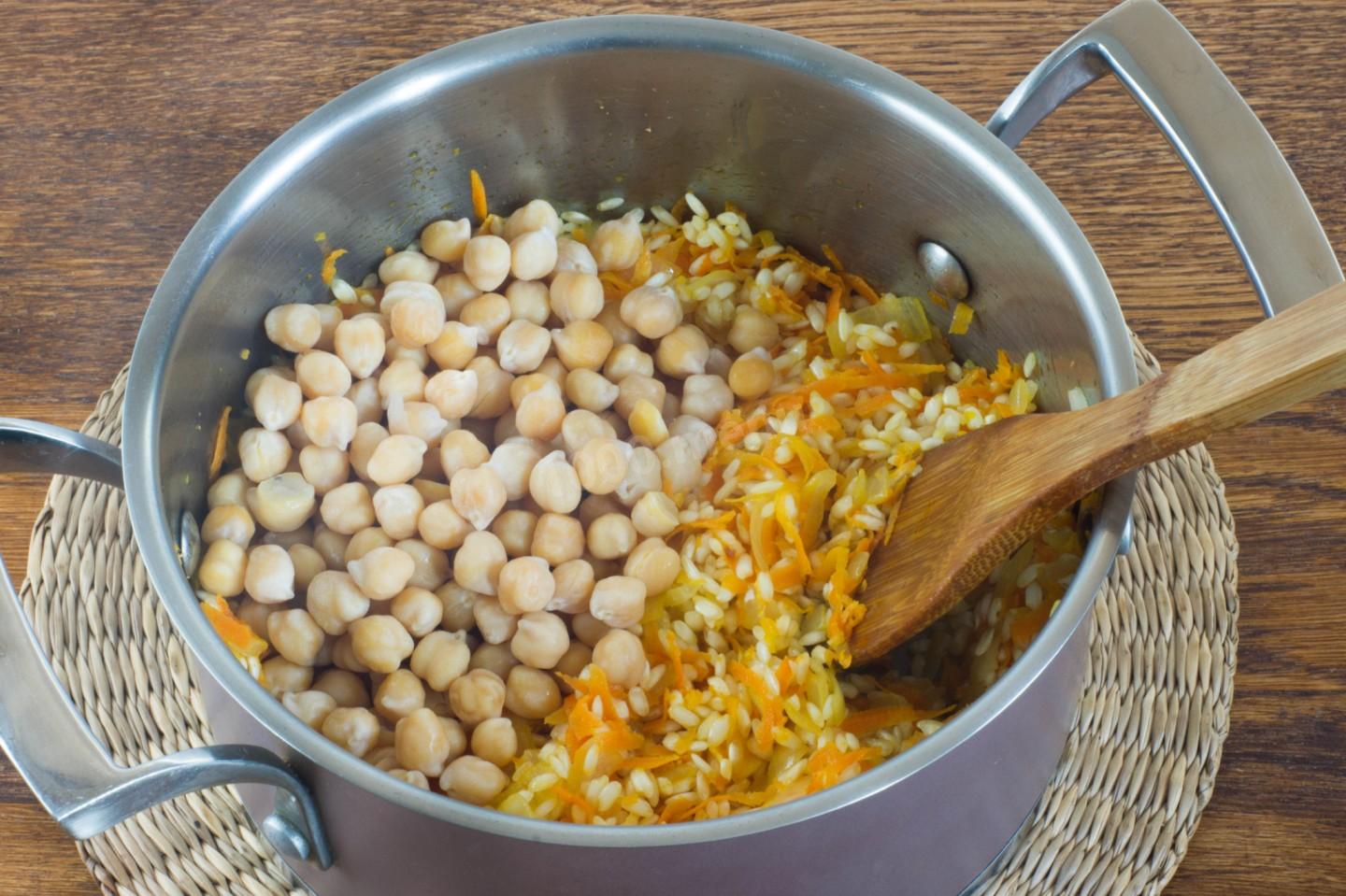
Add the cooked chickpeas to the pot.
-
Step 7:
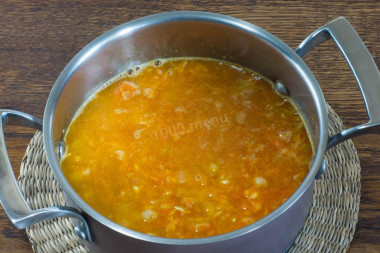
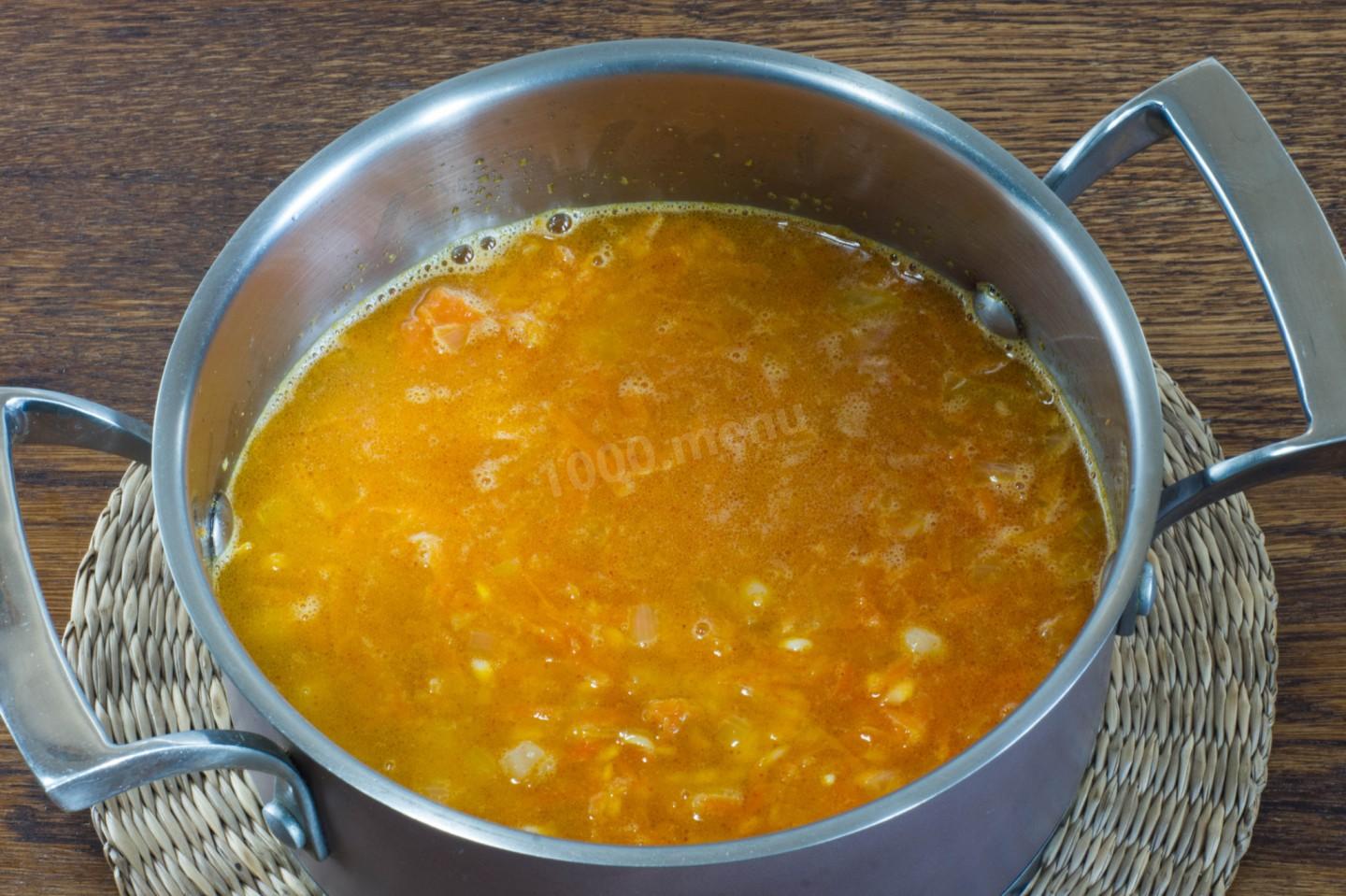
Pour in the hot water and add the salt, ground black pepper, and paprika. Stir, bring to a boil, then cook over the lowest heat until the rice is fully done—about 20 minutes.
-
Step 8:
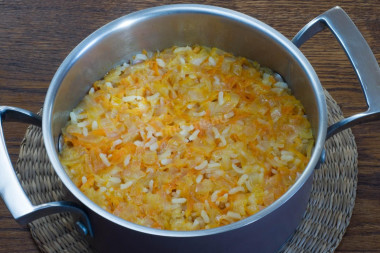
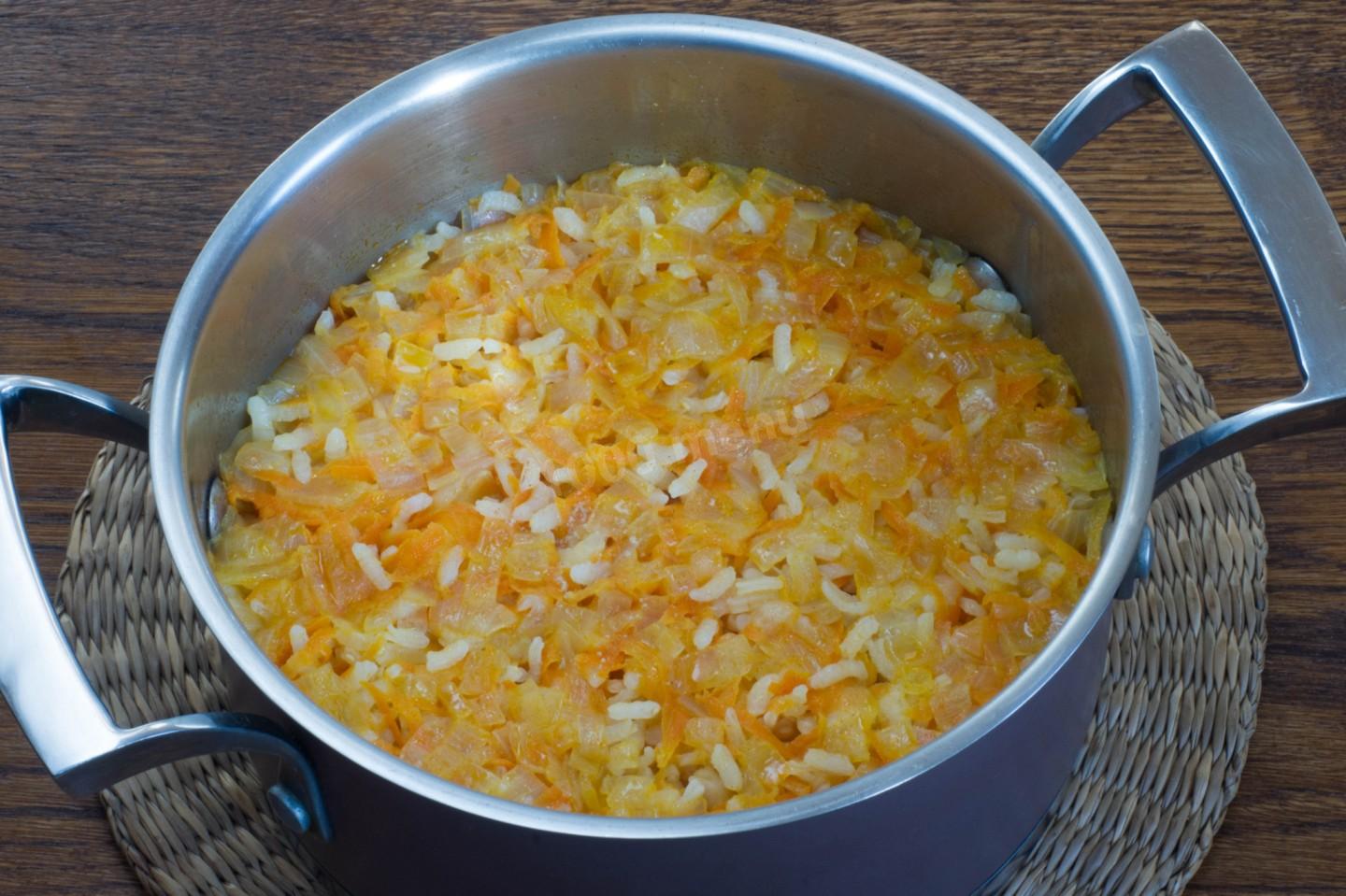
The water should be fully absorbed and the rice tender. Fluff the finished pilaf with a fork and serve. Vegetarian chickpea pilaf is best when freshly made.
- Along with the onion and carrot, you can add a little finely chopped sweet bell pepper to the pilaf. When serving, top the chickpea pilaf with chopped herbs—green onion, dill, or parsley—to make it more appealing and festive. Beyond the black pepper and paprika, you can add other spices like cumin, coriander, bay leaf, curry, turmeric, or hot pepper.
- Important: for rice dishes that turn out great every time, read up on how to choose rice and the tricks to cooking it.
- Keep in mind that how you cut the carrot changes the result: grated carrot breaks down into the dish as it cooks and blends evenly with the other ingredients, while carrot cut into strips or cubes holds its shape.
- Since everyone's tolerance for salt, sweetness, bitterness, heat, sourness, and spice is different, always add seasonings to your own taste. If you're using a spice for the first time, remember some are especially easy to overdo (chili pepper, for instance).
Caloric content of the products possible in the composition of the dish
- Onion - 41 kcal/100g
- Raw wild rice - 353 kcal/100g
- Brown raw rice - 360 kcal/100g
- Boiled brown rice - 119 kcal/100g
- White fortified raw rice - 363 kcal/100g
- White fortified boiled rice - 109 kcal/100g
- White rice, steamed, with long grains raw - 369 kcal/100g
- Steamed white rice, boiled with long grains - 106 kcal/100g
- Instant dry rice - 374 kcal/100g
- Instant rice, ready to eat - 109 kcal/100g
- Fig - 344 kcal/100g
- Carrots - 33 kcal/100g
- Dried carrots - 275 kcal/100g
- Boiled carrots - 25 kcal/100g
- Garlic - 143 kcal/100g
- Ground black pepper - 255 kcal/100g
- Vegetable oil - 873 kcal/100g
- Salt - 0 kcal/100g
- Chickpeas - 364 kcal/100g
- Water - 0 kcal/100g
- Paprika - 289 kcal/100g