Poltava Halushky (Ukrainian Dumplings)
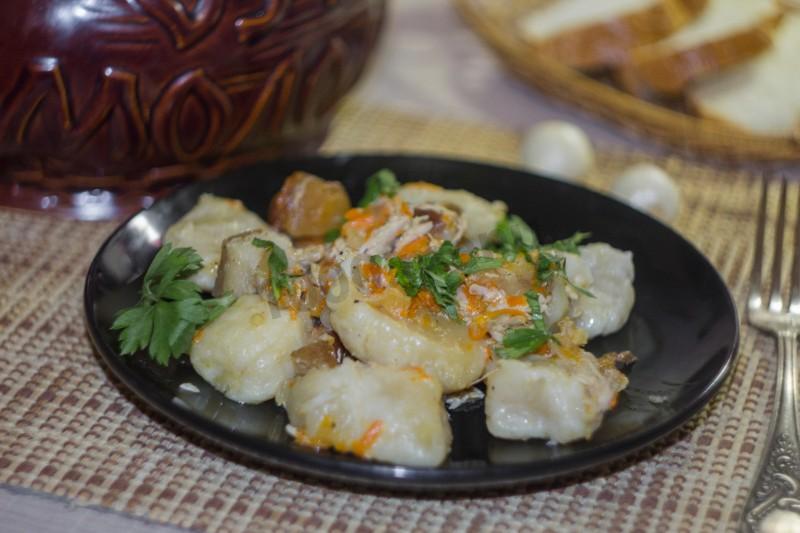
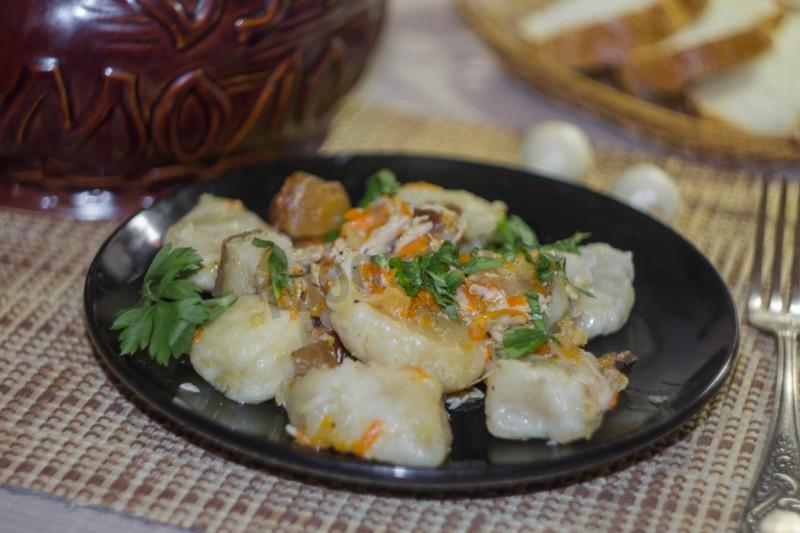
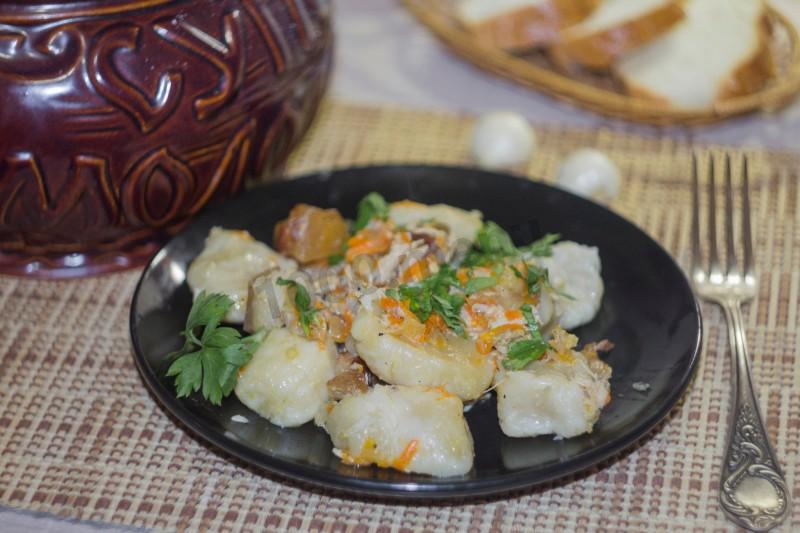
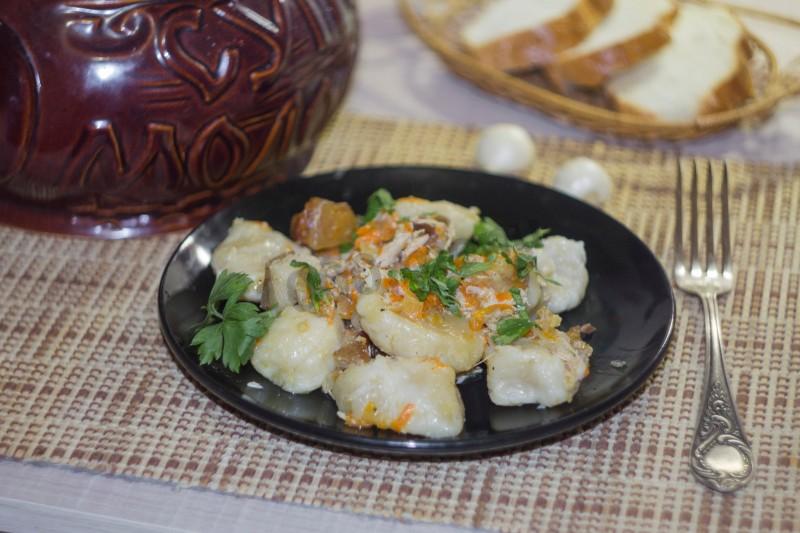
The full flavor of Ukrainian cooking on your table! Simple, delicious, and filling! I'm originally from Ukraine — in fact, my parents studied and met in Poltava — so I just couldn't pass this dish by. Many people know there's even a monument to halushky in Poltava, which tells you there's something special about this dish. I'd tried it before, of course, but this was my first time making it. I aimed for the way ordinary Ukrainian families love it, and the way my own family does. As my husband put it: Ukrainian dumplings!

Cooking method
-
Step 1:
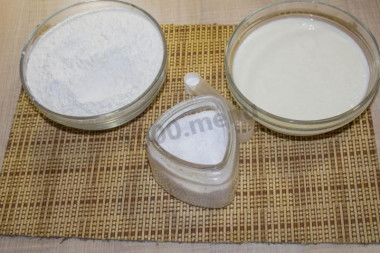
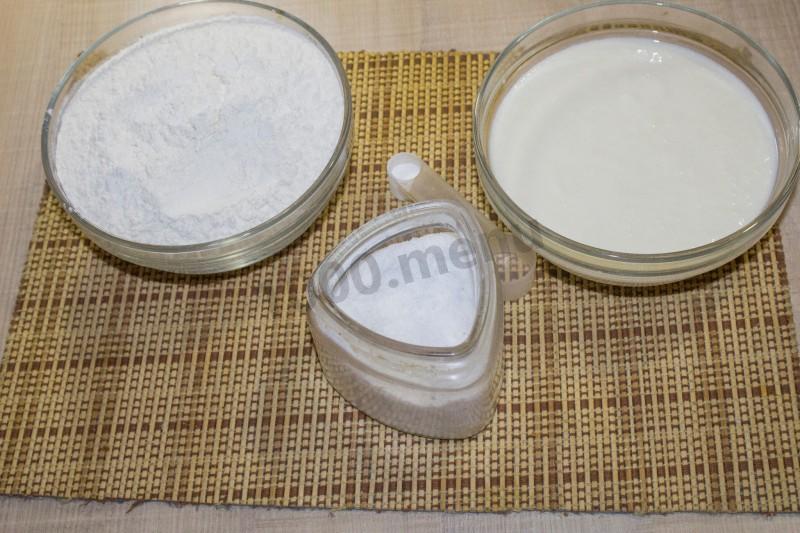
The ingredients for the dough.
-
Step 2:
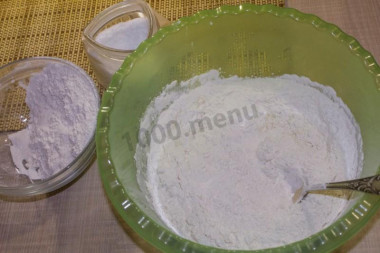
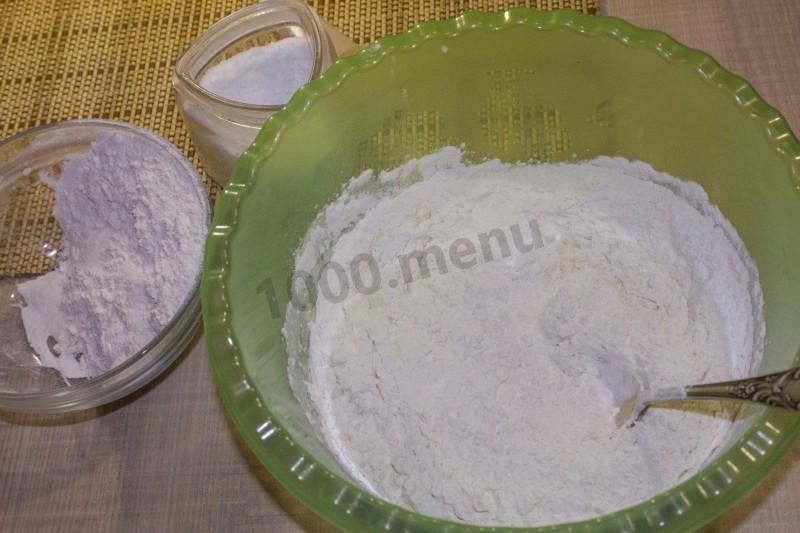
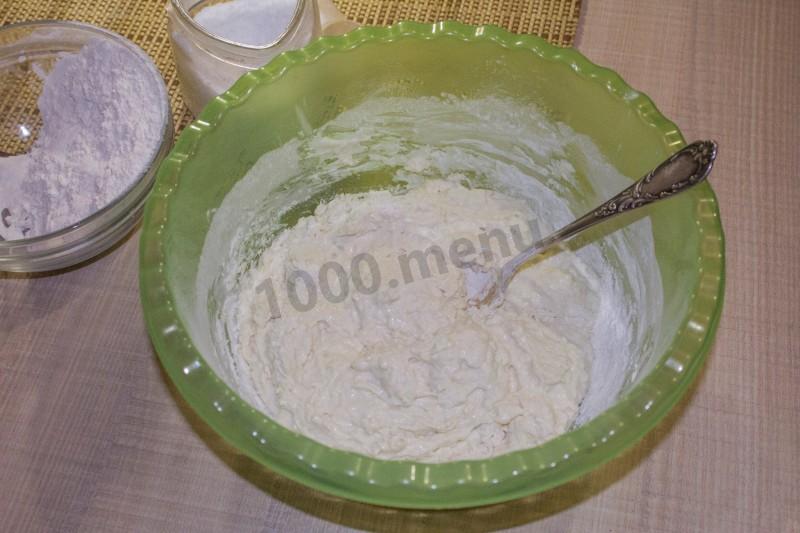
Stir about two-thirds of the flour into the kefir.
-
Step 3:
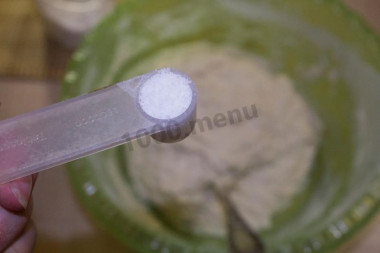
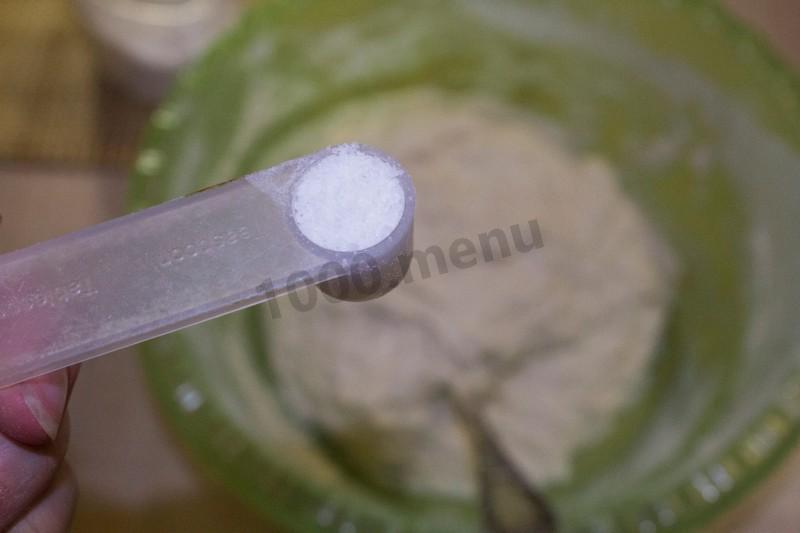
Then add the baking soda and salt.
-
Step 4:
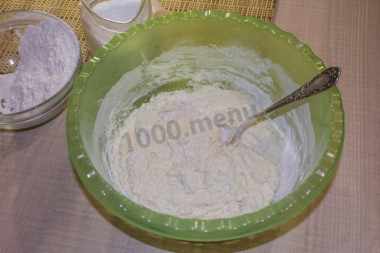
Add the rest of the flour, holding back about 1/2 cup for dusting the counter.
-
Step 5:
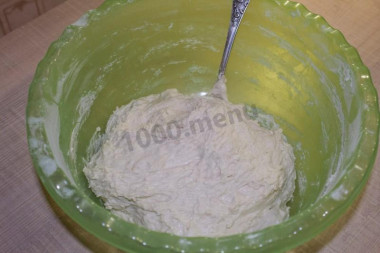
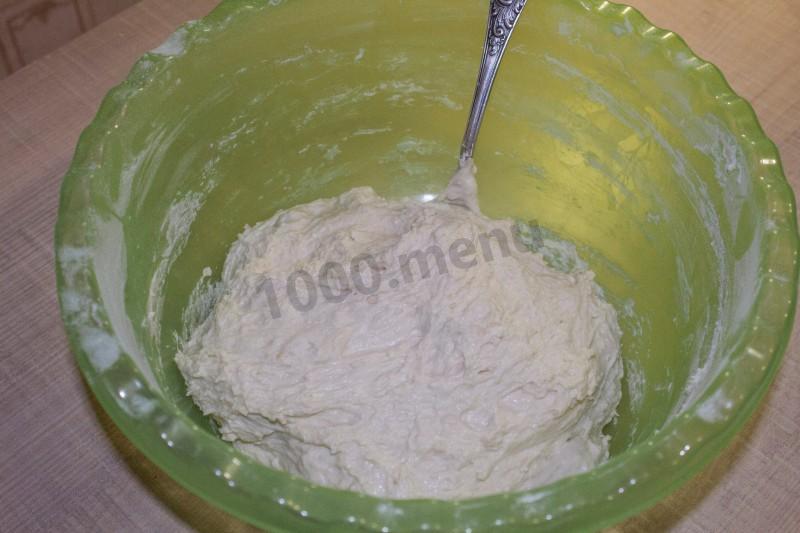
The dough should come out soft, slightly sticky, and not too stiff — workable, about the consistency of a kefir-pastry dough. Let it rest for 20 minutes so the gluten in the flour can relax.
-
Step 6:
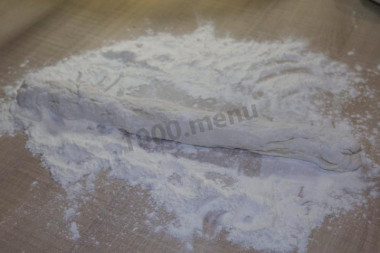
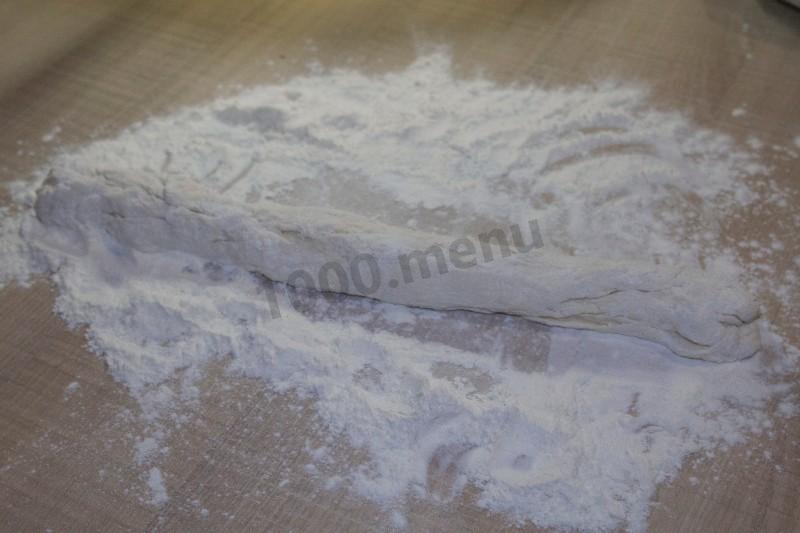
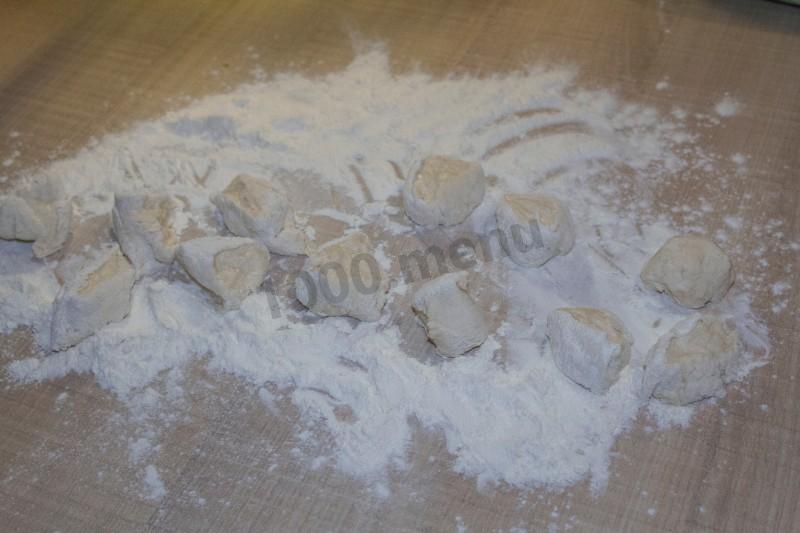
After resting, generously flour the counter, take a piece of dough, and roll it into a rope about 3/4 inch (2 cm) thick.
-
Step 7:
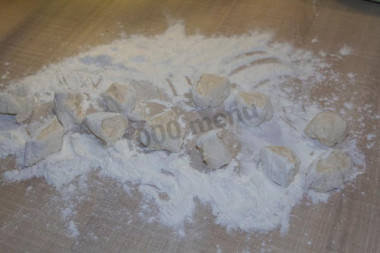
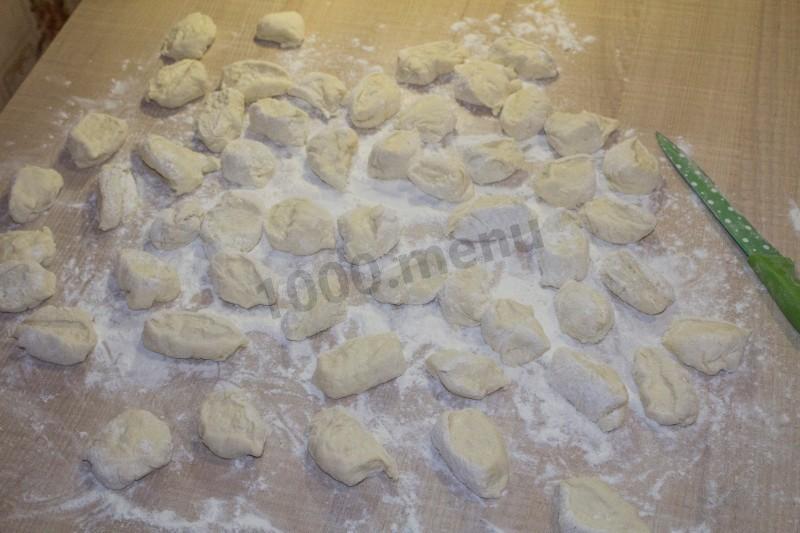
Cut the rope into pieces about 3/4 inch (2 cm) thick.
-
Step 8:
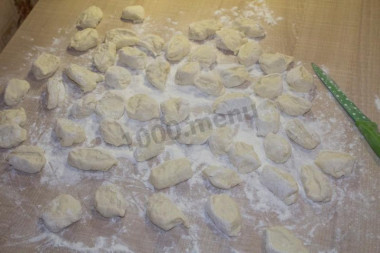
Now cook the dumplings. You can do it two ways.
-
Step 9:
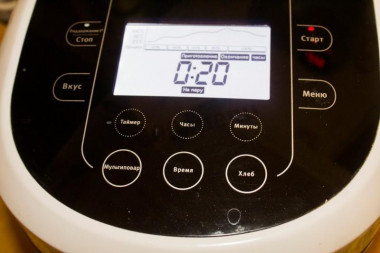
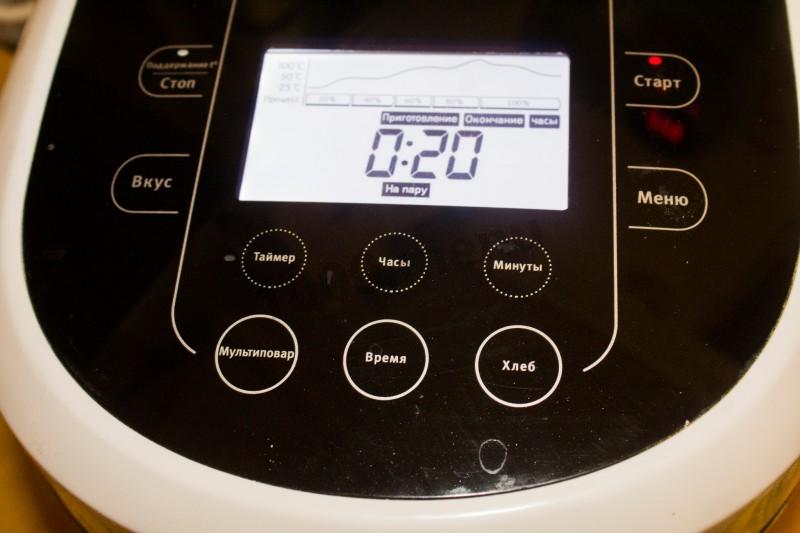
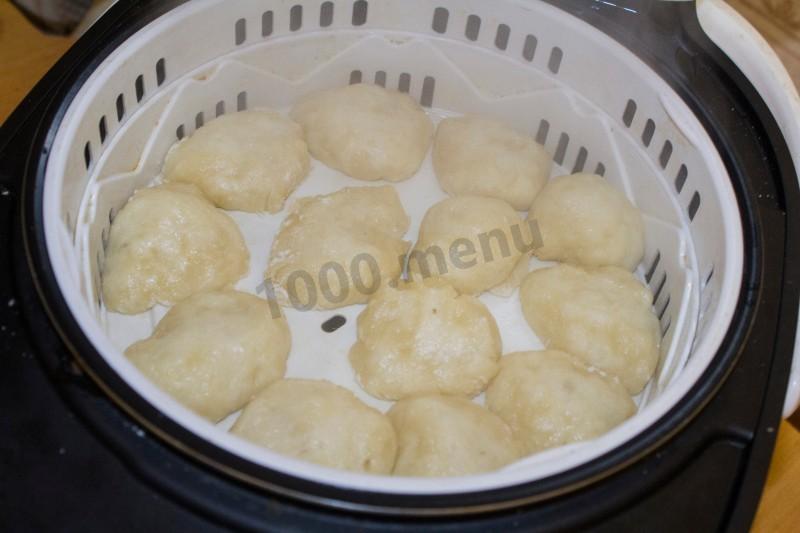
Steamed (I use a multicooker as a steamer, set to the right mode).
-
Step 10:
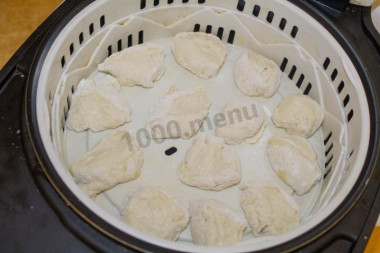
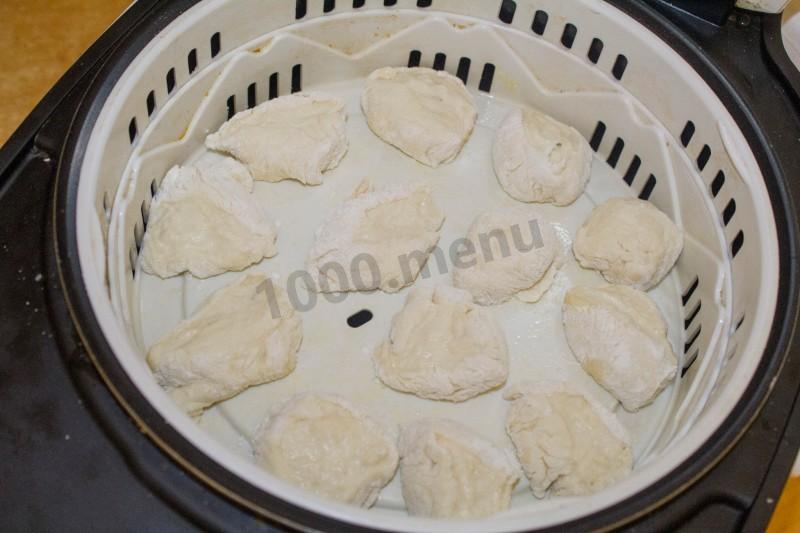
Once the water boils, set up the steamer rack greased with vegetable oil, and place the dumplings apart from one another, since they expand as they cook.
-
Step 11:
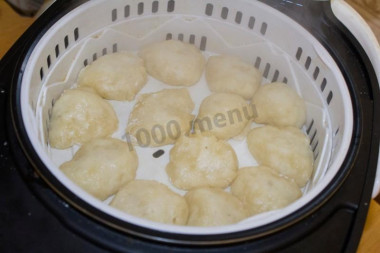
Steam for 7 minutes.
-
Step 12:
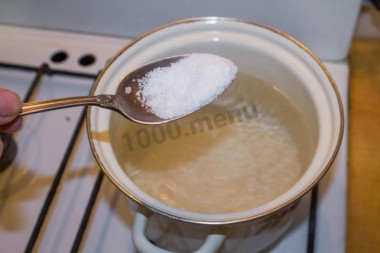
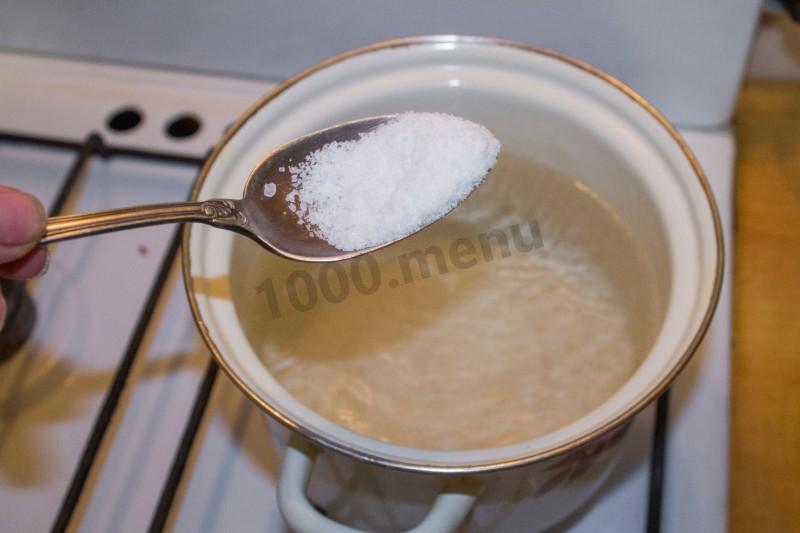
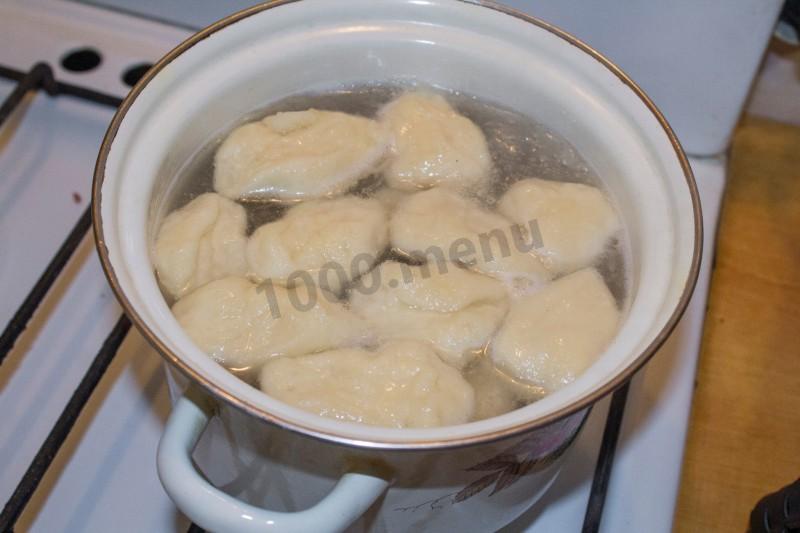
Or boil the dumplings in salted water for 5-7 minutes.
-
Step 13:
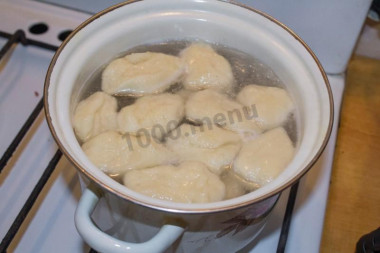
Scoop out the cooked dumplings with a slotted spoon.
-
Step 14:
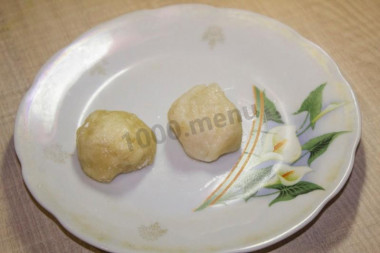
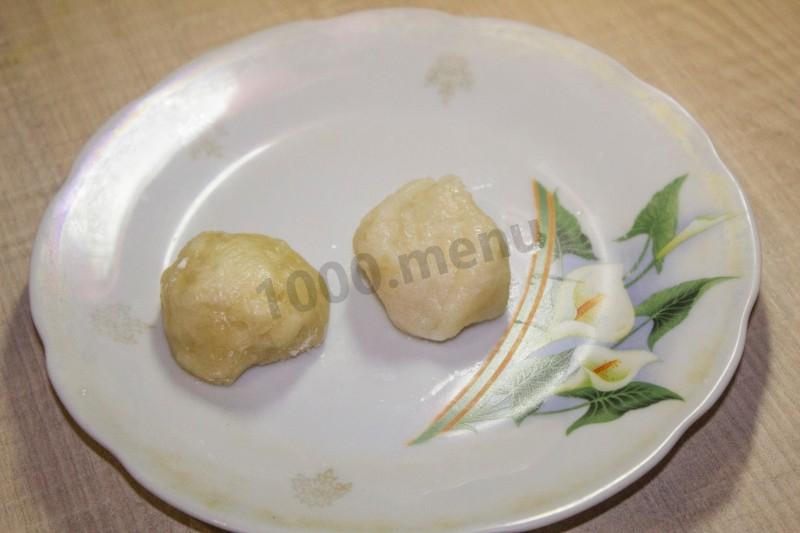
Steamed dumplings are said to be fluffier. I compared them side by side: on the left, steamed; on the right, boiled. They seemed about the same to me, except the steamed one held a nicer shape — though maybe that's just my steamer. Try both ways and compare!
-
Step 15:
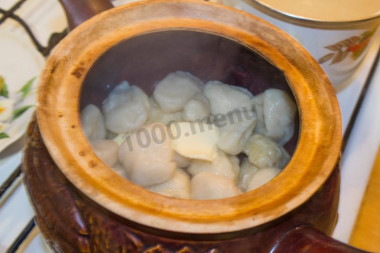
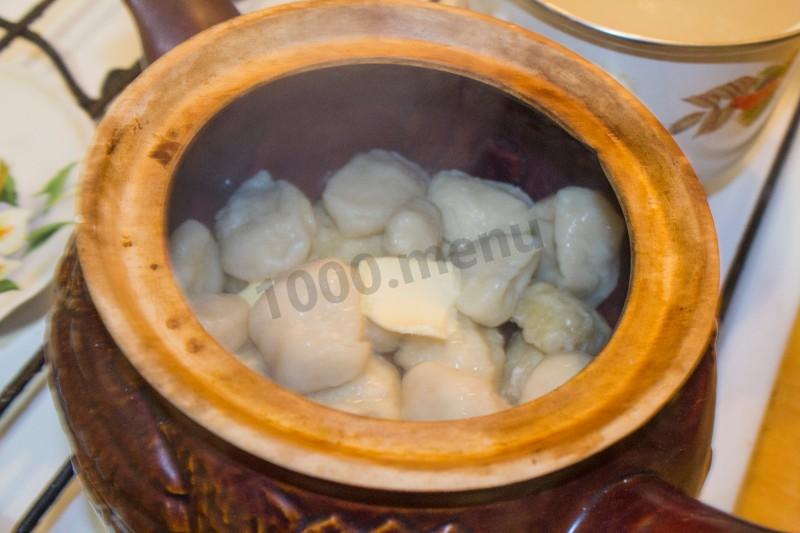
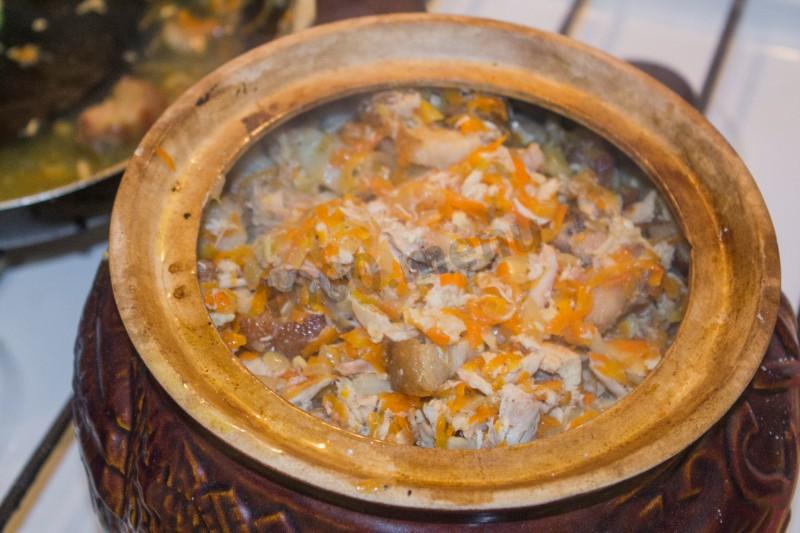
Add a small pat of butter to each cooked batch so the dumplings don't stick together, shaking the bowl now and then. I pile mine into a big clay pot and cover it, which keeps them warm and lets me bake them later in the oven if I like. You can eat them just like this, but they're far better served with the sauce.
-
Step 16:
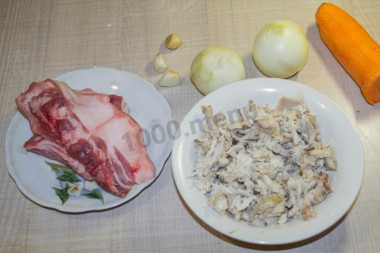
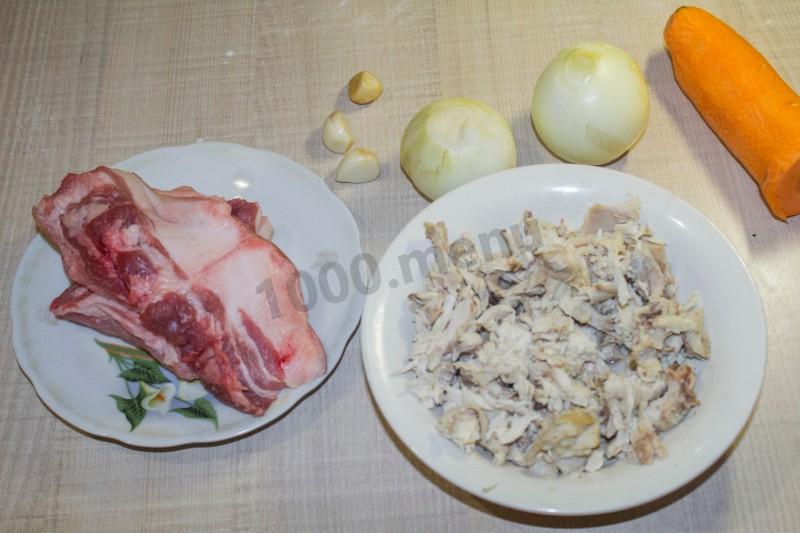
For the sauce you'll need: a little boiled chicken, onion, carrot, garlic, and pork belly (or fatback with a meat streak, or fatty pork). I like the pork belly because it's leaner — somewhere between fatback and meat.
-
Step 17:
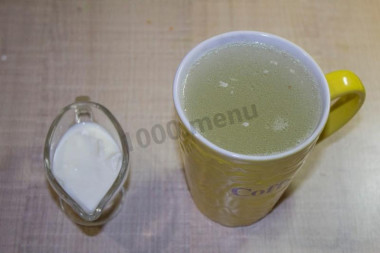
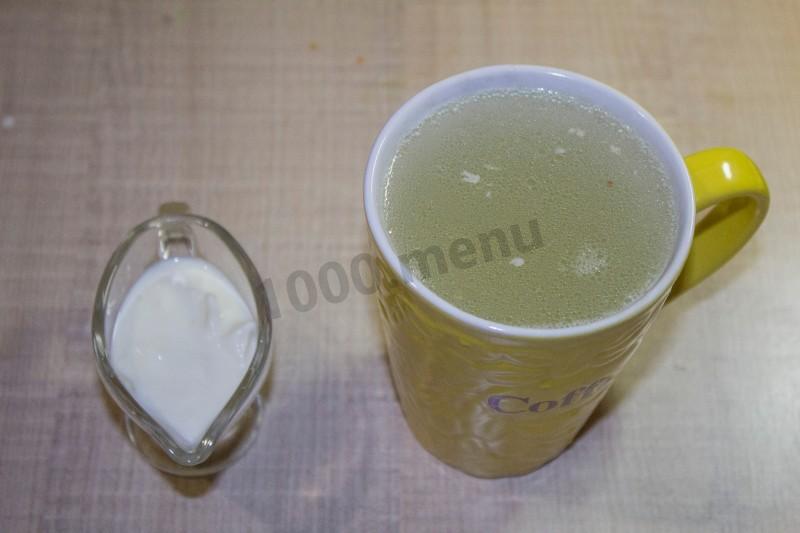
You'll also need the broth the chicken cooked in, plus a little sour cream.
-
Step 18:
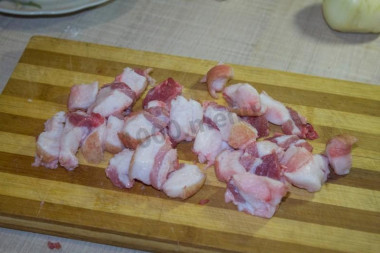
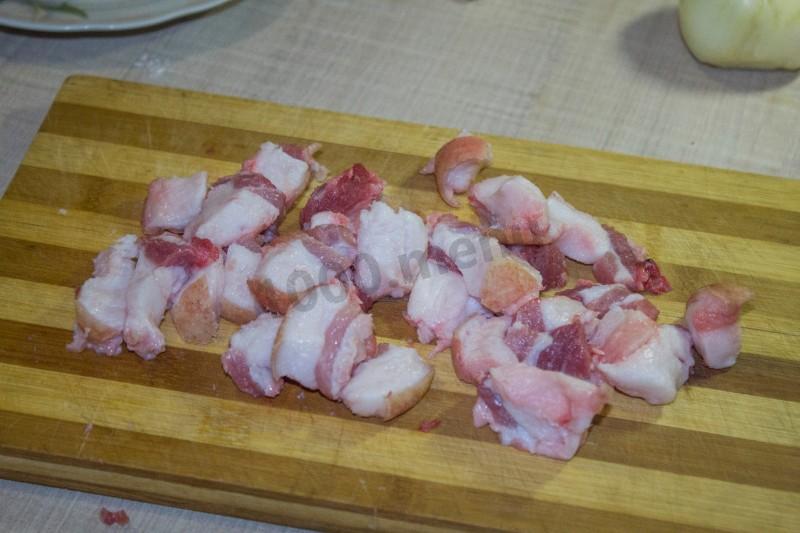
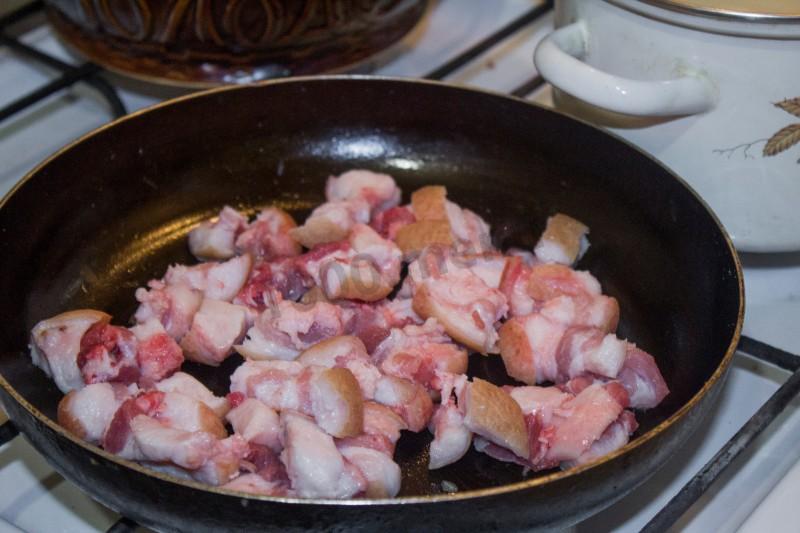
Cut the pork belly into rough pieces.
-
Step 19:
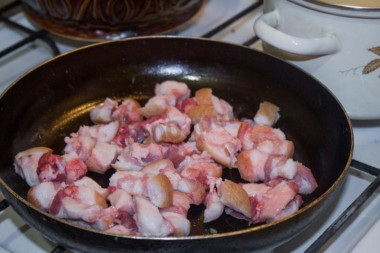
Fry it in a skillet to render some of the fat.
-
Step 20:
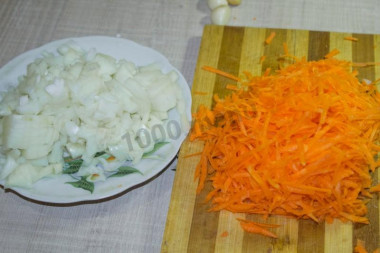
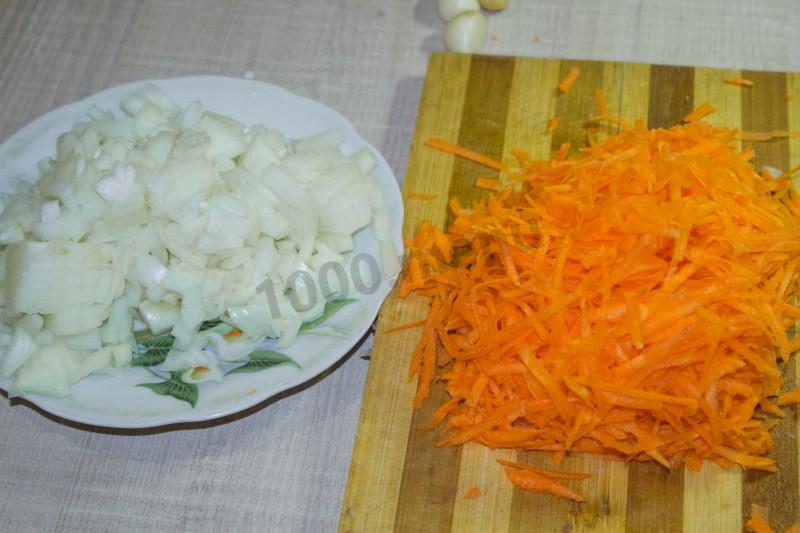
Meanwhile, chop the onion and grate the carrot.
-
Step 21:
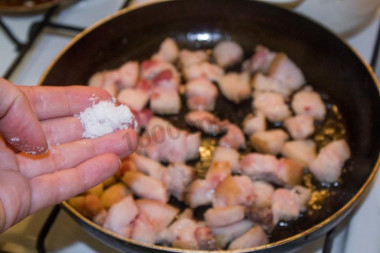
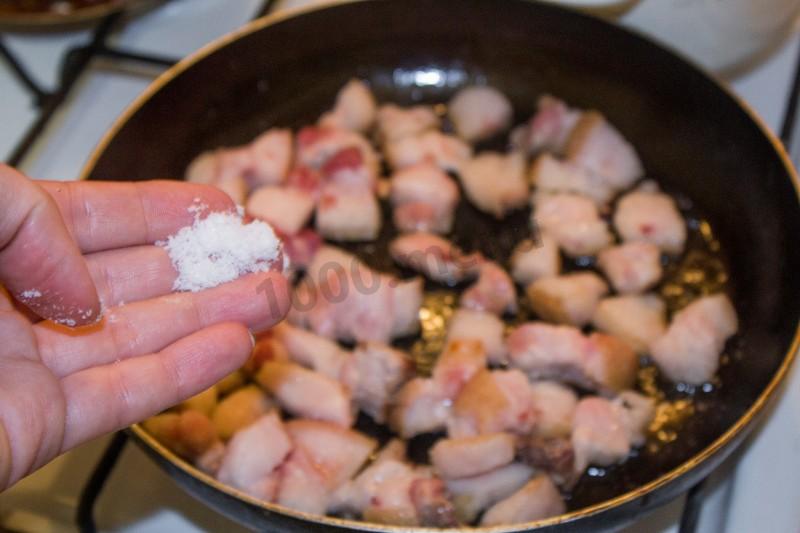
Salt the pork belly.
-
Step 22:
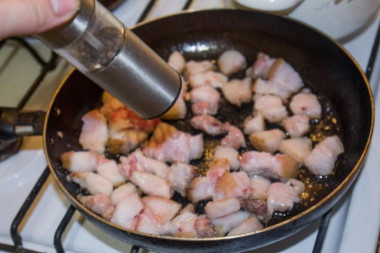
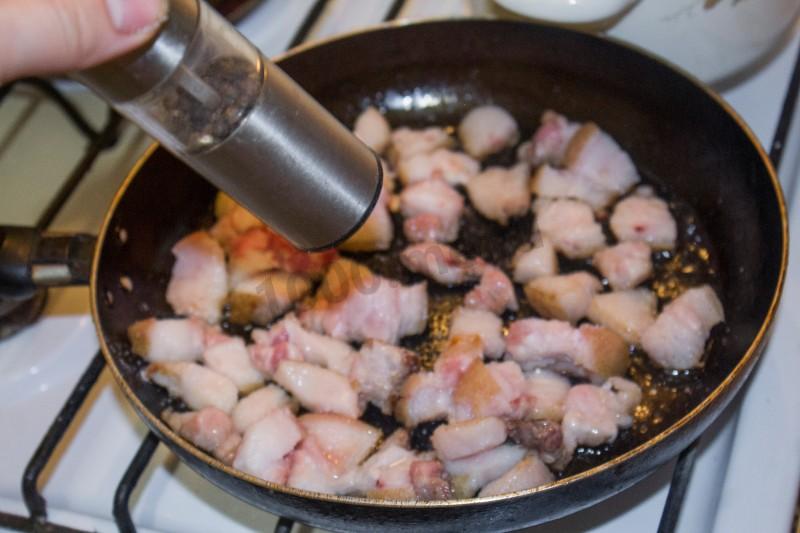
Add freshly ground black pepper.
-
Step 23:
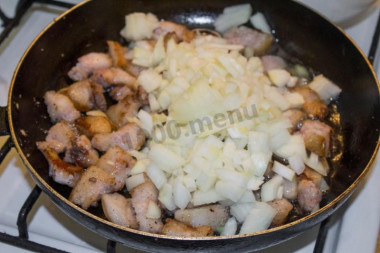
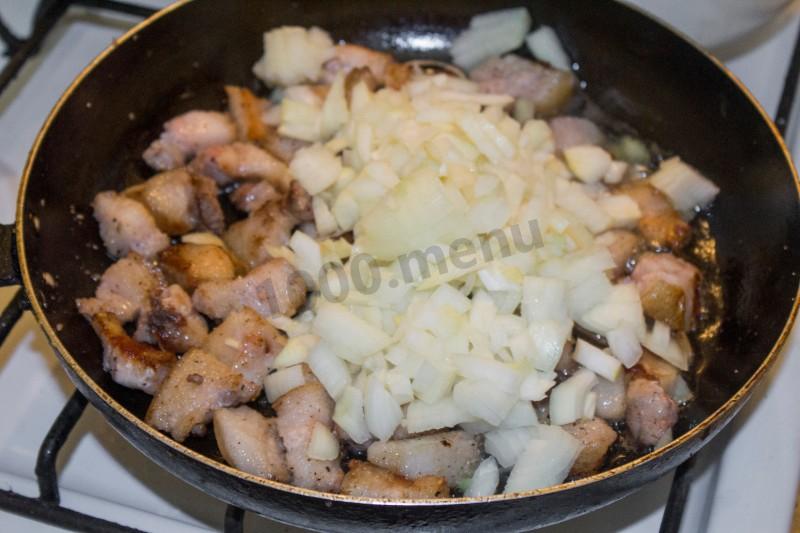
Once the pork belly has browned a little, add the chopped onion.
-
Step 24:
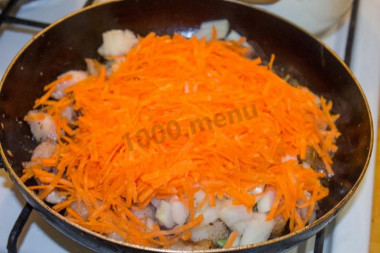
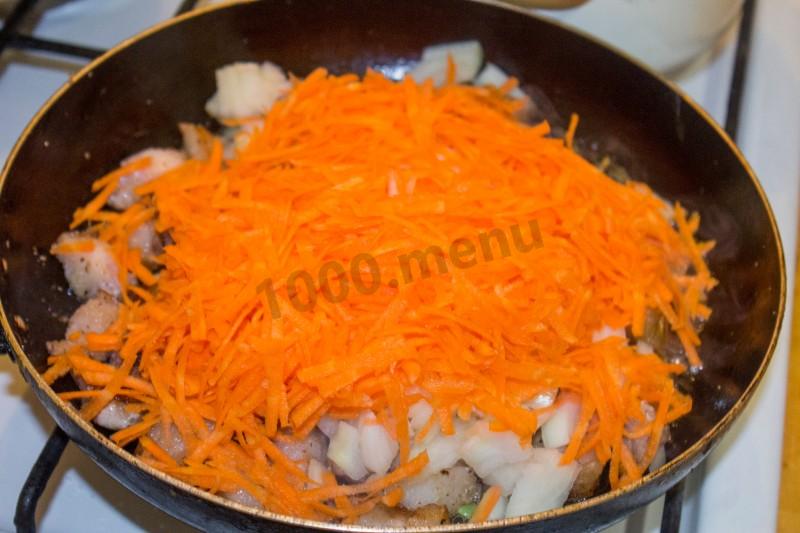
Then add the grated carrot, stir, and simmer covered for 5-7 minutes.
-
Step 25:
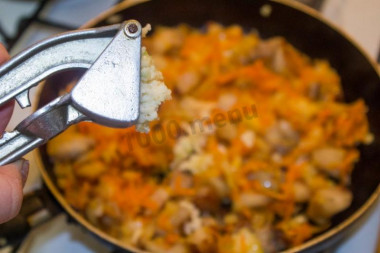
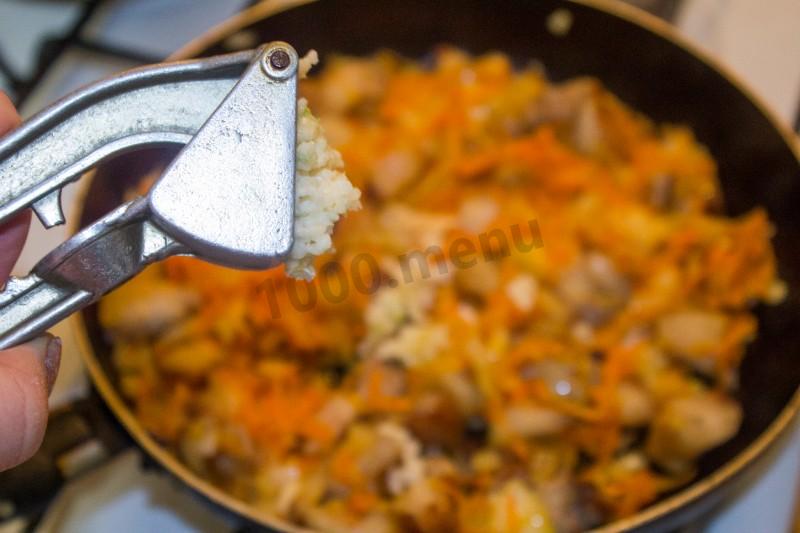
Then press in the garlic. At this point the kitchen smells incredible — chances are the whole household has come running to see what's cooking!
-
Step 26:
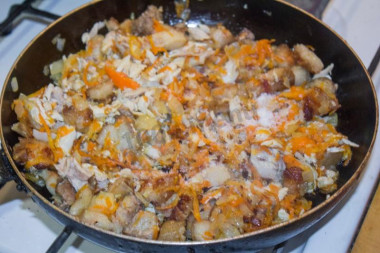
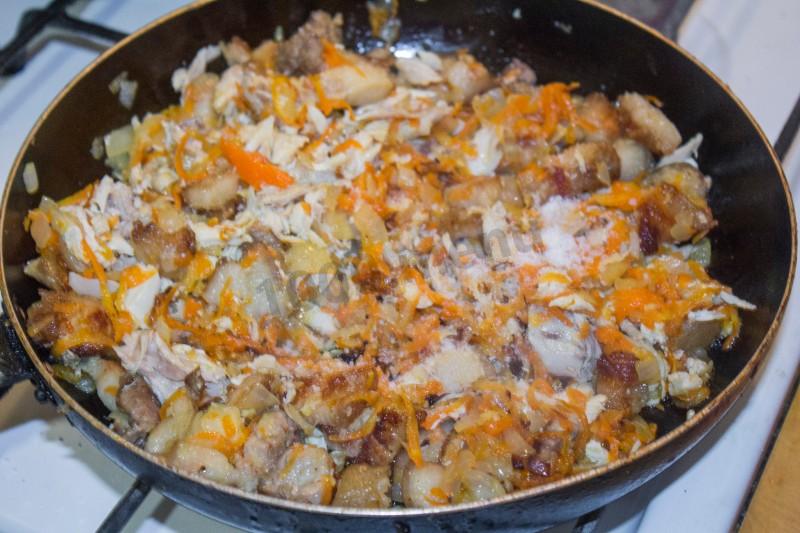
Add the boiled chicken.
-
Step 27:
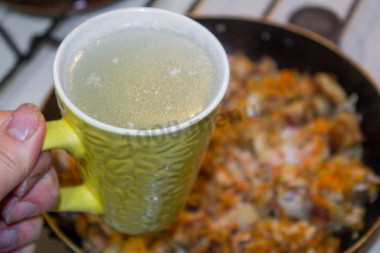
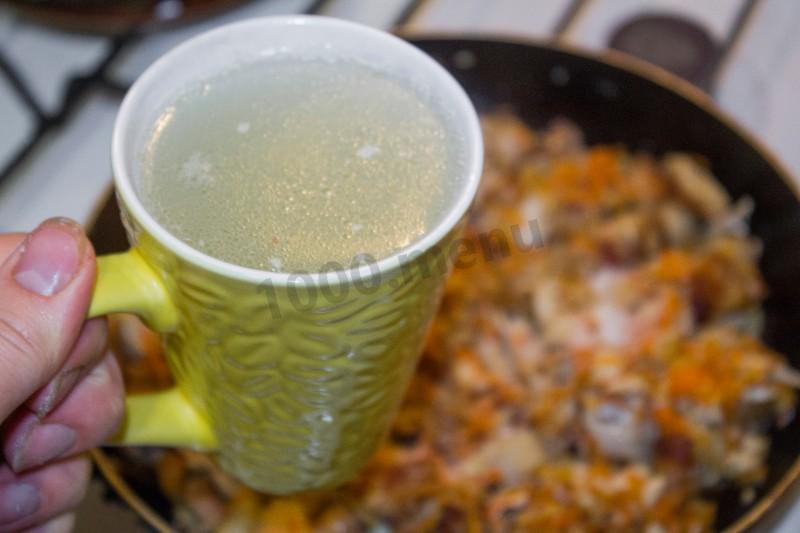
Pour in the broth.
-
Step 28:
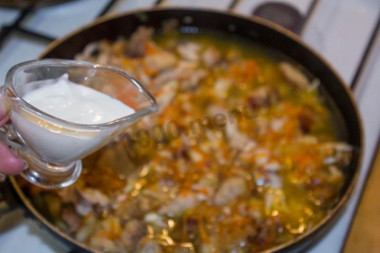
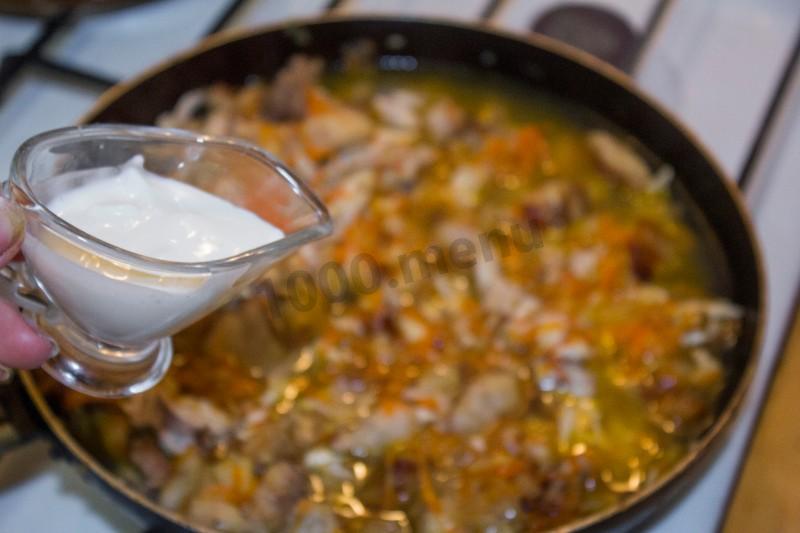
Add the sour cream, and a little more salt to taste if needed.
-
Step 29:
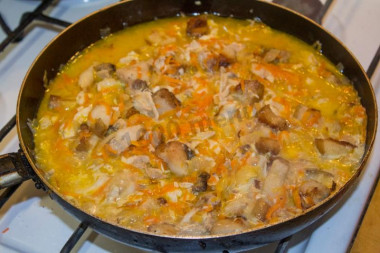
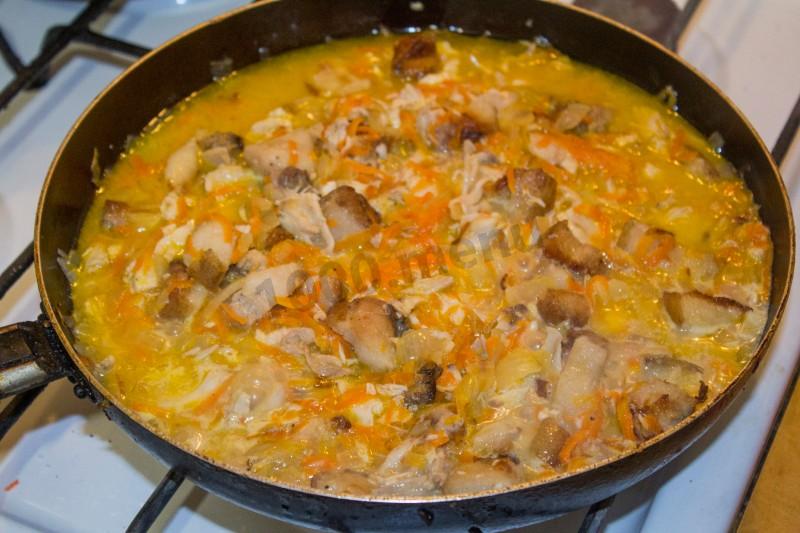
Simmer covered for another 5 minutes, judging by the pork belly — it should be tender. There are many sauce options: ground meat + onion + carrot + garlic + broth + sour cream; chicken + onion + carrot + garlic + ...; fatback fried to cracklings + onion + ...; meat + onion + ... Pick your favorite!
-
Step 30:
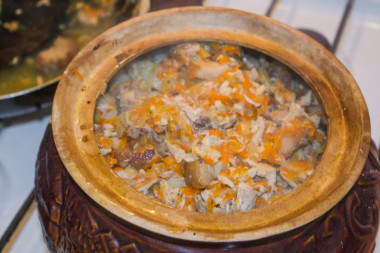
Spoon the sauce over the dumplings and serve! You can take it further and bake them in that clay pot for another 20 minutes — but to me they're already incredibly good!
-
Step 31:
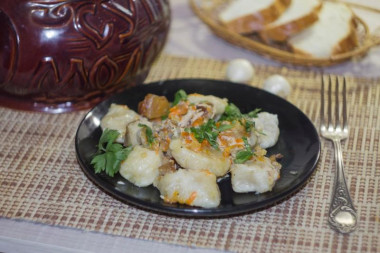
Enjoy!
Caloric content of the products possible in the composition of the dish
- Category I chicken - 238 kcal/100g
- Category II chicken - 159 kcal/100g
- Chicken, flesh without skin - 241 kcal/100g
- Chickens - 140 kcal/100g
- Sour cream with 30% fat content - 340 kcal/100g
- Sour cream of 25% fat content - 284 kcal/100g
- Sour cream with 20% fat content - 210 kcal/100g
- Sour cream of 10% fat content - 115 kcal/100g
- Sour cream - 210 kcal/100g
- Carrots - 33 kcal/100g
- Dried carrots - 275 kcal/100g
- Boiled carrots - 25 kcal/100g
- Garlic - 143 kcal/100g
- Ground black pepper - 255 kcal/100g
- Whole durum wheat flour fortified - 333 kcal/100g
- Whole durum wheat flour, universal - 364 kcal/100g
- Flour krupchatka - 348 kcal/100g
- Flour - 325 kcal/100g
- Kefir fat - 62 kcal/100g
- Kefir of 1% fat content - 38 kcal/100g
- Low-fat kefir - 30 kcal/100g
- Kefir 'doctor beefy' 1,8% fat content - 45 kcal/100g
- Kefir 2.5% fat content - 53 kcal/100g
- Butter 82% - 734 kcal/100g
- Amateur unsalted butter - 709 kcal/100g
- Unsalted peasant butter - 661 kcal/100g
- Peasant salted butter - 652 kcal/100g
- Melted butter - 869 kcal/100g
- Vegetable oil - 873 kcal/100g
- Onion - 41 kcal/100g
- Fresh frozen soup greens in a package - 41 kcal/100g
- Greenery - 41 kcal/100g
- Baking soda - 0 kcal/100g
- Table salt - 0 kcal/100g
- Broth - 15 kcal/100g
- Podcherevok pork - 630 kcal/100g
Similar recipes
- Second course
- Meat and meat products
- Dairy products
- Vegetables
- Flour
- Spices seasonings spices
- Fats and oils
- Other
- Garlic
- Зелень
- Pepper
- Salt
- Vegetable oil
- Butter
- Broth
- Baking soda
- Cooking
- Galushki dumplings
- Meat second course
- Pork
- Poultry
- Kefir
- Sour cream
- Chicken with vegetables
- From carrots
- From onion
- No eggs