Egg-Wrapped Rice and Tuna Rolls
A tasty, simple recipe with a really unusual presentation! These rolls work on the table as either an appetizer or a full meal, like dinner. Since they're made Asian-style, you can serve chopsticks alongside.

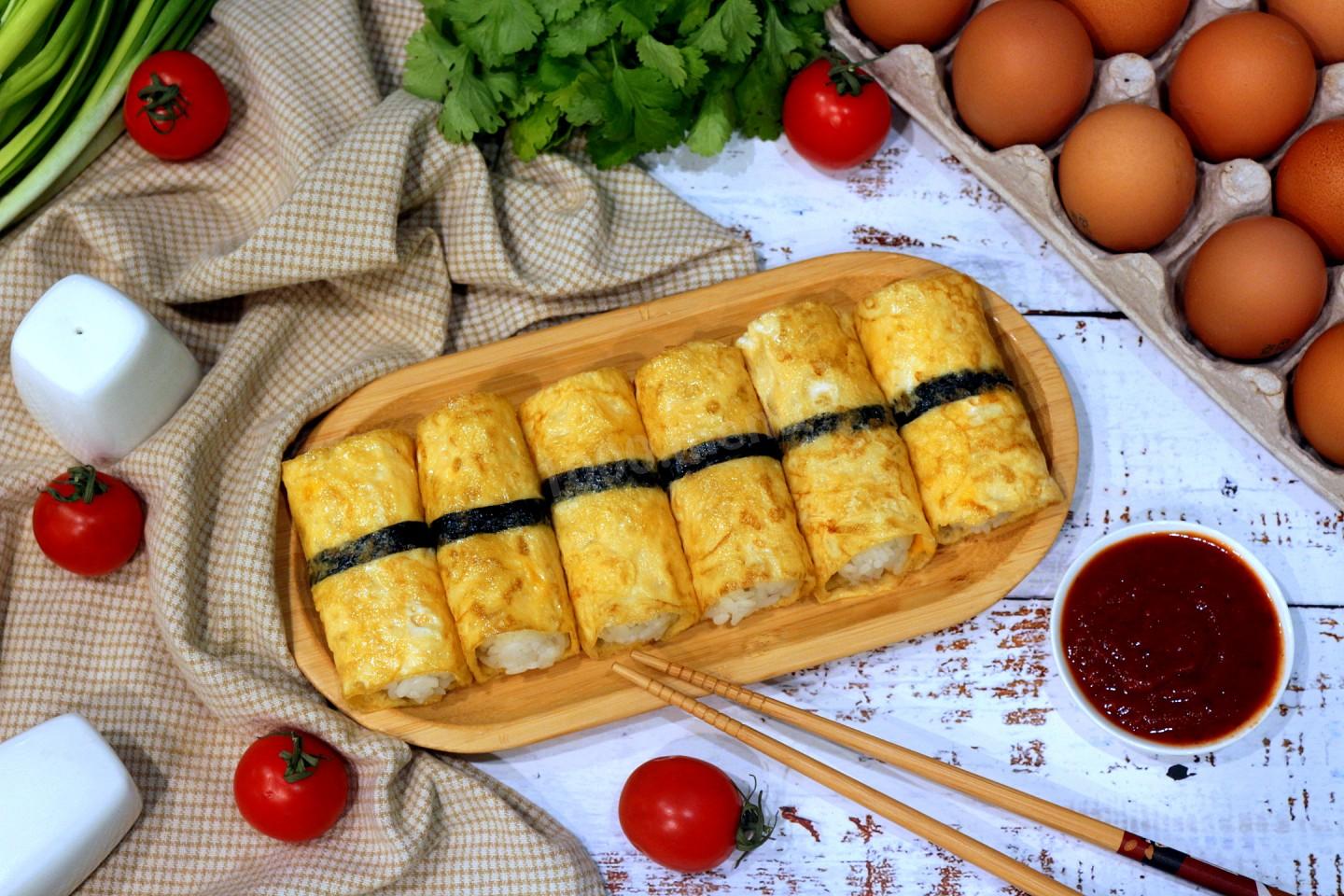

Cooking method
-
Step 1:
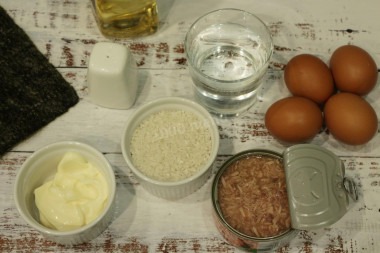
How do you make egg-wrapped rice and tuna rolls? Gather everything you need. Since these are Asian-style, I used chopsticks throughout the process.
-
Step 2:
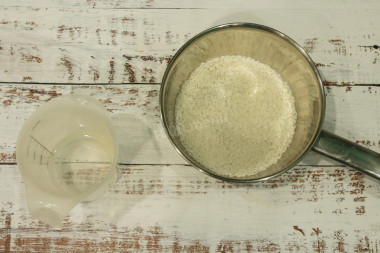
Use short-grain rice, since it has the stickiness you need — with any other kind, the rolls will likely fall apart. Put the rice in a bowl and rinse it 4 times, until the water runs clear. Transfer it to a saucepan, add water in a 1:1 ratio, and salt it. Cover and set over the heat.
-
Step 3:
Bring the water to a boil, keeping the lid on the whole time. Once it boils, lower the heat to its minimum and cook the rice for 15 minutes, until all the liquid is absorbed. Turn off the heat and let it finish, covered, for another 10 minutes so it reaches the right texture.
-
Step 4:
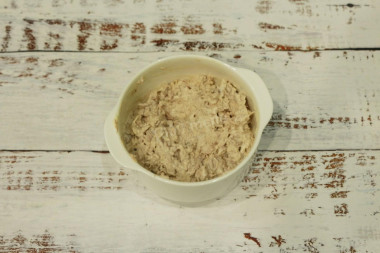
Open the can of flaked tuna, drain off all the liquid, and squeeze the tuna so it isn't wet — but not too hard, or it'll be dry. Put the tuna in a bowl and stir in the mayonnaise.
-
Step 5:
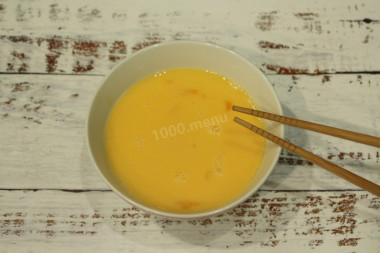
Crack the eggs into a deep bowl, add salt, and mix (I used chopsticks).
-
Step 6:
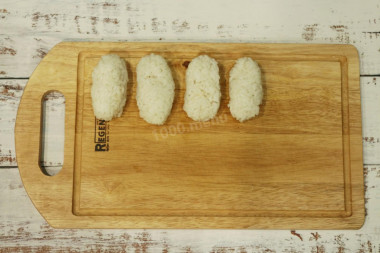
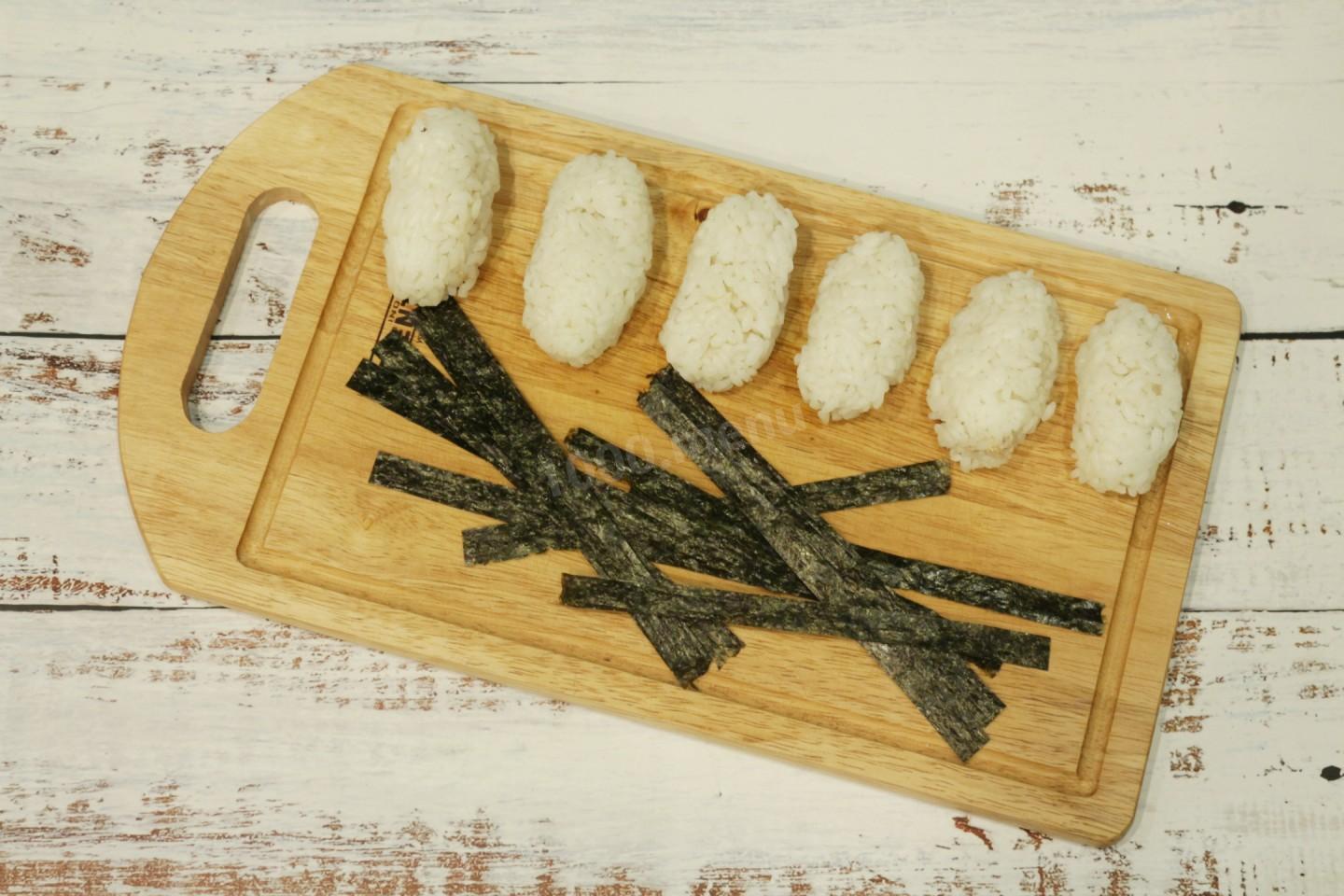
Set up your work surface. Take about a spoonful of cooked rice and flatten it on your palm, then place some of the tuna-mayo mixture on the patty. Wrap the rice around the filling so it's fully enclosed, and shape it into an oblong log.
-
Step 7:

Cut the nori into long strips, about 15 cm long and 1 cm wide.
-
Step 8:
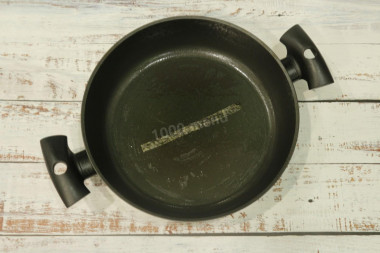
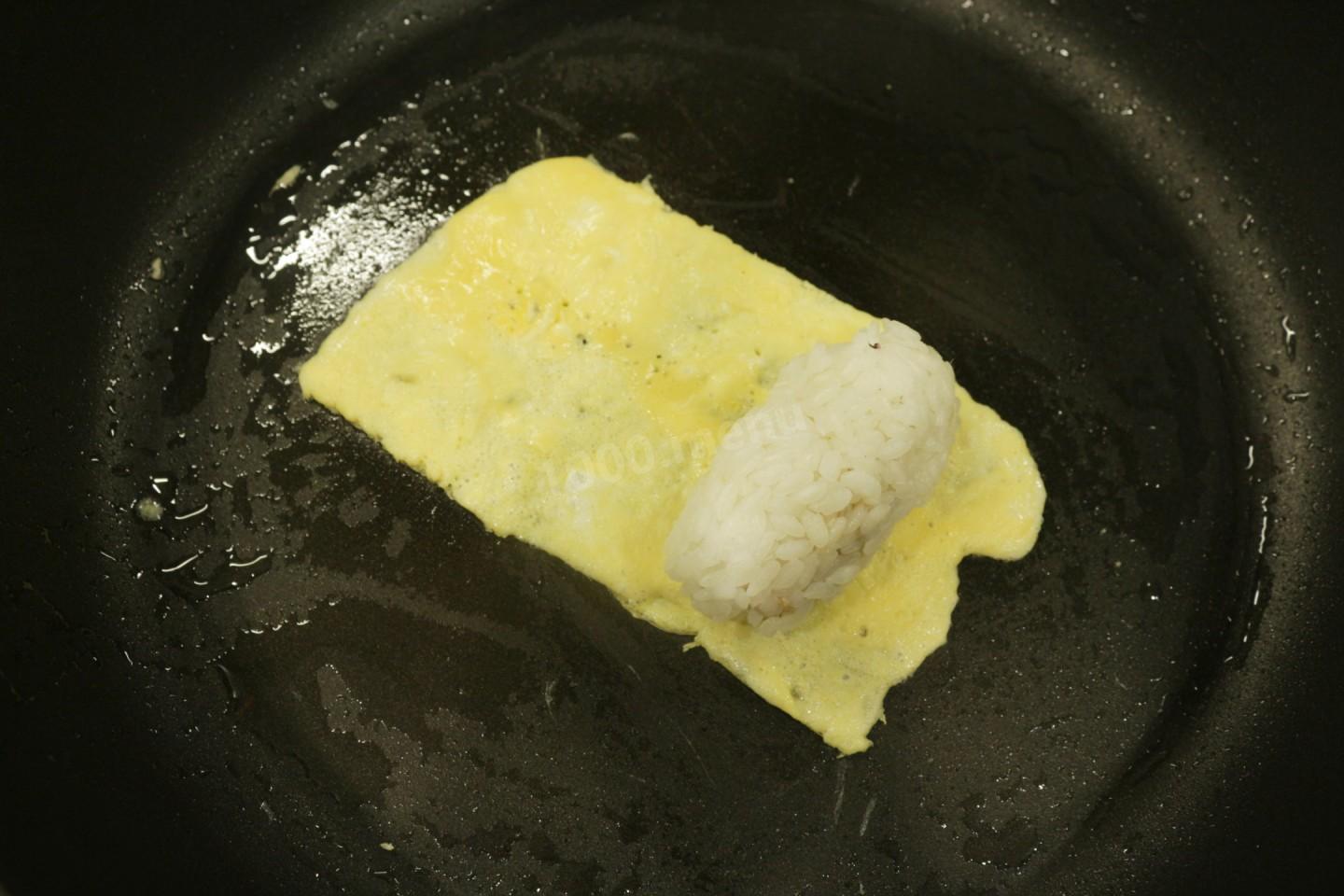
Brush a skillet evenly with vegetable oil (a silicone brush is easiest) and set it over low heat. Lay a strip of nori in the skillet and pour a little egg over it, so the nori strip is centered and the omelet is about the size of a rice log or a touch wider.
-
Step 9:
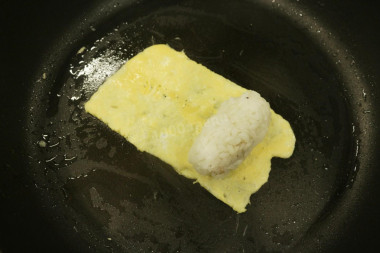
Set a rice log on the egg omelet and roll it up. Note: if the rice log slides as you roll, the omelet isn't set yet — cook it a bit longer so the egg grabs. Make all the rolls this way, adding more oil to the pan as needed.
-
Step 10:
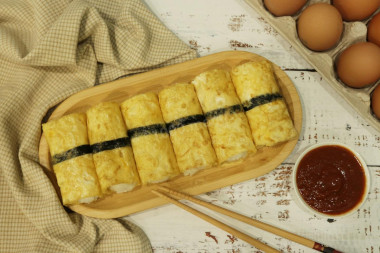
Transfer the finished rolls to a platter or plate.




- Here's an easy way to tell if the oil is hot enough: dip in a wooden spatula. If bubbles gather around it, you're ready to fry.
- Use an oil with a high smoke point for frying. Every oil is fine up to a certain temperature — its smoke point — beyond which it starts to burn and form harmful compounds. Unrefined oils mostly have low smoke points, since they're full of unfiltered particles that scorch quickly. Refined oils stand up to heat much better. If you're cooking in the oven, a skillet, or on the grill, reach for a high-smoke-point oil — refined sunflower, olive, or grapeseed are the most common choices.
Caloric content of the products possible in the composition of the dish
- Salad mayonnaise of 50% fat content - 502 kcal/100g
- Light mayonnaise - 260 kcal/100g
- Provencal Mayonnaise - 624 kcal/100g
- Provencal mayonnaise - 627 kcal/100g
- Table mayonnaise - 627 kcal/100g
- Vegetable oil - 873 kcal/100g
- Nori - 3 kcal/100g
- Salt - 0 kcal/100g
- Water - 0 kcal/100g
- Chicken egg - 80 kcal/100g
- Round rice - 330 kcal/100g
- Canned tuna in its own juice - 96 kcal/100g
Similar recipes

- National cuisine
- Snacks
- Second course
- Eggs
- Fish and seafood
- Seafood
- Cereals and cereal products
- Spices seasonings spices
- Fats and oils
- Other
- Salt
- Mayonnaise
- Vegetable oil
- Water
- Asian cuisine
- Rolls
- Sushi
- Cold snacks
- Cooking
- Frying
- In a frying pan
- Fish second course
- Chicken eggs
- Canned fish
- Algae
- Recipes for lean dishes without butter
- From rice