Candied Lemon Peel
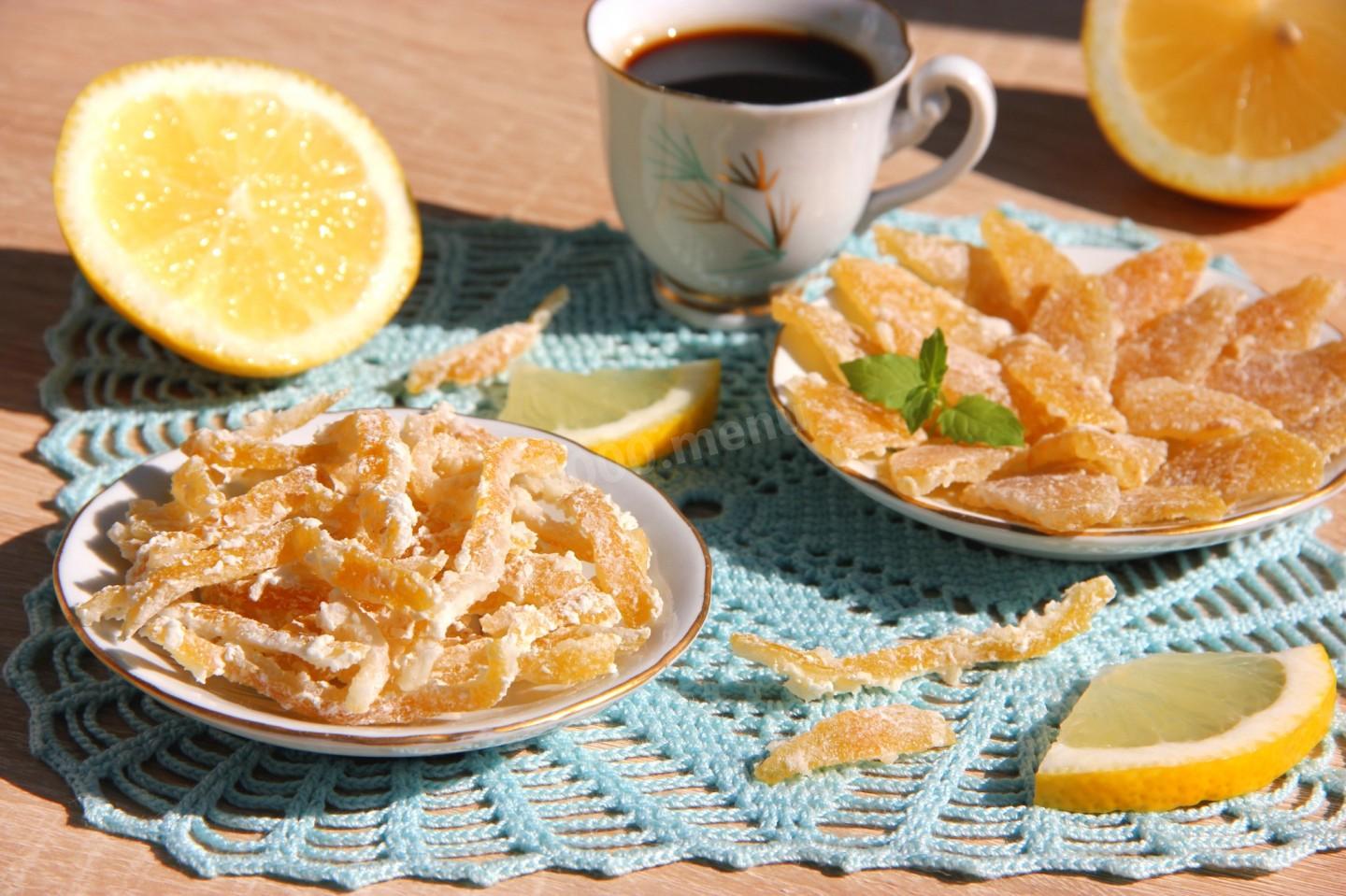
Candied peel is a confection with a long history. When done right, it keeps the same vitamins, minerals, and nutrients as the fruit it came from. Its fiber content is good for digestion and helps your system stay clean, which is why nutritionists often recommend it—just in small amounts. The genuine article is worth seeking out: it has a paler color, and of course homemade is best of all. The only real cost here is time, since the peel usually just gets thrown away.

Cooking method
-
Step 1:

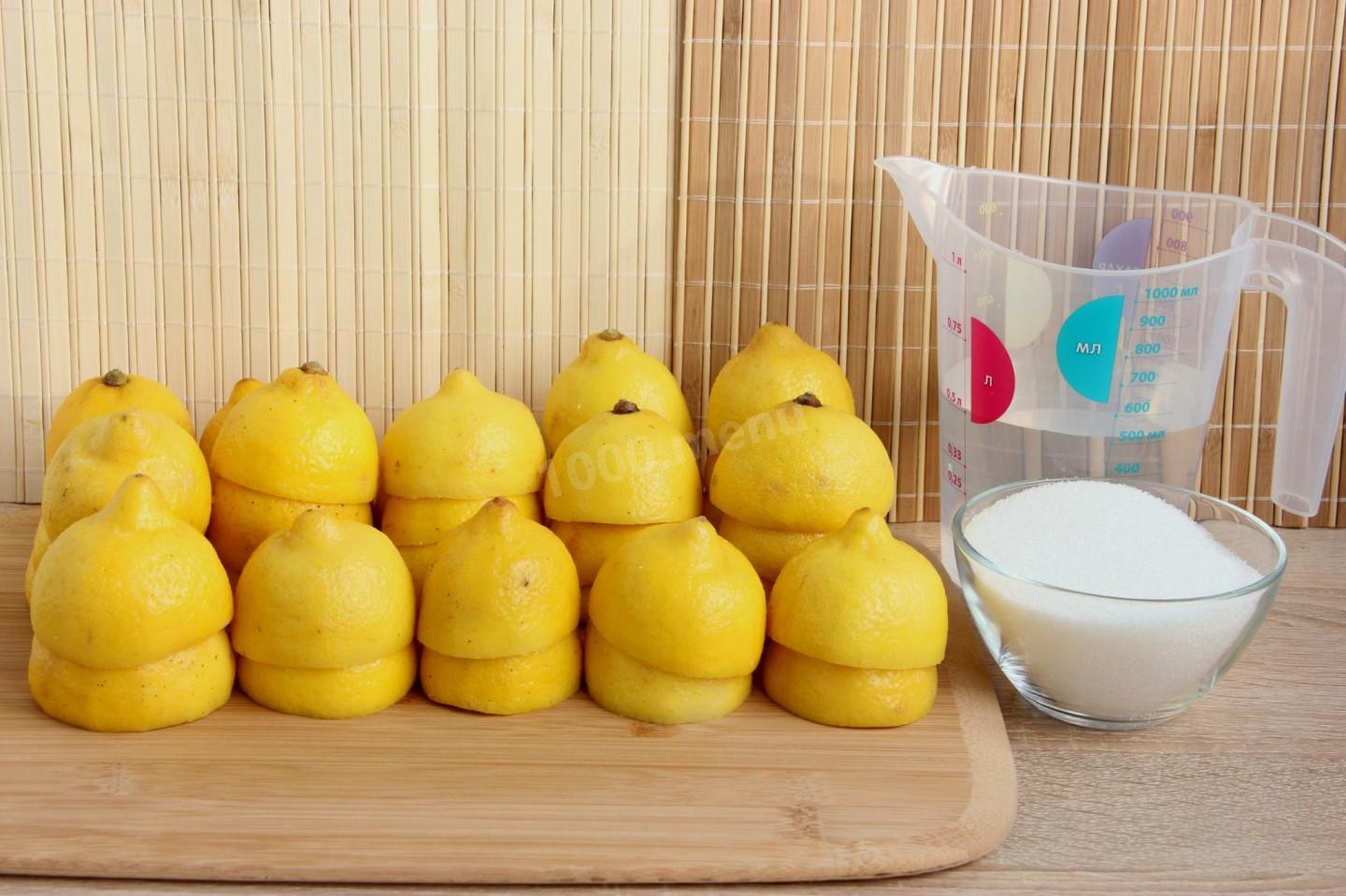
I stopped throwing away citrus peel a long time ago. I either freeze it or, if I have a lot, cook it right away. The candied peel goes into baking and makes a nice little energy-boosting snack. Wash whole citrus fruits well before using; frozen peel just needs a quick rinse under cold water.
-
Step 2:
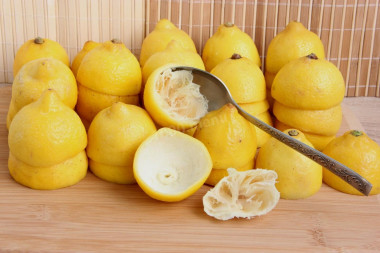
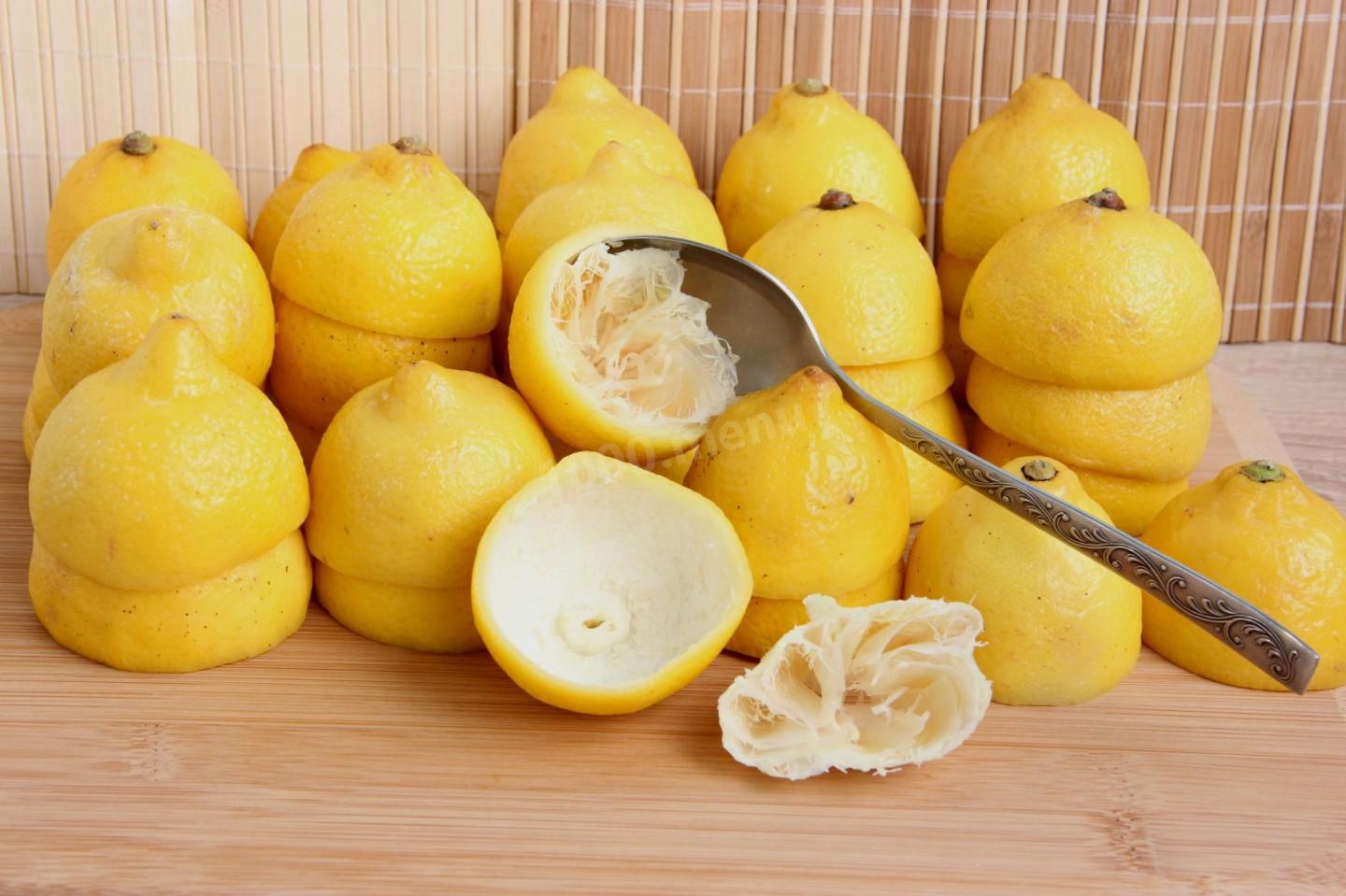
From experience, it's easiest to scrape the leftover membrane off the peel right away, before freezing or soaking. I usually do it with a spoon.
-
Step 3:
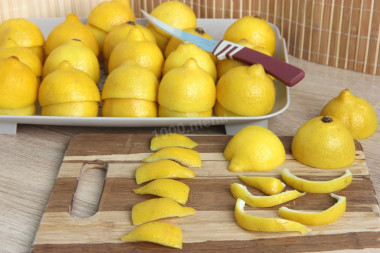
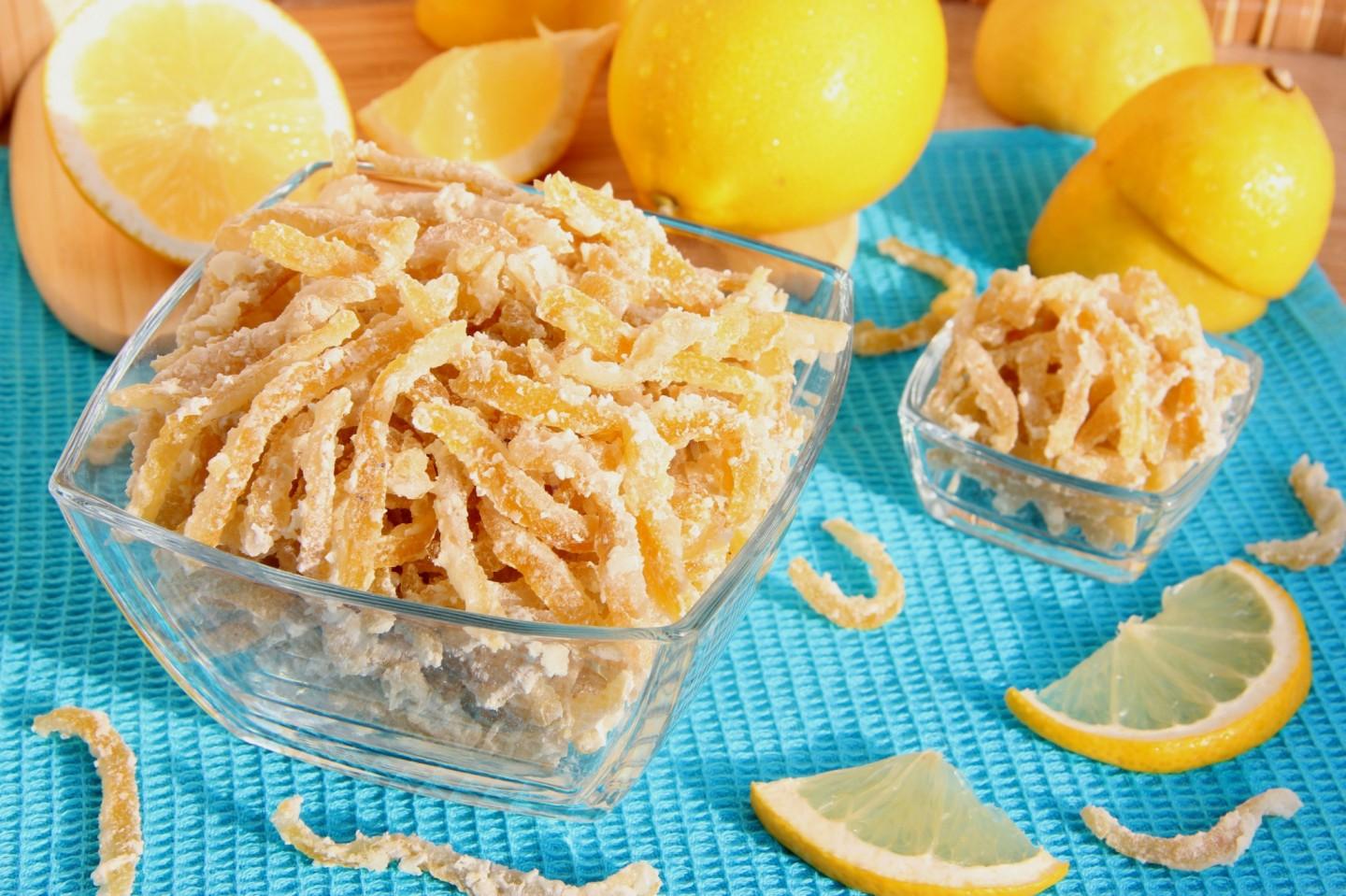
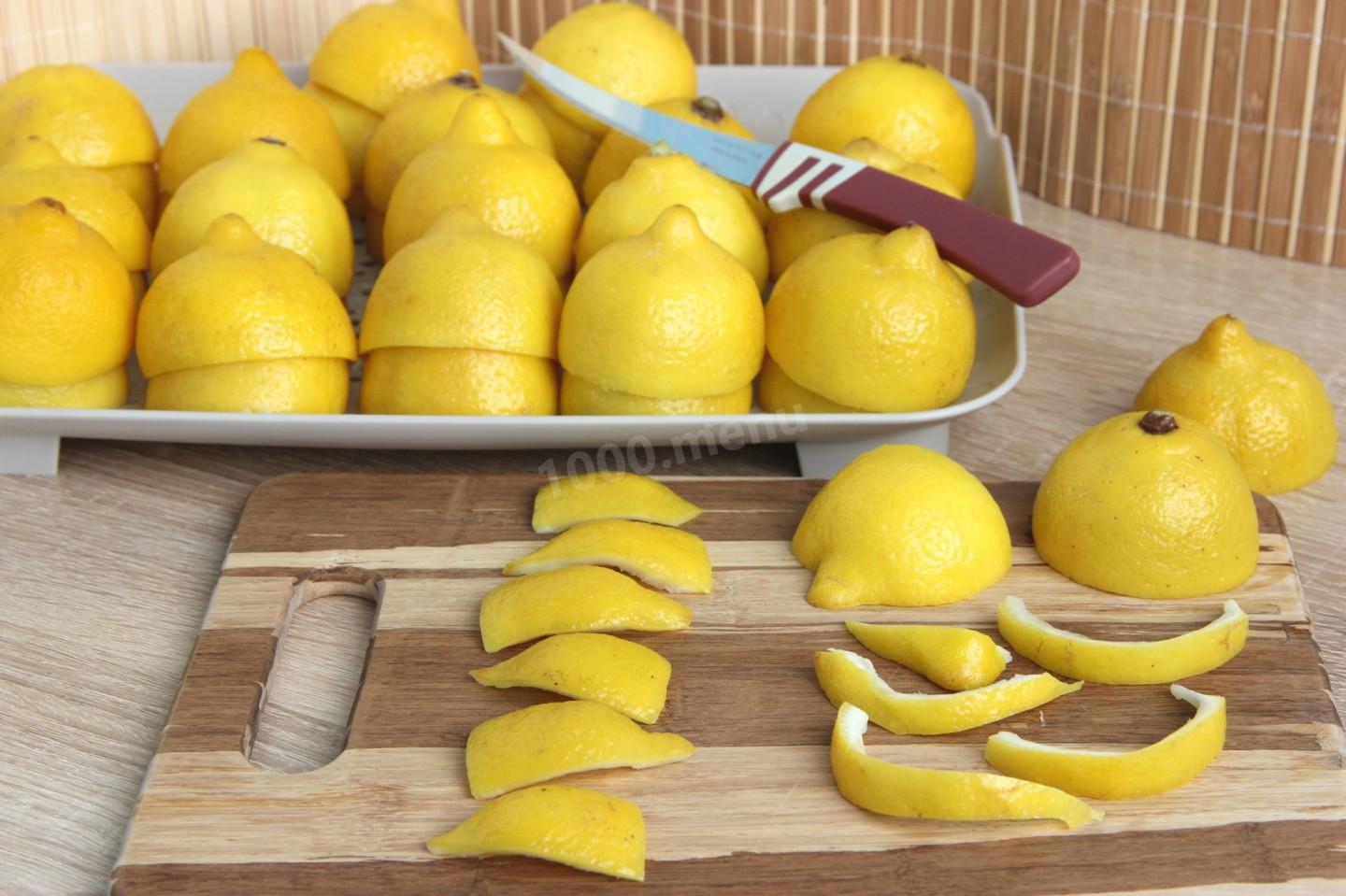
Cut the cleaned peel into strips about 1/4 inch (0.5–0.7 cm) wide. Or cut each half into halves again, then into 3–4 triangular pieces. If you only have a little peel, freeze it until you've collected enough—it takes up less freezer space that way and is ready to use later.
-
Step 4:
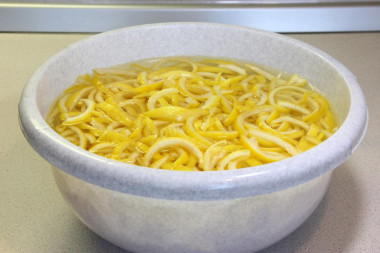
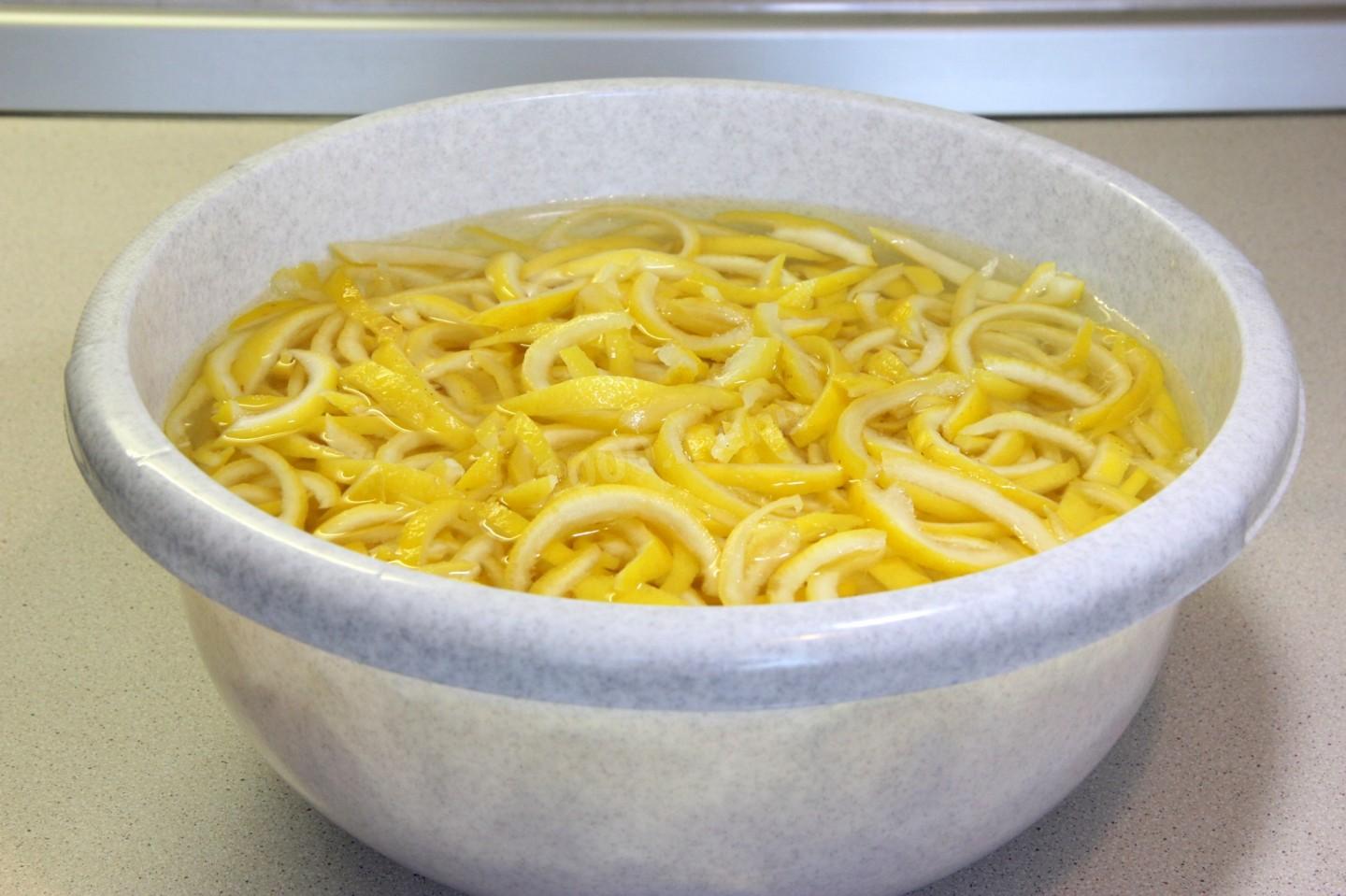
If you have a lot of peel at once, cover it with cold water and soak for two days, draining and replacing the water with fresh every 5–7 hours. Soaking draws out the bitterness. You can get away with just a day—it'll be a touch more bitter—but there's no point soaking longer than 2 days, since the peel loses its shape and looks once you cook it.
-
Step 5:
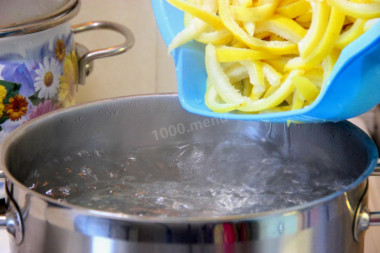
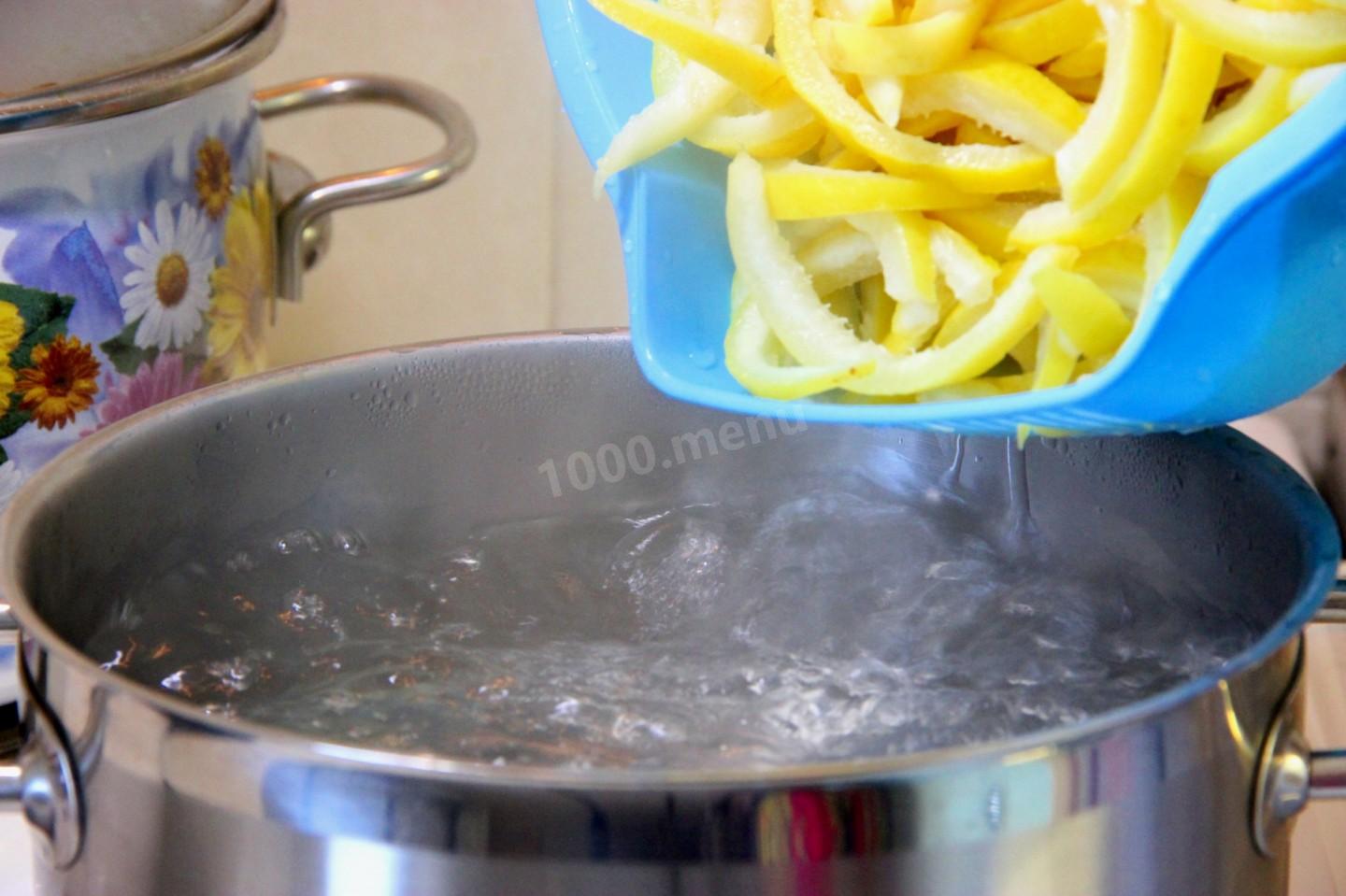
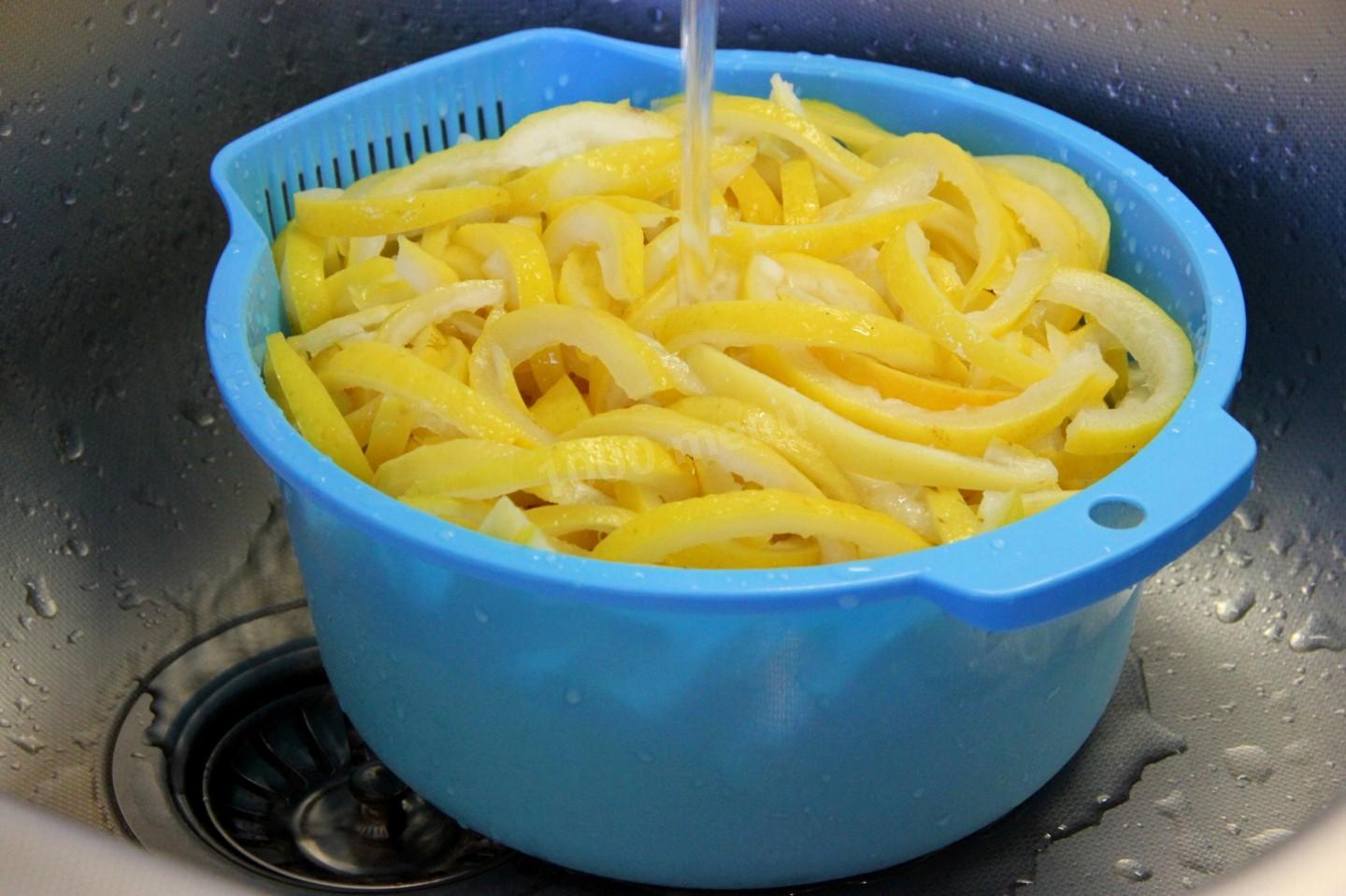
Blanch the soaked peel in boiling water for 3–4 minutes, covered. Repeat this cycle three times.
-
Step 6:
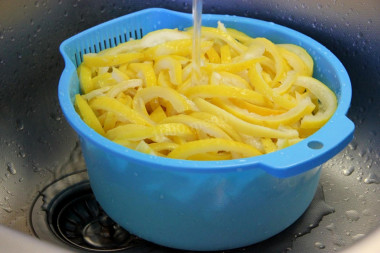
Each time, drain off the boiling water and rinse the peel under cold running water to cool it down.
-
Step 7:
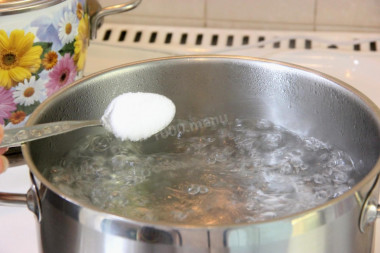
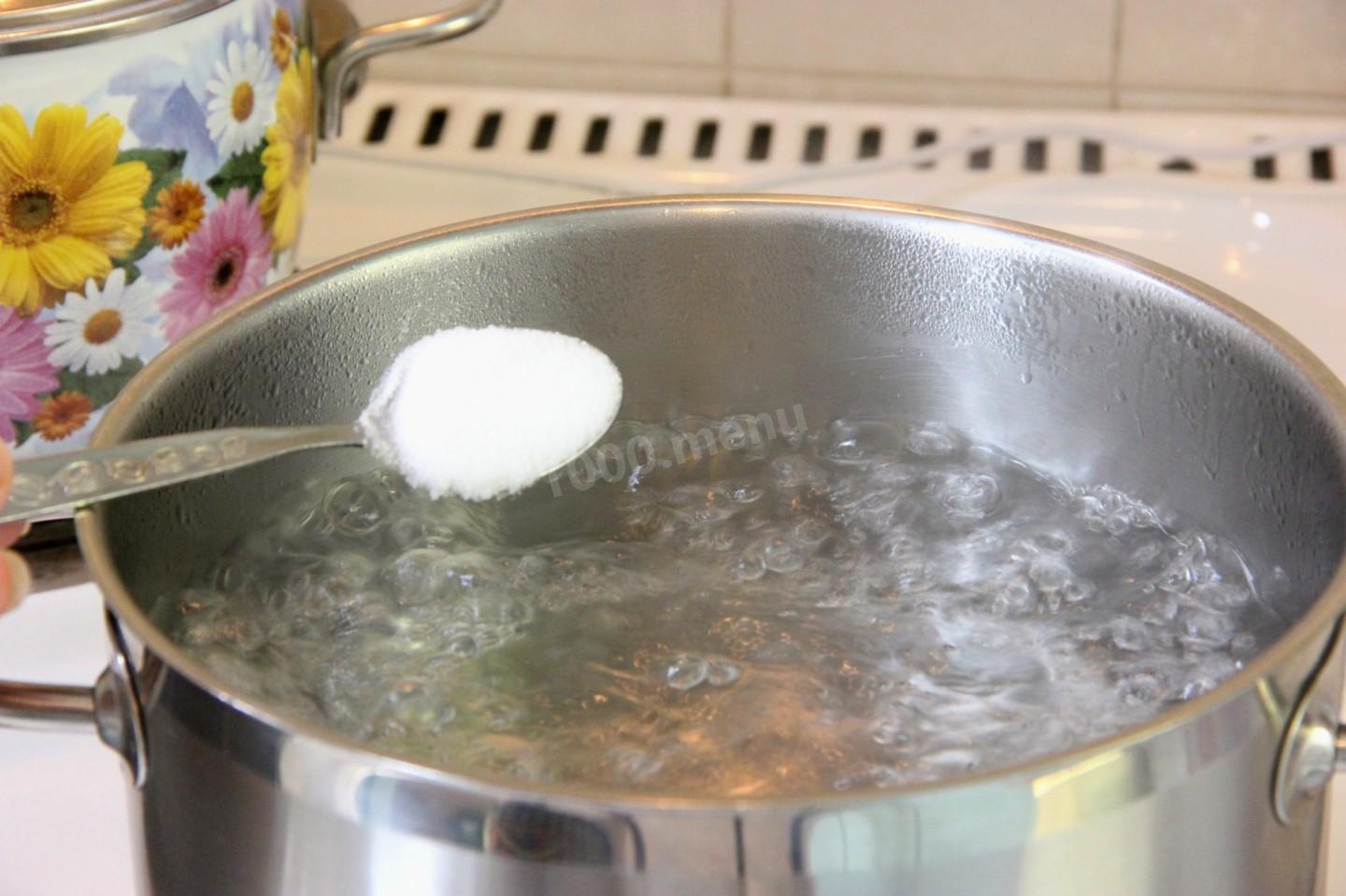
For the last two boils, add 1 teaspoon of salt per 2 liters of water. The salt does a great job of pulling out any remaining bitterness.
-
Step 8:
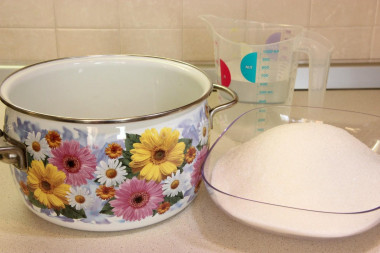
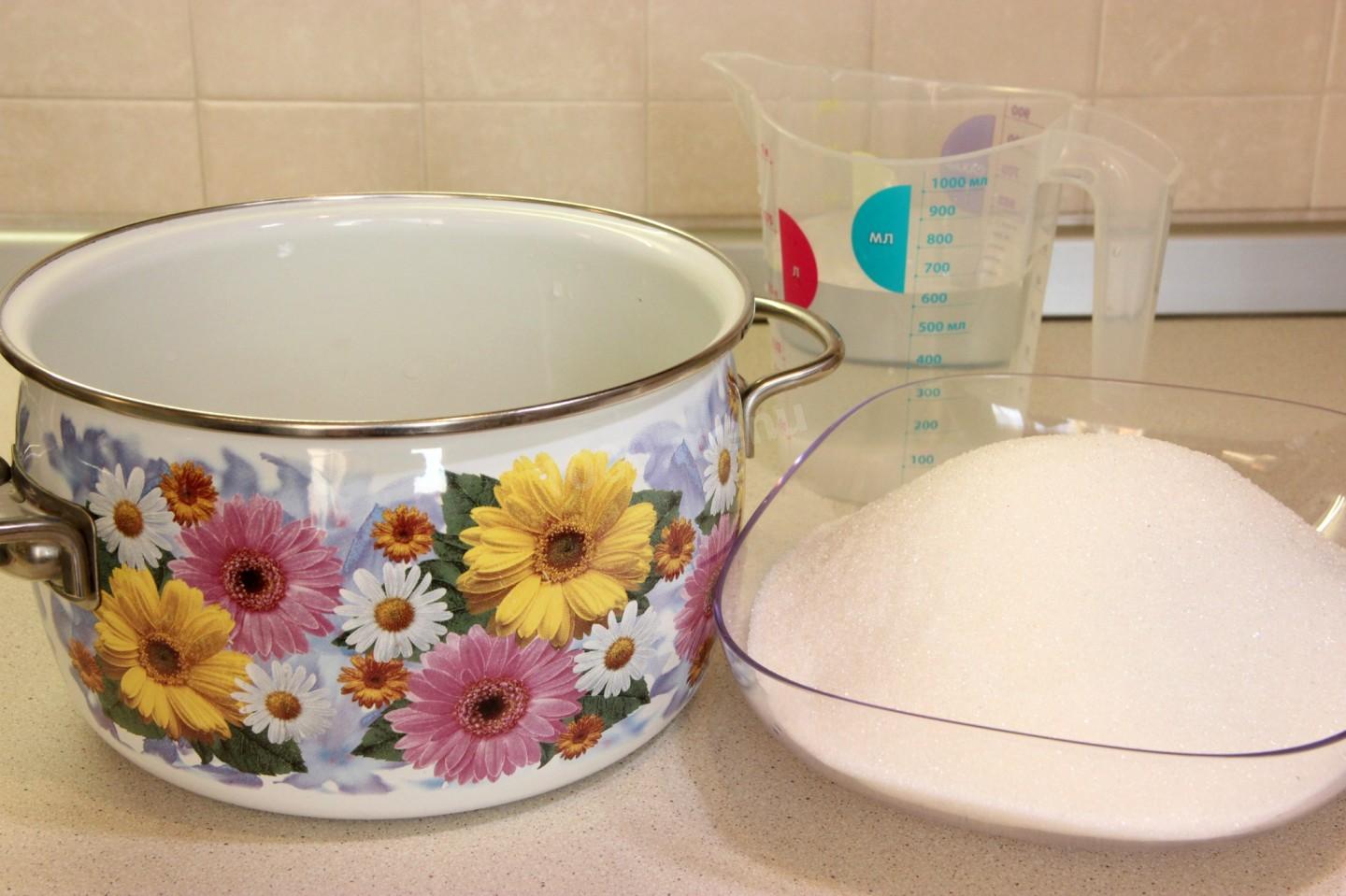
While the peel goes through its blanching cycles, make the syrup: pour 500 g of sugar into a saucepan, add 250 ml of water, and stir. Cook over low heat until the sugar dissolves, then turn up the heat and bring to a boil.
-
Step 9:
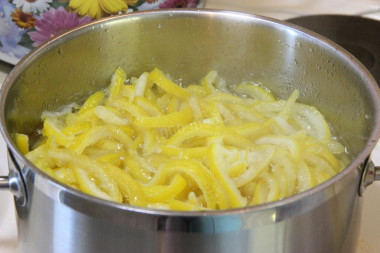
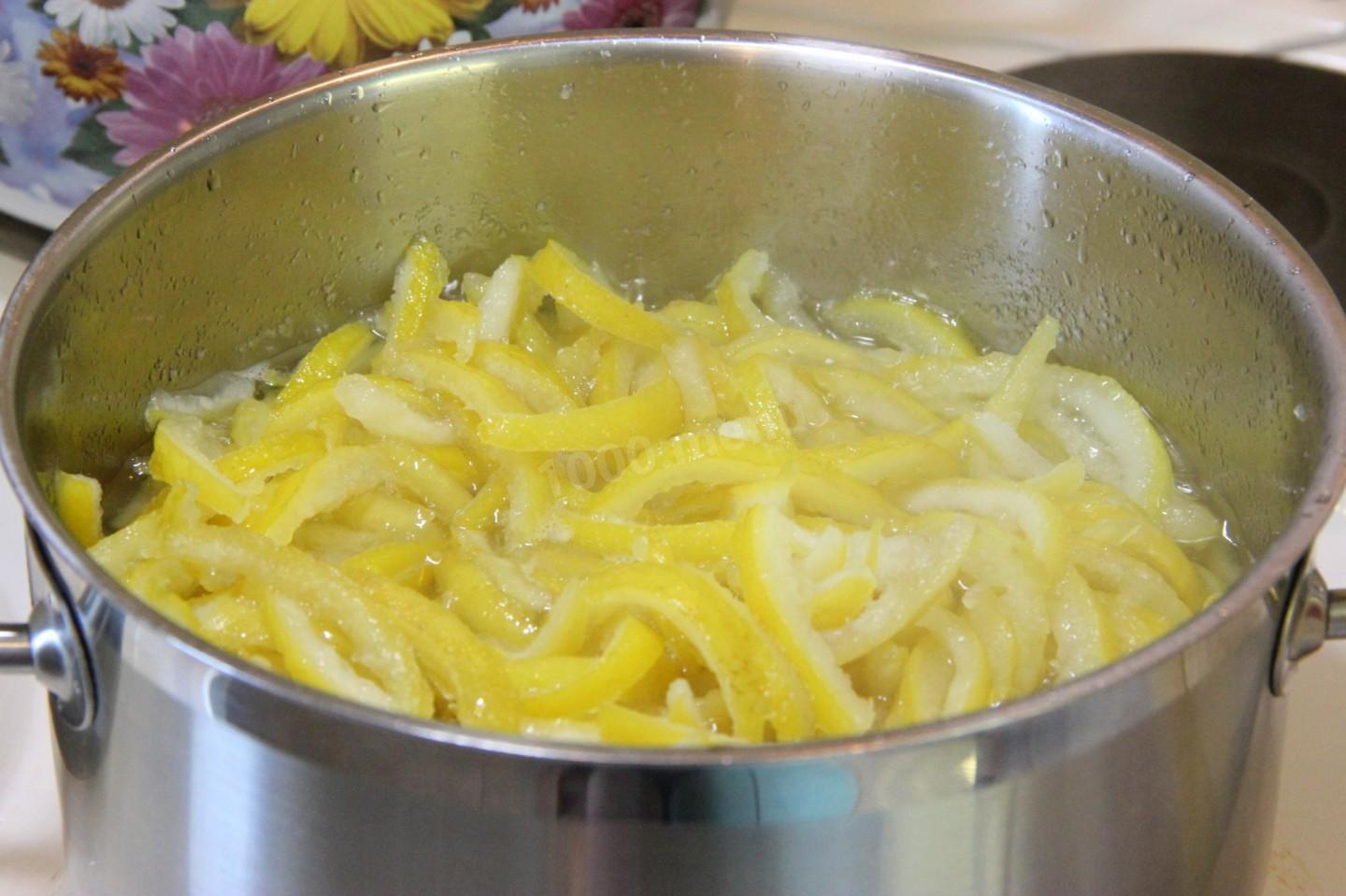
Drop the peel into the boiling syrup and cook over low heat. Adjust it so it bubbles gently and steadily, without spattering or stalling. Leave it uncovered.
-
Step 10:
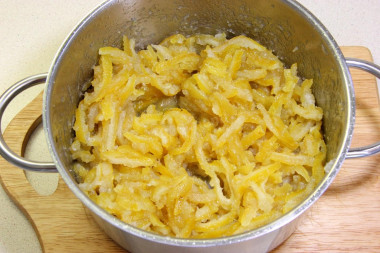
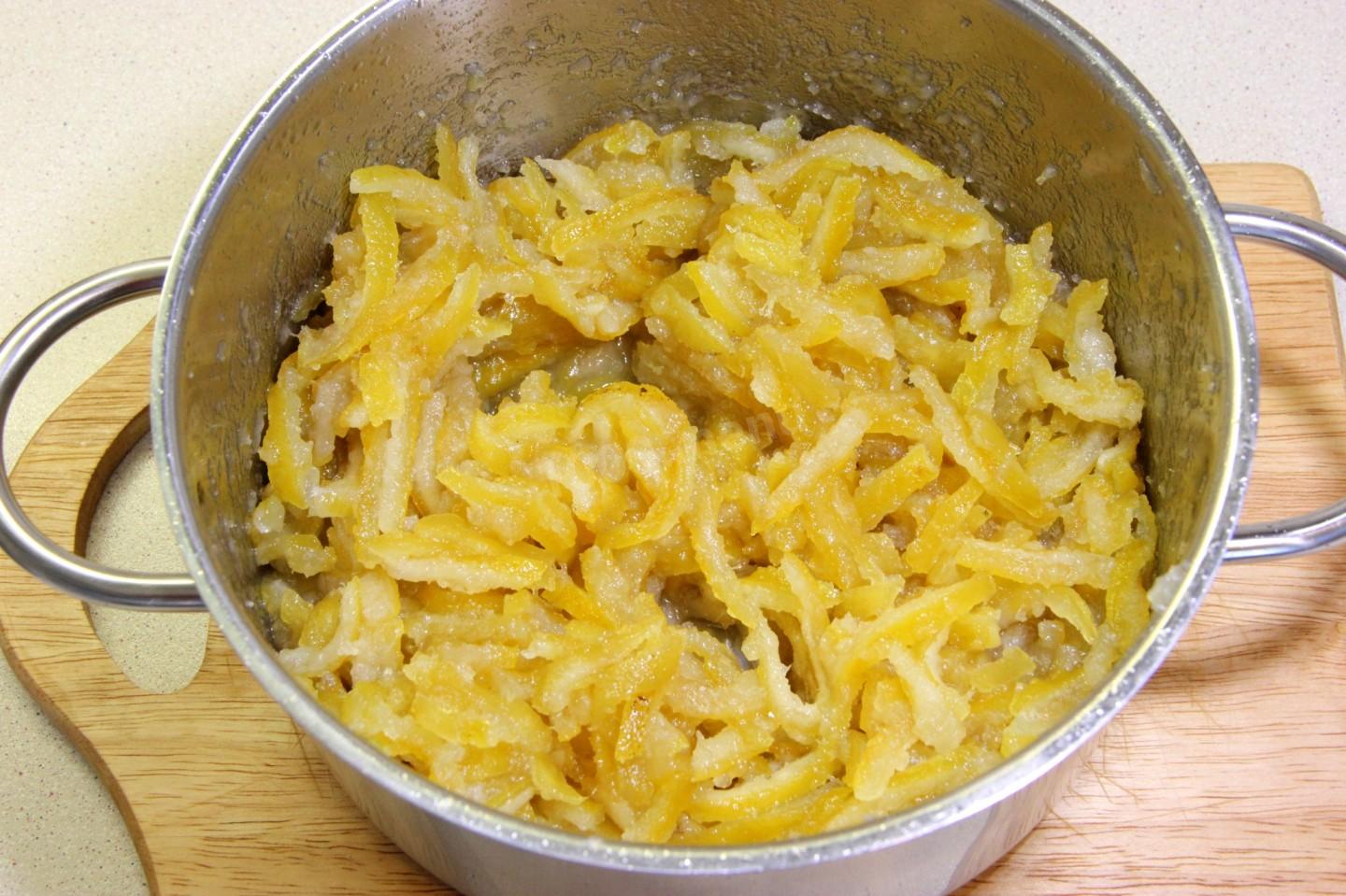
Cook for about an hour, until almost all the syrup has cooked away. Keep an eye on it so the peel doesn't scorch, but let the syrup reduce to almost nothing. Then drain the peel in a colander or sieve and let it cool.
-
Step 11:
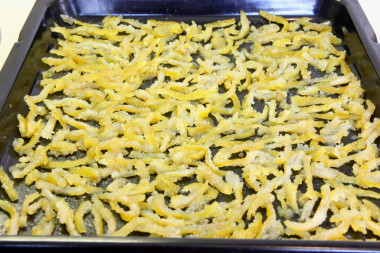
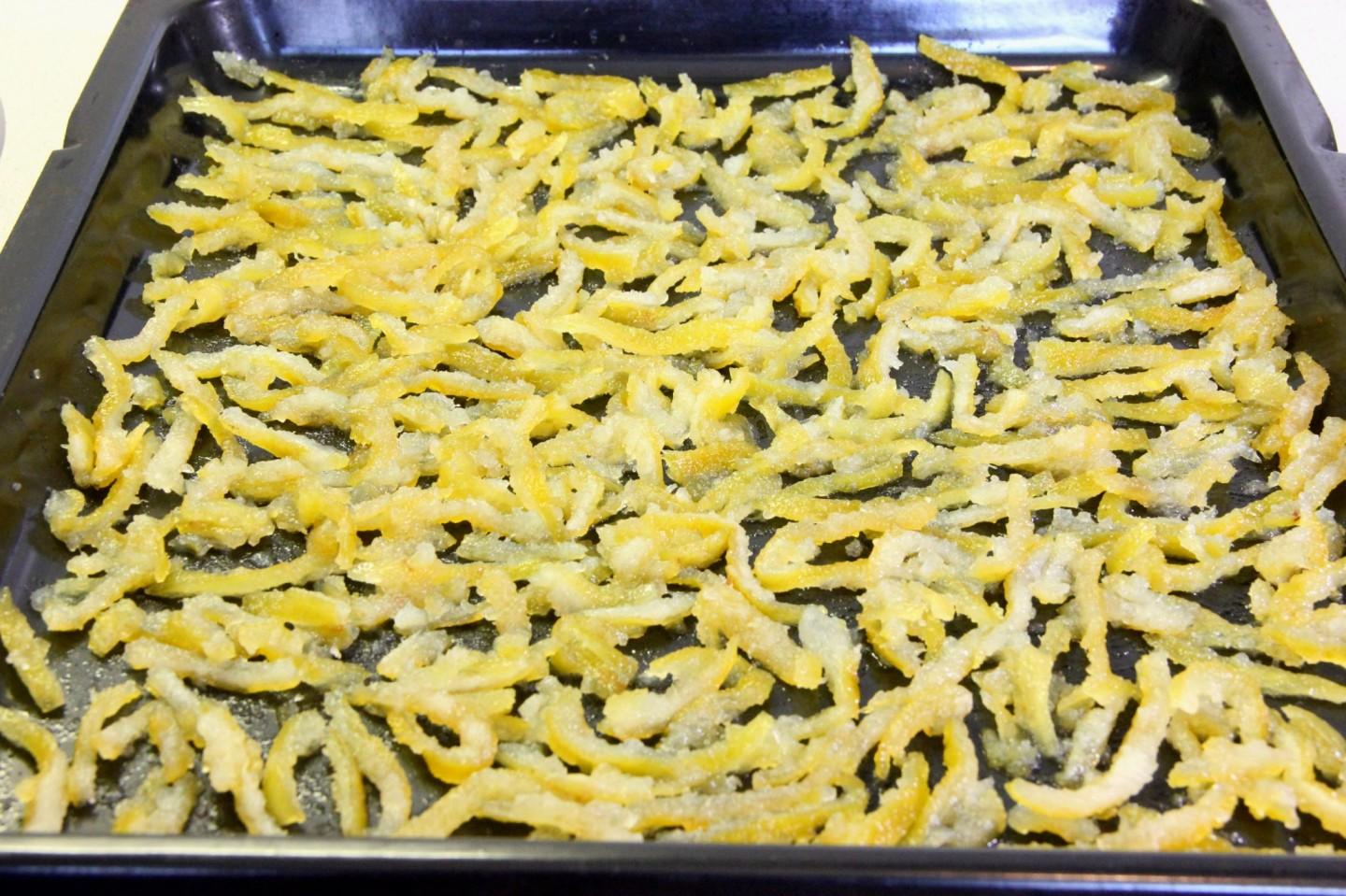
When you have a lot of peel, laying it out in neat rows is a hassle, so I just spread it right on a baking sheet (no parchment). Spread it out carefully in a thin, even layer. With a big batch, I put the sheet in the oven for an hour with the door cracked open. In an electric oven I dry the candied peel by switching the temperature back and forth between 122°F and 176°F (50–80°C). Go by your own oven, but don't exceed 176°F (80°C).
-
Step 12:
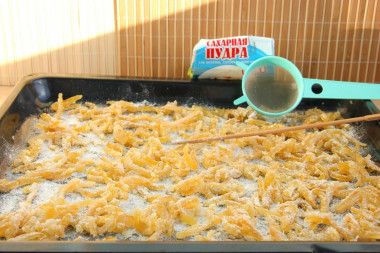
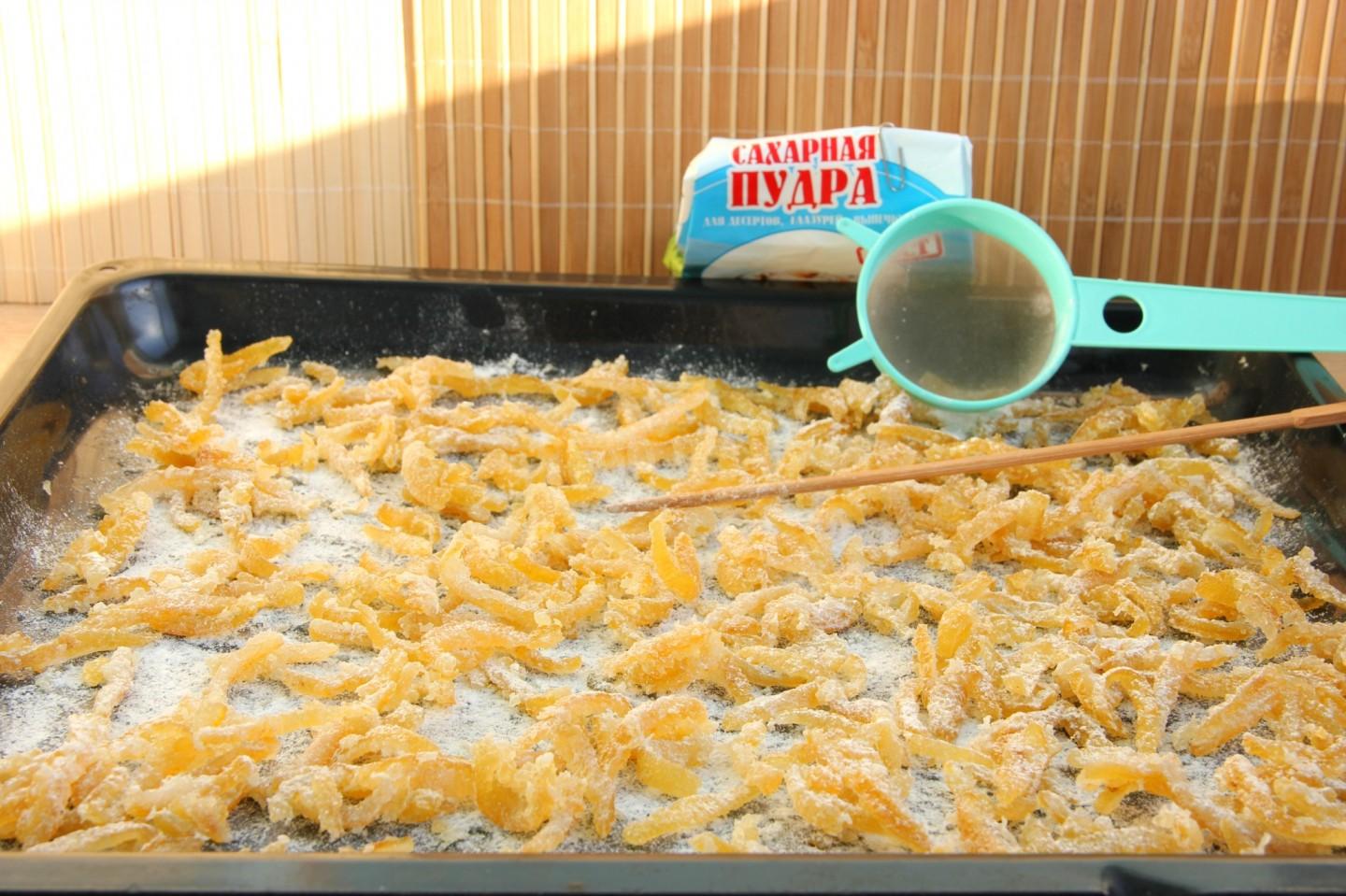
After an hour I turn the candied peel over—just stir it with a chopstick—and let it finish air-drying for a couple of hours. Then I dust it with powdered sugar, toss to coat, and leave it under a piece of cheesecloth for a day. Store the finished peel in a glass container in the fridge. This batch made nearly a kilogram.
-
Step 13:
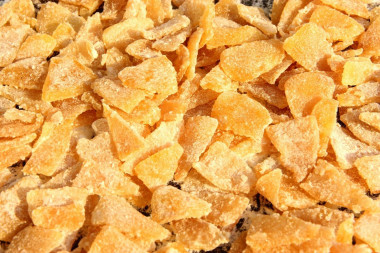
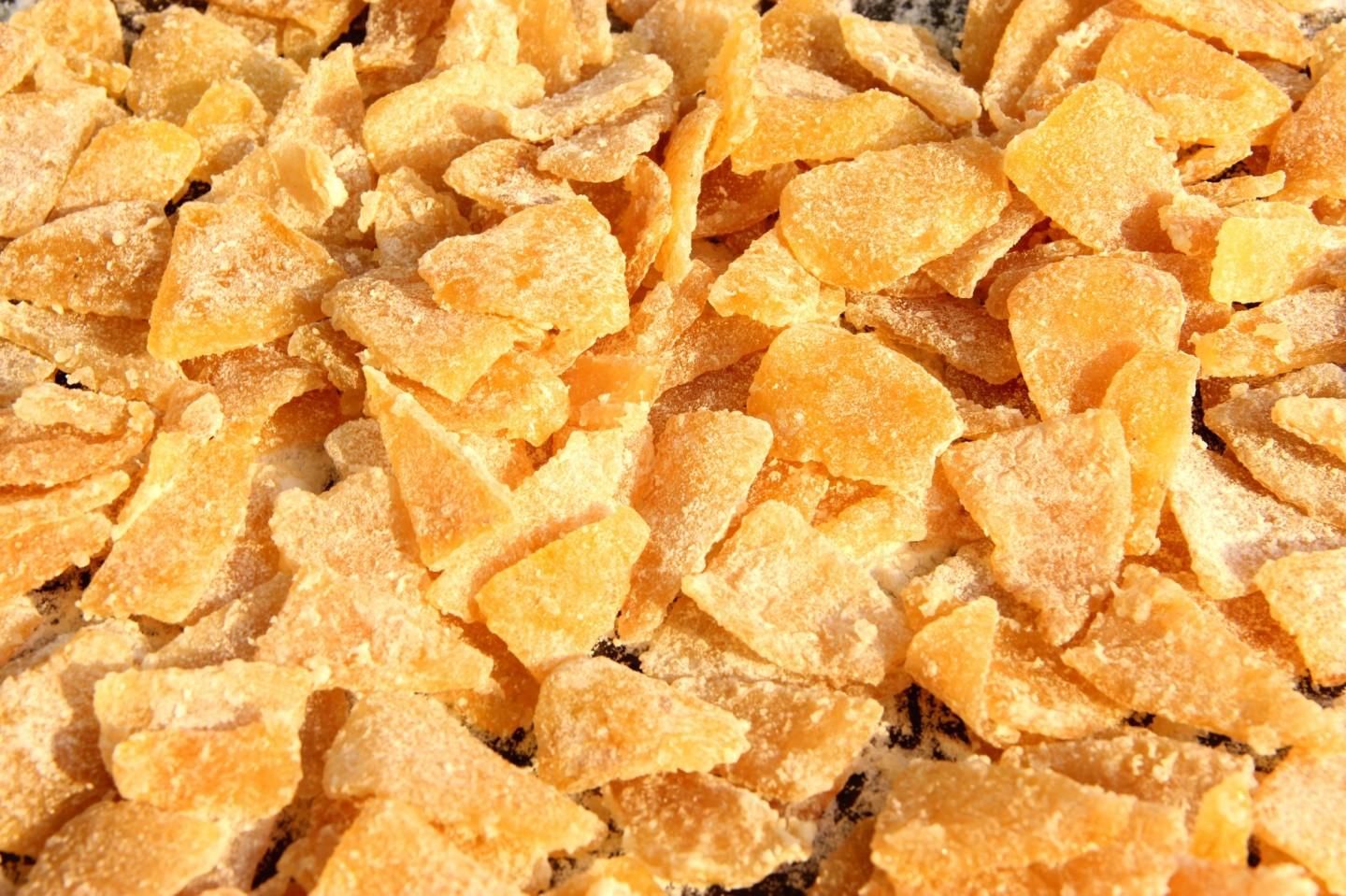
At our house the larger-cut candied citrus disappears like candy, but for baking I prefer it cut into strips.
- Enjoy this treat in moderation. Because of its high sugar content, candied peel isn't suitable for anyone with diabetes or weight issues. On the other hand, candied citrus peel makes a good stand-in for candy and other sweets for people recovering from infections or surgery, or under heavy physical or mental strain.
Caloric content of the products possible in the composition of the dish
- Granulated sugar - 398 kcal/100g
- Sugar - 398 kcal/100g
- Salt - 0 kcal/100g
- Water - 0 kcal/100g
- Lemon peel - 47 kcal/100g