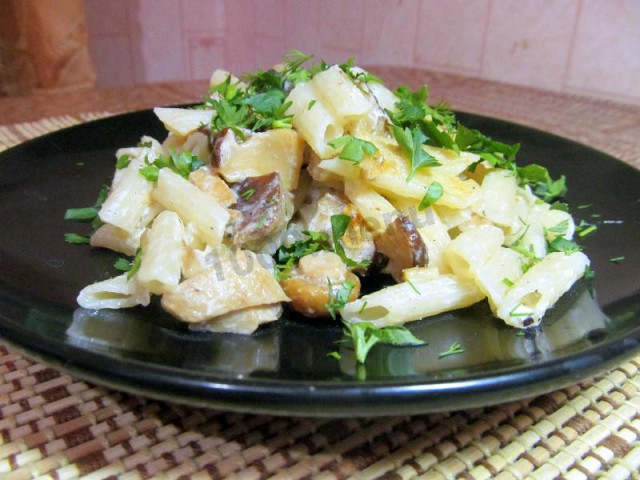
Traditional Easter Kom (Spiced Egg-and-Milk Cheese)
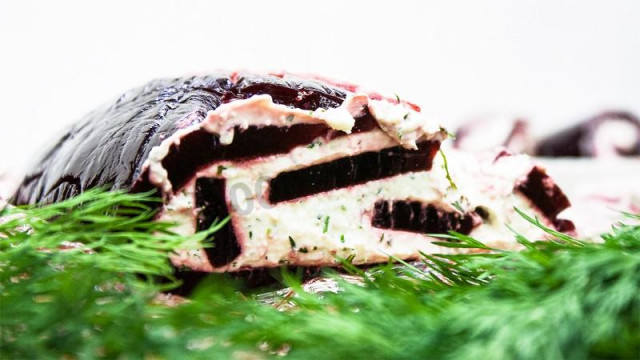
An old-time recipe — hardly anyone remembers it anymore! Before the kulich, the paskha, and the dyed eggs, there was kom. Its flavor is spicy, peppery, and salty. It's not quite cheese, not quite an omelet — it's kom. Heavy as lead, white tinged with yellow, flecked black and red from the peppers, with green veins of dill across a glossy, matte cross-section.

Cooking method
-
Step 1:
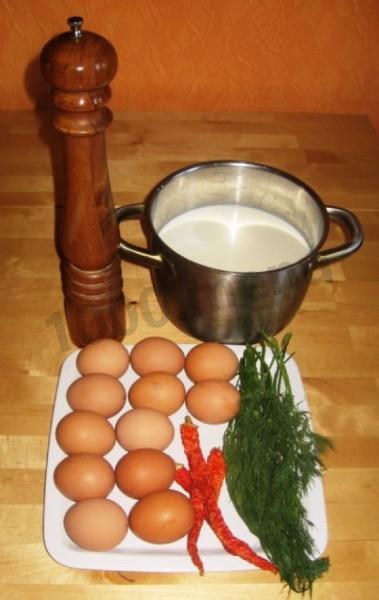
Set the milk over the heat and salt it.
-
Step 2:
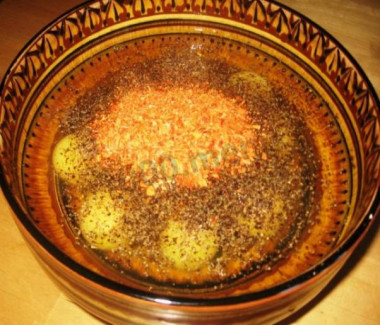
Add a teaspoon (heaping is fine) of ground black pepper to the eggs, and the same amount of red pepper. Chop the dill and add it too.
-
Step 3:
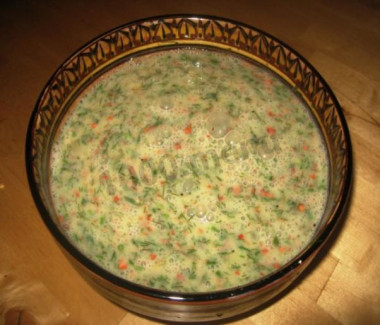
Beat the eggs with a fork — you don't need them perfectly smooth.
-
Step 4:
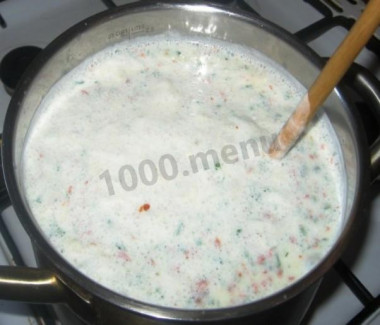
When the milk comes to a boil, pour in the eggs in a thin stream, stirring as you go. After three or four minutes the eggs will start to thicken and the milk will curdle.
-
Step 5:
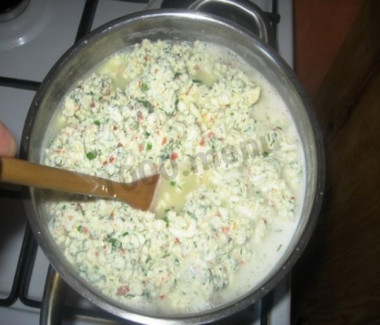
The milk will all but disappear, leaving just a little yellowish translucent liquid behind — essentially whey, but very salty and spicy. Its appearance is the sign that it's done.
-
Step 6:
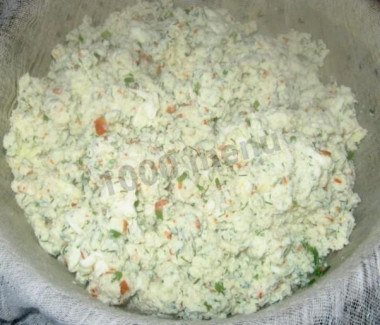
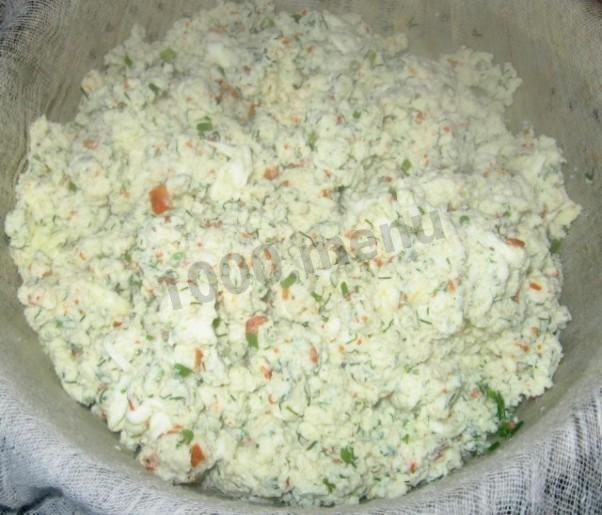
Drain the kom into a cheesecloth-lined colander.
-
Step 7:
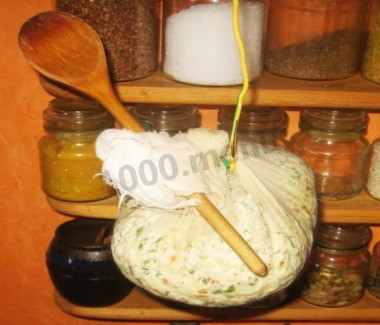
Squeeze it out, shape it, and hang it to drain. After a few hours (about 4-5), the kom will cool to room temperature and stop dripping whey.
-
Step 8:
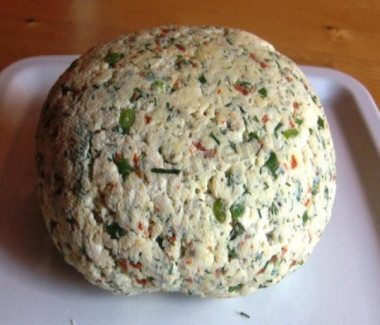
Unwrap it from the cheesecloth, cut it into two halves (so it sits flat), arrange on plates, and refrigerate — it's eaten cold.




Caloric content of the products possible in the composition of the dish
- Whole cow's milk - 68 kcal/100g
- Milk 3.5% fat content - 64 kcal/100g
- Milk 3.2% fat content - 60 kcal/100g
- Milk 1.5% fat content - 47 kcal/100g
- Concentrated milk 7.5% fat content - 140 kcal/100g
- Milk 2.5% fat content - 54 kcal/100g
- Chicken egg - 157 kcal/100g
- Egg white - 45 kcal/100g
- Egg powder - 542 kcal/100g
- Egg yolk - 352 kcal/100g
- Ostrich egg - 118 kcal/100g
- Ground black pepper - 255 kcal/100g
- Dill greens - 38 kcal/100g
- Salt - 0 kcal/100g
- Ground red pepper - 318 kcal/100g