Red (Beet) Pancakes
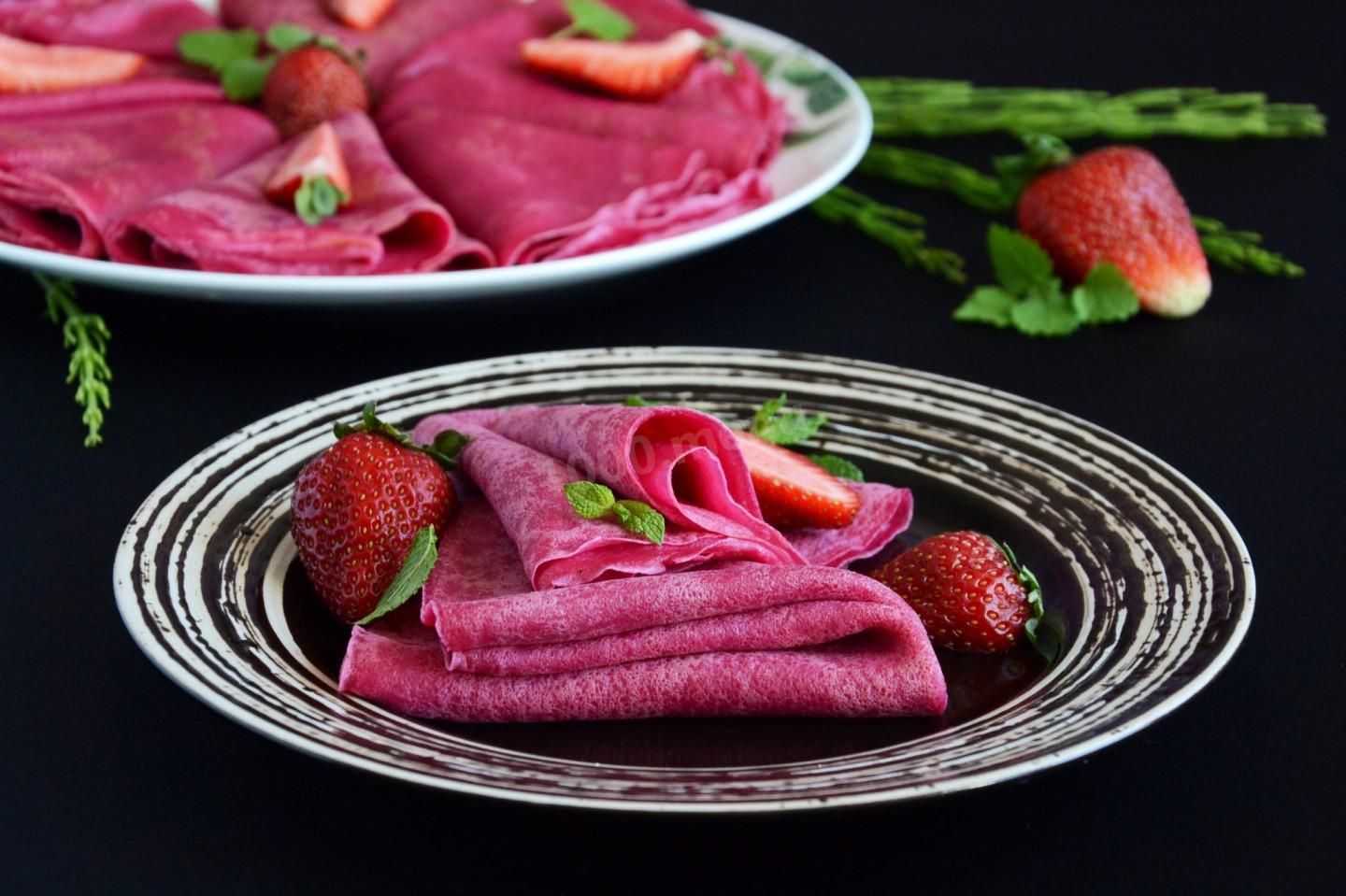
Gorgeous, bright pink, and a real showstopper on the table! These red pancakes are surprisingly quick and easy to make. All you need is enough beet juice — you'll have to make it yourself, but that's fast too. They're perfect for dressing up a party appetizer platter!

Cooking method
-
Step 1:
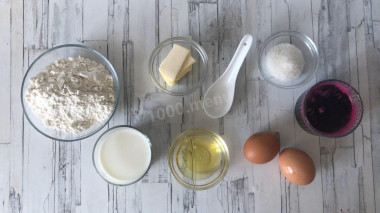
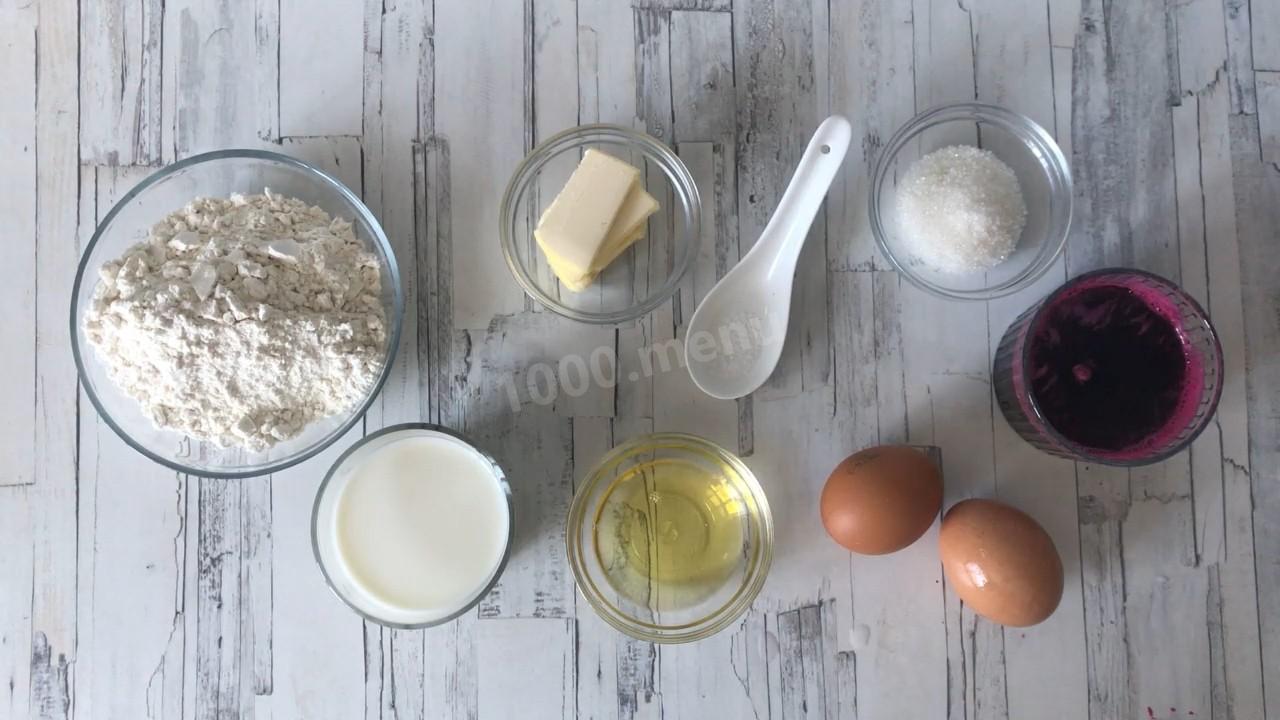
How do you make red pancakes? Gather your ingredients. First, boil a beet and squeeze the juice out of it — or use ready-cooked, vacuum-packed beets from the store. Don't use bottled beet juice; it can be very salty.
-
Step 2:
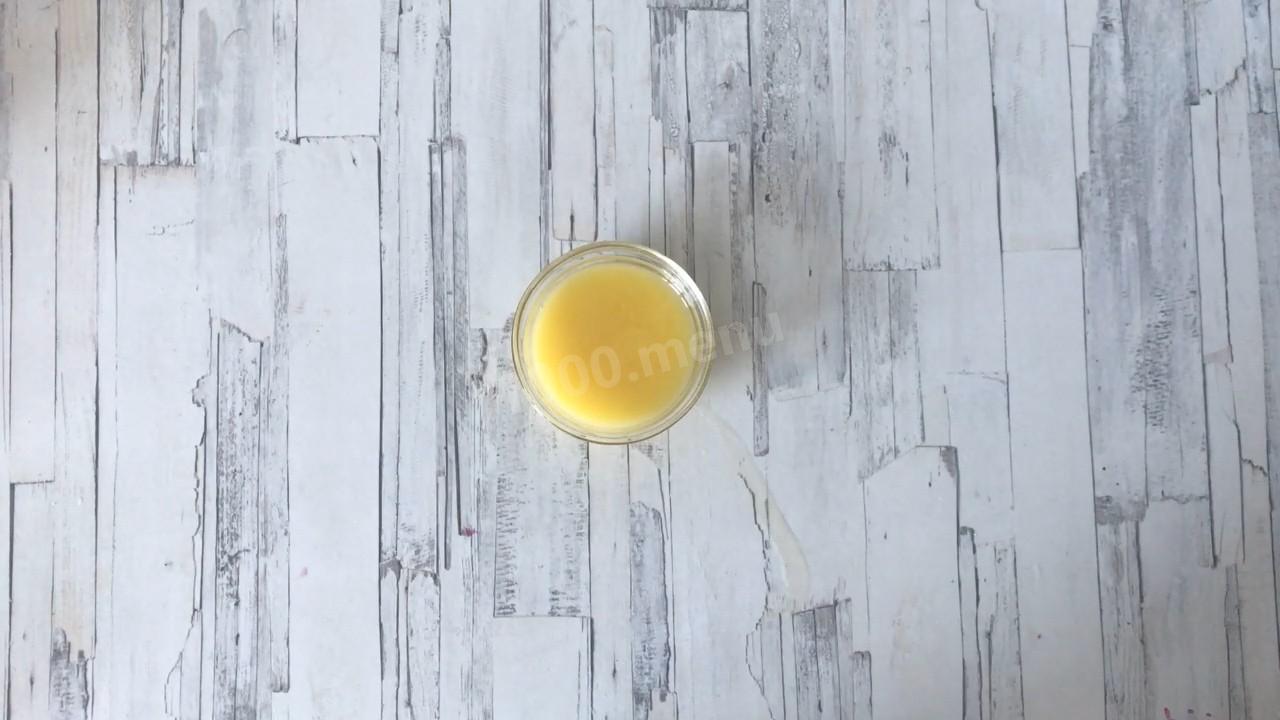
Melt the butter however is easiest for you — on the stovetop or in the microwave.
-
Step 3:
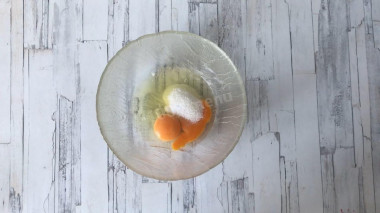
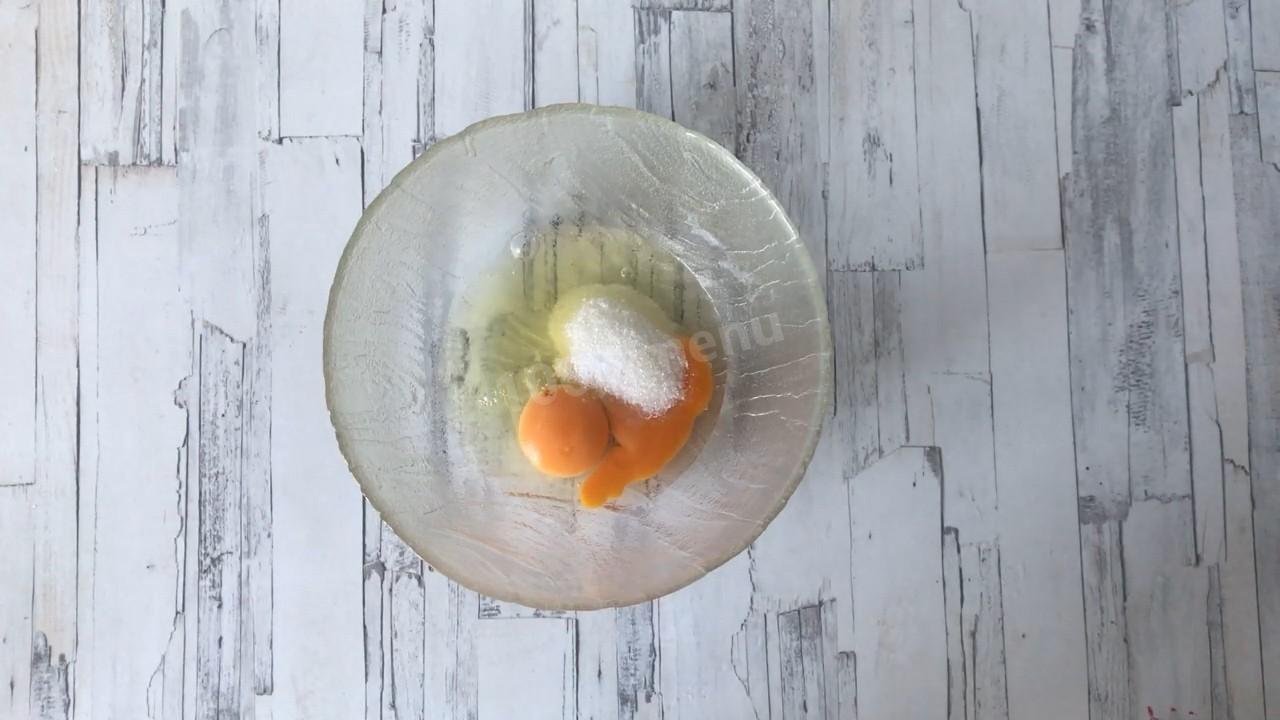
In a separate bowl, whisk the eggs together with the sugar and salt until smooth.
-
Step 4:
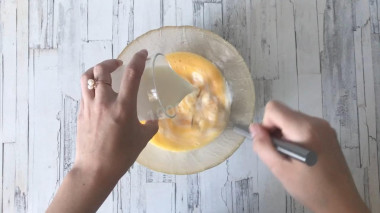
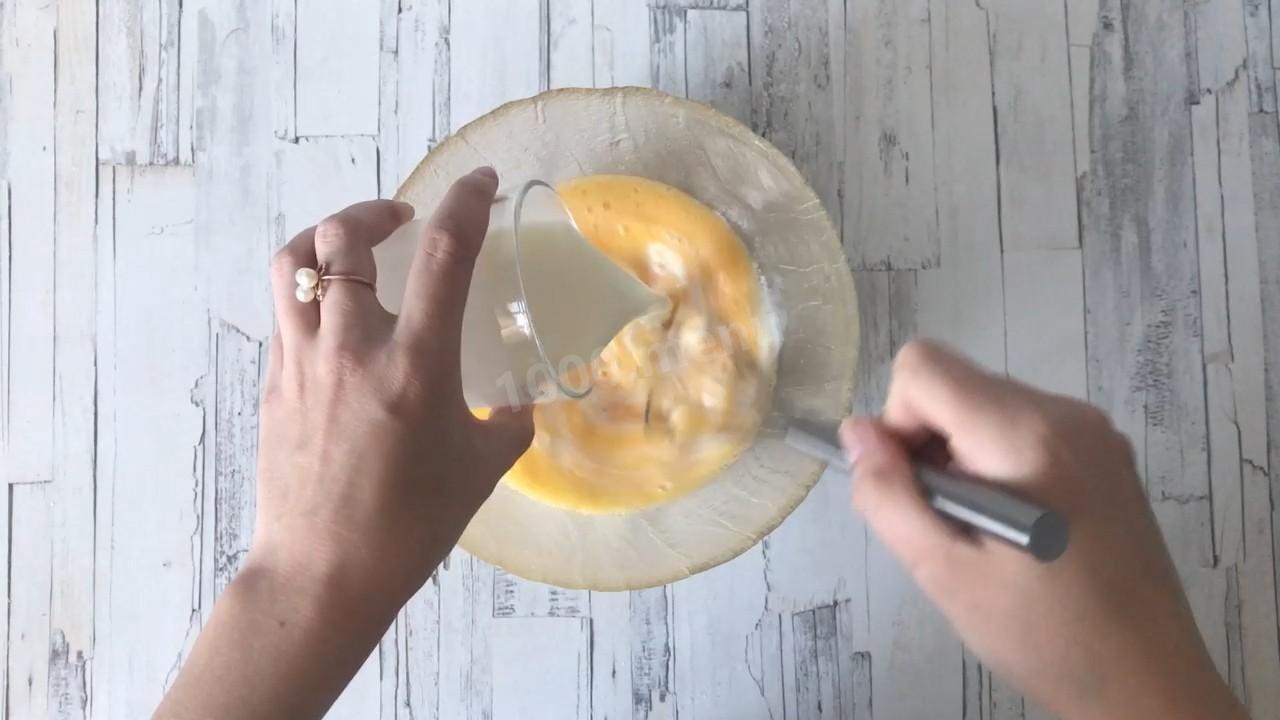
Pour the milk in with the eggs.
-
Step 5:
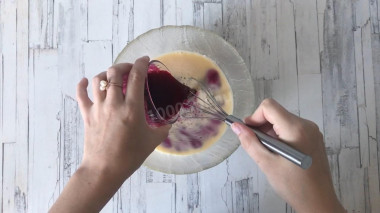
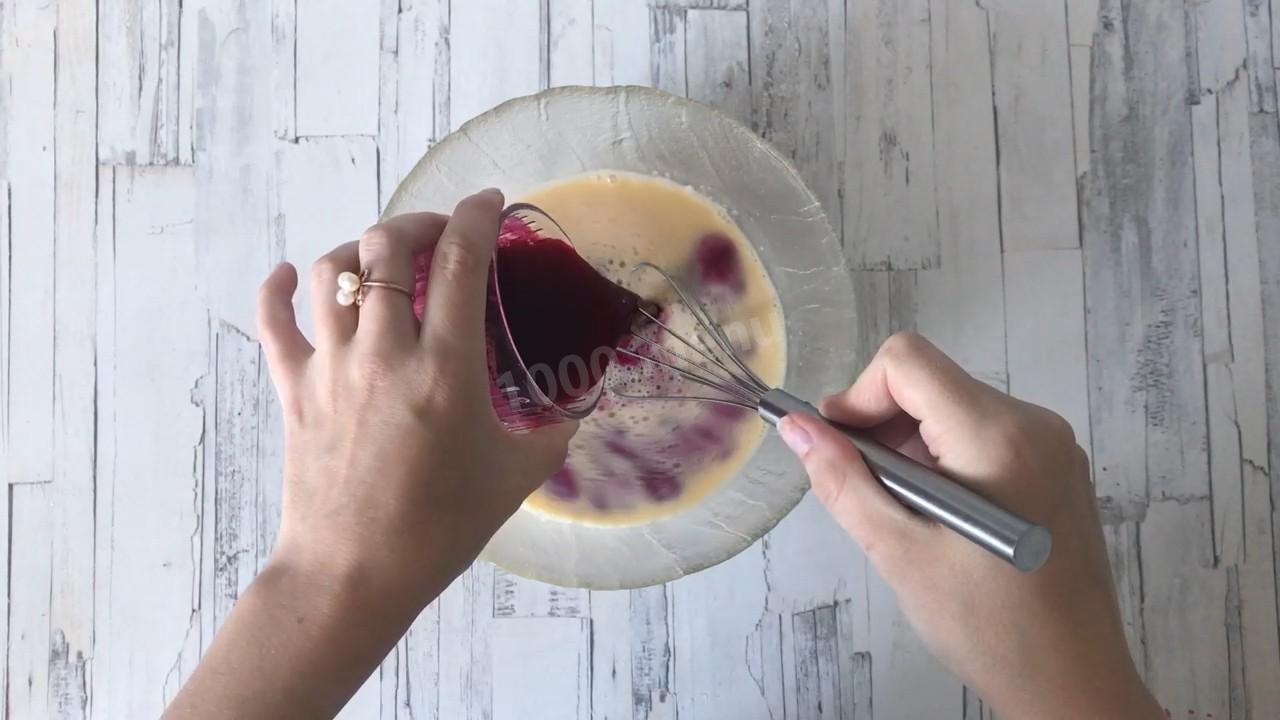
Then add the beet juice. Whisk the mixture until smooth.
-
Step 6:
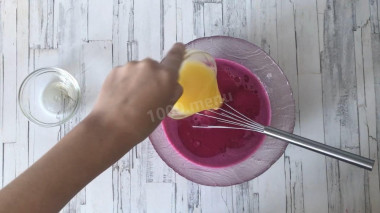
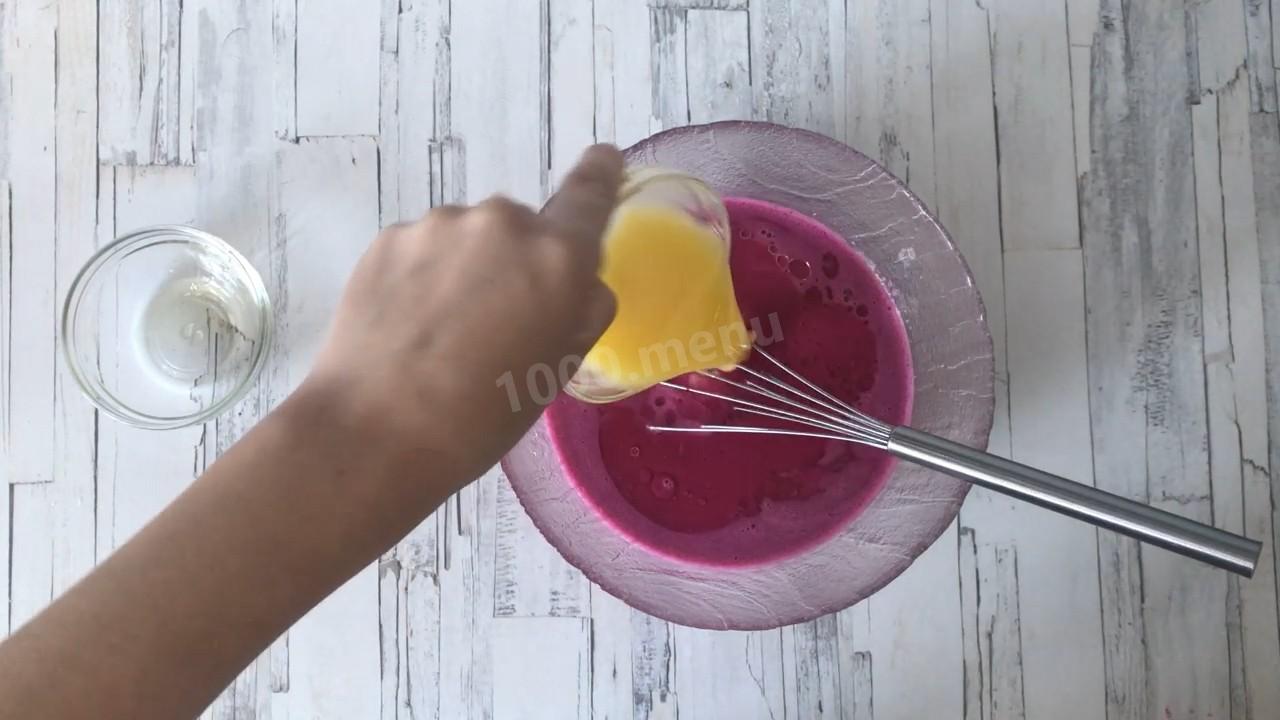
Pour the vegetable oil and melted butter into the egg mixture and stir.
-
Step 7:
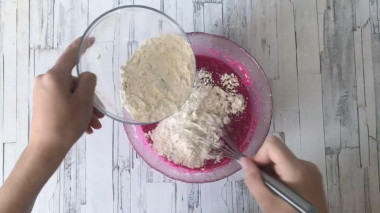
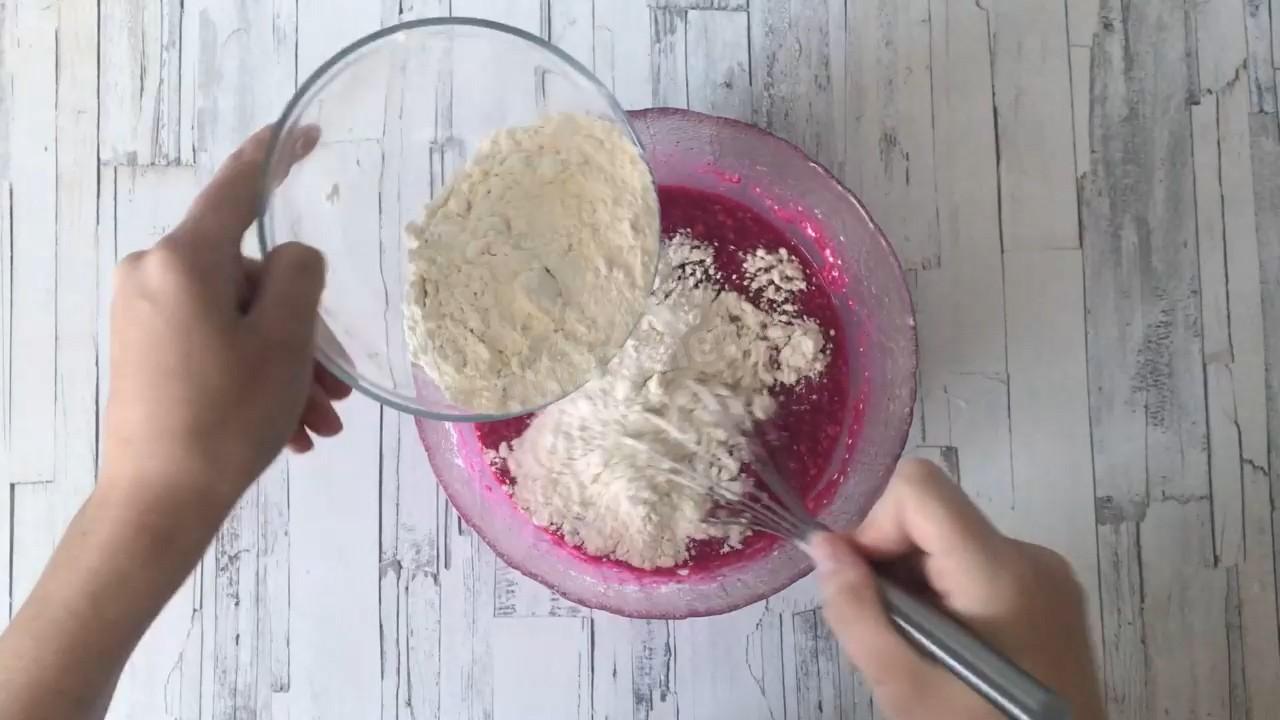
Sift the flour and add it to the batter in batches. Watch the consistency — you may need a little more or less flour than I did.
-
Step 8:
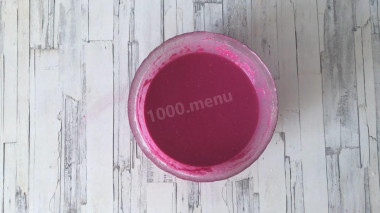
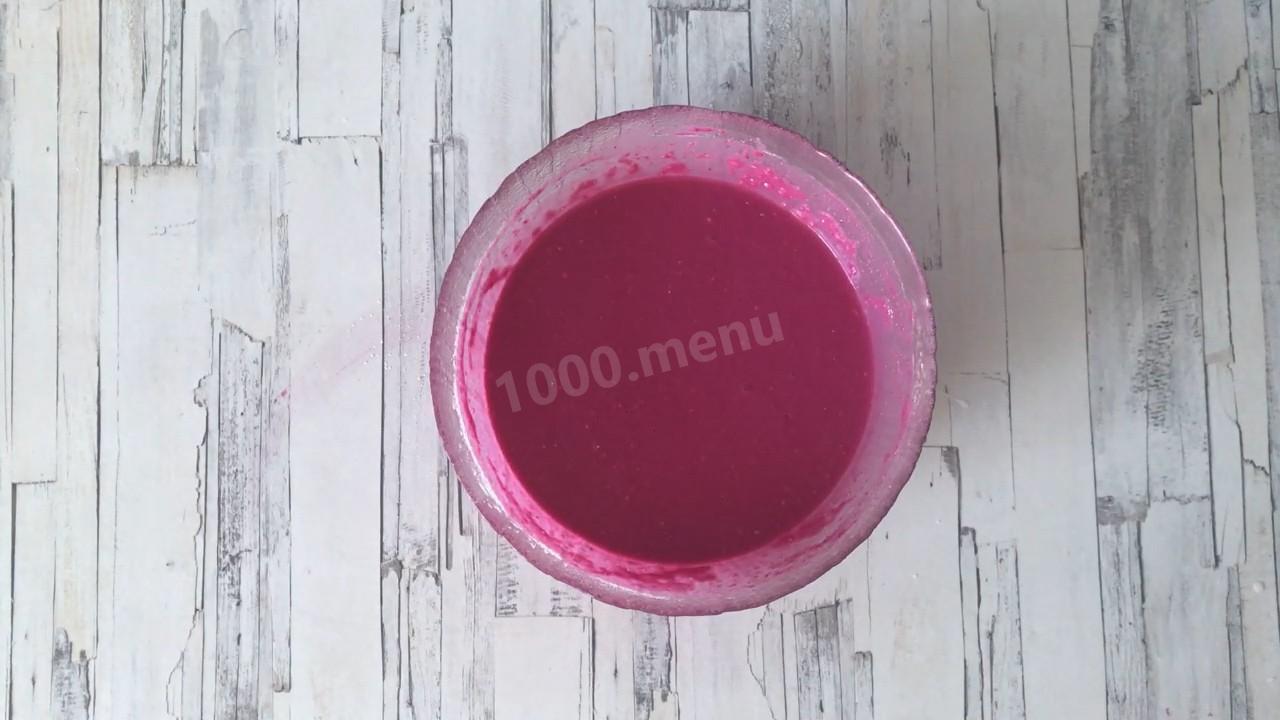
You want a smooth, thin batter with no lumps.
-
Step 9:
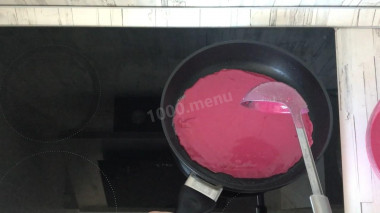
Cook the pancakes on a greased skillet, about 1 minute per side, watching so they don't brown too much and lose their pretty red color.
-
Step 10:
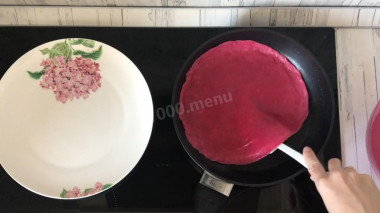
It takes me about 1.5 minutes per pancake over high heat. Go by your own stove and skillet — you may need to shorten or lengthen the cooking time.
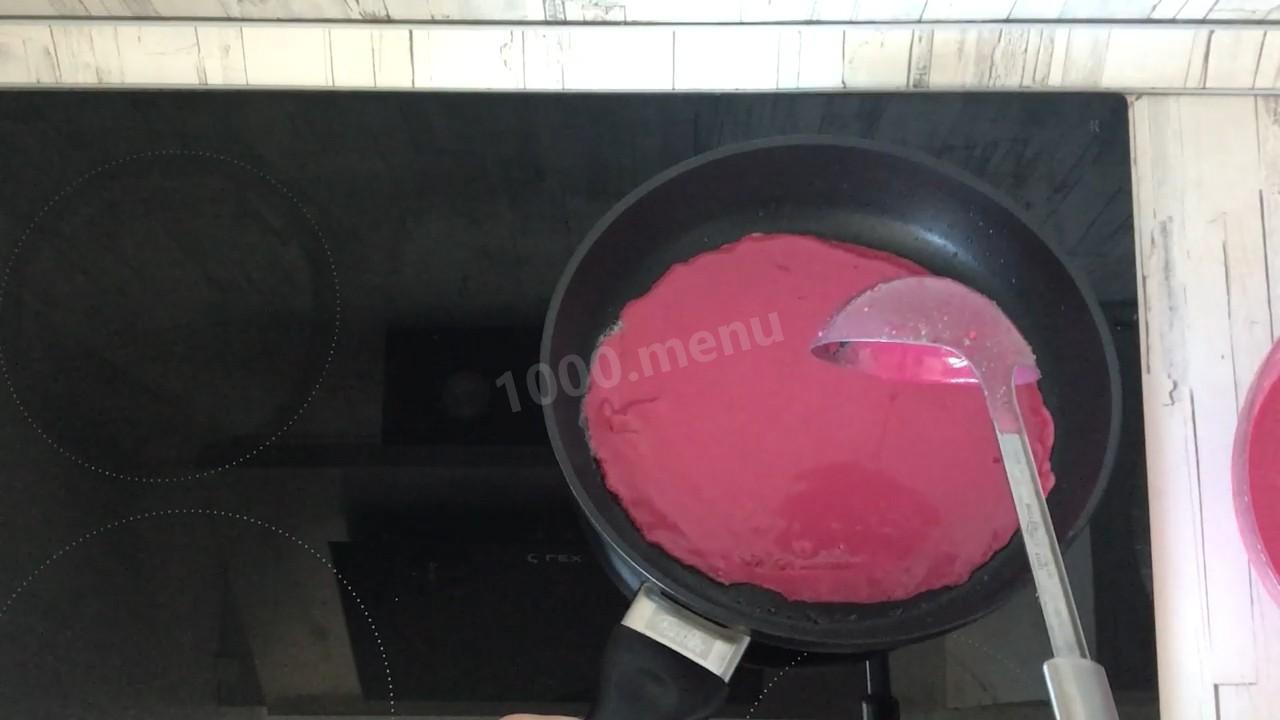
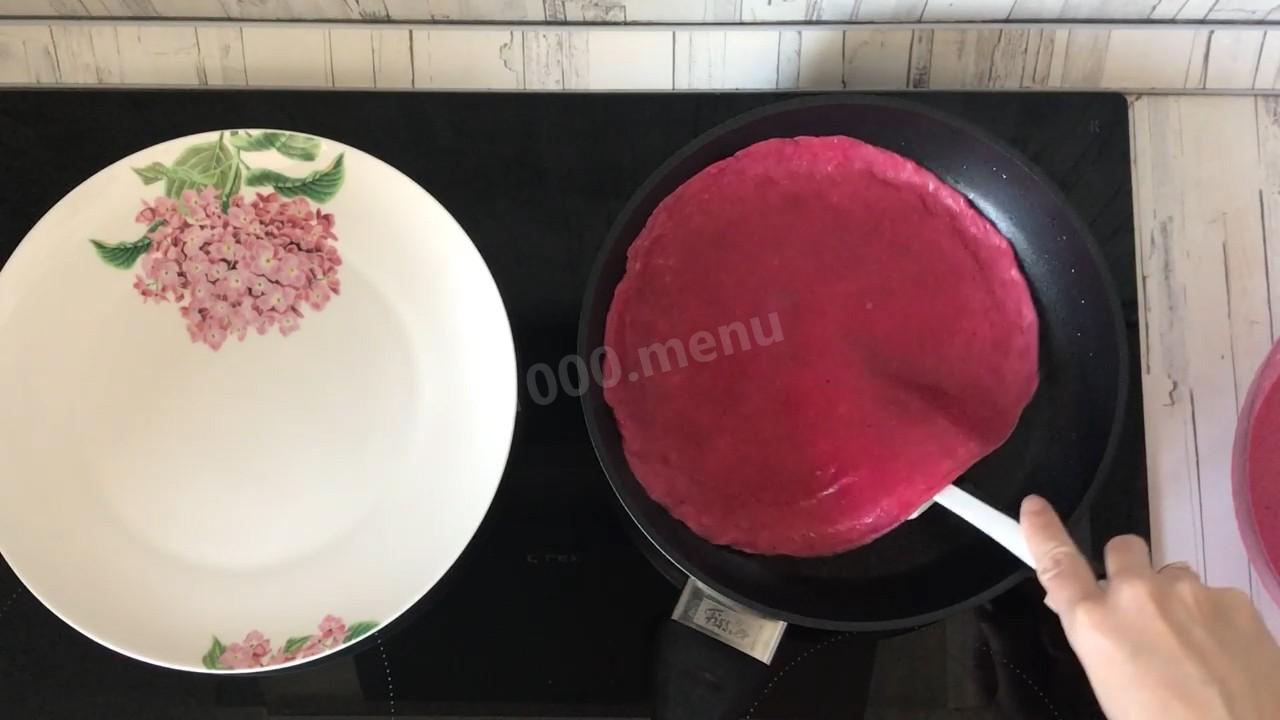
- These pancakes turned out amazing — and, best of all, fast. Beet juice seems to have some special quality: not a single pancake tore. They cooked incredibly quickly — I'd barely finished ladling the batter before it was time to flip. Because of that they came out lightly cooked, a lovely pink, with a delicate velvety pattern. And the taste — I won't even get started! Definitely give these a try; you won't be sorry.
- Use an oil with a high smoke point for frying. Every oil is only good up to a certain temperature — its smoke point — beyond which it starts to burn and forms harmful compounds, including carcinogens. Most unrefined oils have a low smoke point: they're full of unfiltered particles that scorch quickly. Refined oils hold up better to heat. If you're cooking in the oven, in a skillet, or on the grill, reach for a high-smoke-point oil — refined sunflower, olive, or grapeseed are common choices.
- Be ready to use more or less flour than the recipe calls for. Go by the consistency of the batter rather than the exact amount of flour. To steer clear of mistakes, read up on flour and how it behaves.
Caloric content of the products possible in the composition of the dish
- Whole cow's milk - 68 kcal/100g
- Milk, 3.5% fat - 64 kcal/100g
- Milk, 3.2% fat - 60 kcal/100g
- Milk, 1.5% fat - 47 kcal/100g
- Concentrated milk, 7.5% fat - 140 kcal/100g
- Milk, 2.5% fat - 54 kcal/100g
- Chicken egg - 157 kcal/100g
- Egg white - 45 kcal/100g
- Egg powder - 542 kcal/100g
- Egg yolk - 352 kcal/100g
- Ostrich egg - 118 kcal/100g
- Fortified whole durum wheat flour - 333 kcal/100g
- Whole durum wheat flour, all-purpose - 364 kcal/100g
- Fine wheat flour (krupchatka) - 348 kcal/100g
- Flour - 325 kcal/100g
- Granulated sugar - 398 kcal/100g
- Sugar - 398 kcal/100g
- Butter, 82% - 734 kcal/100g
- Amateur unsalted butter - 709 kcal/100g
- Unsalted peasant butter - 661 kcal/100g
- Salted peasant butter - 652 kcal/100g
- Clarified butter - 869 kcal/100g
- Vegetable oil - 873 kcal/100g
- Juice - 36 kcal/100g
- Salt - 0 kcal/100g
Similar recipes


- Fast and tasty
- Festive table
- For breakfast
- Children's recipes
- Baking
- Eggs
- Dairy products
- Flour
- Sweet
- Spices seasonings spices
- Fats and oils
- Other
- Salt
- Vegetable oil
- Butter
- From juice
- Frying
- Hasty pastries
- Dishes in 30 minutes
- Pancakes and pancakes
- Quick baking
- Sweet pastry
- Yeast-free baking
- Recipes for March 8
- Egg breakfast
- Milk
- Vegetarianism
- Sugar