Stir-Fried Pork in Soy Sauce
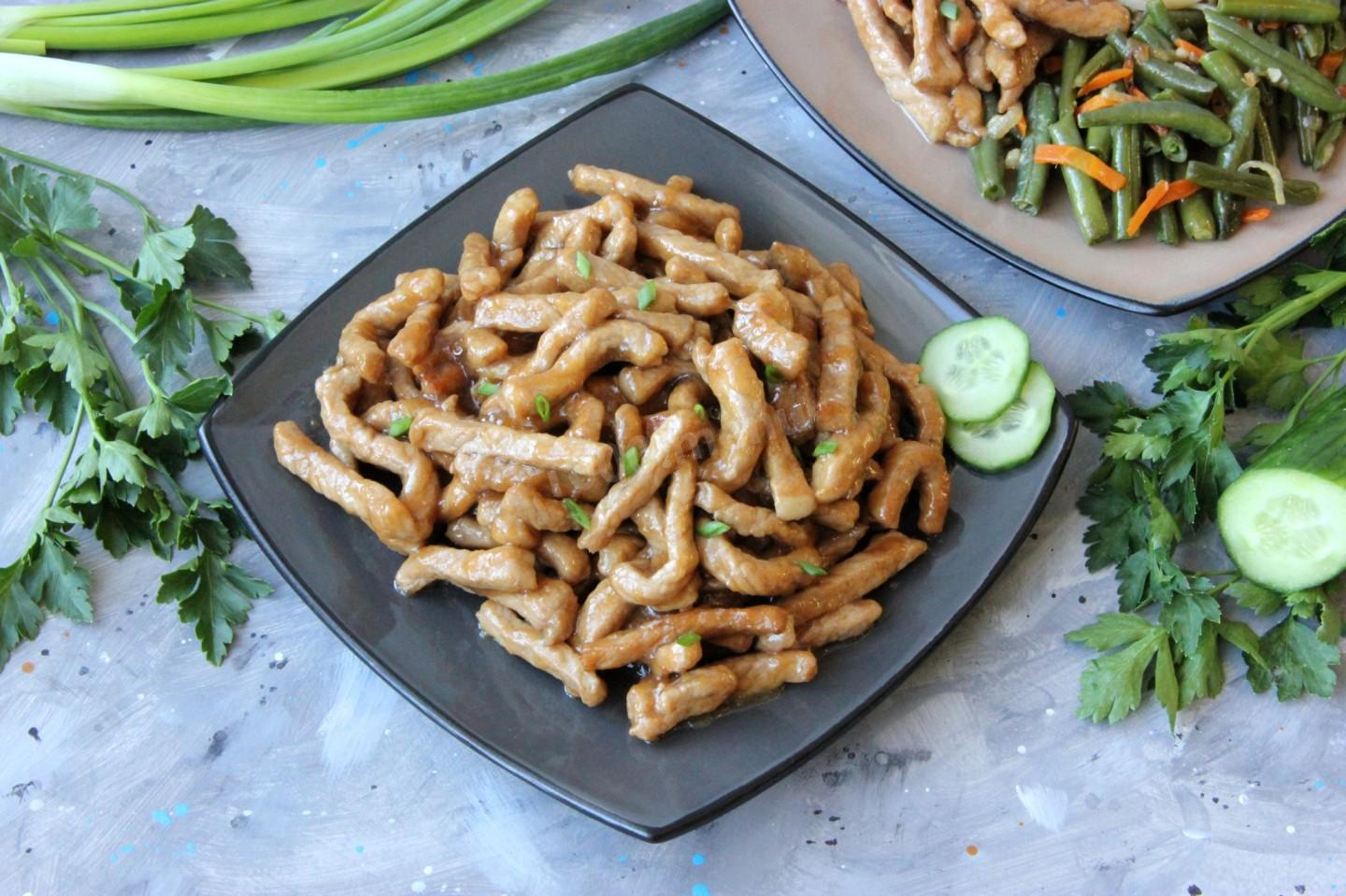
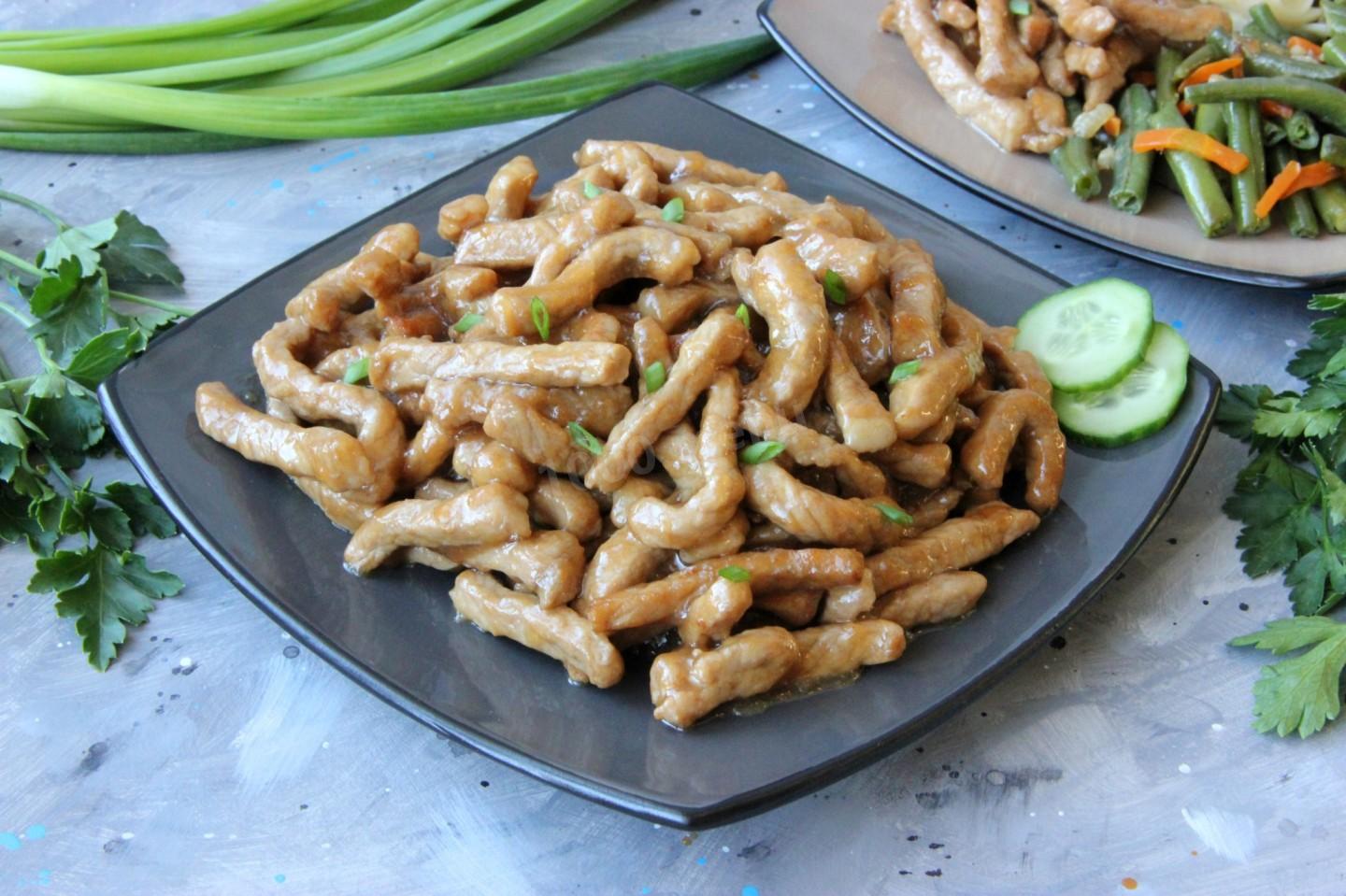
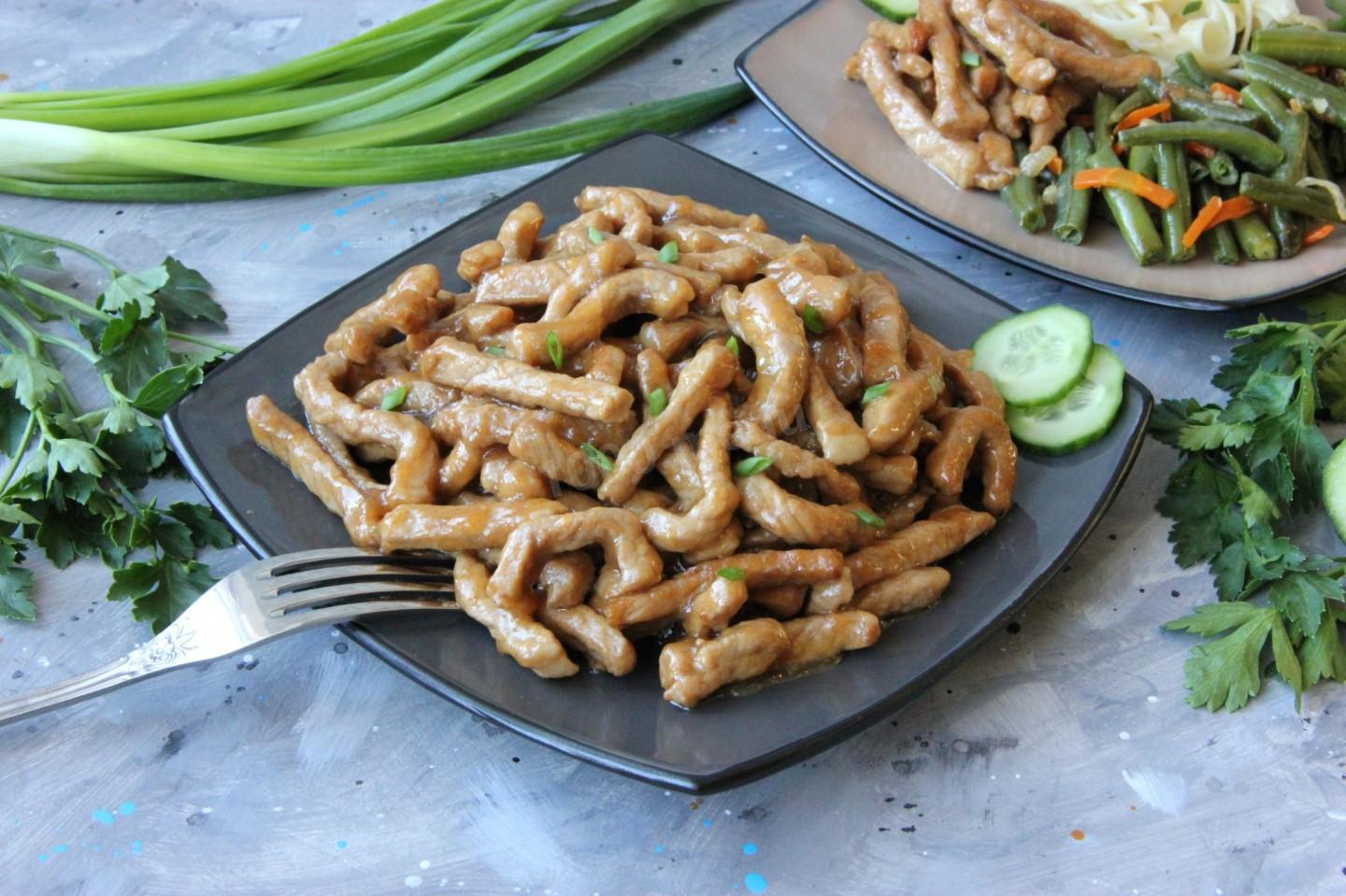
Delicious, juicy meat you can cook in literally minutes—if you use the stir-fry method. The term may not be familiar to everyone, but you've surely seen it done, at least in the movies: cooking in a wok, tossing the food in blazing-hot oil while stirring constantly.


Cooking method
-
Step 1:
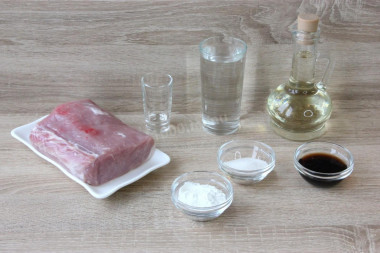
Gather your ingredients. The meat should be at room temperature. I used pork, but you can make this with any lean meat—only the cooking time will vary a bit.
-
Step 2:
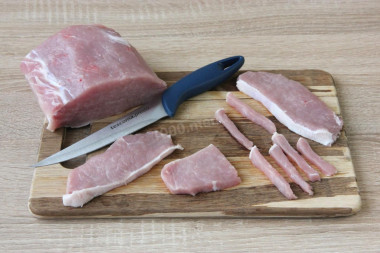
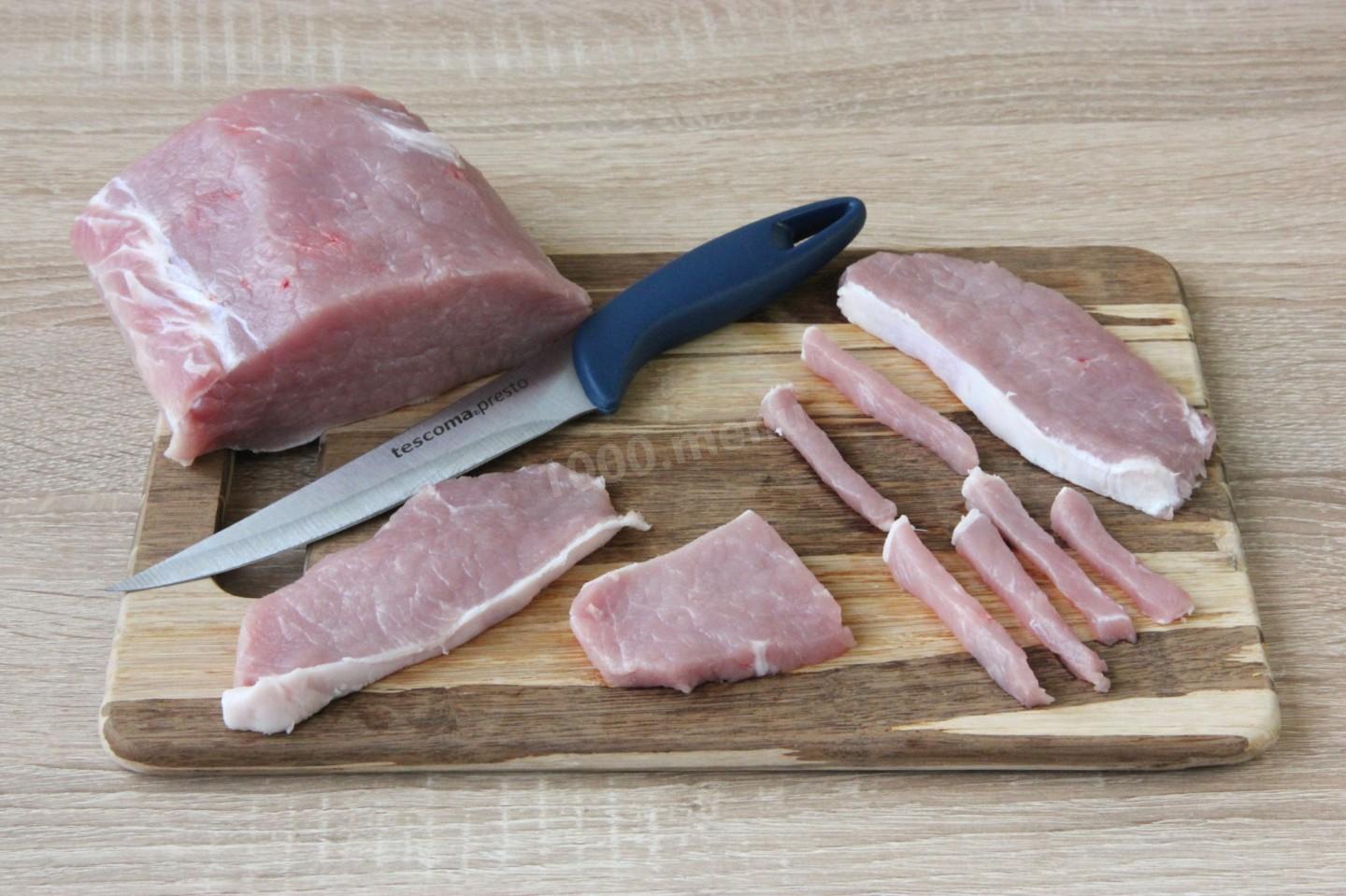
Rinse the meat and pat it thoroughly dry with paper towels. With a sharp knife, cut it across the grain into slices about ½ inch (1–1.3 cm) thick, then cut the slices into strips about ⅜ inch (1 cm) wide.
-
Step 3:
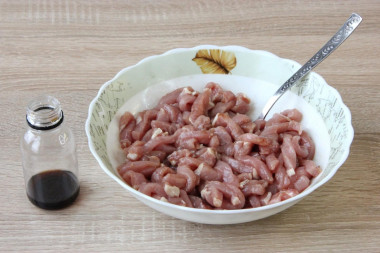
Put the meat in a roomy bowl, pour over 3 tablespoons of soy sauce, stir, and let it marinate for about 20 minutes—longer is fine, as long as the meat soaks up the sauce. Leave it out at room temperature; don't refrigerate it.
-
Step 4:

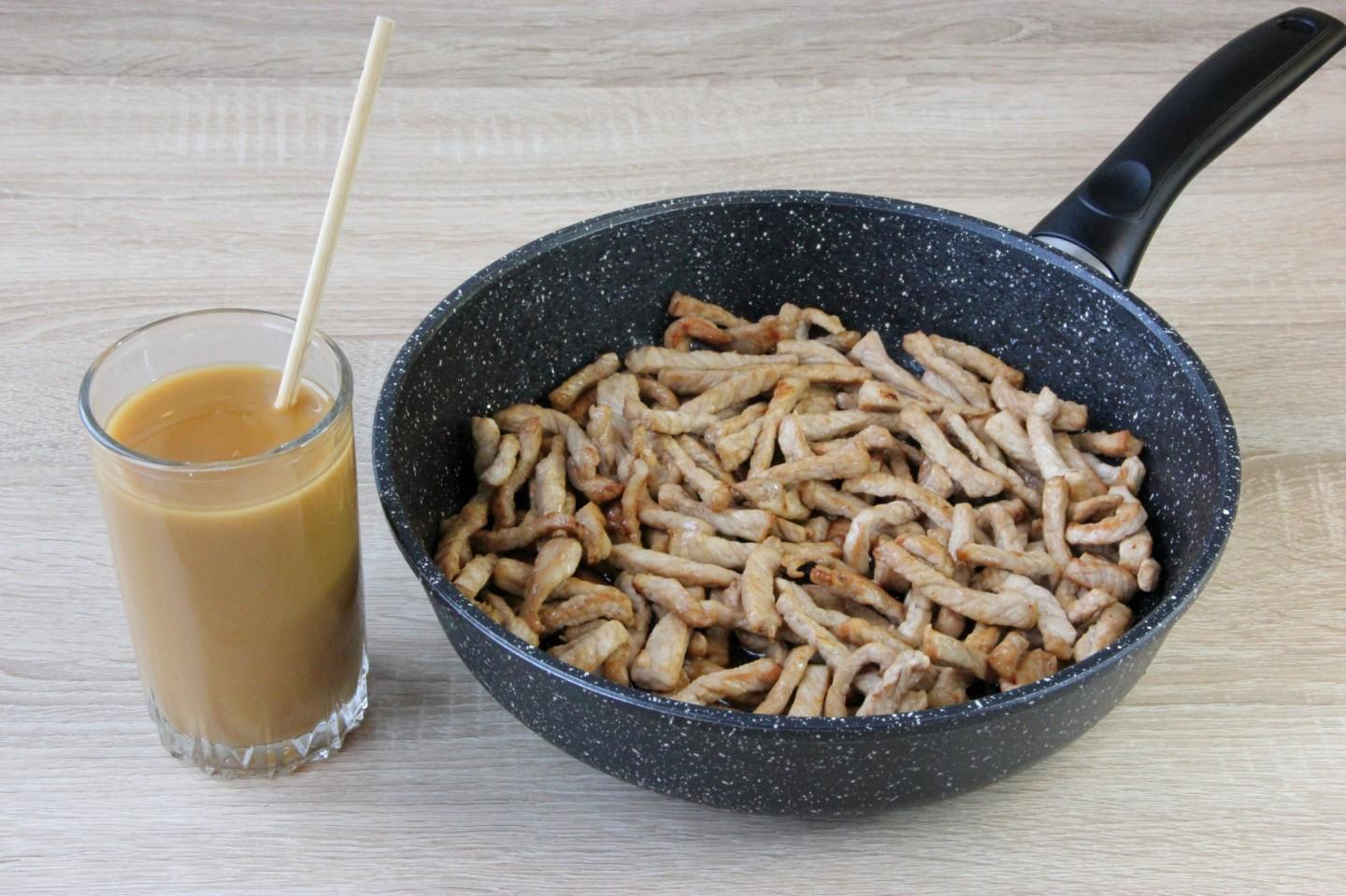
Make the finishing sauce. In a large glass, mix 3 tablespoons soy sauce, 3 teaspoons sugar, and 1 teaspoon 9% vinegar. In a separate container, stir the heaping tablespoon of cornstarch with 3 tablespoons of the cooled boiled water (from the total amount) until smooth, then pour it into the glass. Add the rest of the water and mix everything well.
-
Step 5:
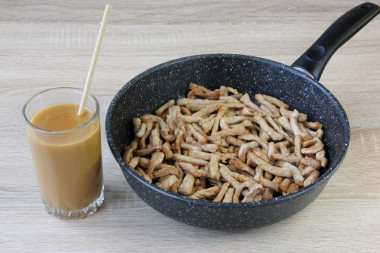
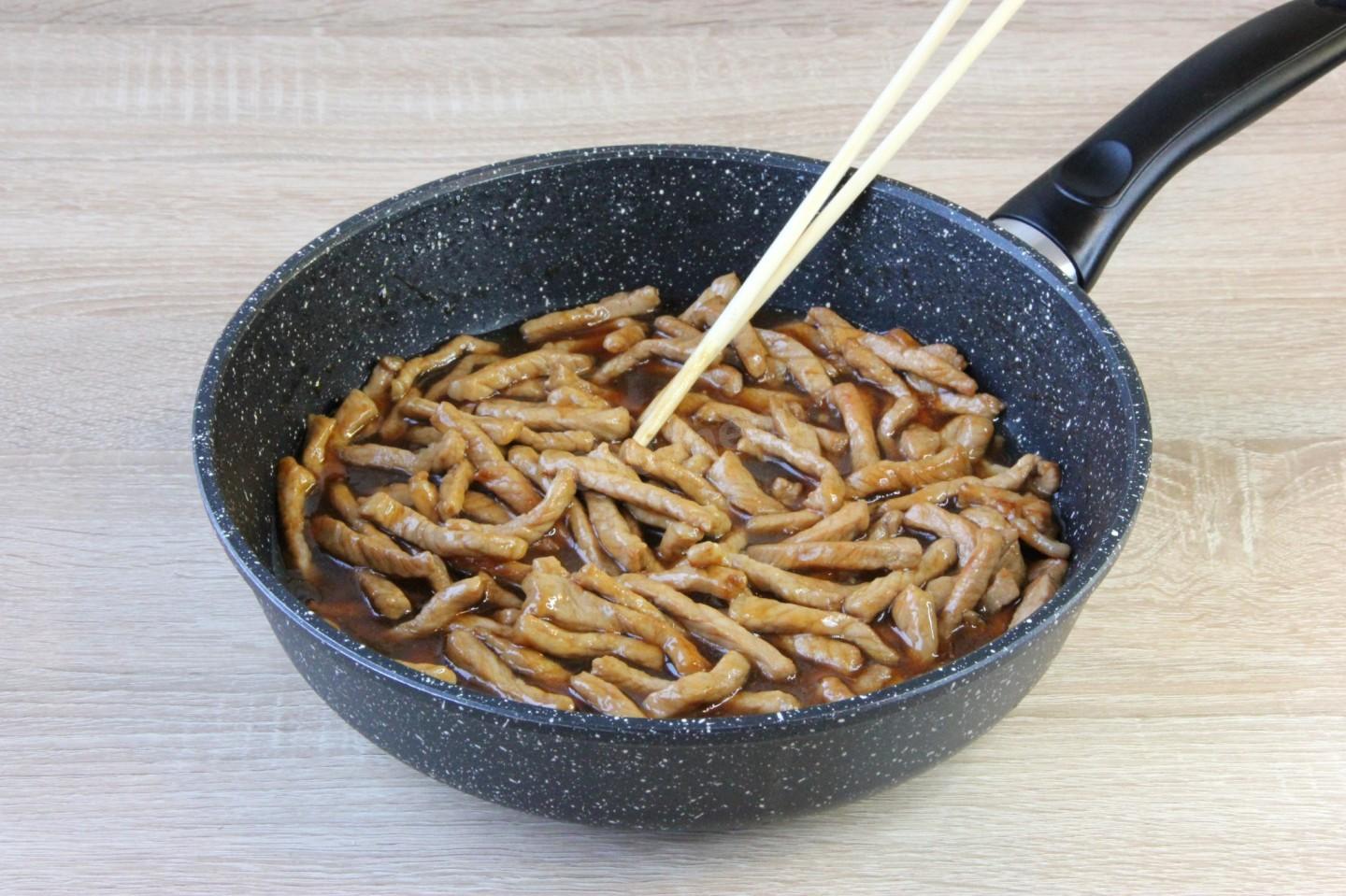
Fry the meat. Three things matter here: Get the oil blazing hot (4–5 minutes over high heat, until it just smokes). Fry no more than about ½ lb (200 g) at a time. Don't overcook it—fry for 2–3 minutes, stirring the whole time. I fried it in three batches. Once the meat turns pale and starts to brown, take it out and fry the rest. Return all the pork to the pan, salt it if needed, and pour in the sauce you mixed earlier. Stir and bring to a boil, then cover the pan and turn off the heat.
-
Step 6:
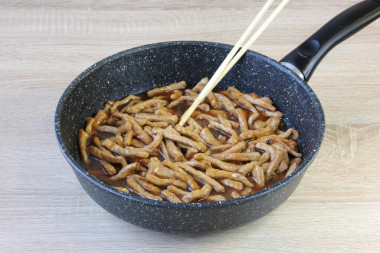
After 5 minutes of resting in the covered pan, the meat is ready. This recipe calls for a wok. If you don't have one, use a heavy-bottomed pot or a deep, high-sided skillet—the high sides keep the oil from spattering all over your stove. Let the finished meat rest in the uncovered pan for 3–4 minutes and serve hot.
-
Step 7:
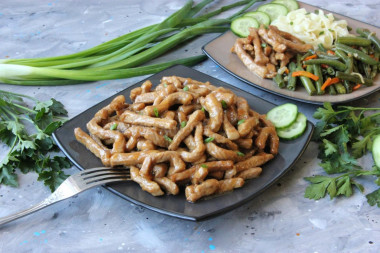
Serve the pork on its own with vegetables and fresh herbs, or with a side. It's great with rice or other grains, any kind of noodles, pasta, or potatoes. The sauce is mild and sweet-and-sour; add spices to taste if you like.



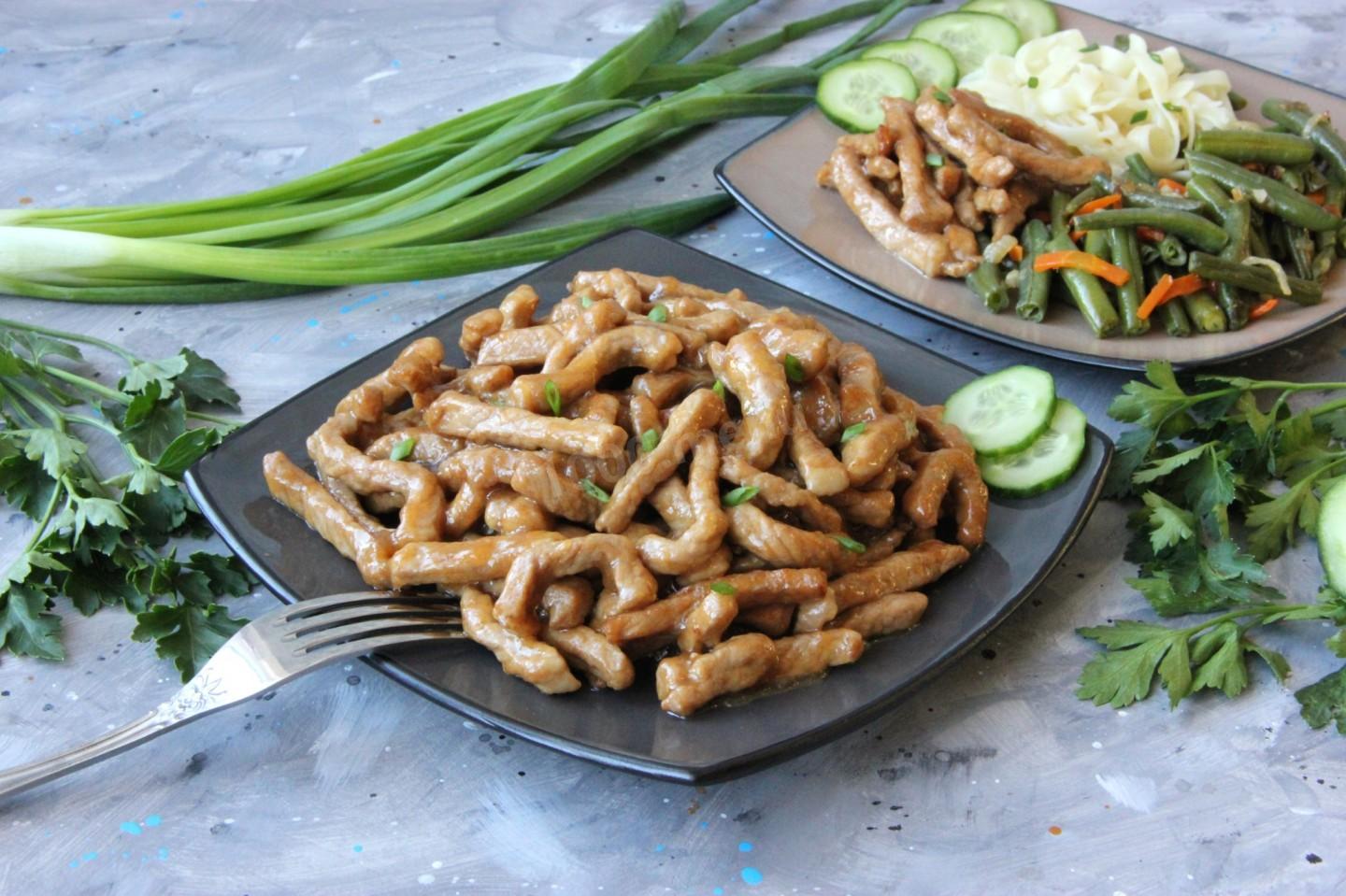
- Stir-frying is a technique from traditional Cantonese cooking. Meat, vegetables, seafood, and noodles are cooked in a wok; the quick, high-heat cooking keeps the ingredients fresh and fragrant and preserves much of their nutritional value. It's hard to imagine any Asian cuisine without the wok and its skilled cooks, and the method keeps growing in popularity everywhere.
Caloric content of the products possible in the composition of the dish
- Soy sauce - 51 kcal/100g
- Granulated sugar - 398 kcal/100g
- Sugar - 398 kcal/100g
- Vegetable oil - 873 kcal/100g
- Salt - 0 kcal/100g
- Water - 0 kcal/100g
- Table vinegar - 11 kcal/100g
- Corn starch - 329 kcal/100g
- Pork fillet - 264 kcal/100g
Similar recipes





- Fast and tasty
- Kitchen utensils
- National cuisine
- Second course
- Meat and meat products
- Semi-finished products
- Sweet
- Spices seasonings spices
- Fats and oils
- Other
- Salt
- Vinegar
- Wok
- Vegetable oil
- Water
- Starch
- Asian cuisine
- Frying
- In a frying pan
- The second is fast and delicious
- Dishes in 30 minutes
- Meat second course
- Pork
- Sauce
- No eggs
- Recipes for lean dishes without butter
- Sugar