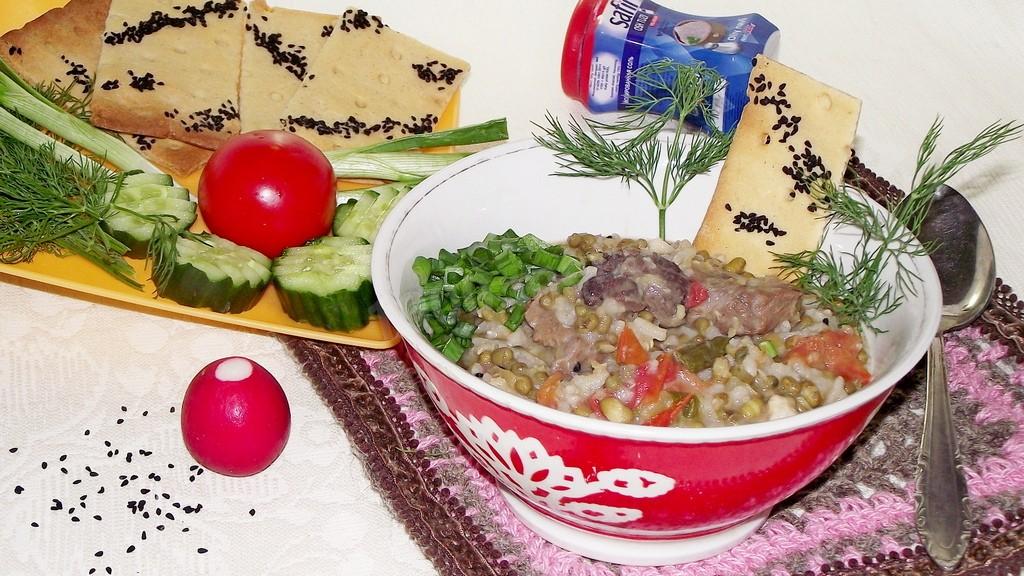
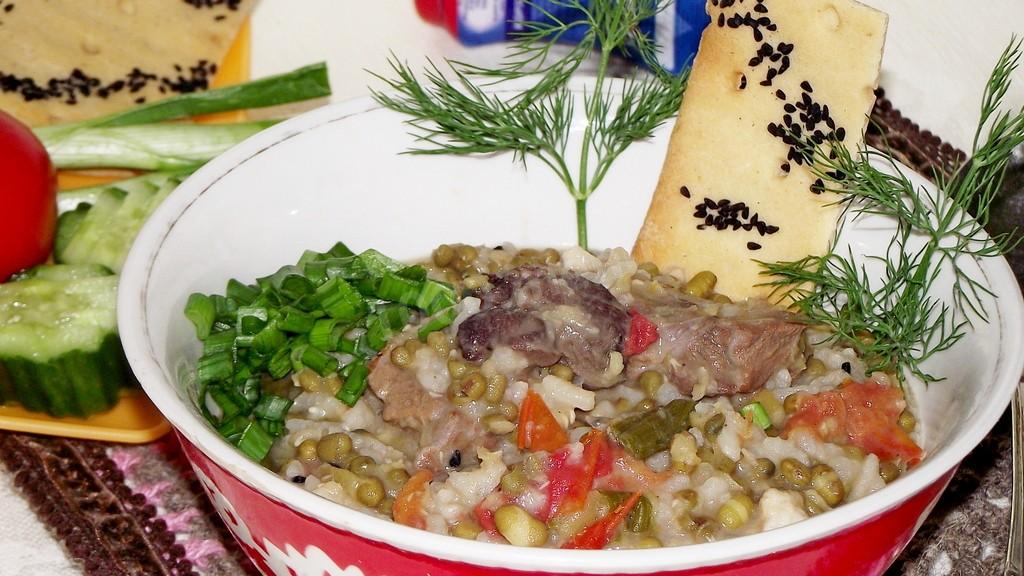
Mashkichiri — Uzbek Mung Bean and Rice Pilaf with Lamb
It's a bit of an acquired taste, but once you get a taste for it, you'll want more. And it's incredibly good for you: mung beans are packed with fiber and with the protein your body needs to build healthy cells. They're even said to help with diabetes or a sluggish metabolism, standing in for other foods that can work against your health.
Mung beans can also help you shed a few extra pounds. Many people like to serve mashkichiri with a tomato sauce made from fried onions and tomatoes, but the lamb flavor makes the dish delicious on its own, so fresh vegetables are all it really needs.
olenika
Recipe author
Mashkichiri — Uzbek Mung Bean and Rice Pilaf with Lamb
Nutrients and energy value of the composition of the recipe
By weight of the composition:
Proteins 24 %
12 g
Fats 27 %
13 g
Carbohydrates 49 %
24 g
263 kcal
GI:
8
/
38
/
54
- In Central Asia, many people love mung beans for how nourishing they are, but some don't enjoy the longer prep, so they end up overlooking this legume altogether — a shame, since porridges and soups made from it, especially with lamb, are hugely popular across the region and in India, which is said to be its homeland. If you've decided to give it a go, let's get started: 1. First, the grains. Rinse the mung beans thoroughly in a sieve to wash away any hidden grit. Look them over for little stones (a common find) and pick out any misshapen beans. Then cover the mung beans halfway with warm water so they can drink and breathe, and salt them well. 2. Rinse the rice until the water runs clear, and likewise cover it halfway with warm water. Now you can get on with everything else; stir the grains now and then so they swell evenly, and salt them too. 3. Set a cauldron (or a heavy Dutch oven) over gentle heat and let it warm, then add the lamb tail fat cut into small cubes. It shouldn't burn — just let it render slowly. Next, cut the lamb into medium pieces and add it to the fat. 4. Dice the onions and add them in. Now turn up the heat and brown everything well. The onion's oils tenderize the meat nicely; just wait for a rich golden color. 5. Dice the carrots (mine are yellow) and the tomatoes and add them to the cauldron. Fry another 5 minutes, then add the garlic scapes. Note that the ingredients on that line are optional — mostly there for color. Once you're happy with the fry-up, add the mung beans along with their soaking water to the cauldron. 6. Here's the key part: add the right amount of water! Top it up (have boiling water ready) so it sits about a middle finger's depth above the food, and bring it to a boil. Then turn the heat to low and let it barely simmer, covered. After 20–30 minutes, once the mung beans start to split open, add the rice. 7. After about 20 minutes, uncover and stir well, cooking off any excess liquid if needed — you can adjust the thickness to your taste. As you can see, nothing complicated, just a few pointers, and a delicious, healthy dish is ready.
Caloric content of the products possible in the composition of the dish
- Onion - 41 kcal/100g
- Tomatoes - 23 kcal/100g
- Lean lamb - 169 kcal/100g
- Fatty lamb - 225 kcal/100g
- Lamb brisket - 533 kcal/100g
- Lamb leg - 232 kcal/100g
- Lamb chop on the bone - 380 kcal/100g
- Lamb shoulder - 284 kcal/100g
- Lamb loin - 459 kcal/100g
- Raw wild rice - 353 kcal/100g
- Raw brown rice - 360 kcal/100g
- Boiled brown rice - 119 kcal/100g
- Raw fortified white rice - 363 kcal/100g
- Boiled fortified white rice - 109 kcal/100g
- Raw long-grain parboiled white rice - 369 kcal/100g
- Boiled long-grain parboiled white rice - 106 kcal/100g
- Dry instant rice - 374 kcal/100g
- Instant rice, ready to eat - 109 kcal/100g
- Rice - 344 kcal/100g
- Carrots - 33 kcal/100g
- Dried carrots - 275 kcal/100g
- Boiled carrots - 25 kcal/100g
- Salt - 0 kcal/100g
- Garlic scapes - 110 kcal/100g
- Mung beans - 300 kcal/100g
- Lamb tail fat - 897 kcal/100g
Similar recipes
Related and additional categories:
- National cuisine
- Second course
- Meat and meat products
- Vegetables
- Cereals and cereal products
- Legumes
- Spices seasonings spices
- Fats and oils
- Beans
- Garlic
- Salt
- Chicken fat
- Asian cuisine
- Frying
- Stewing
- In a frying pan
- Stewed vegetables
- Meat second course
- From mutton
- From carrots
- From tomato
- From onion
- No eggs
- Recipes for lean dishes without butter
- From rice