Millet Porridge with Milk, Cooked in a Saucepan
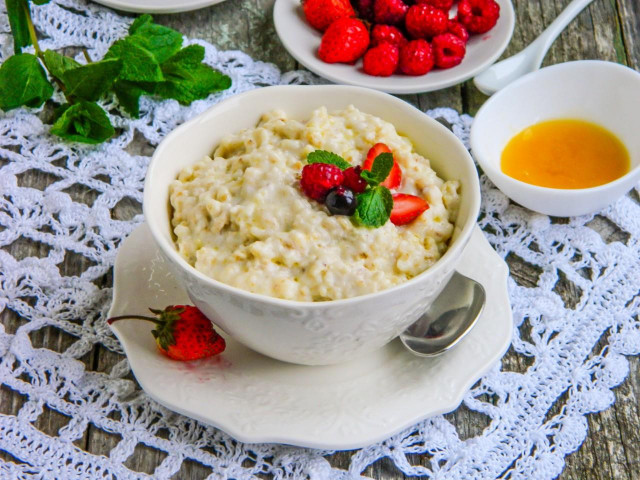
Fast, simple, and tasty — both kids and grown-ups will love it! For this millet porridge made with milk and water, you'll need a heavy-bottomed saucepan. You can serve the dish for breakfast, lunch, or dinner, in sweet or savory versions. It's delicious on its own and with all sorts of add-ins.



Cooking method
-
Step 1:

How do you cook millet porridge in a saucepan? Measure out all the ingredients. Pick over the millet and remove any debris. Rinse it first in cold water, then in hot. Drain off the excess liquid. You can let the millet sit in hot water — that removes its bitterness. A few minutes is enough.
-
Step 2:
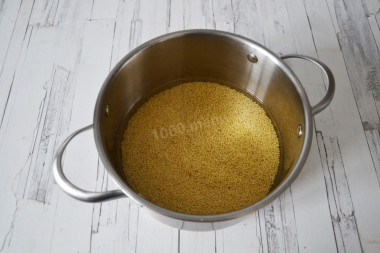
Put the millet in a heavy-bottomed pot, pour in the water, and set the pot on the heat. We need a heavy bottom so the grain doesn't scorch or stick.
-
Step 3:
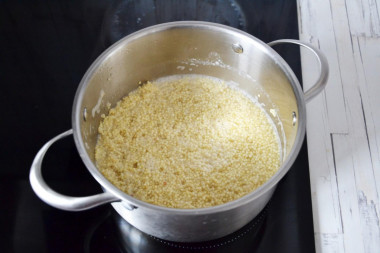
How long do you cook millet? Bring the contents of the pot to a boil over medium heat. Cook for about 15 minutes, skimming off the foam now and then.
-
Step 4:
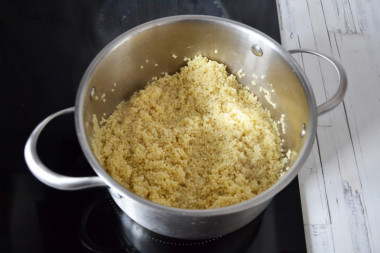
Some of the water should evaporate during cooking, and some should be absorbed into the grain. This is how the millet will look at this stage.
-
Step 5:
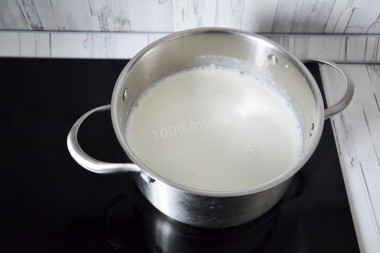
When there's no water left in the bottom of the pot, pour in the milk. Stir the porridge and cook it for another 20 minutes over low heat. Bring it to the consistency you want, but make sure not all the milk gets absorbed into the grain.
-
Step 6:
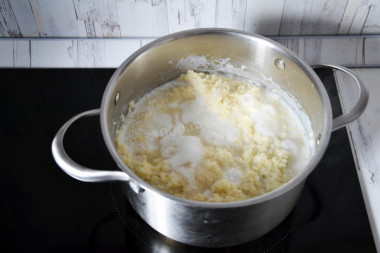
Add the sugar and salt to the porridge and stir. As you can see in the photo, there's still some milk in the pot that hasn't evaporated yet. That's fine. As the porridge rests, the milk will be fully absorbed into the grain. Take the pot off the heat, cover it, and let the porridge rest for 10–15 minutes. Serve the porridge hot, with butter.


- This porridge is good both as a dish in its own right, suitable for children, and as a side dish with meat (even though it's made with milk). By the way, you can replace the milk entirely with water to make it a lean version. You can also cook it in any broth — mushroom, vegetable, or meat — and add various sweet or savory add-ins if you like: raisins, dried fruit, fresh fruit, vegetables (onion, carrot), mushrooms, or meat.
- For cooking, it's better to use filtered or bottled water with a neutral taste. If you use tap water, keep in mind that it can give the dish an unpleasant off-flavor.
- As a child, millet porridge was the one I liked least of all the porridges. The only place millet was welcome was in ukha (fish soup). The other day I decided to add some variety to our menu and put millet porridge back on the table. It's more of a fuss than semolina, of course, but the result came out excellent.
Caloric content of the products possible in the composition of the dish
- Whole cow's milk - 68 kcal/100g
- Milk, 3.5% fat - 64 kcal/100g
- Milk, 3.2% fat - 60 kcal/100g
- Milk, 1.5% fat - 47 kcal/100g
- Concentrated milk, 7.5% fat - 140 kcal/100g
- Milk, 2.5% fat - 54 kcal/100g
- Millet groats - 335 kcal/100g
- Granulated sugar - 398 kcal/100g
- Sugar - 398 kcal/100g
- Salt - 0 kcal/100g
- Water - 0 kcal/100g