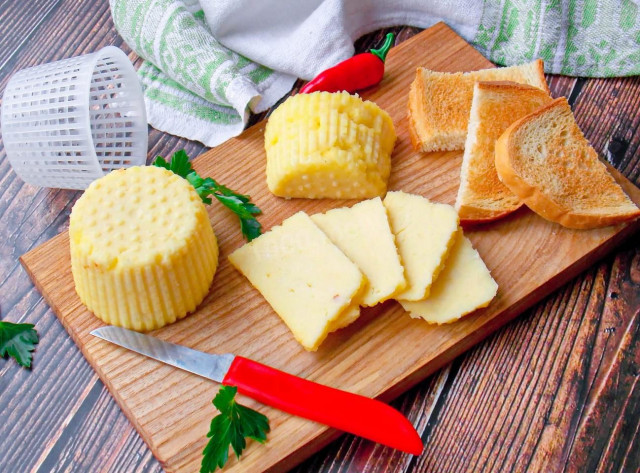
Potato Cheese
A real, delicious cheese made from ordinary potatoes! This recipe is said to have originated in Germany, where cooks first came up with a cheese built around a base of plain potatoes. The finished product tastes surprisingly close to the familiar hard cheeses made from dairy. There are plenty of modern versions that differ from the old German original, but the star ingredient never changes.



Cooking method
-
Step 1:
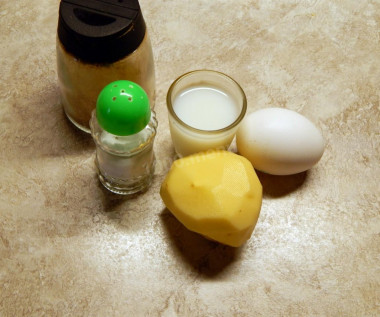
How do you make potato cheese? Start by getting your ingredients ready. The milk has to be sour — and it's easy to sour at home: just leave a container of whole milk in a warm spot at room temperature for a couple of days. The key is to use whole, full-fat milk. You can also use rich, thick sour cream along with or in place of the milk, but the cheese turns out just fine without it.
-
Step 2:
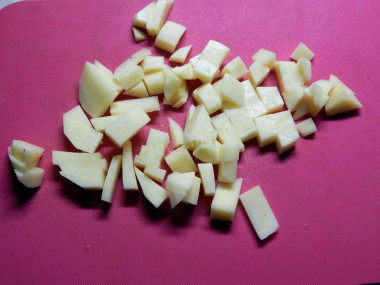
Choose a starchy variety of potato that cooks down easily. Wash and peel the potatoes, then cut them into cubes.
-
Step 3:
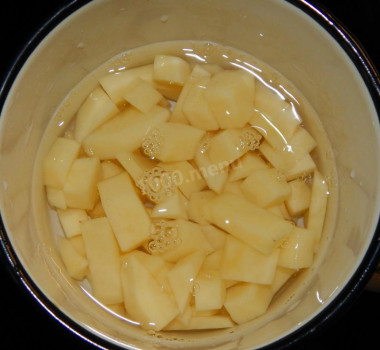
Put the potatoes in a saucepan, cover with water, and set it over the heat. Add a little salt.
-
Step 4:
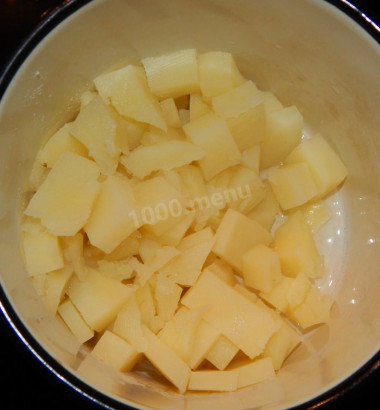
Cook until tender, then drain off all the water the potatoes cooked in.
-
Step 5:
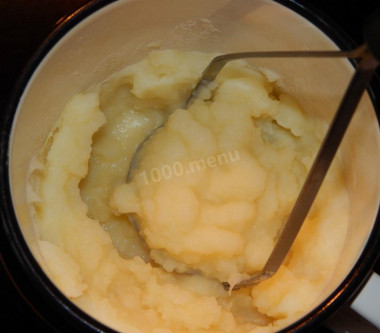
Mash the potatoes until completely smooth, with no lumps, and let them cool slightly. Pour in the sour milk and mix well. Beat in the egg. The egg is optional — skip it if you're not confident in the quality of your eggs, since the mixture won't be cooked again after this point. That said, the yolk gives the cheese a prettier yellow color, and the white makes the mass stickier and firmer.
-
Step 6:
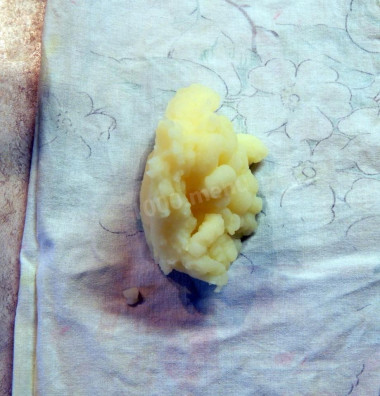
Mix the potato mass well once more. Season with salt to taste, and if you like a sharper, spicier cheese, add a pinch of hot pepper. Take a clean cloth that won't shed lint into the cheese — cheesecloth works well — and spoon the mashed potatoes onto it. Gather up the edges to form a pouch, set it in a colander or sieve, and weight it down on top.
-
Step 7:
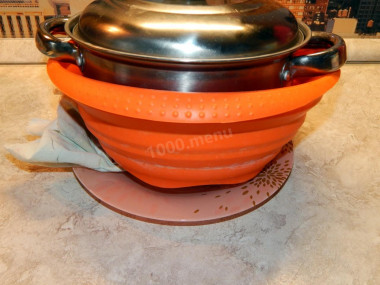
A pot filled with water makes a good weight. Set the sieve over a bowl to catch the liquid as it drains. Leave the cheese under the weight until all the liquid has drained off completely — this can take anywhere from a few hours to two days.
-
Step 8:
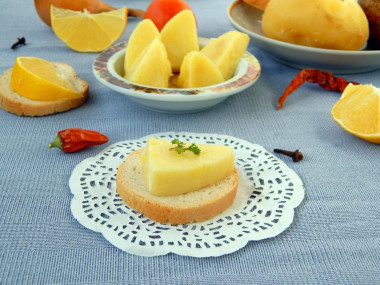
Unwrap the cheese from the cloth, let it dry a little at room temperature, and it's ready to serve. Enjoy!


- Everyone's sense of salty, sweet, bitter, sharp, sour, and spicy is a little different, so always add spices and seasonings to your own taste. If you're using a seasoning for the first time, keep in mind that some are especially easy to overdo — chili pepper, for one.
- How can you tell if an egg is fresh? Crack it into a separate bowl. First and foremost, there should be no off smell. The white of a fresh egg is clear and clean, and the yolk holds its shape — shiny, domed, and even.
- Always wash eggs before using them, since even a shell that looks clean can carry harmful bacteria. A food-safe wash and a brush work best.
Caloric content of the products possible in the composition of the dish
- Ripe potatoes - 80 kcal/100g
- Baked potatoes - 70 kcal/100g
- Mashed potatoes - 380 kcal/100g
- Boiled potatoes - 82 kcal/100g
- Potatoes in their skins - 74 kcal/100g
- Fried potatoes - 192 kcal/100g
- Salt - 0 kcal/100g
- Ground hot pepper - 21 kcal/100g
- Egg - 80 kcal/100g
- Sour milk - 60 kcal/100g