Noodles with pork and vegetables
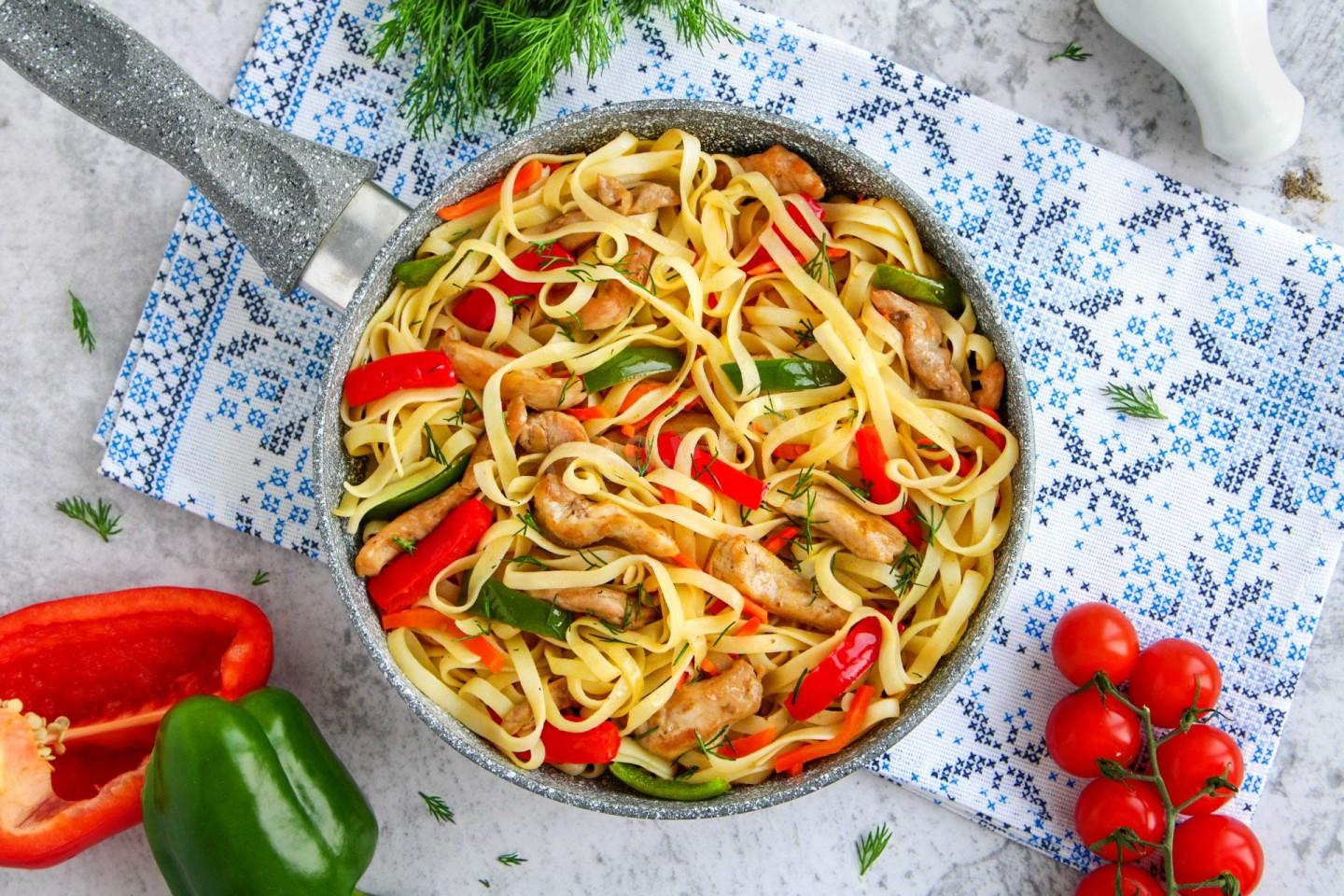
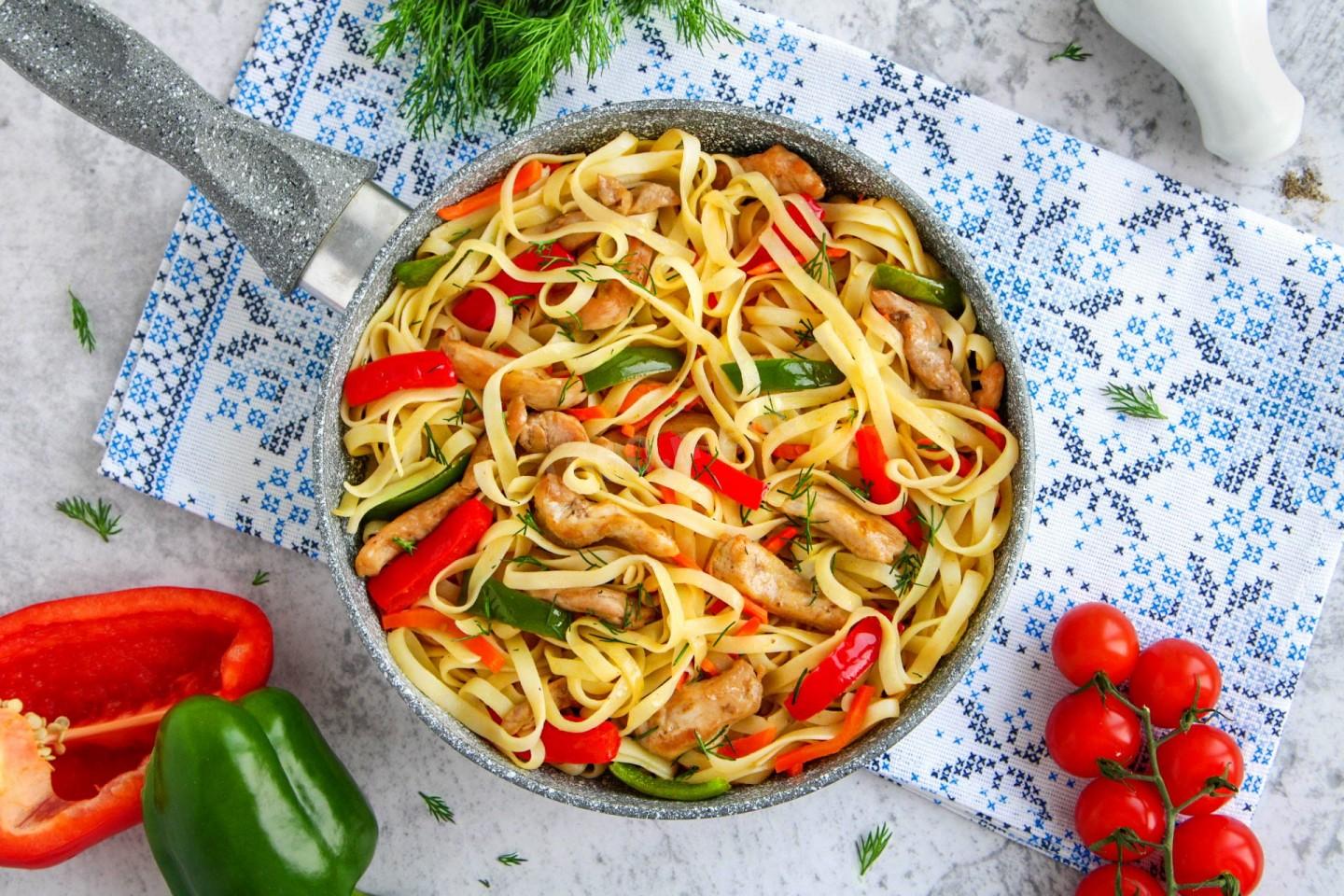
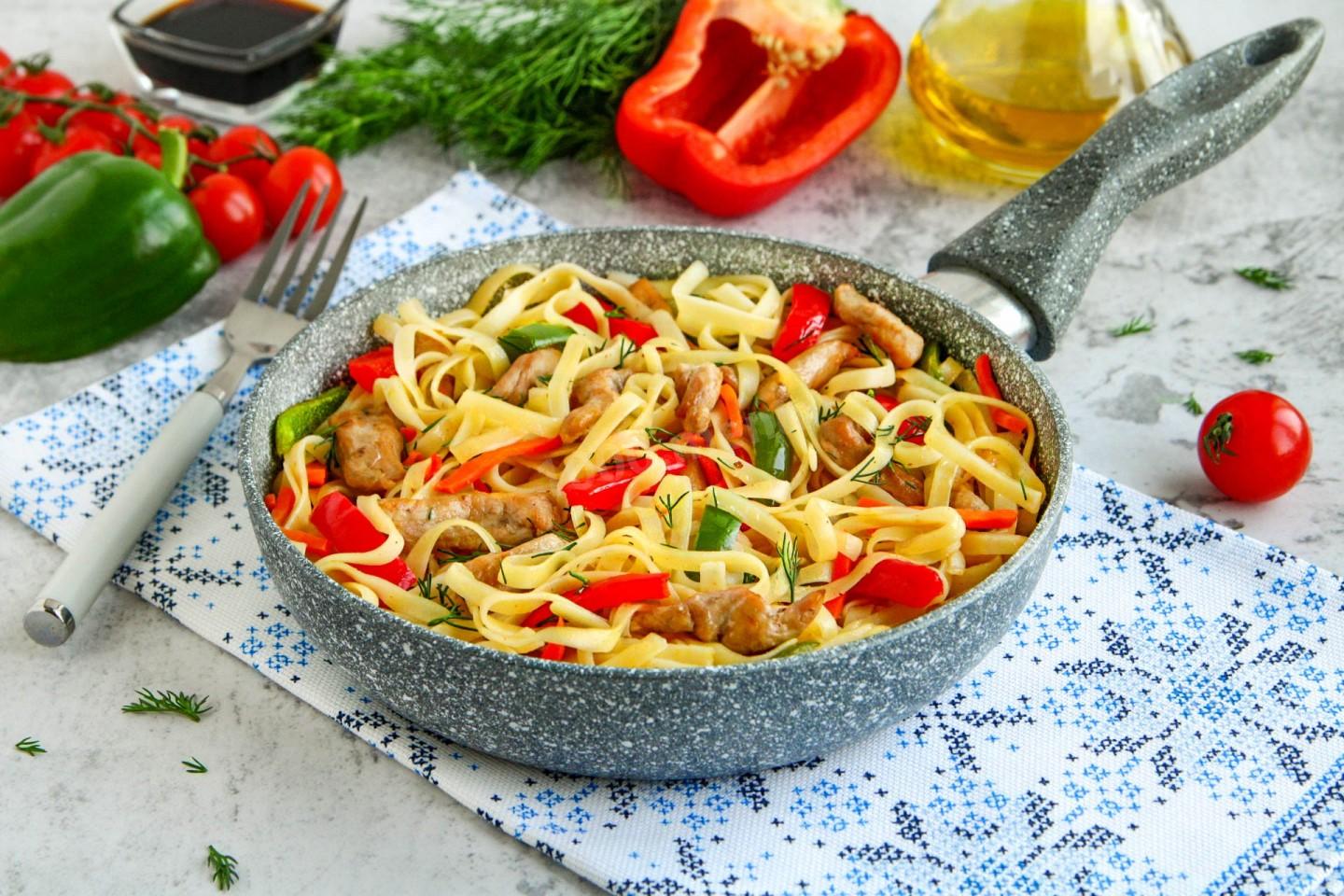
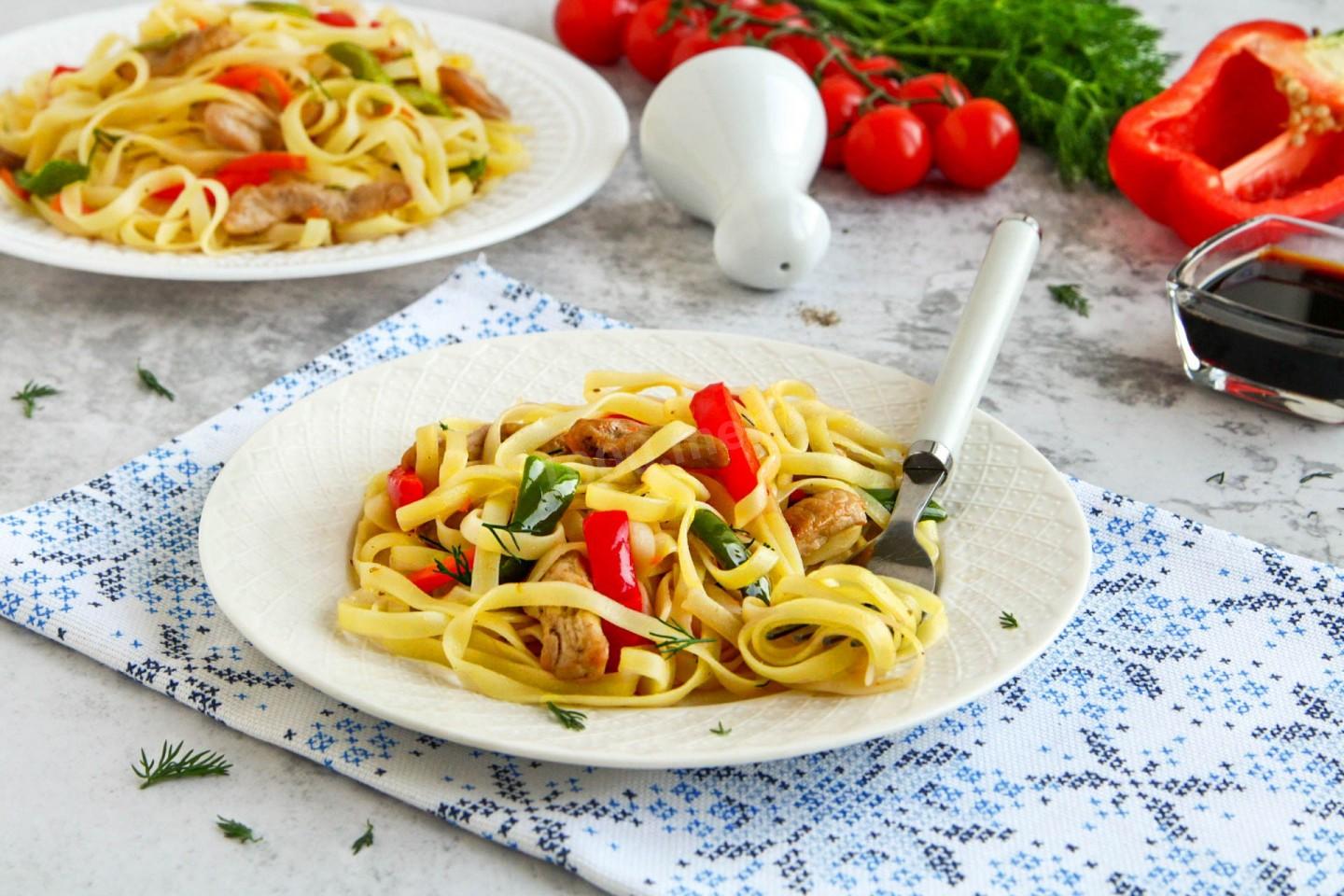
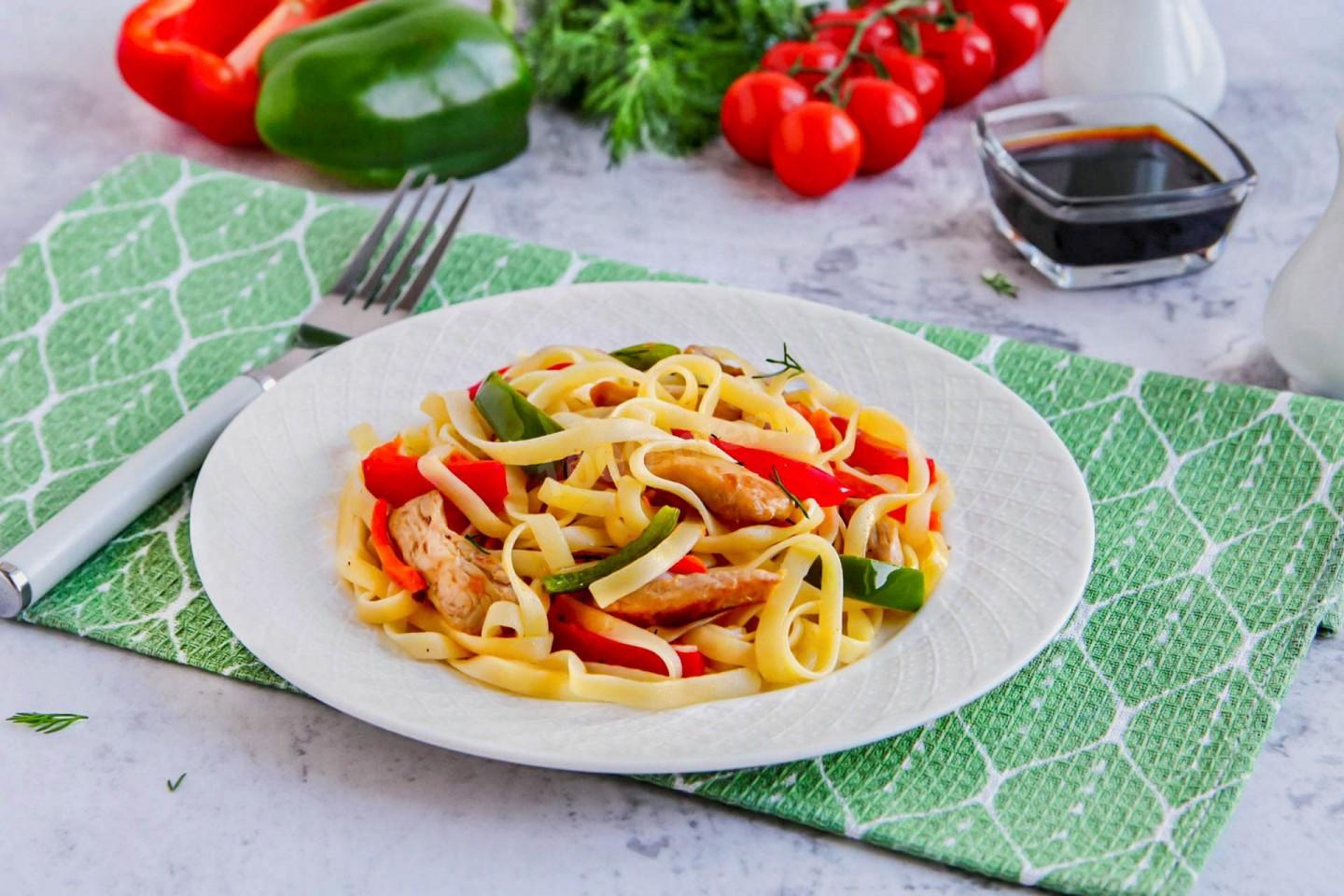
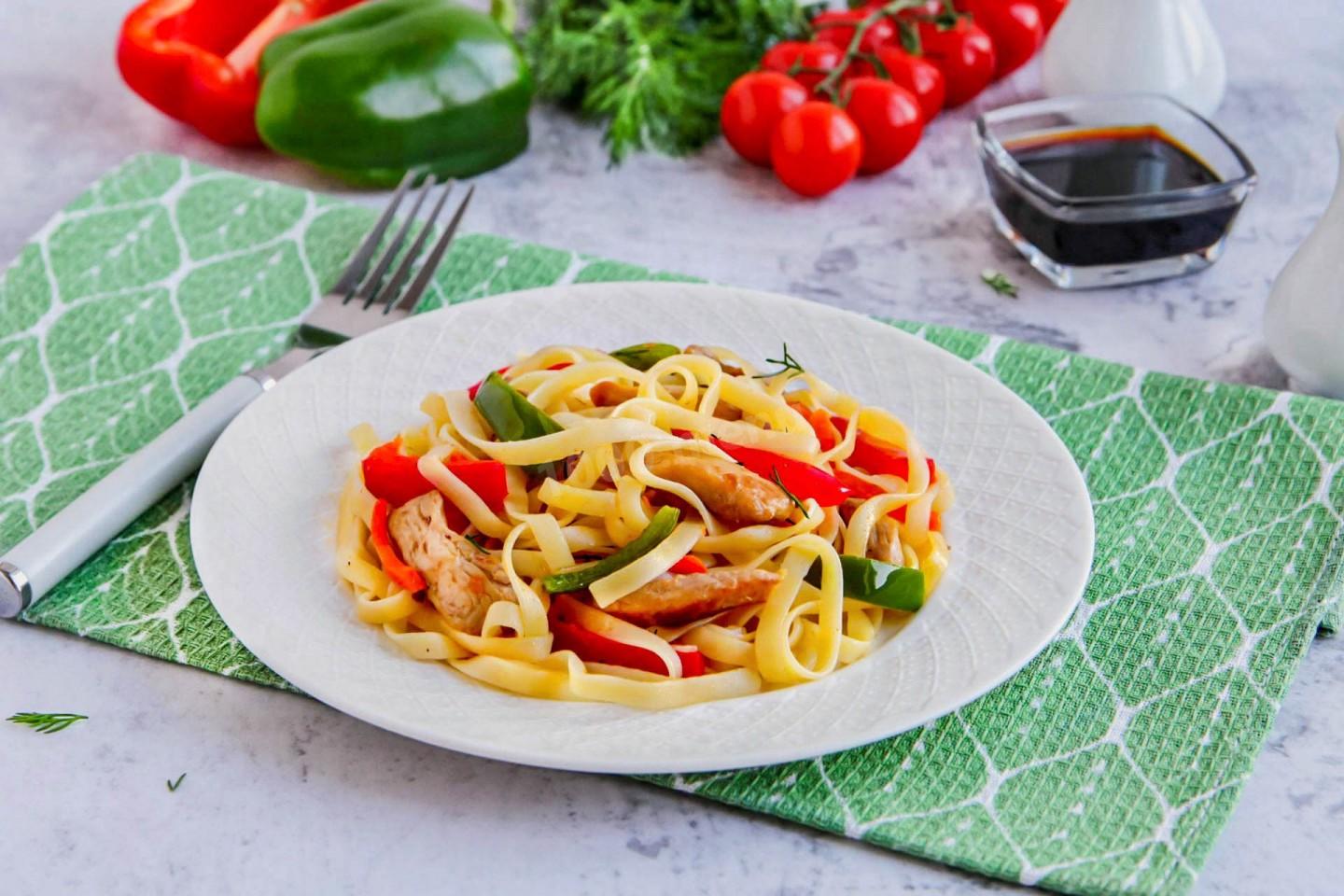
Everyday ingredients with an unusual flavor — easy and fast! Noodles with pork and vegetables are a great way to liven up family lunch or dinner. There are juicy pieces of meat soaked in soy sauce, plus vegetables you can swap out for others as you like, getting a new dish every time.

Cooking method
-
Step 1:
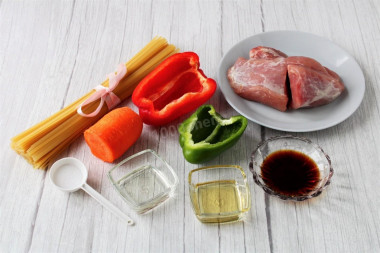
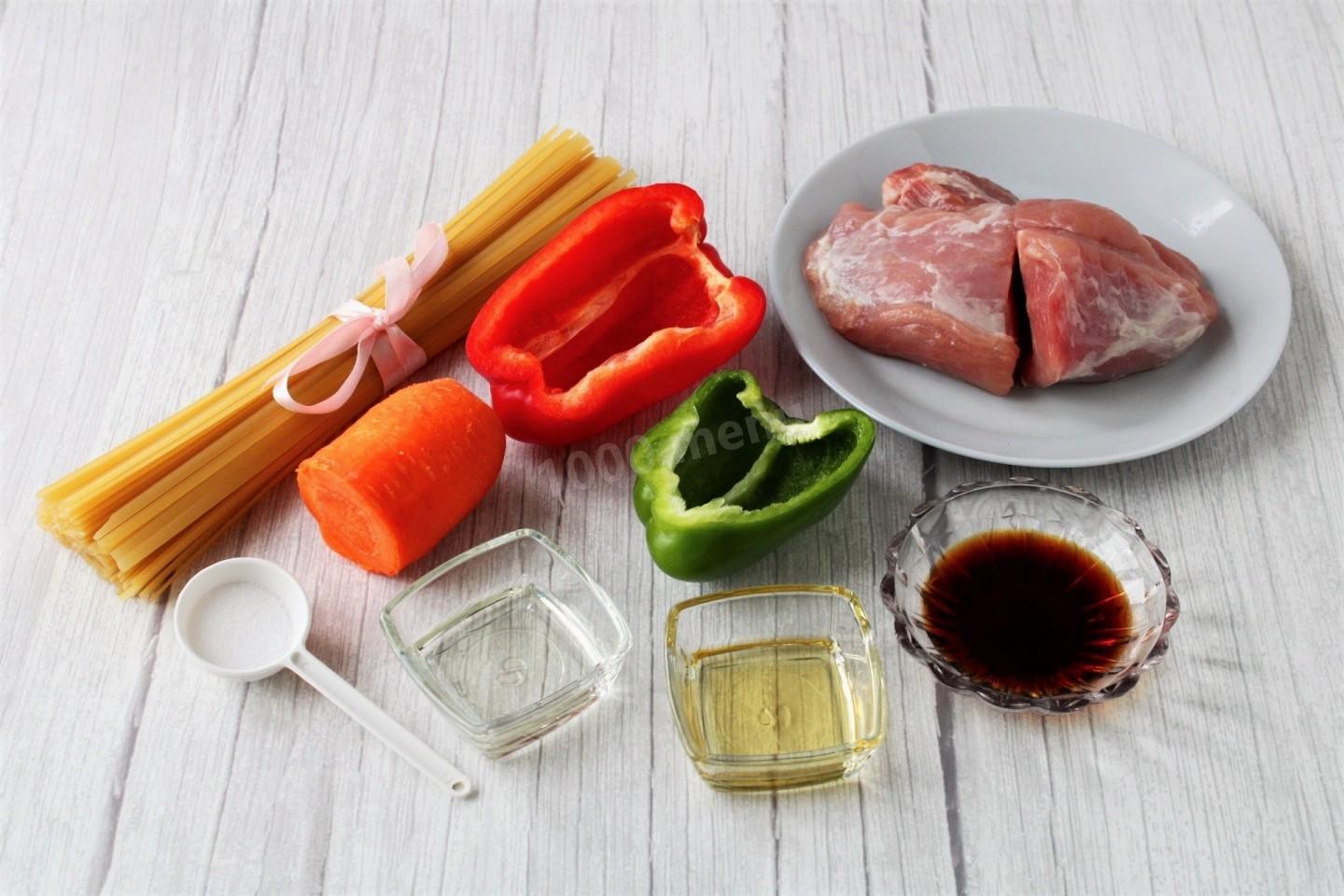
How do you make noodles with pork and vegetables? Gather the ingredients. Any not-too-thin noodle works, such as spaghetti. I used linguine. You can use pork tenderloin or leg. My bell peppers are two colors: red and green. The sesame oil can be swapped for any vegetable oil.
-
Step 2:
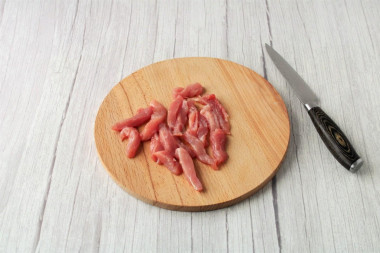
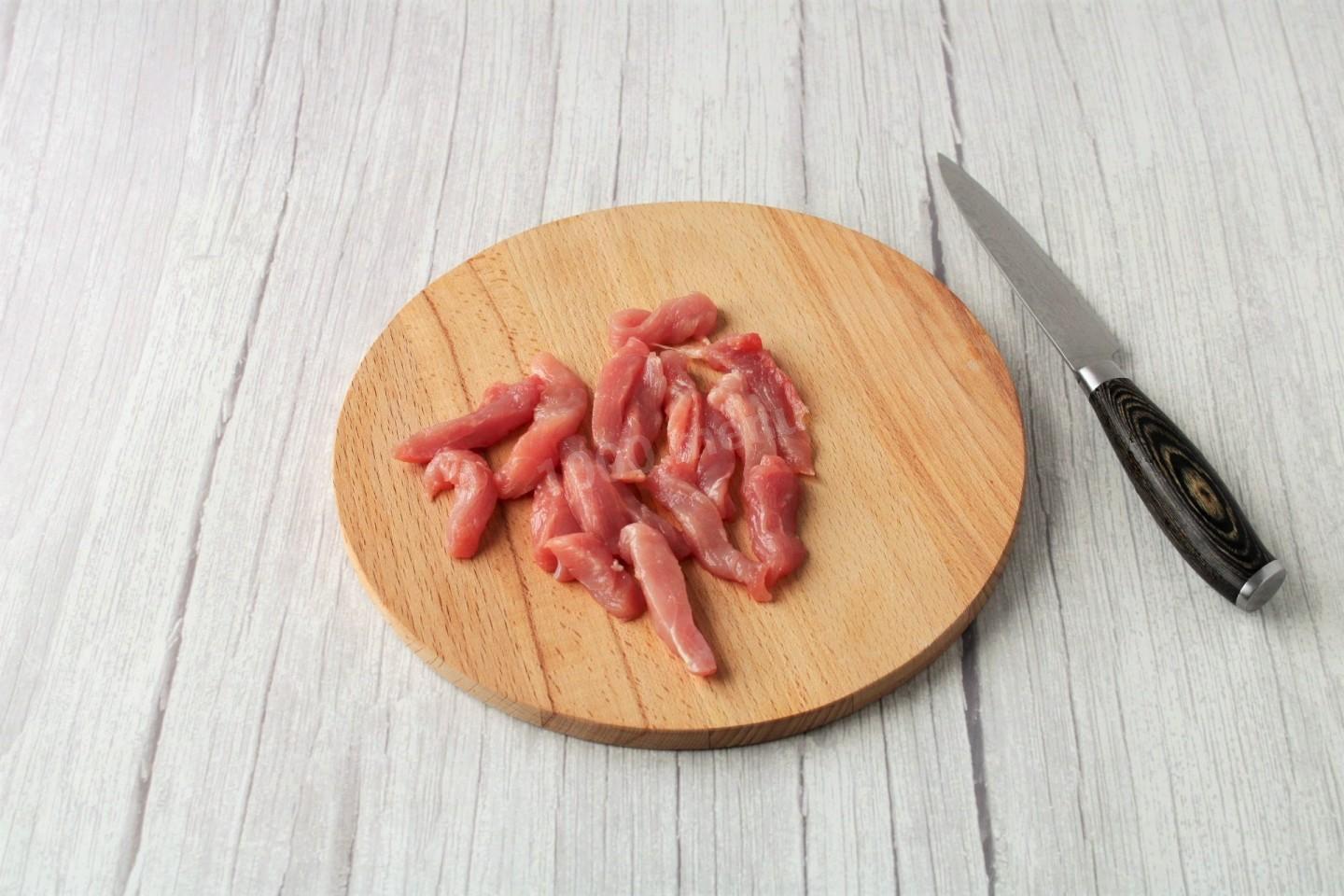
Wash the meat and dry it well. Cut it into medium sticks.
-
Step 3:
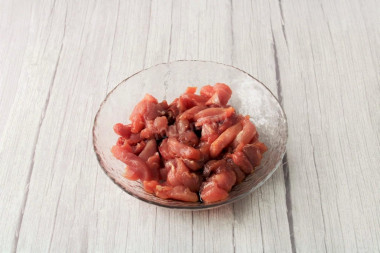
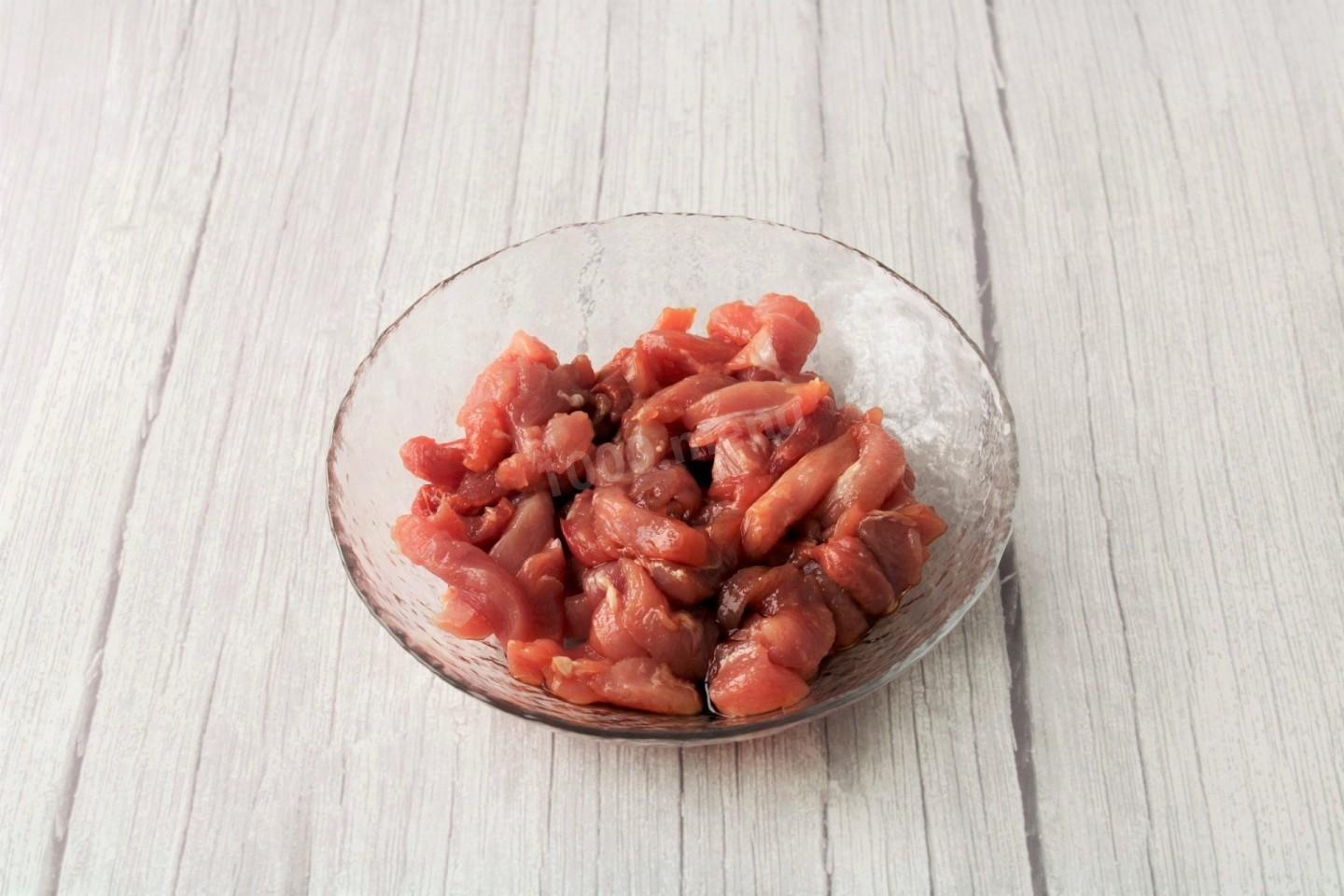
Pour the soy sauce over the pieces of meat and stir. Leave the meat for 30 minutes to soak up the sauce.
-
Step 4:
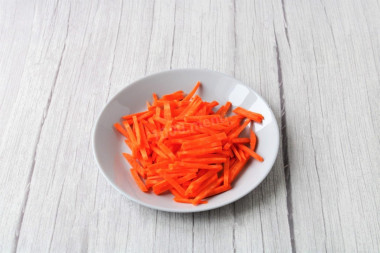
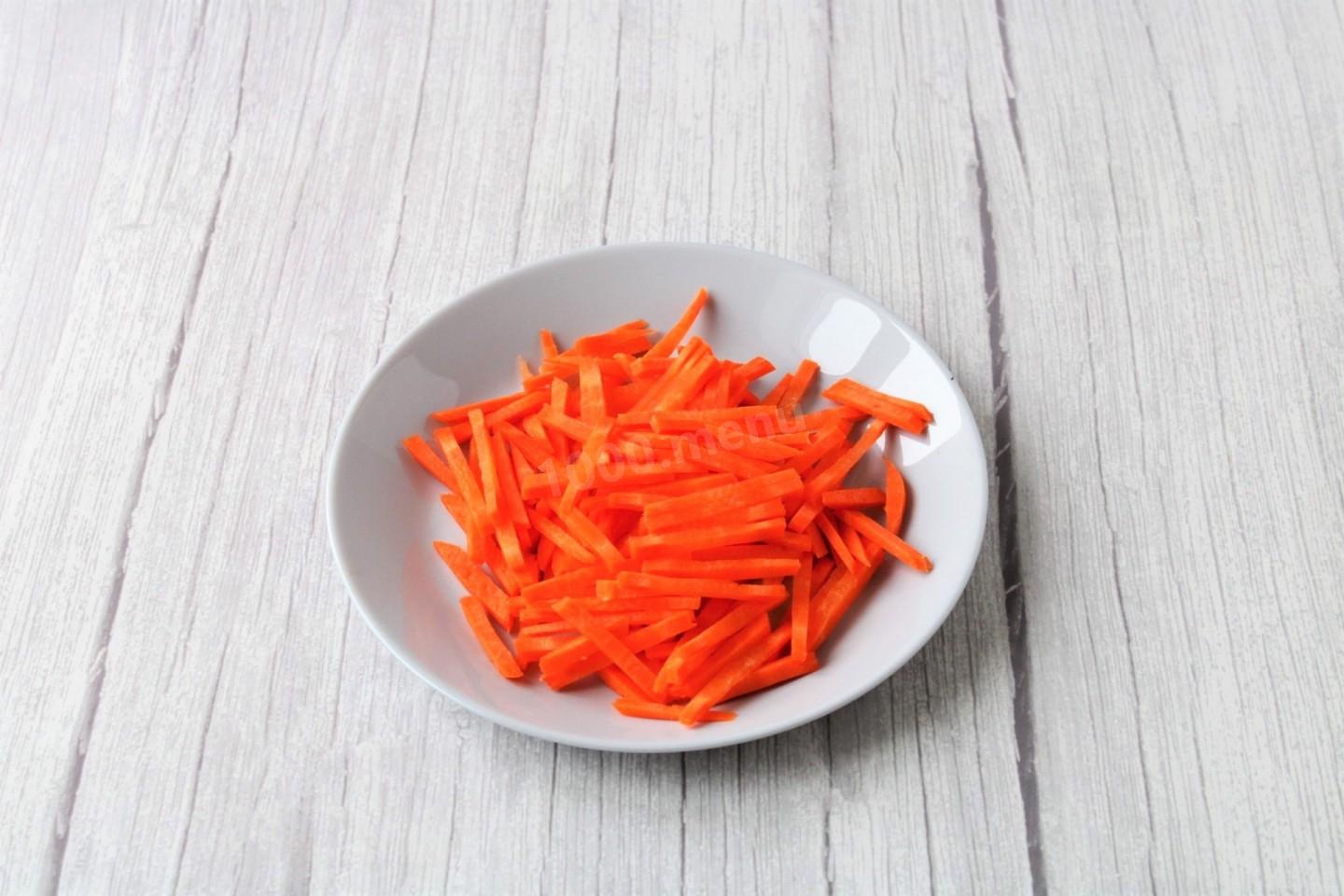
Cut the washed and peeled carrot into strips.
-
Step 5:
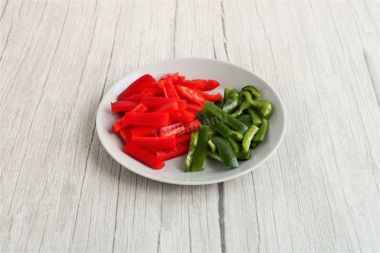
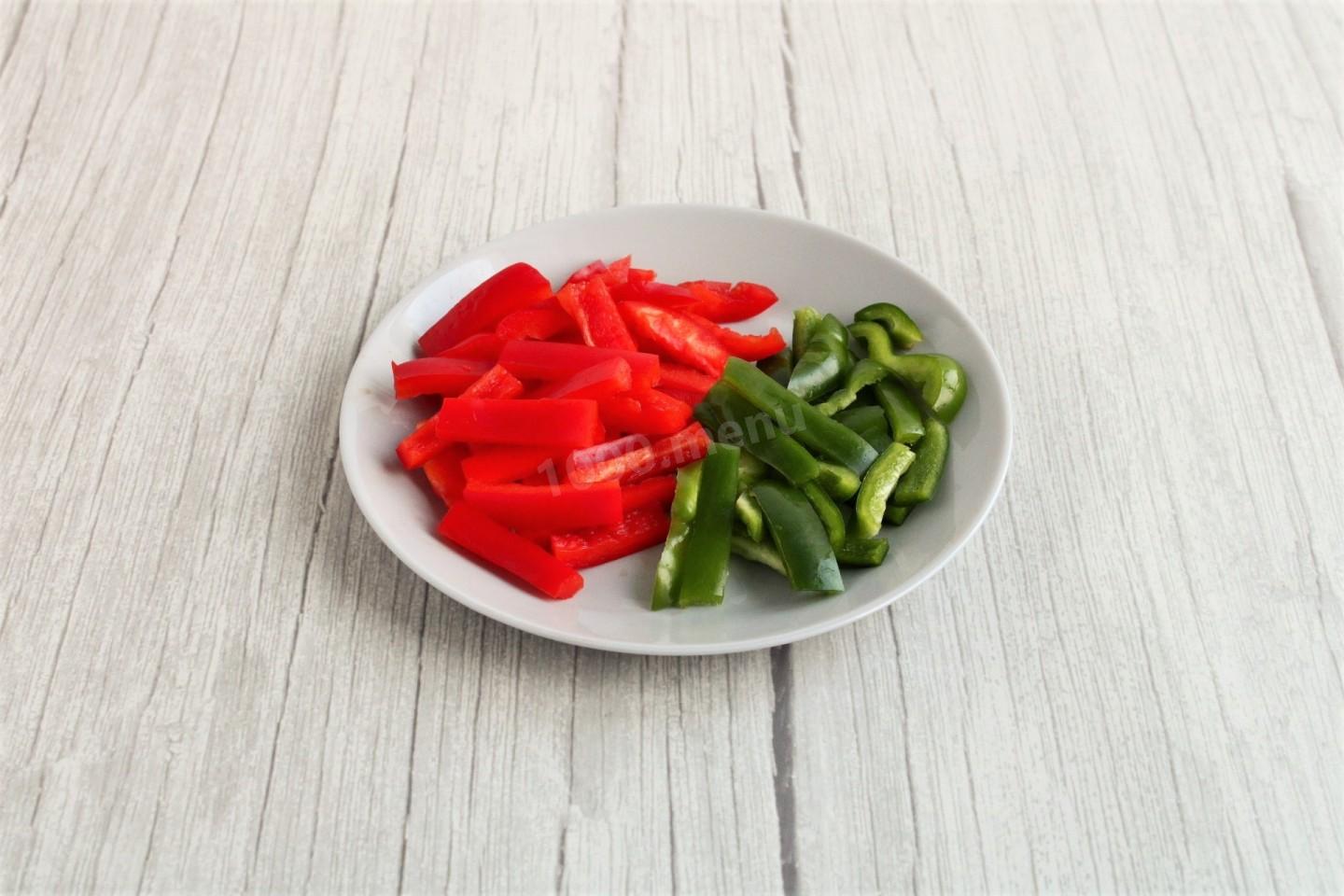
Wash and dry the bell pepper. Remove the stem and seeds. Cut the pepper into sticks.
-
Step 6:
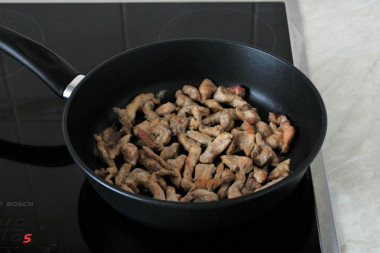
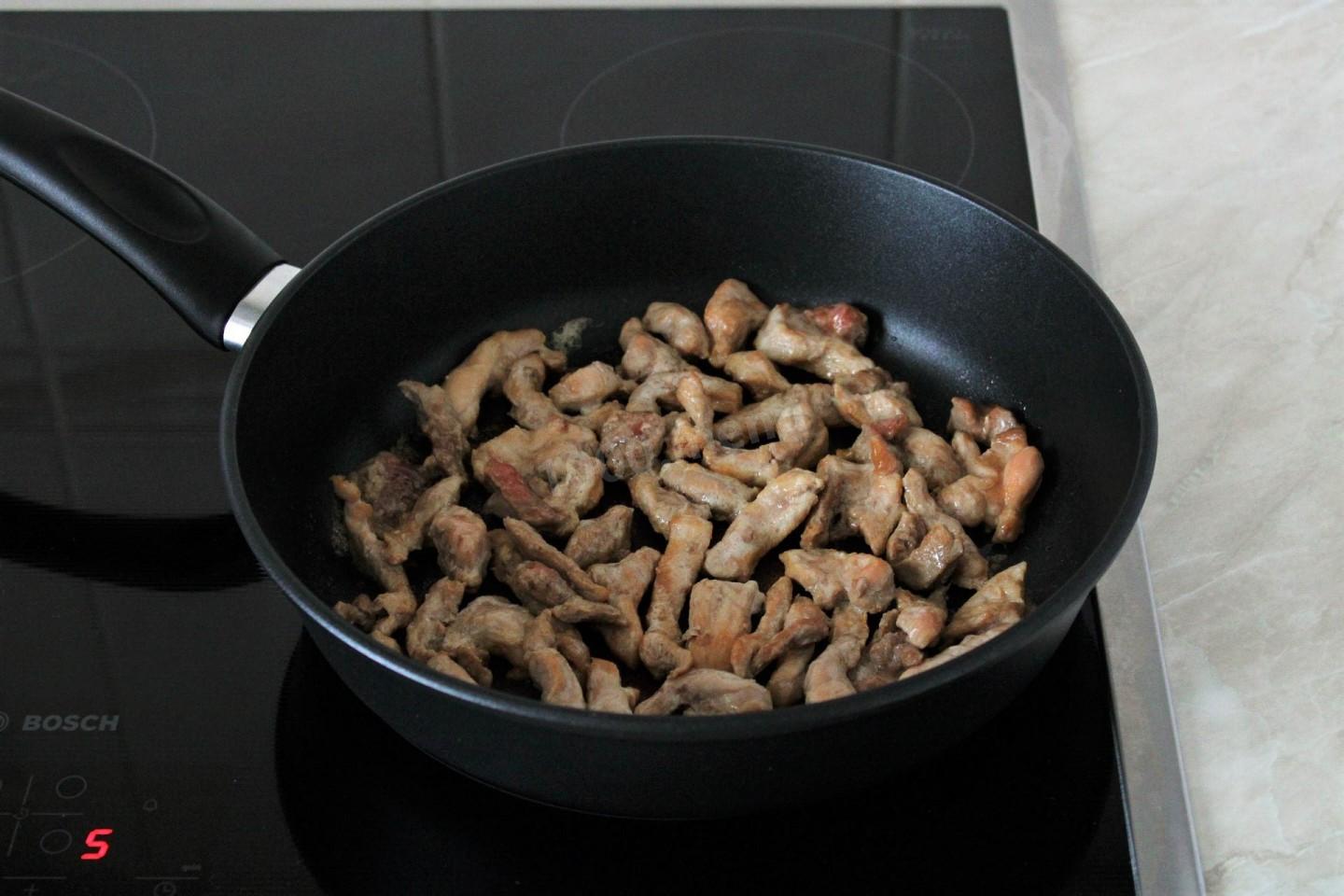
Heat the vegetable oil in a skillet. Fry the pieces of meat over moderately high heat until golden on one side.
-
Step 7:
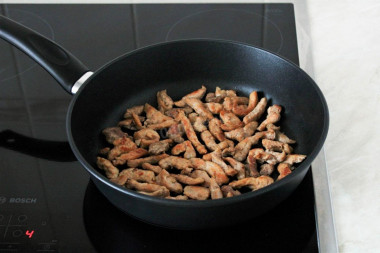
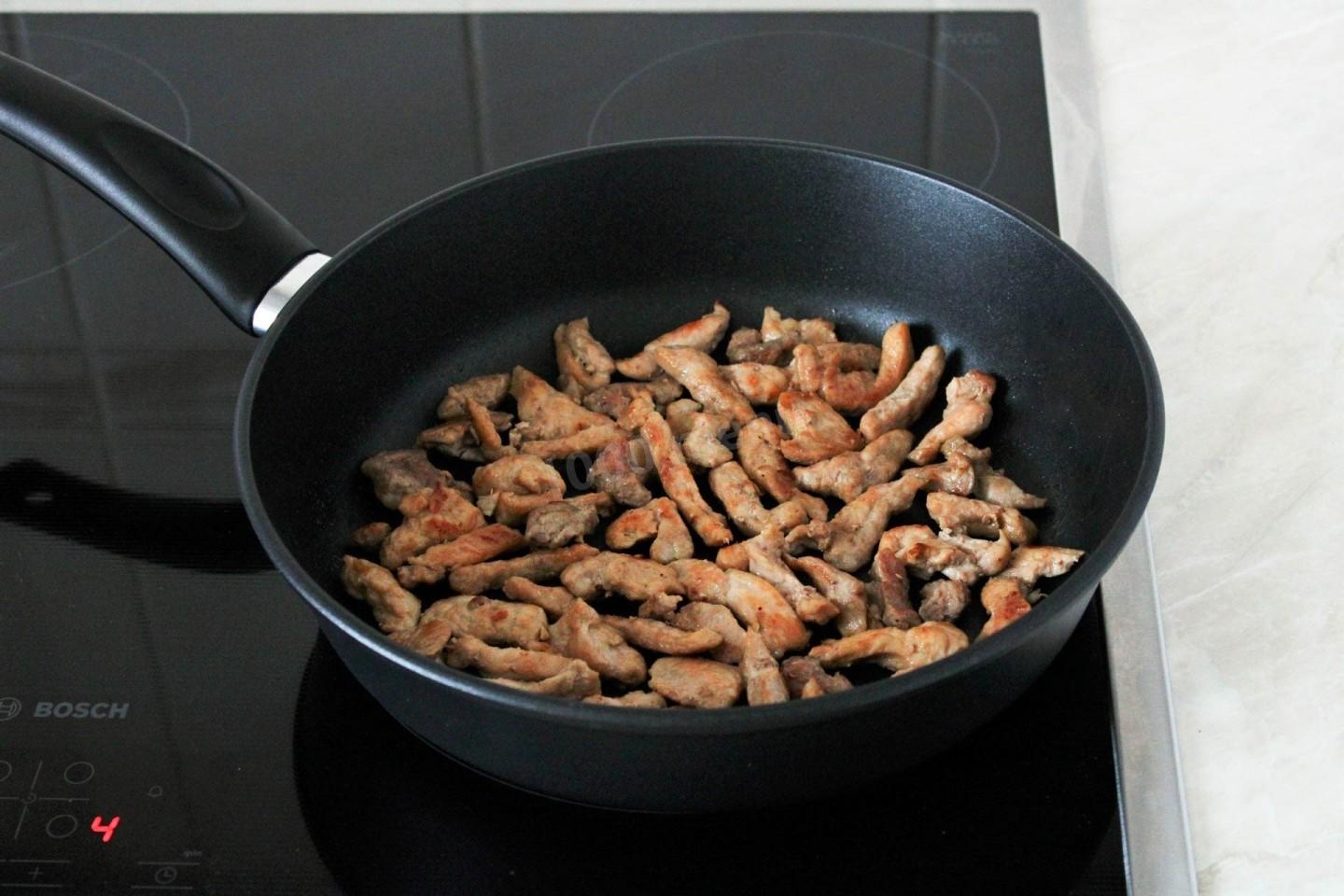
Turn the pieces of meat and fry them the same way on the other side. The crust that forms keeps the juices inside the pieces, so the meat comes out juicy and tender.
-
Step 8:
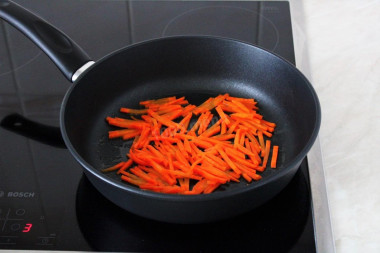
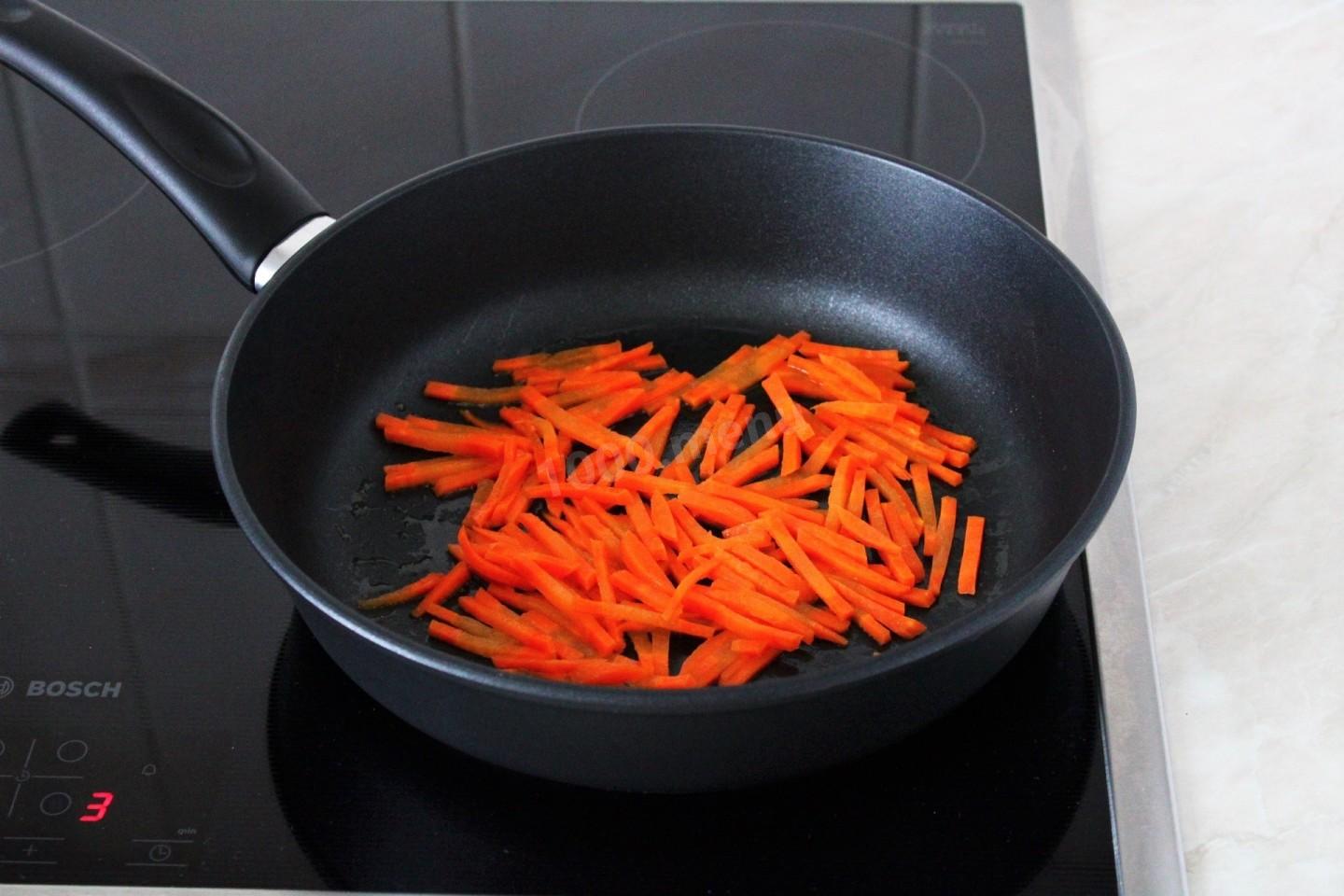
Remove the meat from the skillet. Add the carrots, with more vegetable oil if needed. Fry the carrots over moderate heat, stirring occasionally, until half done.
-
Step 9:
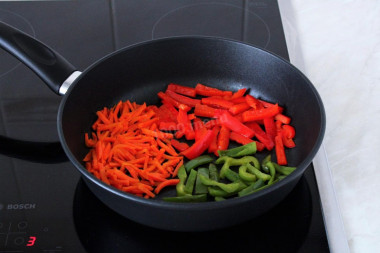
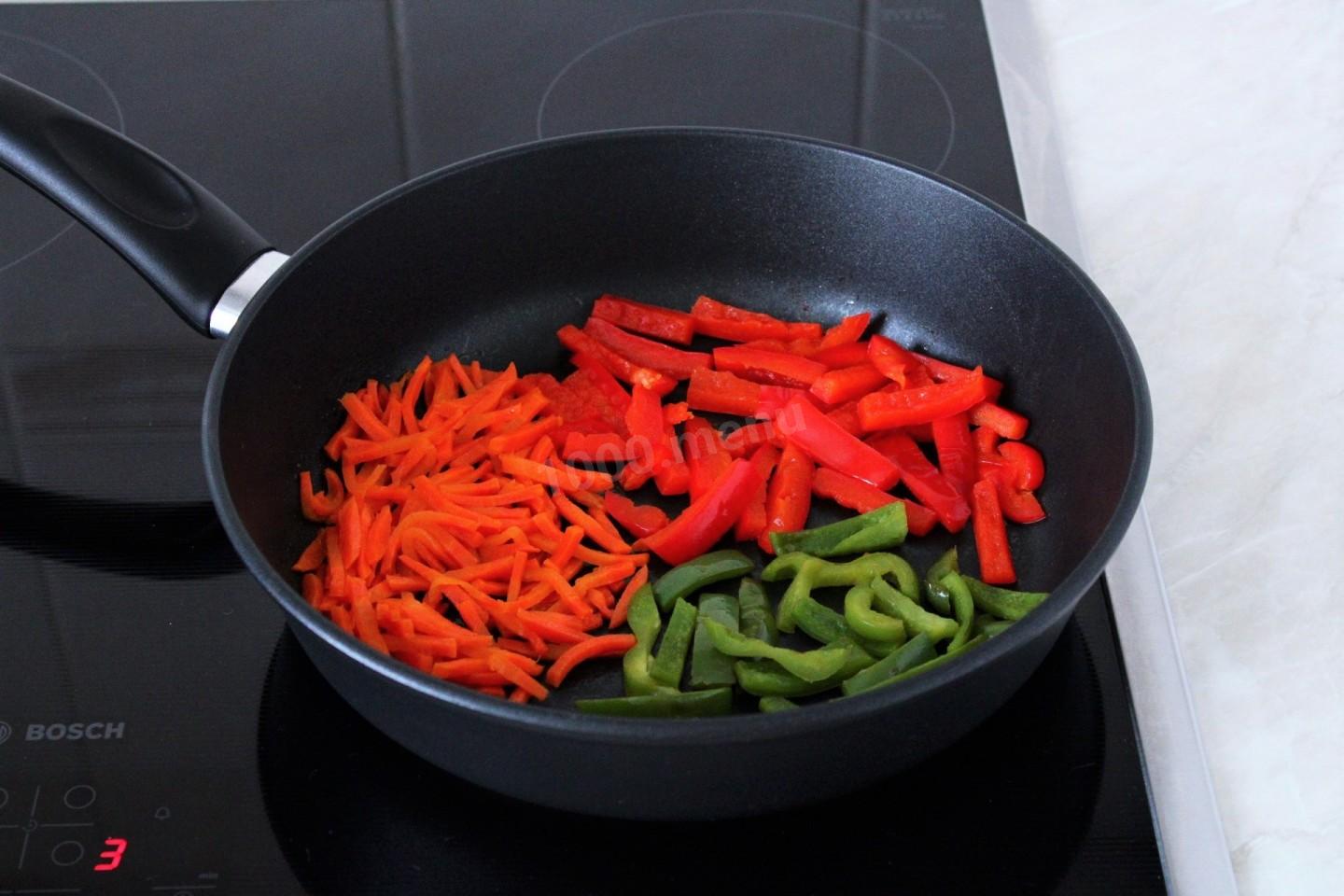
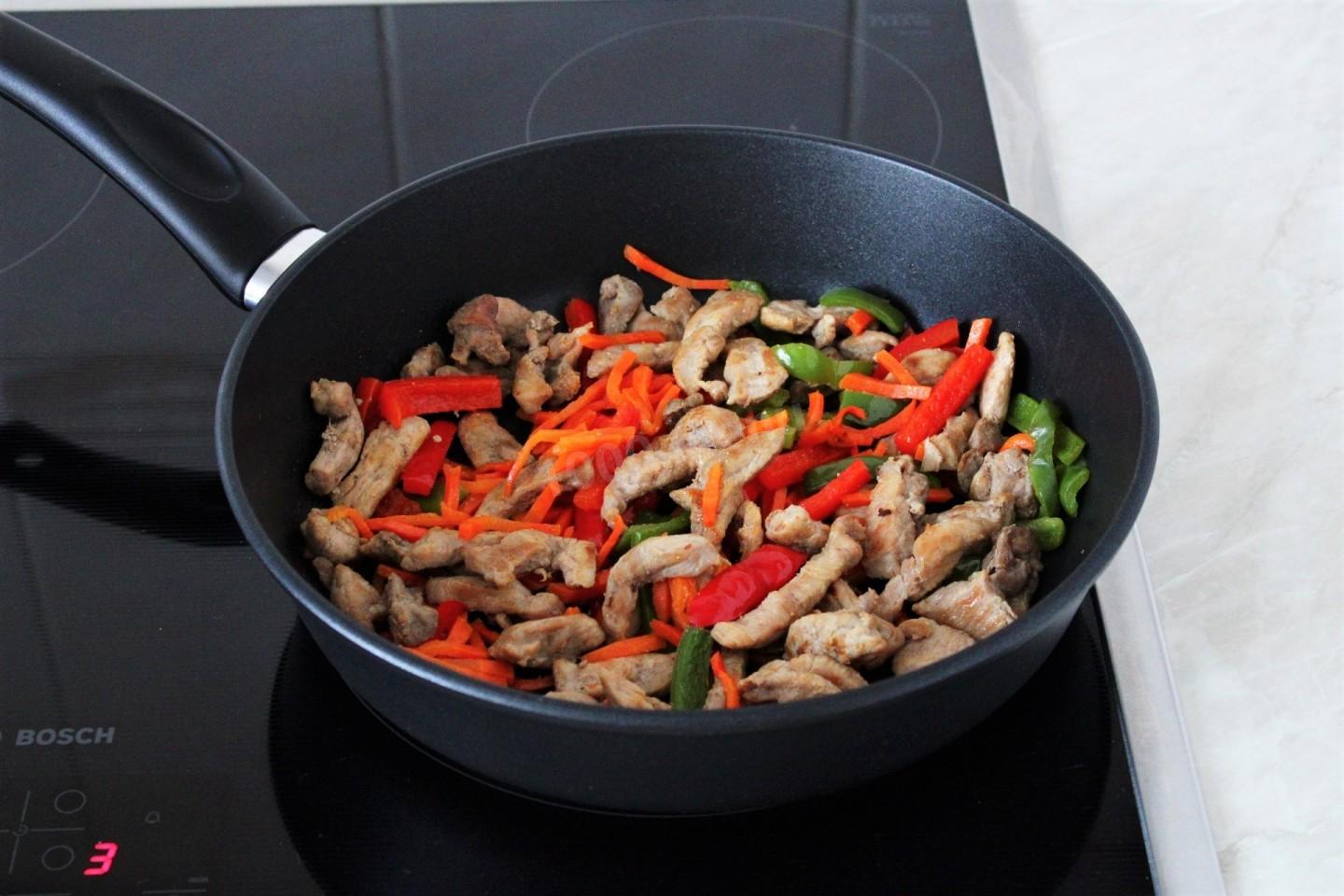
Add the prepared bell pepper to the skillet. Keep frying the vegetables, remembering to stir. Watch the pepper so it turns soft but holds its shape.
-
Step 10:
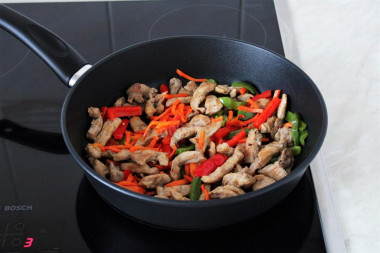
Add the pieces of meat back to the skillet with the vegetables and stir.
-
Step 11:
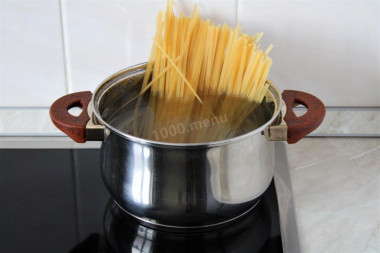
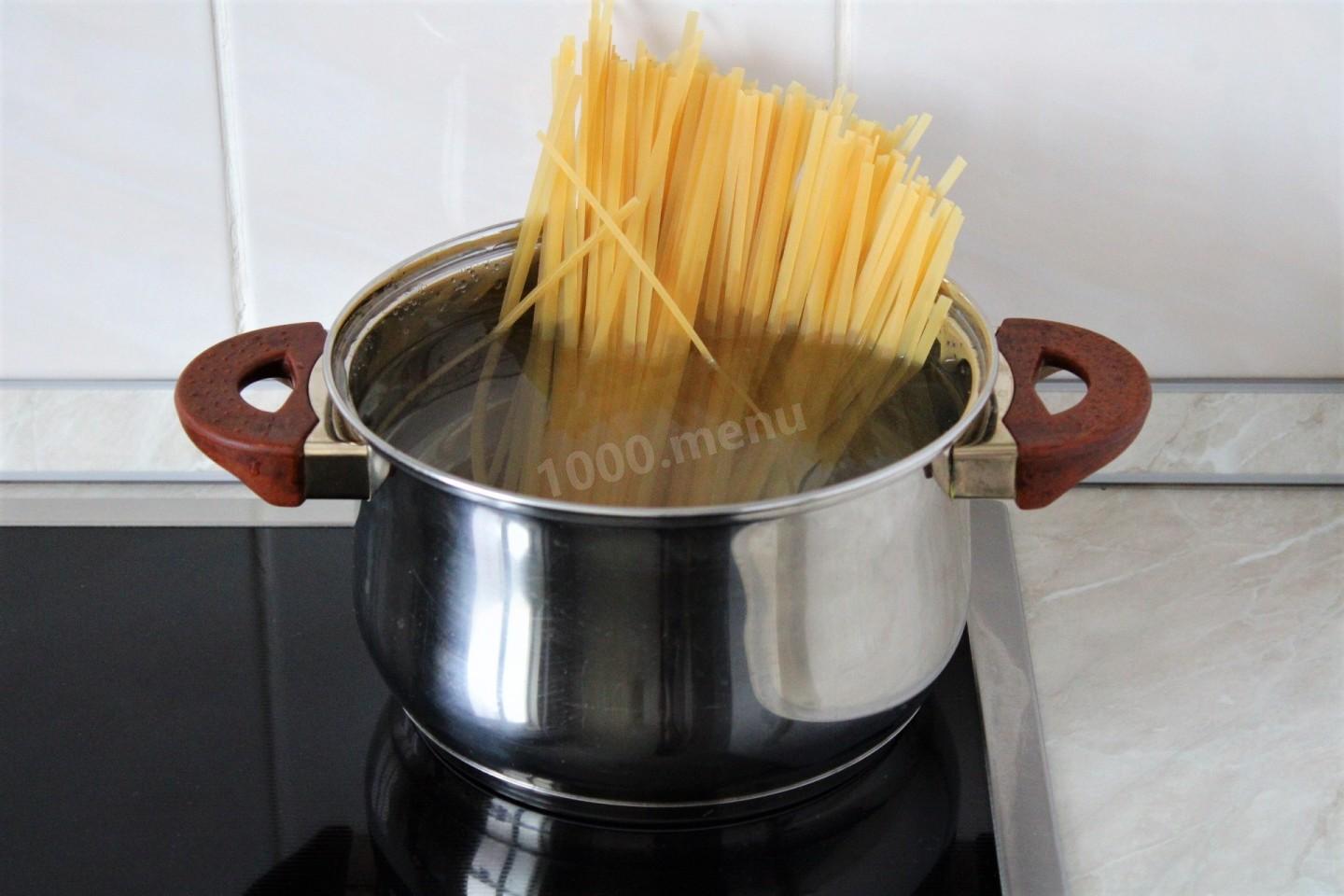
Cook the noodles at the same time. Bring 2 quarts (2 liters) of water to a boil in a suitable pot. Salt the water, add the noodles, and stir. Cook the noodles over moderate heat until al dente, or according to the package directions.
-
Step 12:
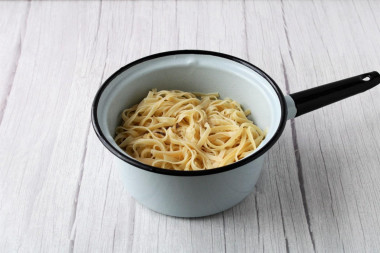
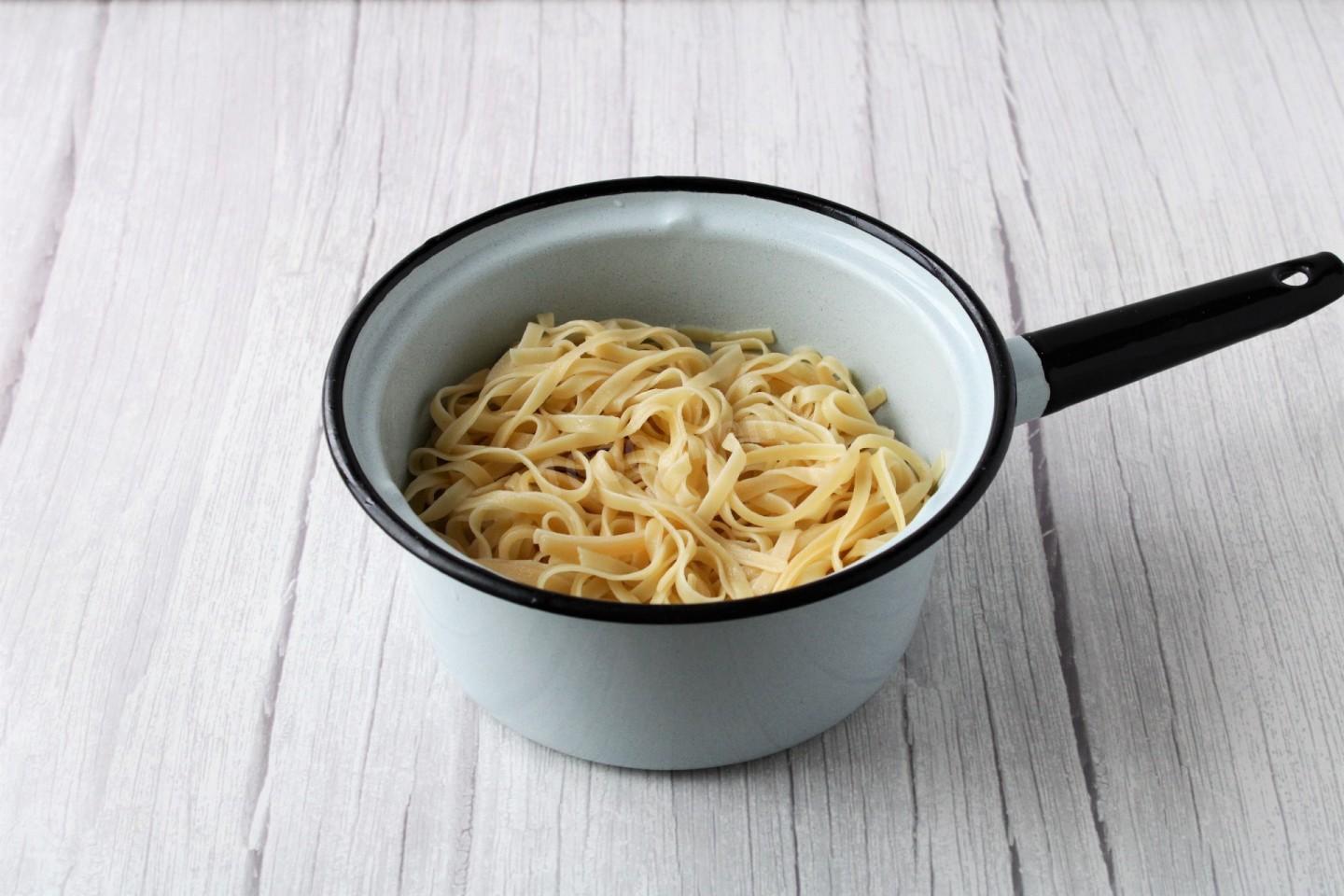
Drain the cooked noodles in a colander. Then drizzle them with sesame oil and toss.
-
Step 13:
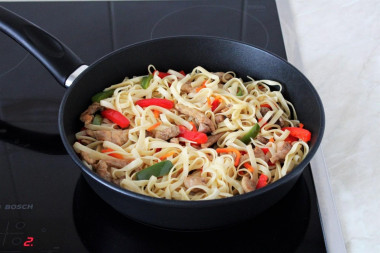
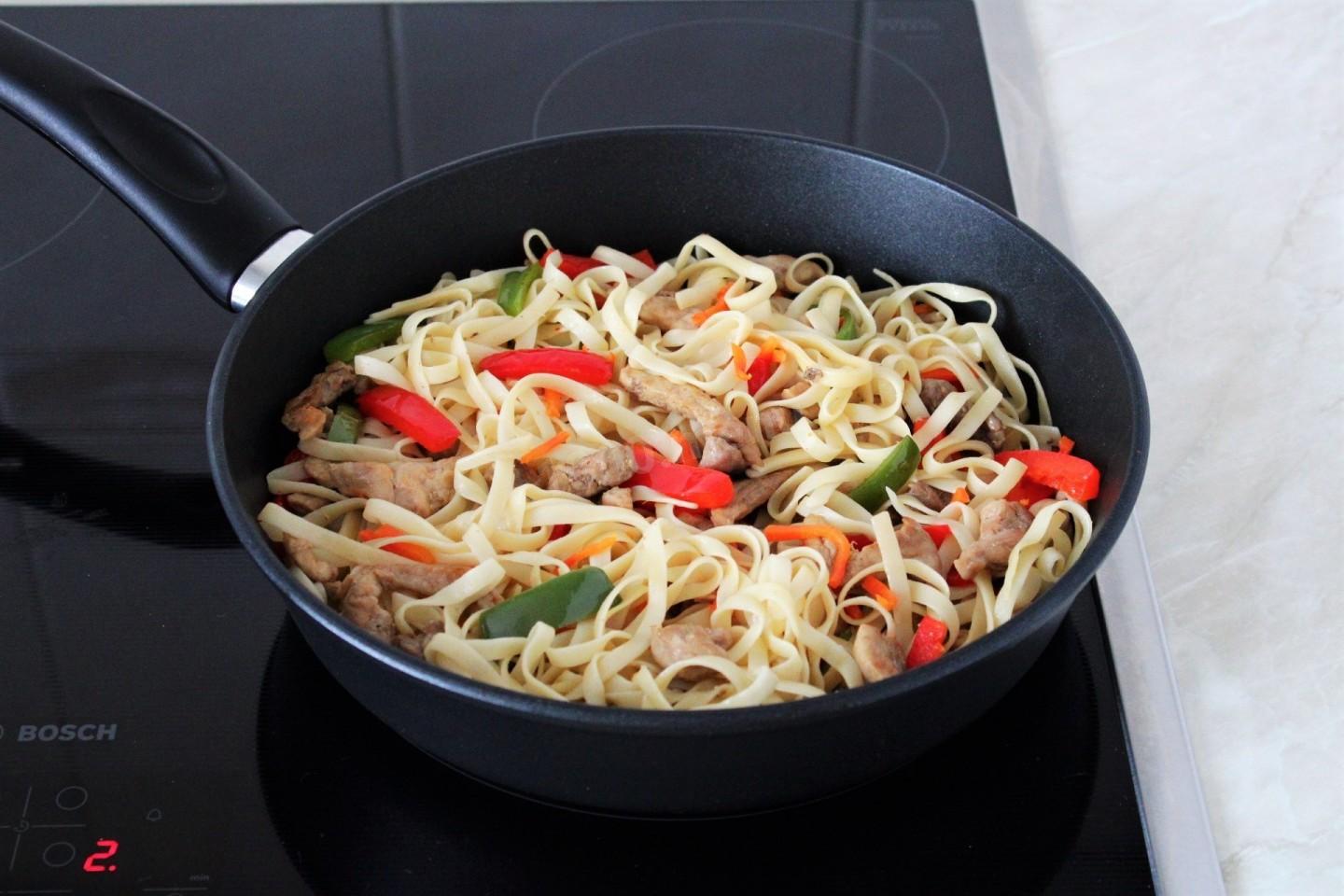
Add the noodles to the skillet and toss with the meat and vegetables. Warm over low heat for 1–2 minutes and serve.
-
Step 14:
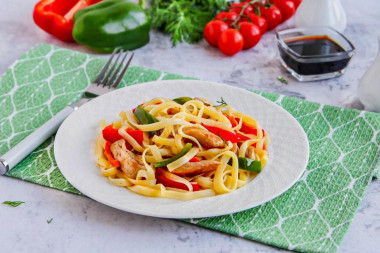
Enjoy!
- For how to cook pasta properly, how to cook it al dente, how to choose a quality product so you're not disappointed, and much more, see the article "Pasta — the fine points of choosing and cooking it."
- Keep in mind that how you cut the carrots affects the final result of this dish: grated carrots will turn to mush during cooking and blend evenly with the rest, while carrots cut into strips or sticks will hold their shape.
- All oils are only beneficial up to a certain temperature — the smoke point — beyond which the oil starts to burn and forms toxic compounds, including carcinogens. For how to gauge frying temperature, choose the best oil for frying, and which ones to avoid entirely, read here.
Caloric content of the products possible in the composition of the dish
- Fatty pork - 333 kcal/100g
- Lean pork - 357 kcal/100g
- Pork - lean roast - 184 kcal/100g
- Pork - bone-in chop - 537 kcal/100g
- Pork - schnitzel - 352 kcal/100g
- Pork shoulder - 593 kcal/100g
- Boar leg - 113 kcal/100g
- Pork - 259 kcal/100g
- Sweet pepper - 27 kcal/100g
- Carrots - 33 kcal/100g
- Dried carrots - 275 kcal/100g
- Boiled carrots - 25 kcal/100g
- Soy sauce - 51 kcal/100g
- Vegetable oil - 873 kcal/100g
- Salt - 0 kcal/100g
- Noodles - 135 kcal/100g
- Sesame oil - 899 kcal/100g
Similar recipes

- Homemade dinner
- Second course
- Meat and meat products
- Semi-finished products
- Vegetables
- Pasta
- Spices seasonings spices
- Fats and oils
- Salt
- Vegetable oil
- Cooking
- Frying
- Marinating
- In a frying pan
- Simple dinner
- Meat second course
- Pork
- Sauce
- Simple quick dinner
- From carrots
- From sweet pepper
- No eggs
- Recipes for lean dishes without butter
- Noodles