Grater Salad
Colorful, delicious, made of raw vegetables, for an everyday menu! Grater salad will appeal to vegetable lovers, vegetarians, and anyone watching their figure. Eating it helps clear harmful substances from the gut. The recipe is simple and quick, made from ordinary natural ingredients. There's no salt, sugar, or mayonnaise in it.

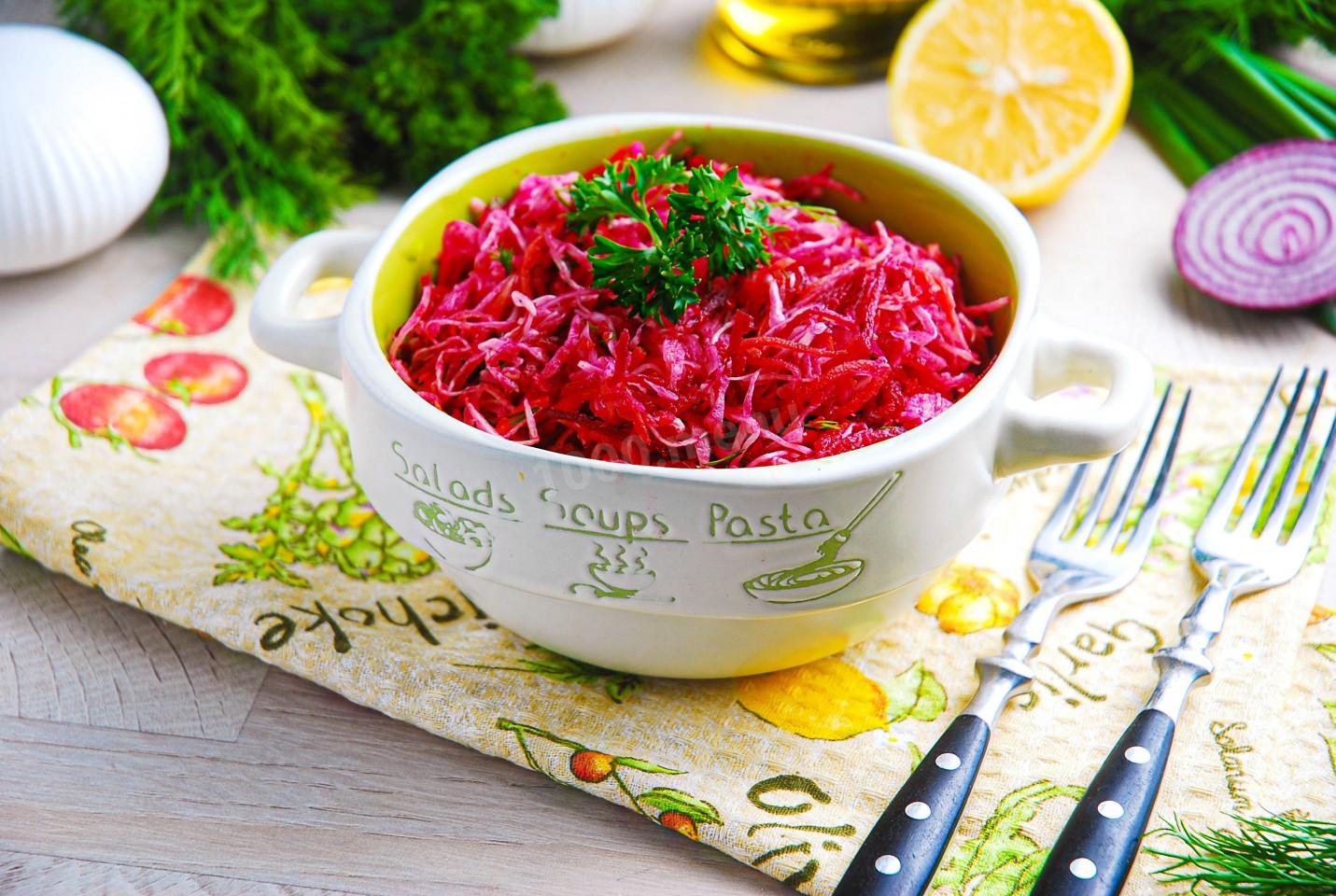

Cooking method
-
Step 1:
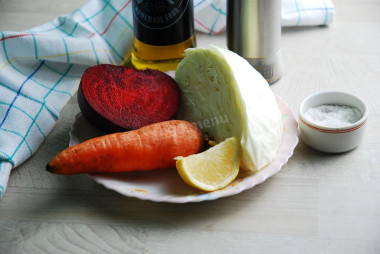
How do you make a grater salad? Gather the ingredients you'll need. All the vegetables should be fresh and raw. Wash them and pat them dry with paper towels. I used olive oil, but you can use any refined vegetable oil.
-
Step 2:
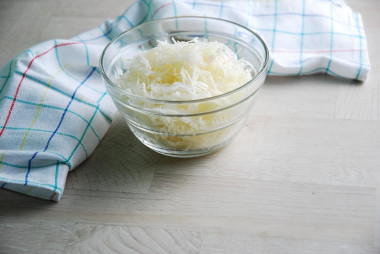
It's better to use young cabbage for this salad, but older cabbage works too. Remove the tough outer leaves. Shred the cabbage as thinly as possible, or chop it finely with a sharp knife. The thinner it's cut, the tastier the salad. Transfer the cabbage to a plate and scrunch it well with your hands so it softens and releases its juices.
-
Step 3:
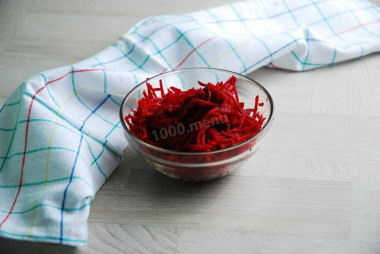
Peel the beets and grate them on a Korean-style julienne grater or a regular coarse grater.
-
Step 4:

Peel the carrots and grate them on a coarse grater or a Korean-style julienne grater. Also wash and dry the dill and chop it finely.
-
Step 5:
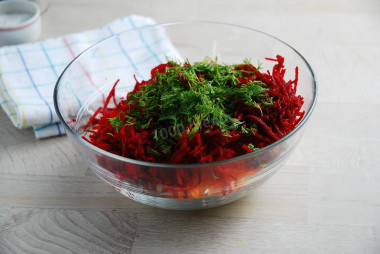
In a suitable deep bowl, combine all the grated vegetables. Add the chopped dill or parsley and about a tablespoon of lemon juice. Drizzle with vegetable oil. If you like, you can add just a little salt. If you like, add finely chopped regular onion or white salad onion, or you can cut up some green onion.
-
Step 6:
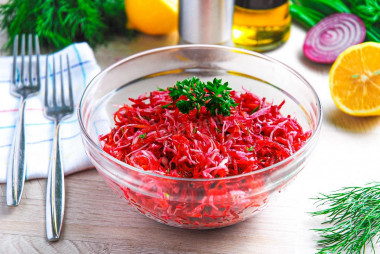
Mix the finished salad well. Serve it only freshly made. Enjoy!


- Make salads only from fully chilled ingredients. A salad made from warm ones can spoil quickly.
- It's important to understand that there are no recipes or foods in nature that are unconditionally good for all people or unconditionally bad for everyone. As with medicines, in nutrition there are indications and contraindications and individual daily intake amounts, and for most people all of this is highly personalized. At the same time, there are plenty of myths "about healthy eating" (for example: fat is bad) that distort the very essence of the concept and, in that distorted form, spread across the internet and media. So remember that any "clean-eating recipe" is only loosely related to healthy eating - don't take it as gospel. And even if the recipe's author, a "healthy-eating specialist," nutritionist, or fitness trainer calls something healthy or harmful, it may not be that way for you personally. The site administration's view of healthy eating may not match the recipe author's view!
Caloric content of the products possible in the composition of the dish
- Beets - 40 kcal/100g
- Dried beets - 278 kcal/100g
- Boiled beets - 49 kcal/100g
- Carrots - 33 kcal/100g
- Dried carrots - 275 kcal/100g
- Boiled carrots - 25 kcal/100g
- Fresh dill - 38 kcal/100g
- Vegetable oil - 873 kcal/100g
- Lemon juice - 16 kcal/100g
- White cabbage - 28 kcal/100g
- Boiled white cabbage - 21 kcal/100g
Similar recipes

- Fast and tasty
- Salads
- Vegetables
- Spices seasonings spices
- Fats and oils
- Other
- Dill
- Vegetable oil
- From juice
- Without heat treatment
- Delicious lean salads
- Eggless salad
- Simple salads
- Vegetable salads
- Salad with vegetable oil
- Salads without mayonnaise
- Simple quick salads
- Snack
- Dishes in 30 minutes
- From carrots
- From beets
- From cabbage
- No eggs
- Pp recipes
- Raw food
- Low-calorie recipes
- Vegetarianism
- Lean table