Crabapple Compote for Winter
No water-bath canning needed — your favorite compote can be made so many ways. Crabapples are tiny apples, with lots of varieties and different ripening times. Fall brings a generous harvest, and the late varieties are perfect for putting up compotes.

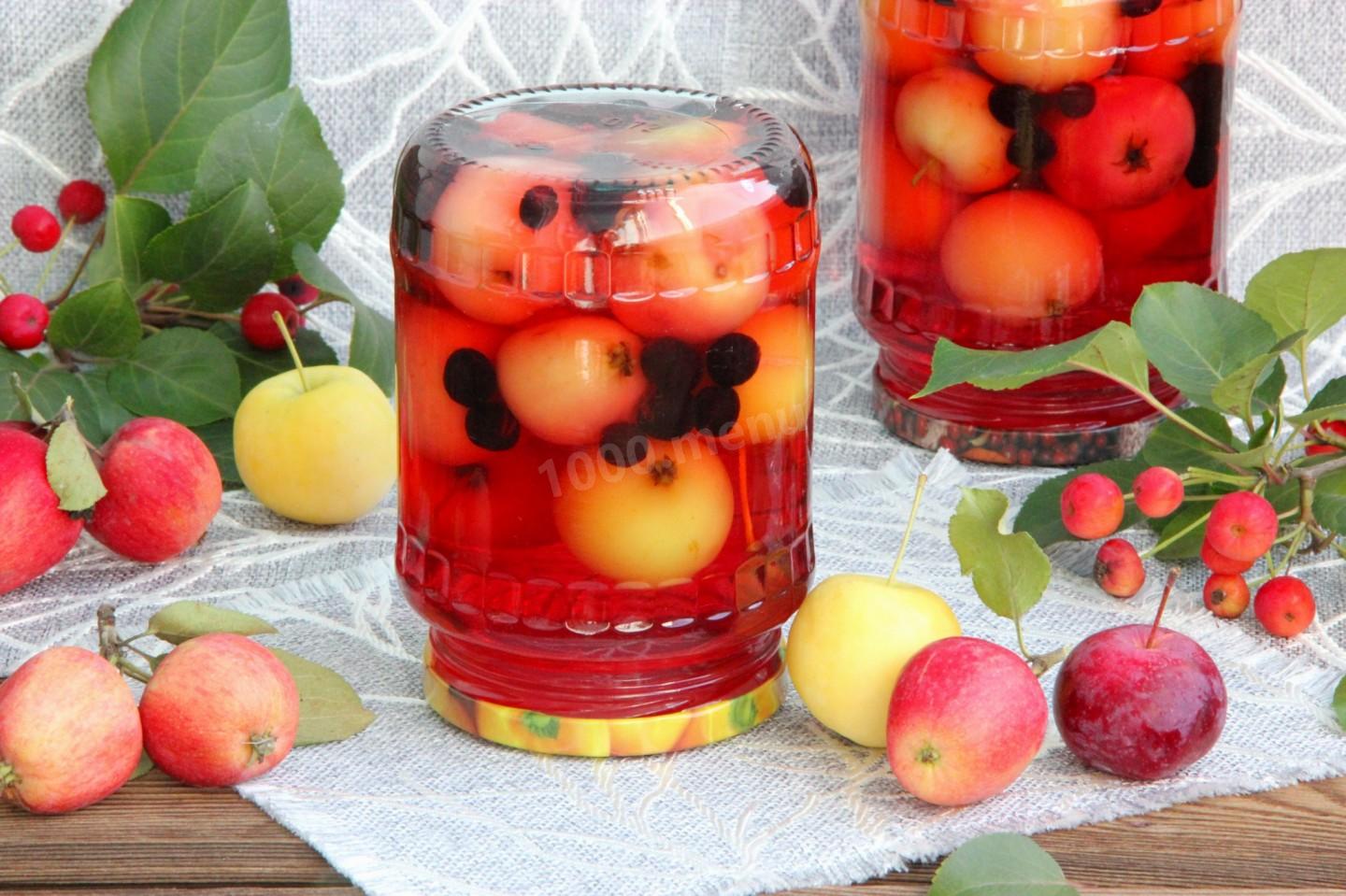
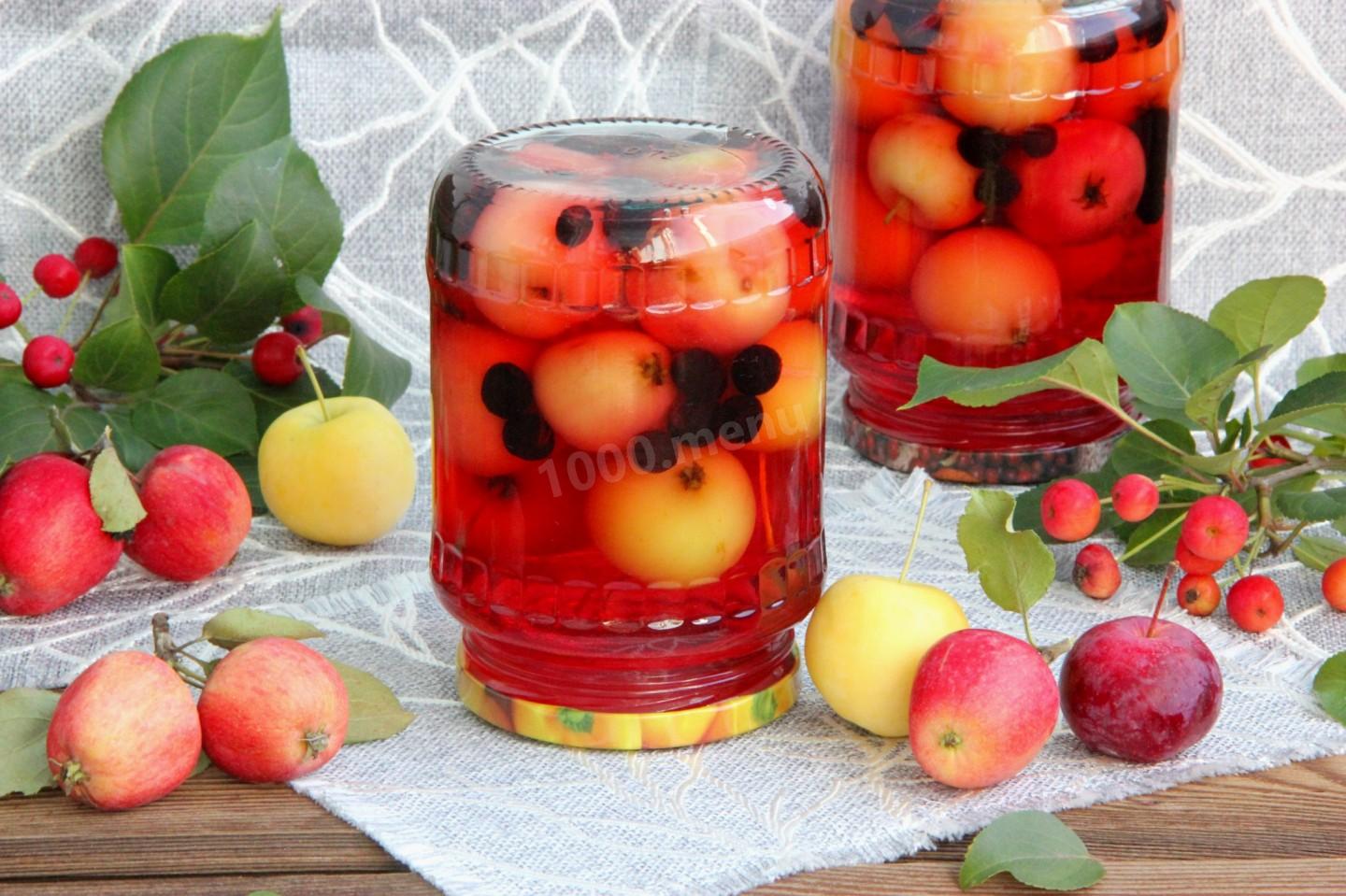
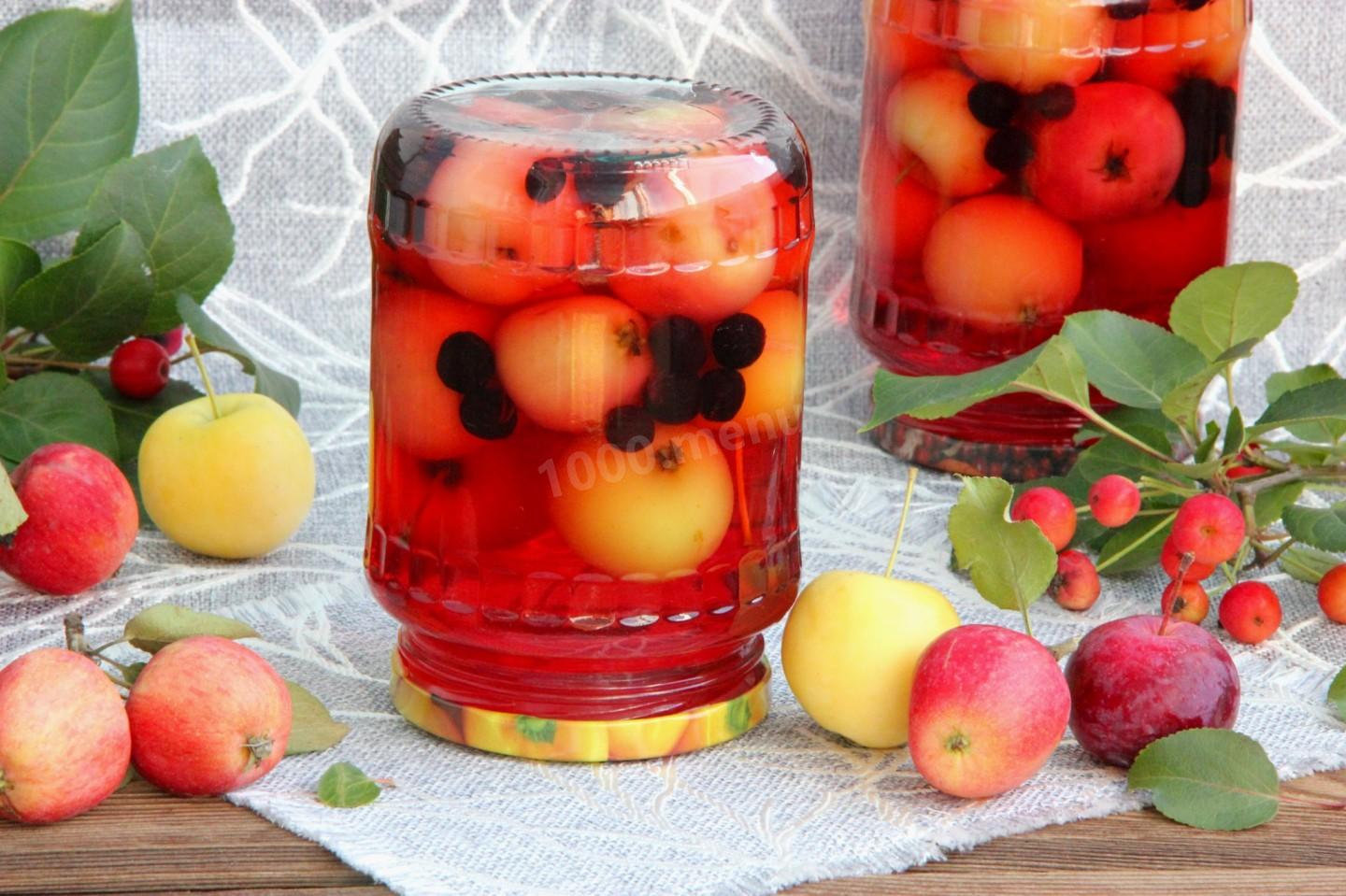
Cooking method
-
Step 1:
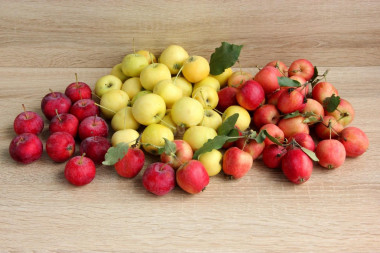
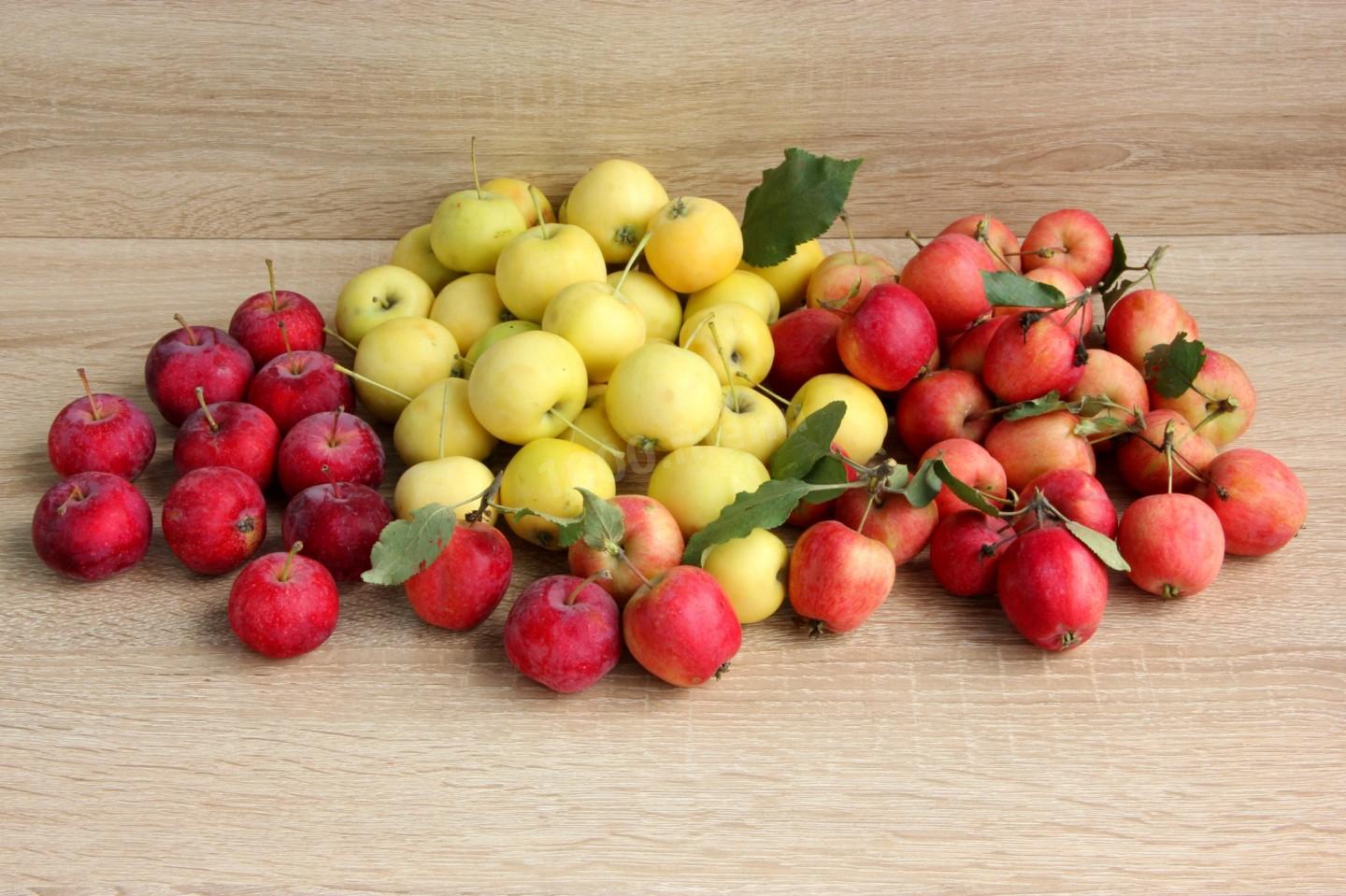
Crabapples of any color or variety work for compote, even wild ones. The important thing is that the apples are undamaged and not overripe — ideally picked straight from the tree. You can use a single variety or mix several. The flavor turns out more interesting and the color prettier if you toss in a handful of any kind of rowan or aronia.
-
Step 2:
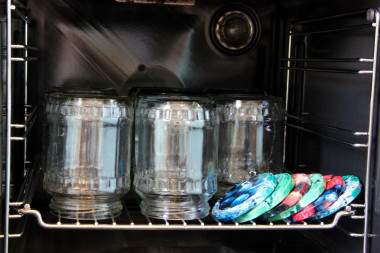
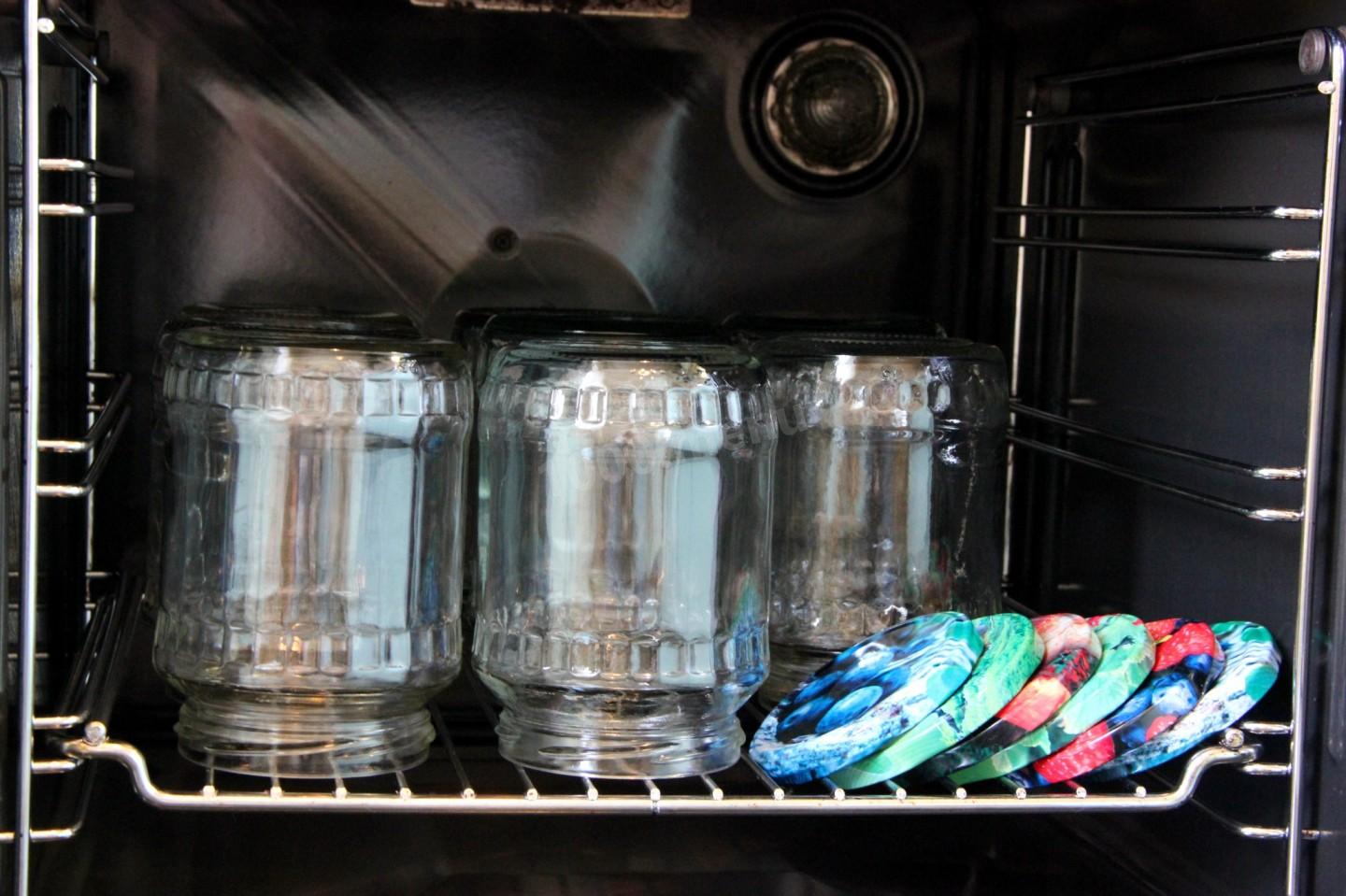
First, prepare the jars; everything else is quick and easy. Wash the jars with baking soda and rinse them well under running water. Set them in a cold oven while still wet, neck-down, and put the lids in too. Turn the oven to 300°F (150°C); once it reaches temperature, sterilize the jars — 15 minutes for 1-quart, 20 for 2-liter, 25 for 3-liter. This is my go-to sterilizing method; I've used it for years and it's never let me down.
-
Step 3:
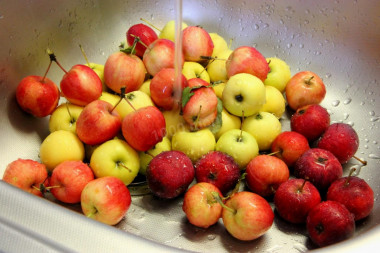
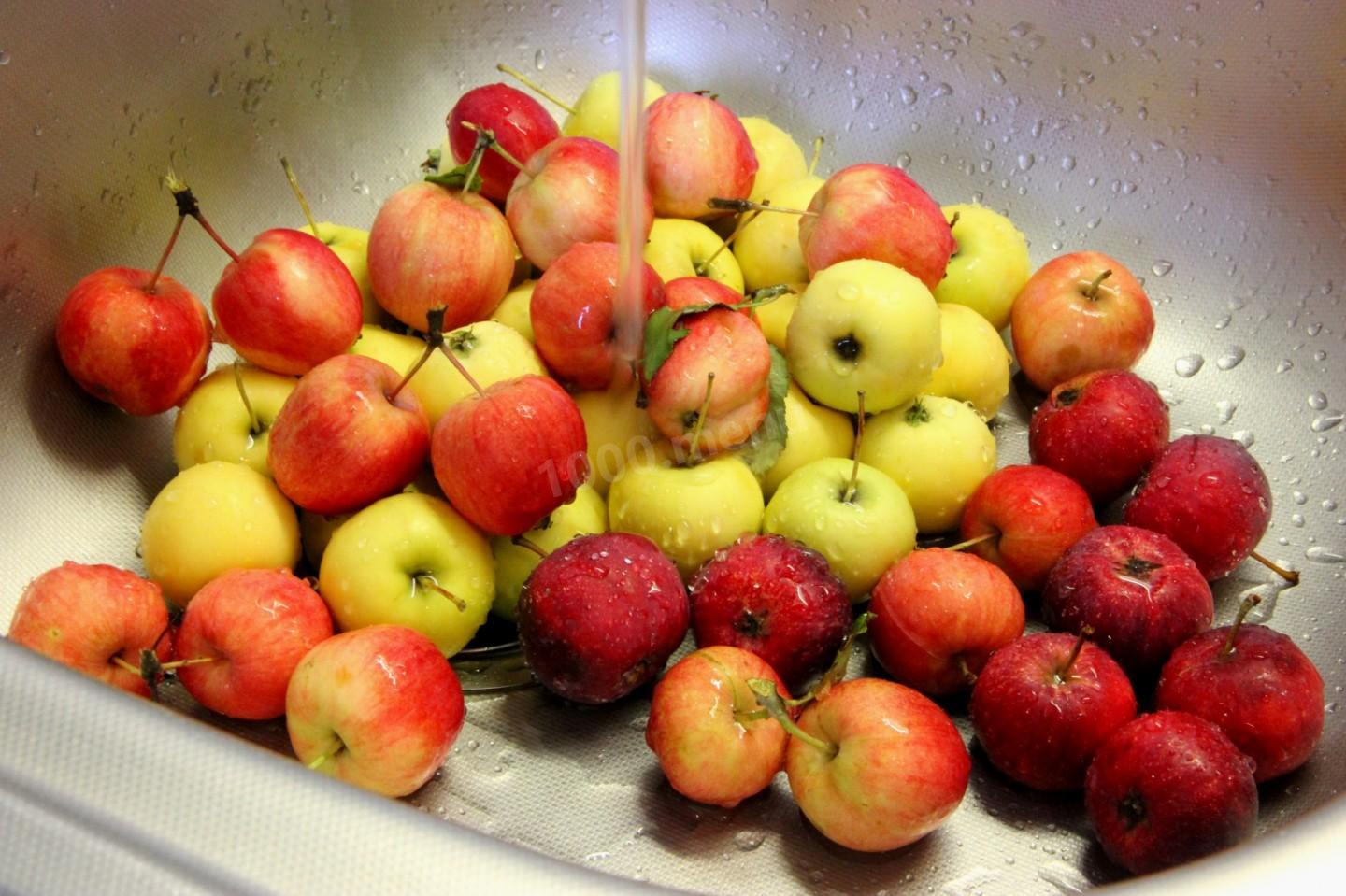
Sort through the crabapples; you can leave the stems on if you like. Rinse them well under barely warm running water and let them drain.
-
Step 4:
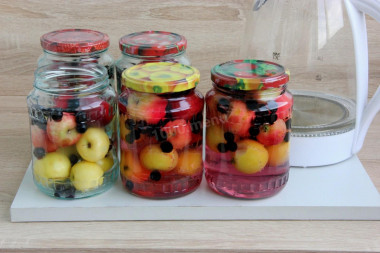
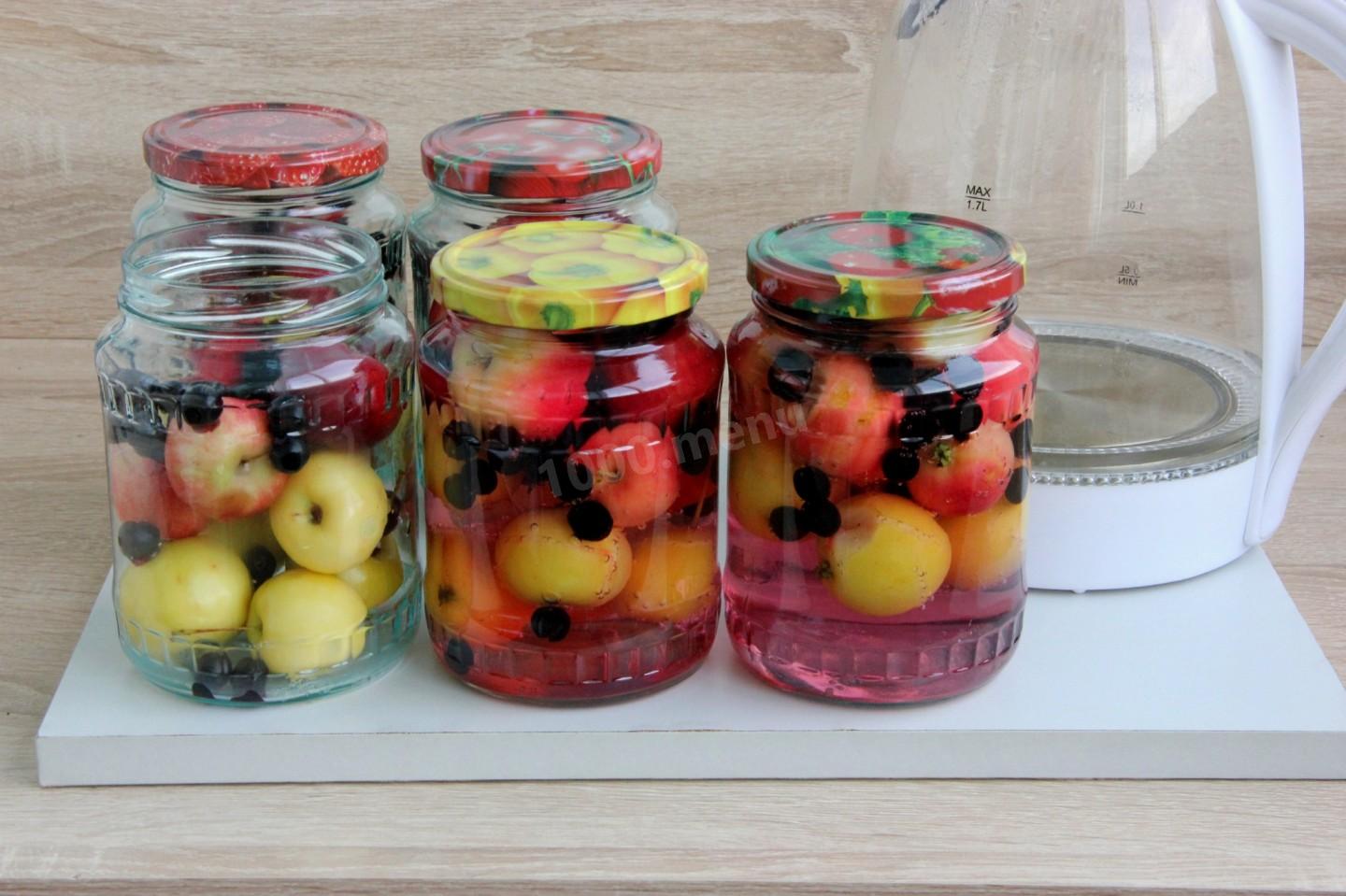
Fill the sterilized jars one-third full or more with crabapples, but don't pack them tightly. I added a handful of chokeberries to each. Boil water and carefully pour it straight from the kettle into the jars, right up to the rim. Cover with lids and let stand 20 minutes; this pasteurizes the fruit. Use only fiercely boiling water, as much as fits — I needed about 1 liter (4 cups) for 2 jars. I like to use 0.72-liter (roughly 1.5-pint) jars; for a big family, go with larger 1- to 3-liter jars.
-
Step 5:
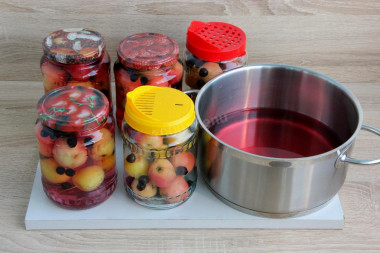
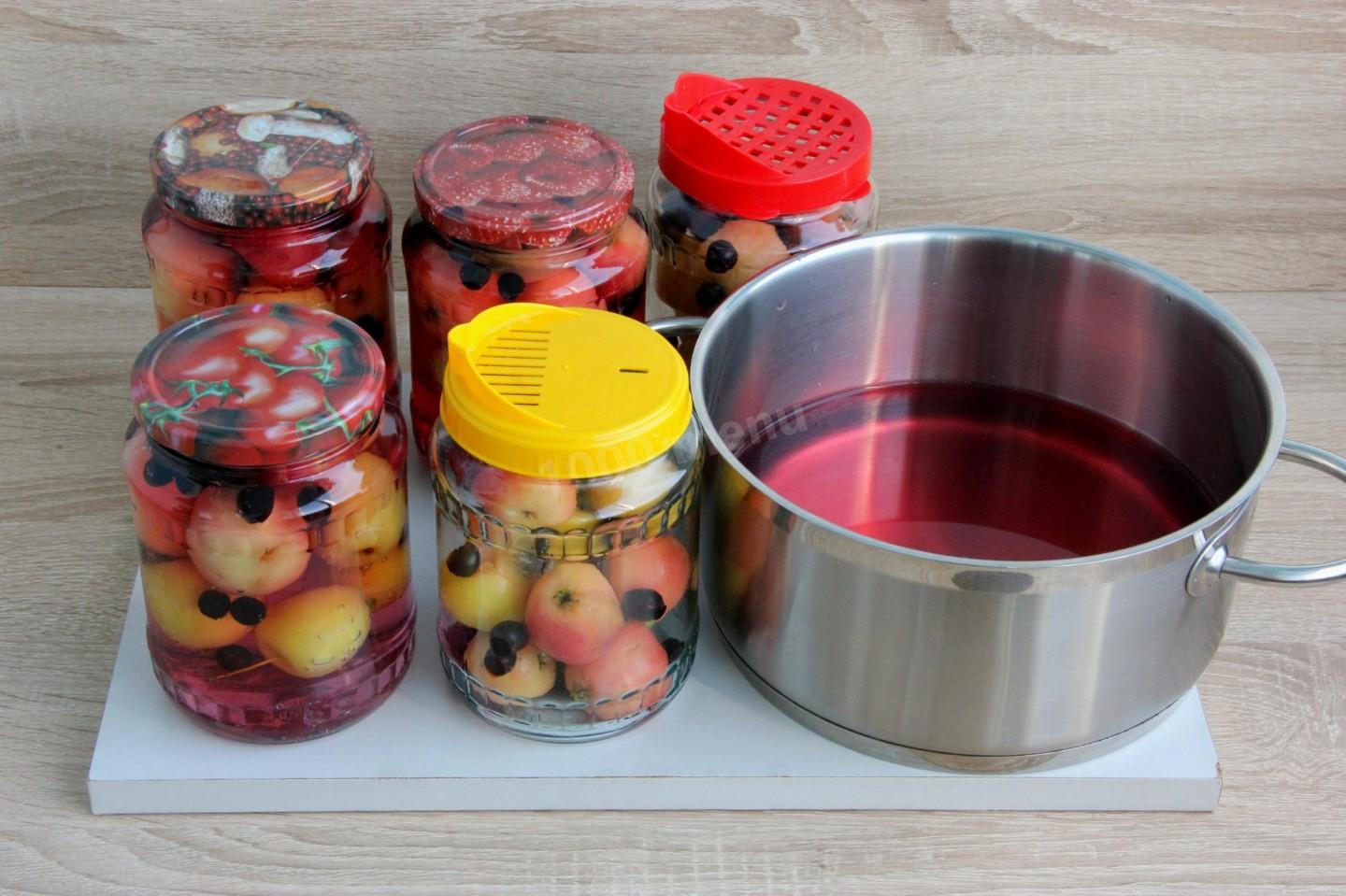
After the time is up, drain the water from the jars into a saucepan — a special lid with holes makes this easy.
-
Step 6:
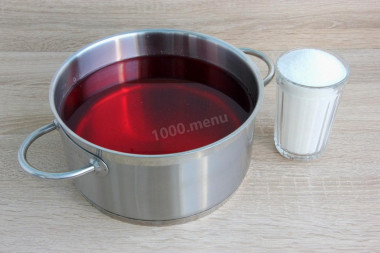
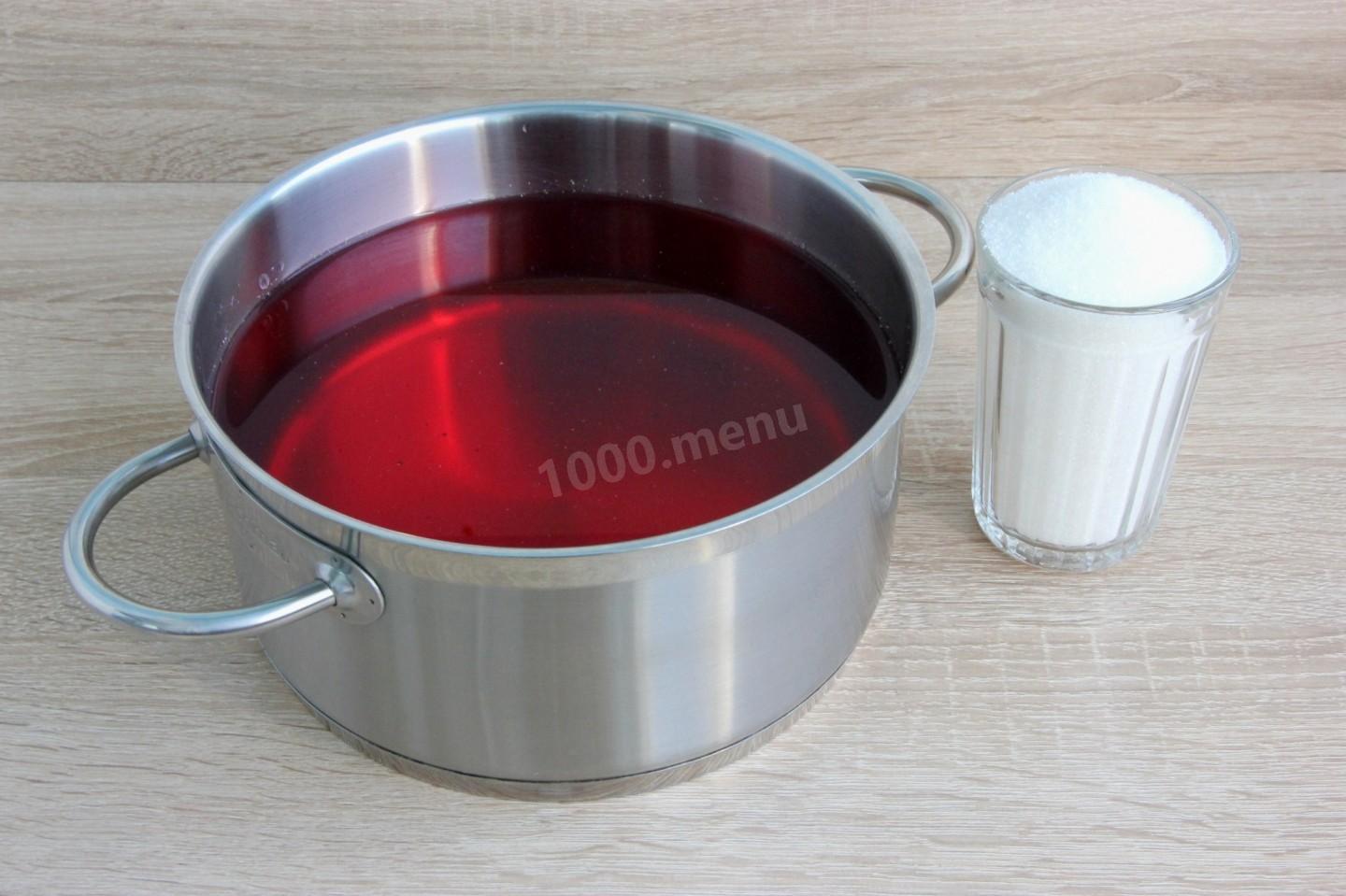
Add another 100 ml (about 1/2 cup) of hot boiled water plus the sugar, and bring to a boil, stirring. Let the syrup simmer for 3-4 minutes. Add a knife tip of citric acid to each jar, then pour the boiling syrup back over the crabapples until it overflows.
-
Step 7:
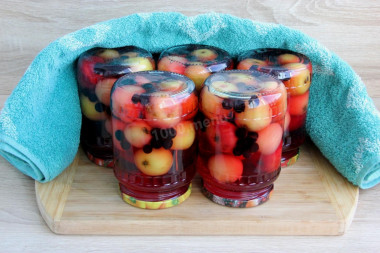
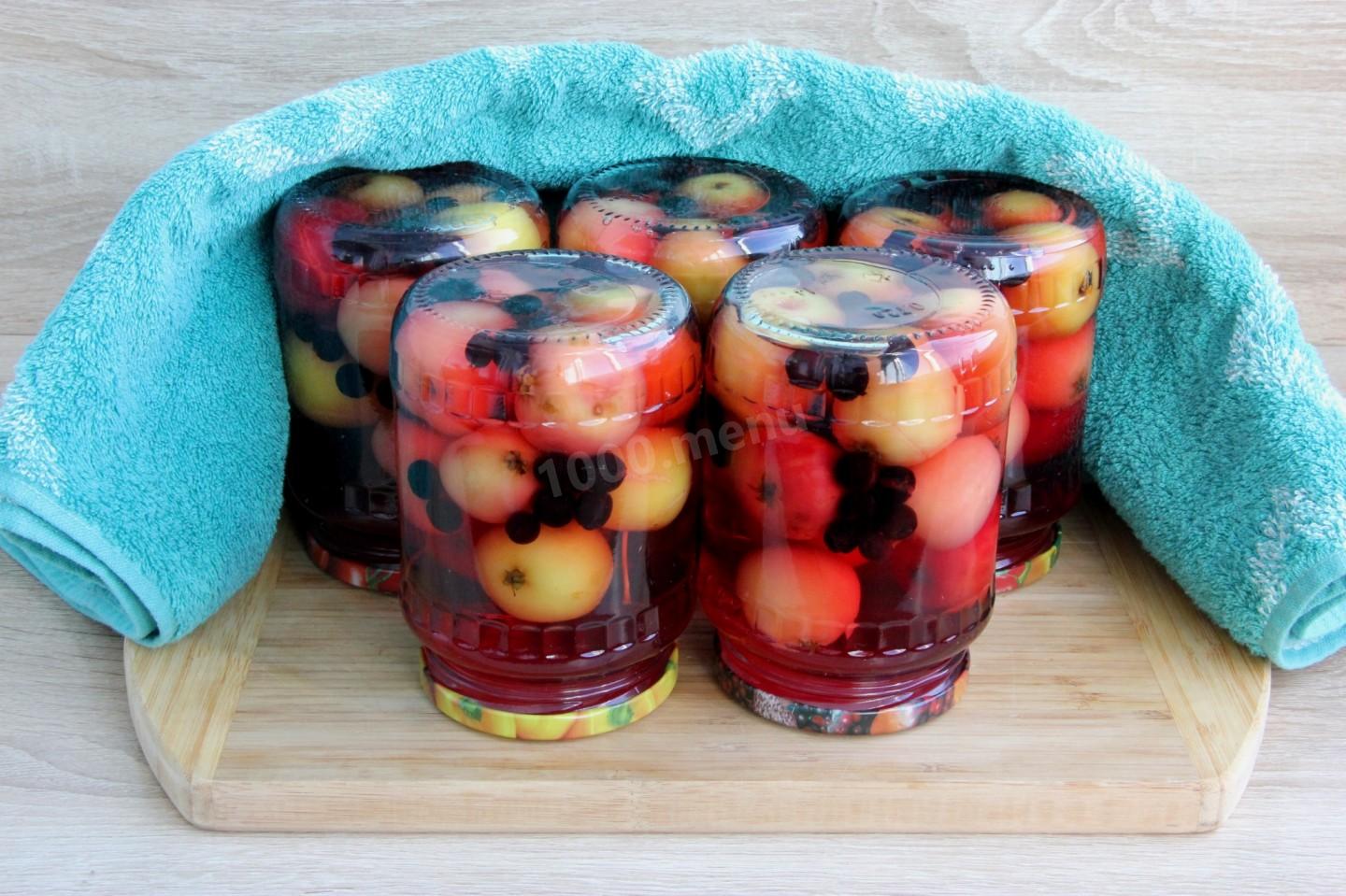
Cover with a lid and leave it for 2-3 minutes so the air bubbles trapped in the water and fruit rise to the surface, then screw the lid on tight. Wipe each jar and roll it on the counter to check the seal. If you're short on syrup, just top off with boiling water. Turn the jars upside down, wrap them in a blanket, and let them cool that way. Then move them to a cool, dark place for storage, or keep them in the refrigerator.
- With this recipe the compote comes out sweet, so dilute it with chilled water to taste before drinking. Enjoy it on its own as a compote or use it as a mixer for cocktails, with or without alcohol. This amount of ingredients makes about 5 jars of 0.72 liters, or 1-3 liters total. It's best to let the compote sit for at least a month. You can use fewer crabapples, but more of them gives a richer flavor. To enrich and vary the taste, you can add cherries, currants, lemon, pear, plum, zucchini, sea buckthorn, grapes, bird cherry, or red and black chokeberry.
Caloric content of the products possible in the composition of the dish
- Granulated sugar - 398 kcal/100g
- Sugar - 398 kcal/100g
- Citric acid - 0 kcal/100g
- Water - 0 kcal/100g
- Ranetki - 47 kcal/100g
- Chokeberry - 52 kcal/100g