Homemade Pear Fruit Butter for Winter
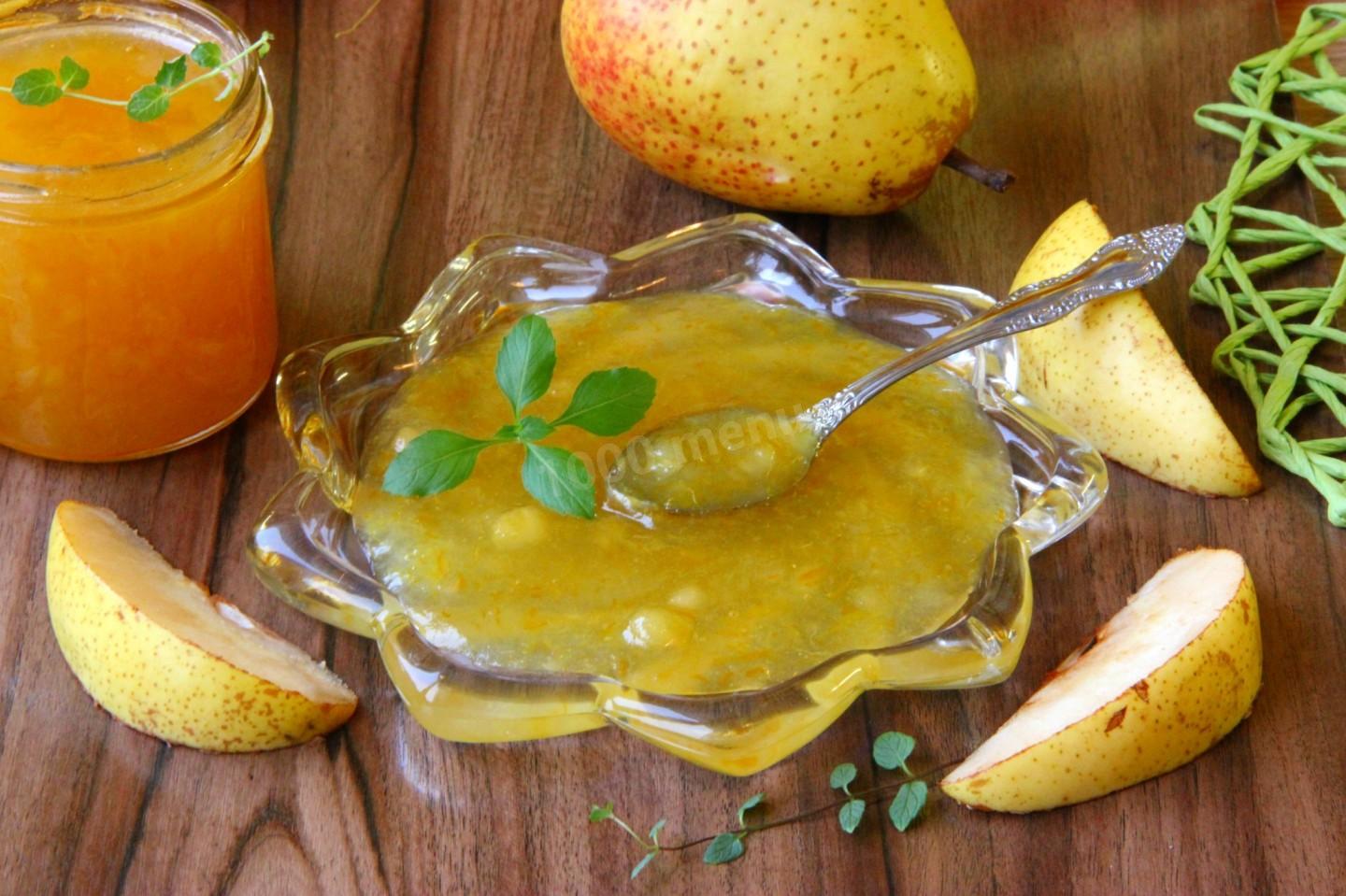
A smooth, golden fruit butter for tea time and beyond. This puréed pear butter is wonderful on rolls, toast, pancakes, and fritters—and as a filling between sponge cake layers, in roll cakes, muffins, and other baked goods.




Cooking method
-
Step 1:
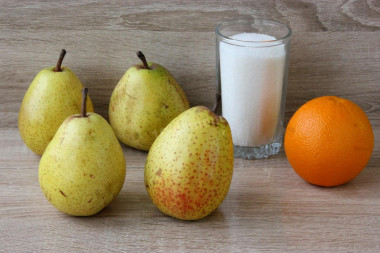
Any slightly underripe, firm pears will work for this fruit butter. You can make it with pears alone, but the flavor is richer and more interesting with a little extra fruit added. This time I'm adding an orange.
-
Step 2:
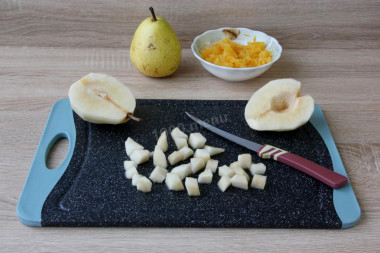
Wash, peel, and finely chop the pears. If you have a lot of them, run them through a meat grinder—then you can leave the skins on. Zest a clean, dry orange. Peel the membranes off the segments and chop them finely. I'll use the whole orange plus the zest, but you can add just part of it—it's up to your taste.
-
Step 3:

Transfer the chopped pear to a cooking pot, add the zest and orange segments, and sprinkle with half the sugar. Let it sit for about 15 minutes to release its juice. Fruit butter tends to scorch, so it's best to use a wide, heavy-bottomed steel pot.
-
Step 4:
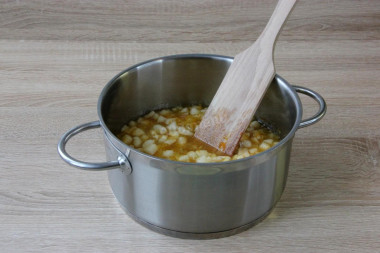
My pears were juicy and I didn't need to add water. If yours are less juicy, it's better to add about 1/4 cup (50 ml) of water.
-
Step 5:
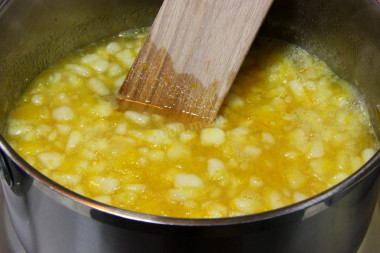
Set the pot over low heat and, stirring, bring the fruit mixture to a boil.
-
Step 6:
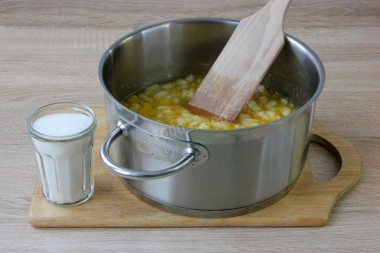
Add the second half of the sugar to the hot mixture in batches, stirring well each time so it dissolves completely. Keep cooking, stirring, for about half an hour, until the pears soften. Keep the heat low. Skim off any foam that forms.
-
Step 7:
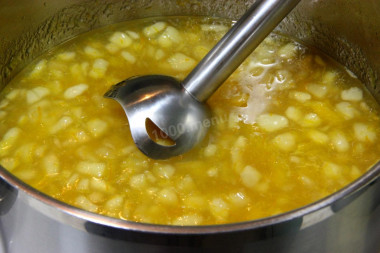
Then blend the mixture with an immersion blender. I like it with small bits of fruit still in it but the bulk smooth. You can also pass it through a sieve for a completely smooth butter.
-
Step 8:
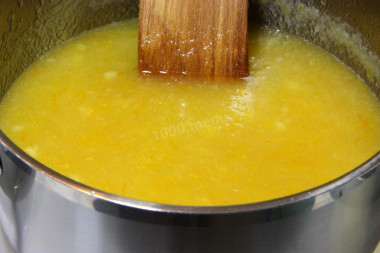
Cook it down until it reaches the thickness you want.
-
Step 9:

Or you can cook it 20–30 minutes and then add a thickener. I used Quittin; you can use pectin (per the package directions). Just sprinkle the powder over in a fine stream, stirring vigorously, and add a little citric acid to brighten the flavor. Cook the butter for 3–4 minutes—it starts thickening right away—and ladle it hot into sterilized, warm, dry jars.
-
Step 10:
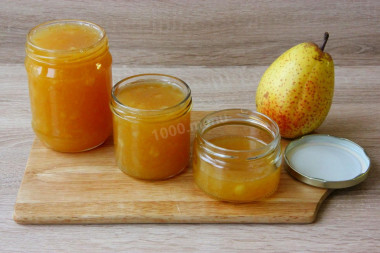
Seal the jars tightly, turn them upside down, and let them cool under a blanket. Store in a dark, cool place. This butter won't be as thick as, say, apple butter—it sets to a jelly-like consistency, a beautiful amber color with a light citrus note and little bits of pear. I got about 3 1/3 cups (800 ml); the butter thickens further as it cools.


- This fruit butter turns out sweet with a gentle tang. The sweetness depends a lot on the variety and flavor of your pears; you can cut back on the sugar to taste without affecting how it keeps. You can purée the mixture with a blender, but for big batches the classic meat-grinder method is better. When making fruit butter, you usually add a little water, but with juicy enough fruit it isn't needed. Pear butter is a very popular preserve, especially if you have your own harvest. That said, few people make it with pears alone, since it comes out very sweet—most cooks add citric acid, or lemon or orange. For a more interesting flavor, try cardamom, nutmeg, or vanilla. It's also lovely combined with tarter fruits and berries—apple, plum, lingonberry. To thicken it, you don't have to cook it down for ages; you can use gelatin, pectin, or Quittin. And you can make it on the stovetop or in a slow cooker. Either way, the result will be a treat!
Caloric content of the products possible in the composition of the dish
- Pear - 42 kcal/100g
- Dried pear - 246 kcal/100g
- Canned pears - 76 kcal/100g
- Granulated sugar - 398 kcal/100g
- Sugar - 398 kcal/100g
- Oranges - 36 kcal/100g
- Citric acid - 0 kcal/100g
- Pectin - 336 kcal/100g