Skillet Vegetable Stew with Zucchini, Potatoes, and Cabbage
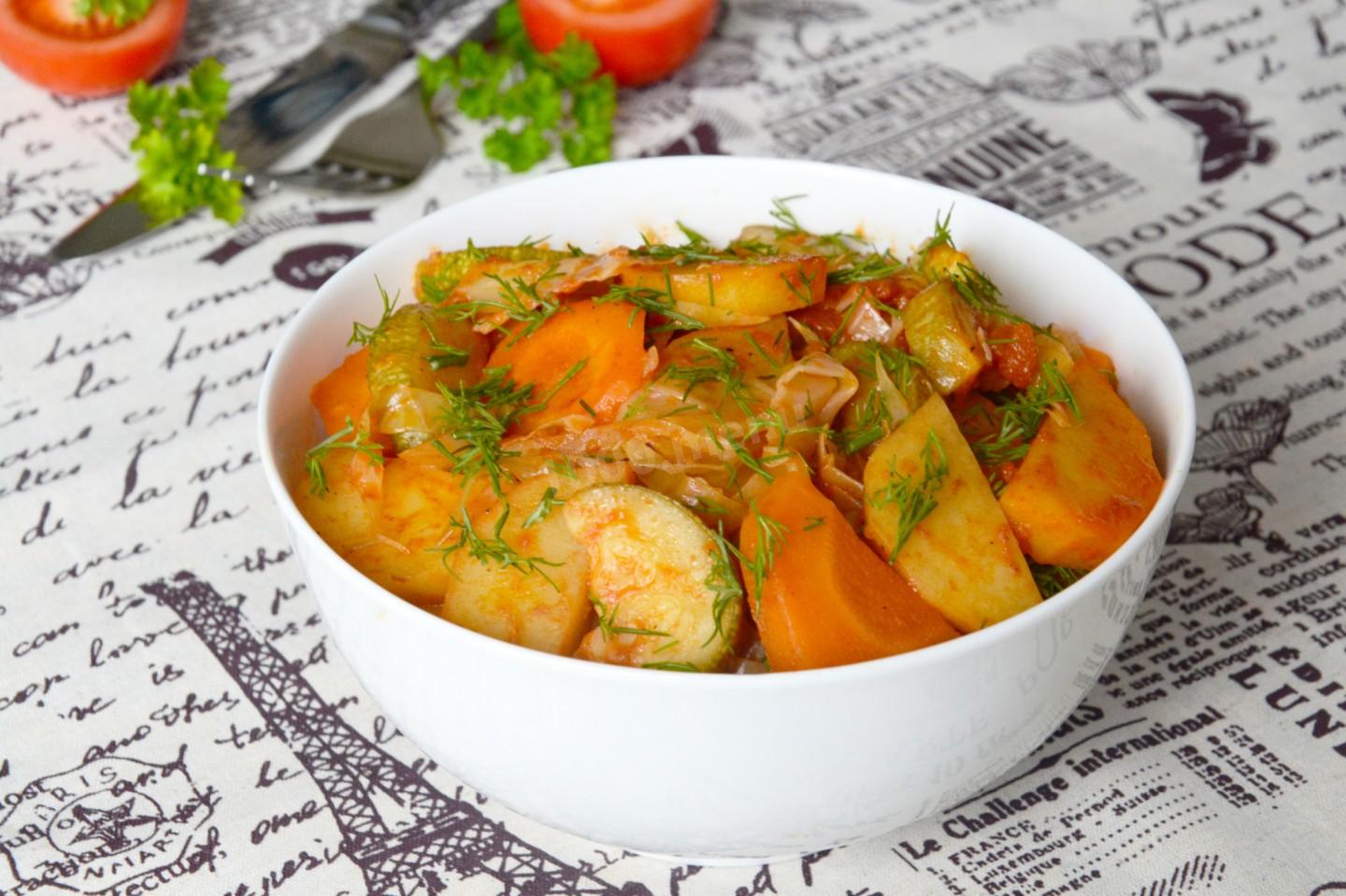
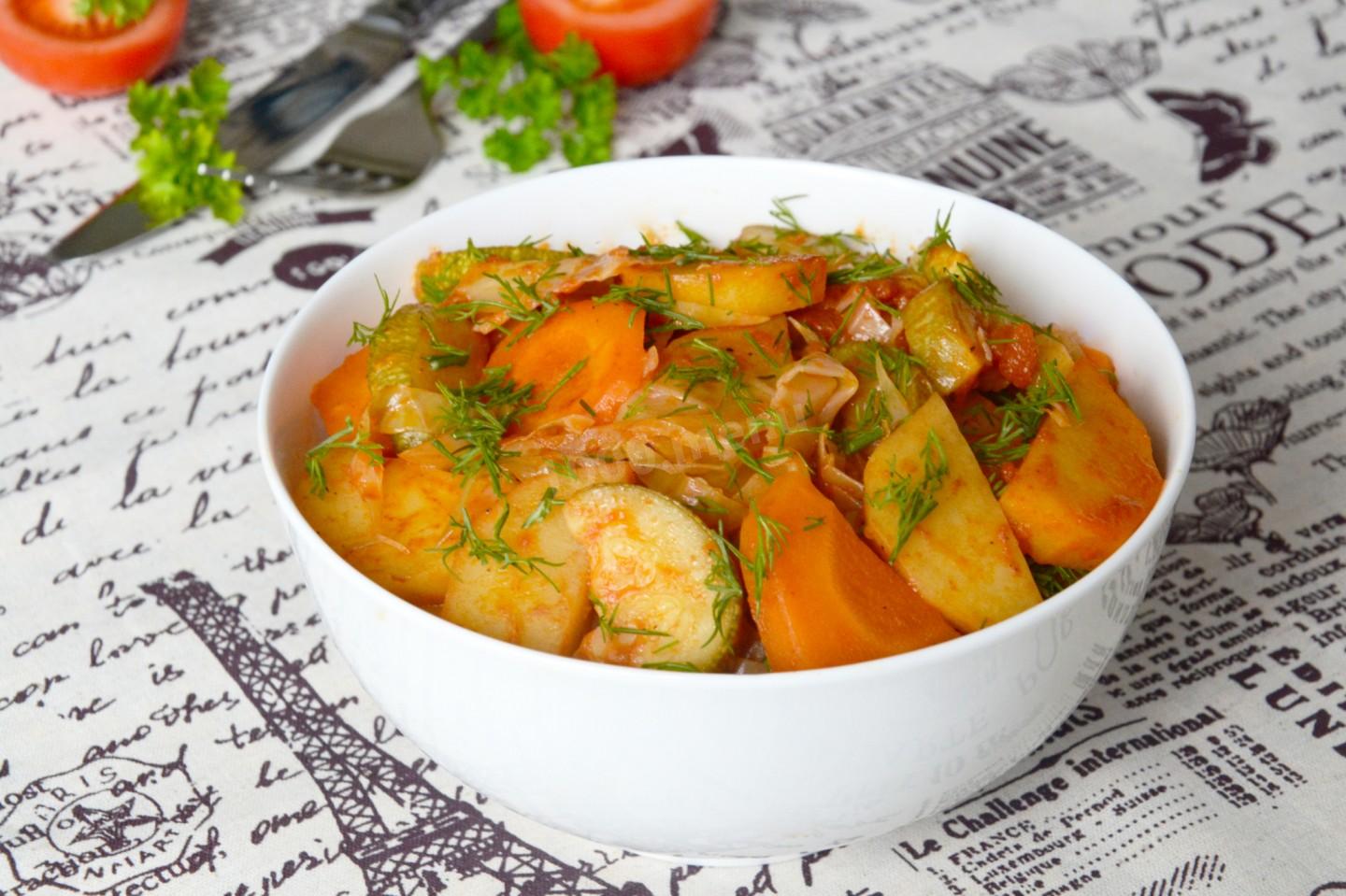
Tasty, wholesome, and budget-friendly — simple and quick! This skillet vegetable stew with zucchini, potatoes, and cabbage is a great choice for lunch or dinner. The whole family will love how fragrant it is, and it comes together easily. Feel free to change up the vegetables to suit your taste — add bell pepper or eggplant, for instance.

Cooking method
-
Step 1:
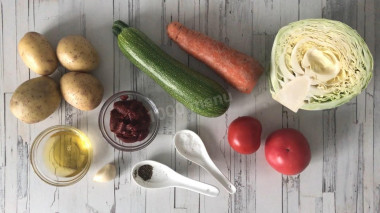
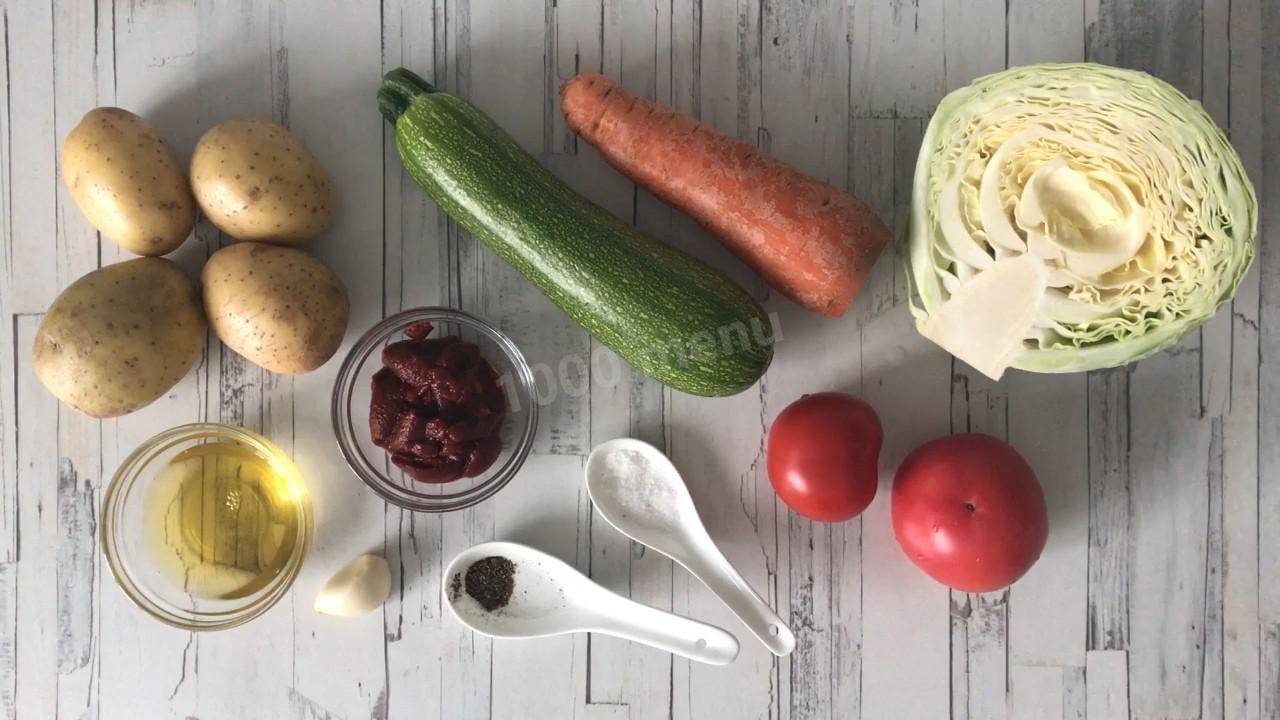
How do you make a vegetable stew with zucchini, potatoes, and cabbage? Gather your ingredients and wash and peel all the vegetables listed in the recipe.
-
Step 2:
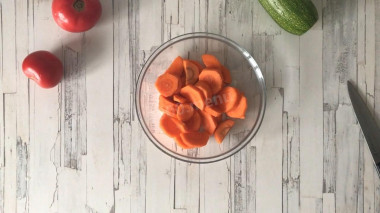
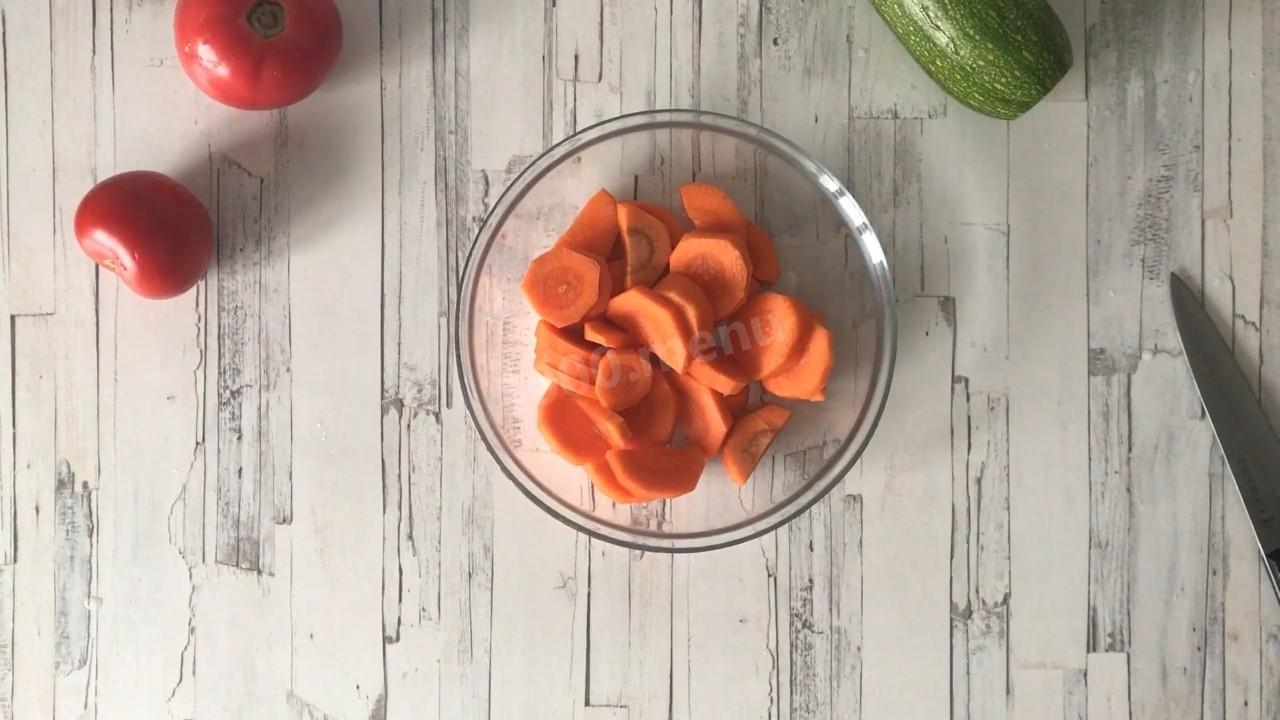
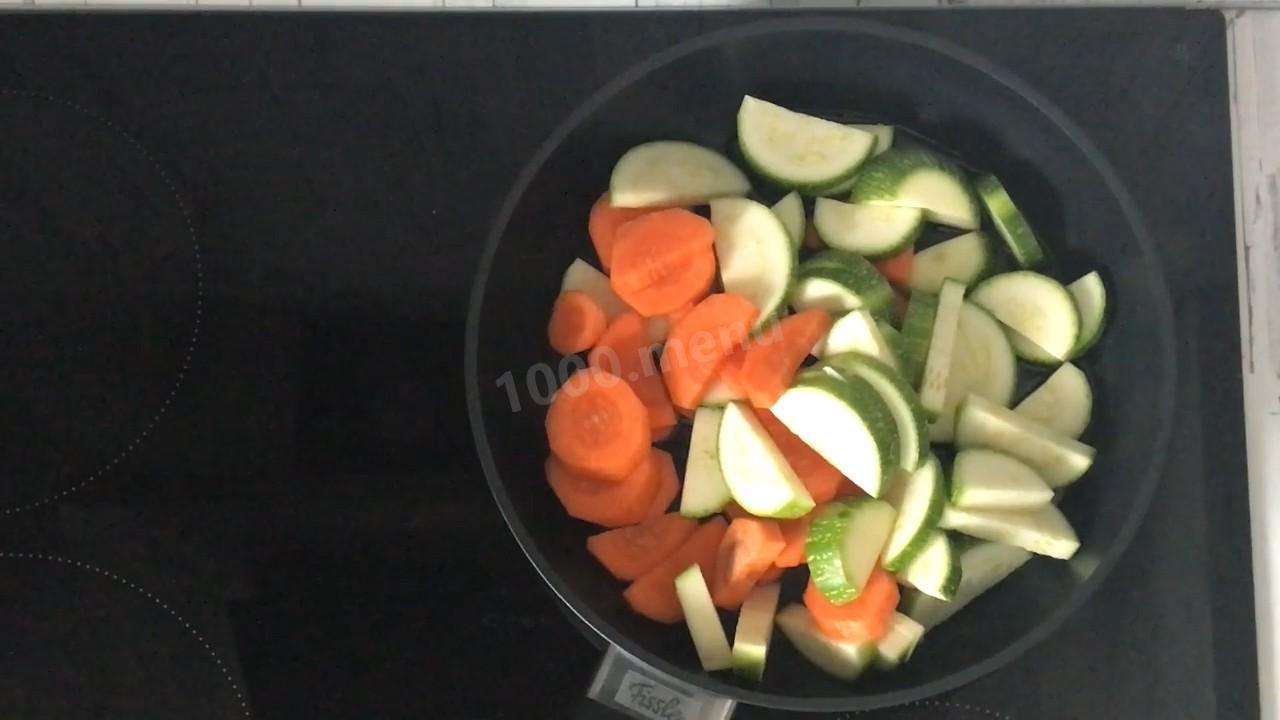
Cut the carrot into thin half-moons.
-
Step 3:
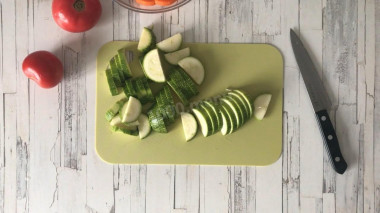
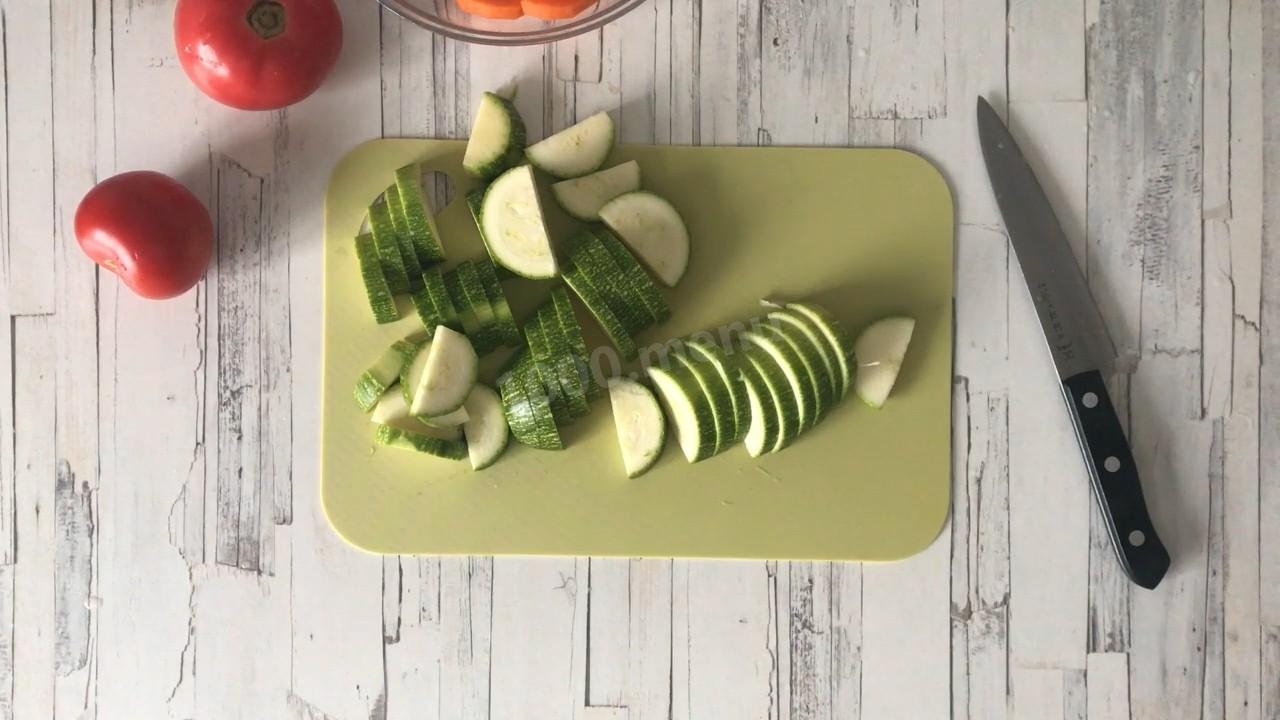
Cut a medium zucchini into half-moons as well. Young zucchini don't need to be peeled; for older, more mature ones, peel them, halve them, and scoop out the seeds.
-
Step 4:
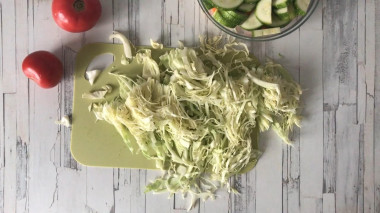
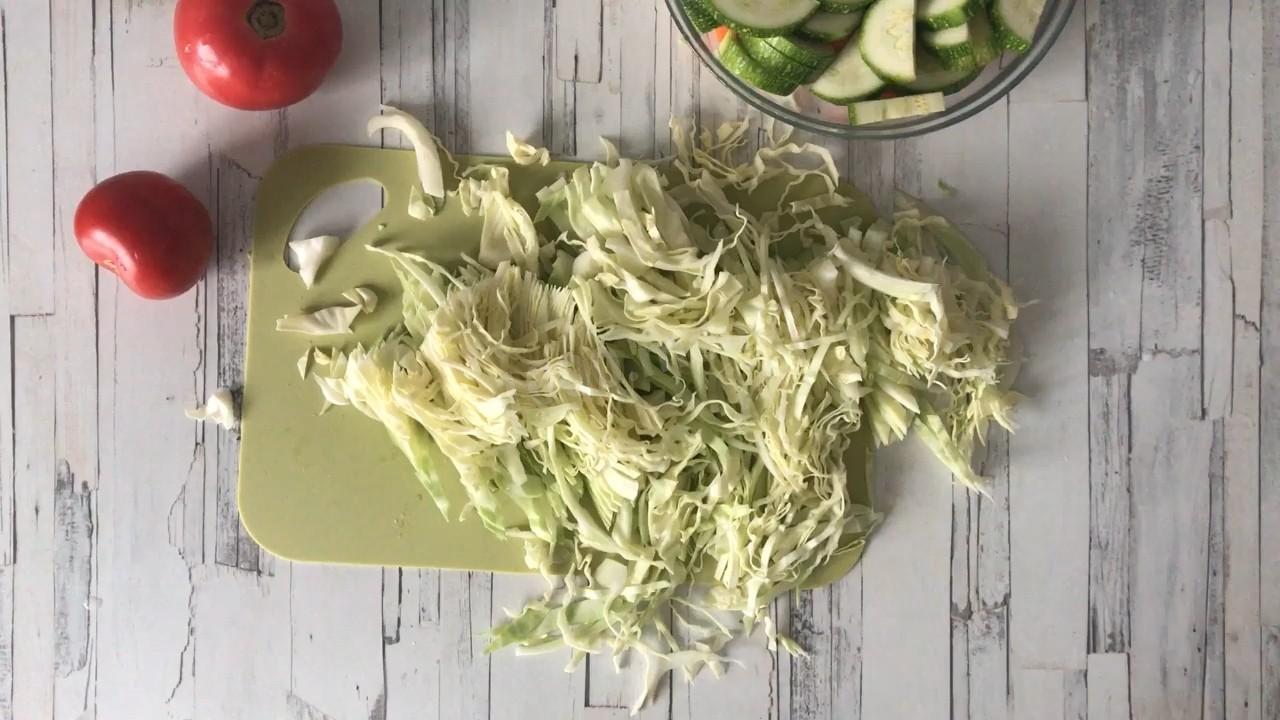
Peel away any wilted or darkened outer leaves from the cabbage. Cut off a quarter of the head and shred it thinly with a knife or a food processor. Wrap the rest of the cabbage and store it in the refrigerator.
-
Step 5:
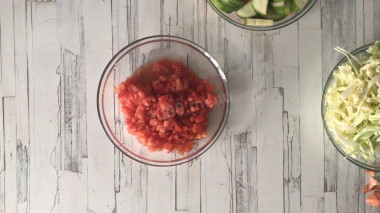
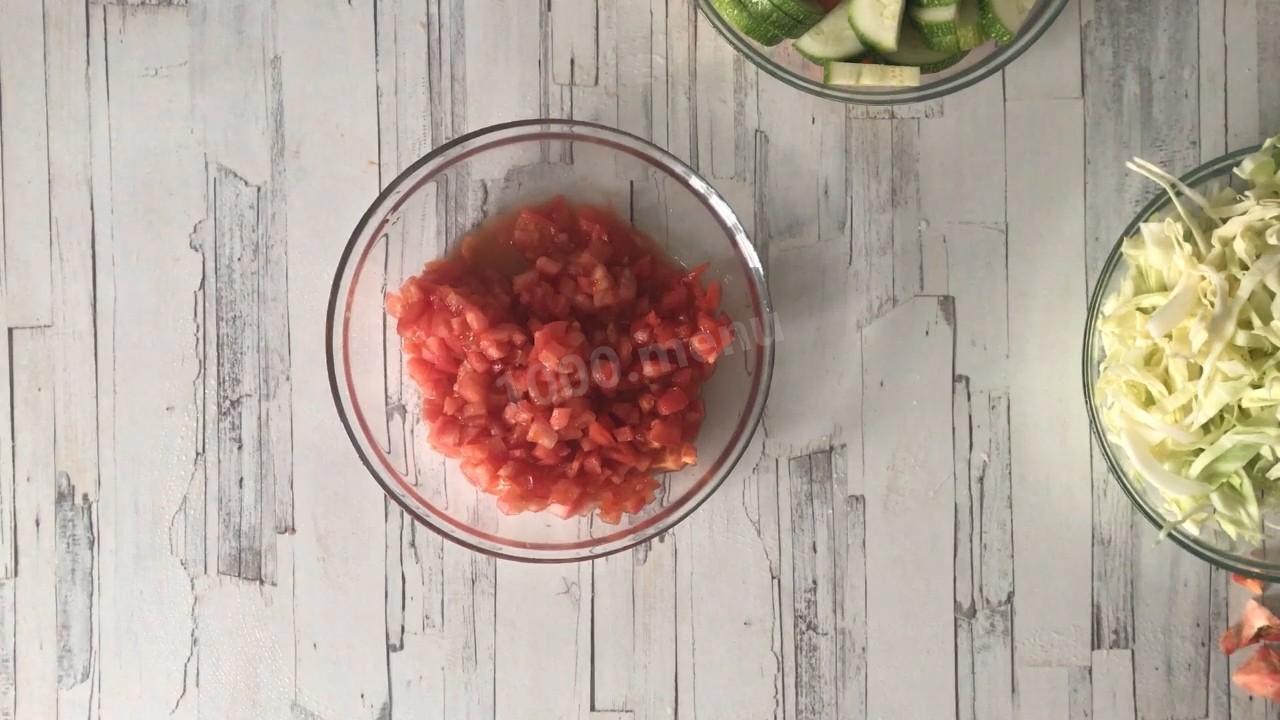
Peel the tomatoes: score a shallow cross in the bottom of each, pour boiling water over them, and let sit for 2–3 minutes. Drain, and the skins will slip off easily with a knife. Cut the flesh into small cubes.
-
Step 6:
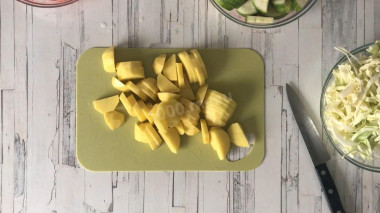
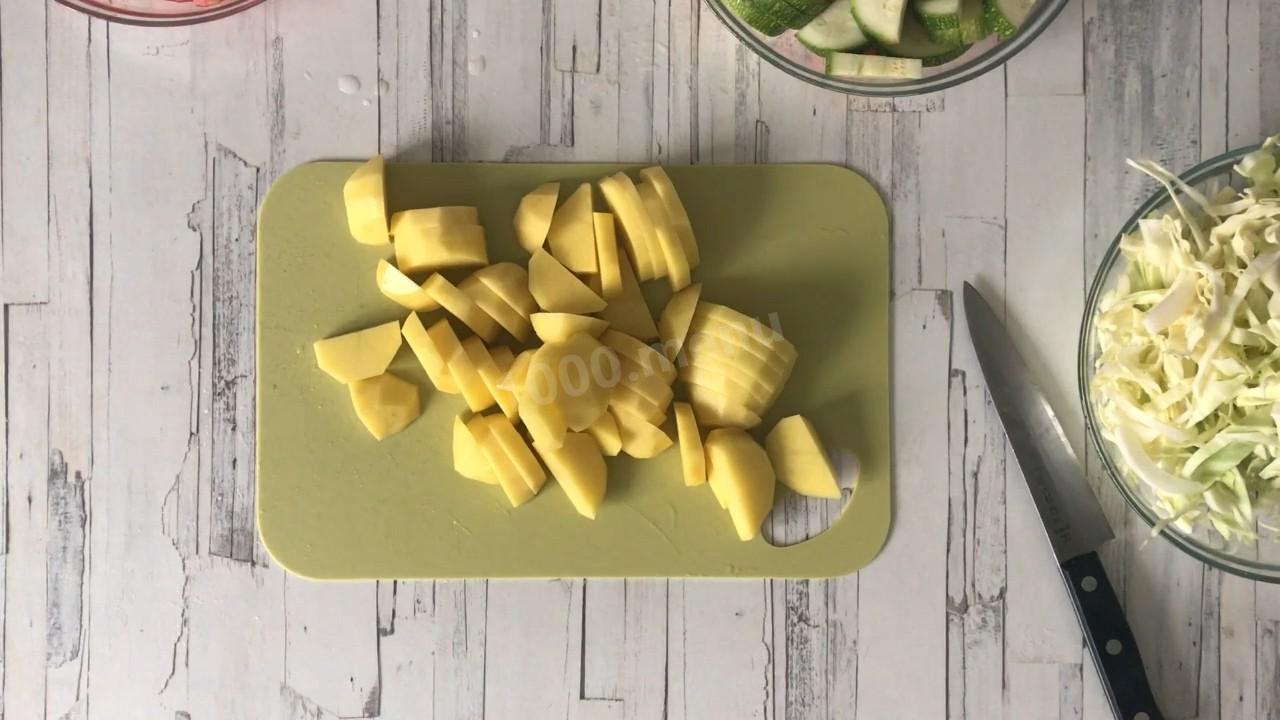
Cut the peeled potatoes into slices about 1/8 inch (3–5 mm) thick. A mandoline or food processor makes quick work of this and gives you even, tidy slices.
-
Step 7:
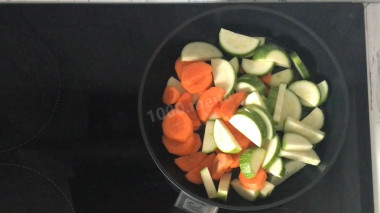
Pour a refined, high-smoke-point oil into a skillet and heat it well. Add the carrot and zucchini and fry, stirring, for about 5 minutes, until the carrot softens.
-
Step 8:
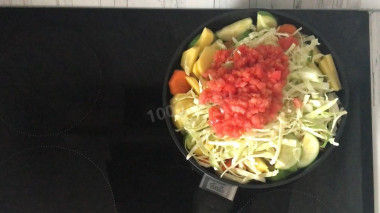
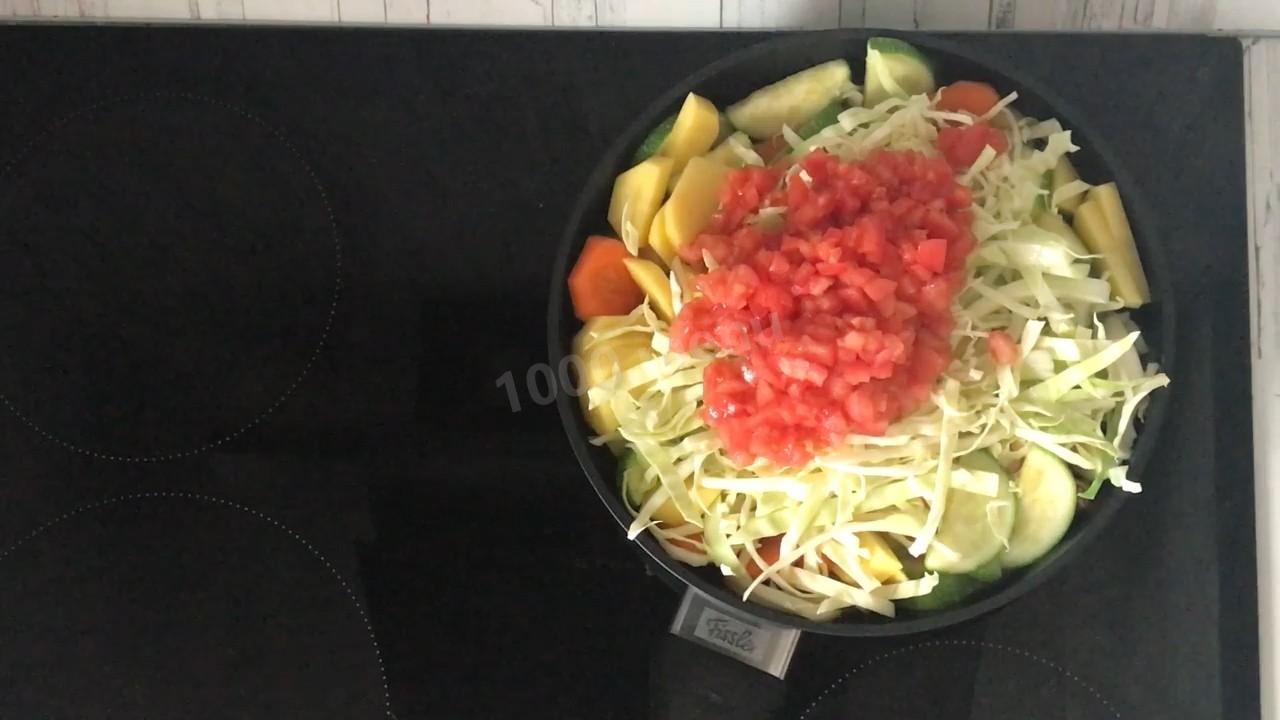
Add the cabbage, potatoes, and tomatoes to the skillet. Fry, stirring, for 2 minutes. Don't cover the pan — otherwise the cabbage steams rather than stews.
-
Step 9:
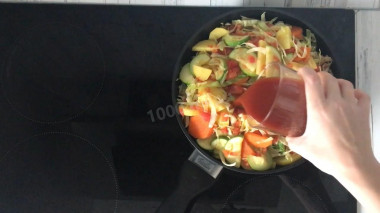
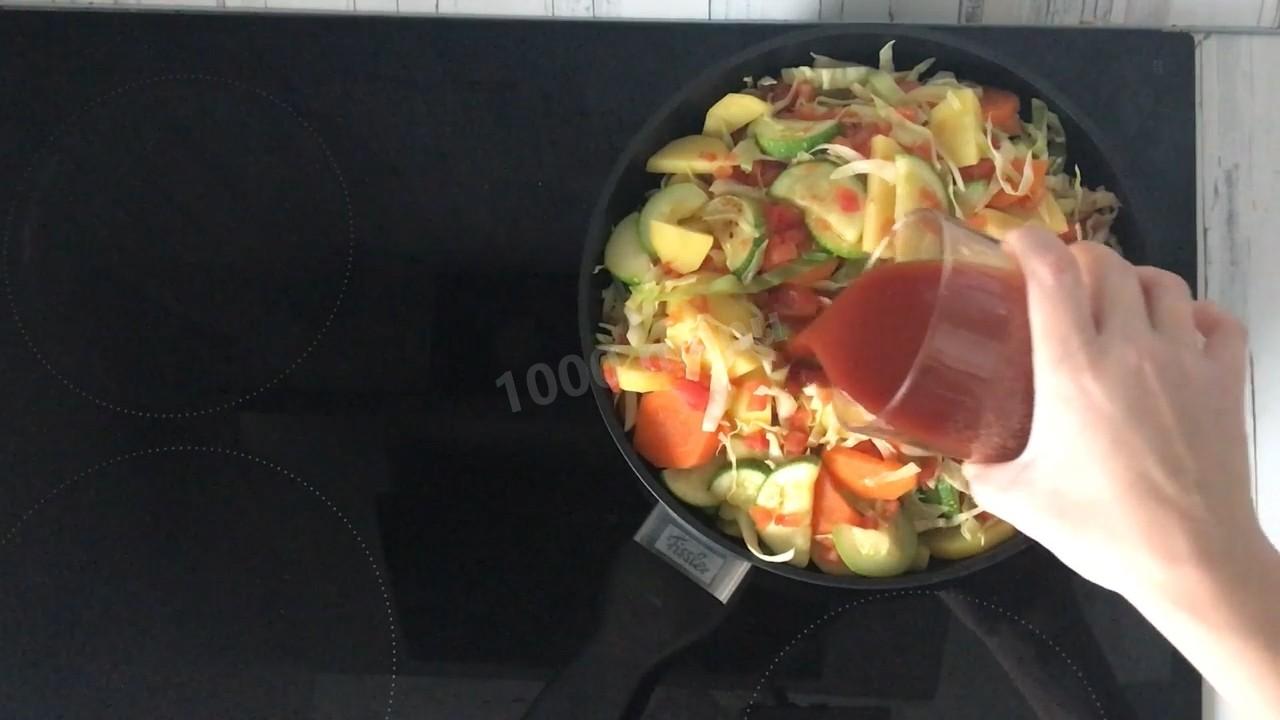
Stir the tomato paste into 250 ml (about 1 cup) of cool boiled water and pour it into the skillet with the vegetables. Stir to combine.
-
Step 10:
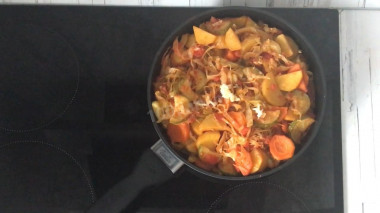
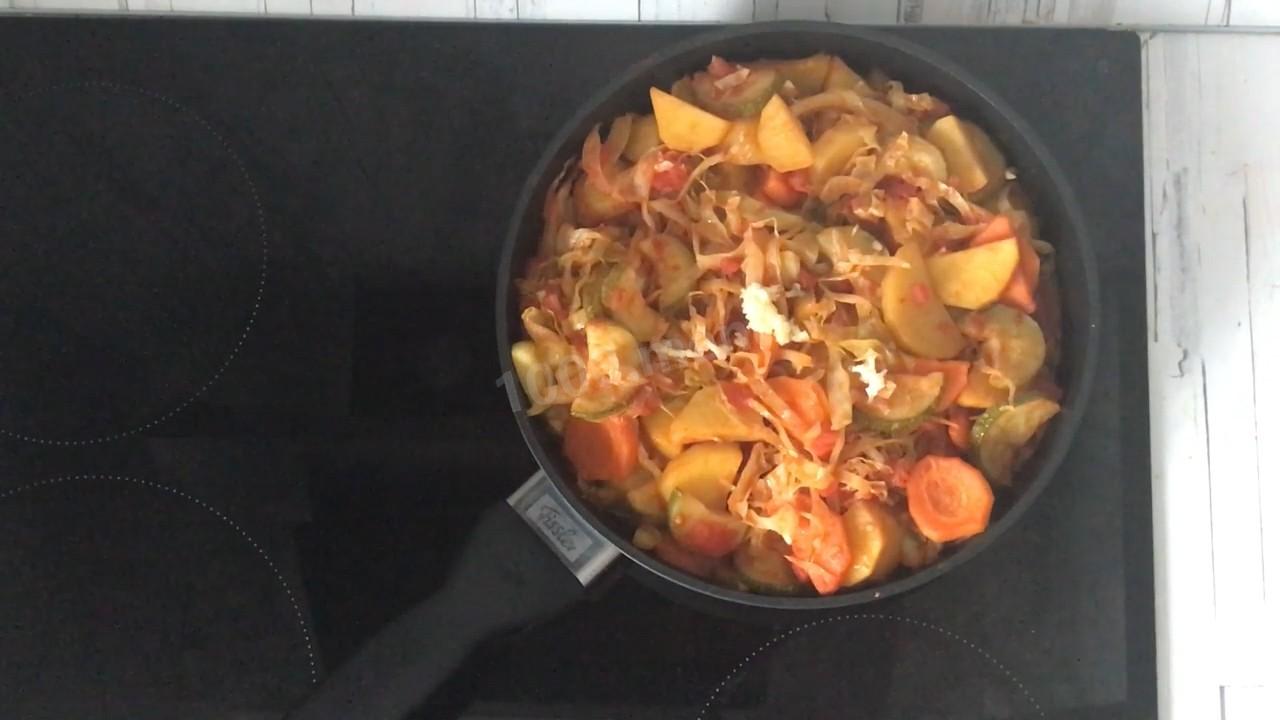
Simmer the stew over low heat until the potatoes and cabbage are tender, about 25 minutes. At the end, stir in the garlic pressed through a garlic press and season with salt and pepper to taste. The cabbage releases plenty of juice as it stews, but if the pan looks dry, add a splash of hot boiled water (1–2 tablespoons). Stir now and then so the cabbage doesn't scorch.
-
Step 11:
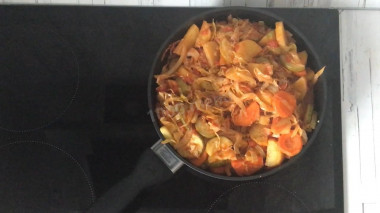
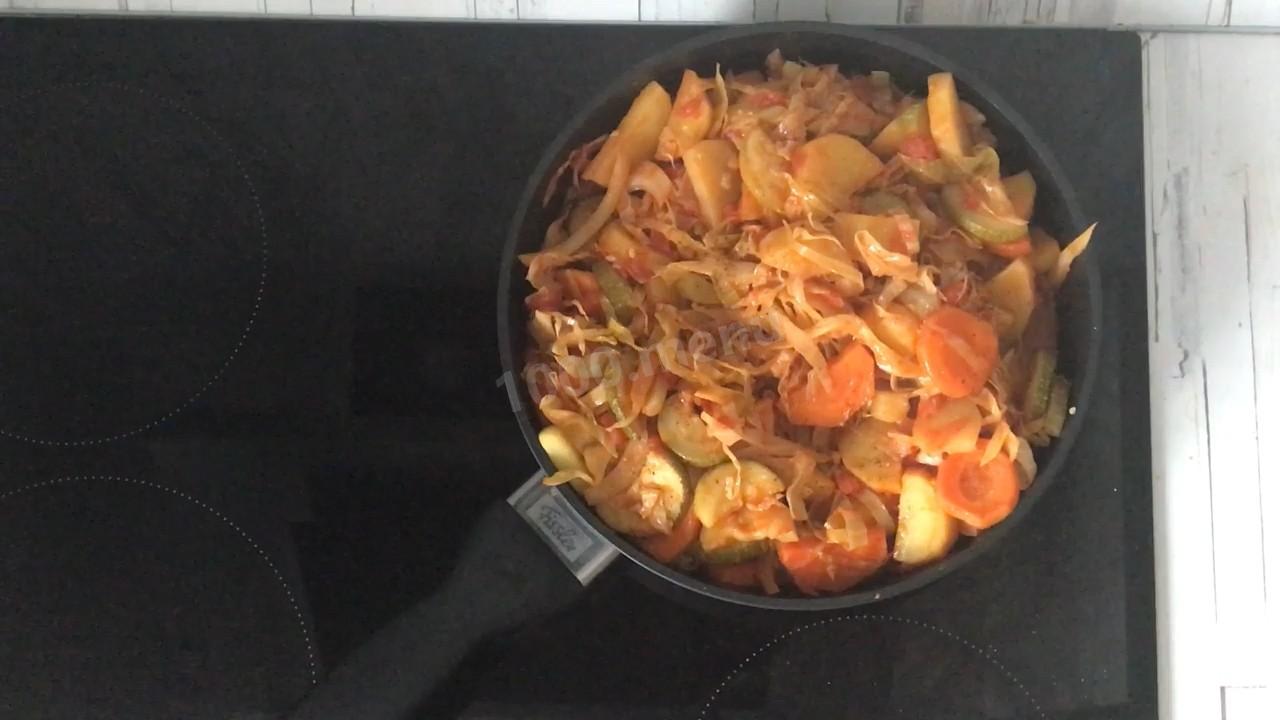
Simmer another minute or two, then take it off the heat. Before serving, sprinkle with chopped fresh herbs (dill, parsley, scallion). Serve the vegetable stew hot.
- Along with the tomatoes, you can add bell pepper cut into rings or slices. If you like, cut an onion into half-rings or small cubes and sauté it until translucent, then add the carrot and so on.
- For a heartier stew, add 1–2 sliced sausages about 10–15 minutes before the end of cooking.
- Root vegetables are best scrubbed with a brush or a stiff sponge under running water.
- Which zucchini work best? Choose young ones with tender skin. Wash and peel them — very thin skin doesn't have to be removed. If you're using more mature zucchini, cut away the tough peel and scoop out the seedy center.
- Remember that how you cut the carrot affects the final result: grated carrot breaks down into a purée during cooking and blends in evenly, while carrot cut into strips or cubes holds its shape.
- Use a high-smoke-point oil for frying. Every oil is only healthy up to a certain temperature — its smoke point — beyond which it starts to burn and forms harmful compounds. Unrefined oils, with few exceptions, have a low smoke point: they're full of unfiltered particles that scorch quickly. Refined oils stand up to heat better and have a higher smoke point. Whether you're baking, pan-frying, or grilling, make sure to use an oil with a high smoke point. Common ones include refined sunflower, olive, and grapeseed oil.
- The tomato paste in this recipe can be swapped for canned tomatoes in their own juice, fresh tomatoes, or ketchup.
- Here's an easy way to tell whether the oil in your skillet is hot enough: dip in a wooden spoon or spatula. If little bubbles gather around it, you're ready to start frying.
- For cooking, it's best to use filtered or bottled water that's neutral in taste. Tap water can give the dish an off flavor.
Caloric content of the products possible in the composition of the dish
- Ripe potatoes - 80 kcal/100g
- Baked potatoes - 70 kcal/100g
- Mashed potatoes - 380 kcal/100g
- Boiled potatoes - 82 kcal/100g
- Potatoes in uniform - 74 kcal/100g
- Fried potatoes - 192 kcal/100g
- Tomatoes - 23 kcal/100g
- Zucchini - 23 kcal/100g
- Carrots - 33 kcal/100g
- Dried carrots - 275 kcal/100g
- Boiled carrots - 25 kcal/100g
- Garlic - 143 kcal/100g
- Ground black pepper - 255 kcal/100g
- Parsley greens - 45 kcal/100g
- Tomato paste - 28 kcal/100g
- Salt - 0 kcal/100g
- Water - 0 kcal/100g
- White cabbage - 28 kcal/100g
- Boiled white cabbage - 21 kcal/100g
- Sunflower oil - 898 kcal/100g
- Refined sunflower oil - 899 kcal/100g
Similar recipes


- Vegetables
- Spices seasonings spices
- Fats and oils
- Other
- Garlic
- Pepper
- Salt
- Vegetable oil
- Water
- Tomato paste
- Frying
- Stewing
- In a frying pan
- Рагу
- Stewed vegetables
- Zucchini second course
- Second courses of cabbage
- From zucchini
- From carrots
- From potatoes
- From cabbage
- From tomato
- No eggs
- Vegetarianism
- Recipes for lean dishes without butter