Sunny-Side-Up Fried Eggs
A quick, pretty, and wholesome way to get some protein at breakfast! How do you fry an egg so the yolk stays bright yellow, doesn't run off, and isn't covered with a cloudy film on top? This recipe shares all the secrets of a perfect fried egg. With these tips, you'll nail it on the first try.

Cooking method
-
Step 1:
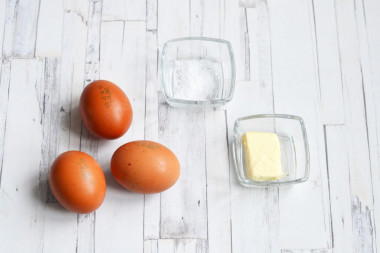
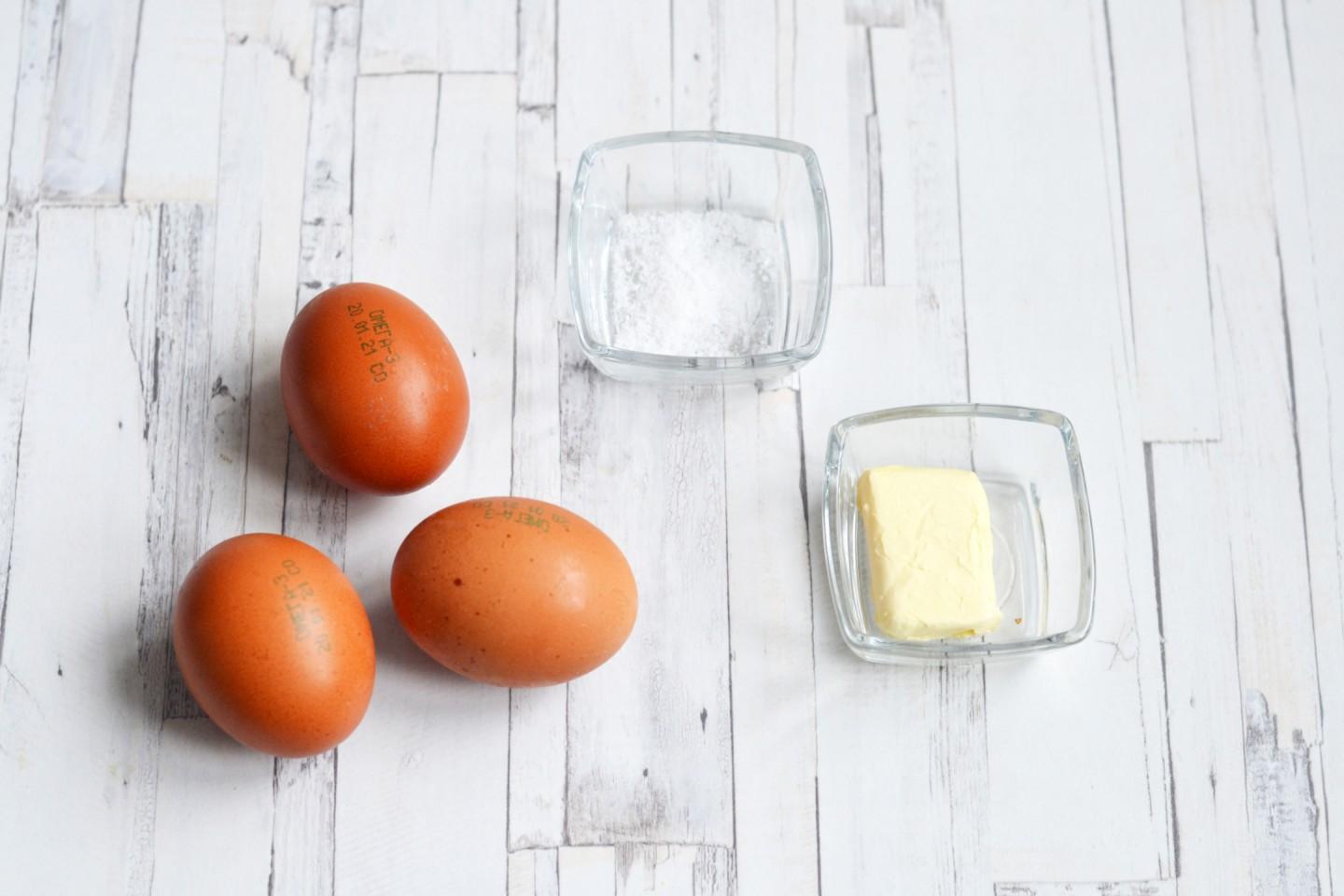
How do you fry a sunny-side-up egg? Start by gathering your ingredients. Use large eggs. For eggs that are both tasty and pretty, farm-fresh eggs with big, deep-yellow yolks are the way to go. Be sure the eggs are fresh. You can use vegetable oil in place of the butter.
-
Step 2:
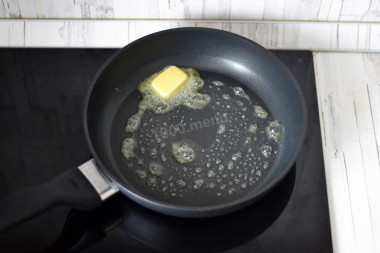
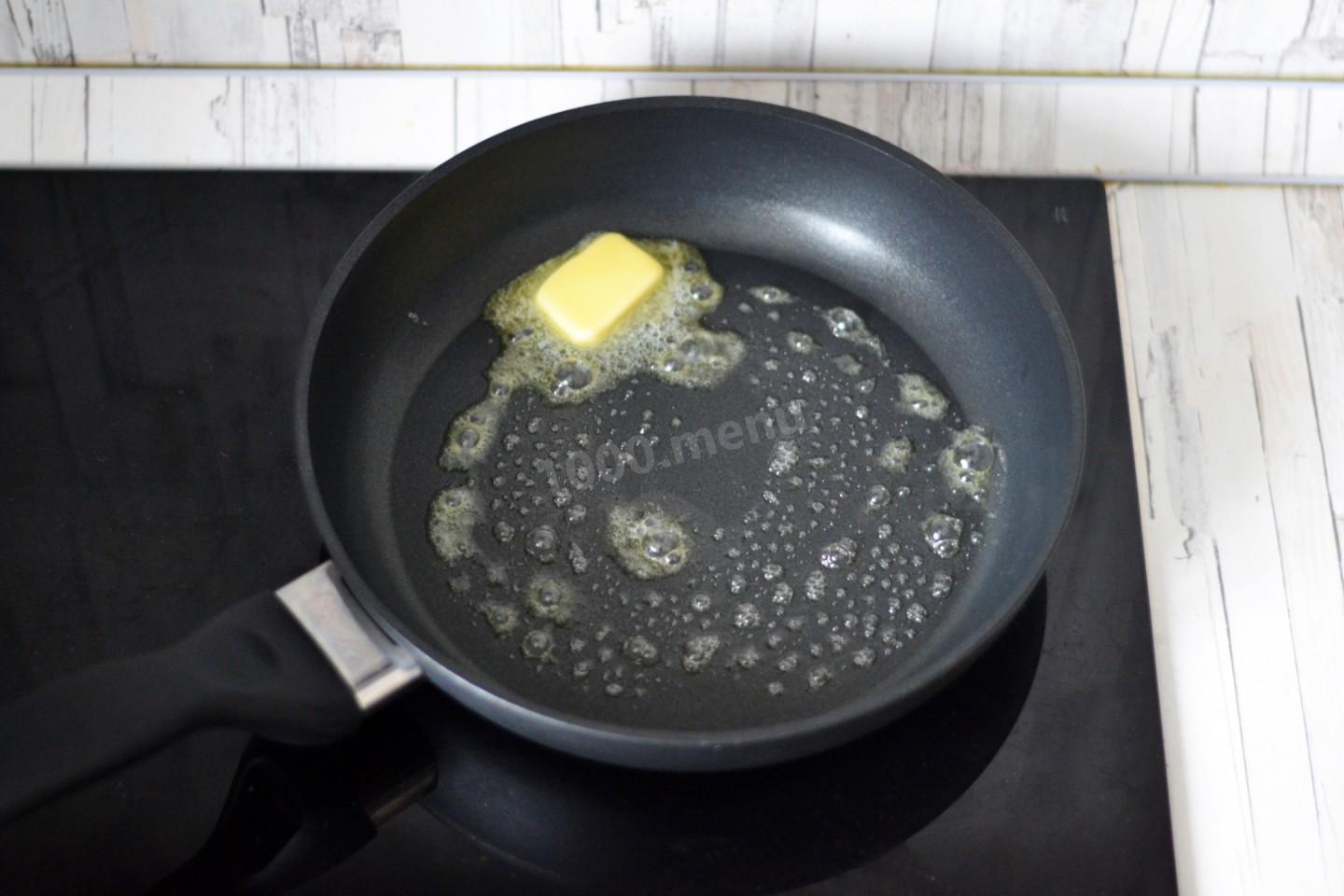
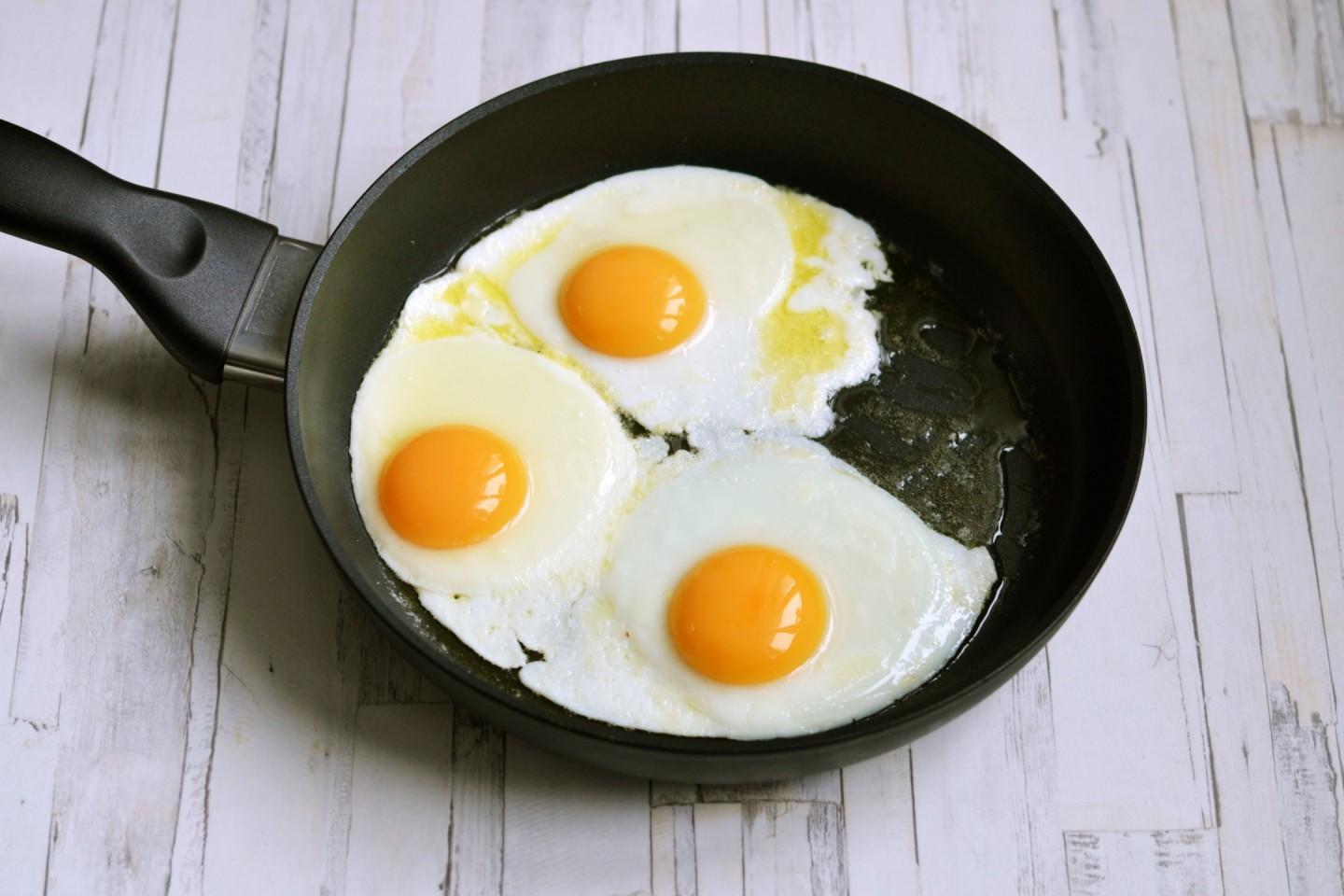
Set a skillet over low heat (I use level 2 out of 9) and let it warm up well — this can take 5–7 minutes. Add a pat of butter and let it melt. When the butter starts to bubble, carefully and slowly crack the eggs into the pan, trying to keep the yolks whole. It's really important to preheat the pan so the whites set the moment they hit the hot surface, instead of spreading thin across the whole pan.
-
Step 3:
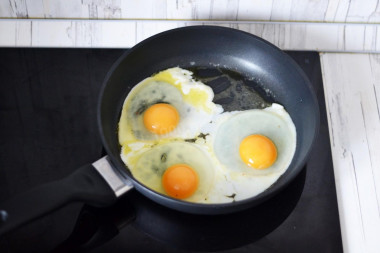
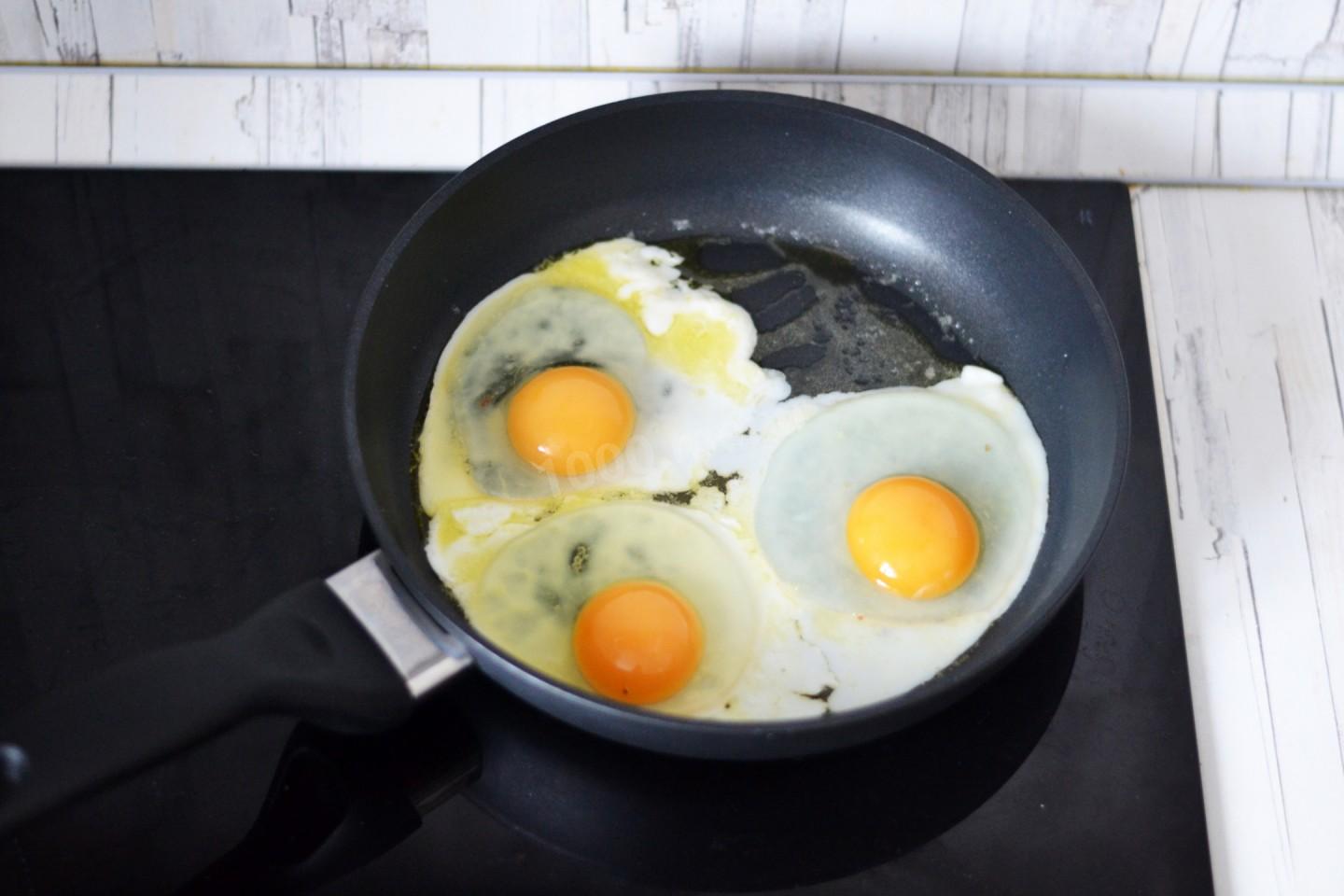
Fry the eggs over low heat, uncovered, for about 5 minutes. The whites should set while the yolks stay runny and bright. To keep the yolks from filming over and staying soft, it's best to leave the pan uncovered — or if you do cover it, no more than 1–2 minutes. And don't turn up the heat, or the eggs will cook too fast and the yolks will firm up.
-
Step 4:
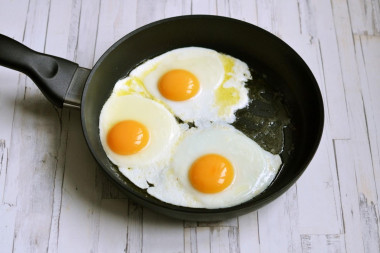
Really, it's best not to step away from the stove, so you don't miss the moment when the whites are set but the yolks are still runny. Salt the eggs at the very end, and only the whites — salt on the yolk leaves unsightly white spots.
-
Step 5:
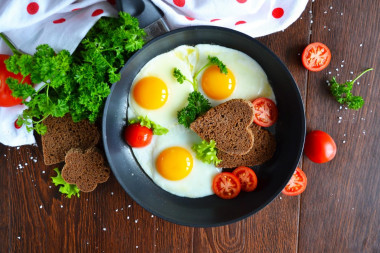
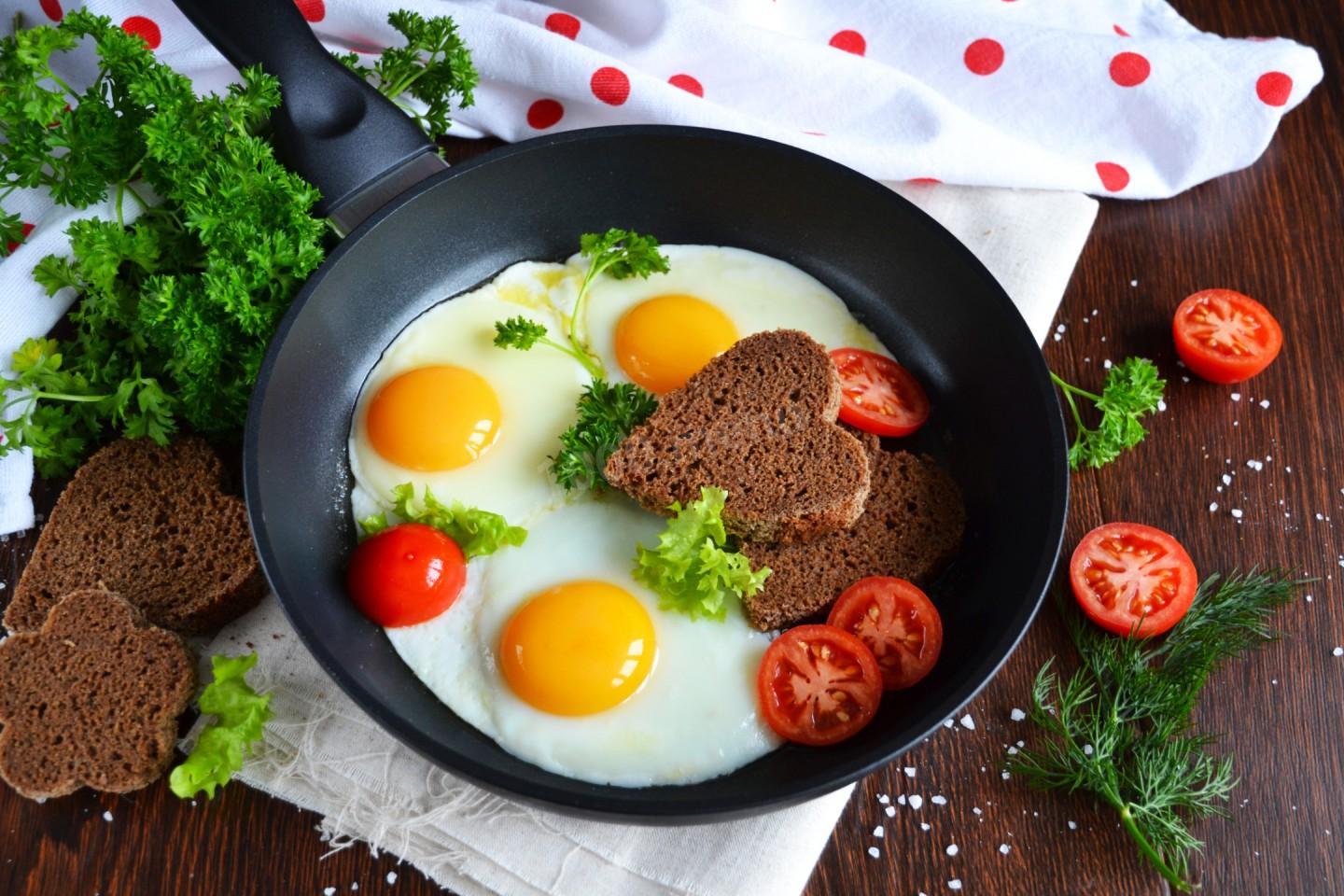
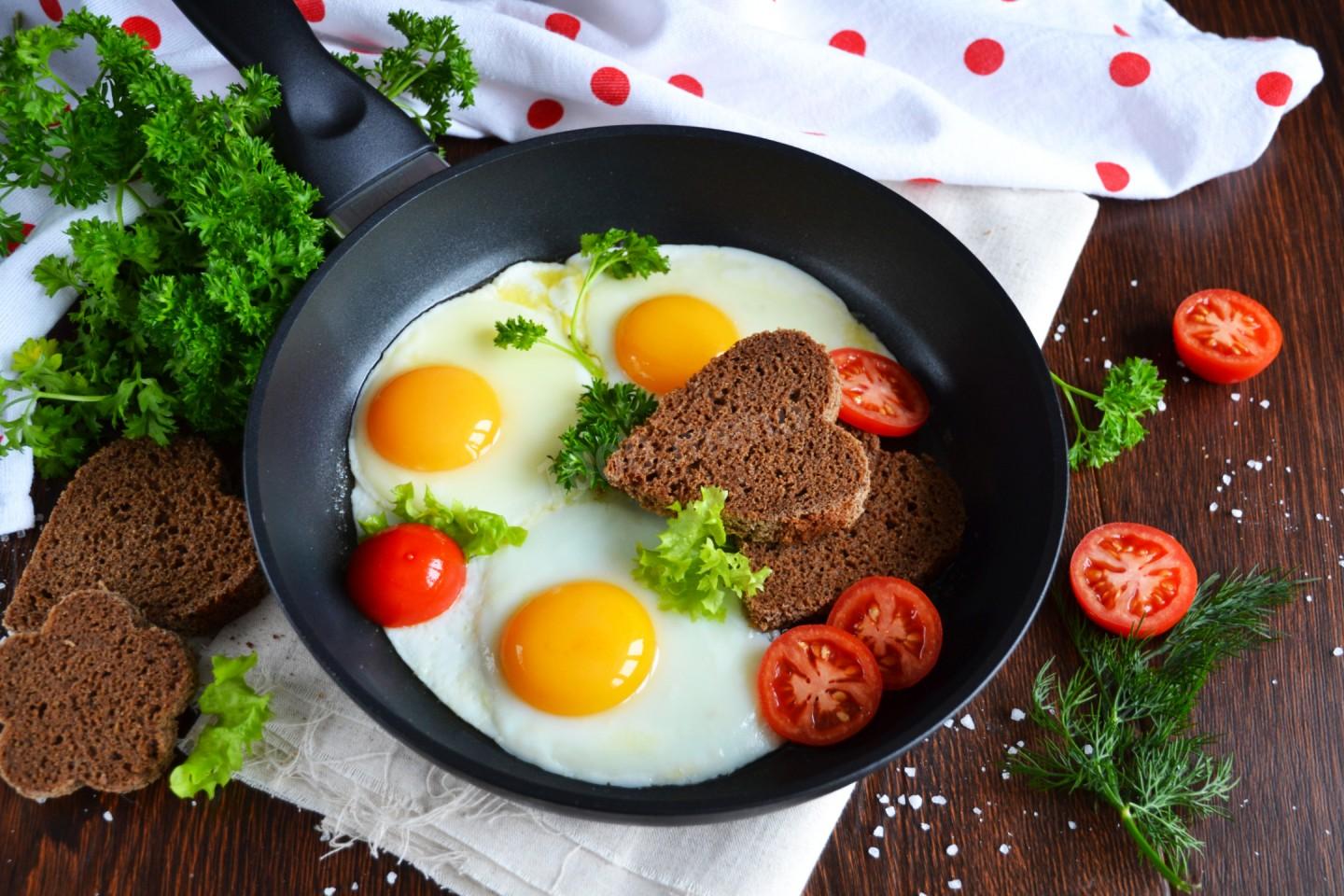
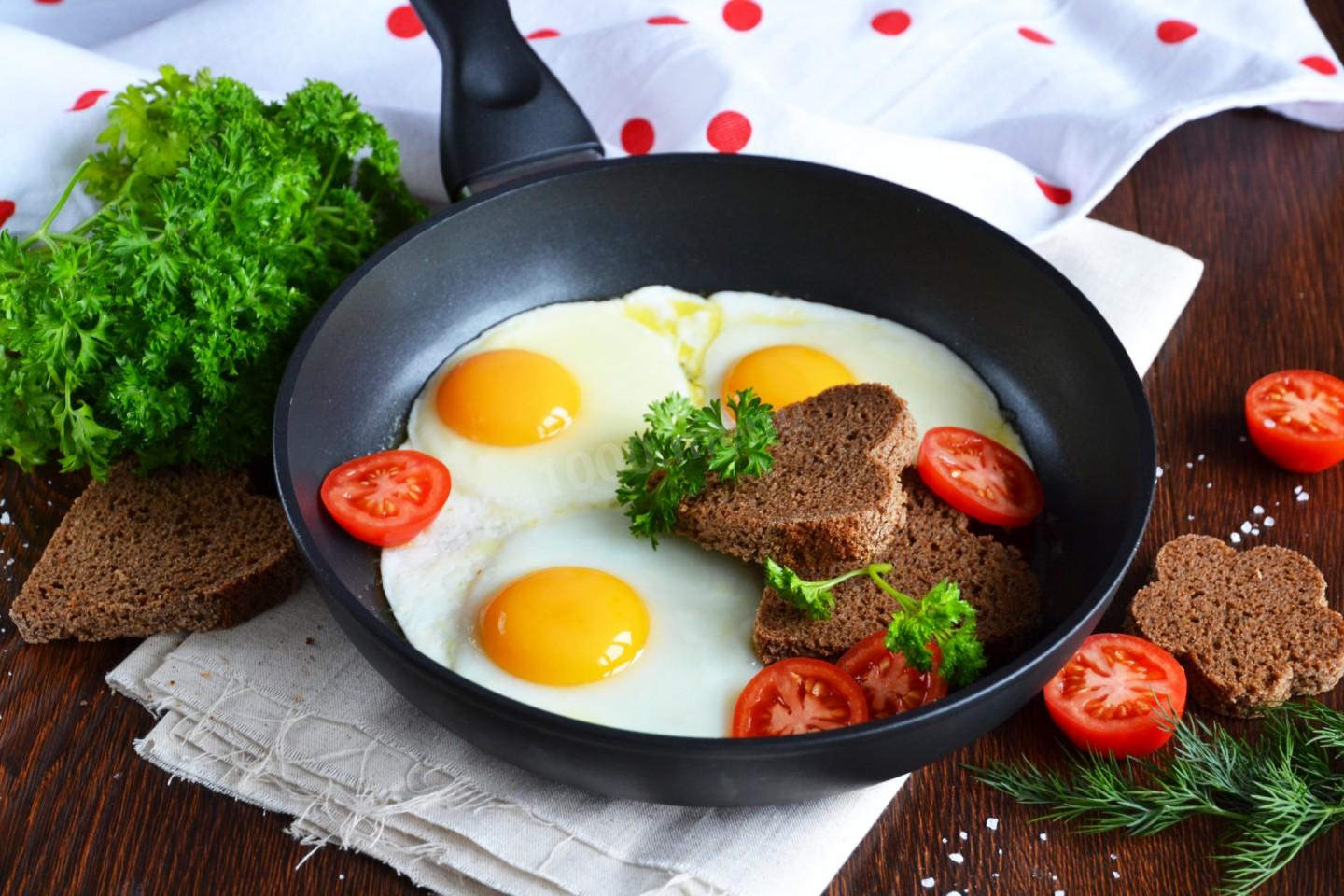
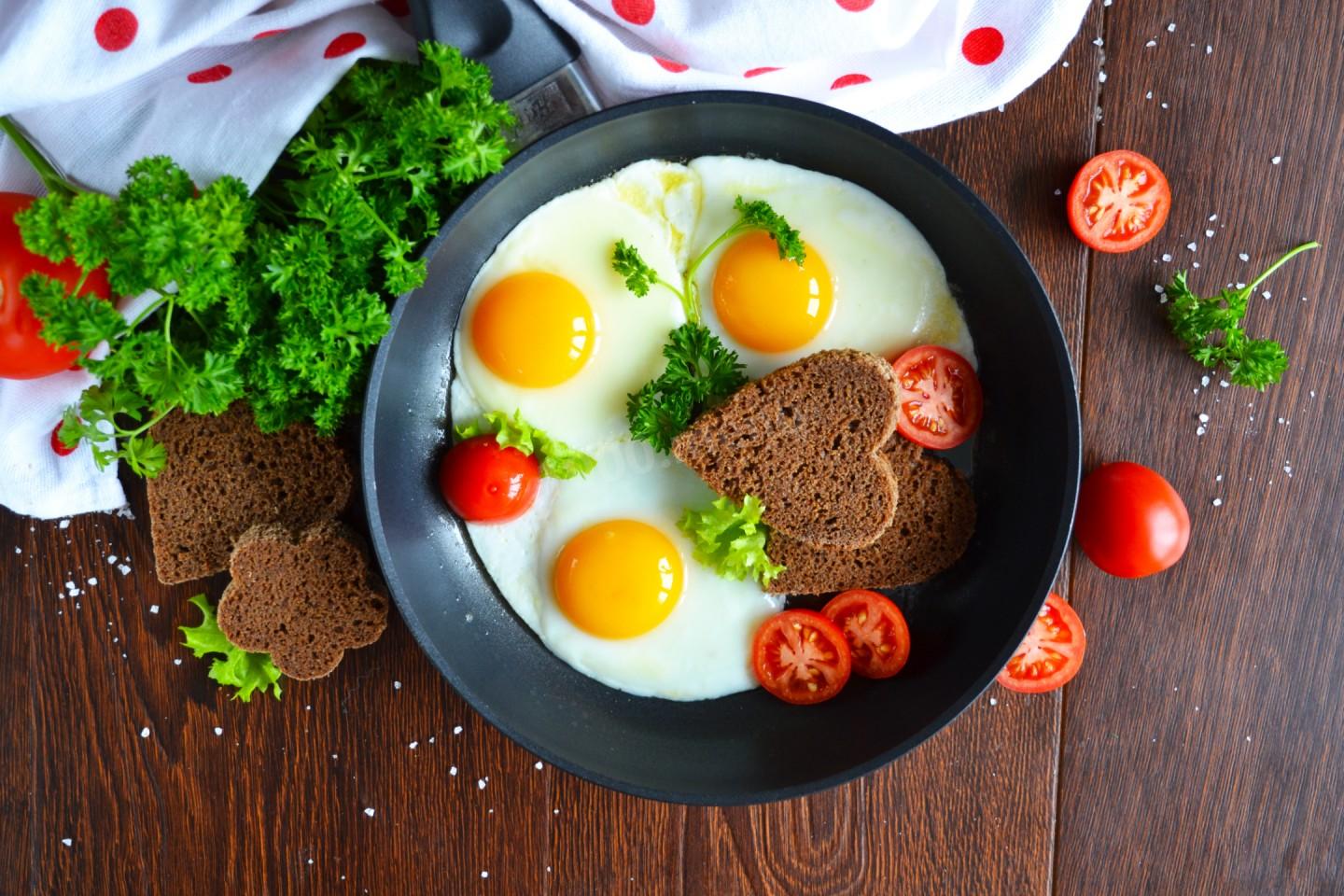
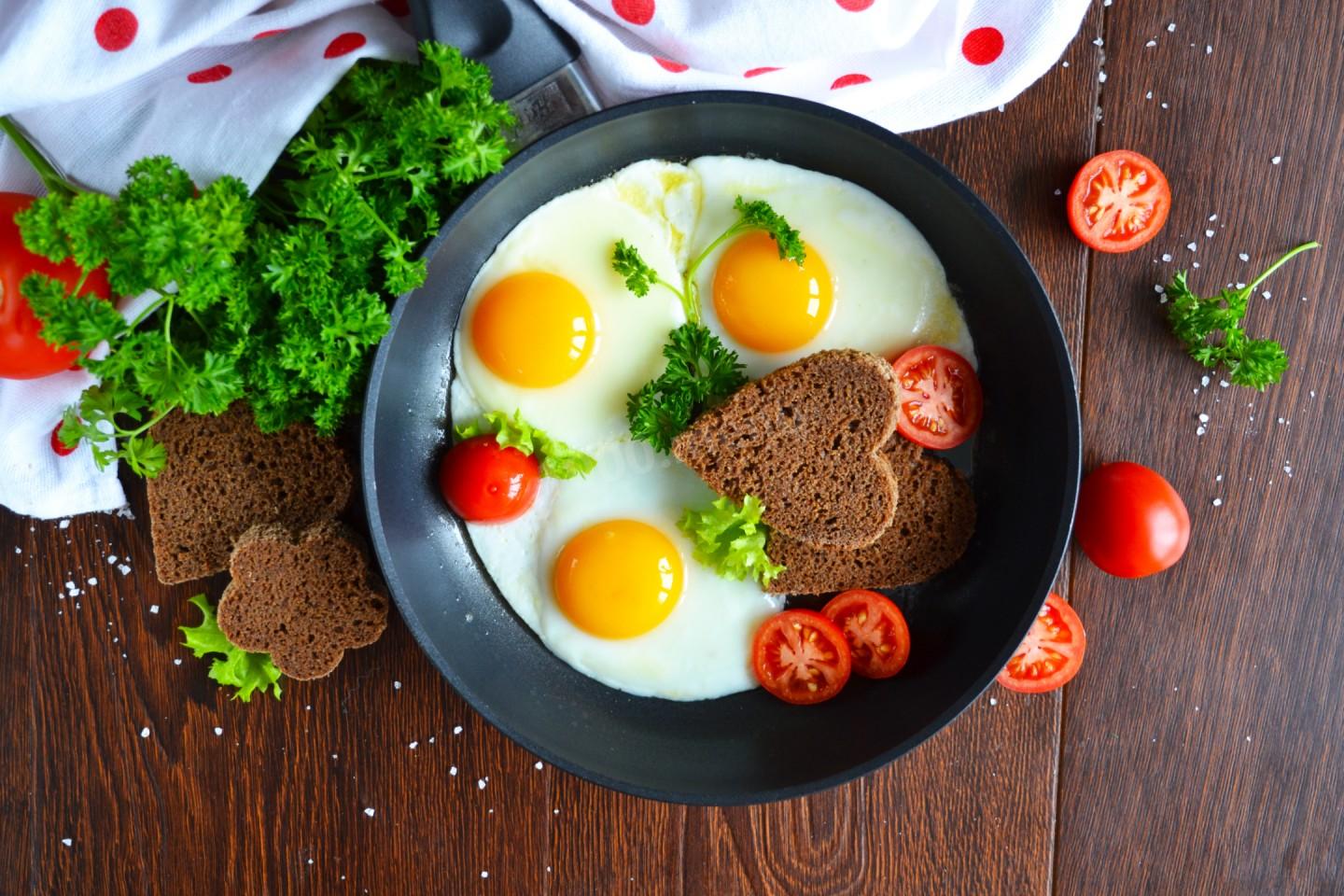
Slide the finished eggs onto a plate and garnish with halved cherry tomatoes, slices of bread, and sprigs of fresh herbs. Enjoy!
- How can you tell if an egg is fresh? Crack it into a separate bowl. First and foremost, there should be no off smell. The white of a fresh egg is clear and clean, and the yolk should hold together — shiny, domed, and even.
- Always wash eggs before using them, since even a seemingly clean shell can carry harmful bacteria. A food-safe wash and a brush work best.
- With a properly fried egg, the white sets firm and stays white, and it holds its shape — it won't run off even if you tip the egg up on its side.
Caloric content of the products possible in the composition of the dish
- Chicken egg - 157 kcal/100g
- Egg white - 45 kcal/100g
- Egg powder - 542 kcal/100g
- Egg yolk - 352 kcal/100g
- Ostrich egg - 118 kcal/100g
- Parsley greens - 45 kcal/100g
- Butter 82% - 734 kcal/100g
- Amateur unsalted butter - 709 kcal/100g
- Unsalted peasant butter - 661 kcal/100g
- Peasant salted butter - 652 kcal/100g
- Melted butter - 869 kcal/100g
- Bread 'darnitsky' - 206 kcal/100g
- Premium wheat flour bread - 254 kcal/100g
- Wheat flour bread of the 1st grade - 226 kcal/100g
- Wheat flour bread of 2 grades - 220 kcal/100g
- Wheat bread made from coarse flour - 250 kcal/100g
- Rye bread from floured flour - 189 kcal/100g
- Rye bread from wallpaper flour - 181 kcal/100g
- Protein bran bread - 182 kcal/100g
- Wheat protein bread - 242 kcal/100g
- Grain bread - 231 kcal/100g
- Bread 'doctor' - 232 kcal/100g
- Bread 'Orlovsky' - 211 kcal/100g
- Ukrainian bread - 213 kcal/100g
- Simple loaf - 248 kcal/100g
- Loaf of premium flour - 265 kcal/100g
- City rolls made of grade I flour - 254 kcal/100g
- City bun - 261 kcal/100g
- Sweet bun - 252 kcal/100g
- Simple steering wheels - 336 kcal/100g
- Bread - 254 kcal/100g
- Salt - 0 kcal/100g
- Cherry tomatoes - 15 kcal/100g
Similar recipes
- Fast and tasty
- Festive table
- For breakfast
- Snacks
- Eggs
- Vegetables
- Bakery products
- Spices seasonings spices
- Fats and oils
- Wheat bread
- Salt
- Butter
- Hot snacks
- Frying
- Tomatoes fast and delicious
- The second is fast and delicious
- Dishes in 30 minutes
- Omelets рецепты
- Яичница
- Valentine's day
- Eggs with tomatoes
- Egg breakfast
- From tomato
- Vegetarianism