Classic Beef Lagman
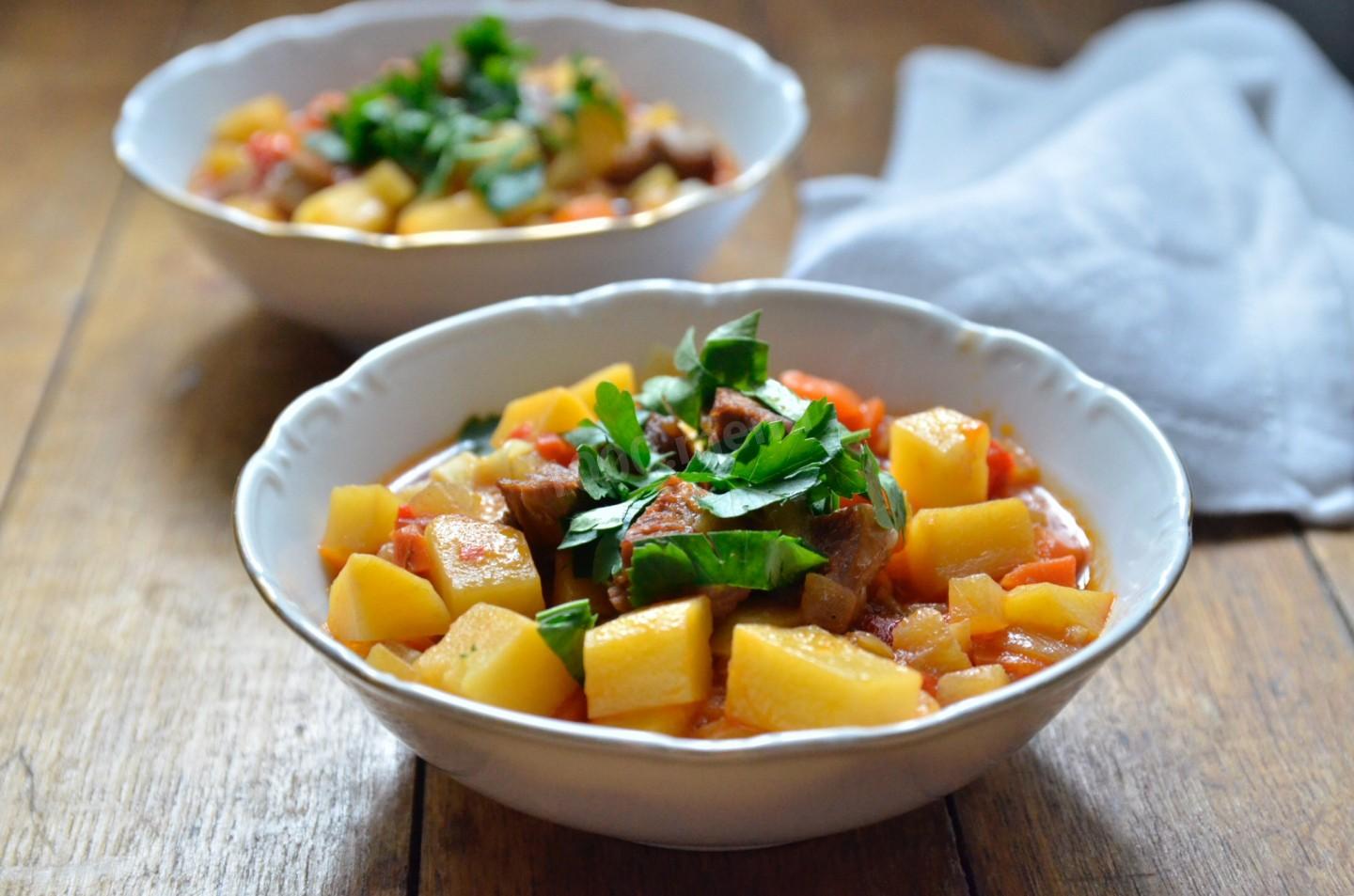
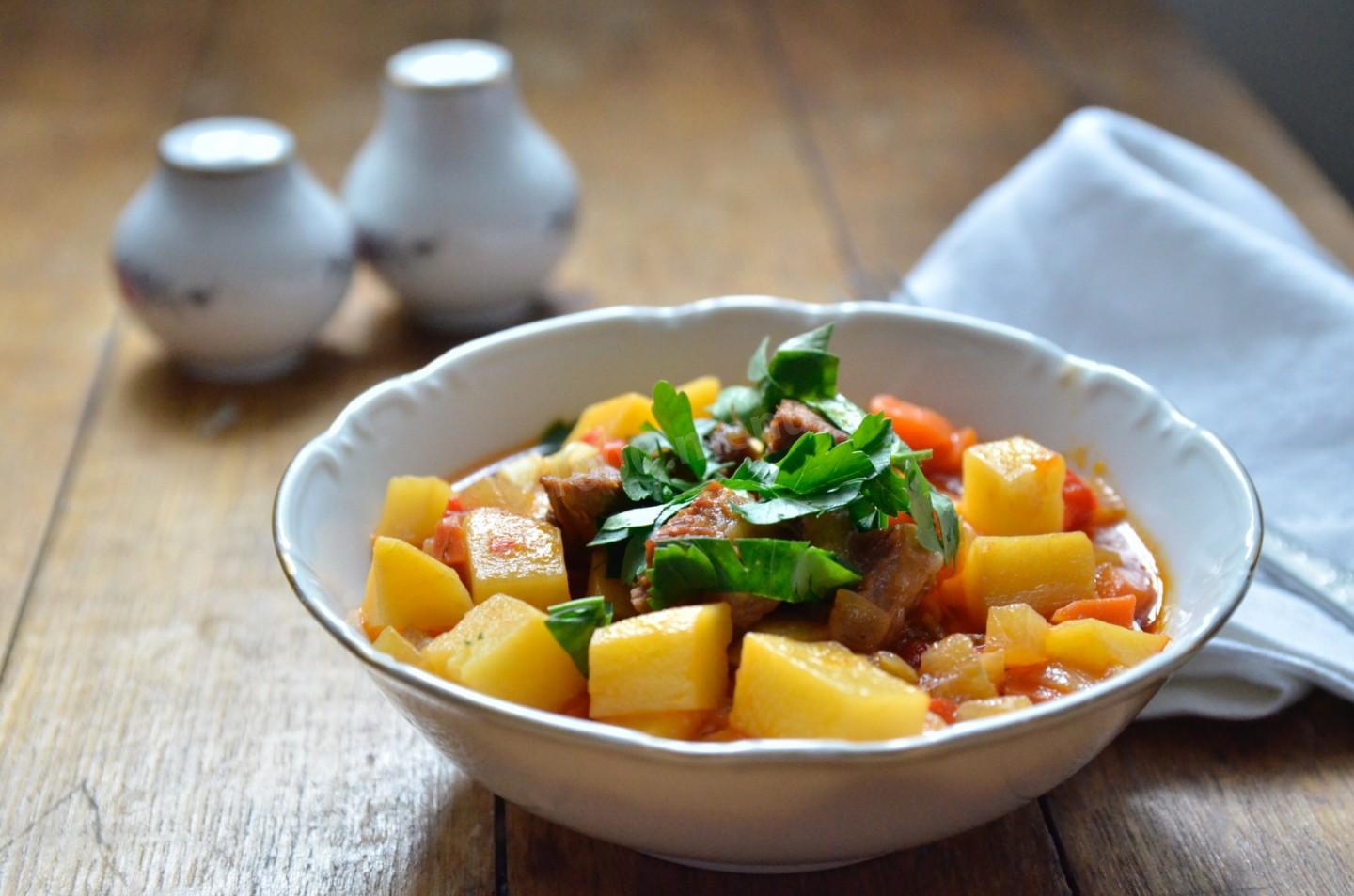
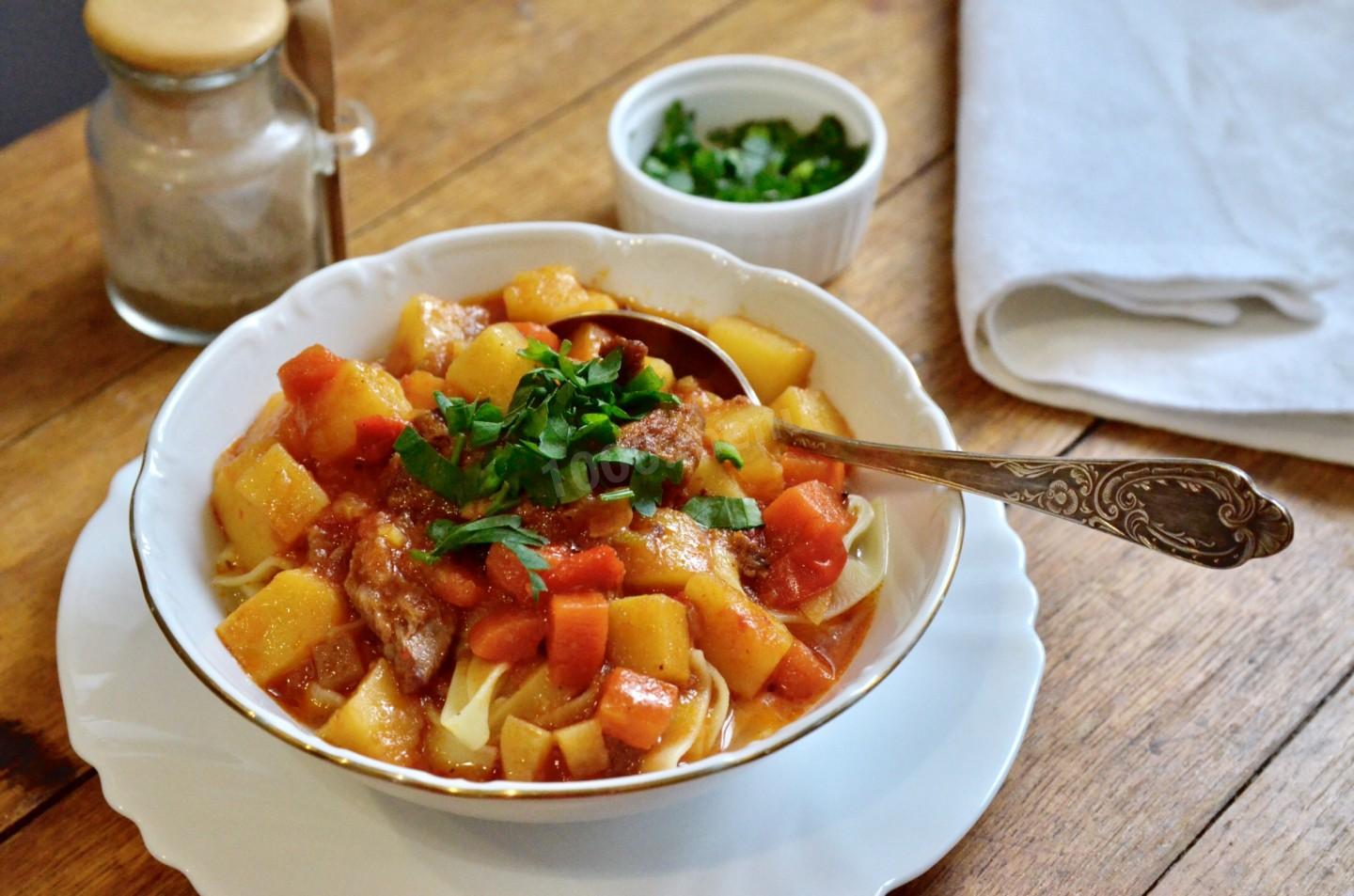
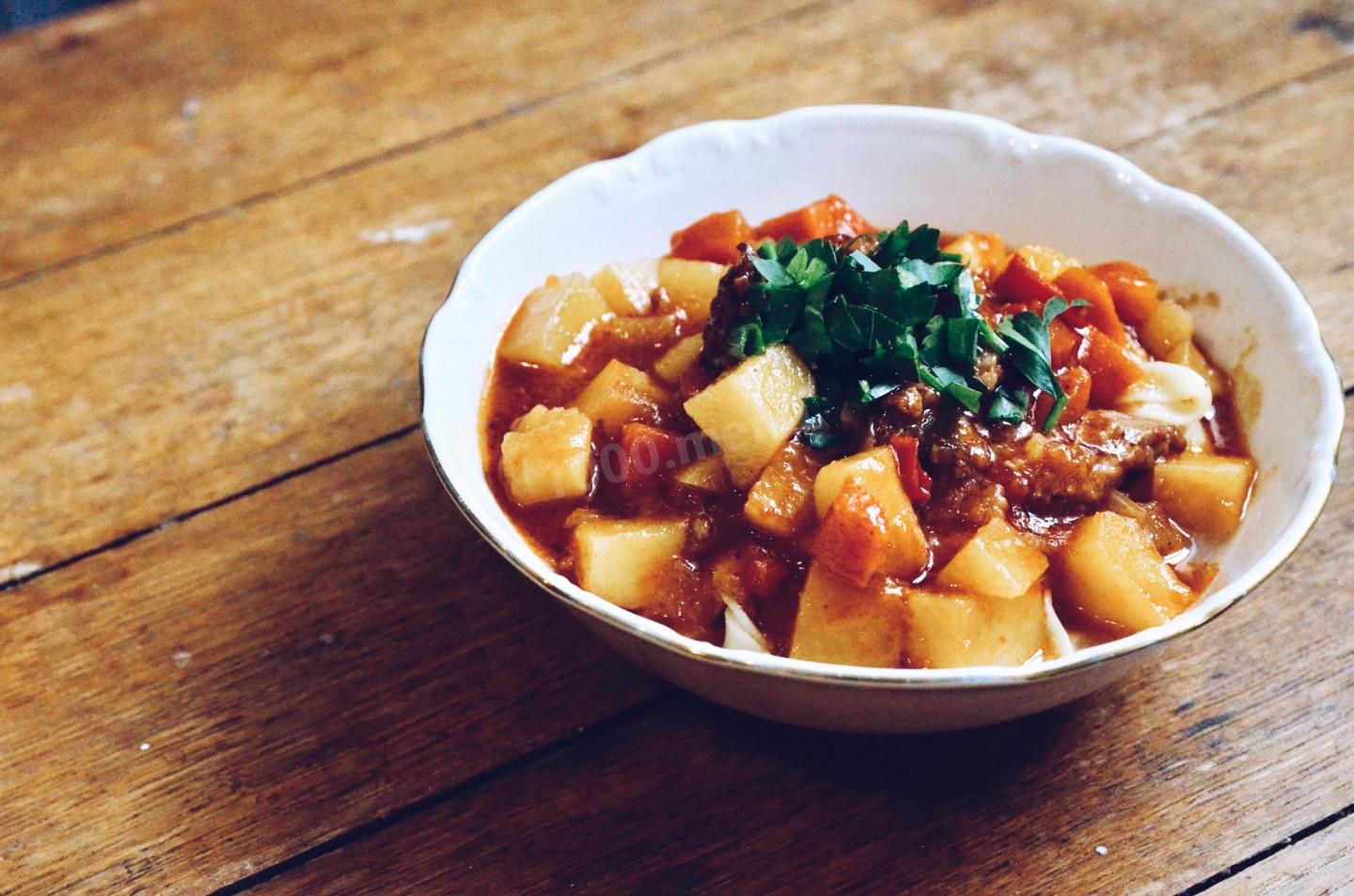
A fragrant, hearty, and very tasty Central Asian dish! Classic beef lagman comes from Central Asian cooking. Legend has it that lagman was born when three hungry travelers met on the road — one had flour and meat, the second had vegetables, and the third had only a cauldron. Together they cooked a dish that became lagman. There are many versions, but the main ingredients never change: meat, vegetables, and noodles. You can make lagman soupy, or thicker if you prefer.

Cooking method
-
Step 1:
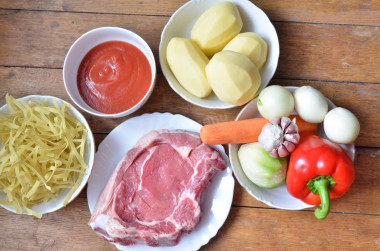
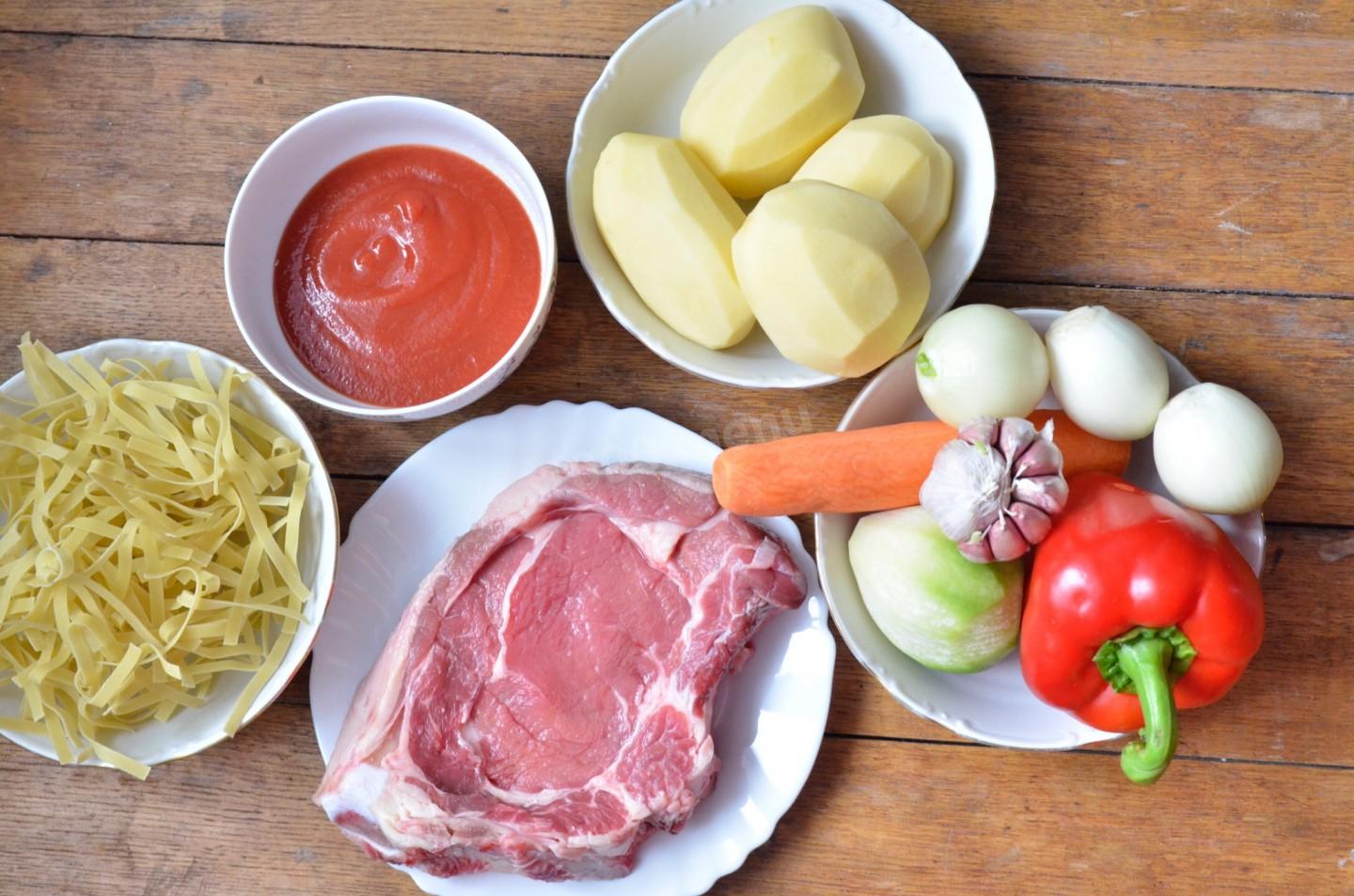
How do you make classic beef lagman? Gather your ingredients. Rinse and dry the meat. Wash and peel the vegetables.
-
Step 2:
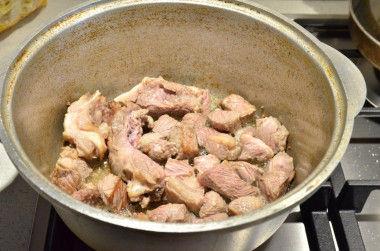
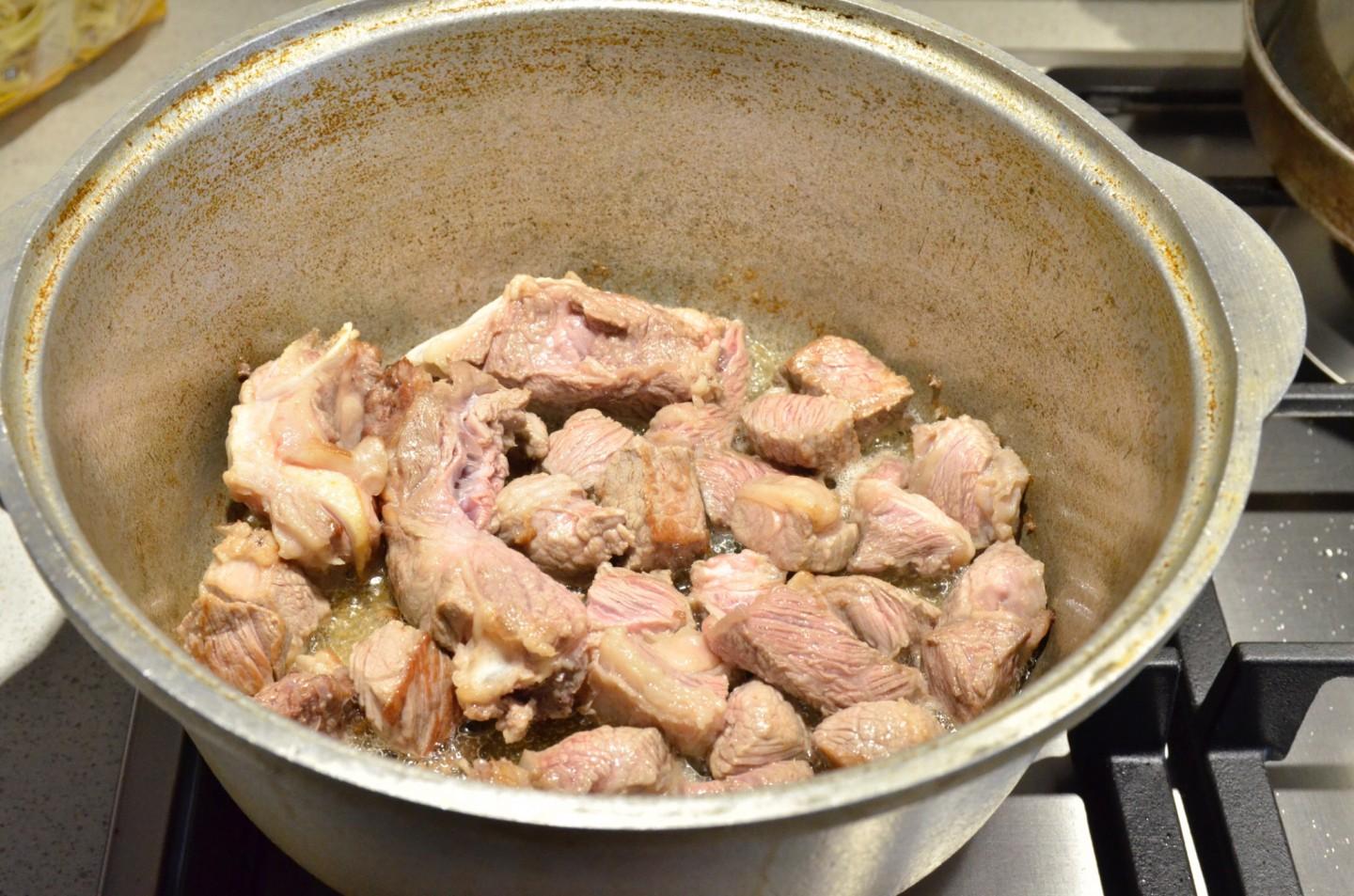
Cut the meat into pieces. Heat vegetable oil in a Dutch oven or heavy pot and sear the meat over high heat.
-
Step 3:
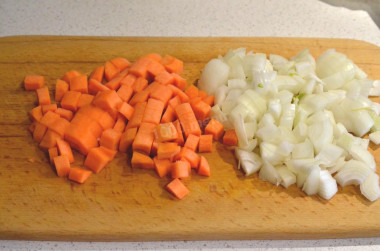
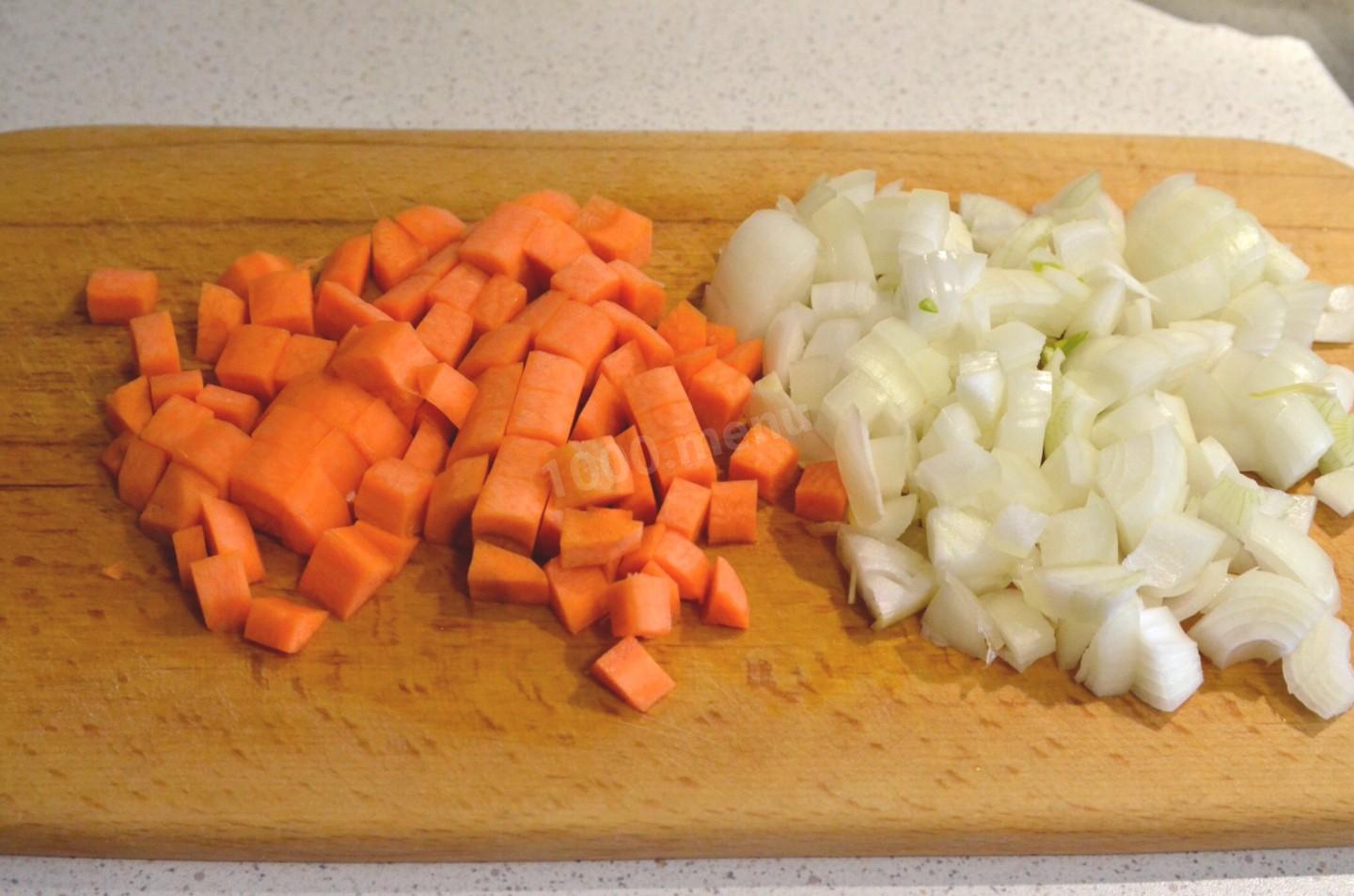
Dice the onion and carrot. Add them to the meat and cook for a few minutes.
-
Step 4:
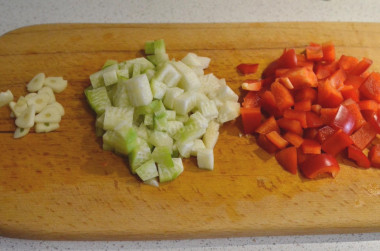
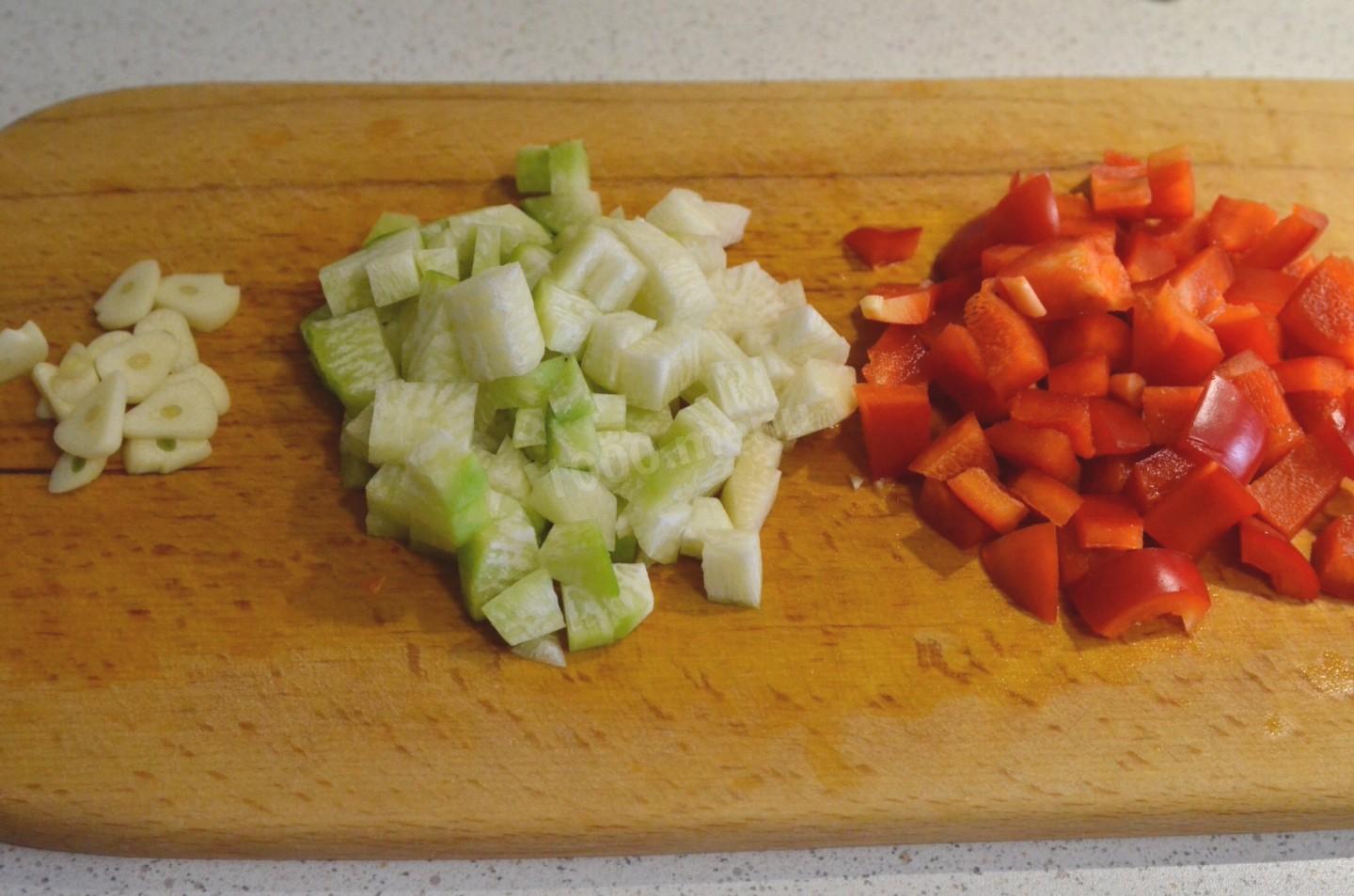
Dice the bell pepper and daikon, slice the garlic, add them to the meat, and cook a little longer.
-
Step 5:
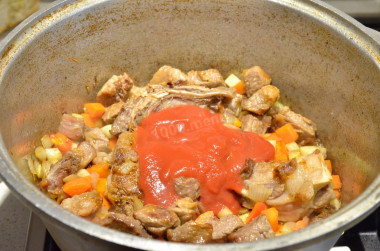
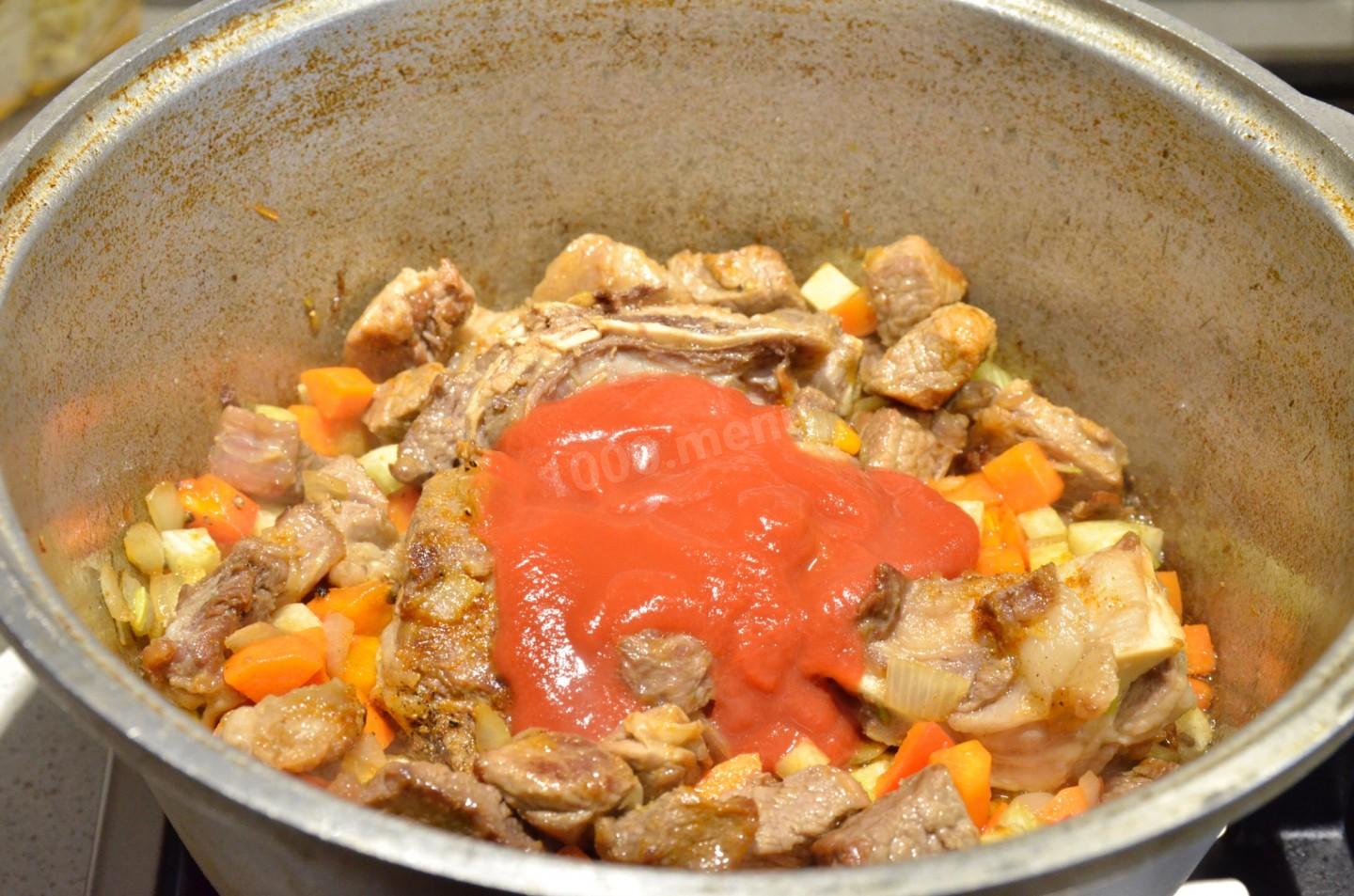
Add the tomato paste. I used strained tomatoes, which you'd want more of. In tomato season, fresh tomatoes are the way to go. Stir and cook another two minutes.
-
Step 6:
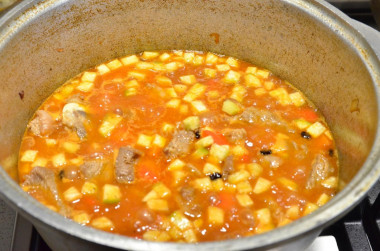
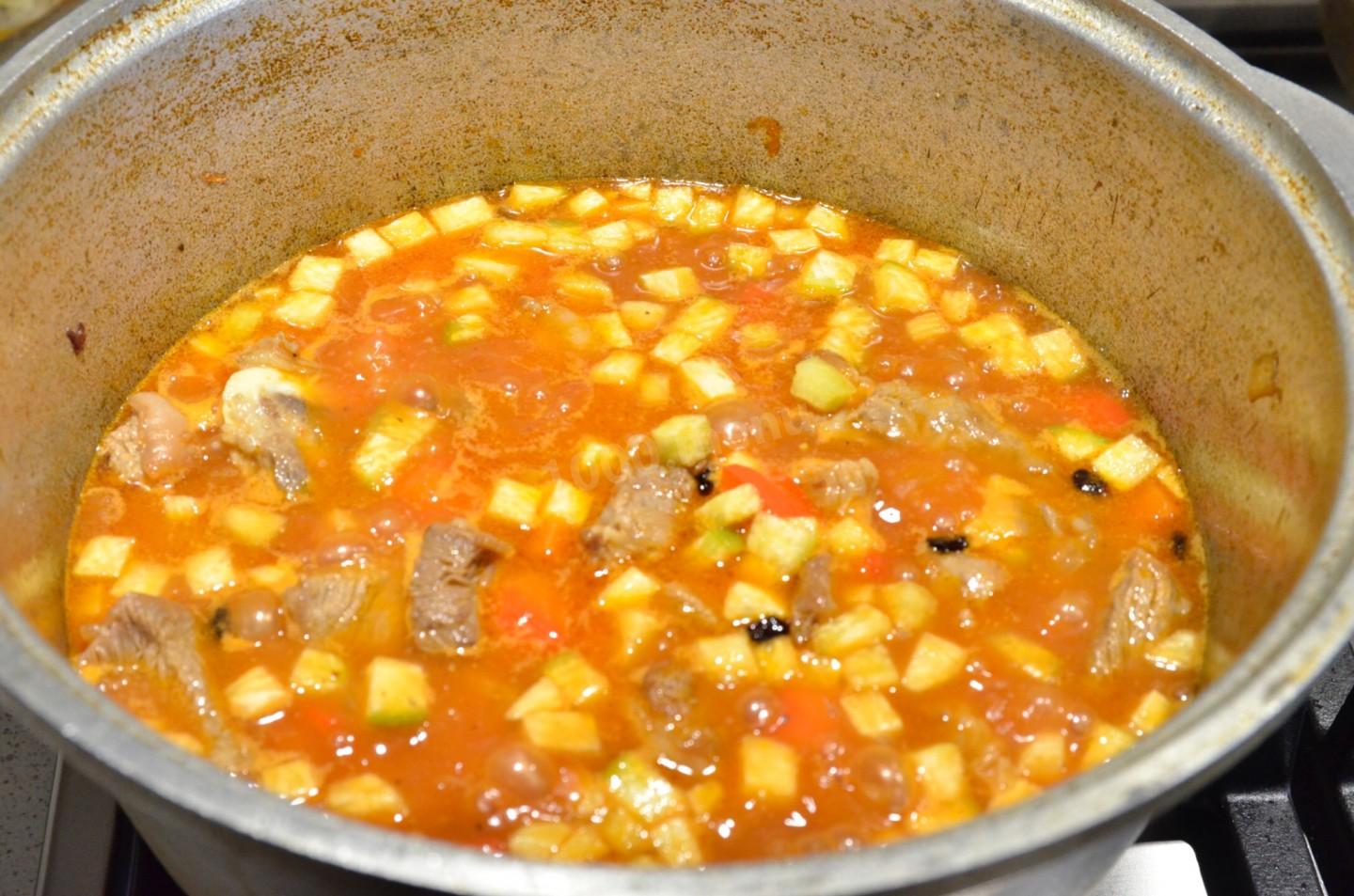
Pour boiling water over the meat and vegetables until they're fully covered. Season with salt to taste. Set it to simmer over medium heat for an hour.
-
Step 7:
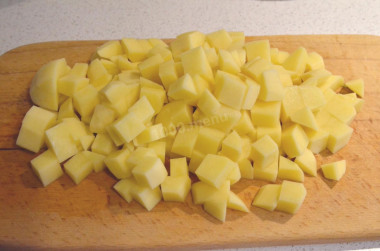
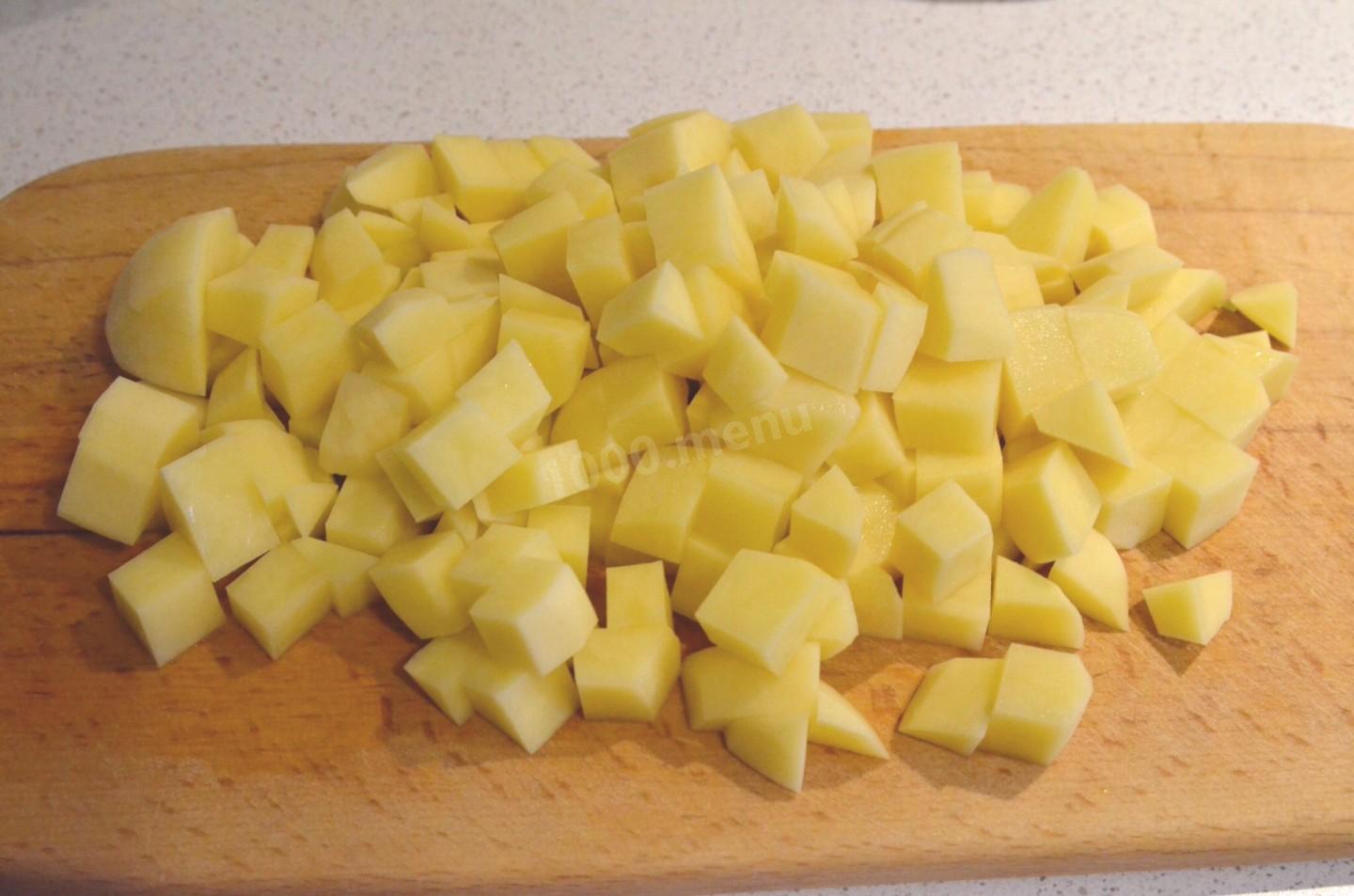
After half an hour, add the diced potatoes.
-
Step 8:
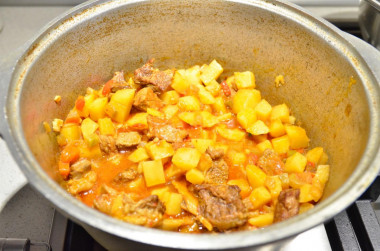
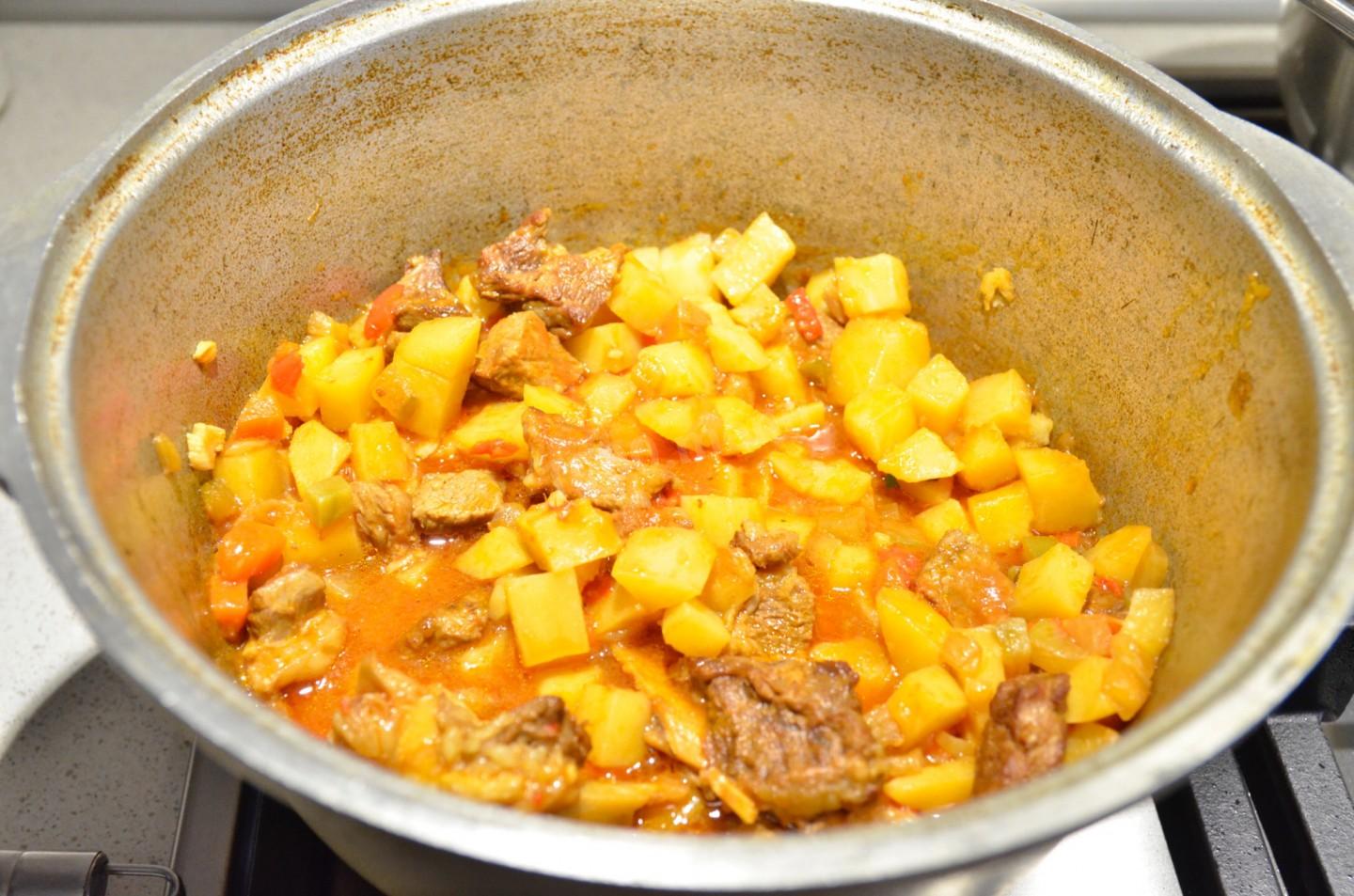
Simmer until done. If you want lagman as a soup, add more water as it cooks. I made mine thicker.
-
Step 9:
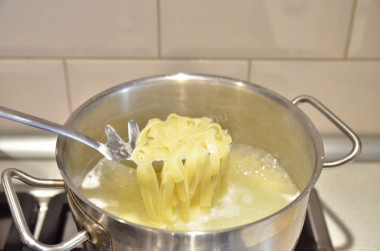
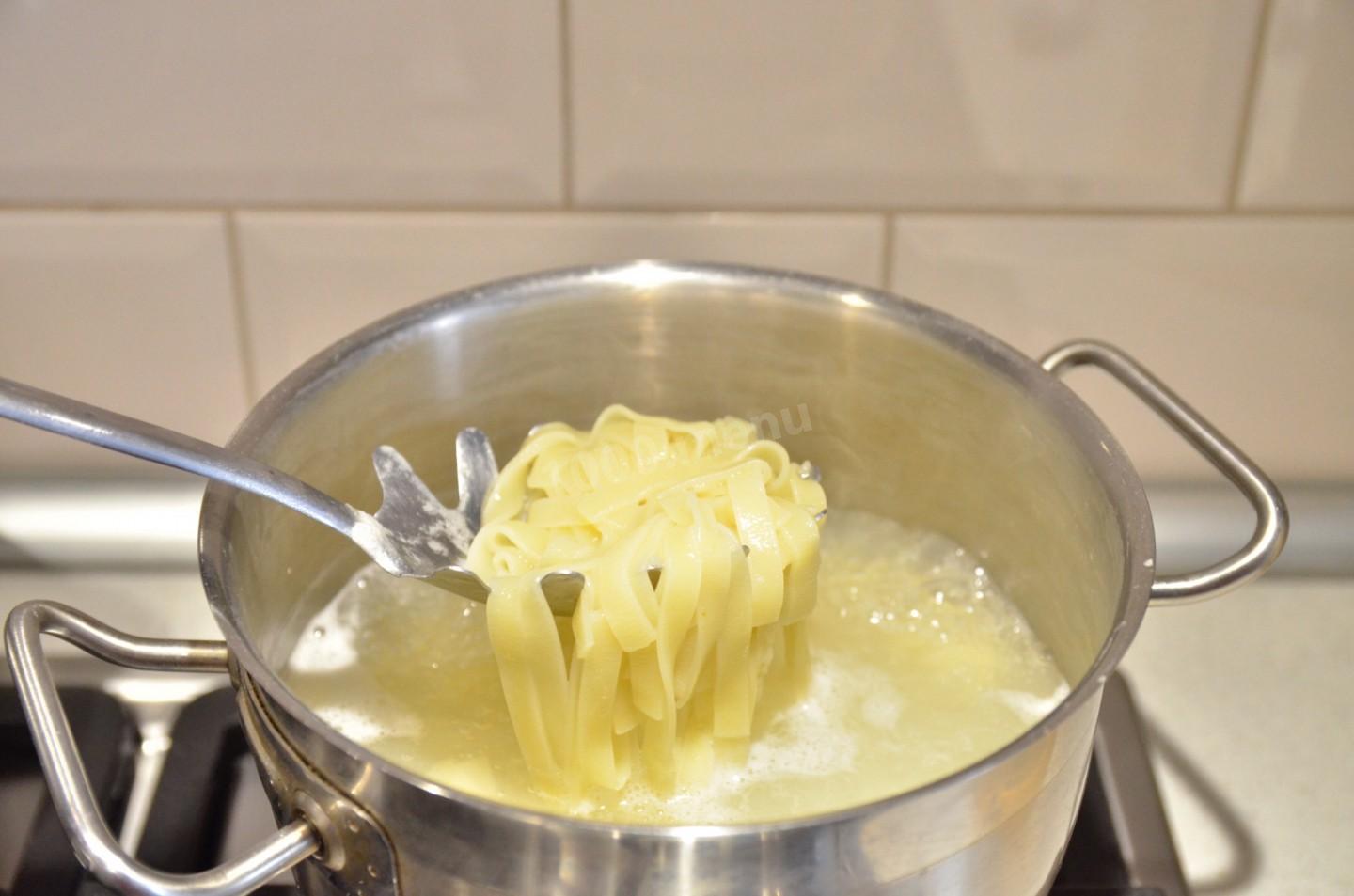
In a separate pot, cook the noodles until tender.
-
Step 10:
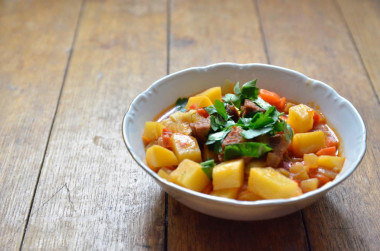
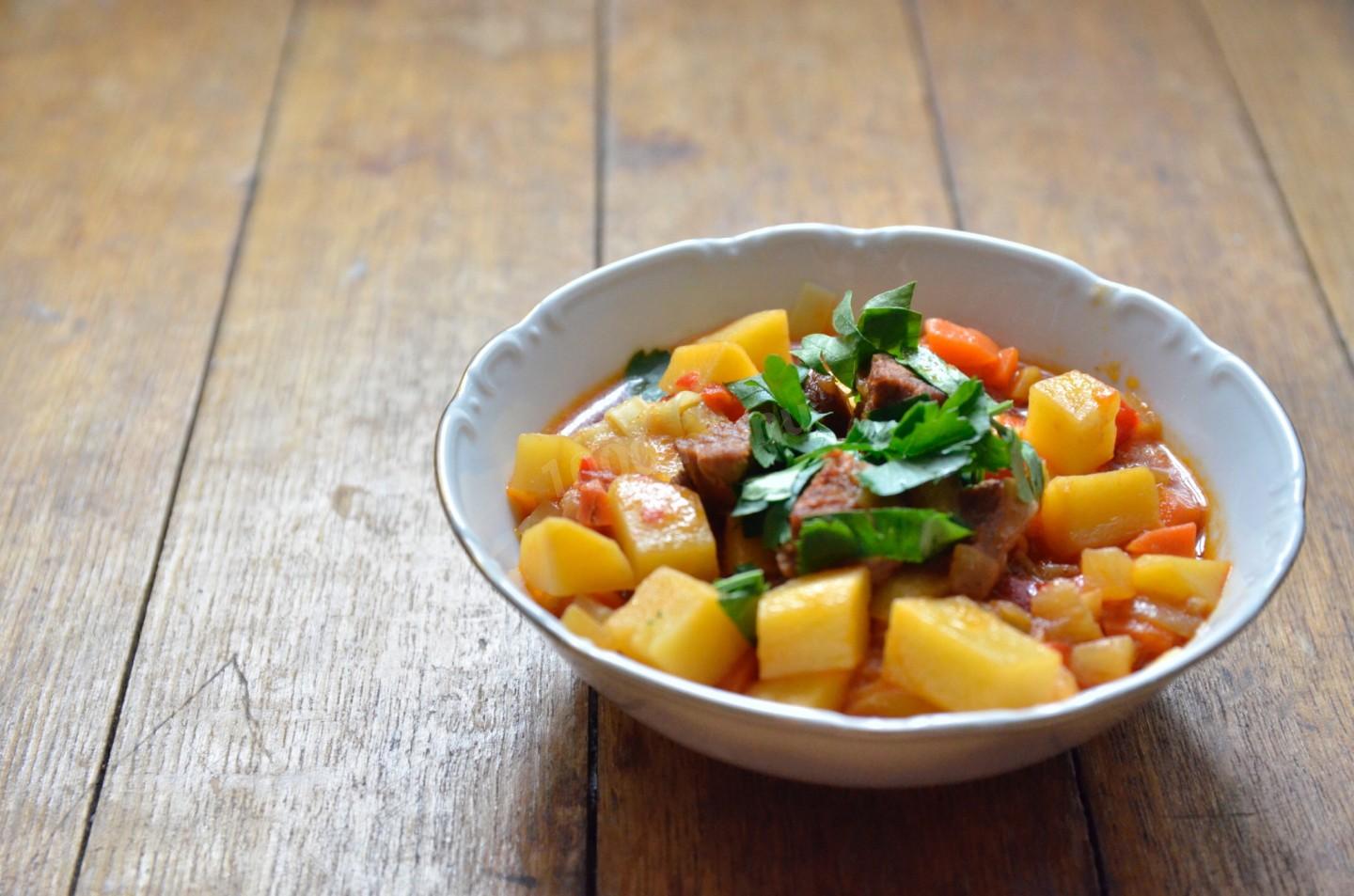
Put the noodles in a bowl first, then the meat and vegetables on top. Garnish with fresh herbs.
- I used store-bought noodles — you can now find noodles made specifically for lagman. If you like, you can make them yourself: the dough is flour, water, and eggs, kneaded stiff, rested, rolled out, and cut into thin strips. Skilled cooks even make hand-pulled noodles for lagman; you can find tutorials online. Use whatever vegetables you like — celery, turnip, eggplant, and zucchini all work in lagman. Whether or not to add potatoes is up to you. For spices I strongly recommend cumin — it's central to Central Asian cooking and gives the dish its distinctive aroma and rich flavor.
- One more thing: the wrong pan can ruin even the best recipe, so it's worth choosing a good pot suited to what you're cooking.
- Every oil is only good up to a certain temperature — its smoke point — beyond which it starts to burn and forms harmful compounds. Choose a refined oil with a high smoke point for frying.
- If you use a store-bought spice blend, be sure to read the label. These blends often already contain salt, so account for that or you risk over-salting the dish.
Caloric content of the products possible in the composition of the dish
- Onion - 41 kcal/100g
- Ripe potatoes - 80 kcal/100g
- Baked potatoes - 70 kcal/100g
- Mashed potatoes - 380 kcal/100g
- Boiled potatoes - 82 kcal/100g
- Potatoes in uniform - 74 kcal/100g
- Fried potatoes - 192 kcal/100g
- Melted beef fat - 871 kcal/100g
- Fat beef - 171 kcal/100g
- Lean beef - 158 kcal/100g
- Beef brisket - 217 kcal/100g
- Beef - okovalok - 380 kcal/100g
- Beef - lean roast - 200 kcal/100g
- Beef shoulder - 137 kcal/100g
- Beef - ribs - 233 kcal/100g
- Beef - ham - 104 kcal/100g
- Beef - tail - 184 kcal/100g
- Boiled ham - 269 kcal/100g
- Beef corned beef - 216 kcal/100g
- Sweet pepper - 27 kcal/100g
- Carrots - 33 kcal/100g
- Dried carrots - 275 kcal/100g
- Boiled carrots - 25 kcal/100g
- Garlic - 143 kcal/100g
- Radish - 35 kcal/100g
- Tomato paste - 28 kcal/100g
- Noodles - 135 kcal/100g
Similar recipes


- National cuisine
- Classic recipes
- Second course
- Meat and meat products
- Vegetables
- Spices seasonings spices
- Other
- Garlic
- Tomato paste
- Asian cuisine
- Beef classic recipes
- Frying
- Stewing
- In a frying pan
- Stewed vegetables
- Meat second course
- Beef
- From carrots
- From potatoes
- From sweet pepper
- Root radish
- From onion
- No eggs
- Recipes for lean dishes without butter
- Noodles