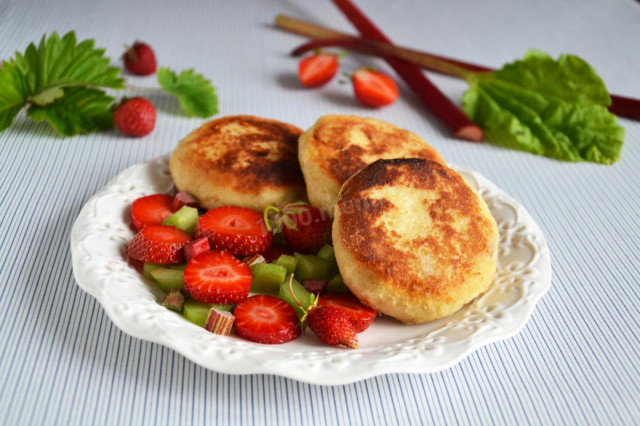
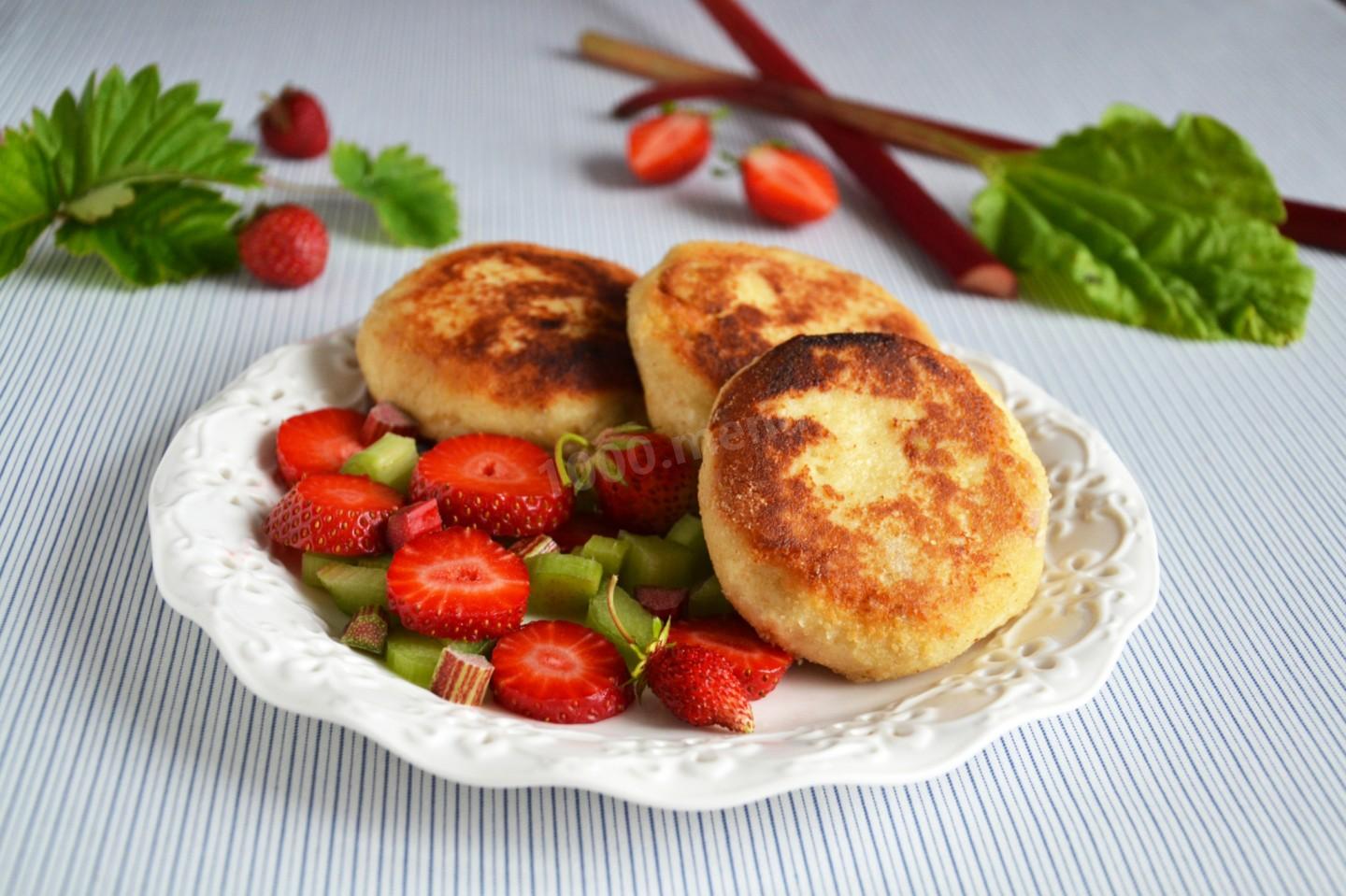
Oatmeal Syrniki (Farmer Cheese Fritters) with Rhubarb
You can make these fritters with regular wheat flour too. I came up with these fun, tasty syrniki to use up the huge amount of rhubarb piling up in my fridge — I found the recipe online. The oat flour makes the batter beautifully soft and easy to work with, and the fritters are so filling that just one makes a full breakfast.

Cooking method
-
Step 1:
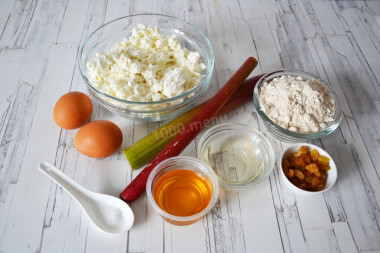
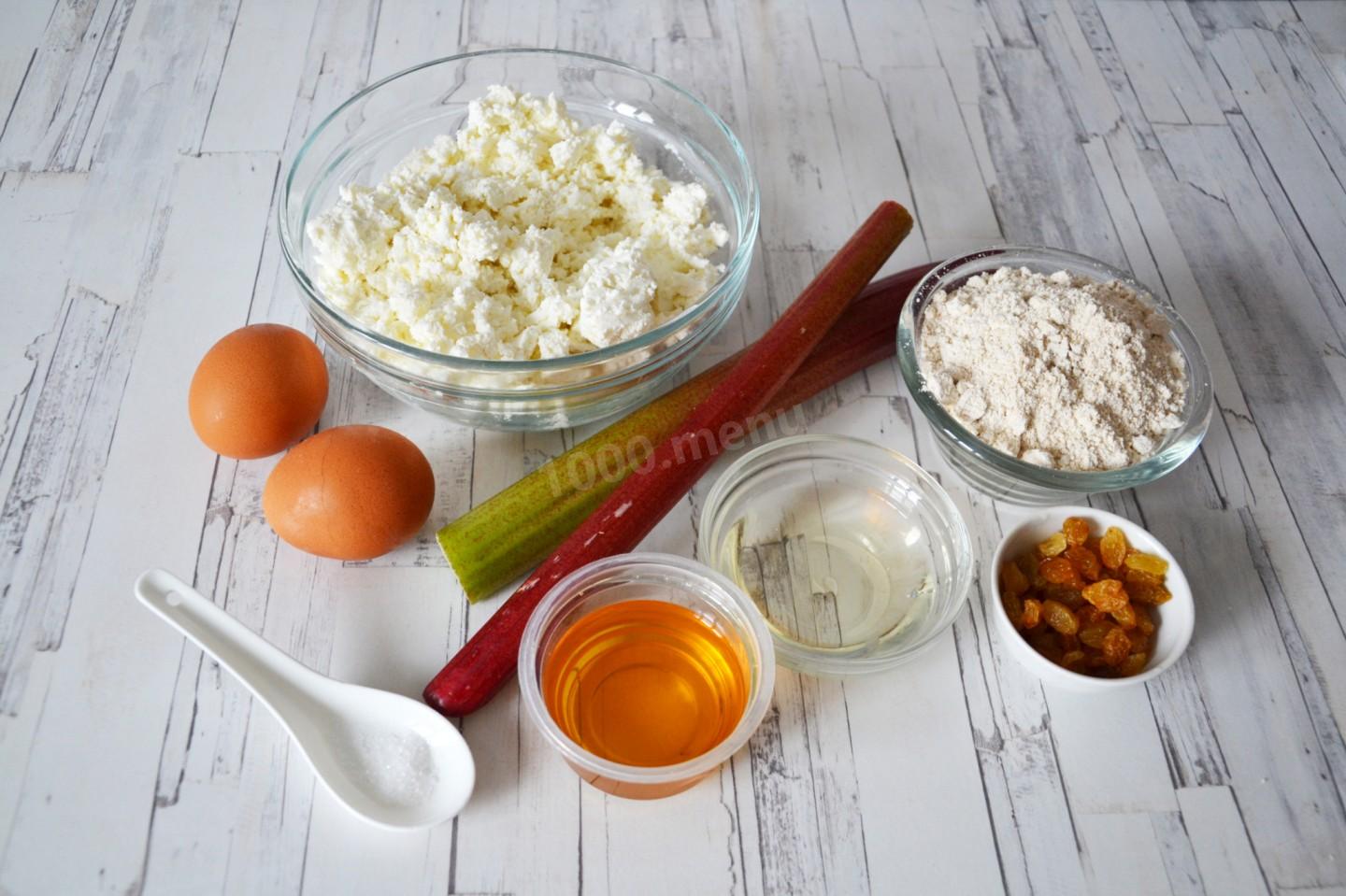
Gather the ingredients. For oat-flour syrniki with rhubarb and raisins you'll need: oat flour, runny honey, large eggs, rhubarb, golden raisins, vegetable oil for frying, and salt.
-
Step 2:
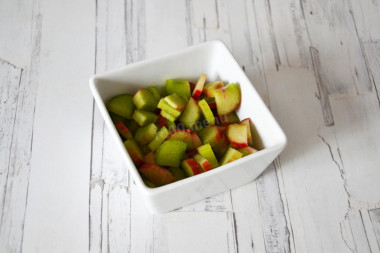
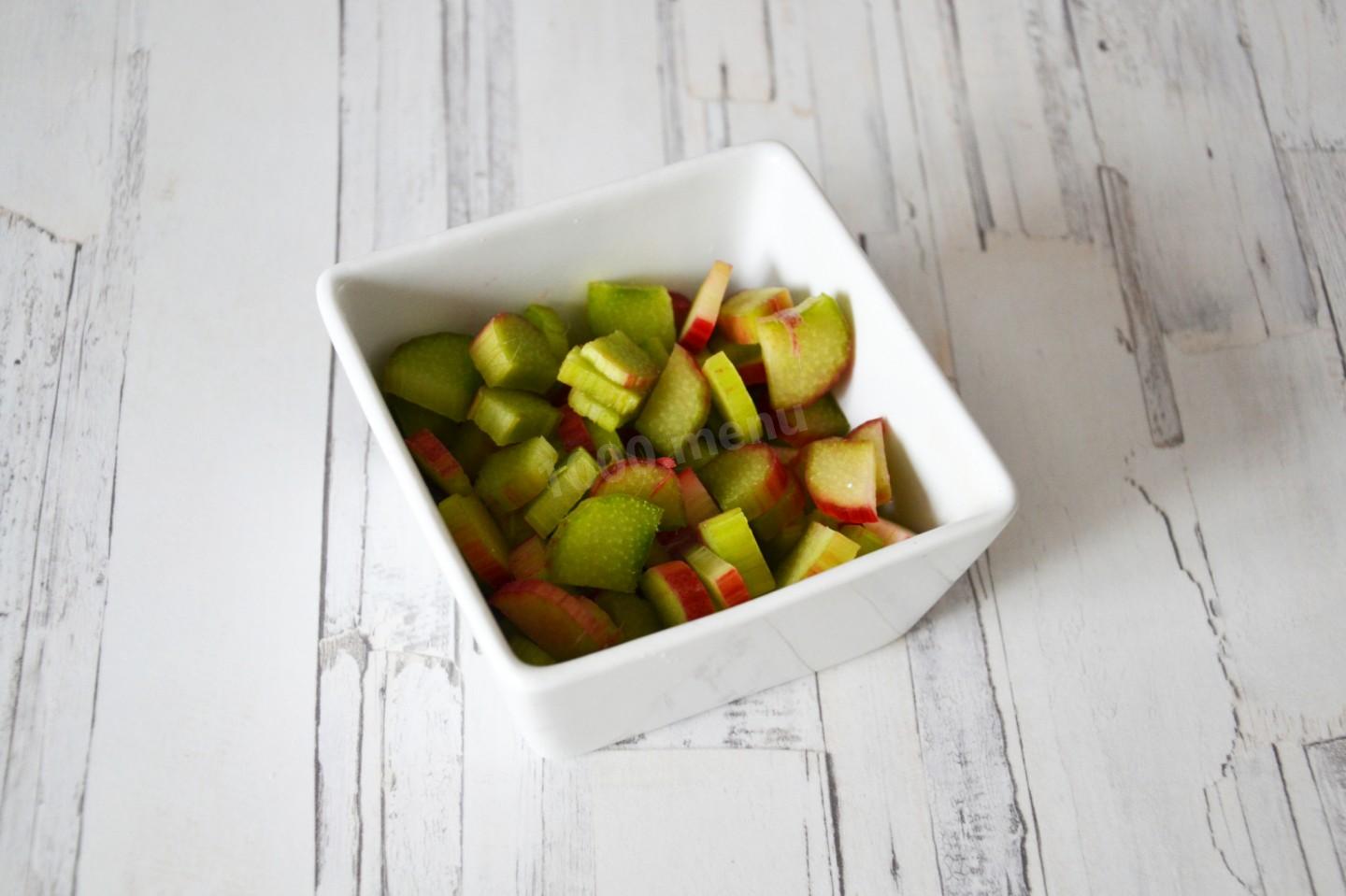
Wash the rhubarb, peel it, and cut it into small cubes.
-
Step 3:
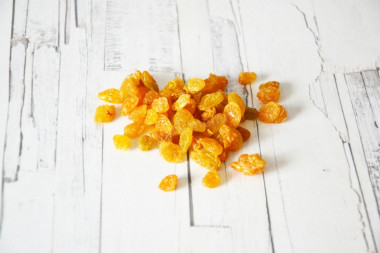
Wash and dry the raisins.
-
Step 4:
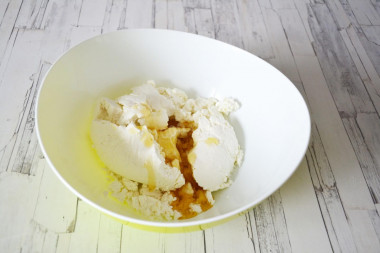
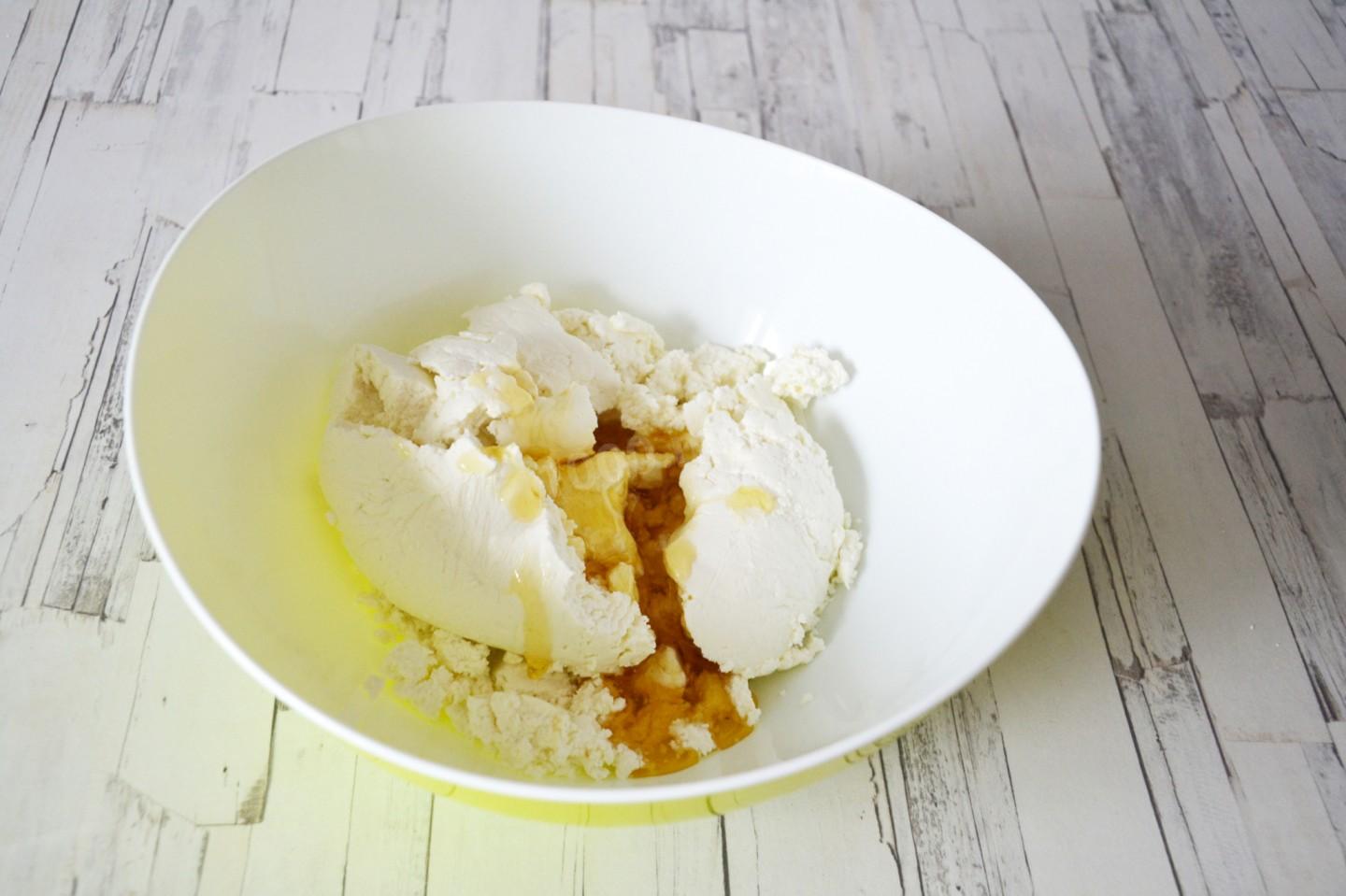
Combine the farmer cheese with the honey and salt and stir until smooth.
-
Step 5:
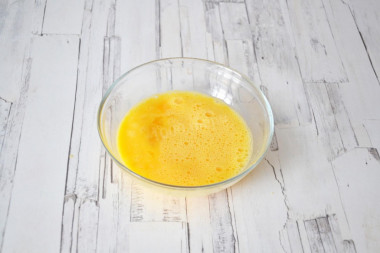
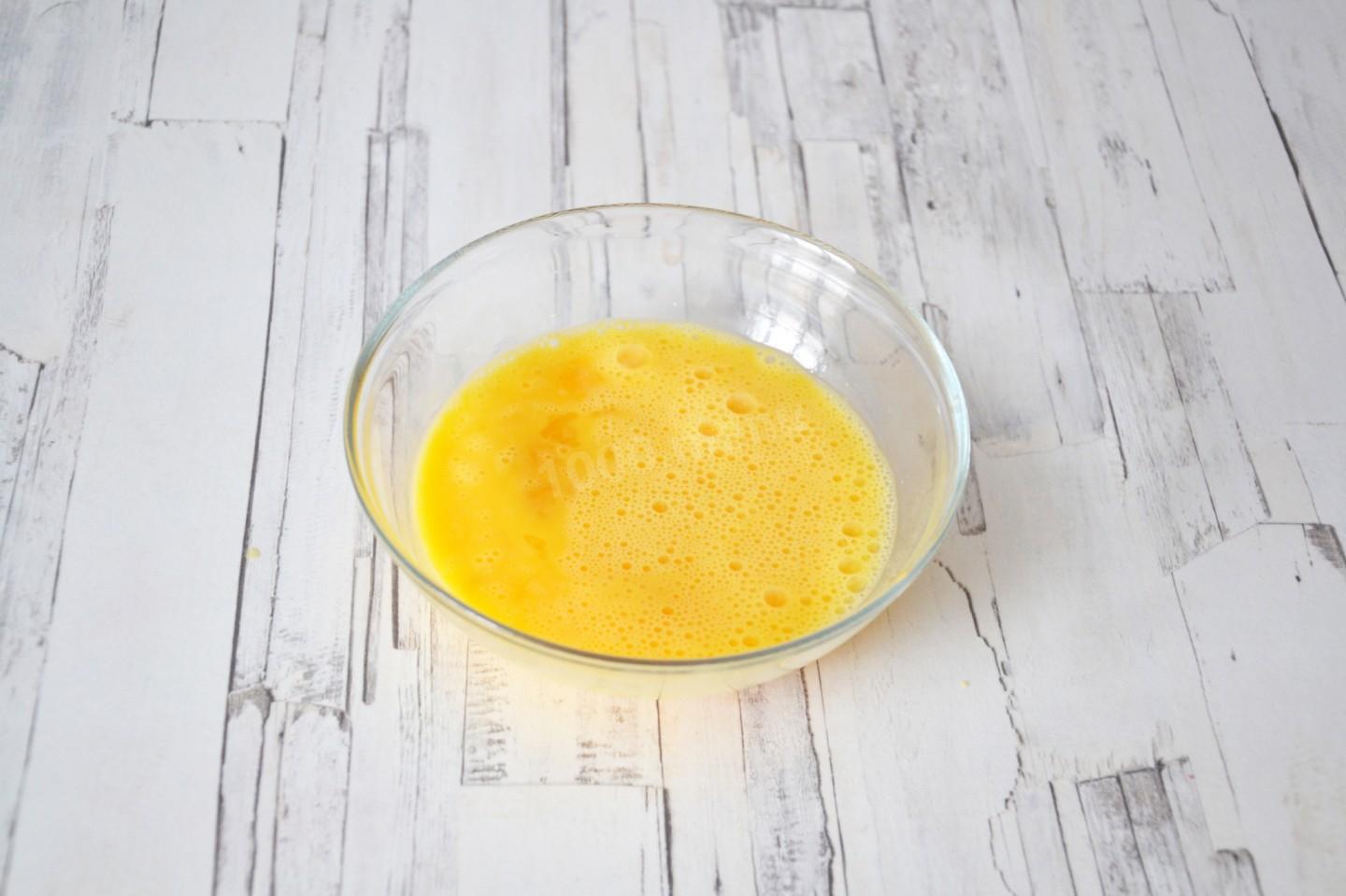
Whisk the eggs until smooth.
-
Step 6:
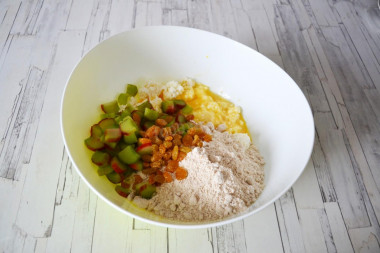
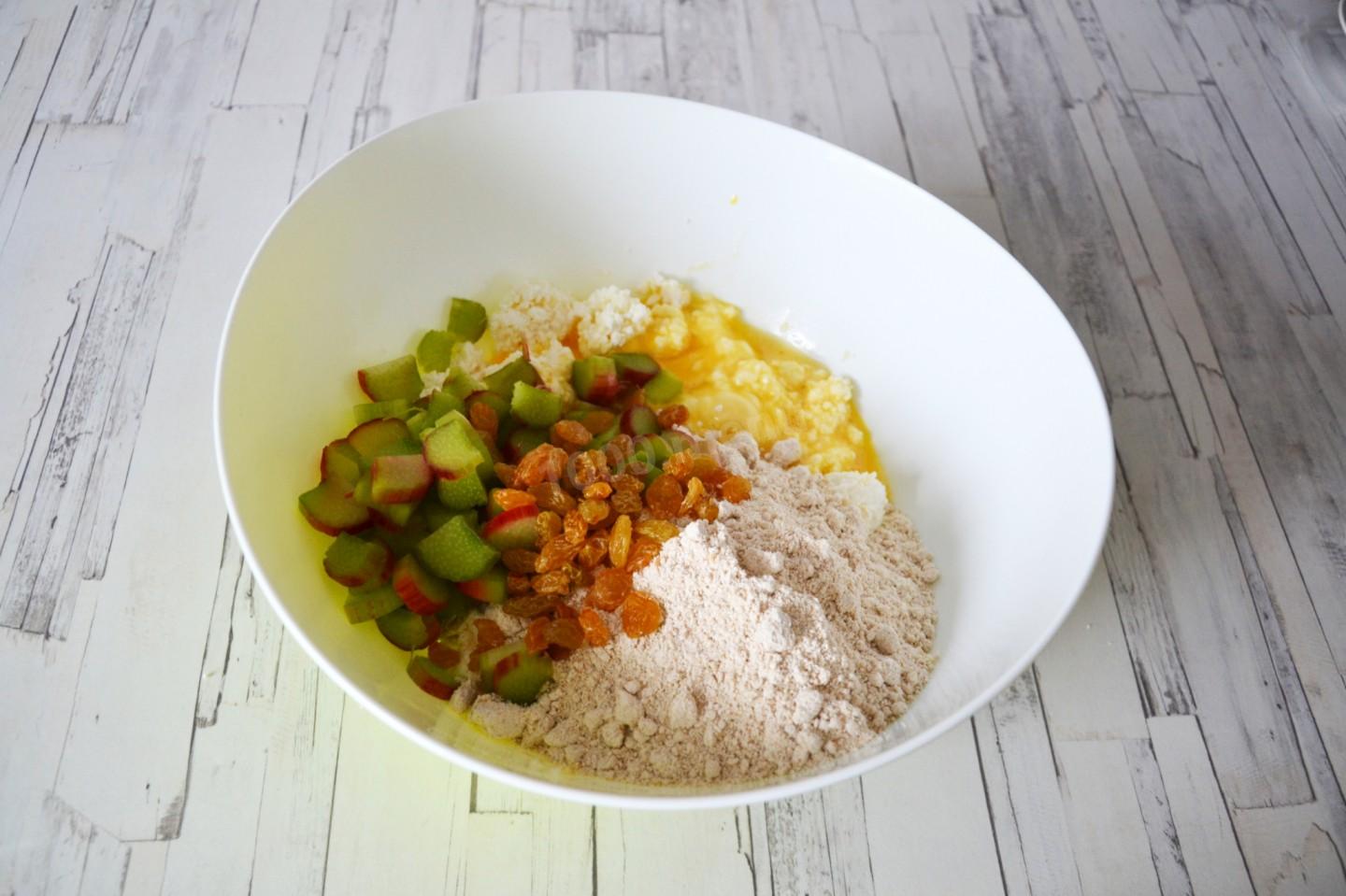
Add the beaten eggs, oat flour, rhubarb, and raisins to the farmer cheese.
-
Step 7:
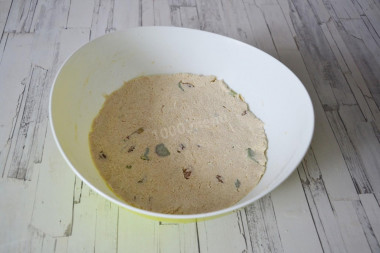
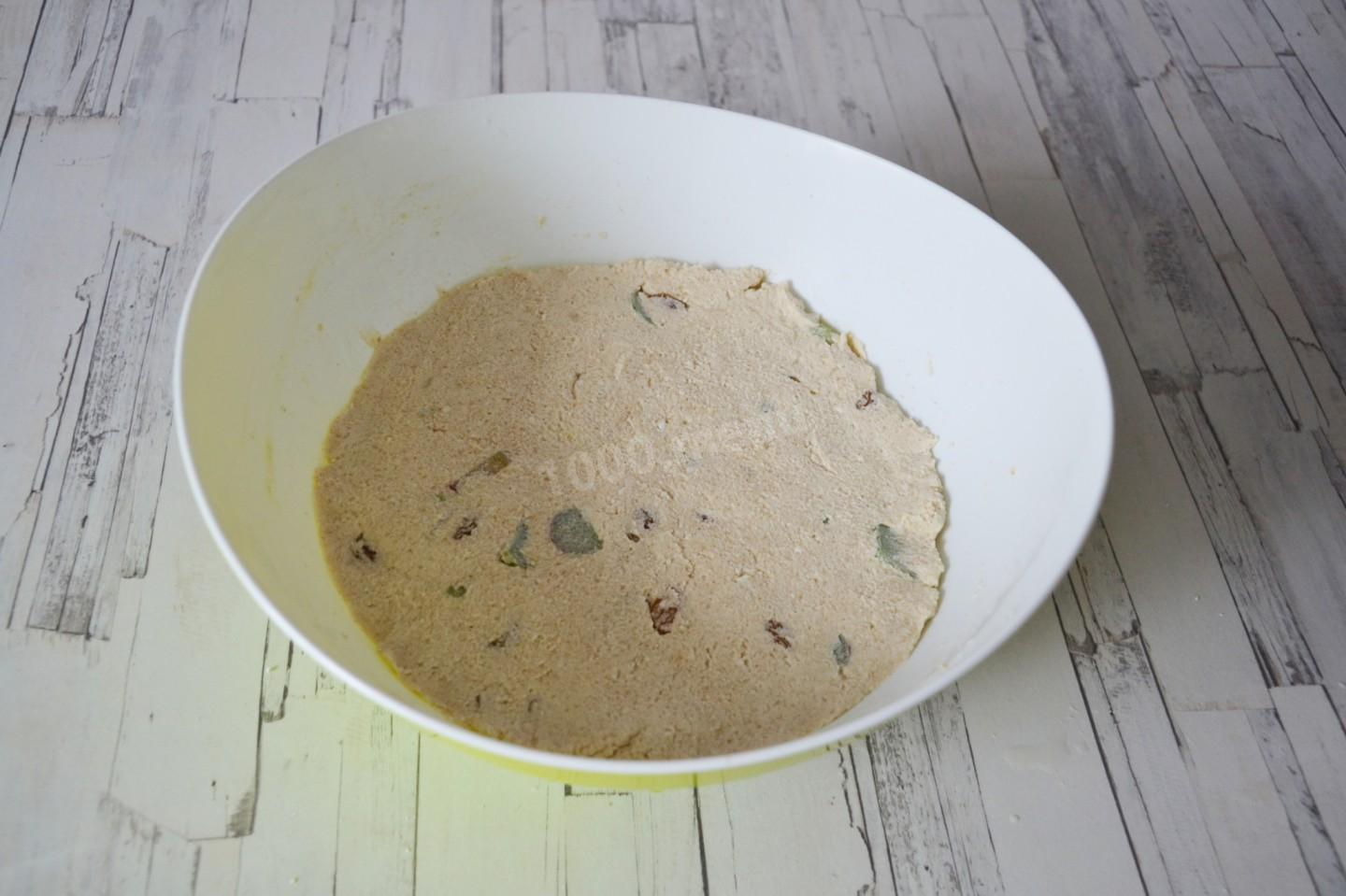
Mix well and let the batter rest for 15 minutes.
-
Step 8:
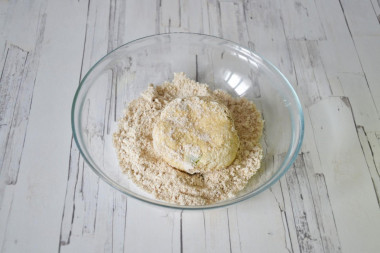
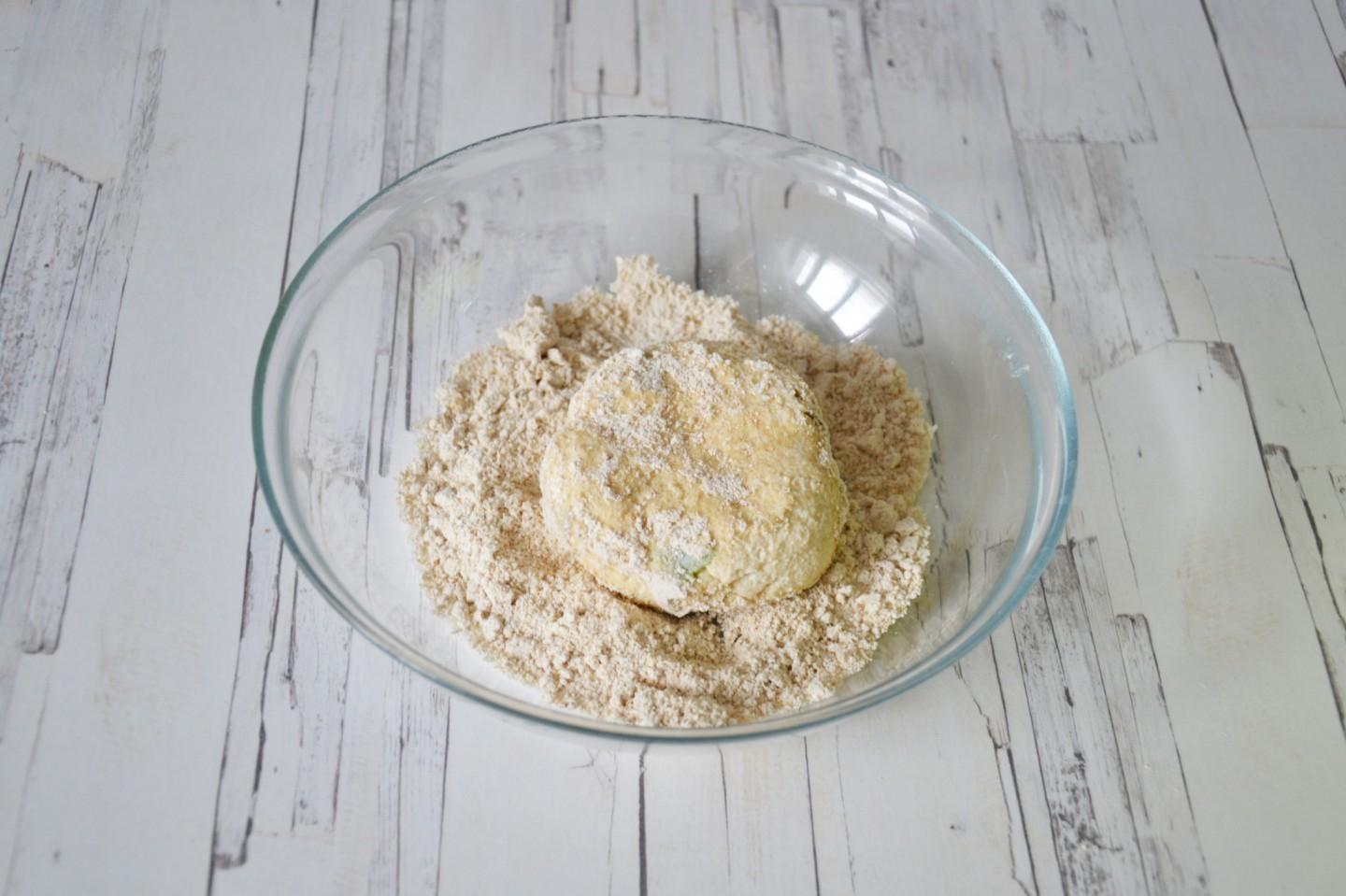
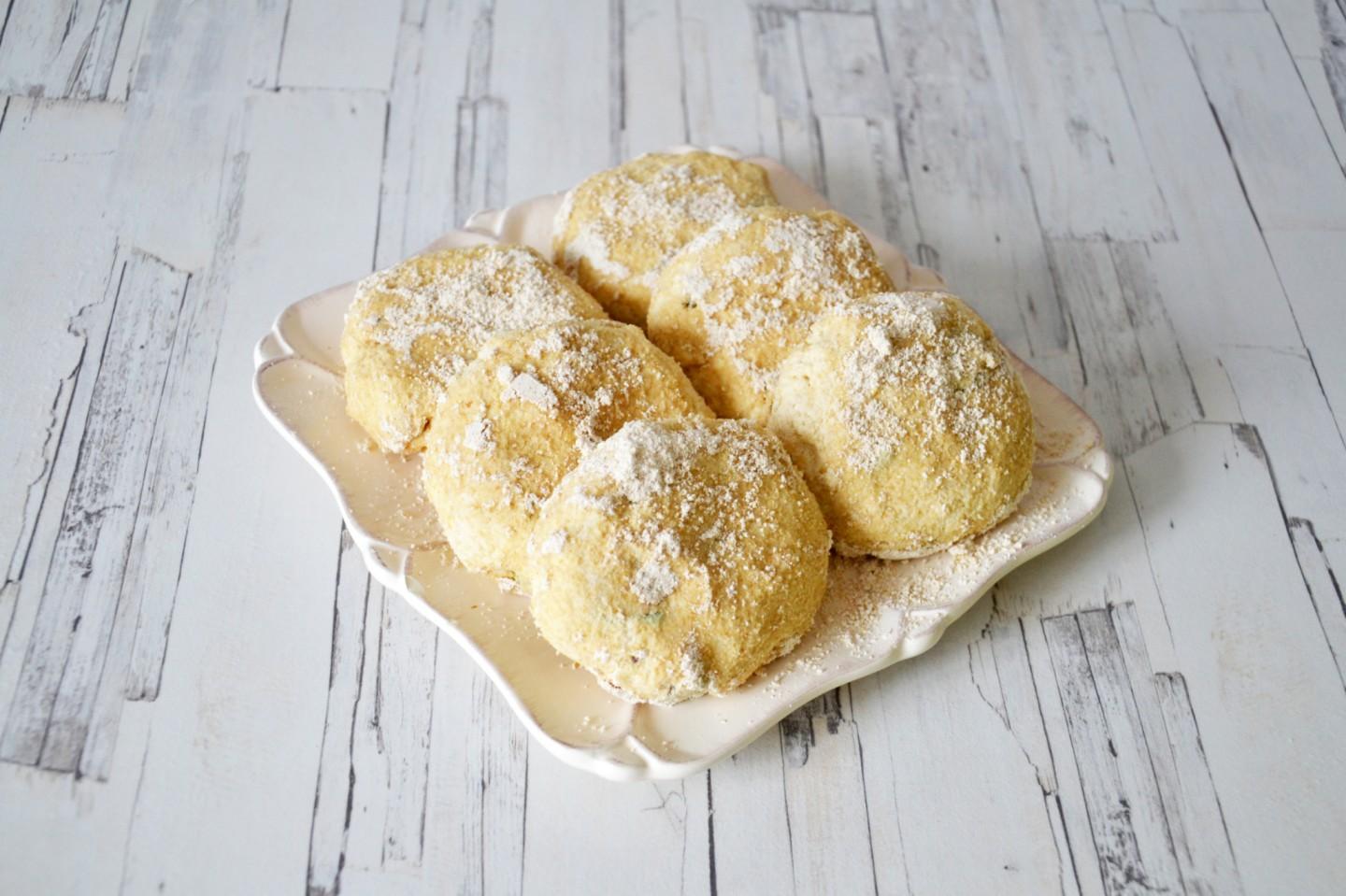
Shape a small fritter from the cheese mixture and roll it in oat flour.
-
Step 9:
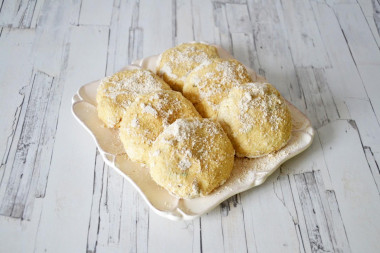
Shape the rest of the fritters the same way.
-
Step 10:

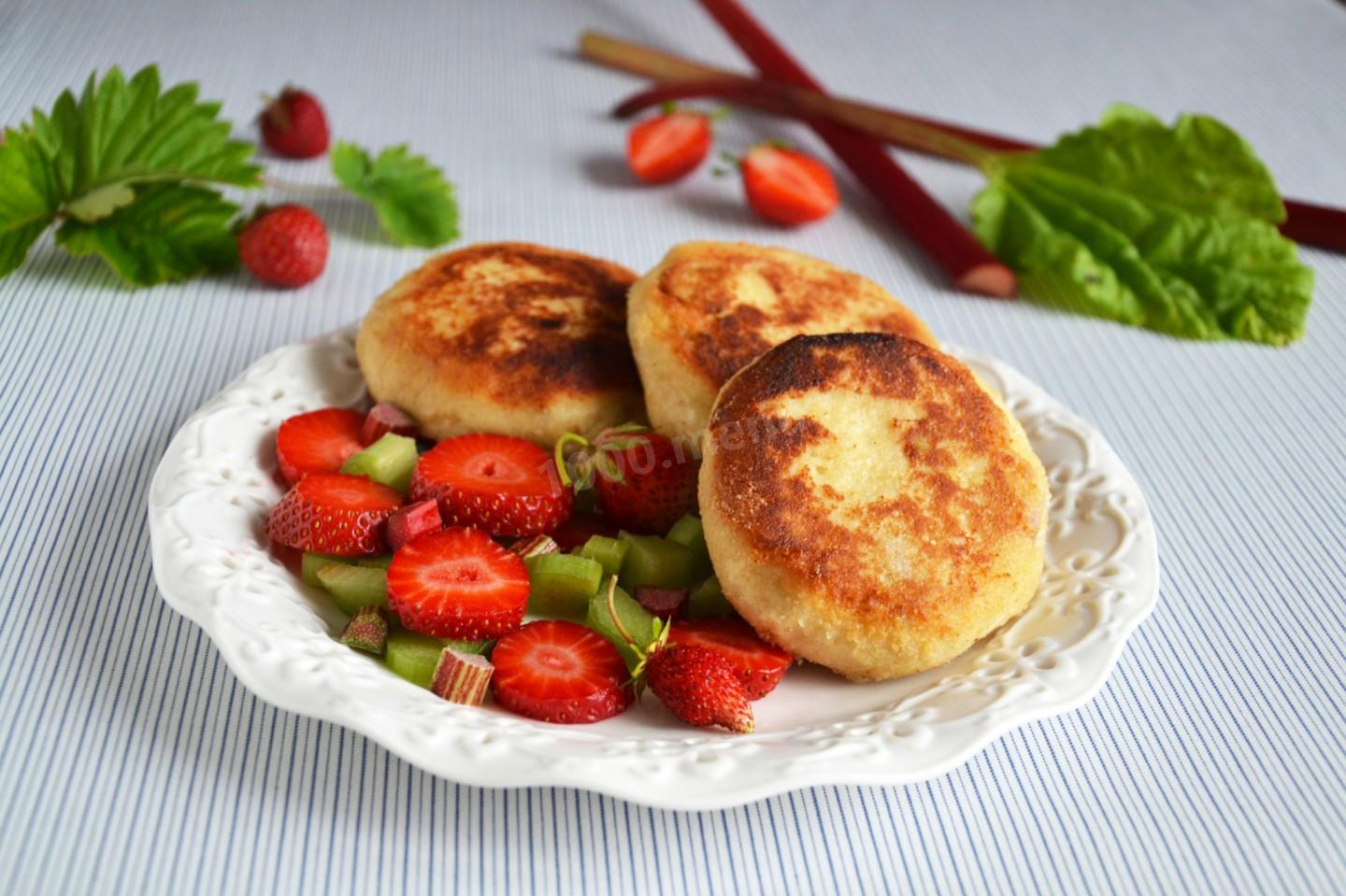
Heat the vegetable oil in a skillet and fry the syrniki on both sides until golden.
-
Step 11:
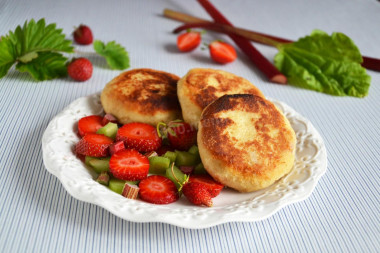
Serve the syrniki warm with sour cream, sweetened condensed milk, or fruit sauces. They're especially good with strawberry jam, which pairs beautifully with the rhubarb. Enjoy!

- The name "syrniki" is a bit of a linguistic quirk. Before hard cheeses arrived and cooks began distinguishing "tvorog" (farmer cheese) from "syr" (cheese), all fresh-curd products were called cheese — and farmer cheese was, in effect, "cheese." That's where the name syrniki comes from. In parts of southern Russia and Ukraine, people still use "cheese" to mean both aged cheeses and fresh farmer cheese.
- Traditionally, farmer cheese was made from soured milk: it was warmed on the stove until it curdled, then the whey was drained and the curds pressed. Repeating the process gave a firmer cheese that kept for a week in a cold cellar. People were wary of eating it raw, so they found all sorts of ways to cook with it — syrniki being one of them. The classic version adds sugar, flour, and eggs to the cheese.
Caloric content of the products possible in the composition of the dish
- Chicken egg - 157 kcal/100g
- Egg white - 45 kcal/100g
- Egg powder - 542 kcal/100g
- Egg yolk - 352 kcal/100g
- Ostrich egg - 118 kcal/100g
- Honey - 400 kcal/100g
- Farmer cheese, 40% fat - 466 kcal/100g
- Farmer cheese, 20% fat - 233 kcal/100g
- Farmer cheese, 18% fat - 226 kcal/100g
- Farmer cheese, 10% fat - 156 kcal/100g
- Low-fat farmer cheese - 75 kcal/100g
- Farmer cheese with sour cream - 260 kcal/100g
- Fruit farmer cheese - 147 kcal/100g
- Soft diet farmer cheese - 170 kcal/100g
- Vitalinia farmer cheese - 64 kcal/100g
- Danone morning farmer cheese, unsweetened - 91 kcal/100g
- Farmer cheese - 156 kcal/100g
- Raisins - 280 kcal/100g
- Sultanas - 279 kcal/100g
- Rhubarb - 13 kcal/100g
- Vegetable oil - 873 kcal/100g
- Salt - 0 kcal/100g
- Oat flour - 369 kcal/100g
Similar recipes


- Fast and tasty
- For breakfast
- Baking
- Eggs
- Dairy products
- Flour
- From dried fruits
- Sweet
- Spices seasonings spices
- Root flower leaves
- Fats and oils
- Salt
- Rhubarb
- Vegetable oil
- Frying
- In a frying pan
- Breading
- Hasty pastries
- From cottage cheese fast and tasty
- Dishes in 30 minutes
- Cheesecakes
- Cottage cheese pastries
- Quick baking
- Sweet pastry
- Yeast-free baking
- Egg breakfast
- Cottage cheese for breakfast
- Cottage cheese
- Oat flour
- From raisins
- Vegetarianism
- Recipes for lean dishes without butter
- Honey