Sushi Rice at Home
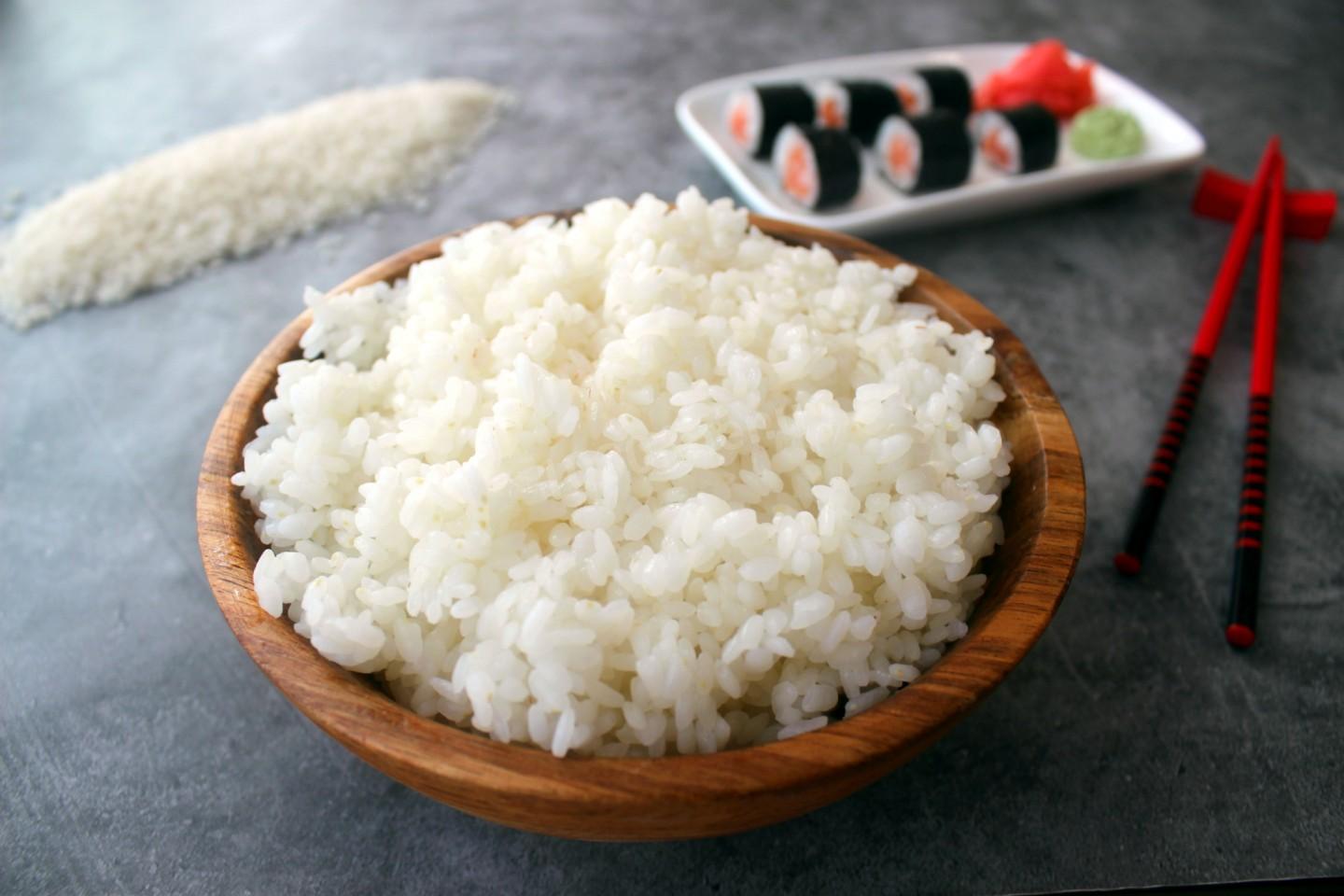
How do you cook rice for sushi? It's not that hard — it's actually simple! The final result and the quality of your Japanese dishes hinge on getting the rice right. You'll no longer have to go to a restaurant for sushi and rolls — you'll be able to make all kinds of them at home yourself.



Cooking method
-
Step 1:
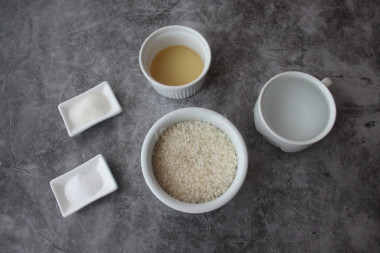
Gather the ingredients. The rice must be Japanese short-grain, or special sushi rice. Long-grain and parboiled rice are absolutely unsuitable for sushi and rolls, because their low starch content means the rice lacks the necessary stickiness, and the finished dish will simply fall apart. For the seasoning you must use rice vinegar — substituting table vinegar is strictly off-limits.
-
Step 2:
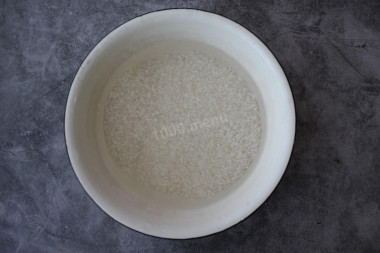
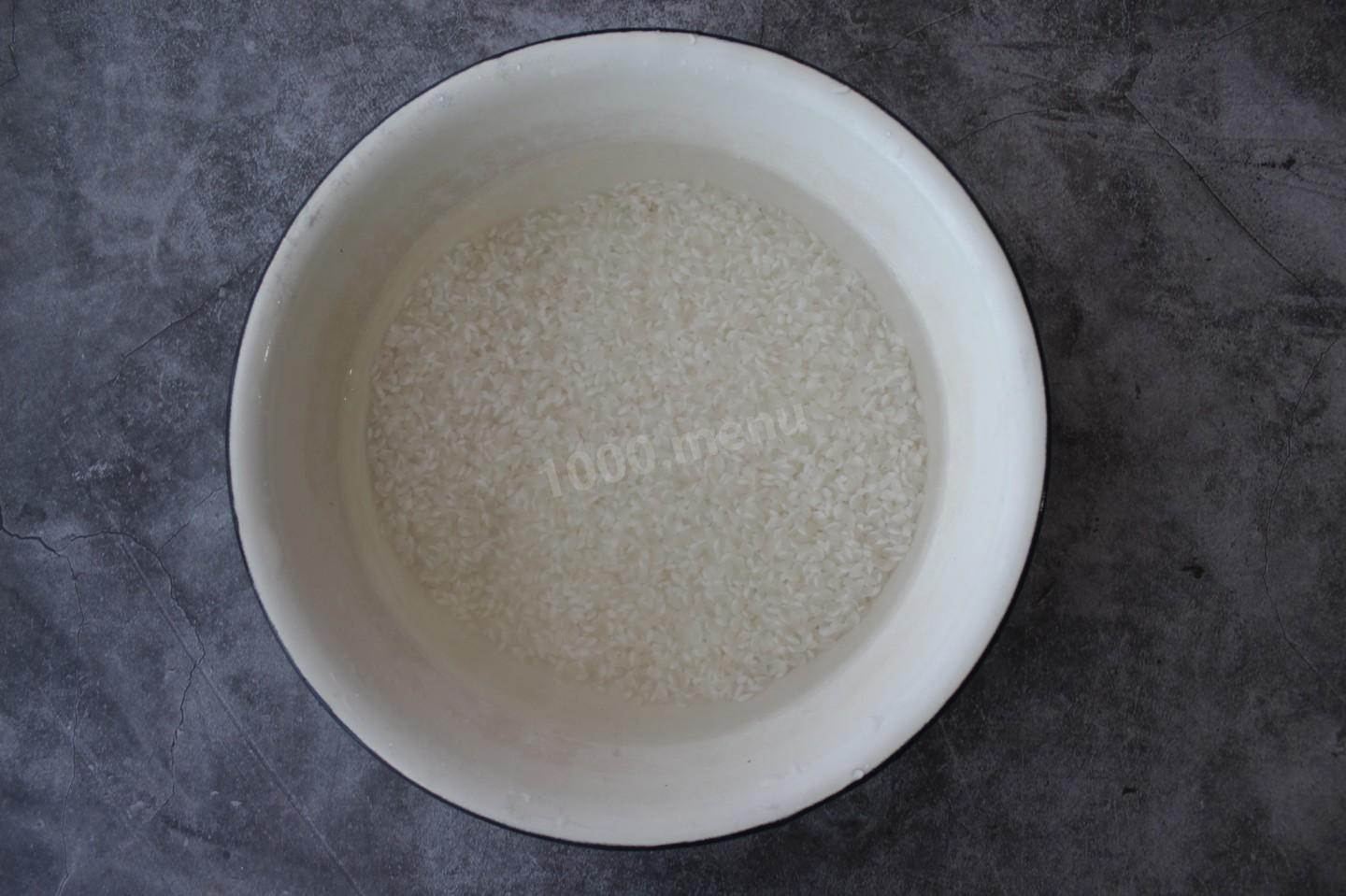
Pour the rice into a bowl, add cold running water, and rinse it gently so as not to damage the grains. Drain the cloudy water and add fresh cold running water again. Rinse the rice at least 4 times, until the water is clean and clear. Tip the rinsed rice into a colander and leave it for 10 minutes so all the excess liquid drains off.
-
Step 3:
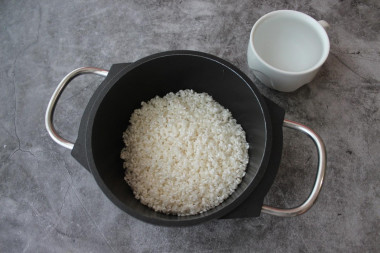
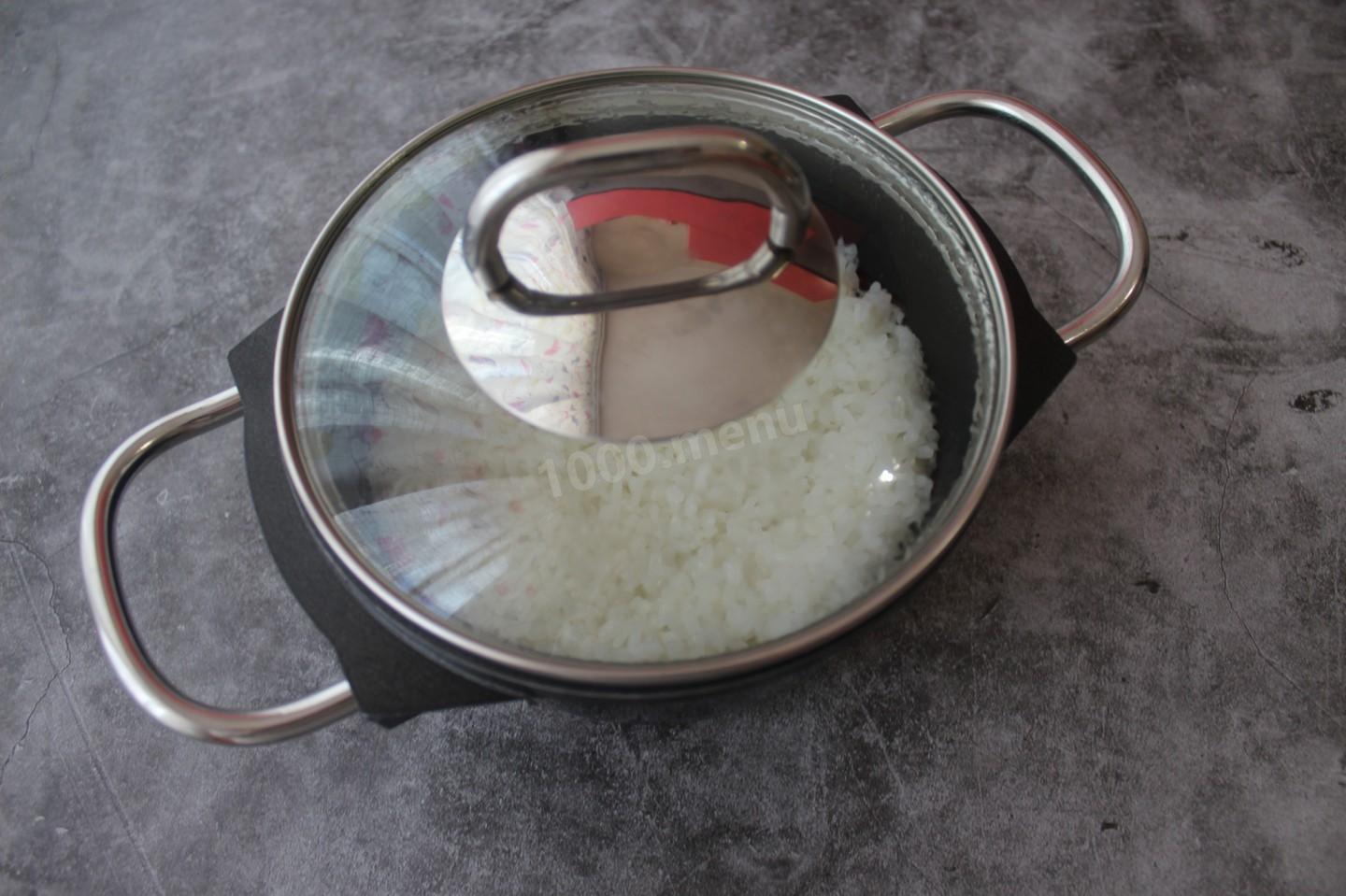
Put the rice in a pot, cover with water, and set it on the heat. It's very important to keep the rice-to-water ratio at 1:1. When the water boils, cover the pot with a clear lid, reduce the heat to low, and cook for 15 minutes. By then all the moisture should have evaporated. Don't open the lid during cooking, so a clear lid is best for keeping an eye on things.
-
Step 4:

After that time, take the pot off the heat and let the rice steam, covered, for another 10 minutes. Don't open the lid — the rice should cook through completely.
-
Step 5:

Meanwhile, make the seasoning. Pour the rice vinegar into a small saucepan and add the sugar and salt. Set it over low heat and stir to dissolve the dry ingredients. As soon as the sugar and salt dissolve, take it off the heat right away. The seasoning must never boil, so don't make it over high heat.
-
Step 6:

Transfer the cooked rice to a wooden bowl wiped with a damp towel, so the rice won't stick. A special cypress hangiri tub is ideal, but I don't have one, so I used what I had. Wooden vessels are used to prevent any reaction with the rice vinegar, and they also absorb the rice's excess moisture as you mix it.
-
Step 7:
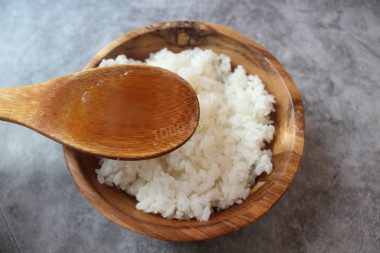
Take a wooden paddle and hold it over the rice. Pour the vinegar seasoning onto the paddle so it spreads gently over the rice. Break up the rice with smooth motions and fold it together carefully, trying not to crush the grains. Cover with a damp clean towel and let the rice cool. Once it's cool, you can start shaping your sushi and rolls.




- This amount of ingredients made 450 g of cooked sushi rice. Never salt or add spices while cooking the rice. If you really want fragrant rice, you can add a piece of kombu (seaweed) — but remove it from the pot before the water boils. You can also buy ready-made vinegar seasoning for rice at the store, which makes the process even faster. Don't refrigerate the finished rice, as the grains turn hard and that hurts the quality and taste of your dishes — so it's better to make the rice in small batches.
Caloric content of the products possible in the composition of the dish
- Granulated sugar - 398 kcal/100g
- Sugar - 398 kcal/100g
- Salt - 0 kcal/100g
- Water - 0 kcal/100g
- Rice vinegar - 20 kcal/100g
- Short-grain rice - 330 kcal/100g