Pea Mash (Goroshnitsa)
Made from peas — thick, hearty, and very appetizing! In this recipe I'll share a few secrets for making pea mash quickly and easily. In just an hour you'll have a steaming bowl of delicious pea purée on your table. As a side dish or a meal in its own right, this porridge is always a great idea!


Cooking method
-
Step 1:
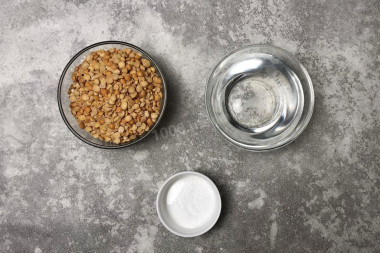
How do you make pea mash? Gather your ingredients. I recommend split peas — they cook down faster and don't need soaking. But if all you have are whole peas, no problem; I'll tell you what to do. You'll need water in a 1:3 ratio — three parts water to one part peas.
-
Step 2:
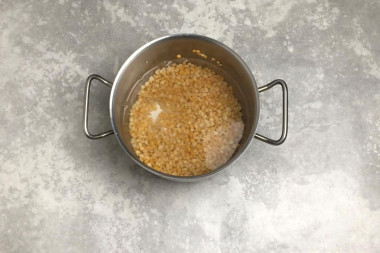
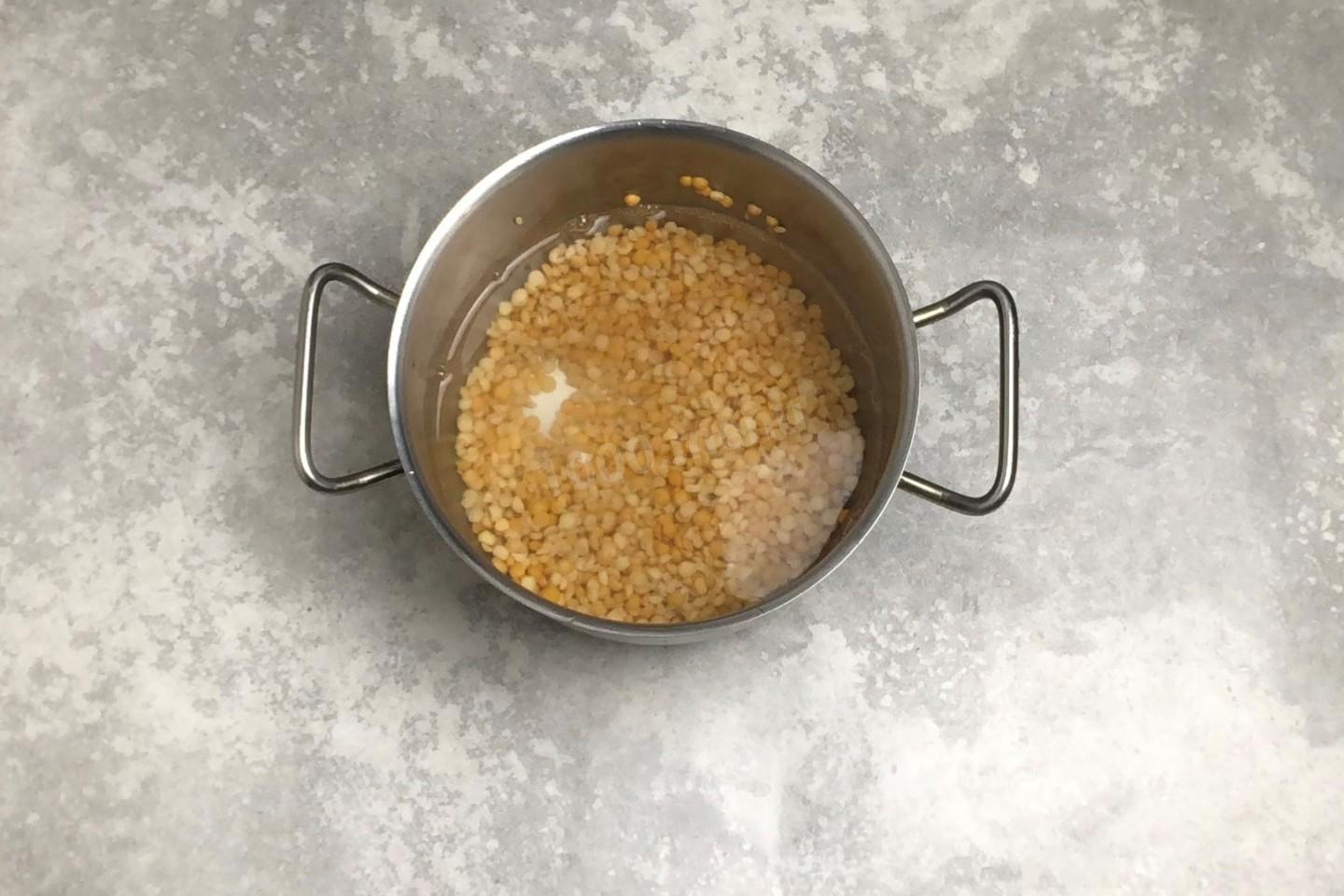
First, rinse the peas well under cool running water. Change the water several times to wash off all the dirt and dust. If you have whole peas, cover them with cold water and leave them for 10–12 hours. If the peas are split, like mine, you can cook them right away. Pour all the water in with the peas and put them on the stove.
-
Step 3:
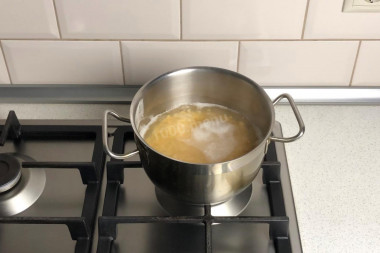
Set the heat to medium and bring the peas to a boil. Don't step away from the stove just then — a high head of foam will rise that can boil over and dirty the stovetop. Lower the heat and skim off the foam with a spoon. Add the salt.
-
Step 4:
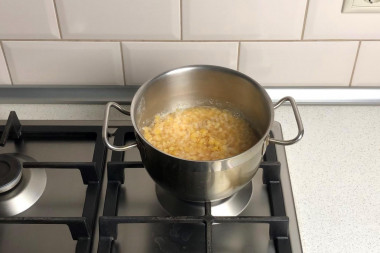
Leave the peas to cook on the lowest heat. Stir them occasionally and check the water level. Gradually the peas will start to soften and the porridge will thicken.
-
Step 5:
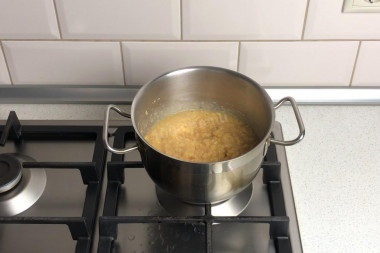
From this point on, keep a closer eye on it. Peas tend to scorch if left without enough liquid. Taste the porridge; if the peas are still firm but the water has all boiled off, add a little more. It's better to use boiling water so the peas keep cooking quickly. I didn't add any water — mine cooked down perfectly in an hour, even a little less.
-
Step 6:
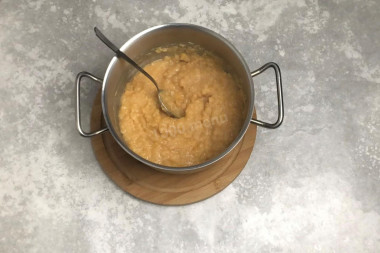
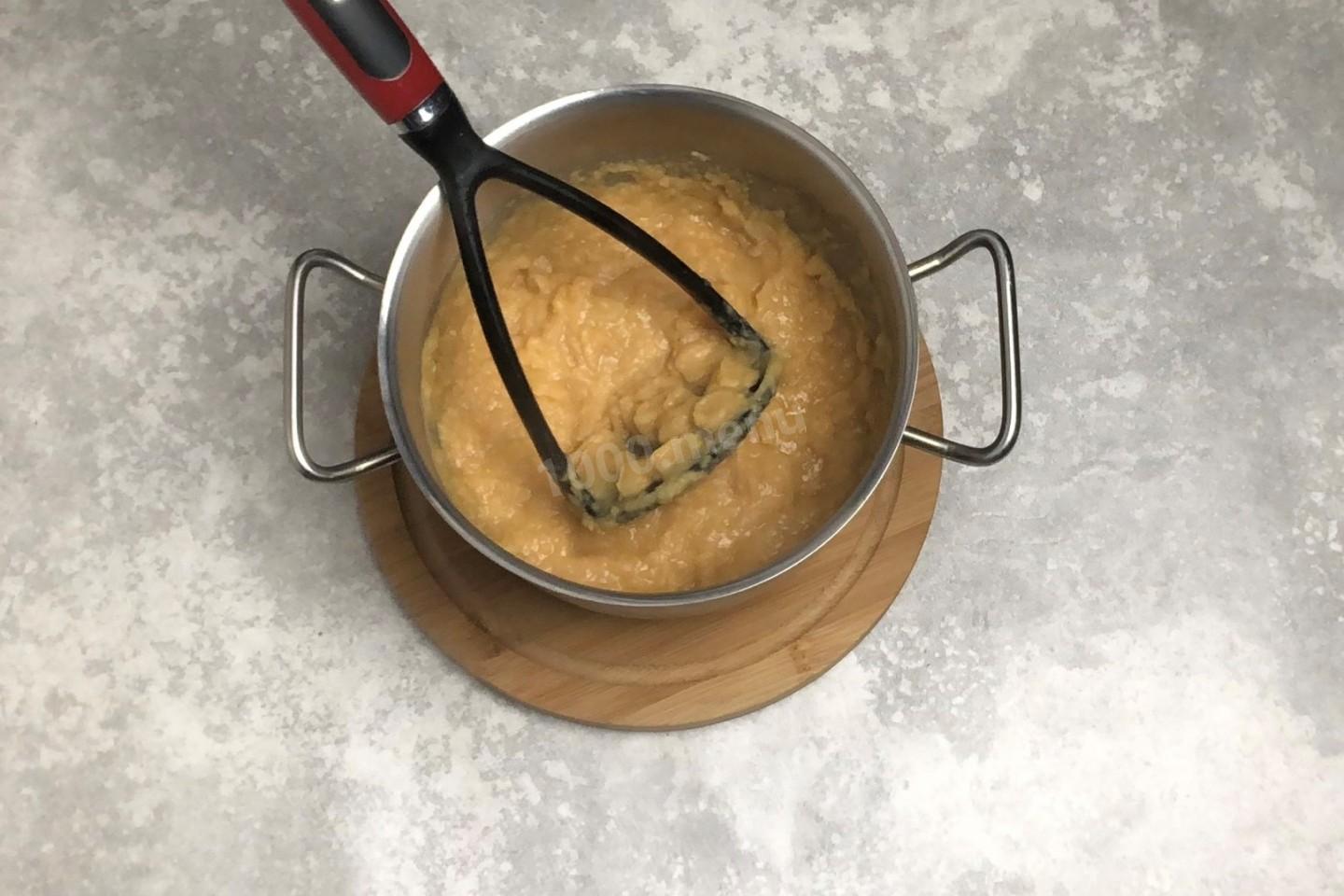
Take the pot of peas off the heat. From here you can go two ways — serve the porridge as is, or purée it. Straight off the stove, the pea mash has a coarse texture with soft but whole peas in it. It's a matter of taste.
-
Step 7:
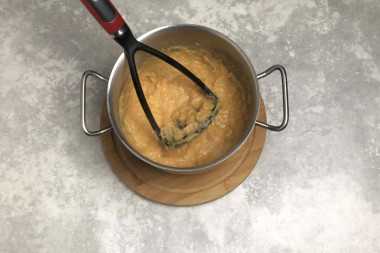
I mashed the peas a little with a masher — an old-fashioned wooden masher is even better, it does the job faster than a modern one. Or you can blitz the peas with an immersion blender for a very smooth, creamy texture. Serve the pea mash right away. As it cools, it gets very thick. If you reheat it later, you'll need to add a little boiling water.



- I really love pea porridge. I always make both it and pea soup just like this, without long soaking. The peas cook down to a purée without any trouble.
- While cooking, you can add pepper, garlic, bay leaf, or your favorite spices to the peas. And when serving, stir butter or vegetable oil into the purée. This porridge also goes well with fried or raw onion, salo, or sausage. Everyone can pick their own version.
- For cooking, it's best to use filtered or bottled water that's neutral in taste. If you use tap water, keep in mind that it can give the dish an unpleasant, distinctive aftertaste.
Caloric content of the products possible in the composition of the dish
- Dried whole green peas, uncooked - 340 kcal/100g
- Raw split peas, hulled - 348 kcal/100g
- Boiled split peas - 115 kcal/100g
- Dried uncooked chickpeas - 360 kcal/100g
- Dried uncooked cowpeas - 343 kcal/100g
- Dried boiled cowpeas - 76 kcal/100g
- Dried peas - 322 kcal/100g
- Peas - 298 kcal/100g
- Salt - 0 kcal/100g
- Water - 0 kcal/100g