Classic Vareniki with Cottage Cheese
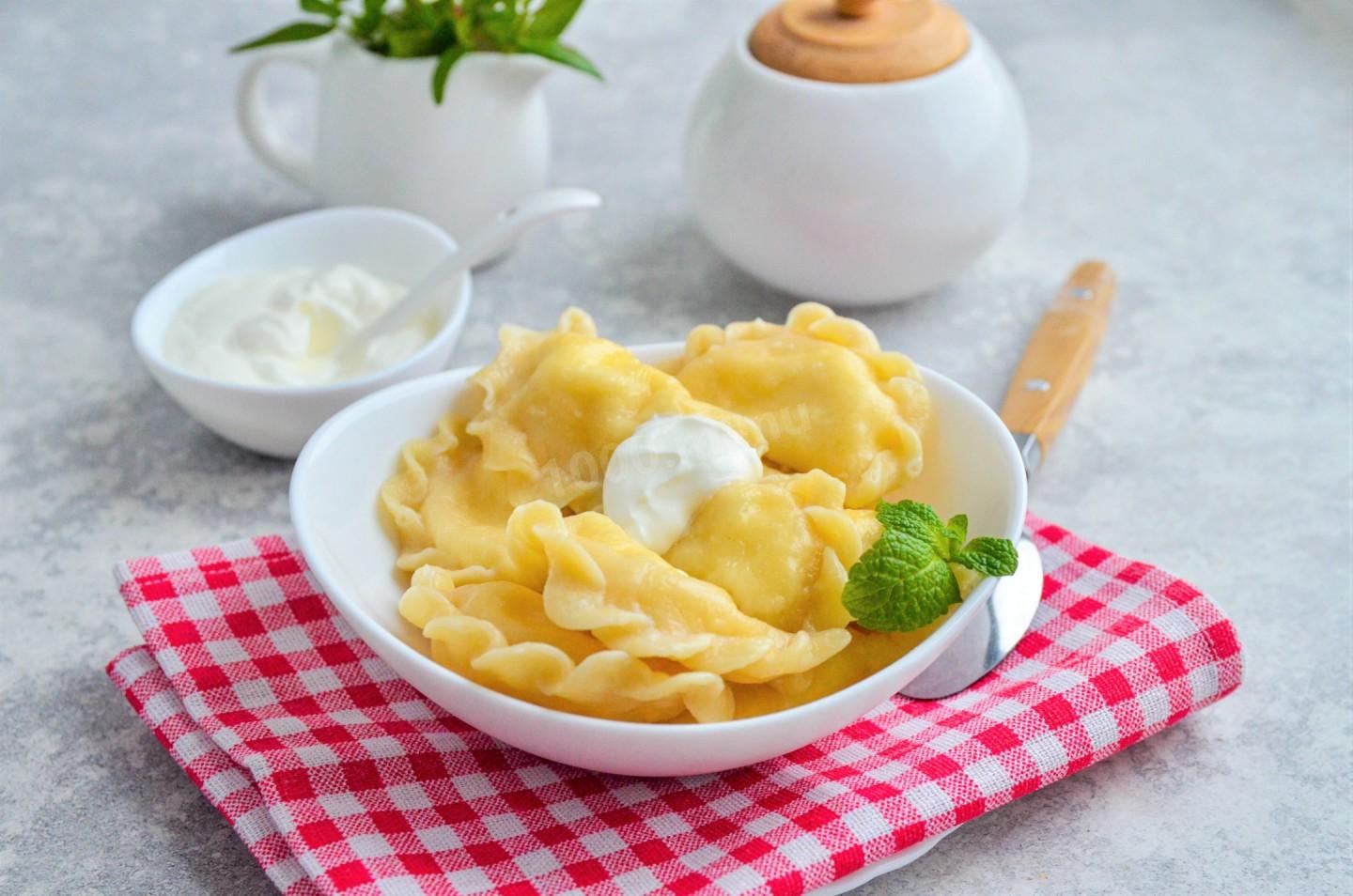
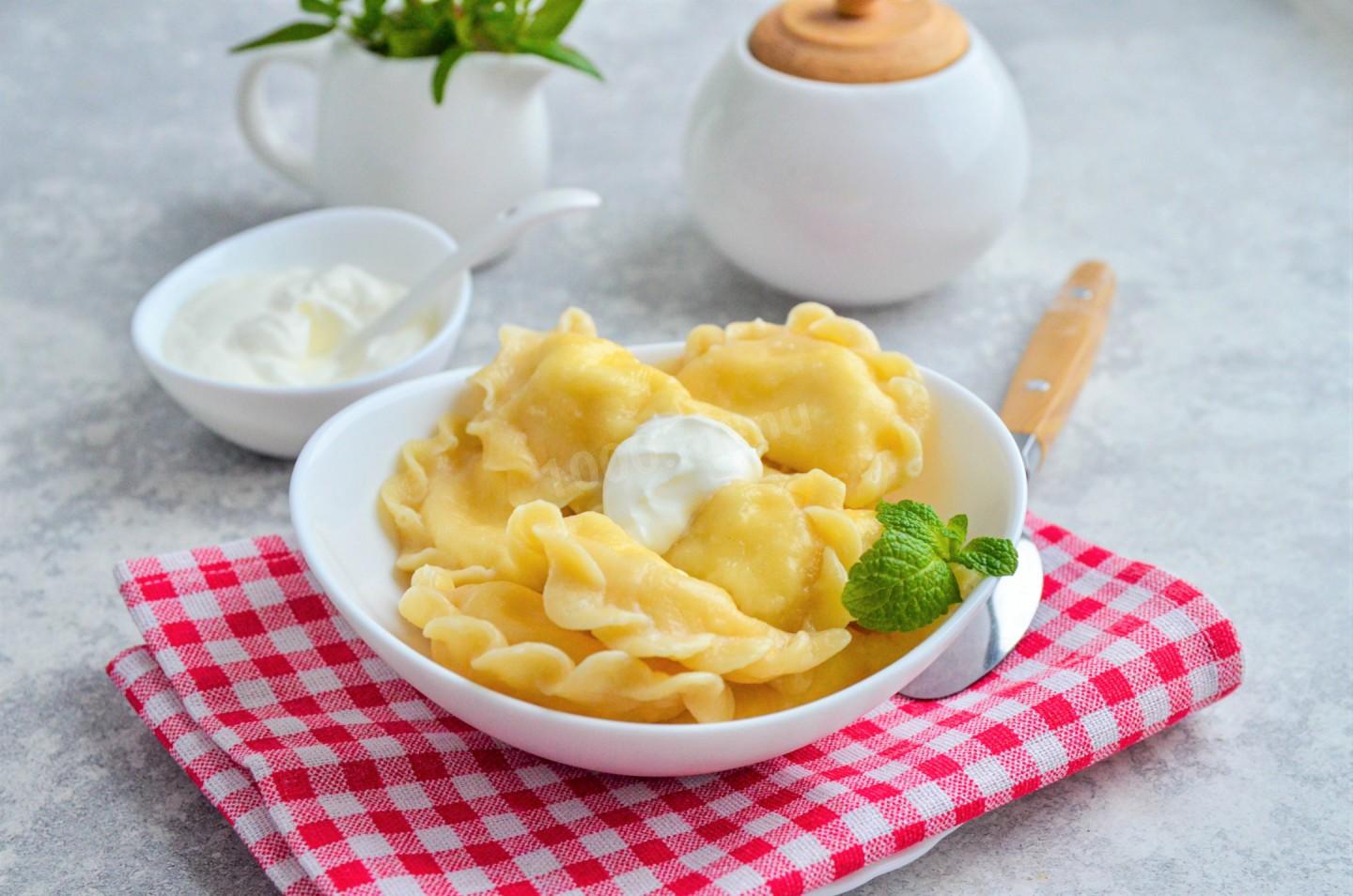
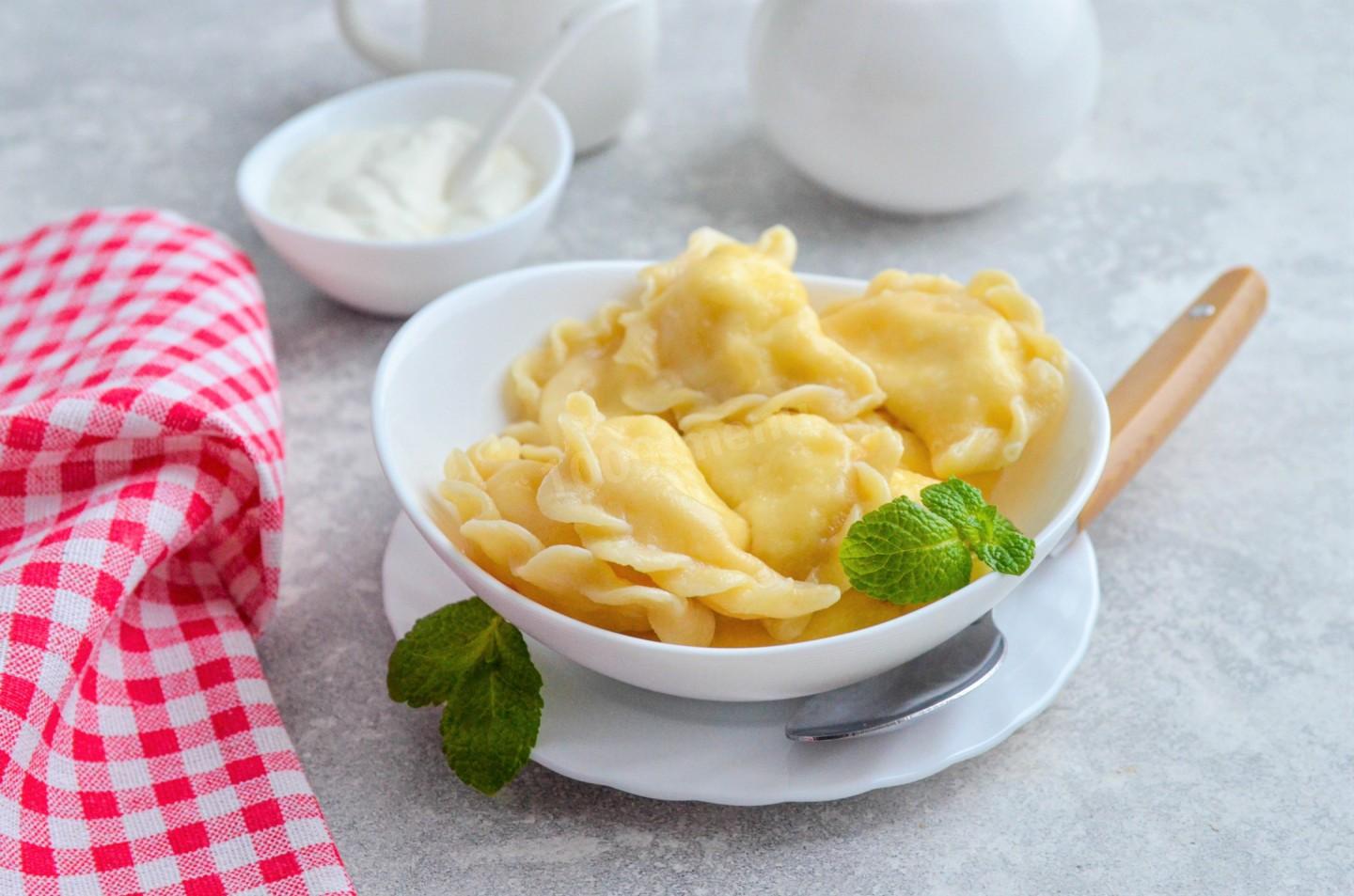
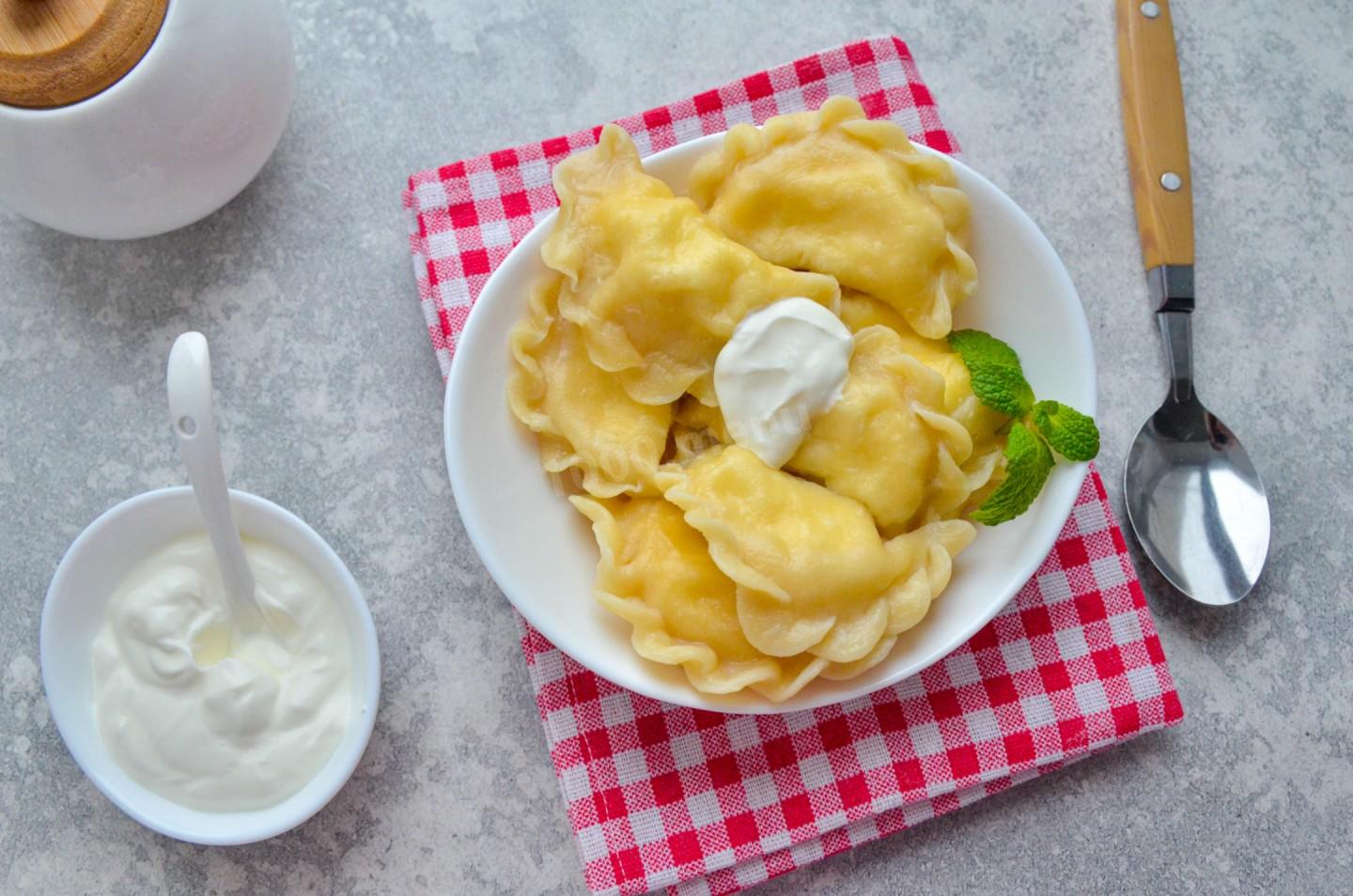
Tender, sweet, and the truest vareniki of all! Who could doubt that one of the most popular and beloved dishes in our country is classic vareniki with cottage cheese? Kids and grown-ups alike love them, and they're no trouble to make. For breakfast, an afternoon snack, or dinner — they're always welcome at the table!

Cooking method
-
Step 1:
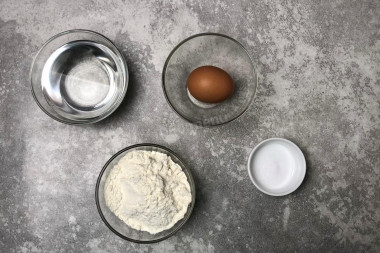
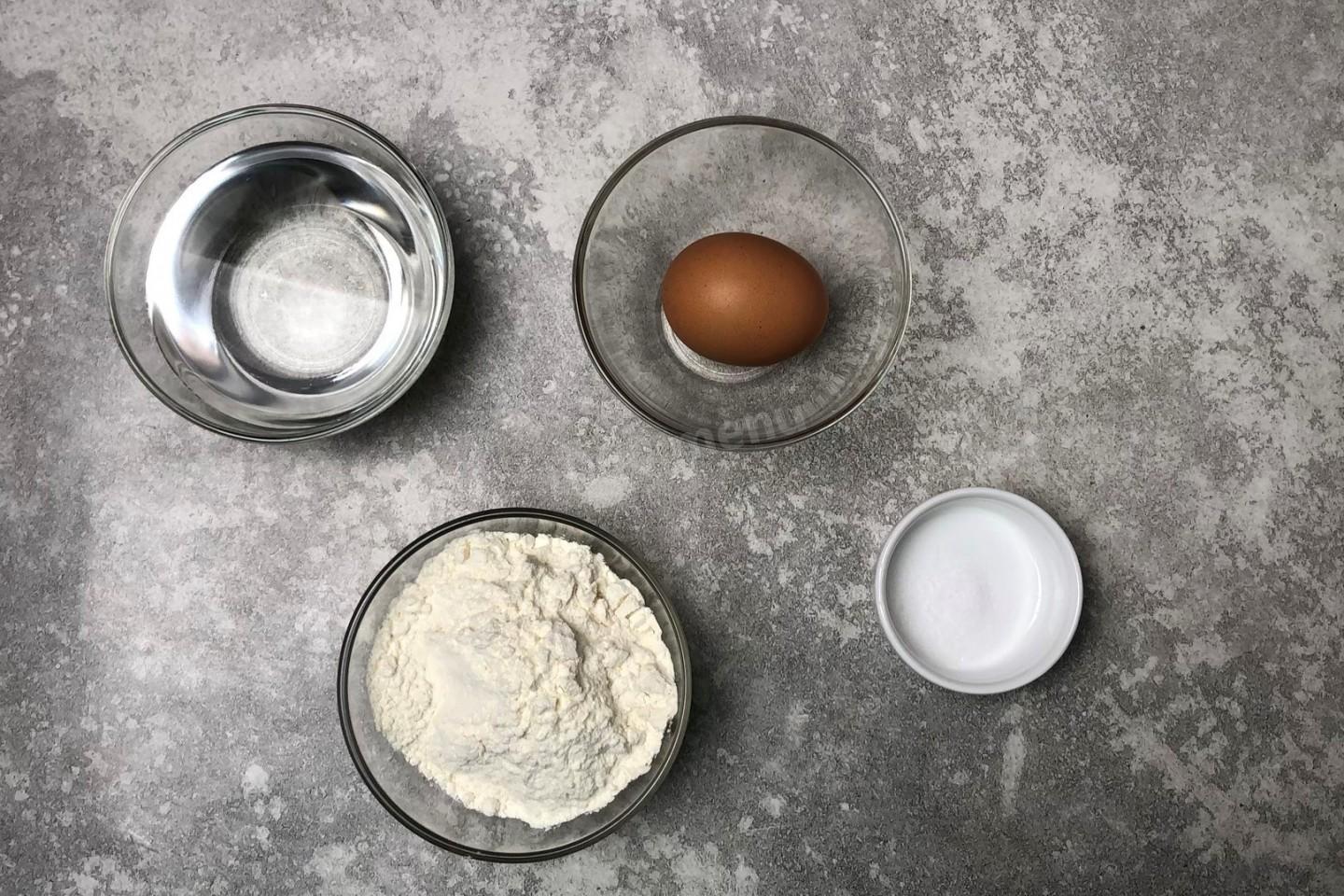
How do you make classic vareniki with cottage cheese? Gather the ingredients — first for the dough. You may need more or less flour than the recipe states; go by the dough itself. The water needs to be warmed. Sift the flour first.
-
Step 2:
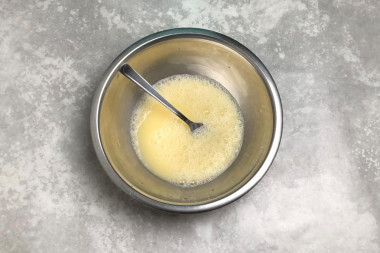
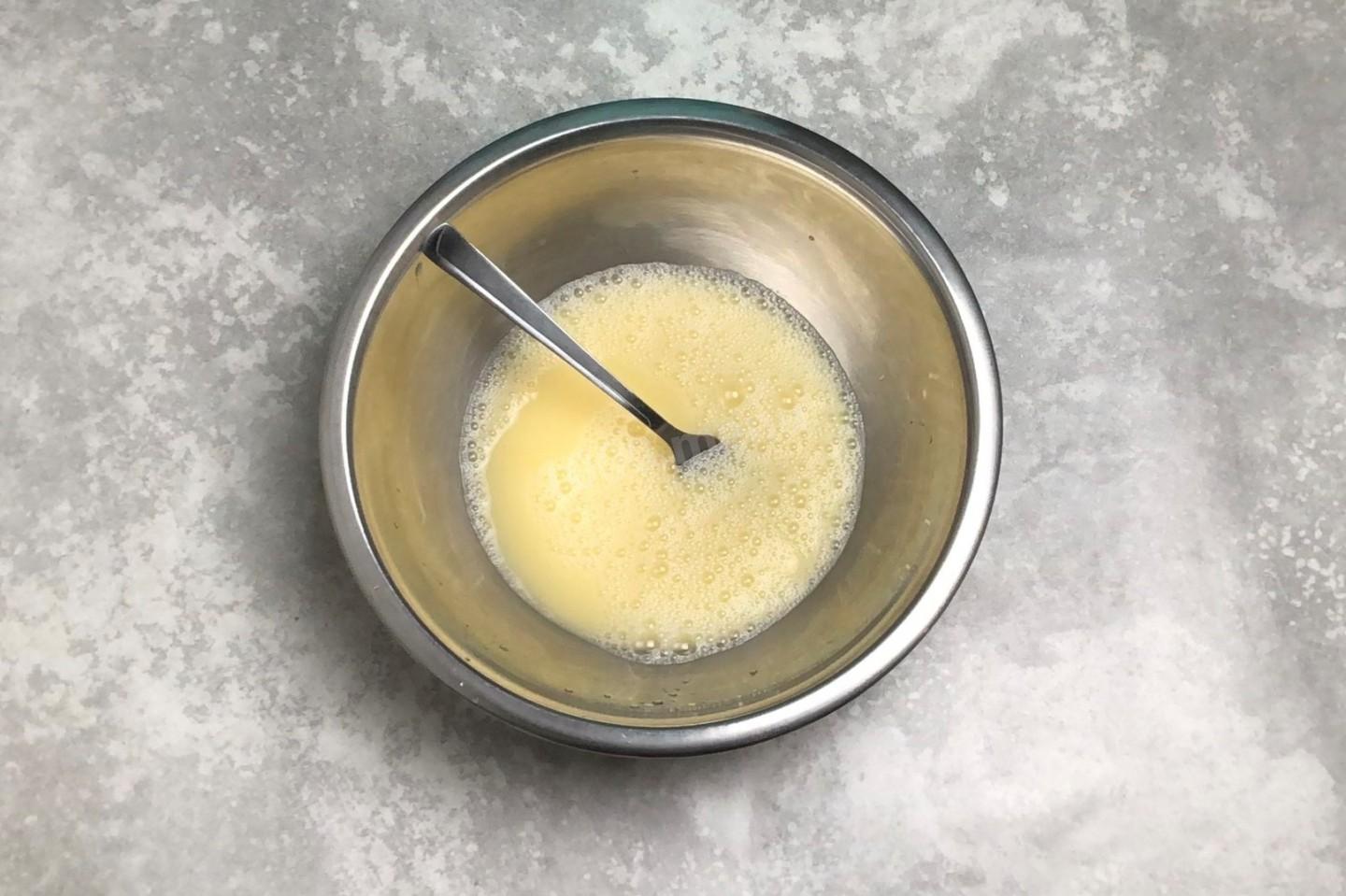
Take a bowl and pour the warm water into it. The water should be noticeably warm, so the dough comes together faster. Crack in the egg and add the salt. With a fork, beat the water and egg together until smooth.
-
Step 3:
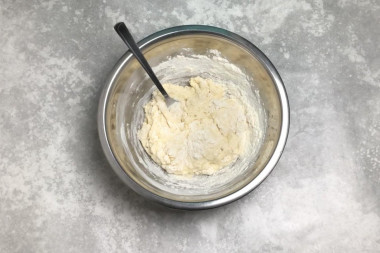
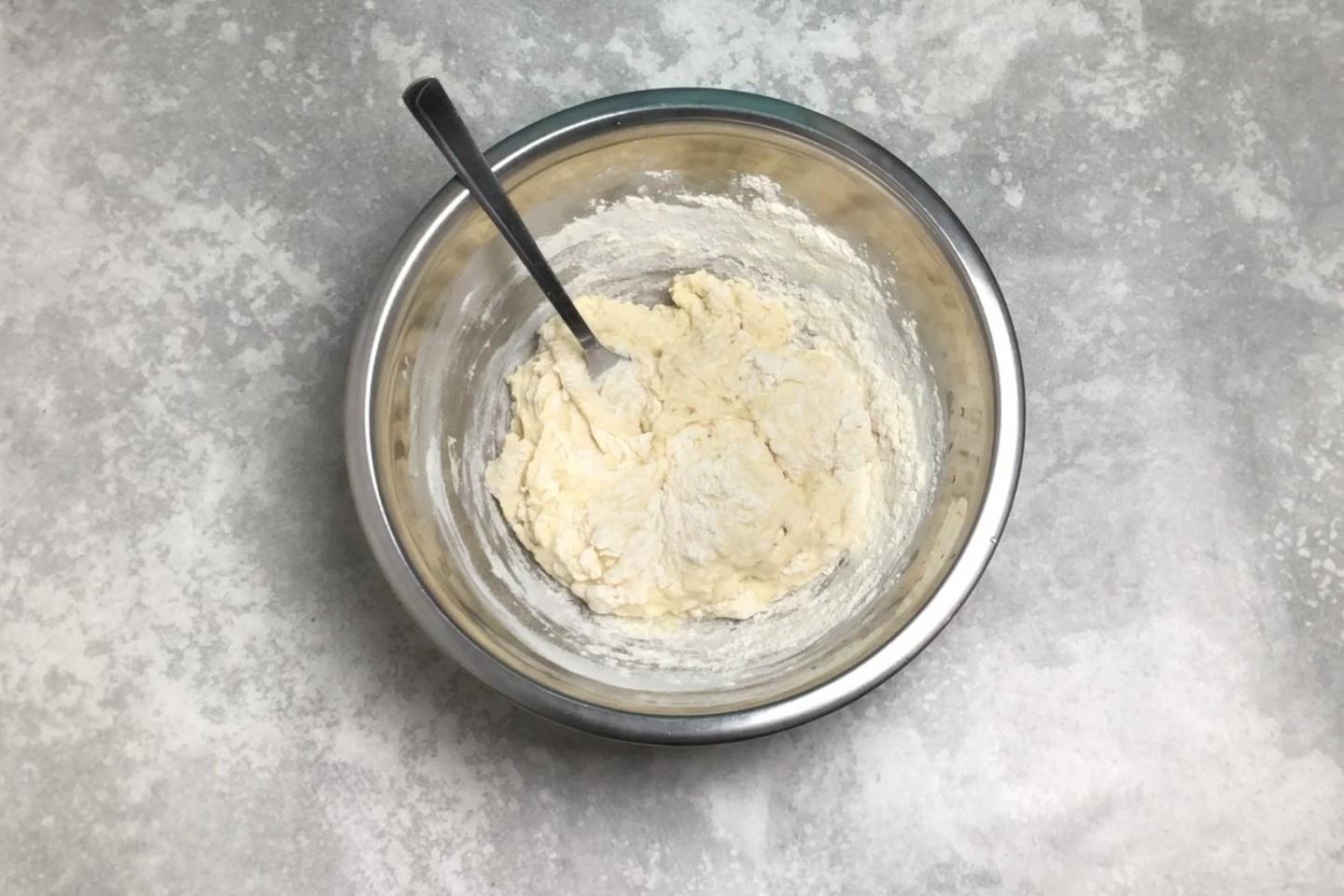
Start adding the flour a cup at a time, stirring the dough after each addition. Stir with a fork at first, then with your hand once the dough begins to thicken.
-
Step 4:
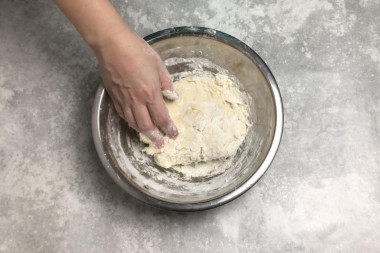
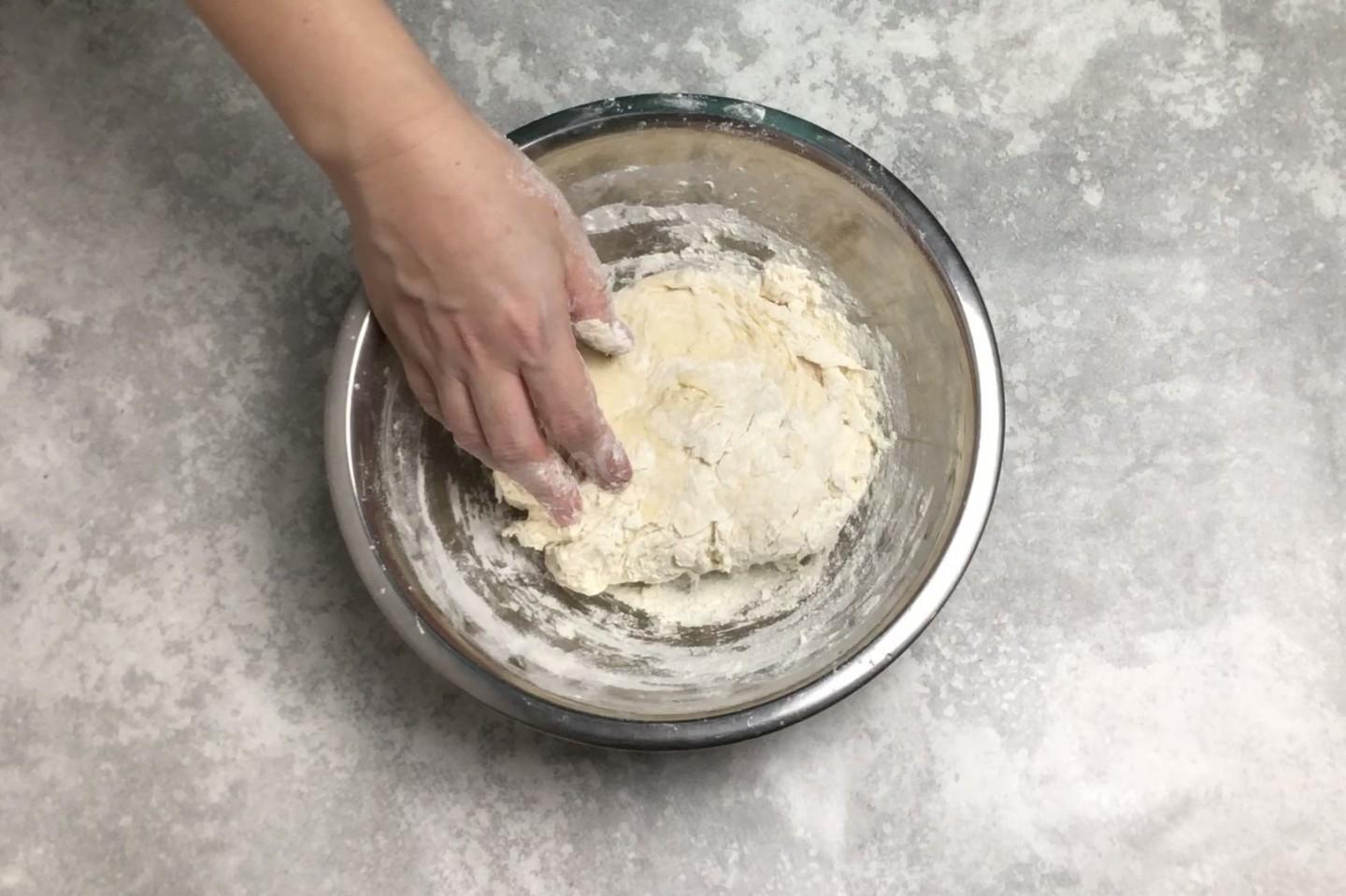
Add the third cup in small portions. The dough should come together into a ball but stay soft. At this stage it's important not to overdo the flour, so you don't toughen it. Otherwise you'll end up with a stiff, unpleasant dough. Knead the dough for a good while — it should take in all the flour and stop sticking to your hands.
-
Step 5:
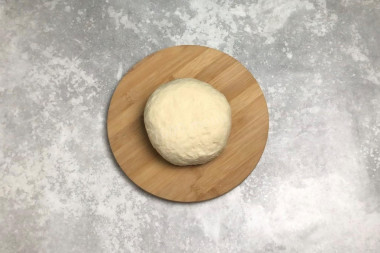
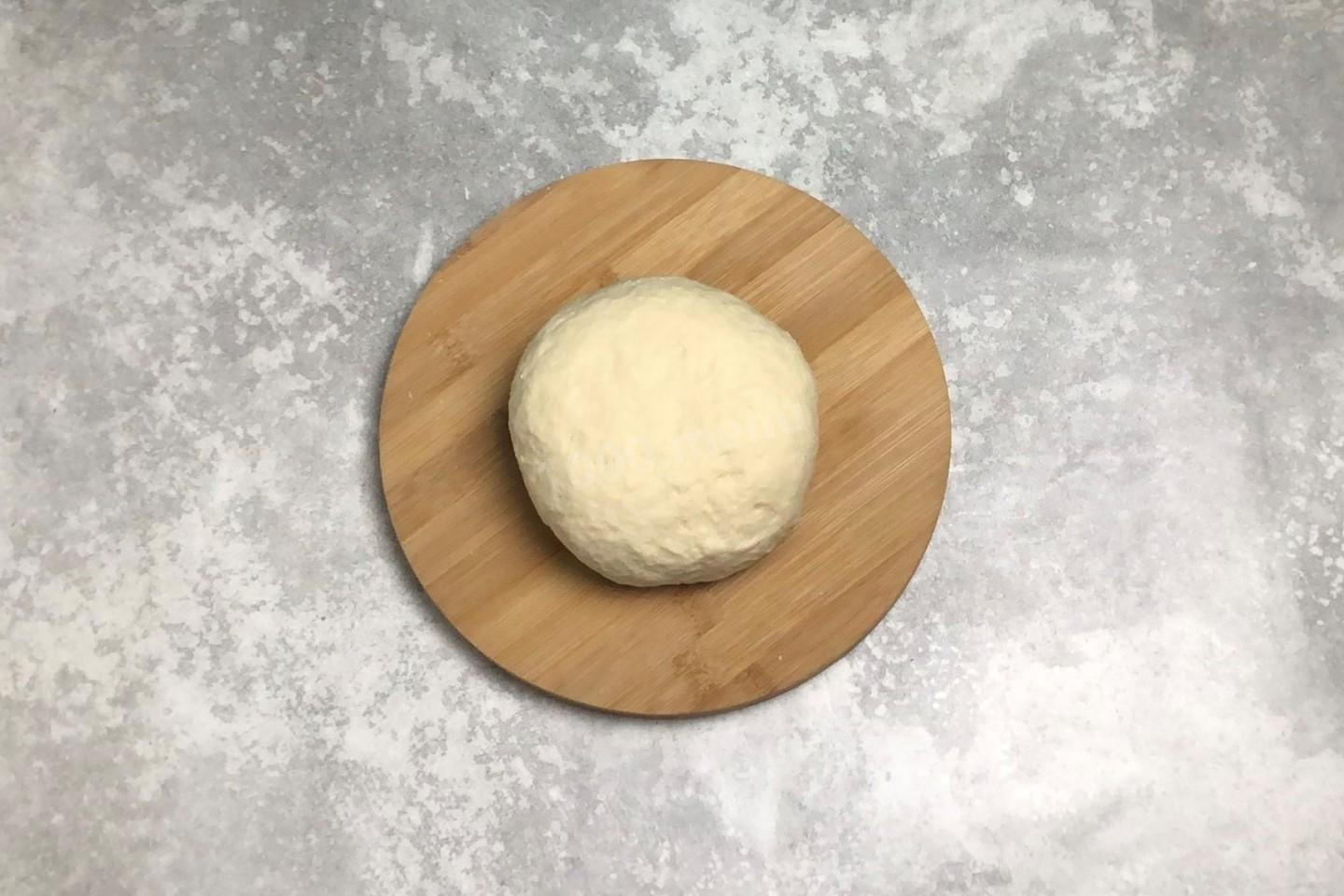
At the very end, knead the dough on a board. It will turn completely smooth and non-sticky. Gather the dough into a ball and cover it with a towel. Leave it on the counter for 30 minutes. In that time the gluten develops well — the dough becomes very elastic and supple.
-
Step 6:
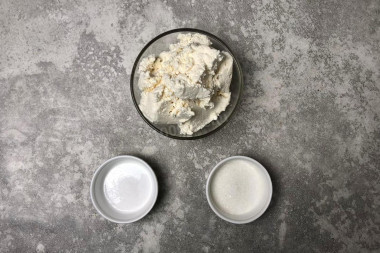
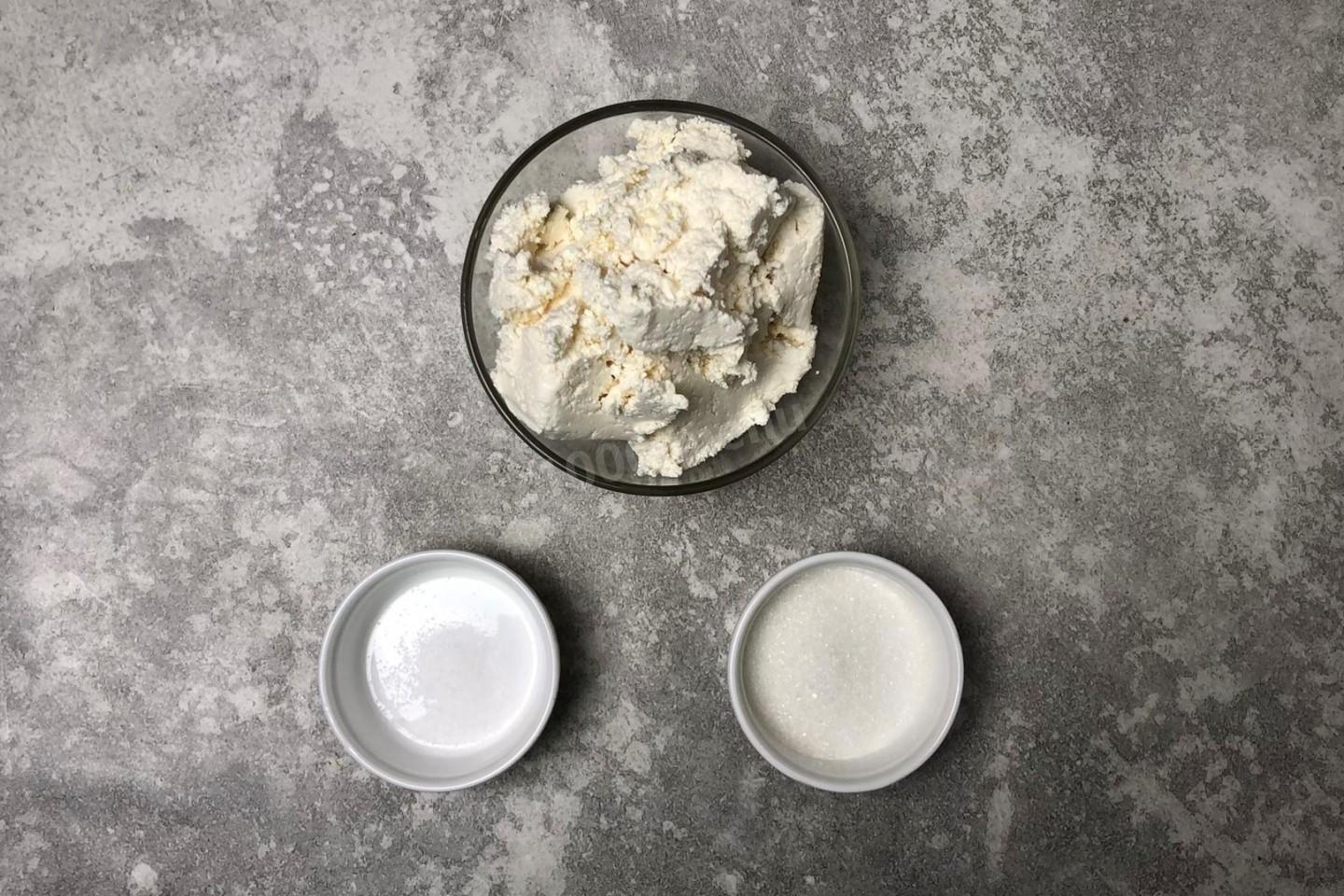
While the dough rests, make the filling. Gather the ingredients for it. Choose tasty cottage cheese — that's the main thing. Use as much sugar and salt as you like. We love sweet cottage cheese vareniki, but some people make them with savory cottage cheese. I didn't add an egg to the cottage cheese, since mine is soft on its own. If yours is on the dry side, add a yolk to "bind" the filling.
-
Step 7:
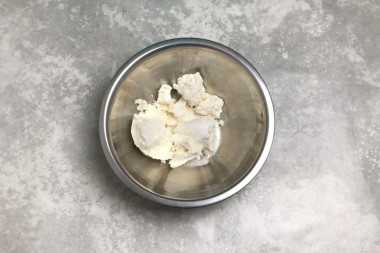
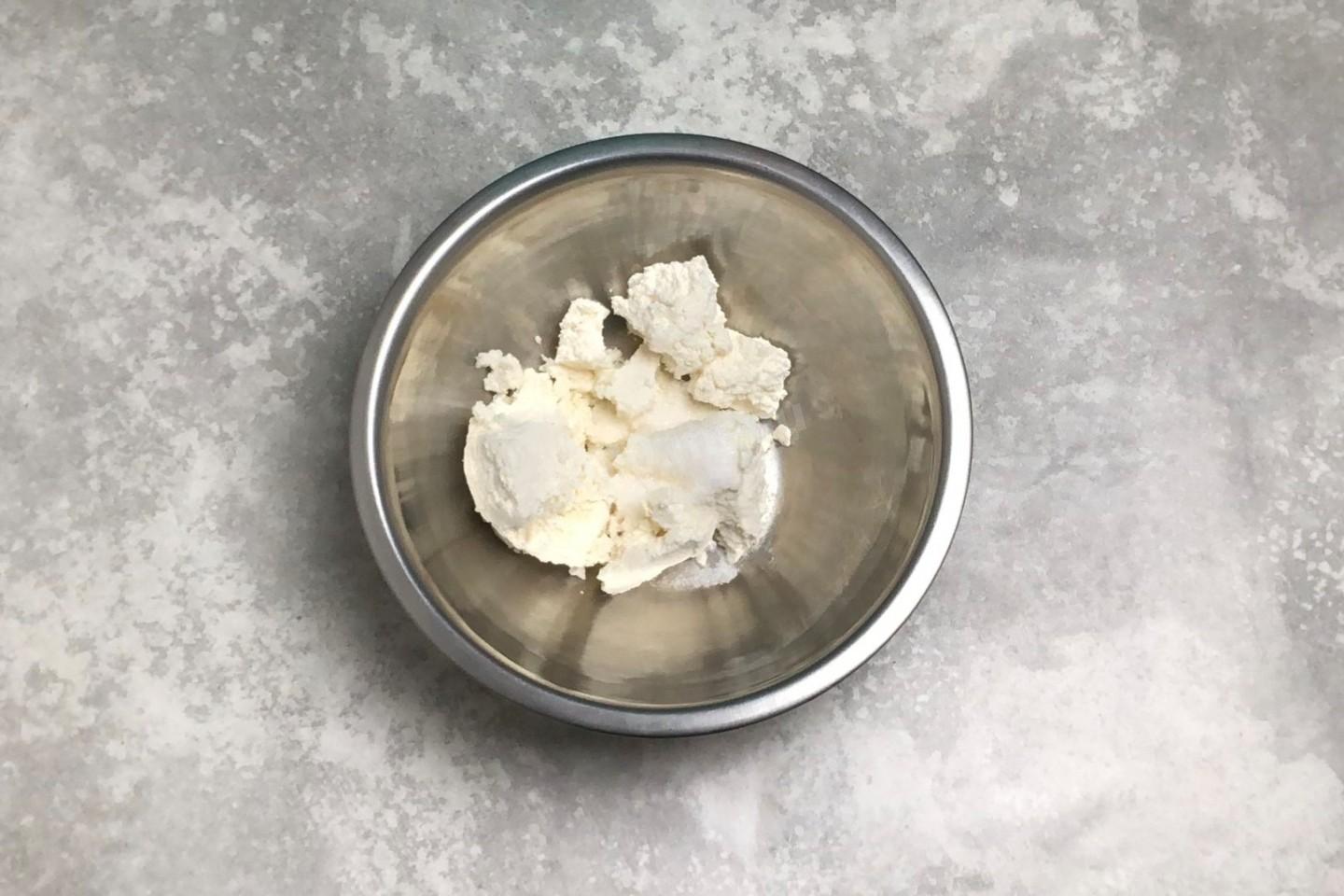
Put the cottage cheese in a bowl. Add the sugar and salt. At this point, feel free to taste the filling and adjust it.
-
Step 8:
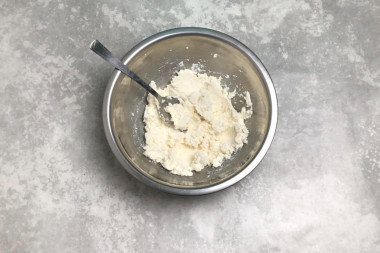
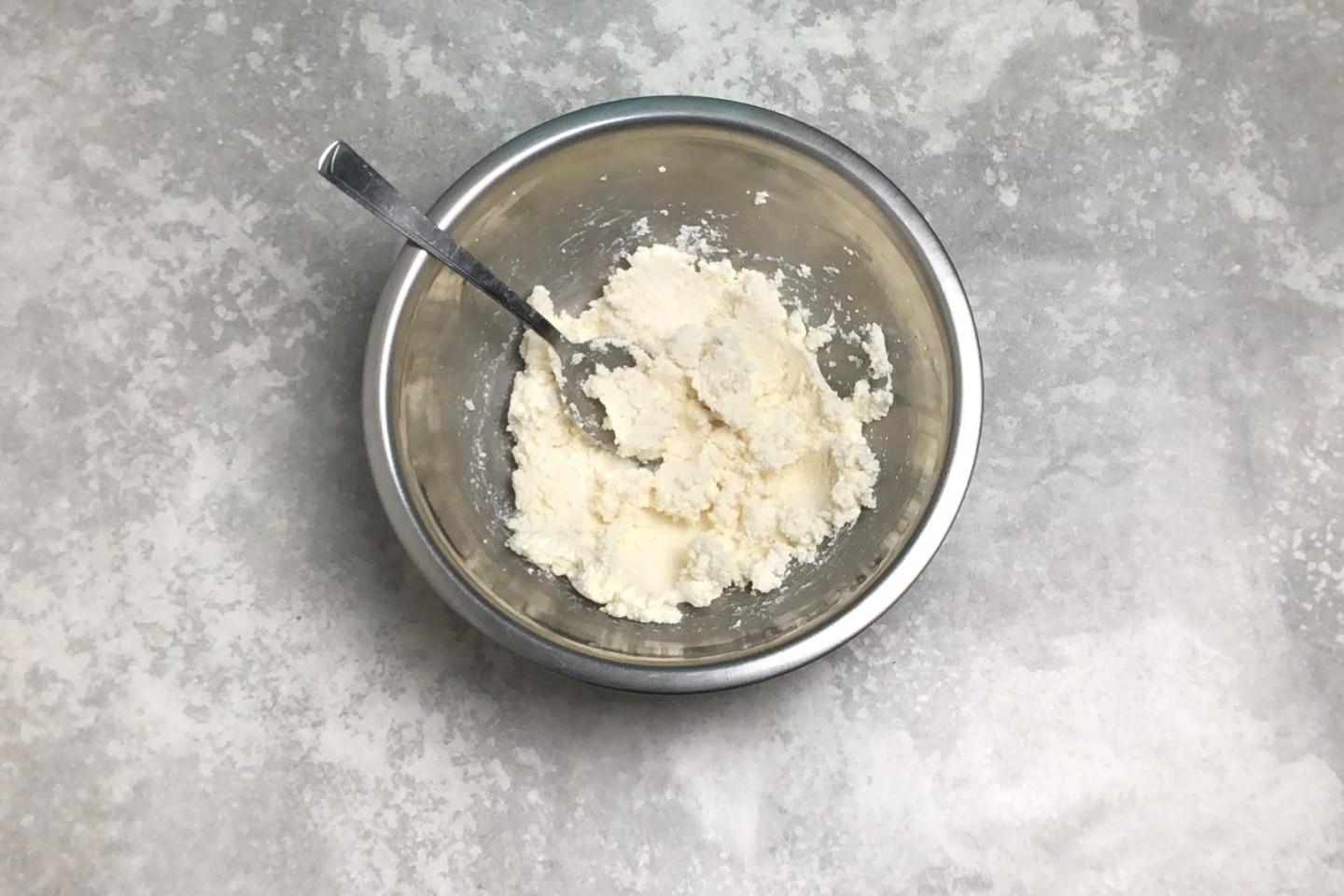
Mix the cottage cheese well until smooth, and decide whether to add an egg.
-
Step 9:
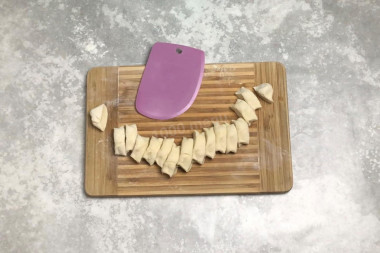
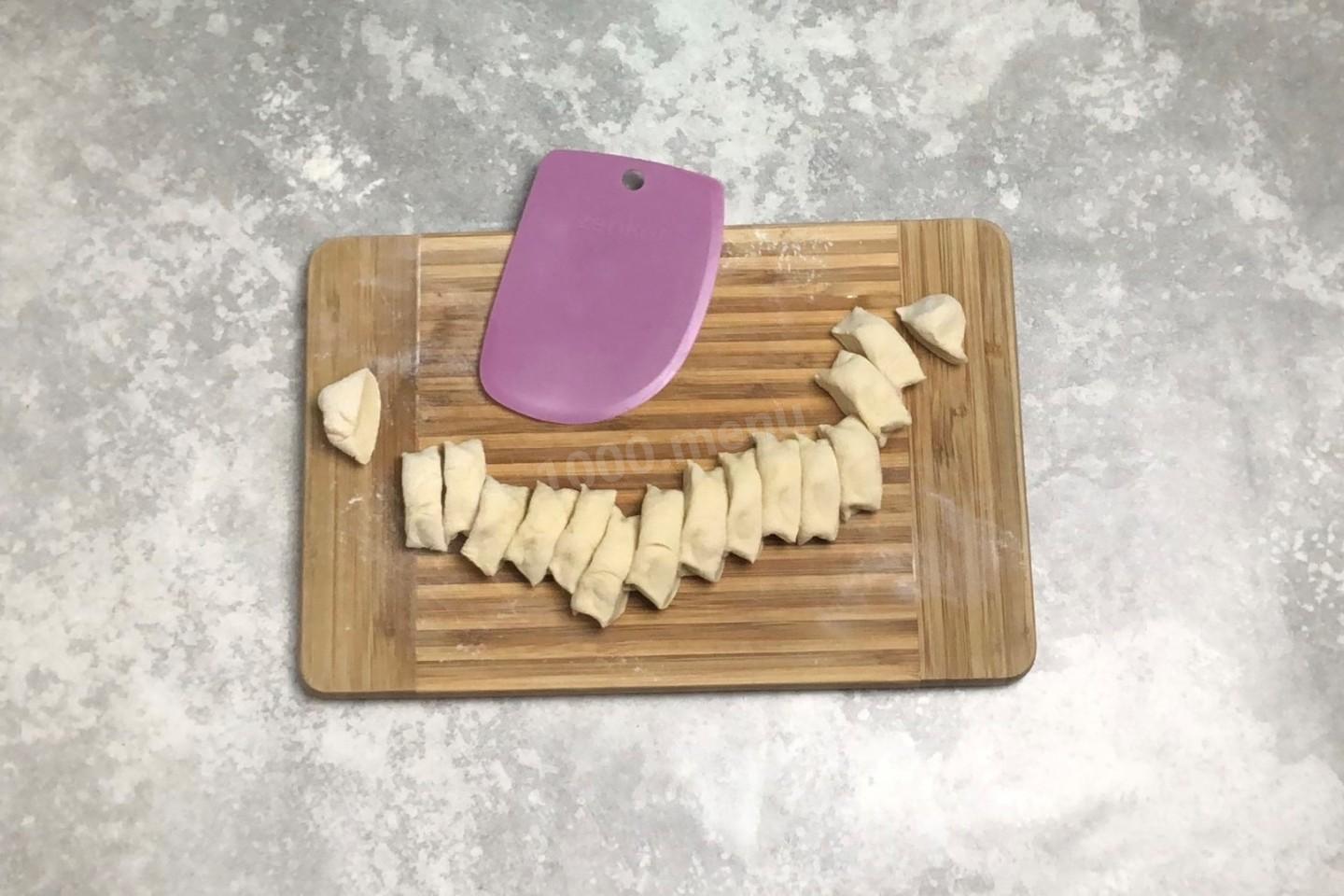
Divide the rested dough into three parts. Leave two under the towel. Roll the third part into a long rope and cut it into pieces. This is one way to shape vareniki. You can also roll the dough into a sheet, cut out circles, and shape them from those. With my method, all the dough gets used up, with nothing left over.
-
Step 10:
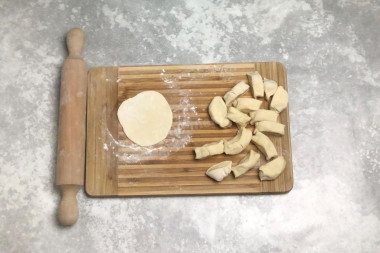
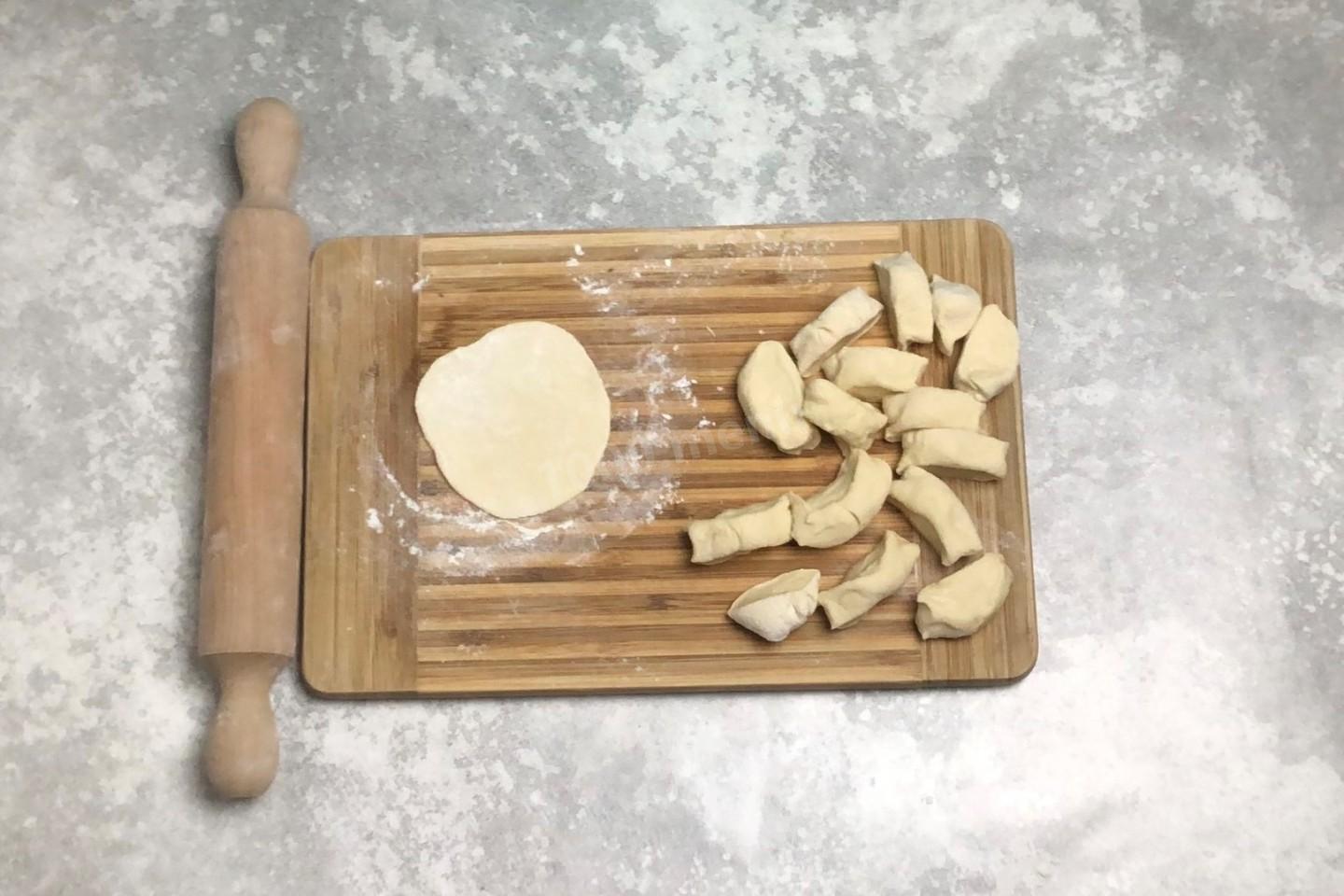
Roll each piece out into a circle. Dust the board lightly with flour, as the dough will get a little sticky.
-
Step 11:
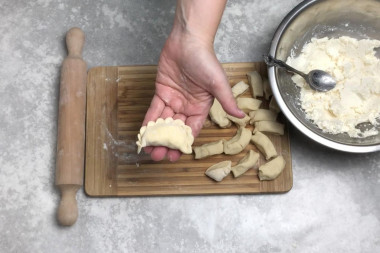
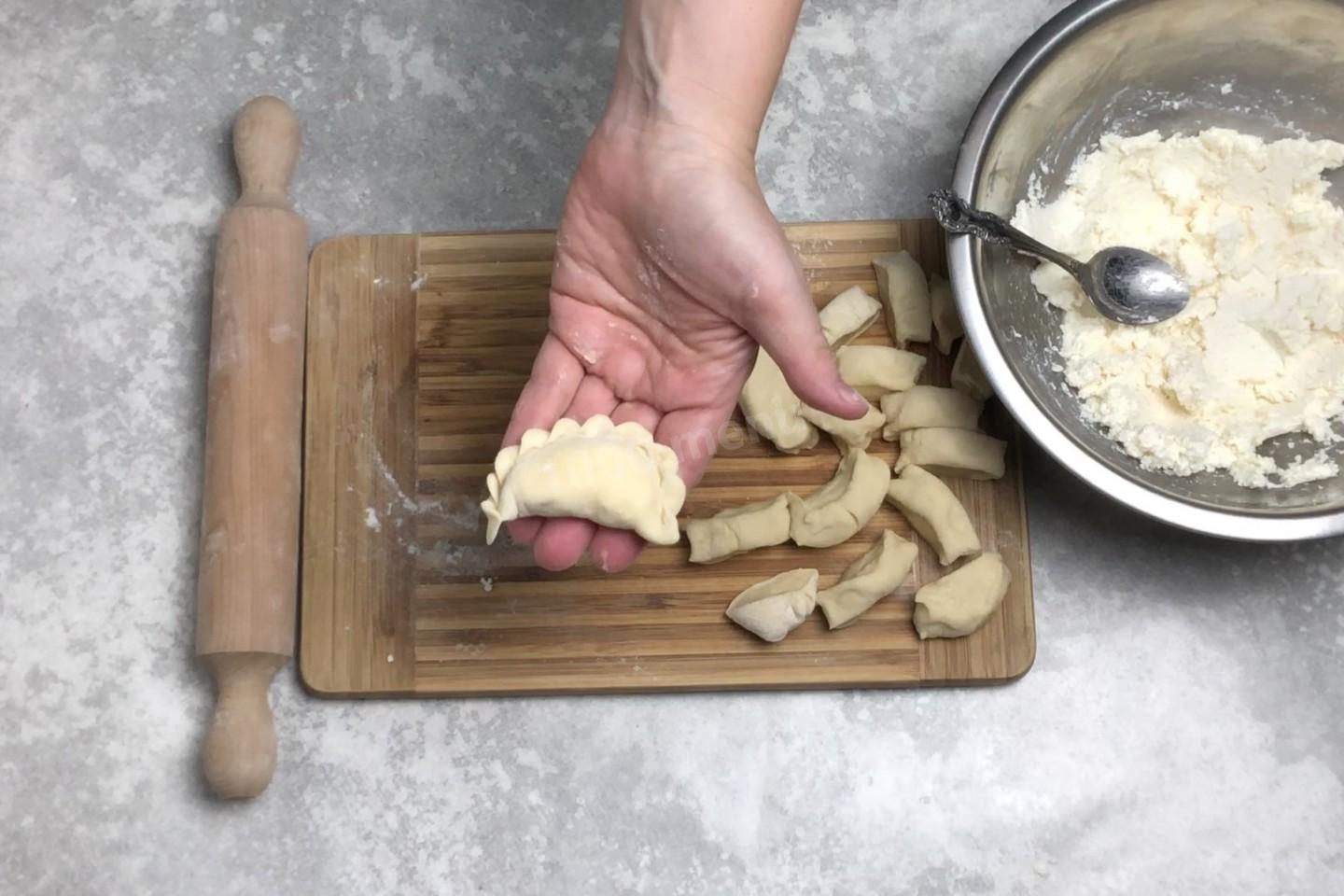
Put a spoonful of filling on the circle. Pinch the edges shut to form a varenik. You can leave it like that, or crimp the edge decoratively — it looks nice and seals more securely. Make all the vareniki the same way. Set the finished vareniki on a flour-dusted board.
-
Step 12:
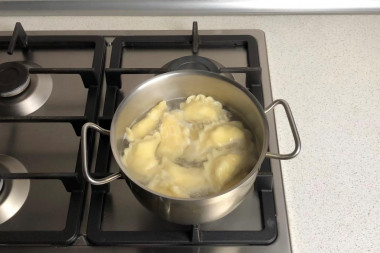
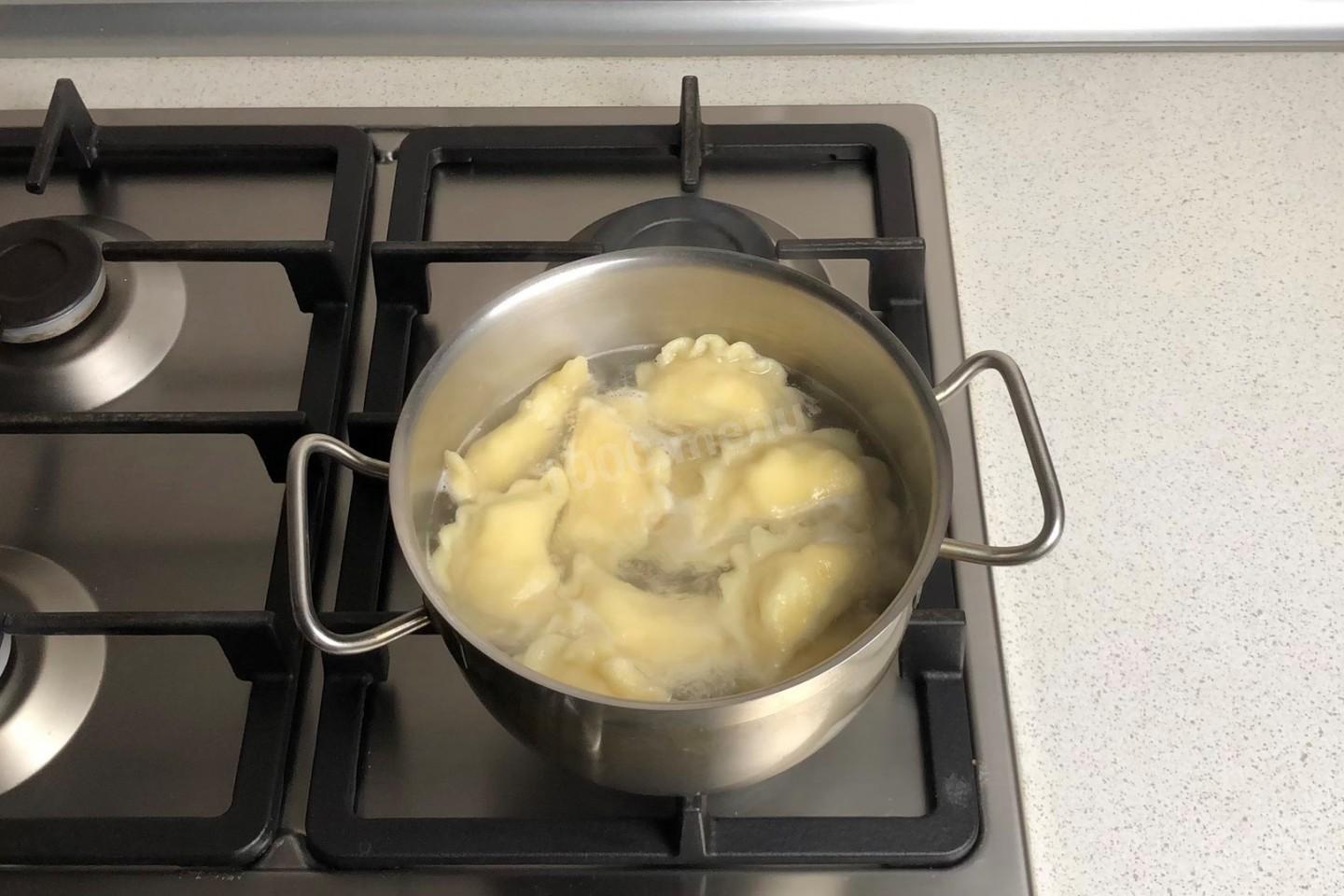
How do you cook vareniki? Bring water to a boil in a pot. Use plenty of water so they're not crowded as they cook. Salt the water. Drop in the vareniki. Stir gently so they don't stick to the bottom. The vareniki will soon float to the surface. Boil them for just a couple of minutes. Lift the vareniki out with a slotted spoon onto a plate and serve immediately. Vareniki are served with butter, sour cream, and jam, to taste.
- A good basic recipe. A great dough, easy to work with. A lot depends on the cottage cheese, so don't skimp on it. These vareniki can be frozen for later: put them on a board in the freezer for a couple of hours, then transfer them, now firm, into bags. They'll keep for several months.
- Be prepared: you may need more or less flour than the recipe states. Go by the desired consistency of the dough, not the amount of flour. To avoid mistakes, read up on flour and its properties!
- For cooking, it's better to use filtered or bottled water with a neutral taste. If you use tap water, keep in mind that it can give the dish an unpleasant off-flavor.
Caloric content of the products possible in the composition of the dish
- Chicken egg - 157 kcal/100g
- Egg white - 45 kcal/100g
- Egg powder - 542 kcal/100g
- Egg yolk - 352 kcal/100g
- Ostrich egg - 118 kcal/100g
- Cottage cheese, 40% fat - 466 kcal/100g
- Cottage cheese, 20% fat - 233 kcal/100g
- Cottage cheese, 18% fat - 226 kcal/100g
- Cottage cheese, 10% fat - 156 kcal/100g
- Low-fat cottage cheese - 75 kcal/100g
- Cottage cheese with sour cream - 260 kcal/100g
- Fruit cottage cheese - 147 kcal/100g
- Soft diet cottage cheese - 170 kcal/100g
- Vitalinia cottage cheese - 64 kcal/100g