Homemade Barbecue Sauce
A sweet-and-sour taste, from always-available ingredients. Barbecue sauce was invented by Americans but has become hugely popular all over the world, thanks to how well it pairs with so many dishes, from plain French fries to all sorts of meats. It's simple to make and there are many recipes, but they often include ingredients that not every cook in our part of the world keeps on hand — Worcestershire sauce, for one, which itself contains anywhere from 20 to 40 components! What makes this recipe appealing is that everything is right there in every kitchen.


Cooking method
-
Step 1:
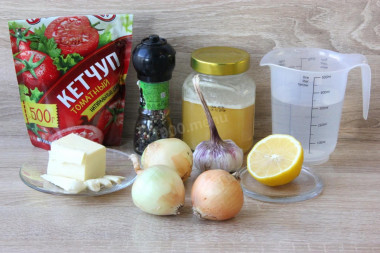
Gather the ingredients. The water is plain tap or filtered water. The butter can even come straight from the freezer. The honey can be either runny or thick, as long as it's natural.
-
Step 2:
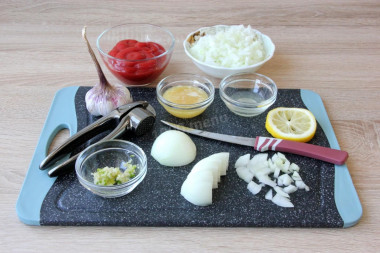
The sauce comes together very fast, so get everything ready up front. Weigh the ketchup and honey, squeeze the lemon juice, press the garlic cloves through a press, and finely chop the onion. Wash, dry, and finely chop the herbs too.
-
Step 3:
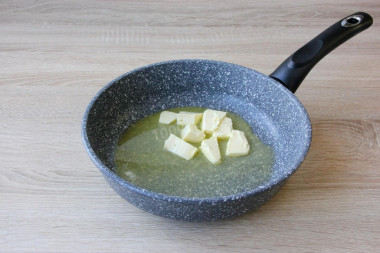
Melt the butter. Cut it into small pieces, put it in a cold skillet, and only then turn on medium heat. That way the butter melts gently and won't burn.
-
Step 4:
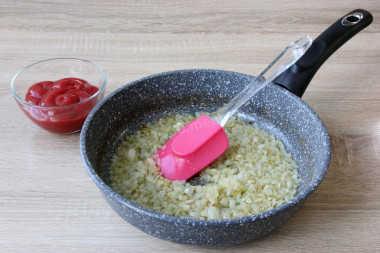
Don't wait for the butter to melt completely — add the onion. Sauté the onion for about 6 minutes, remembering to stir. As soon as the onion turns translucent and starts to turn golden, add the ketchup. Stirring, cook it until it begins to set — a couple of minutes.
-
Step 5:
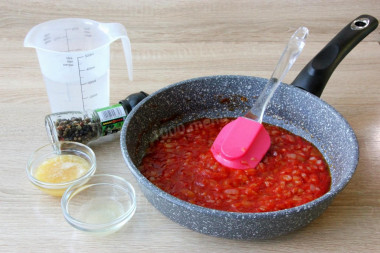
Pour in the water, add the honey, lemon juice, and pepper, and stir.
-
Step 6:
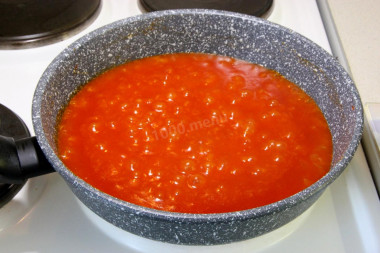
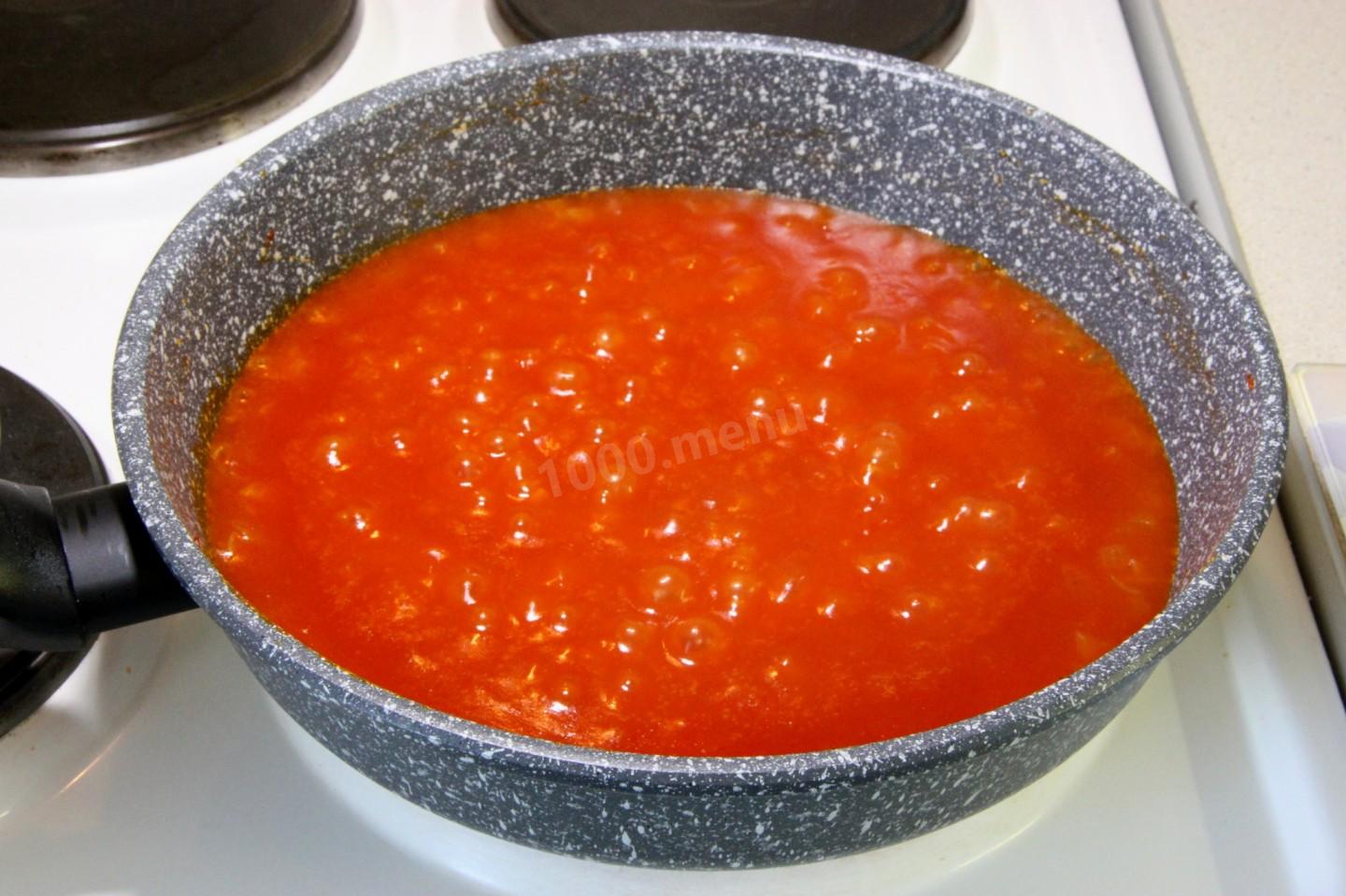
Reduce the heat to low, or just above — the sauce should simmer quietly, without bubbling up or going still. Cook for 8–10 minutes, stirring constantly.
-
Step 7:
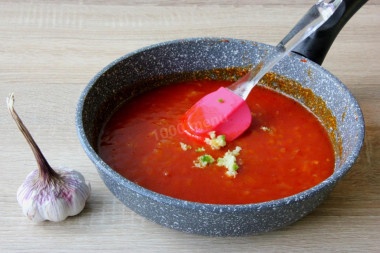
Take it off the stove and add the garlic.
-
Step 8:
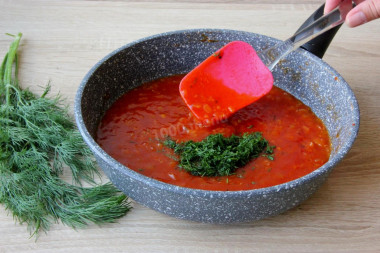
Then the chopped herbs. (I added a couple of sprigs each of dill and cilantro — just the tenderest leaves, no stems. You can swap the herbs to your preference, but fresh ones taste best.) Stir, taste, and add salt, pepper, or garlic if needed. Then return it to the warm stove and heat it a little, without letting it boil.
-
Step 9:
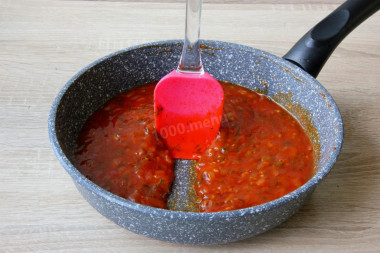
The finished sauce has a rich red-orange color. Run a spatula along the bottom of the pan: if a trail forms and then closes back up right away, the consistency is right — no need to reduce it any thicker. The taste is tomatoey, sweet-and-sour, with a pronounced garlic note. There's some heat, but not a burning one, a slight honey flavor, and the aroma of herbs. The flavor palette is many-sided, but everything is in balance and the combination is harmonious.
-
Step 10:
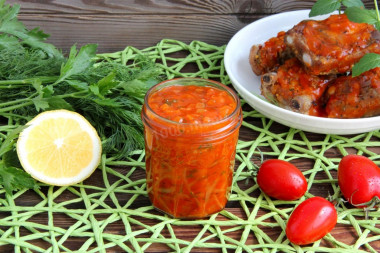
Cool the sauce and serve it with any meat, sausages, cutlets, pasta, or rice. You can transfer it to a jar and keep it in the refrigerator, or take it on a picnic — after all, that's what barbecue sauce is for.




- Barbecue sauce almost always contains one common element: tomatoes — as tomato paste, juice, or ketchup. For add-ins, you can use paprika, chili, and various other peppers, as well as mustard, soy and rice sauce, vinegar, honey, and sugar. There are recipes where the sauce can be made without any cooking, just by mixing certain components together. Even ketchup, mayonnaise, garlic, and herbs — that's it, that'll be a barbecue sauce! With such a wide choice of ingredients and methods, every cook can create a recipe to their own taste.
Caloric content of the products possible in the composition of the dish
- Honey - 400 kcal/100g
- Garlic - 143 kcal/100g
- Ground black pepper - 255 kcal/100g
- Dill - 38 kcal/100g
- Butter 82% - 734 kcal/100g
- Unsalted table butter - 709 kcal/100g
- Unsalted farmhouse butter - 661 kcal/100g
- Salted farmhouse butter - 652 kcal/100g
- Ghee - 869 kcal/100g
- Water - 0 kcal/100g
- Onion - 41 kcal/100g
- Lemon juice - 16 kcal/100g
- Fresh cilantro - 25 kcal/100g
- Ketchup - 93 kcal/100g