Homemade Mustard from Mustard Powder
The simplest, most affordable, and easiest method! Your homemade mustard from mustard powder will turn out far better than store-bought if you follow one piece of advice. To keep the powder from clumping or sticking to the sides of the container, do exactly as the recipe says!


Cooking method
-
Step 1:
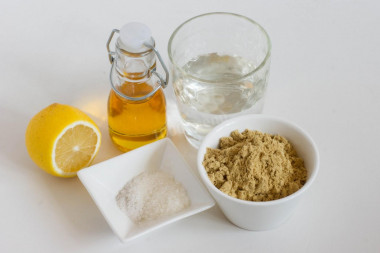
How do you make mustard from mustard powder? Gather everything on the list. Use any vegetable oil you like. Use bottled, filtered, or boiled water. Salt - fine-grained is best.
-
Step 2:
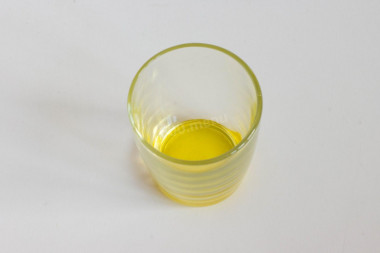
Pour a little vegetable oil into the bottom of a clear glass or jar. It keeps the mustard powder from sticking to the bottom as you stir. The clear sides also make it easier to mix thoroughly, since you can immediately see any dry powder left behind.
-
Step 3:
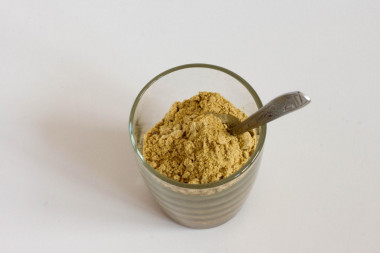
Put the mustard powder into the glass with the oil.
-
Step 4:
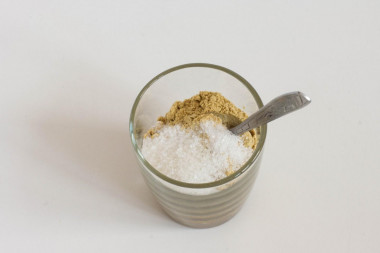
Add the salt and sugar. Stir a little.
-
Step 5:
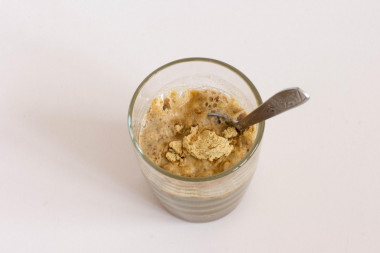
Now add warm (not hot!) water a little at a time - don't rush. Pour in a bit, stir, then add more and stir again. Mustard soaks up water readily, so add just enough to reach the consistency of a thin sour cream. Don't leave a single dry spot in the glass.
-
Step 6:
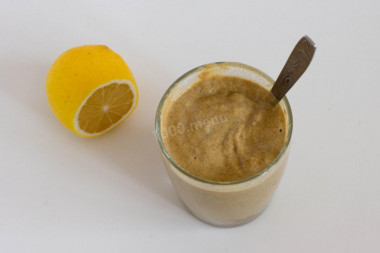
Now add a little lemon juice and leave the mustard in a warm place for a few hours to infuse and "ripen." Ripened mustard is sharper and more pungent.


- One of everyone's favorite condiments, mustard adds a little something to all sorts of dishes. There are tons of ways to make this sauce. Mustard is especially good after it sits for a while, first in a warm spot (sometimes a jar of mustard is even set on a radiator or lowered into hot water). Once you've mastered plain mustard, you can start experimenting - adding honey, apples, and more.
- It comes together in minutes, and after the few hours it needs to infuse, you'll have a wonderful homemade sauce to round out your meals. Instead of water you can use brine (from pickles, tomatoes, or sauerkraut); in that case you won't need to add salt, sugar, or lemon juice. If needed, you can swap the lemon juice for vinegar. The key is to find good-quality mustard powder of an even yellow color - then you're set for homemade mustard!
- For the best result, use neutral-tasting filtered or bottled water. Tap water can give the dish an unpleasant, off taste.
Caloric content of the products possible in the composition of the dish
- Table mustard - 417 kcal/100g
- Mustard - 417 kcal/100g
- Granulated sugar - 398 kcal/100g
- Sugar - 398 kcal/100g
- Vegetable oil - 873 kcal/100g
- Salt - 0 kcal/100g
- Water - 0 kcal/100g
- Lemon juice - 16 kcal/100g