Classic tomato paste
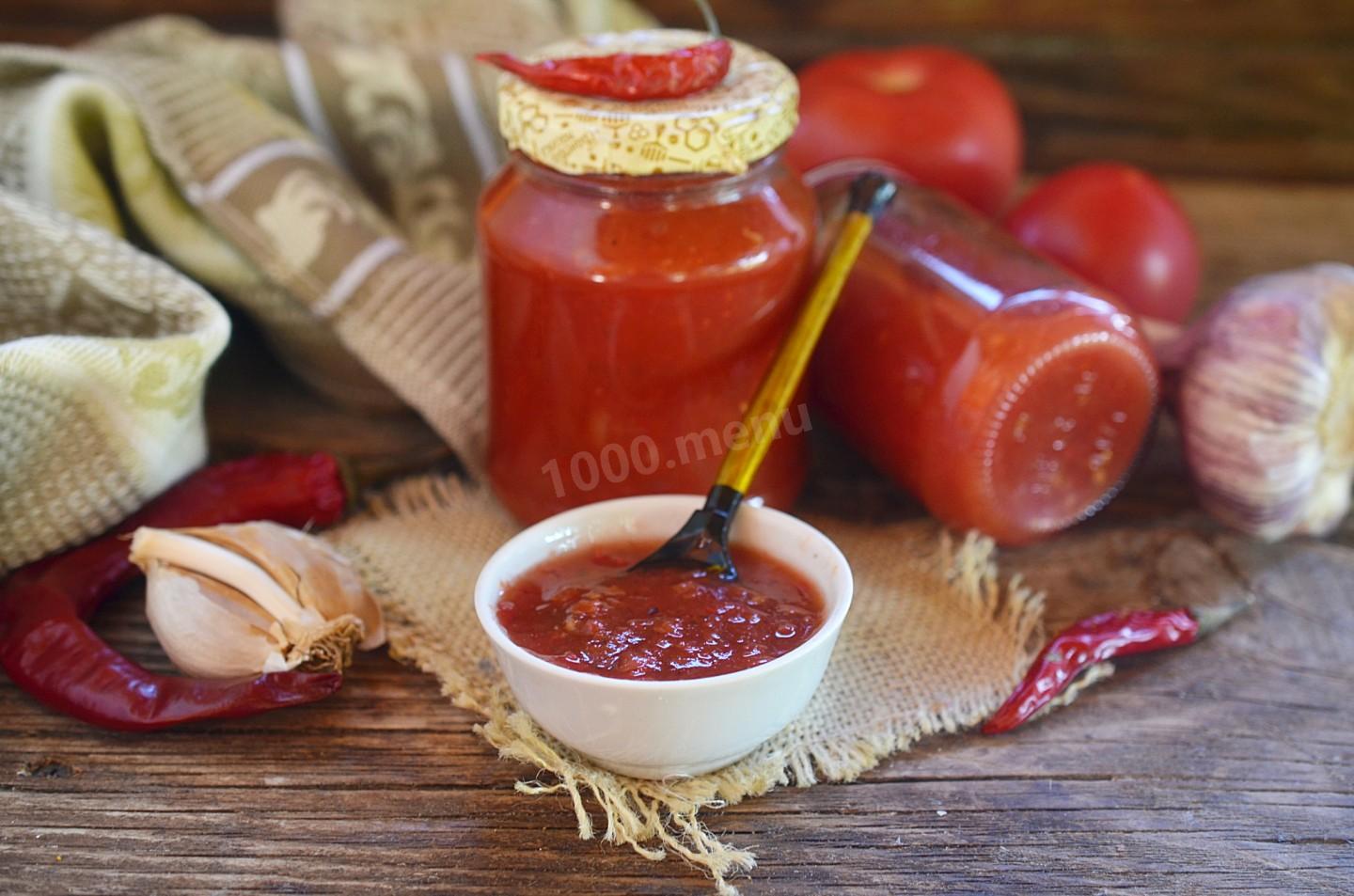
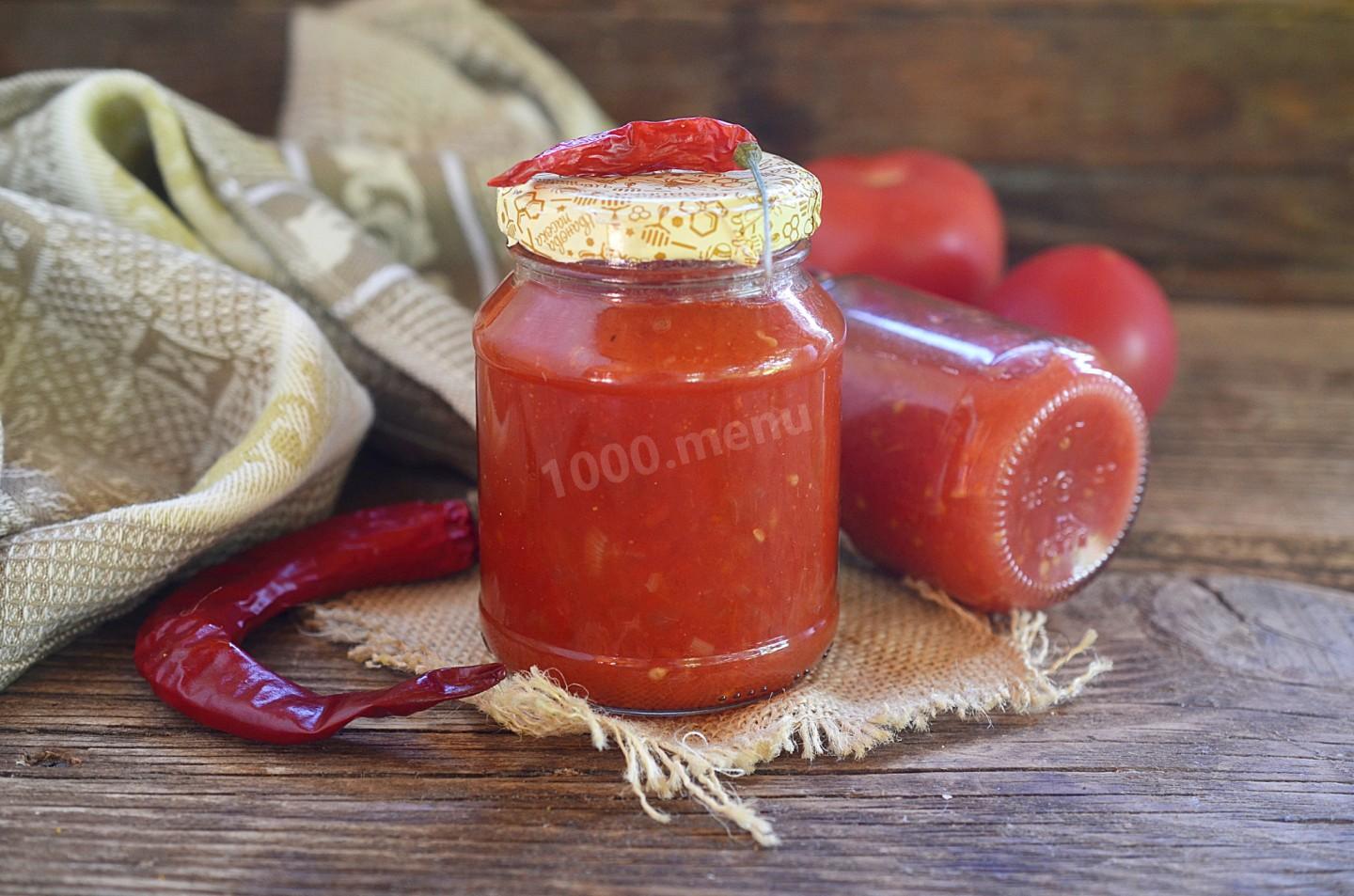
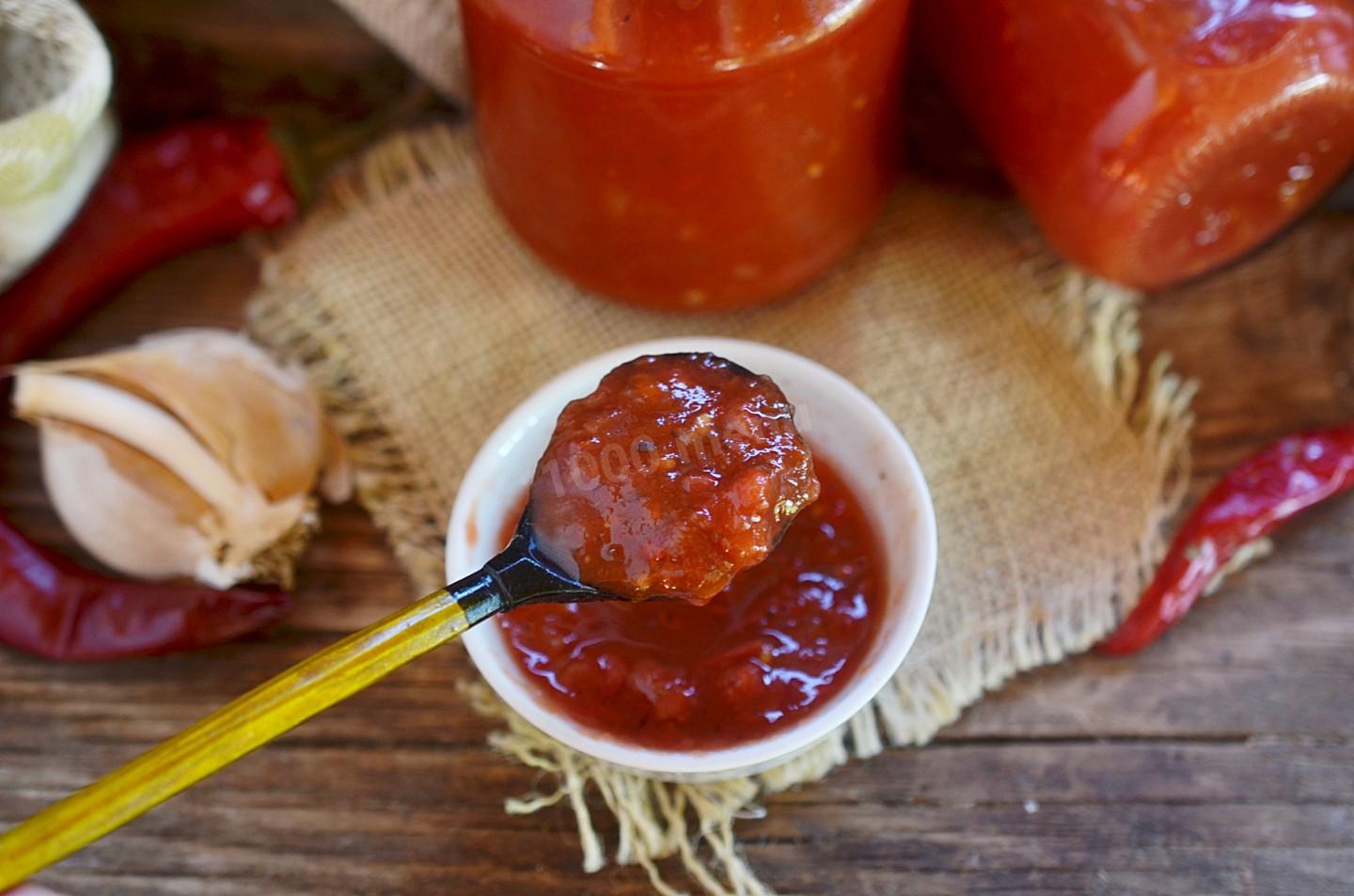
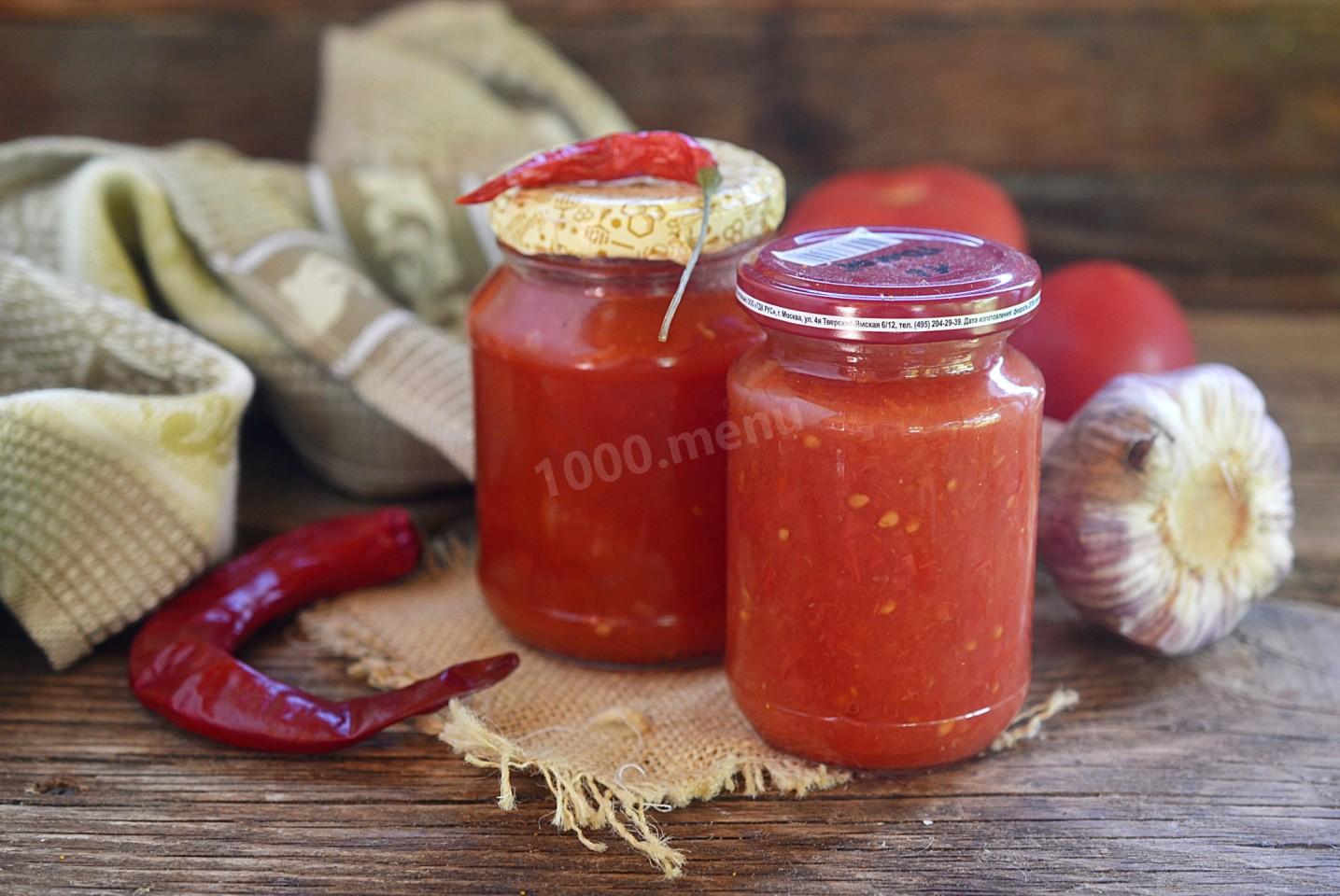
A simple, budget-friendly tomato paste recipe! Homemade tomato paste is a must-have preserve for every cook. It comes out thick, fragrant, and packed with bright tomato flavor — perfect for sauces, soups, and all kinds of dishes!

Cooking method
-
Step 1:
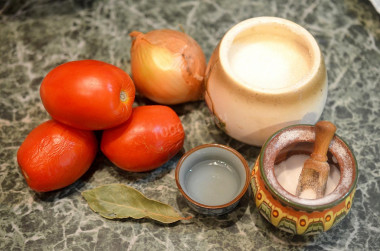
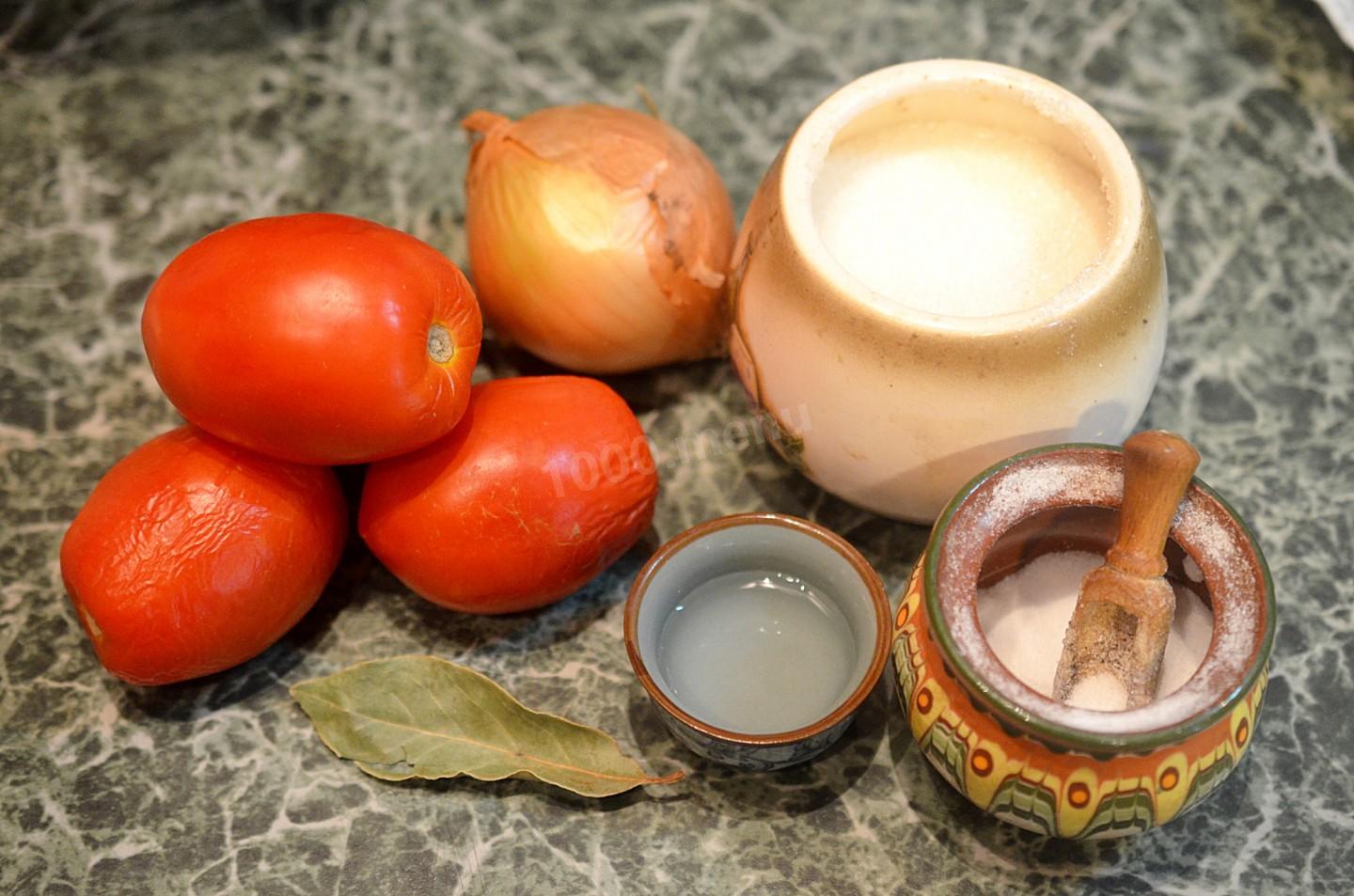
How do you make tomato paste? Gather all the ingredients. The main one, of course, is tomatoes. They should be ripe and meaty. I suggest choosing them by smell — really good tomatoes have a strong tomato aroma. I'm using apple cider vinegar, but ordinary 6-9% table vinegar works too. If you have vinegar essence, dilute it 1 part to 9.
-
Step 2:
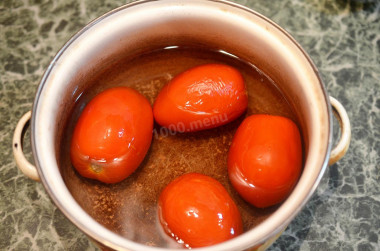
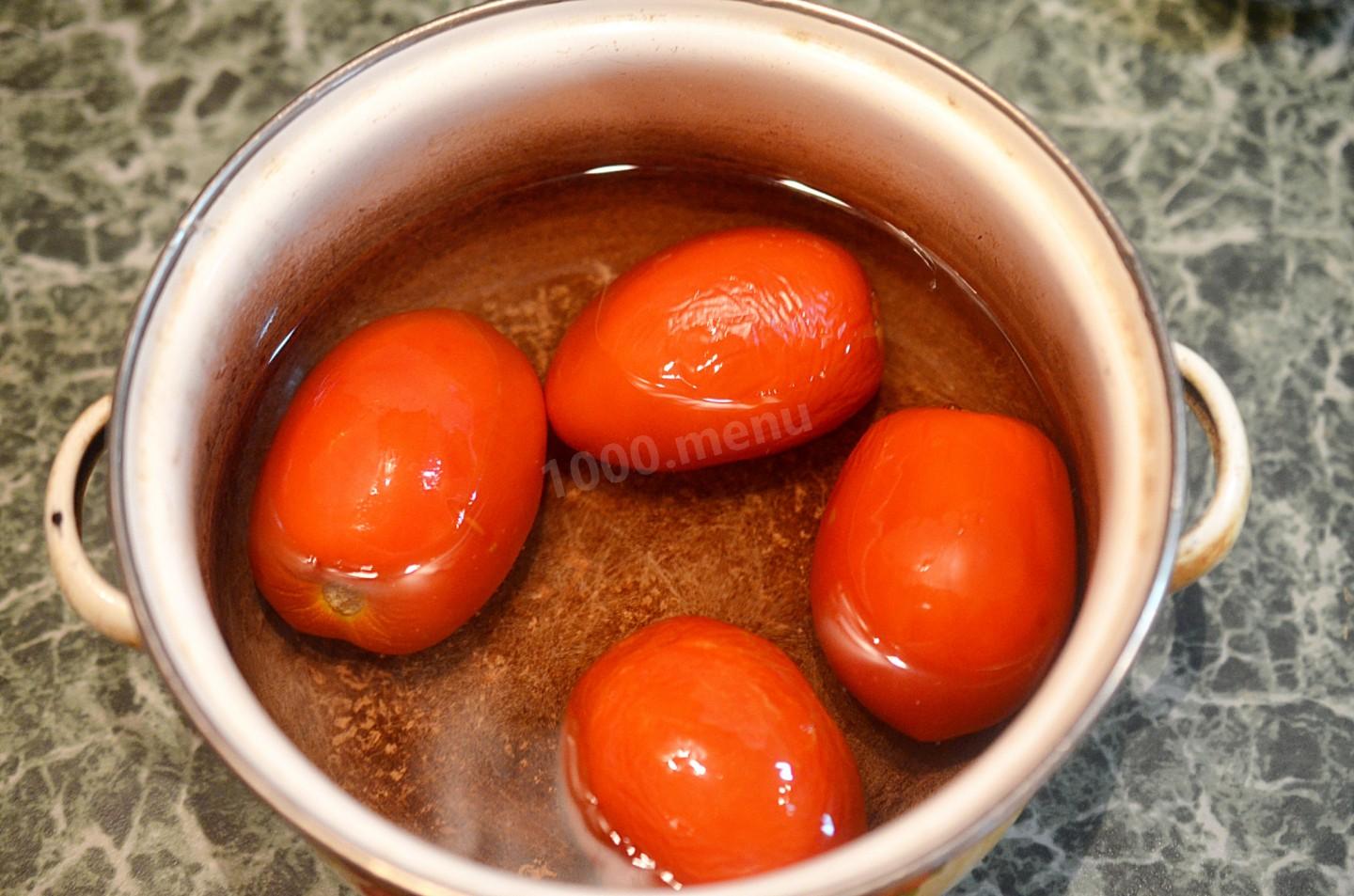
Drop the tomatoes into boiling water for about 5 minutes, then remove the stem ends and slip off the skins.
-
Step 3:
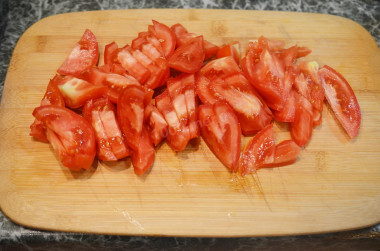
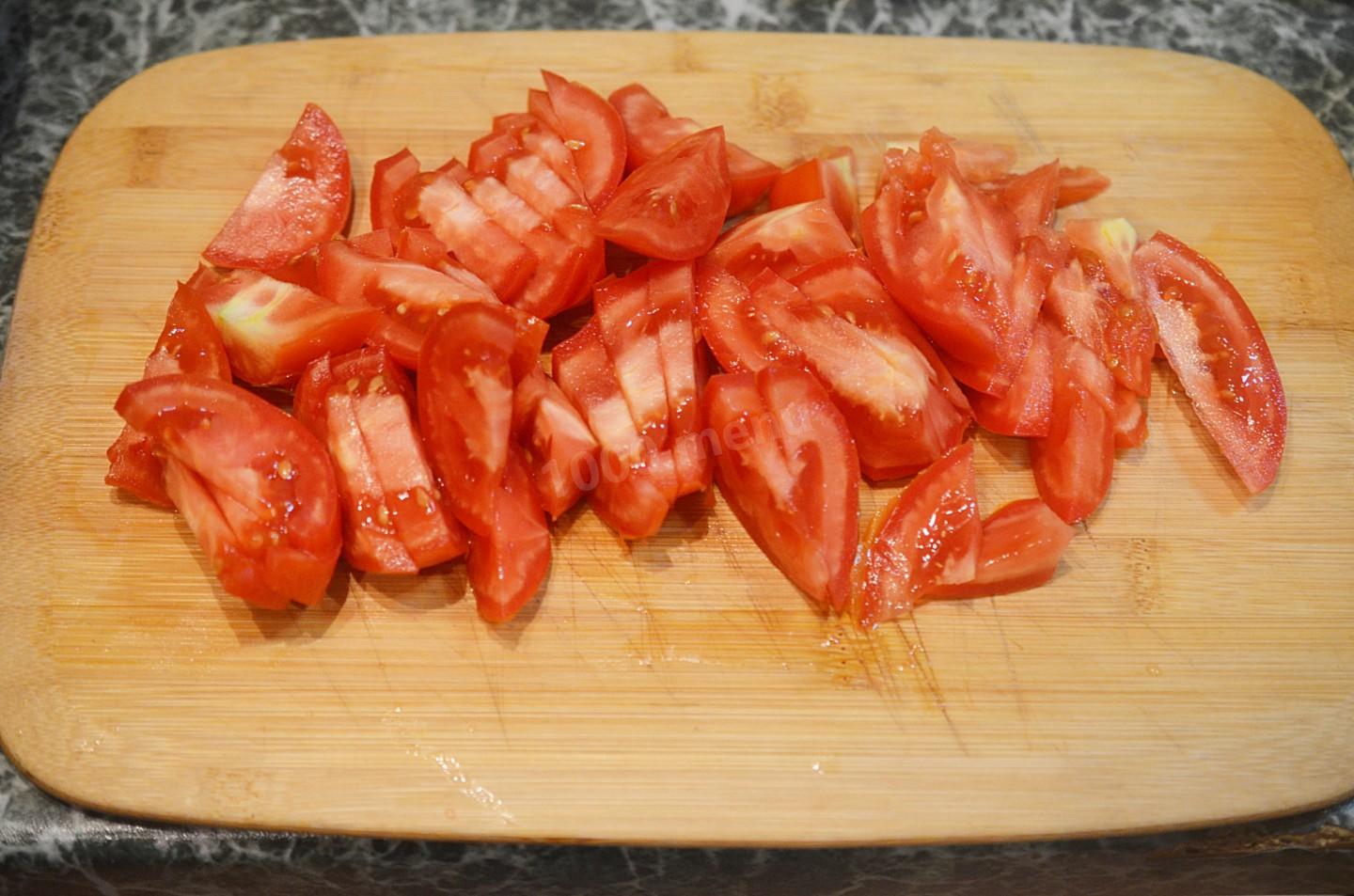
Roughly chop the tomato flesh.
-
Step 4:
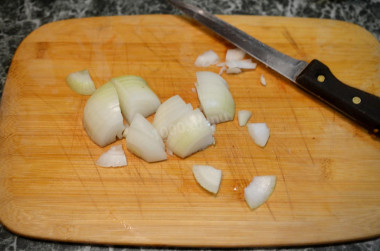
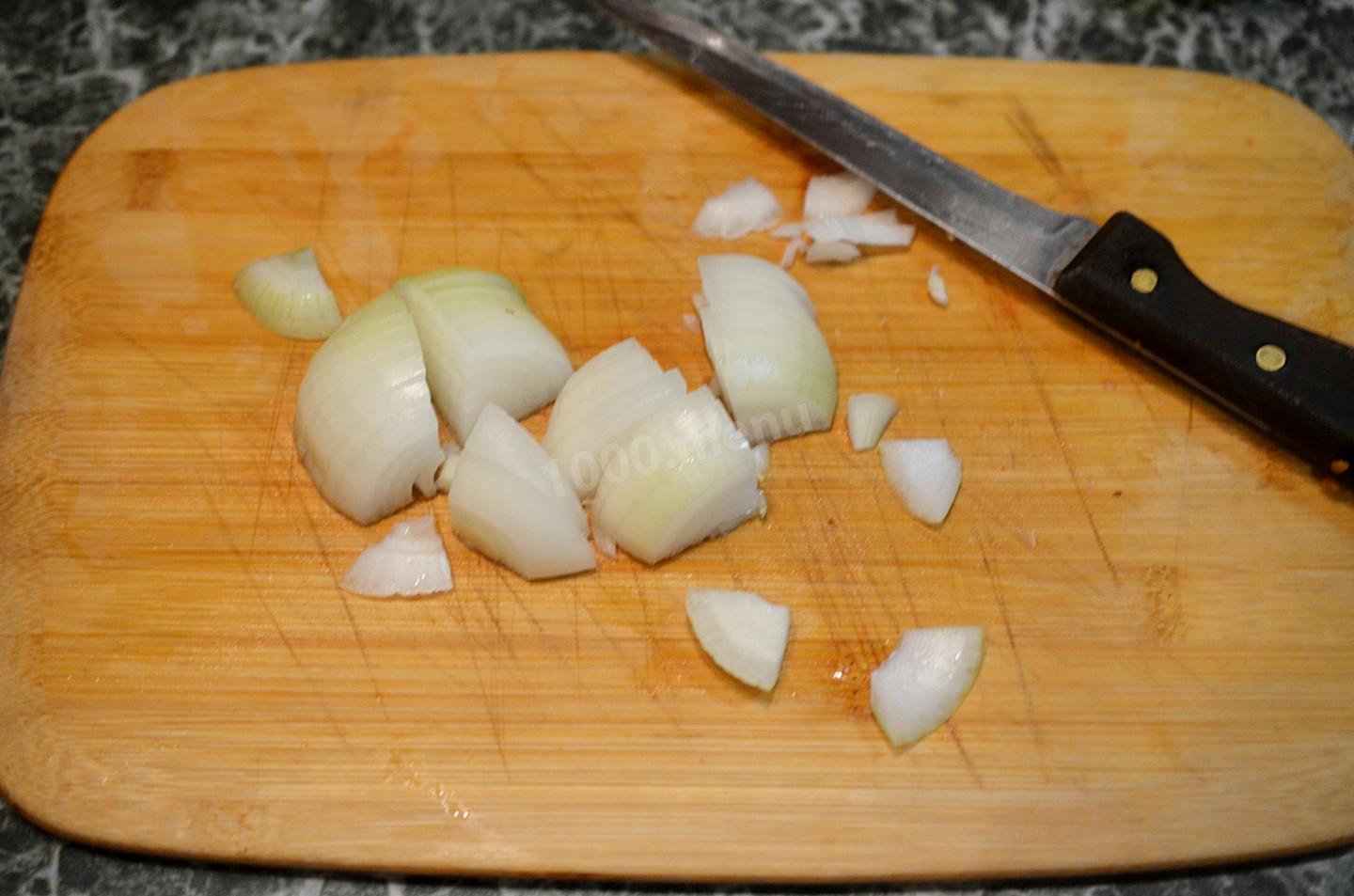
Peel and roughly chop the onion.
-
Step 5:
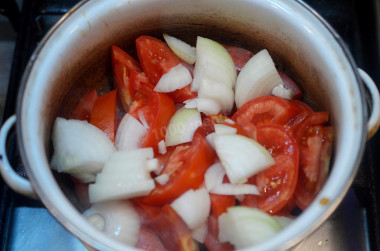
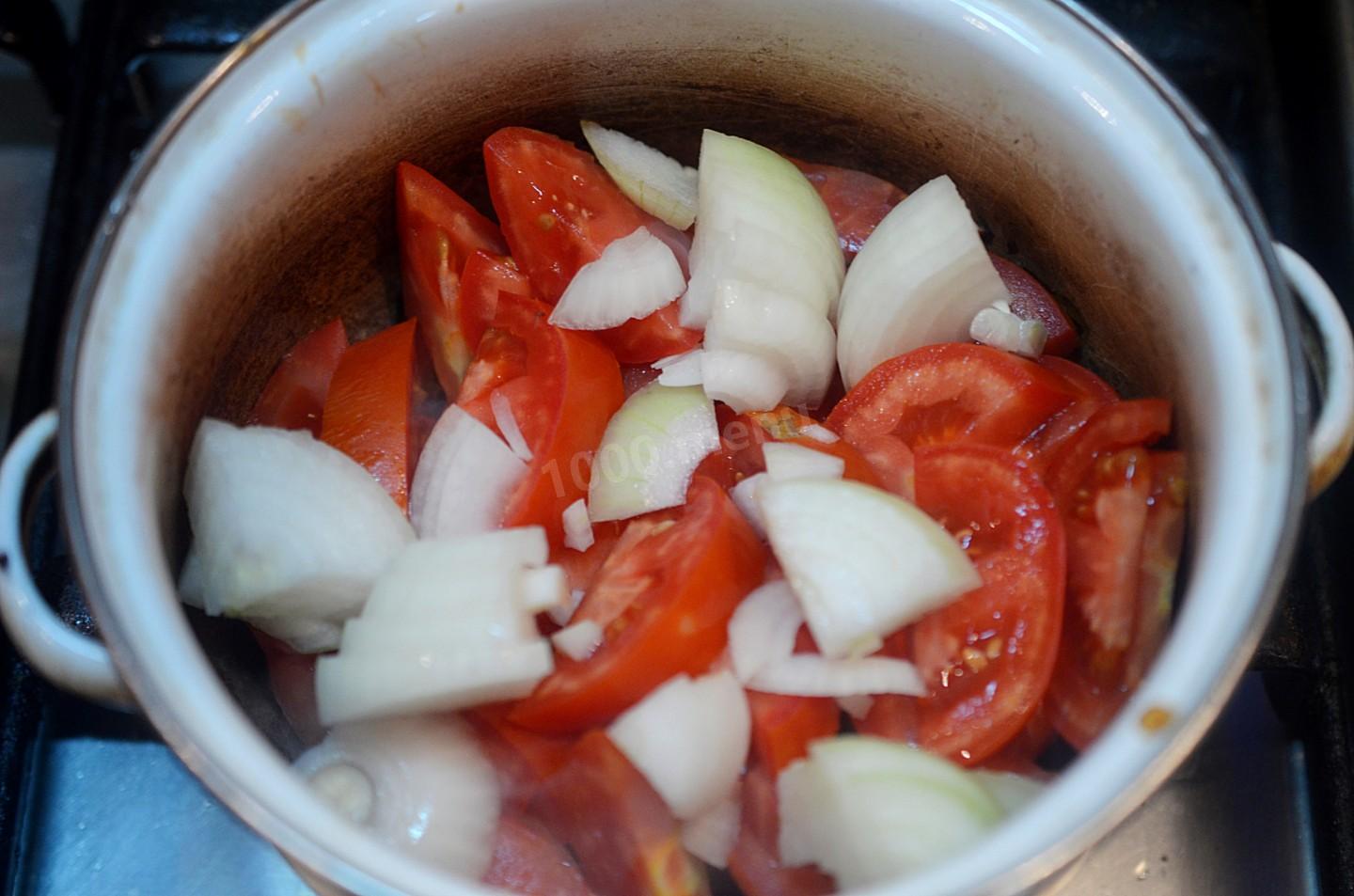
Put the tomato flesh in the pot you'll cook the paste in and simmer it over the lowest heat for 5 minutes, then add the onion and simmer them together. Pour off the juice that releases.
-
Step 6:
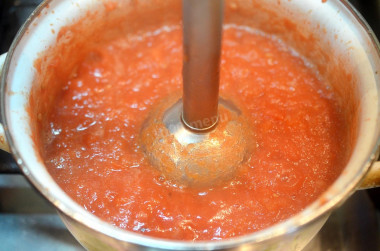
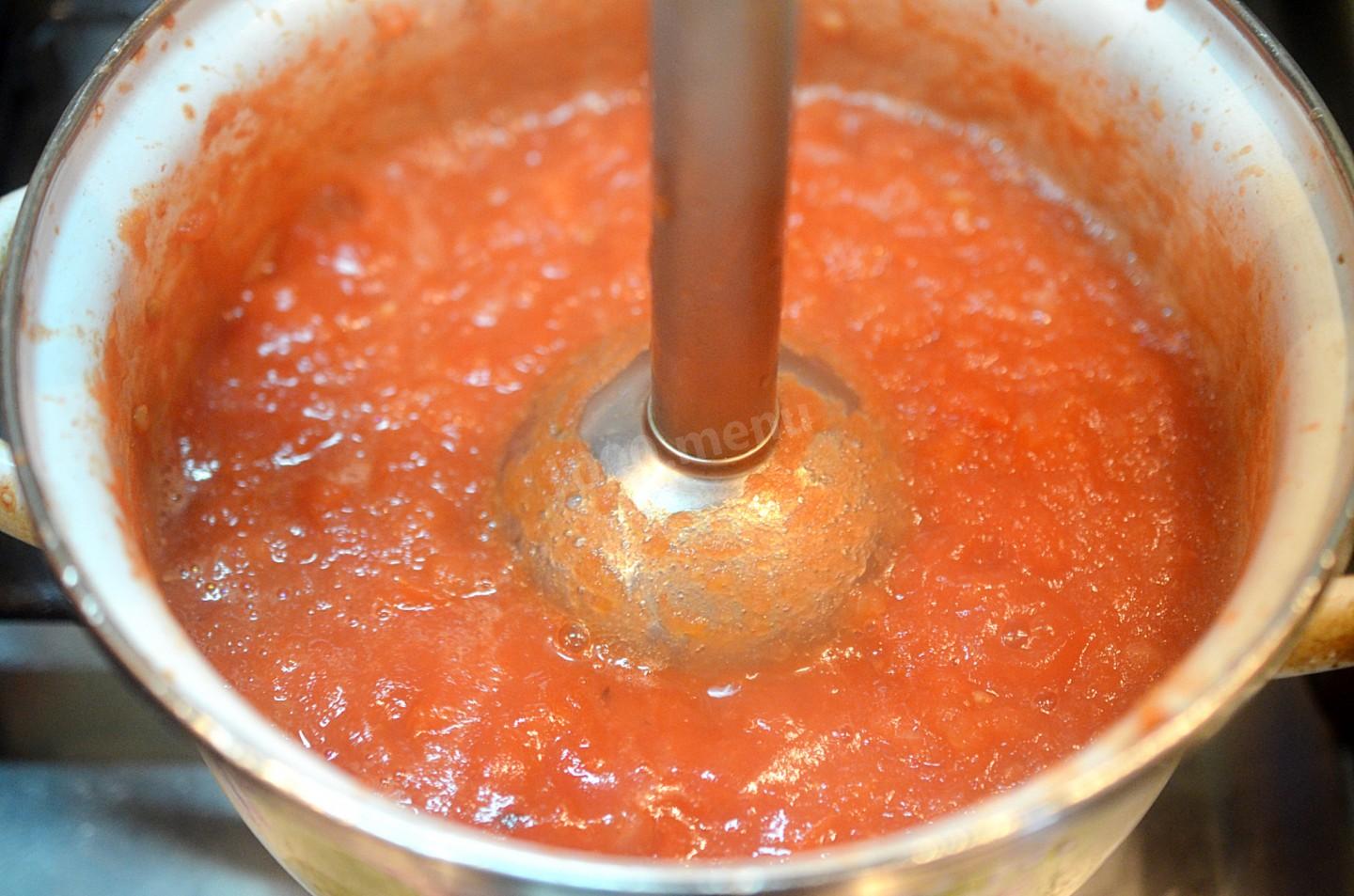
Blend everything smooth with a blender. You could of course run it through a meat grinder, but moving the hot mixture back and forth isn't very appealing.
-
Step 7:
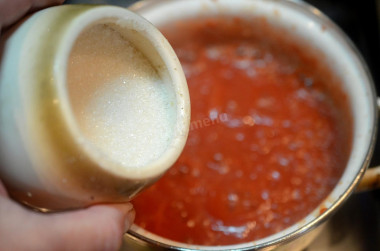
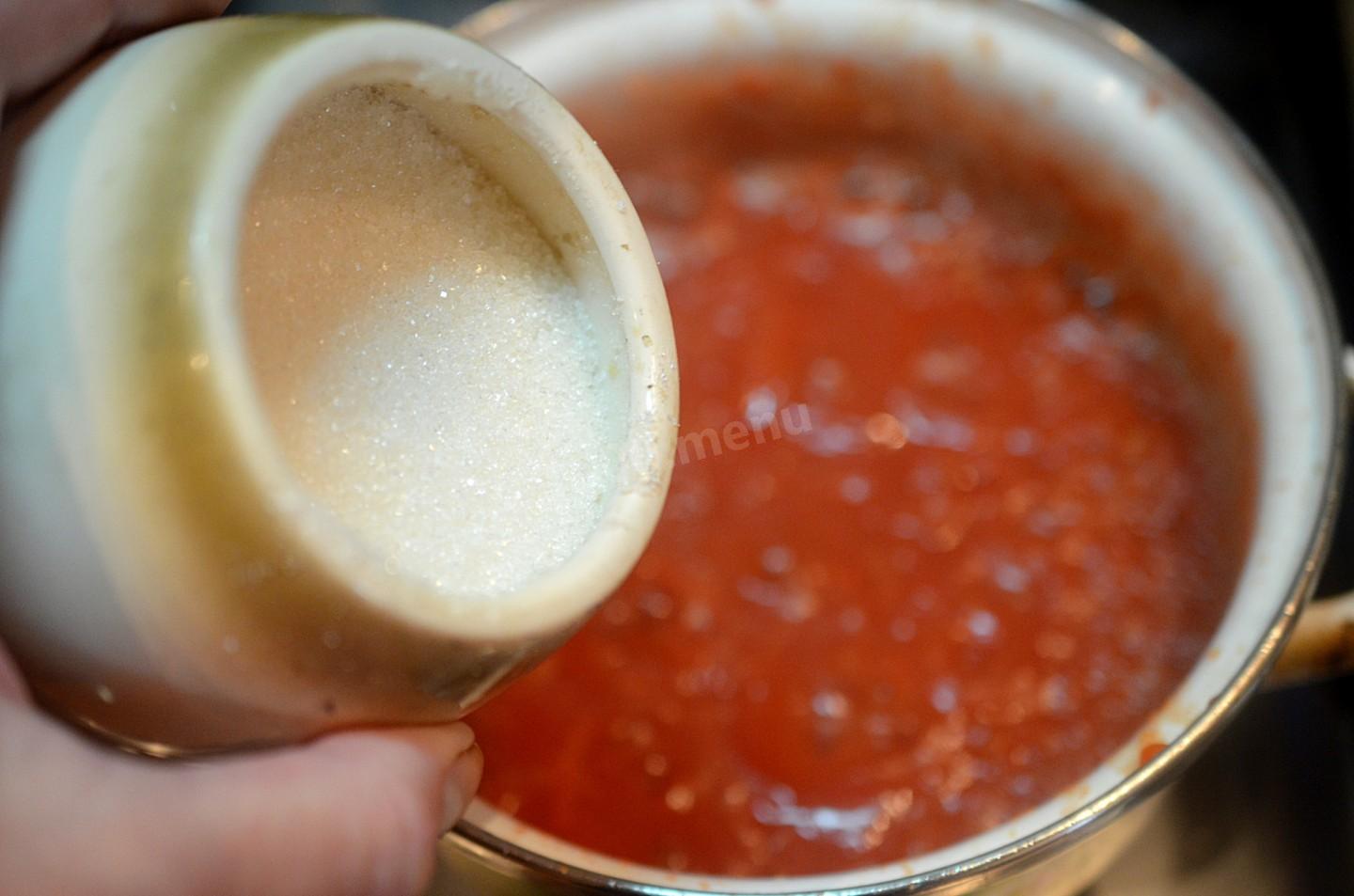
Add the sugar and salt to the tomato puree.
-
Step 8:
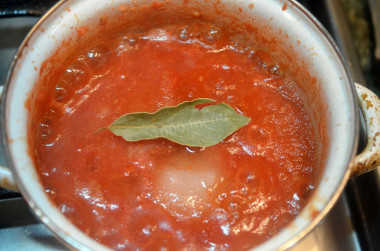
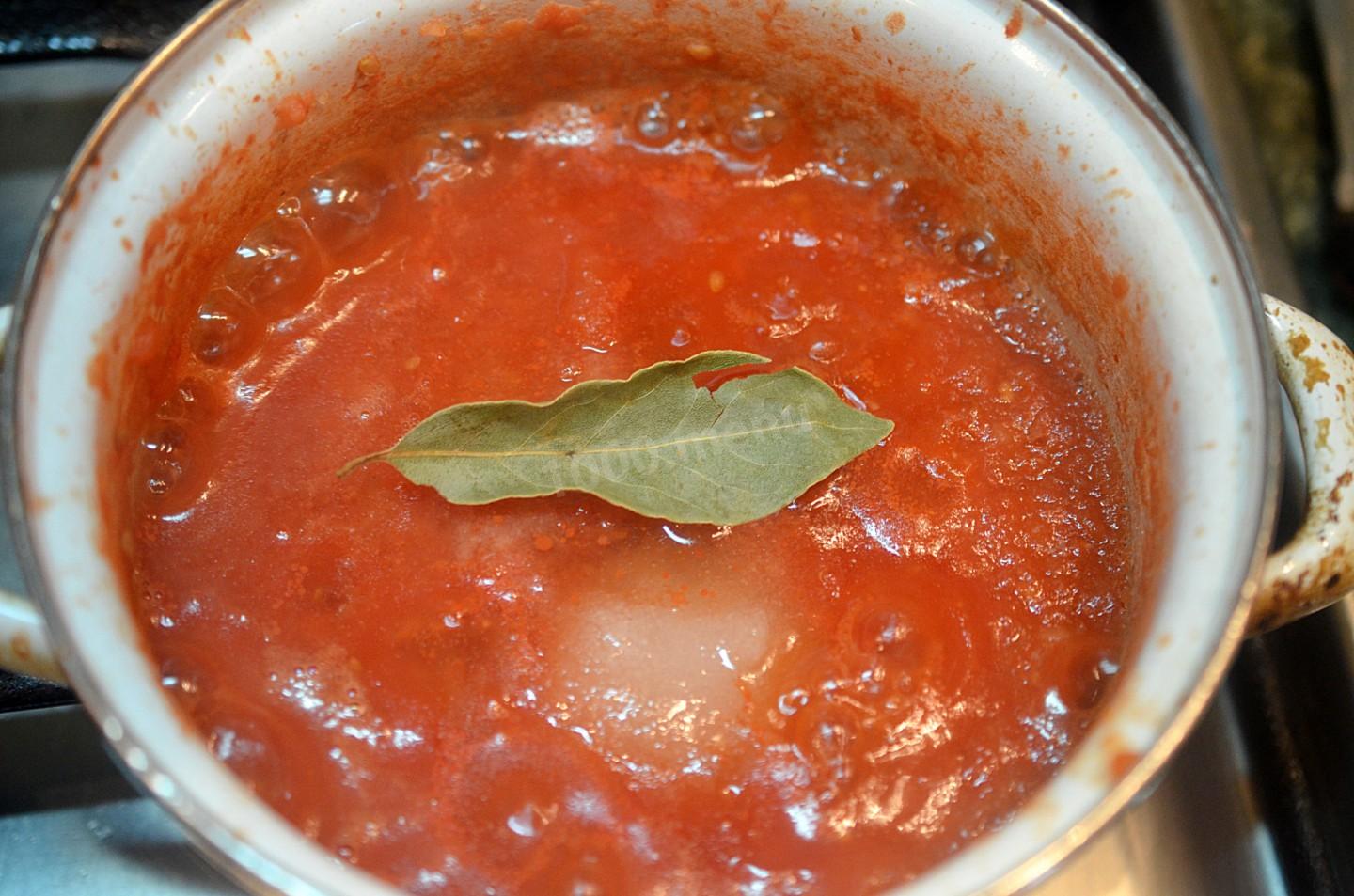
Add the bay leaf. If you like, add other spices too: allspice, chili, dried dill or parsley — whatever you fancy.
-
Step 9:
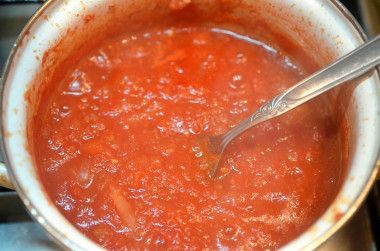
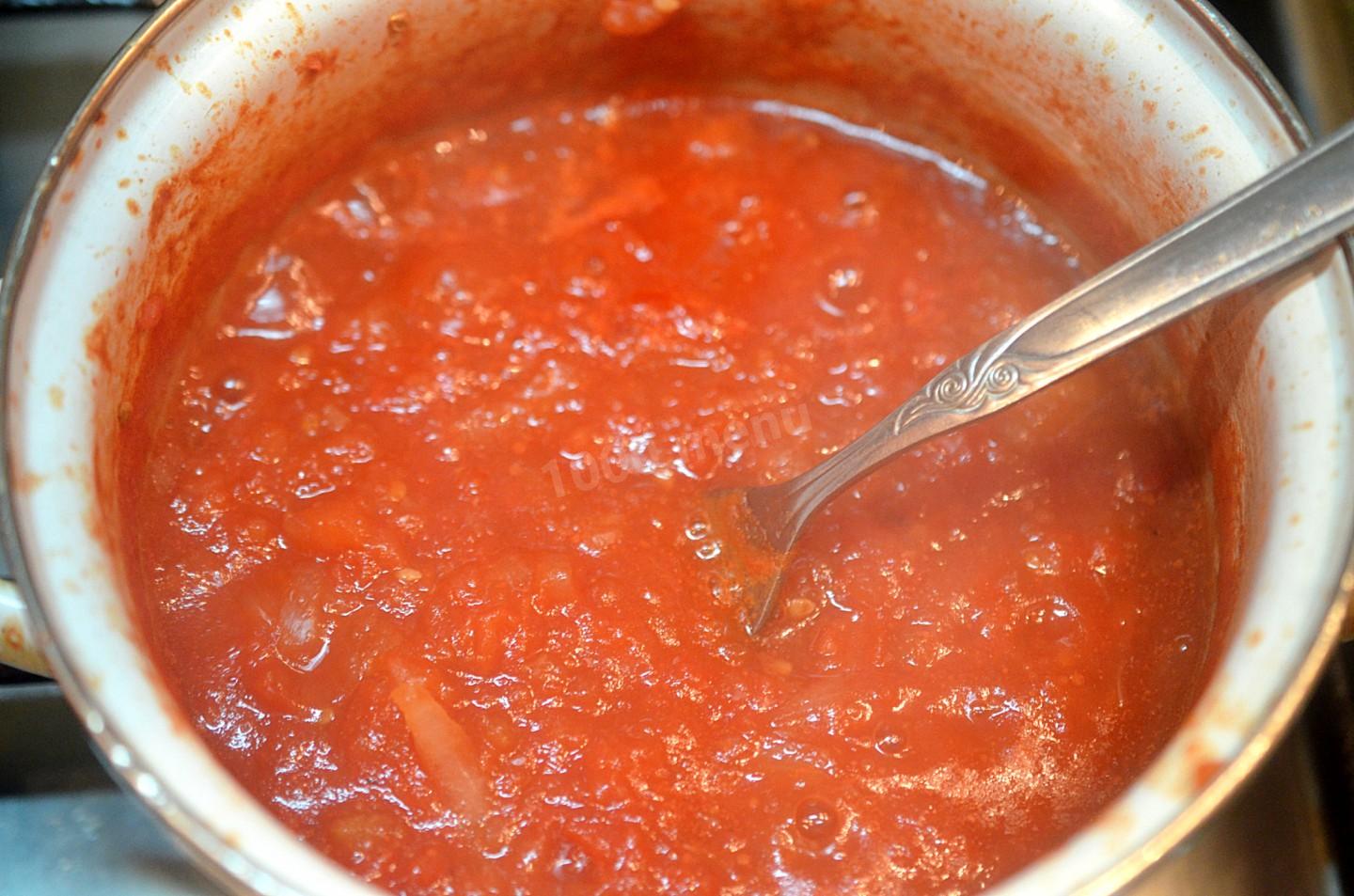
Cook over low heat until the paste reaches the thickness you want. It took me about 2 hours.
-
Step 10:
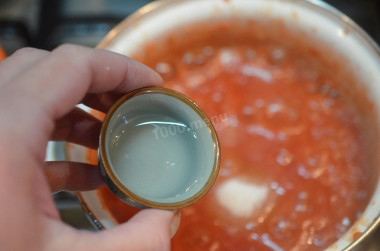
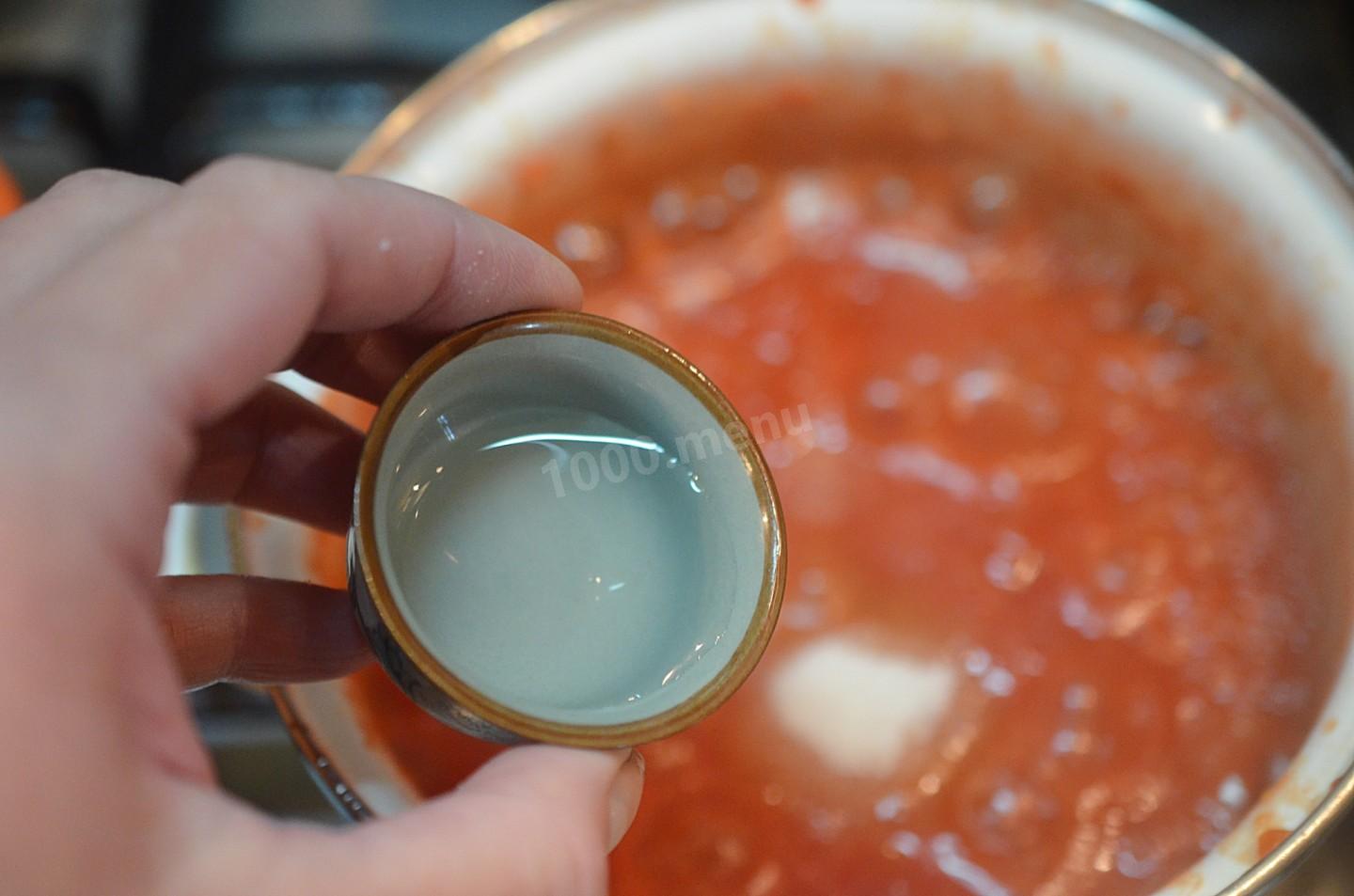
At the end of cooking, add the vinegar.
-
Step 11:
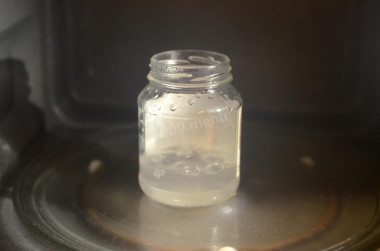
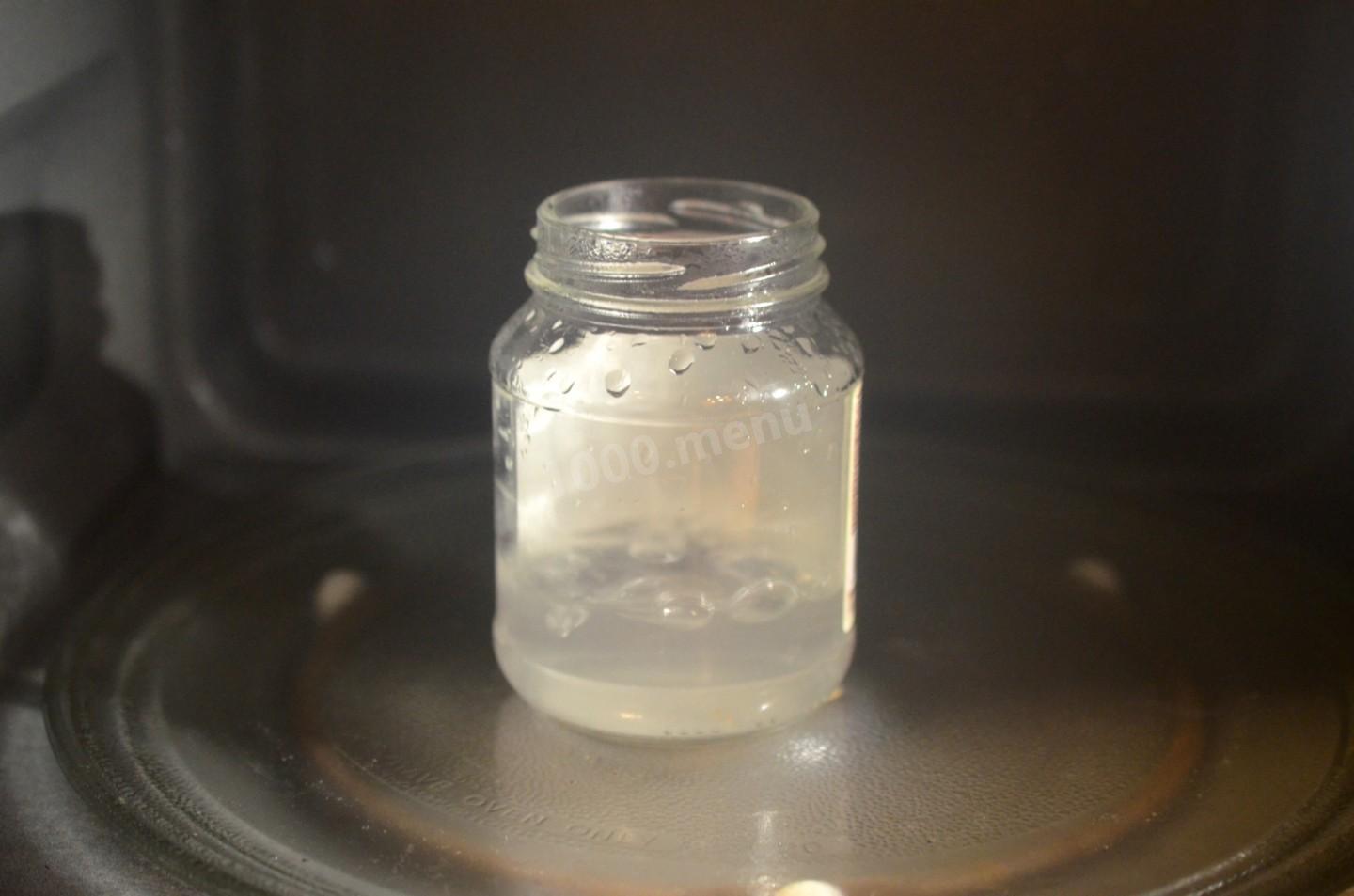
Sterilize the jars however is easiest for you. I pour a little water into the jars and microwave them for 5-7 minutes. The lids just need to be boiled.
-
Step 12:
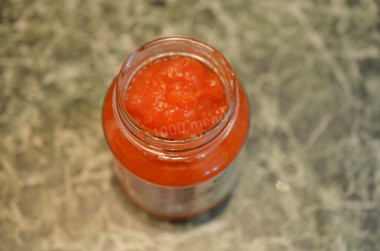
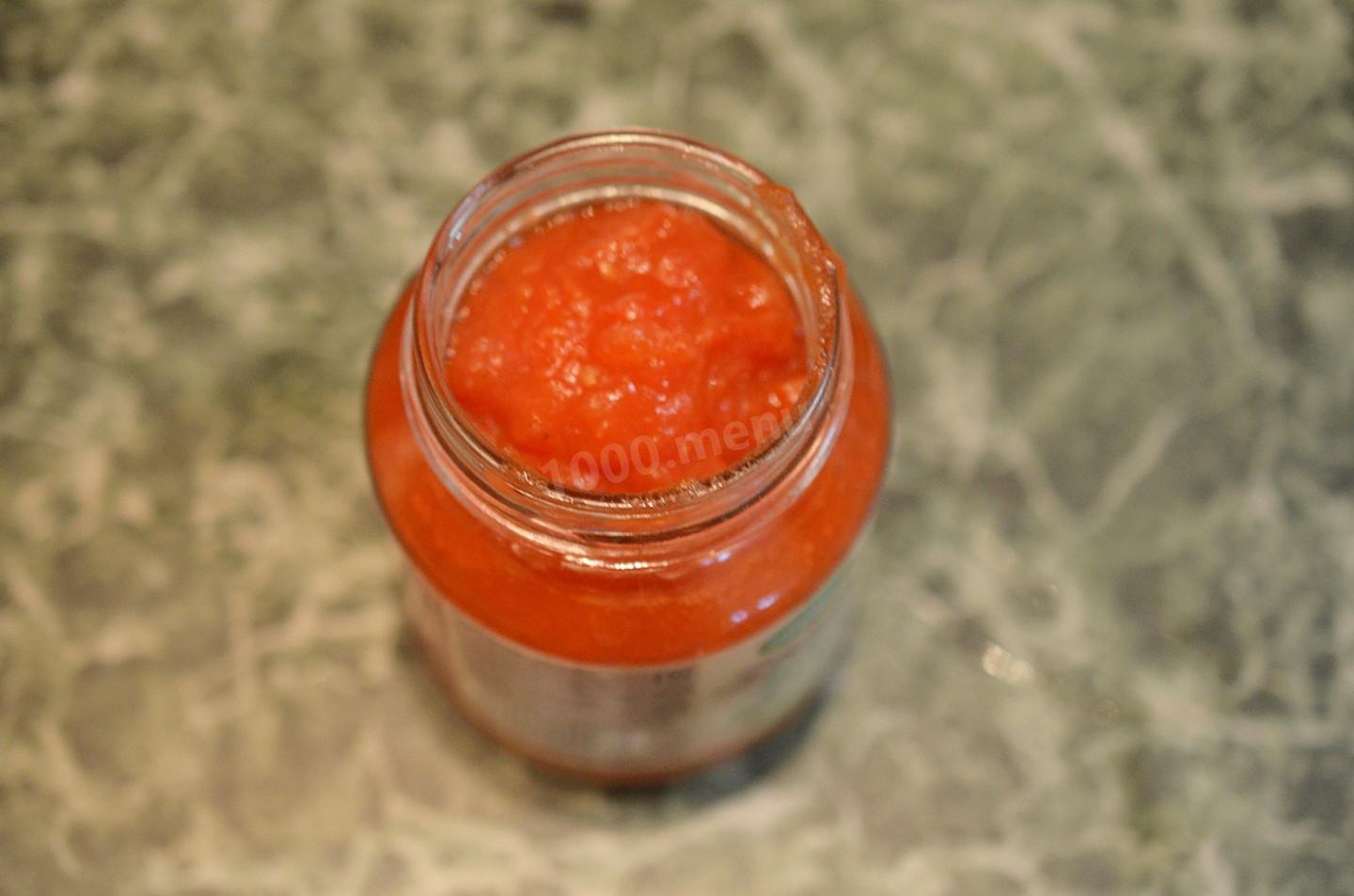
Ladle the hot tomato paste into the sterilized jars and seal them tightly. This preserve doesn't need processing in a water bath. Tomato paste keeps in an ordinary cupboard, no refrigerator needed.
-
Step 13:
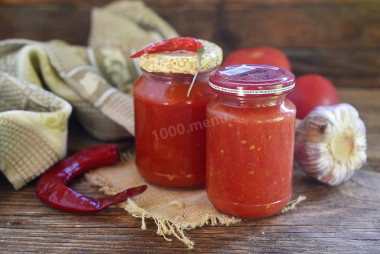
Enjoy!
- Remember that seasonings like salt and sugar, along with vinegar and its substitutes, are used in winter-preserve recipes not just for flavor but, first and foremost, as preservatives. So never reduce the amount of salt and sugar, or substitute a weaker vinegar (or essence) than the recipe calls for — otherwise the vinegar (and salt/sugar) won't do their preserving job and the preserve will spoil.
Caloric content of the products possible in the composition of the dish
- Tomatoes - 23 kcal/100g
- Bay leaf - 313 kcal/100g
- Granulated sugar - 398 kcal/100g
- Sugar - 398 kcal/100g
- Salt - 0 kcal/100g
- Onion - 41 kcal/100g
- Apple cider vinegar - 14 kcal/100g