Classic Borscht with Chicken
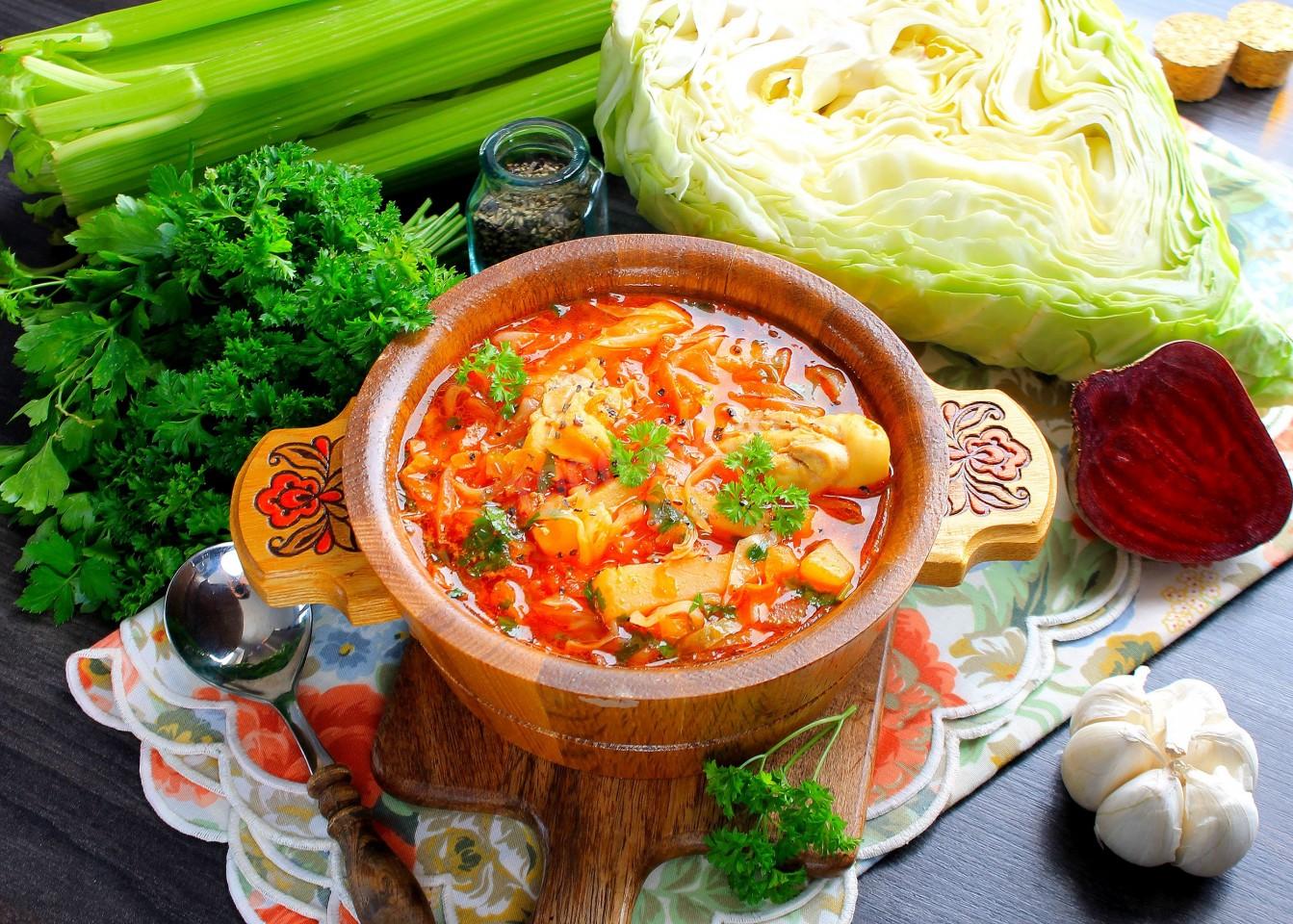
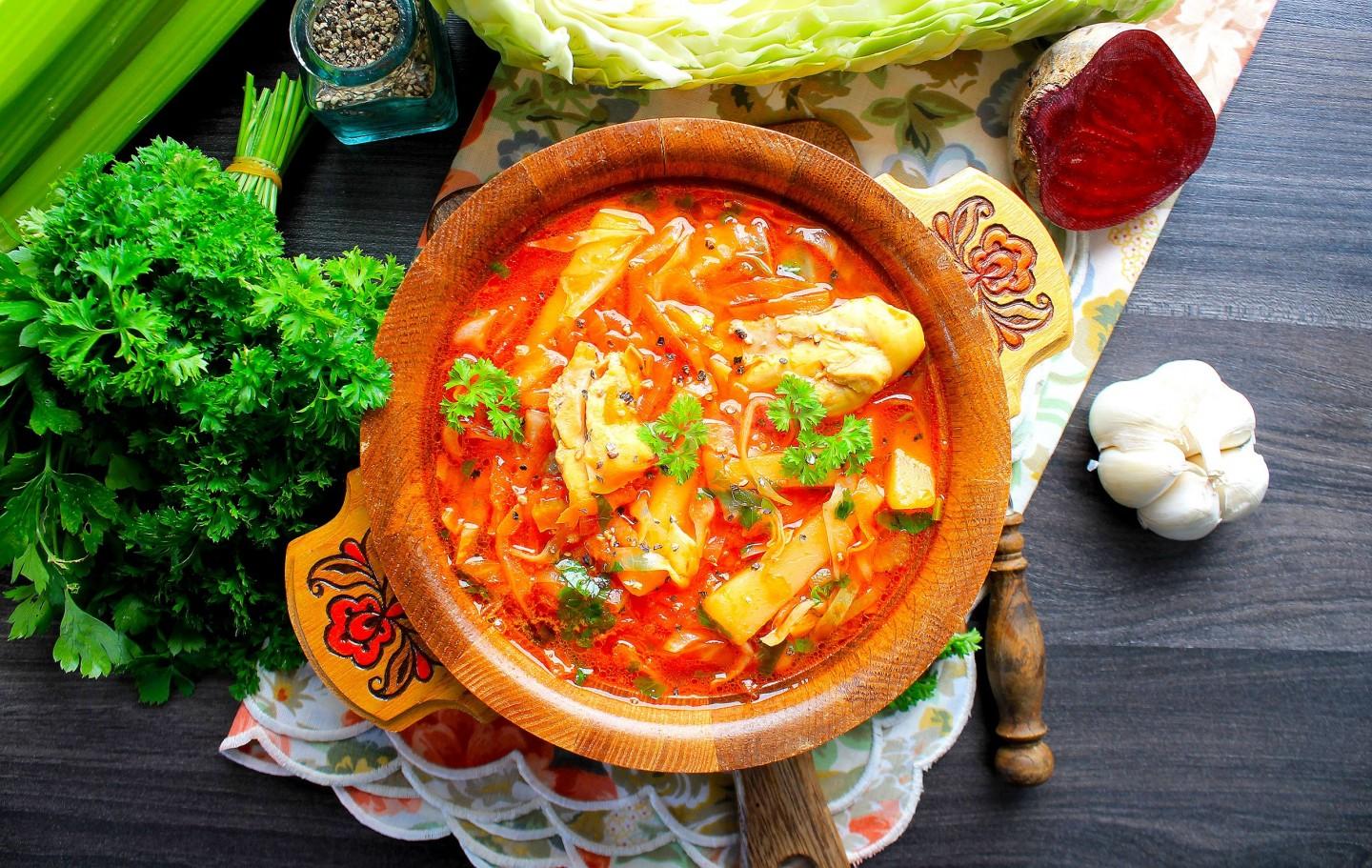
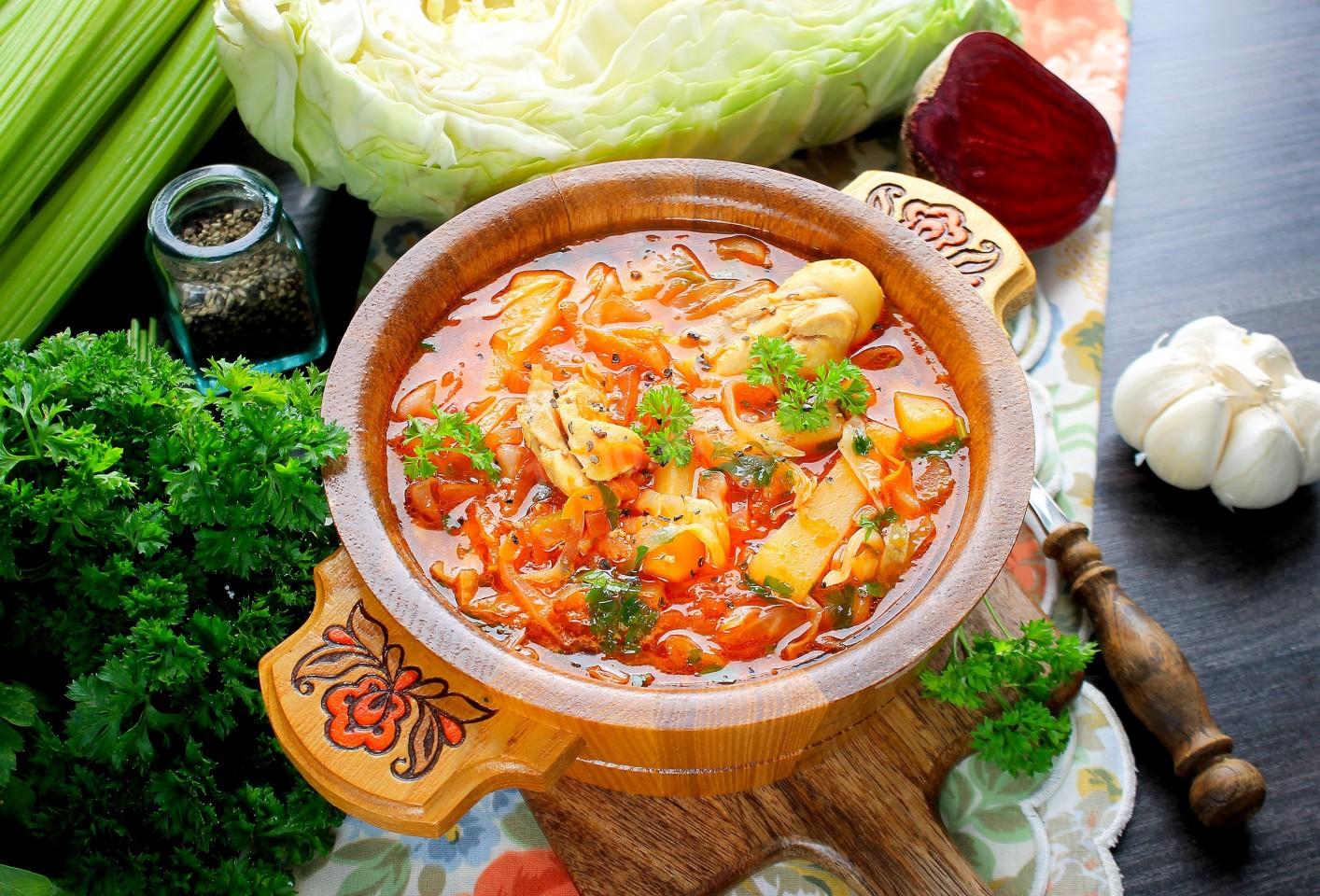
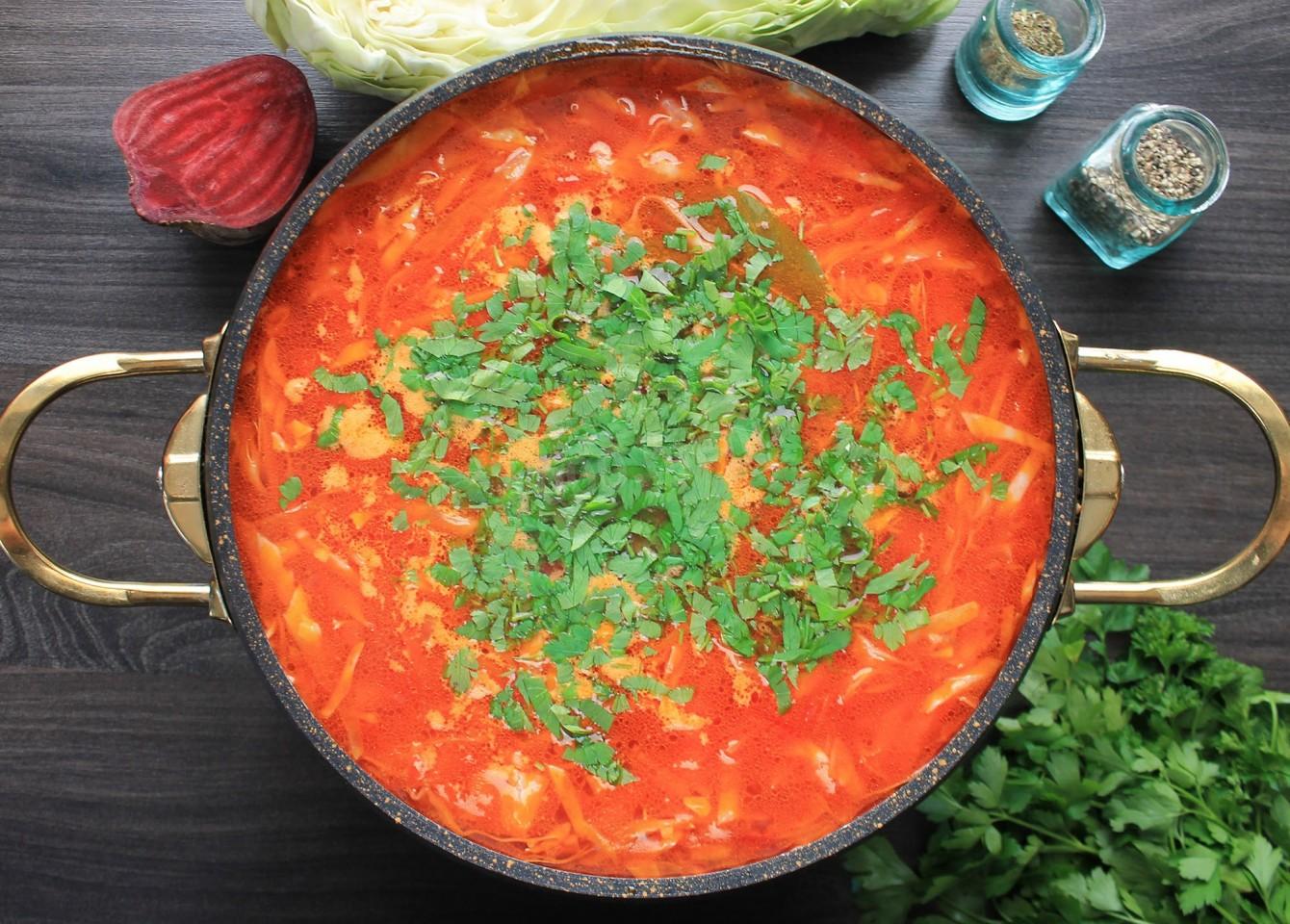
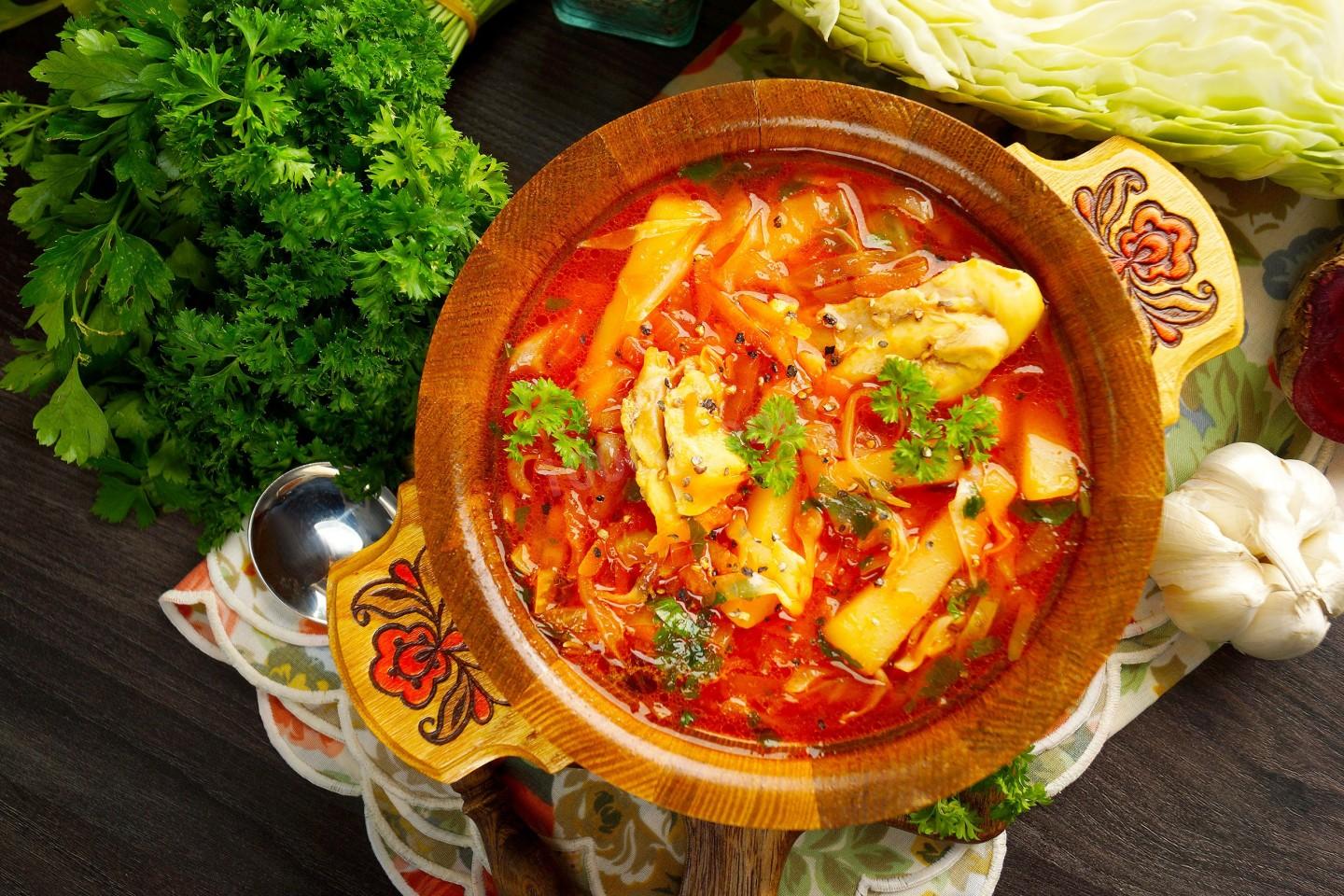
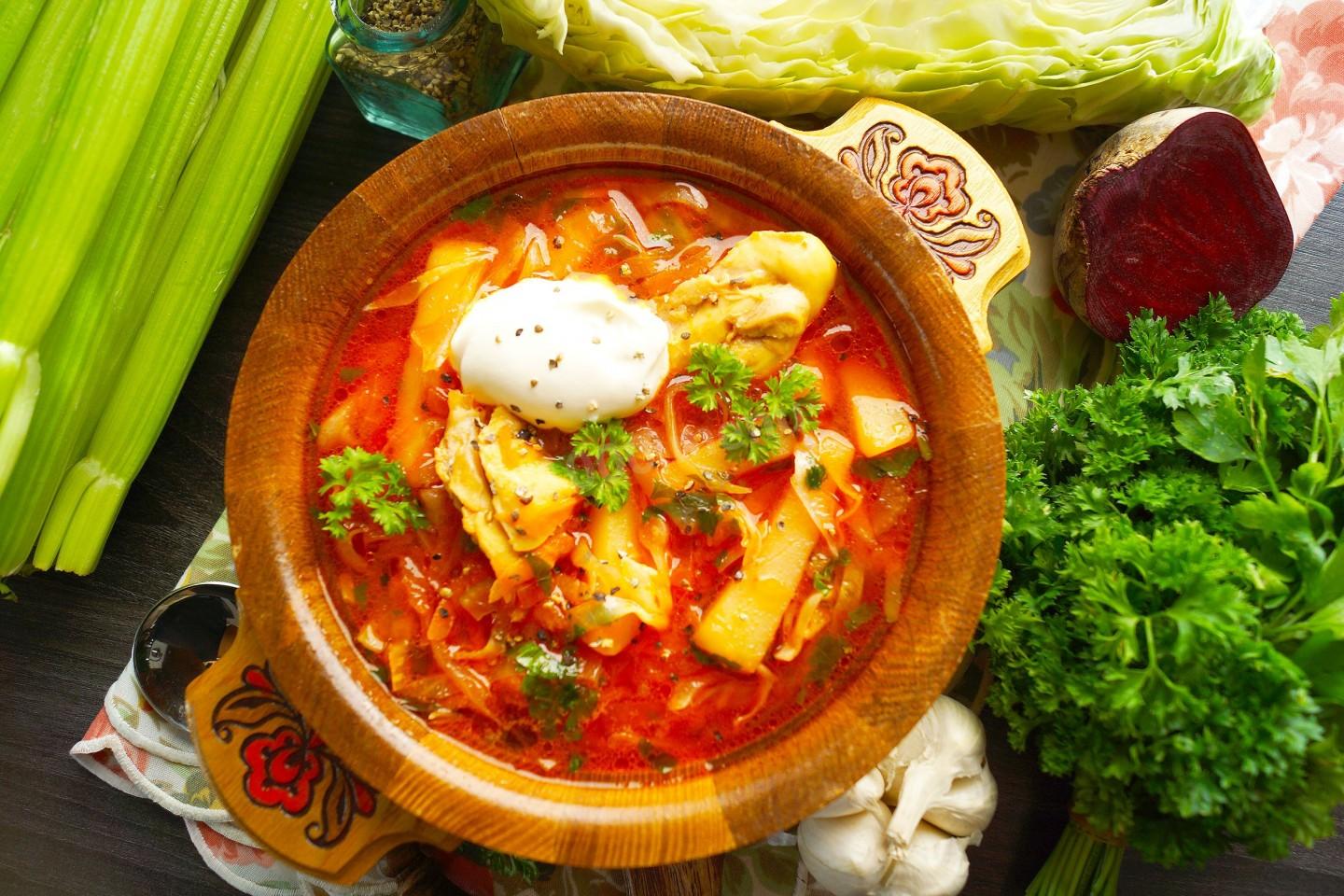
The tastiest, richest, and most filling—for the whole family! Classic borscht with chicken is probably one of the most popular soups in any home. You can use any meat in place of chicken and it'll be just as delicious. Fresh homemade sour cream and freshly baked bread or Ukrainian garlic pampushky are the perfect match for borscht!

Cooking method
-
Step 1:
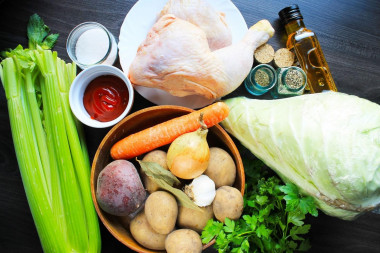
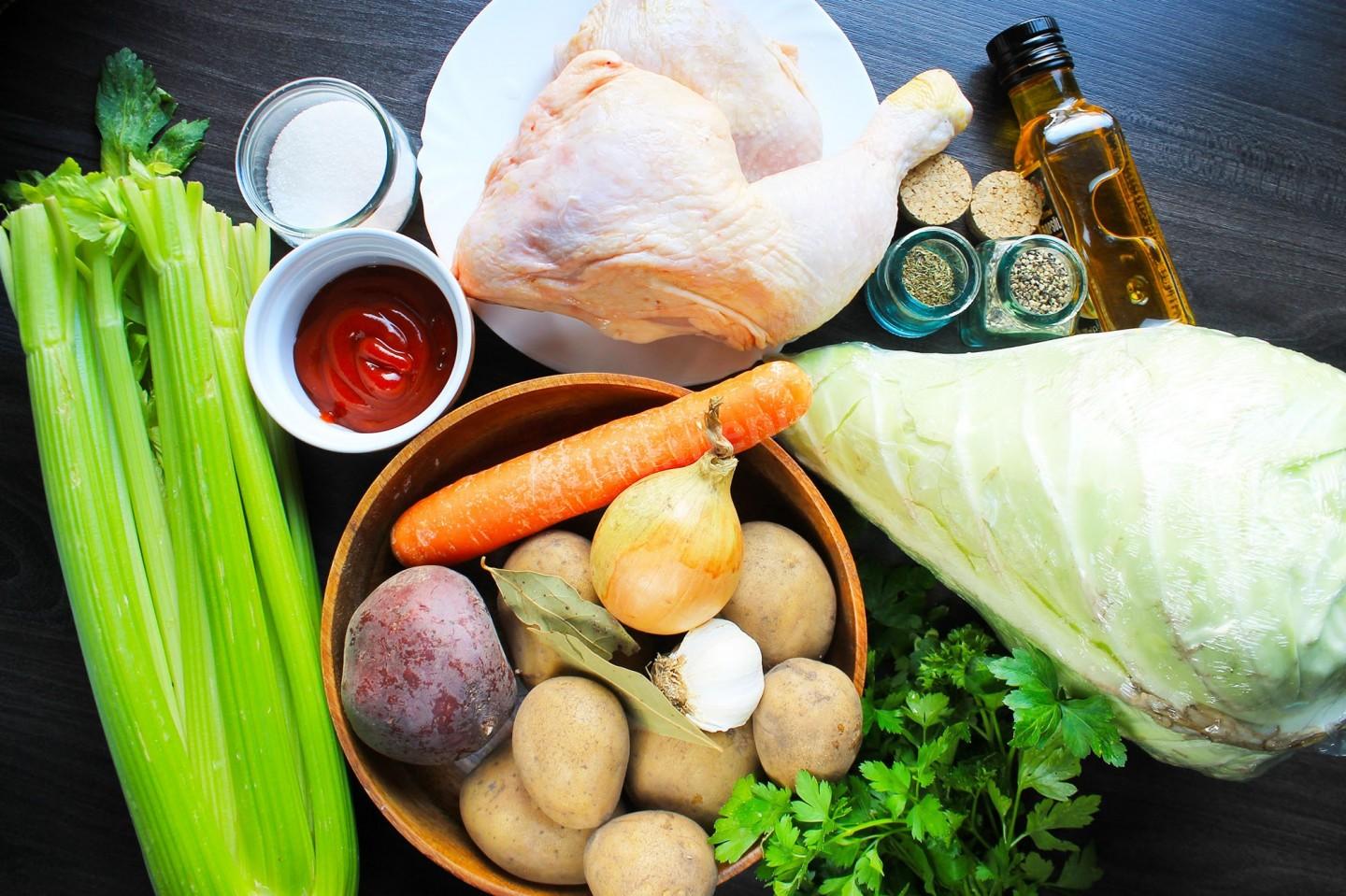
How do you make classic chicken borscht? Gather everything on the list. Use a whole chicken or just some parts—I most often make borscht with chicken leg quarters. Home-raised poultry, of course, makes it far tastier. Singe the chicken to remove any leftover feathers and wash it well. I love the taste of celery, so I add the stalks.
-
Step 2:
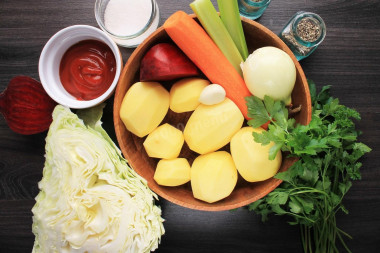
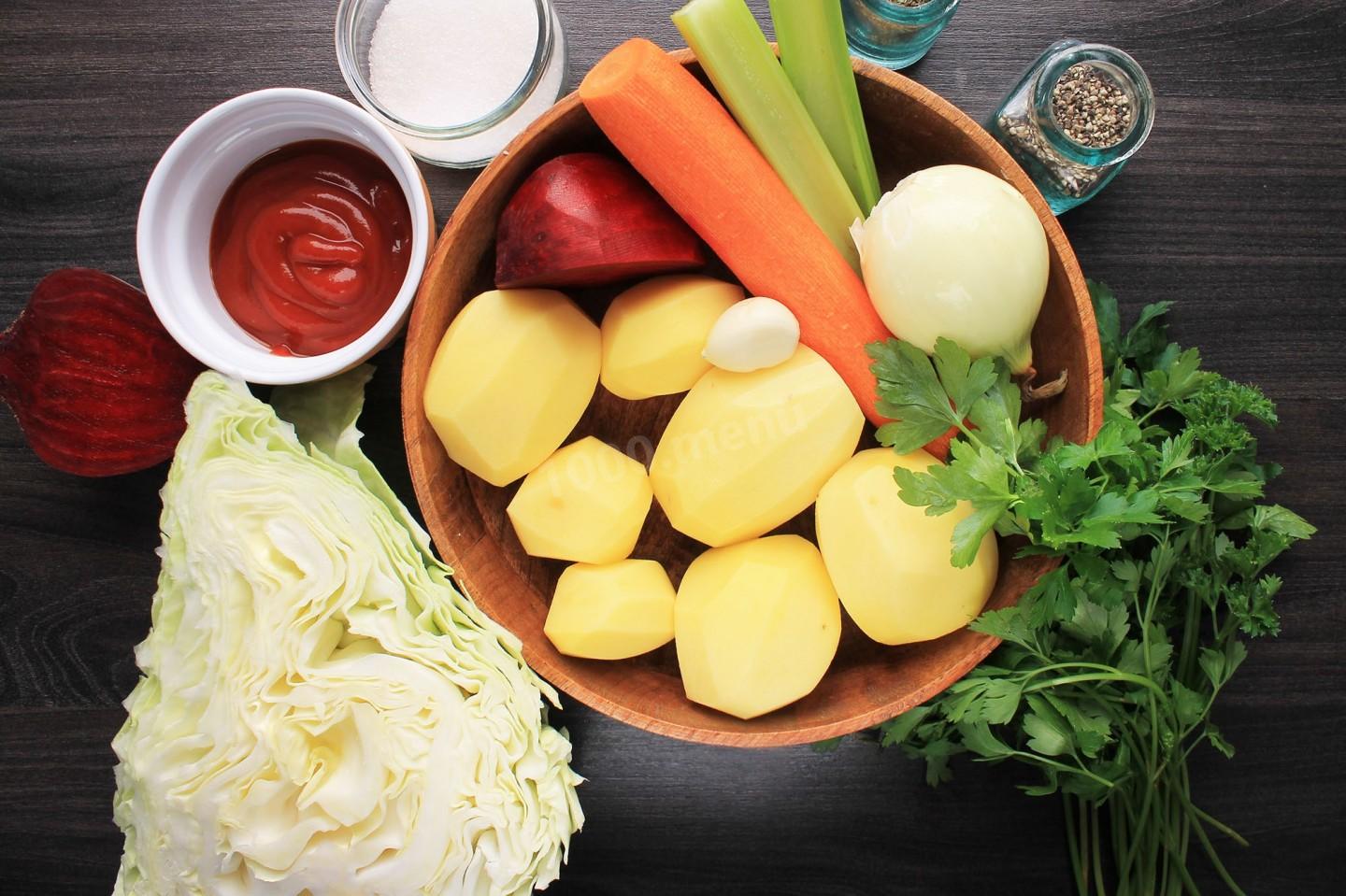
Peel the carrot, potatoes, onion, garlic, and beet. Remove the cabbage's damaged outer leaves. Wash all the vegetables and the celery stalk.
-
Step 3:
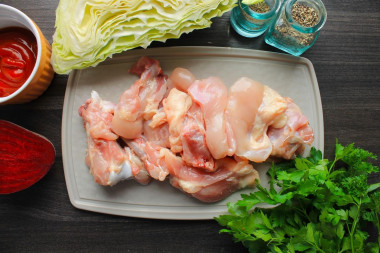
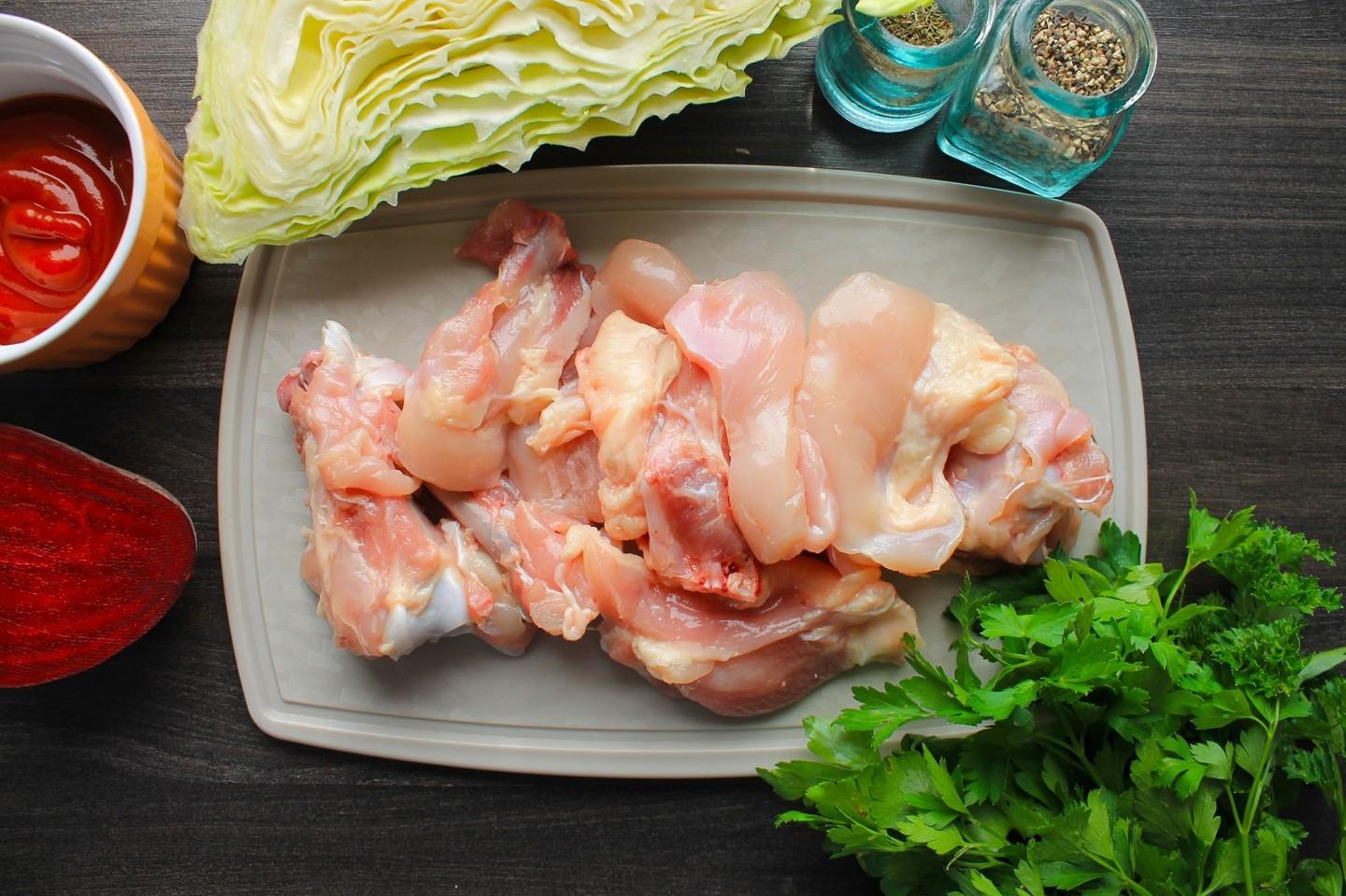
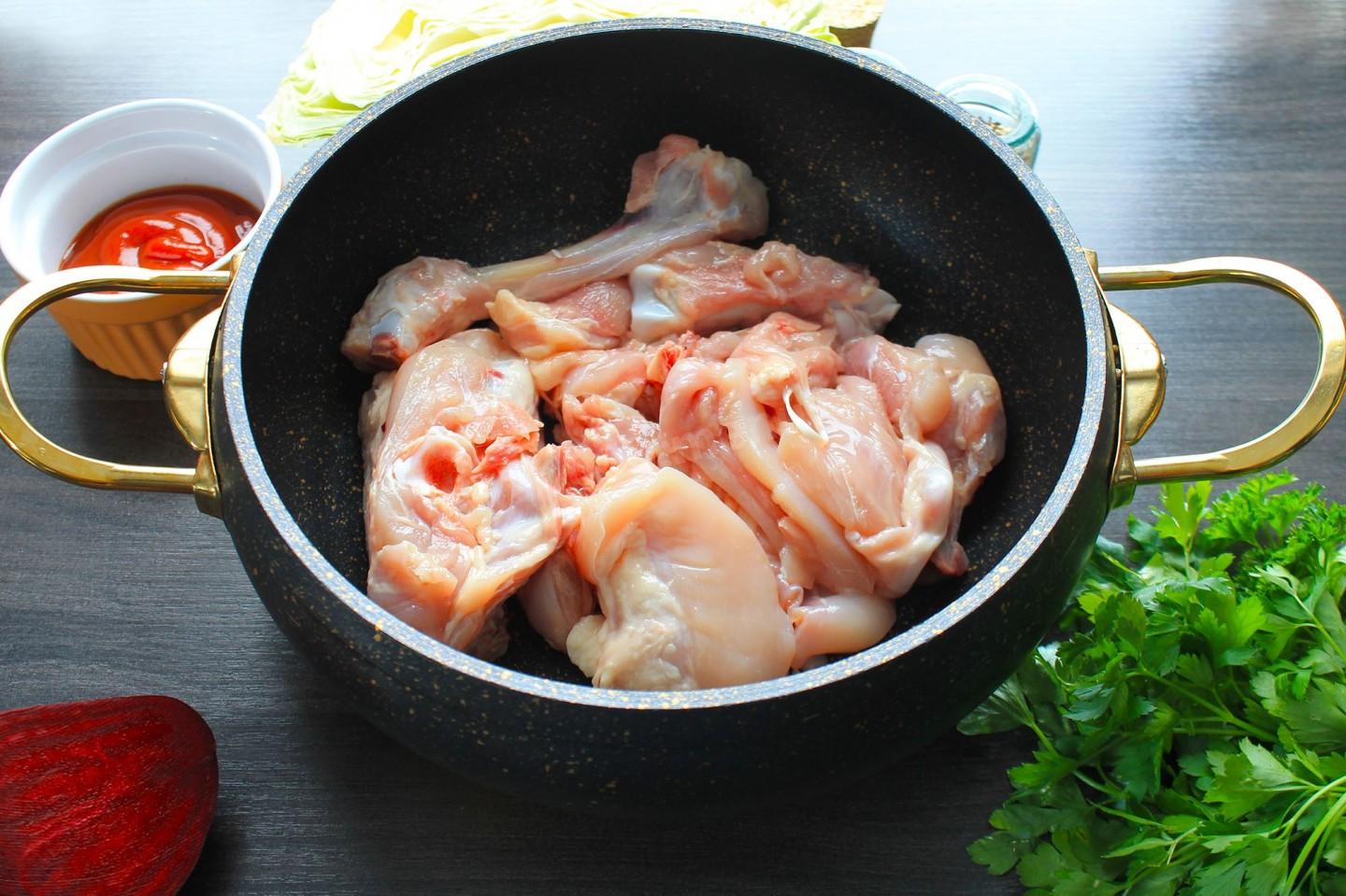
Remove the skin from the leg quarters. Cut the chicken into small pieces, as in the photo.
-
Step 4:
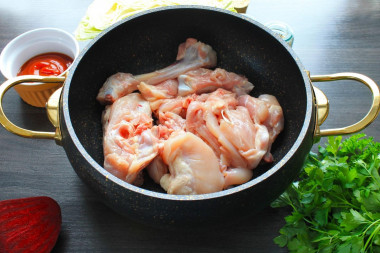
Put the meat in a pot. Use the bones too—they make the broth richer. Cover with water and set it on the stove. Bring to a boil over high heat, skim off the foam, lower the flame, and cook the broth for about 10–15 minutes.
-
Step 5:
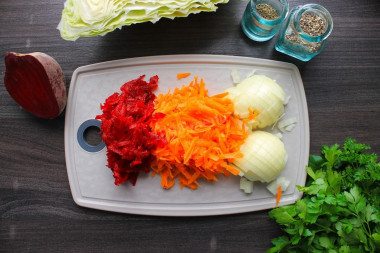
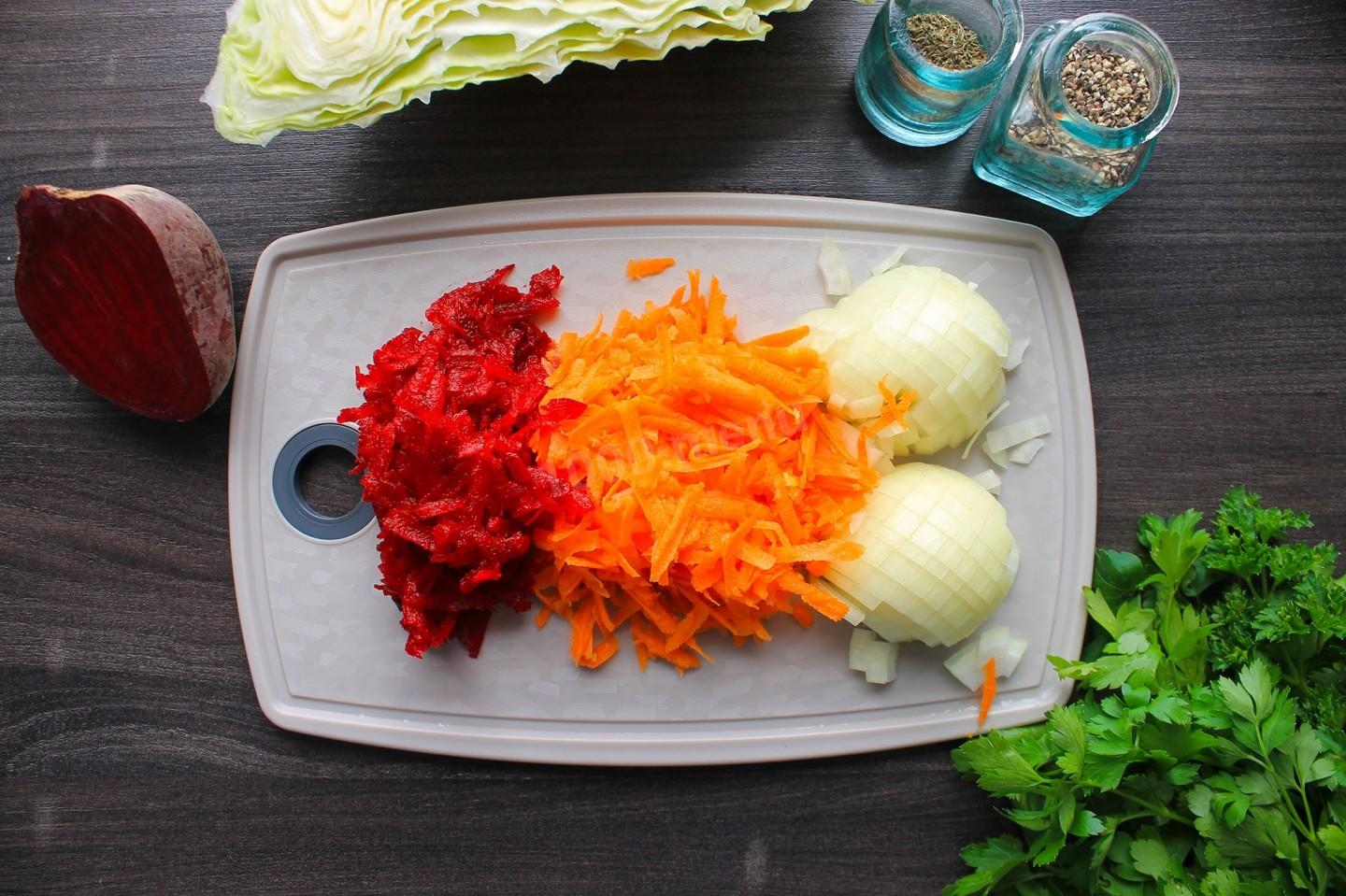
Meanwhile, prep the vegetables. Finely chop the onion and coarsely grate the carrot and beet.
-
Step 6:
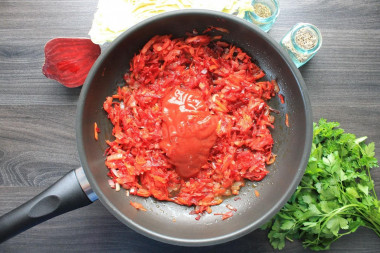
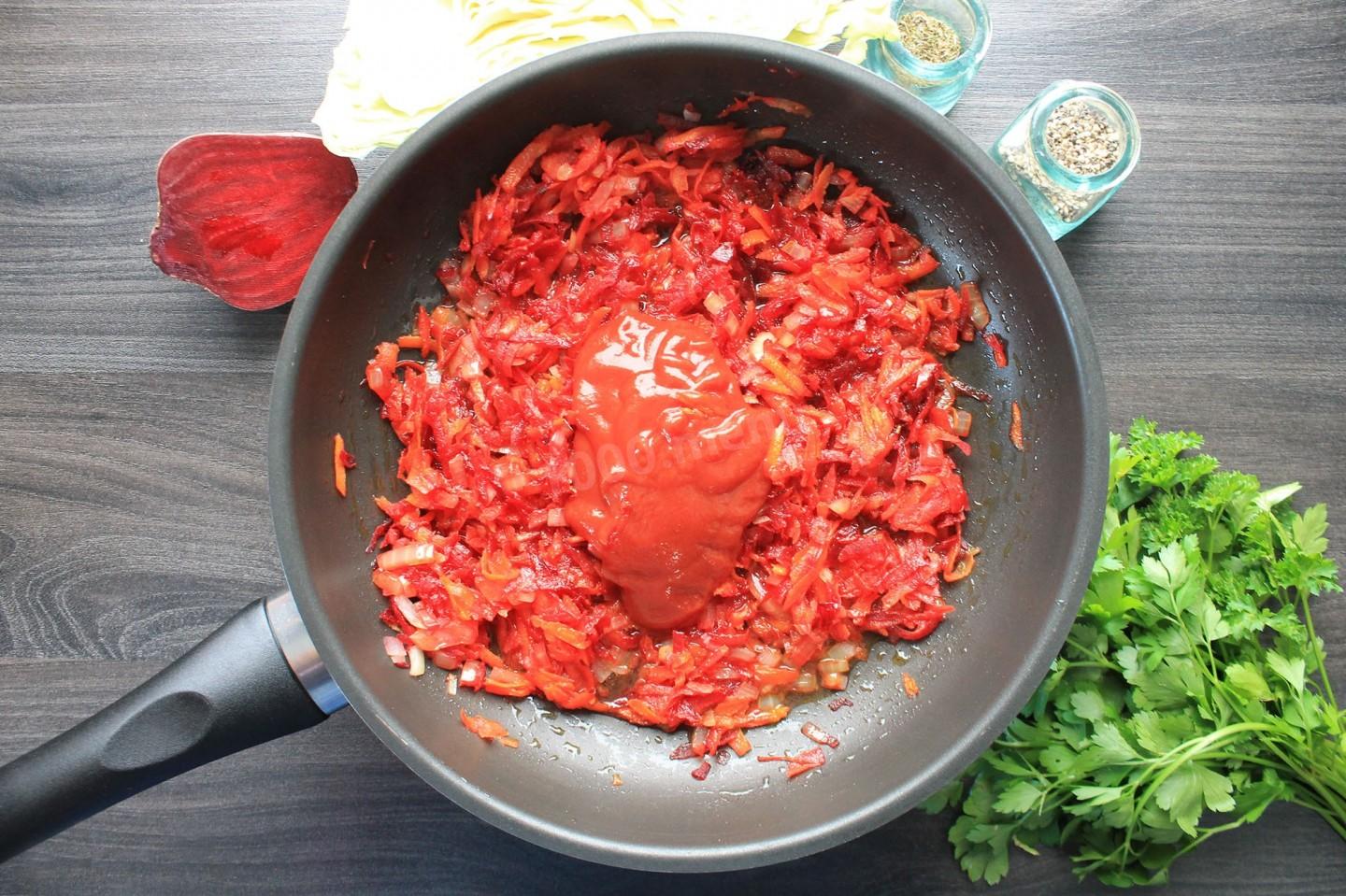
Heat odorless vegetable oil in a skillet. Over high heat, sauté the onion, beet, and carrot for about 5 minutes, stirring constantly. Add the tomato sauce.
-
Step 7:
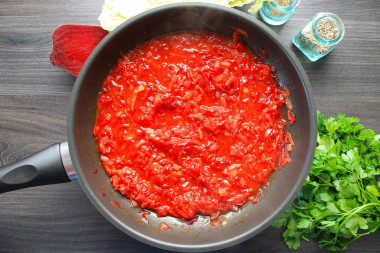
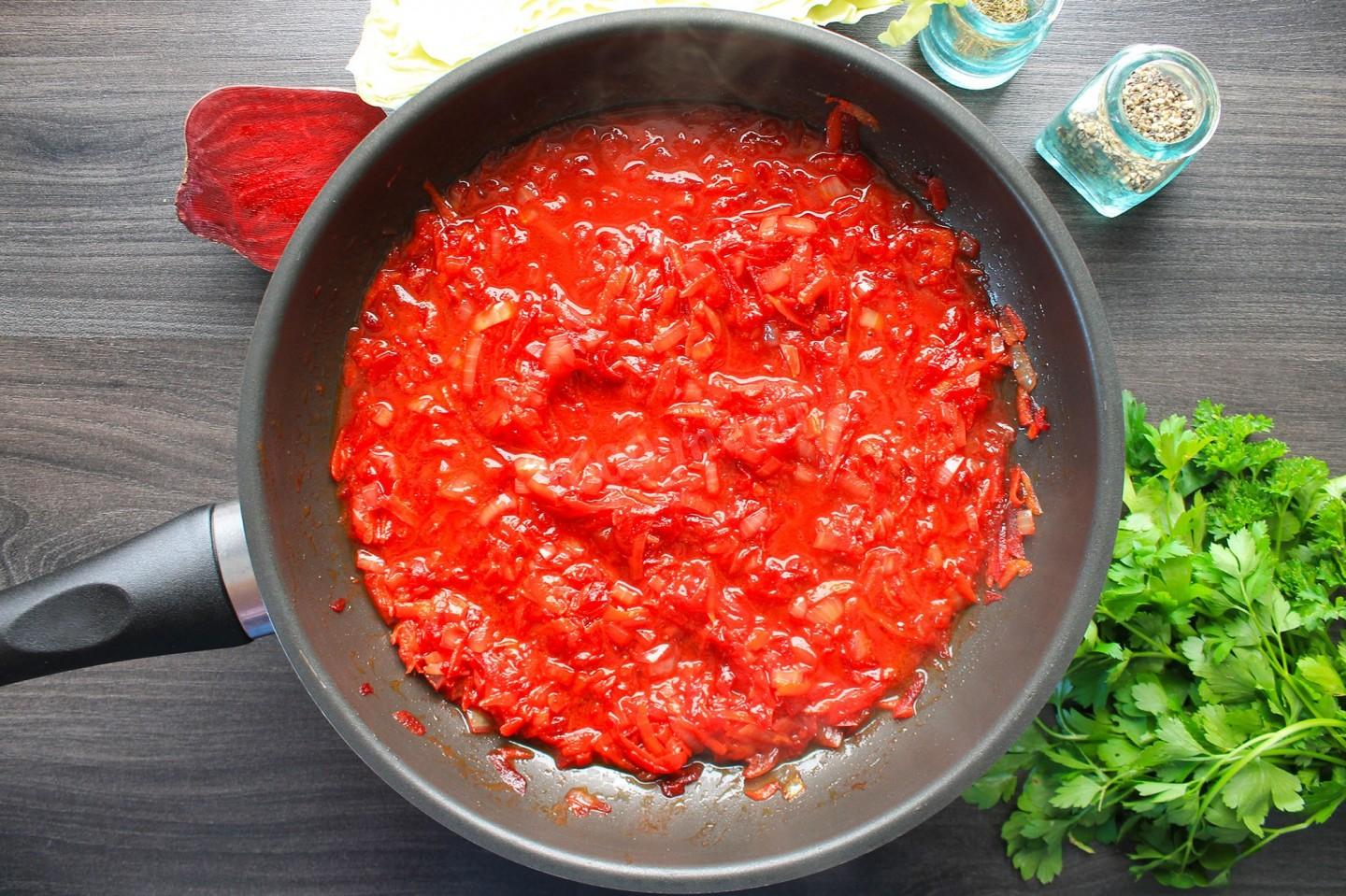
Pour in a little water, lower the heat under the pan a bit, and let the sauté braise for about 10 minutes, stirring occasionally.
-
Step 8:
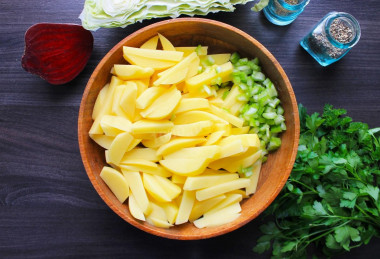
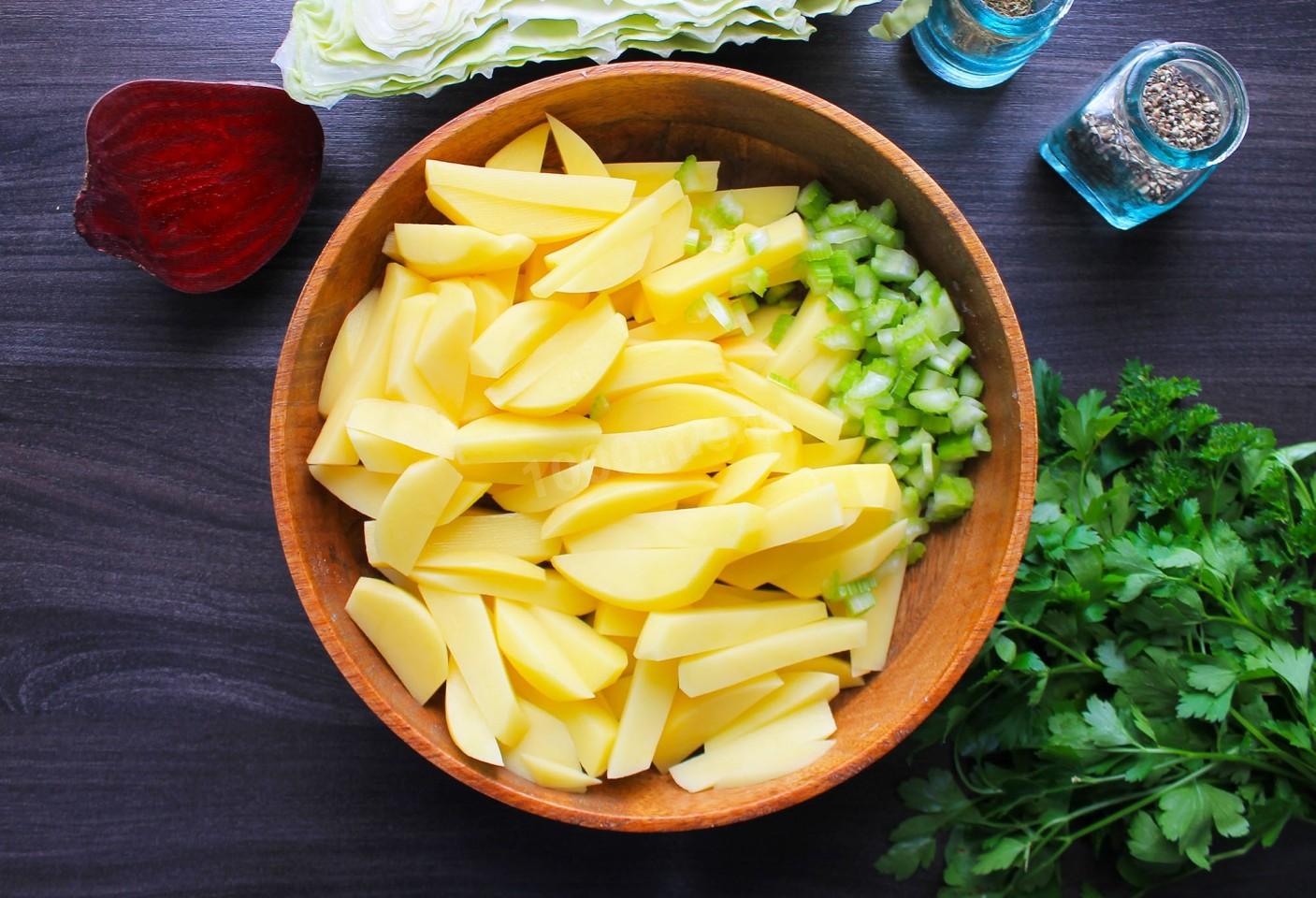
Cut the potatoes into sticks or cubes, whichever you prefer. Chop the celery into small pieces.
-
Step 9:
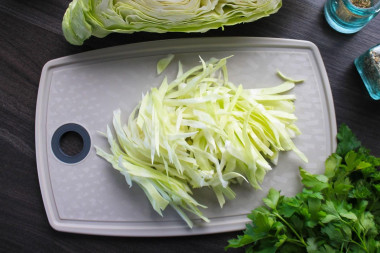
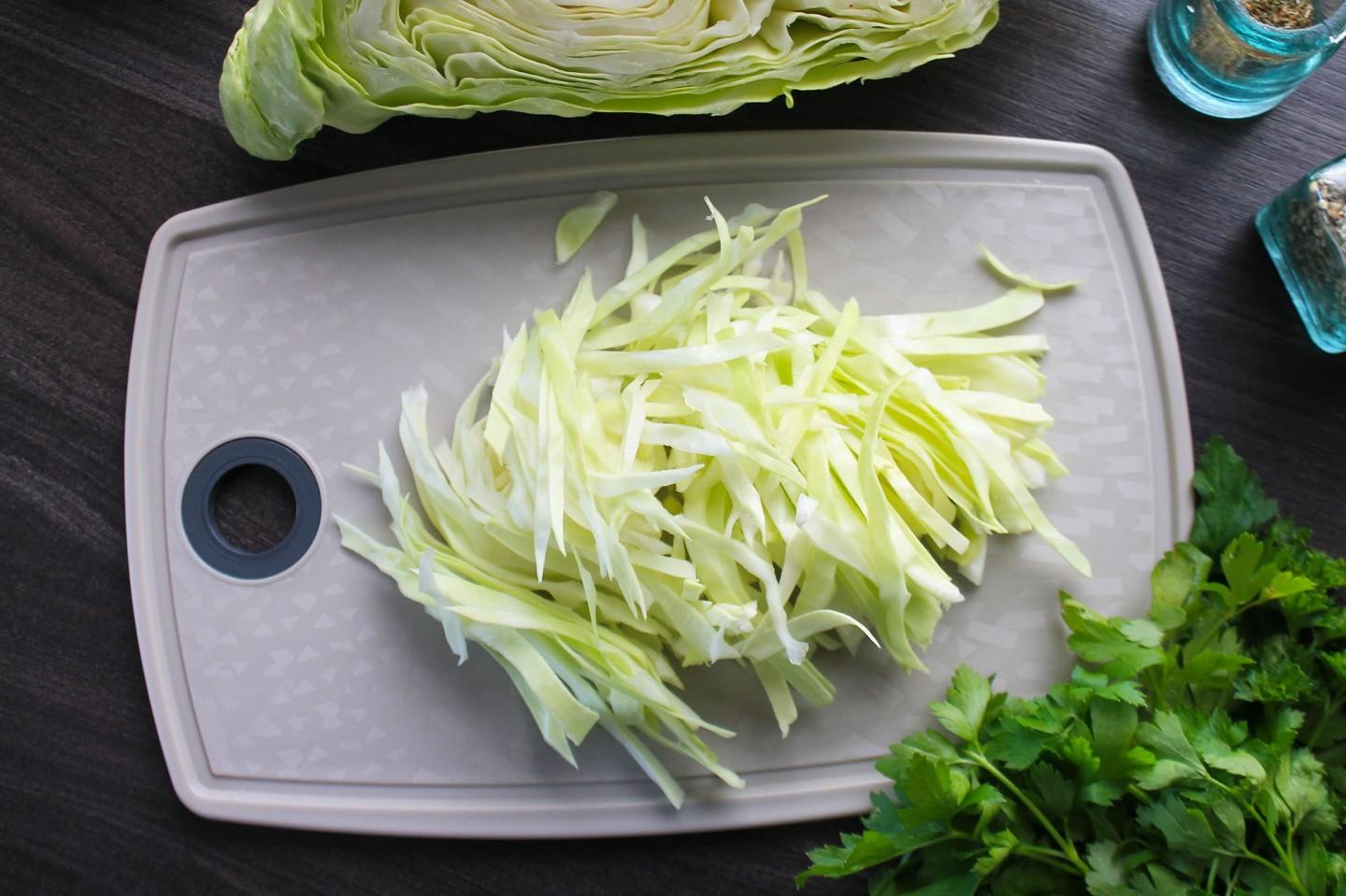
Shred the cabbage into thin strips.
-
Step 10:
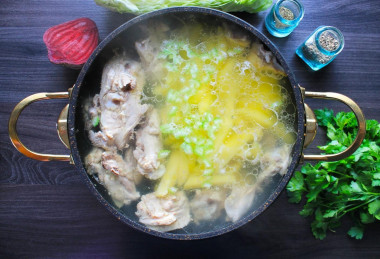
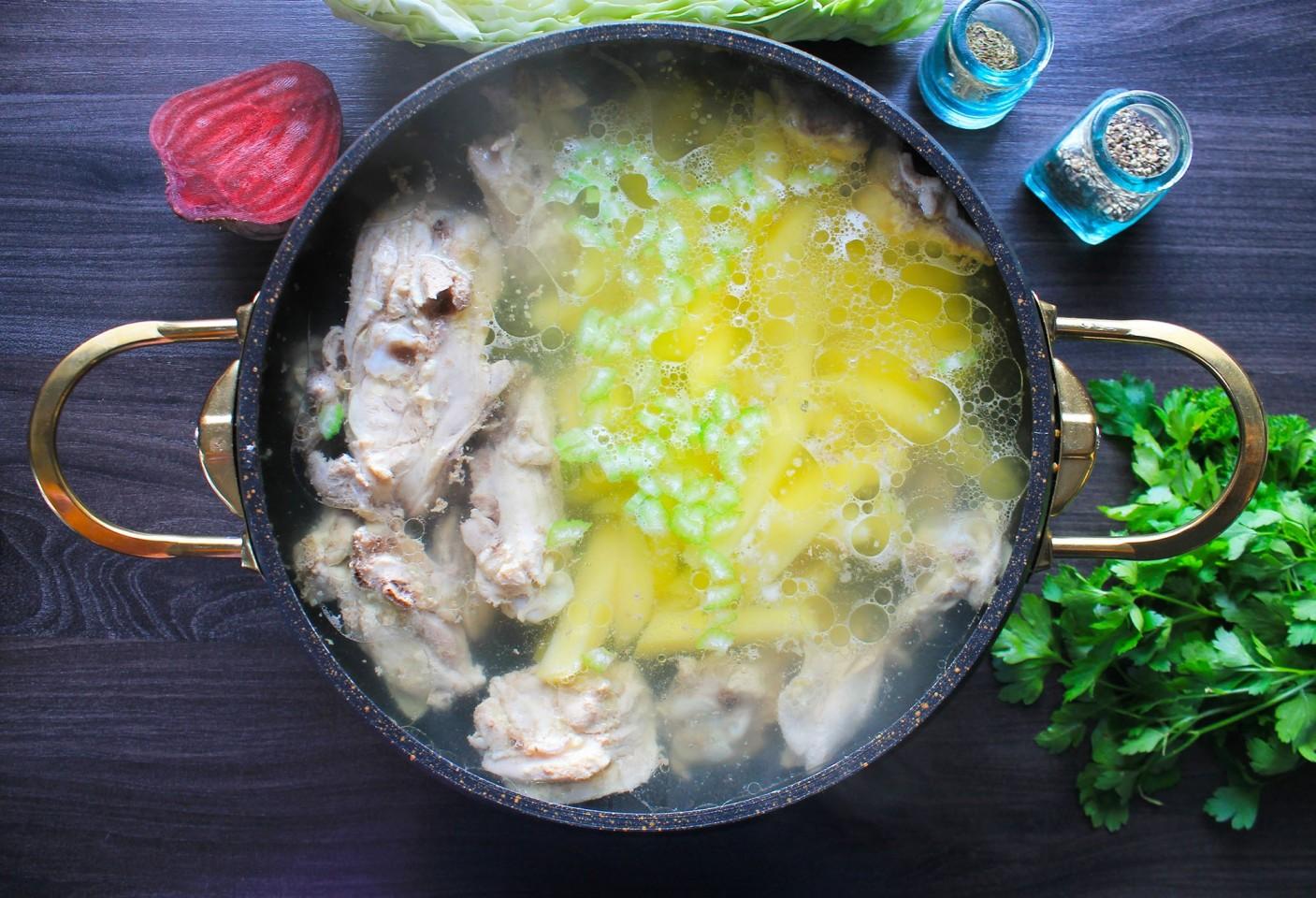
Add the potatoes to the pot. I add the celery here too. Cook, covered, for 15–20 minutes (until the potatoes are tender).
-
Step 11:
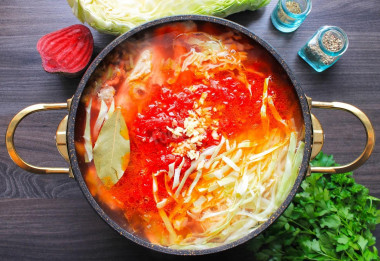
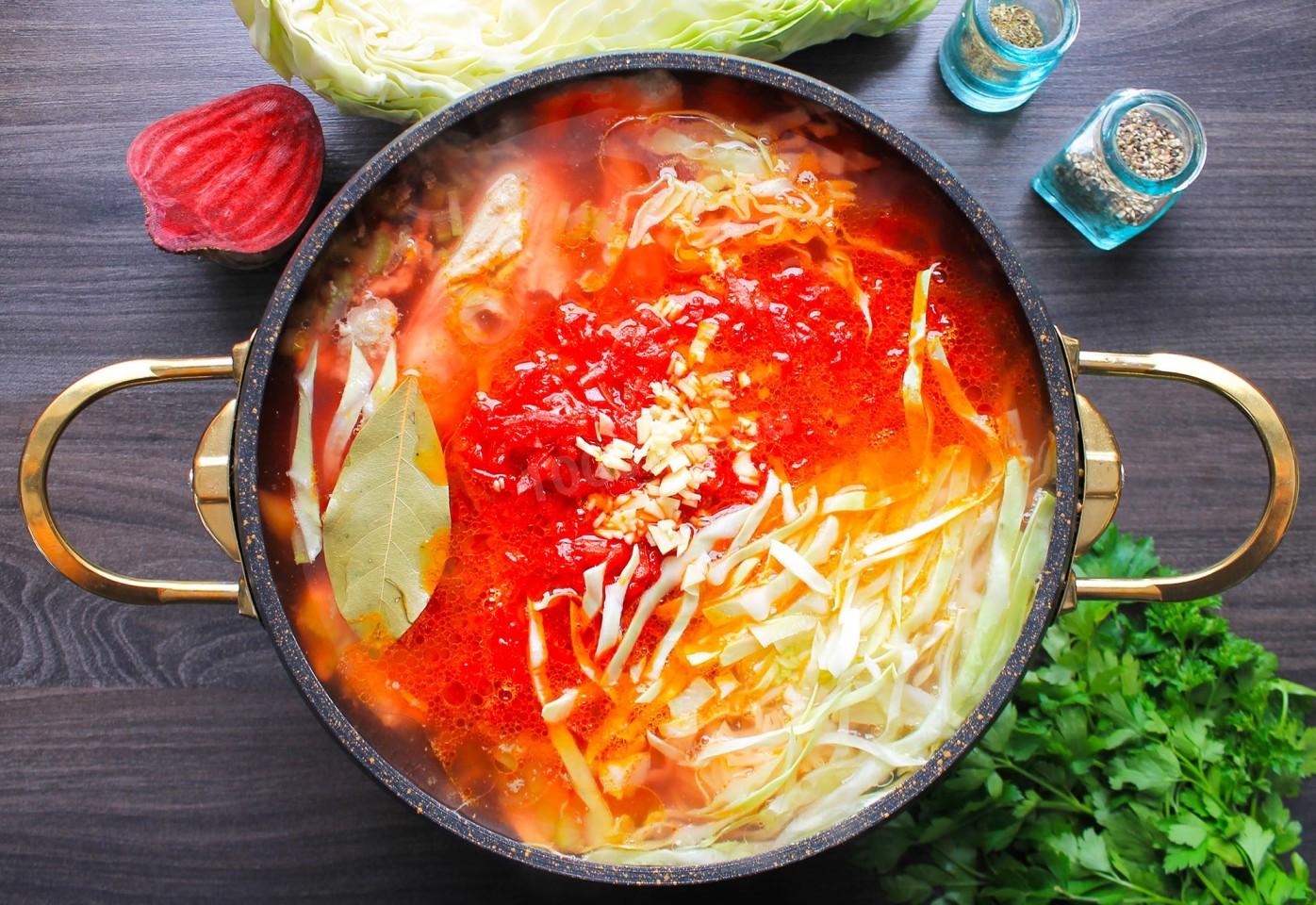
Add the cabbage, the sauté, the bay leaf, and the minced garlic clove to the borscht. Salt to taste. Over high heat, bring it back to a boil. Pour in the vinegar, add the sugar, and simmer over low heat for another 3–5 minutes. Add the sugar a little at a time, to taste (you may need more or less than the recipe says).
-
Step 12:
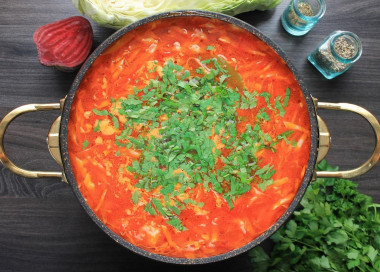
At the end of cooking, add the finely chopped herbs, hold it on the stove another minute, then take the pot off the heat.
-
Step 13:
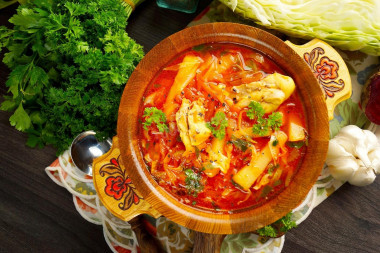
Let the borscht rest for a while. Then it's ready to serve!
-
Step 14:
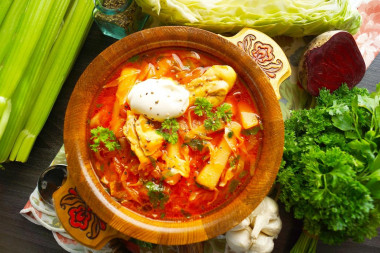
Offer everyone a dollop of sour cream and a pinch of ground allspice in their bowl.
- I most often make borscht with young cabbage—its leaves are tender, juicy, and crisp, so I always add it right at the end. If your head of cabbage is more mature, add it a bit earlier, along with the potatoes, so it has time to cook through. You can make this borscht with any meat, or even with plain water if you're observing a fast or watching your diet. Enjoy! Important: whether or not the recipe gives an amount of water, it's best to go by your own preferences (whether you like a thick or thinner soup), the size of your pot, and the ingredients you're using. Remember that the author's idea of how much meat, potato, grain, and so on to use may not match yours. In practice, if it's your first time, don't make a whole potful at once—make a tasting batch for one or two people. Scale all the ingredients down to 1–2 servings and figure the water at roughly one cup per serving for a very thick soup, up to 1.5–2 cups for a thinner one, remembering that some liquid boils off as it cooks. After tasting a small portion, you can adjust both the liquid and the proportions to your taste. Over time, like most experienced cooks, you'll be able to add the water and the ingredients by eye.
- To pick the perfect pot for soup, porridge, or pickling, check out our guide to cookware.
- Keep in mind that how you cut the carrot affects the result: grated carrot breaks down into the soup during cooking and blends in evenly, while carrot cut into strips or cubes holds its shape.
Caloric content of the products possible in the composition of the dish
- Onion - 41 kcal/100g
- Ripe potatoes - 80 kcal/100g
- Baked potatoes - 70 kcal/100g
- Mashed potatoes - 380 kcal/100g
- Boiled potatoes - 82 kcal/100g
- Potatoes in uniform - 74 kcal/100g
- Fried potatoes - 192 kcal/100g
- Green cabbage - 46 kcal/100g
- Fresh frozen green cabbage in a package - 45 kcal/100g
- Beetroot - 40 kcal/100g
- Dried beetroot - 278 kcal/100g
- Boiled beets - 49 kcal/100g
- Carrots - 33 kcal/100g
- Dried carrots - 275 kcal/100g
- Boiled carrots - 25 kcal/100g
- Garlic - 143 kcal/100g
- Bay leaf - 313 kcal/100g
- Granulated sugar - 398 kcal/100g
- Sugar - 398 kcal/100g
- Vegetable oil - 873 kcal/100g
- Salt - 0 kcal/100g
- Water - 0 kcal/100g
- White wine vinegar - 14 kcal/100g
- Fresh frozen soup greens in a package - 41 kcal/100g
- Greenery - 41 kcal/100g
- Chicken leg - 185 kcal/100g
- Hot tomato sauce - 99 kcal/100g
Similar recipes
- National cuisine
- Classic recipes
- Soups
- Meat and meat products
- Semi-finished products
- Vegetables
- Sweet
- Spices seasonings spices
- Fats and oils
- Other
- Garlic
- Зелень
- Bay leaf
- Salt
- Vinegar
- Vegetable oil
- Water
- Ukrainian cuisine
- Polish cuisine
- Classic borscht
- Classic chicken recipes
- Classic soups
- Cooking
- Borscht
- Meat soup
- Cabbage soup
- Potato soup
- Poultry
- Sauce
- Chicken with vegetables
- From carrots
- From beets
- From potatoes
- From cabbage
- From onion
- No eggs
- Recipes for lean dishes without butter
- Sugar