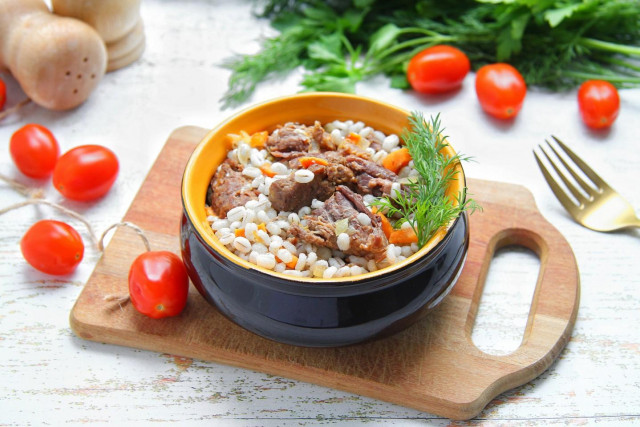
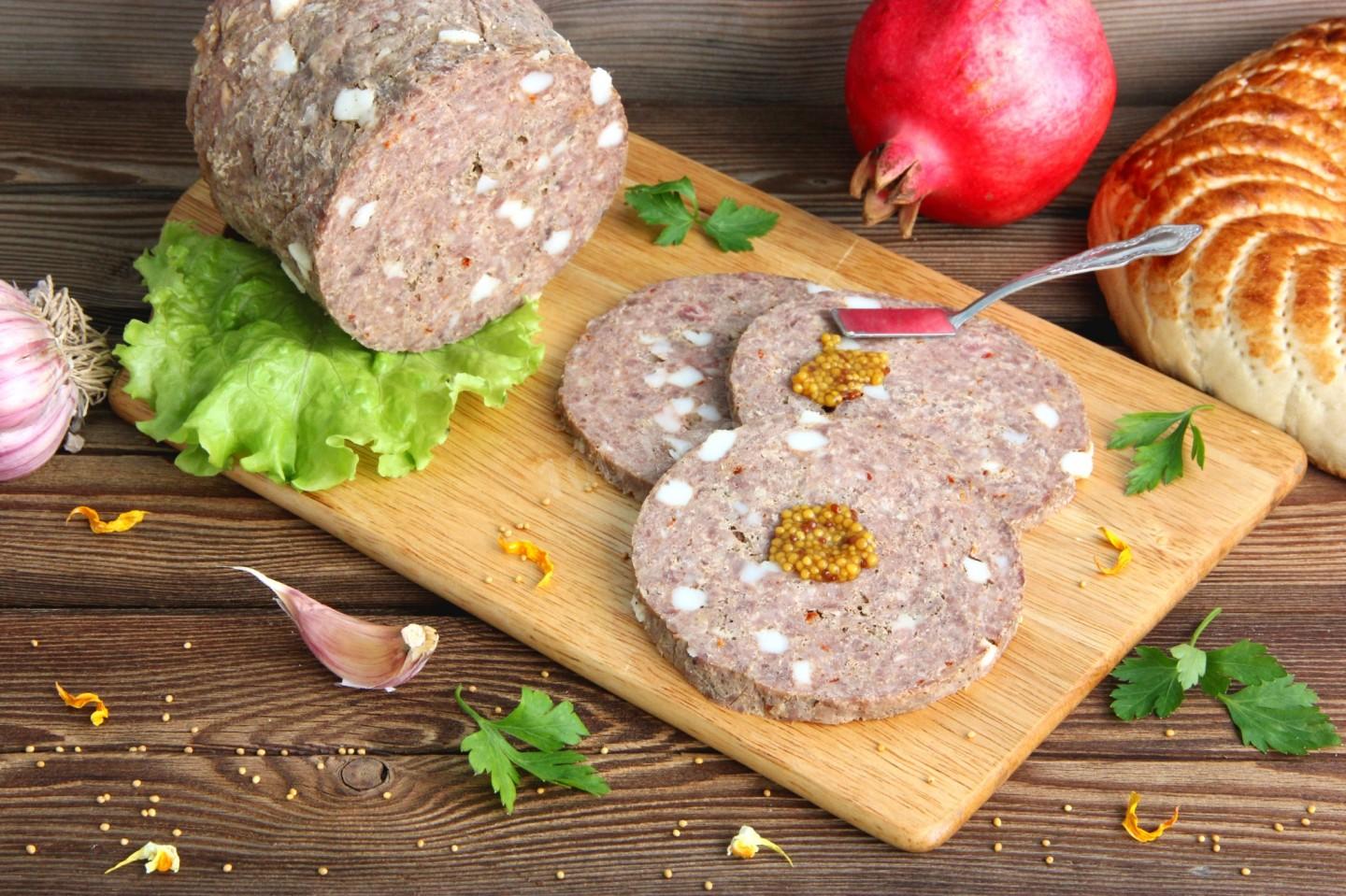
Homemade Sausage in a Ham Maker
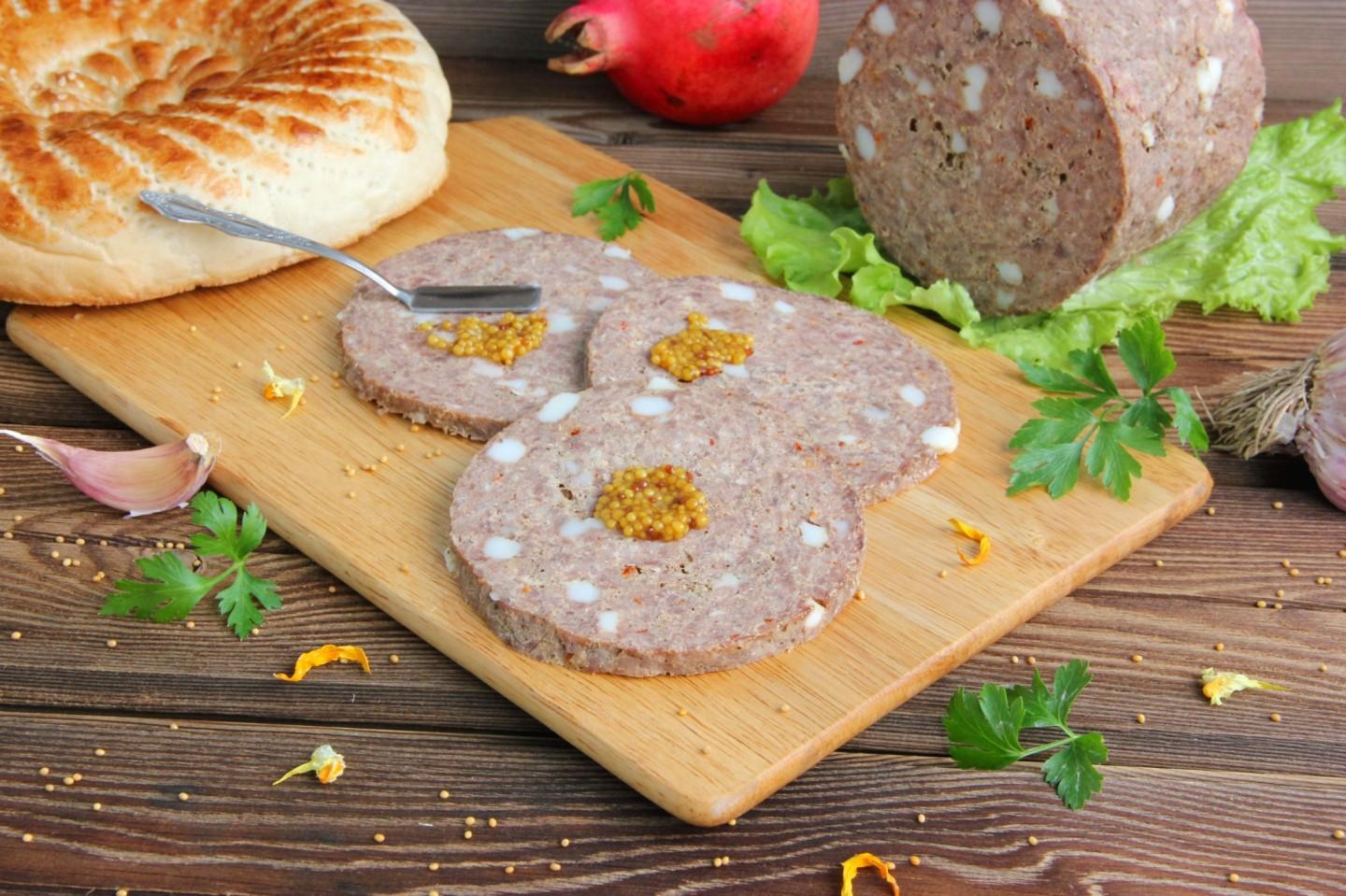
Excellent natural flavor, made from any meat you like! With the simplest kitchen gadget—a ham maker—you can always make sausage to your own taste. Finely chop the meat or grind it, add your favorite spices, change the meat ratios, and boil or bake it... It'll be delicious!


Cooking method
-
Step 1:
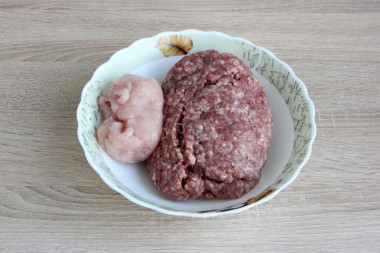
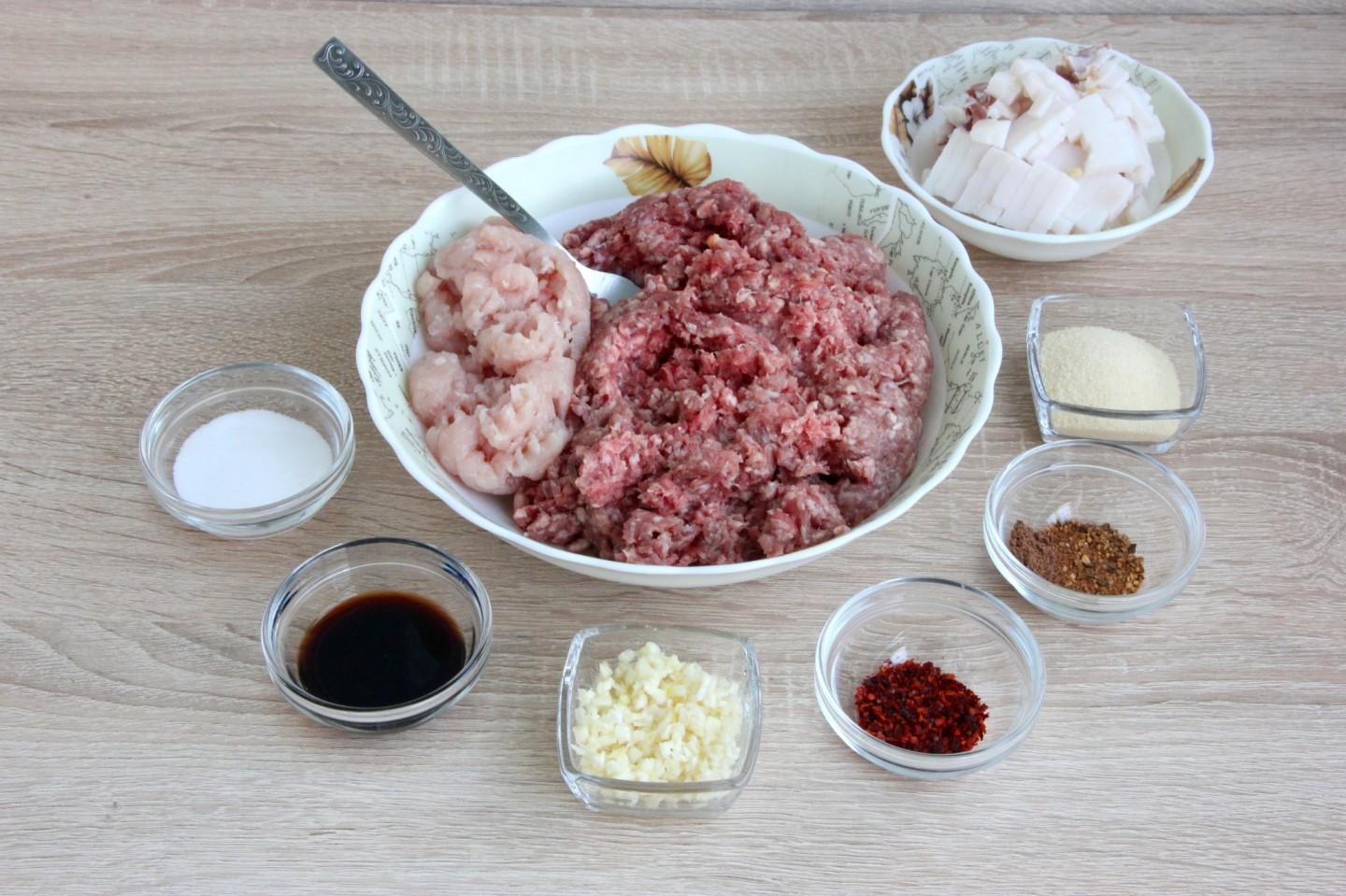
Prepare the meat. You can use ready-made ground meat for this sausage; I ground my own. If it's frozen, thaw it and let it warm to a soft, pliable state.
-
Step 2:
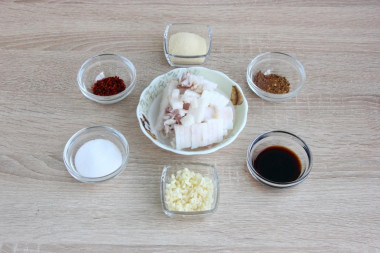
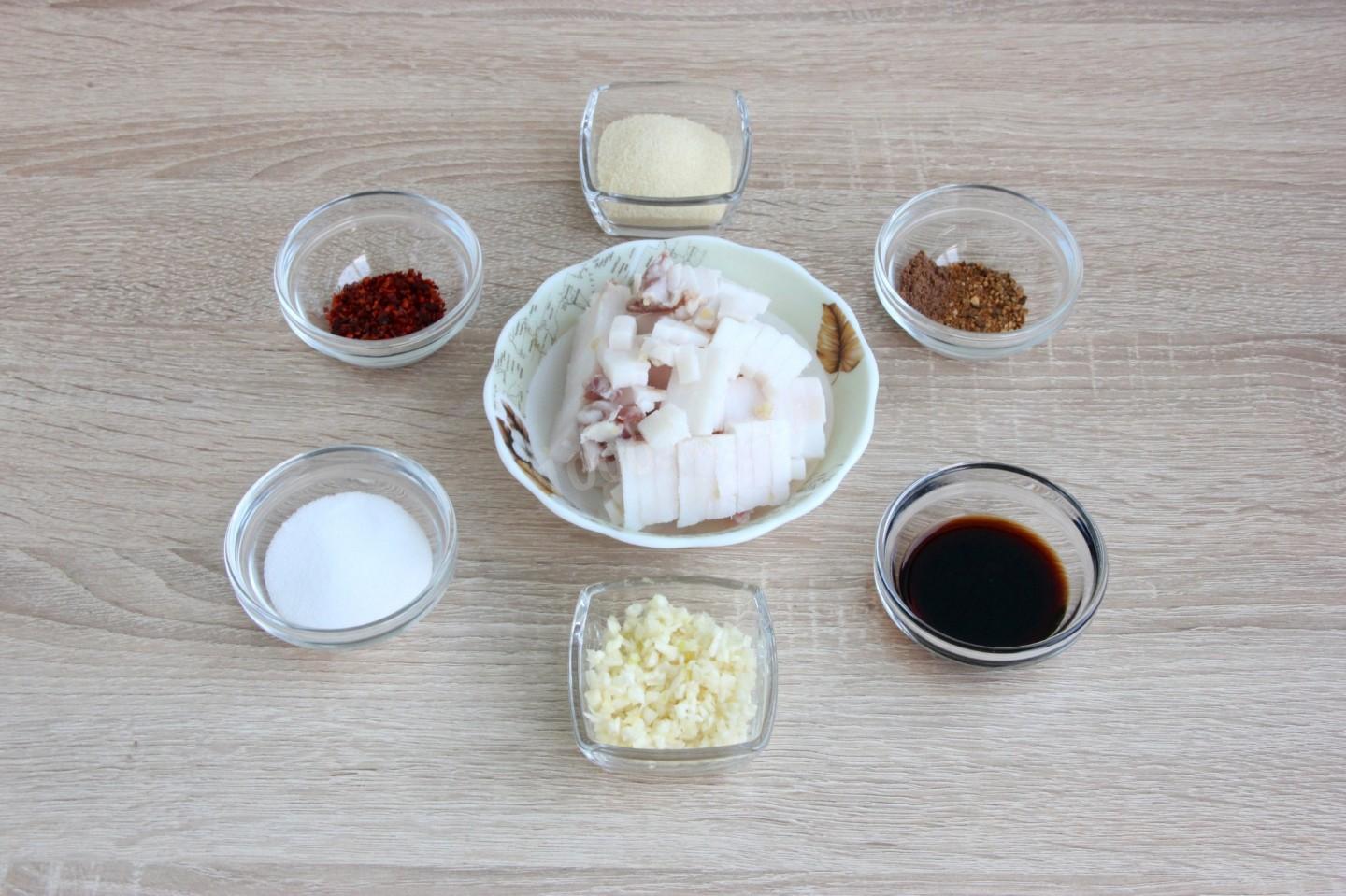
Prepare and measure the spices. I didn't grind the garlic with the meat—I finely chopped it, along with the fat. Whether to add the fat is up to you; it's fine without it, but it adds juiciness without tasting greasy. You can use fresh or lightly salted fat.
-
Step 3:
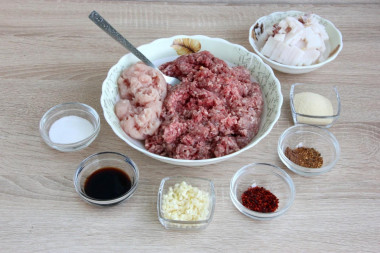
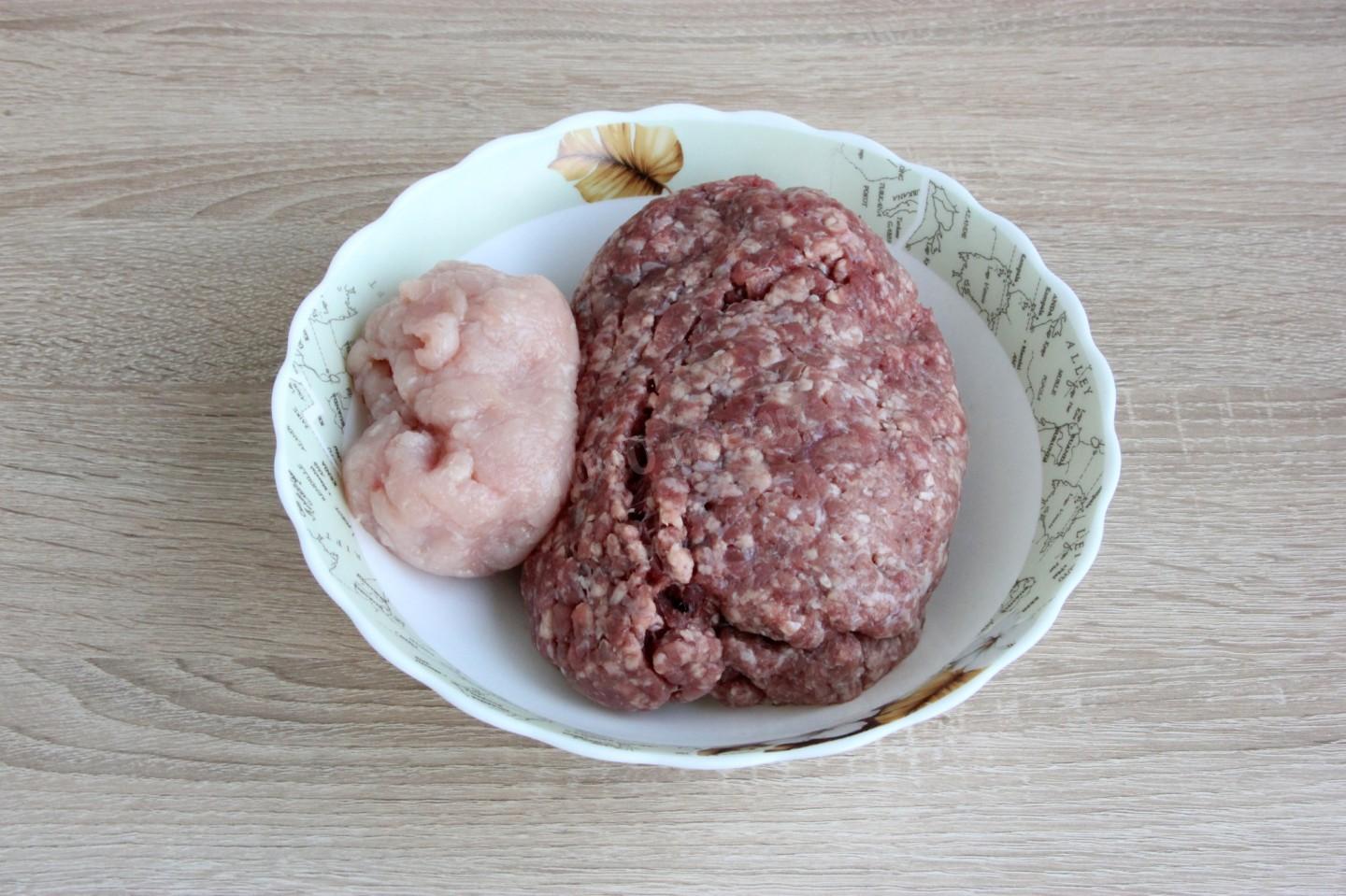
Mix both kinds of ground meat well—I find it easiest by hand, but a stand mixer or another tool works. Add the garlic, nutmeg, pepper blend, and smoked paprika, mixing well after each. Then add the soy sauce and stir. Then salt it, keeping in mind the soy sauce is salty too. Add the dry gelatin and stir in the fat last. Mix very thoroughly so the fat is evenly distributed.
-
Step 4:
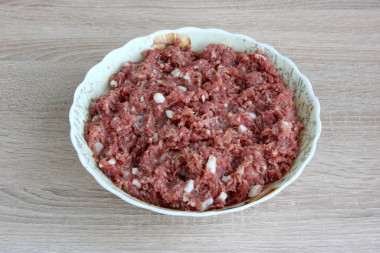
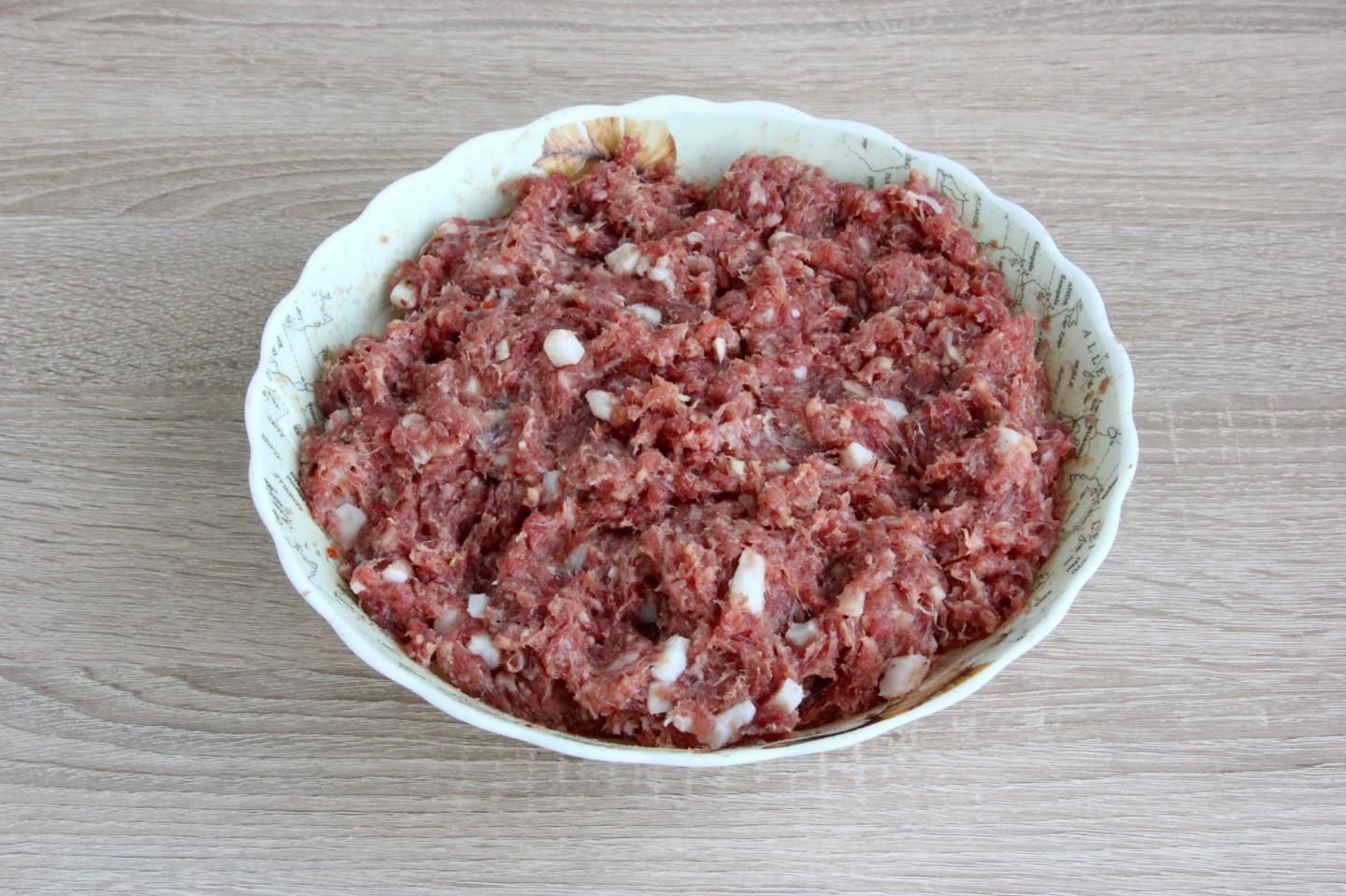
Here's what the raw sausage mixture looks like—quite dense, sticky, and pliable.
-
Step 5:
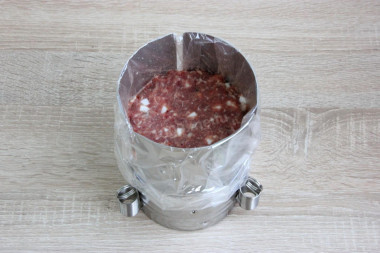
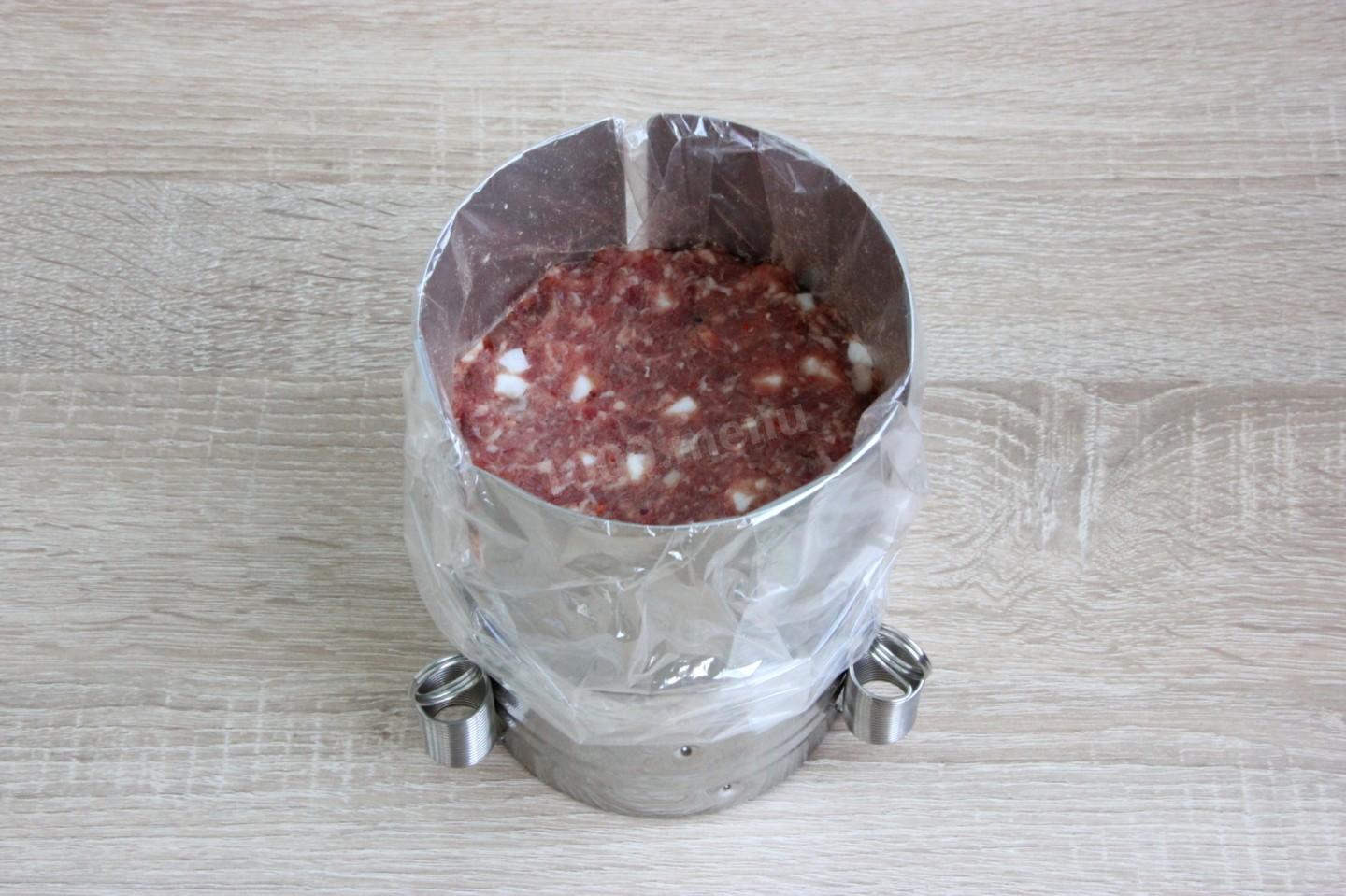
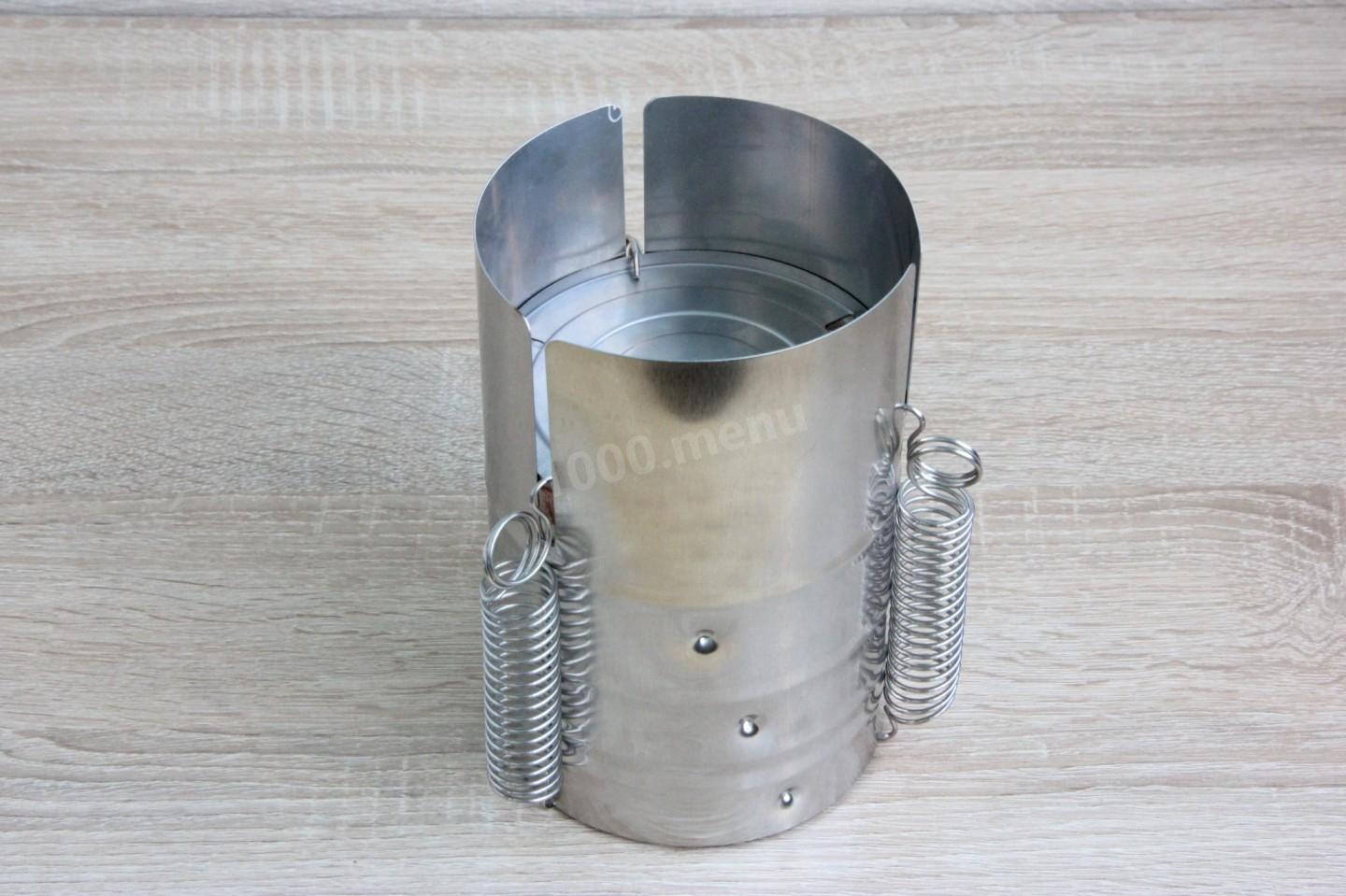
Assemble the ham maker per its instructions. Tightly clip or tie off the bottom of an oven roasting bag, set it inside the cylinder, and pack it very firmly with the meat mixture. Tie the top securely too, and trim off the excess bag so it doesn't get in the way of closing the cylinder. Set everything up neatly so water can't get inside.
-
Step 6:
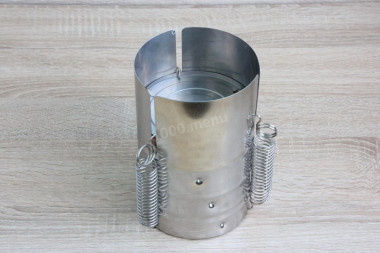
Close the top lid with the rims up, but so the lid's slits don't line up with the cylinder's slots—the slits on the top lid are there to let steam escape. Pull the springs along the guides and draw the lid down, hooking it over the edge of the rims.
-
Step 7:
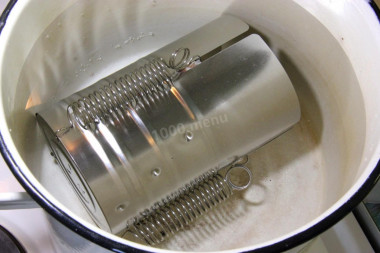
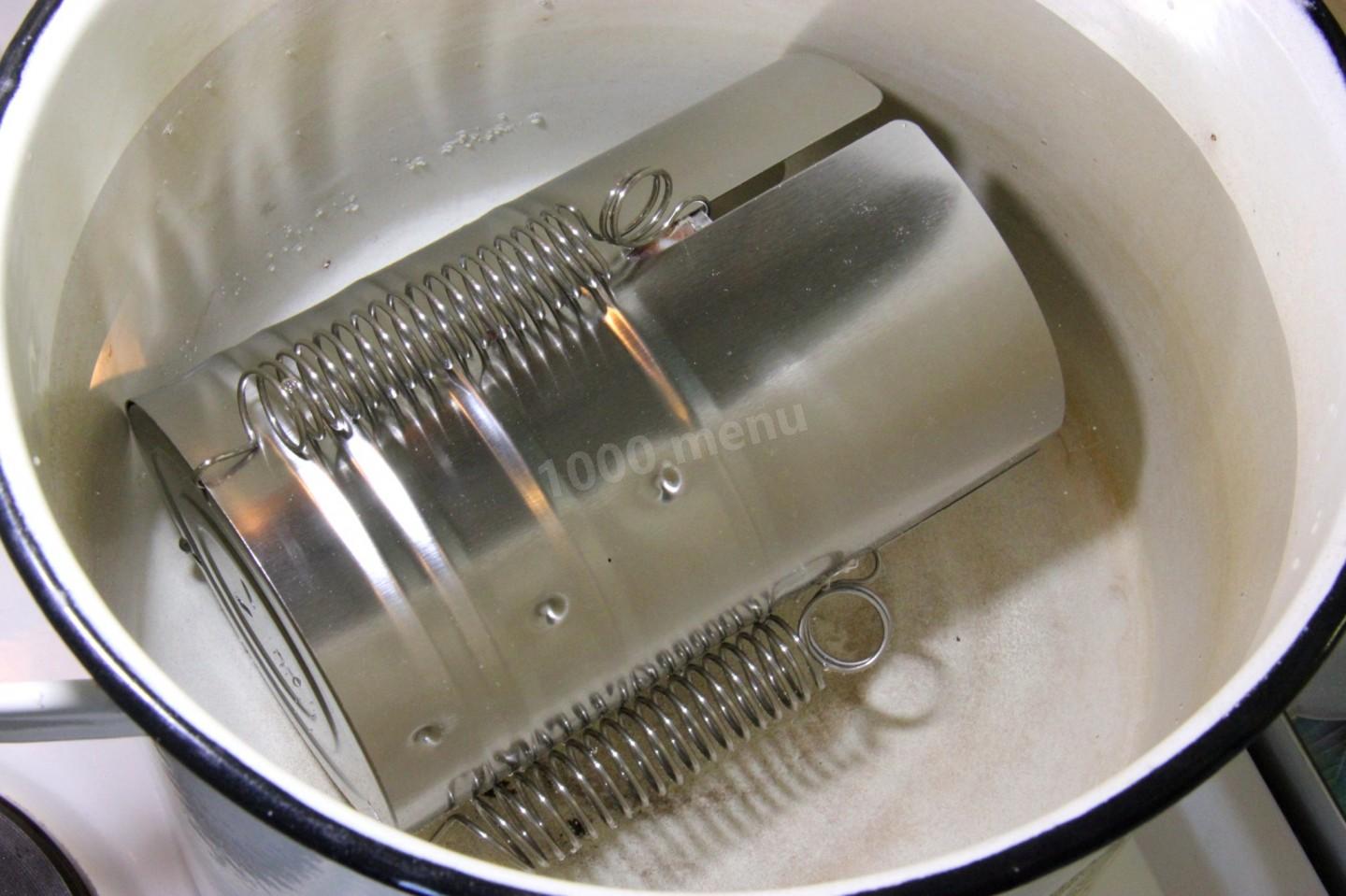
Set the loaded ham maker in a roomy pot and add cold water so it covers it by about two finger-widths. Turn the heat up high so the water heats quickly, but don't let it boil.
-
Step 8:
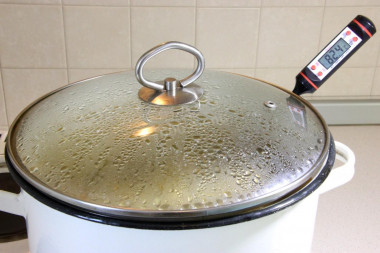
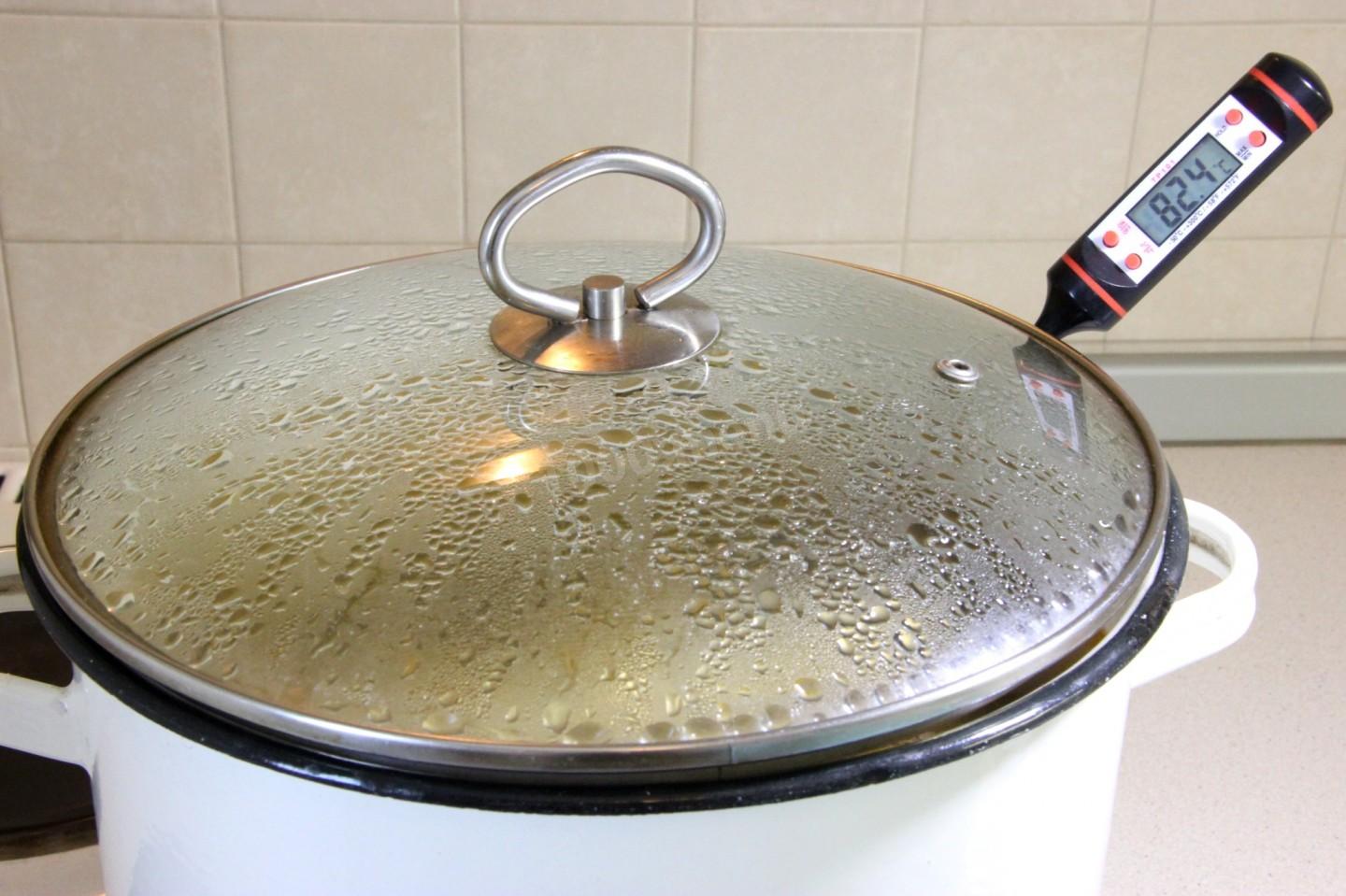
Bring the temperature to 175°F (80°C) and lower the heat to its minimum. The sausage should cook at 175–190°F (80–87°C) for about 2–2.5 hours, since there's a lot of beef in it; other meats may cook faster.
-
Step 9:
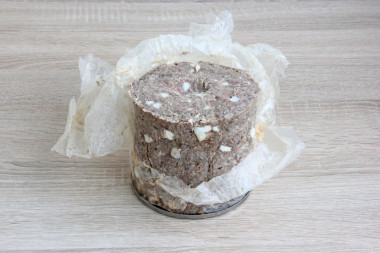
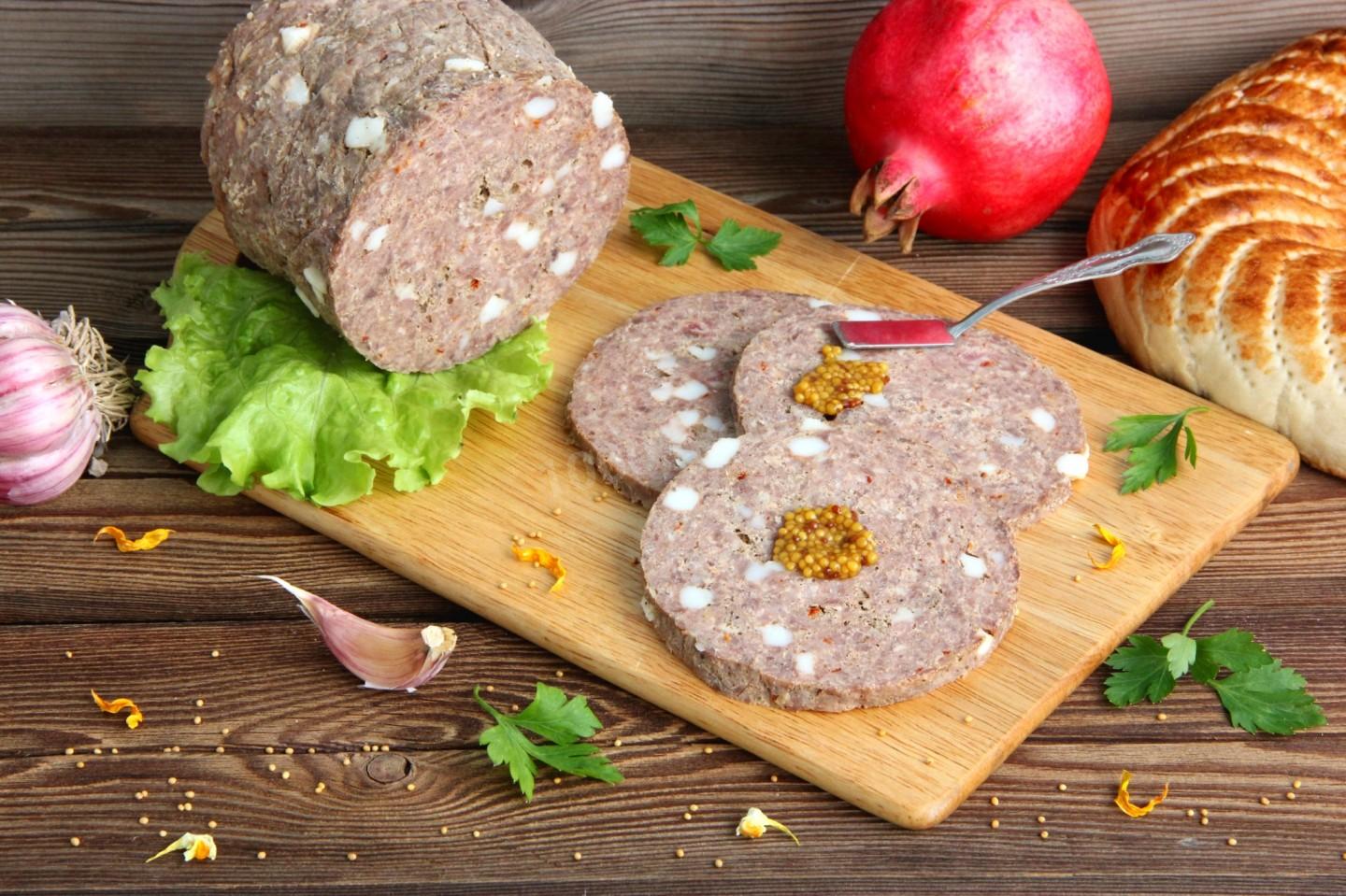
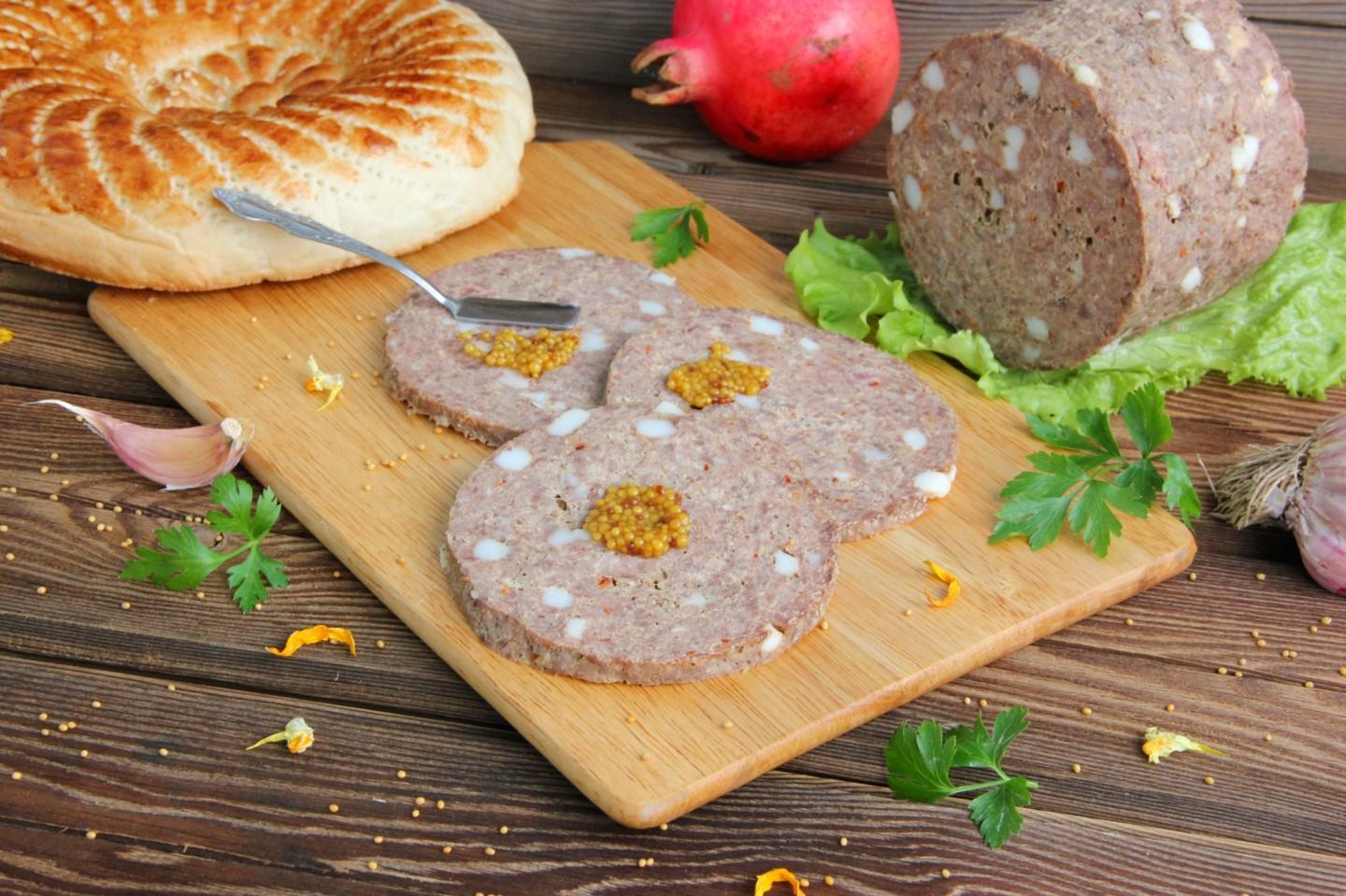
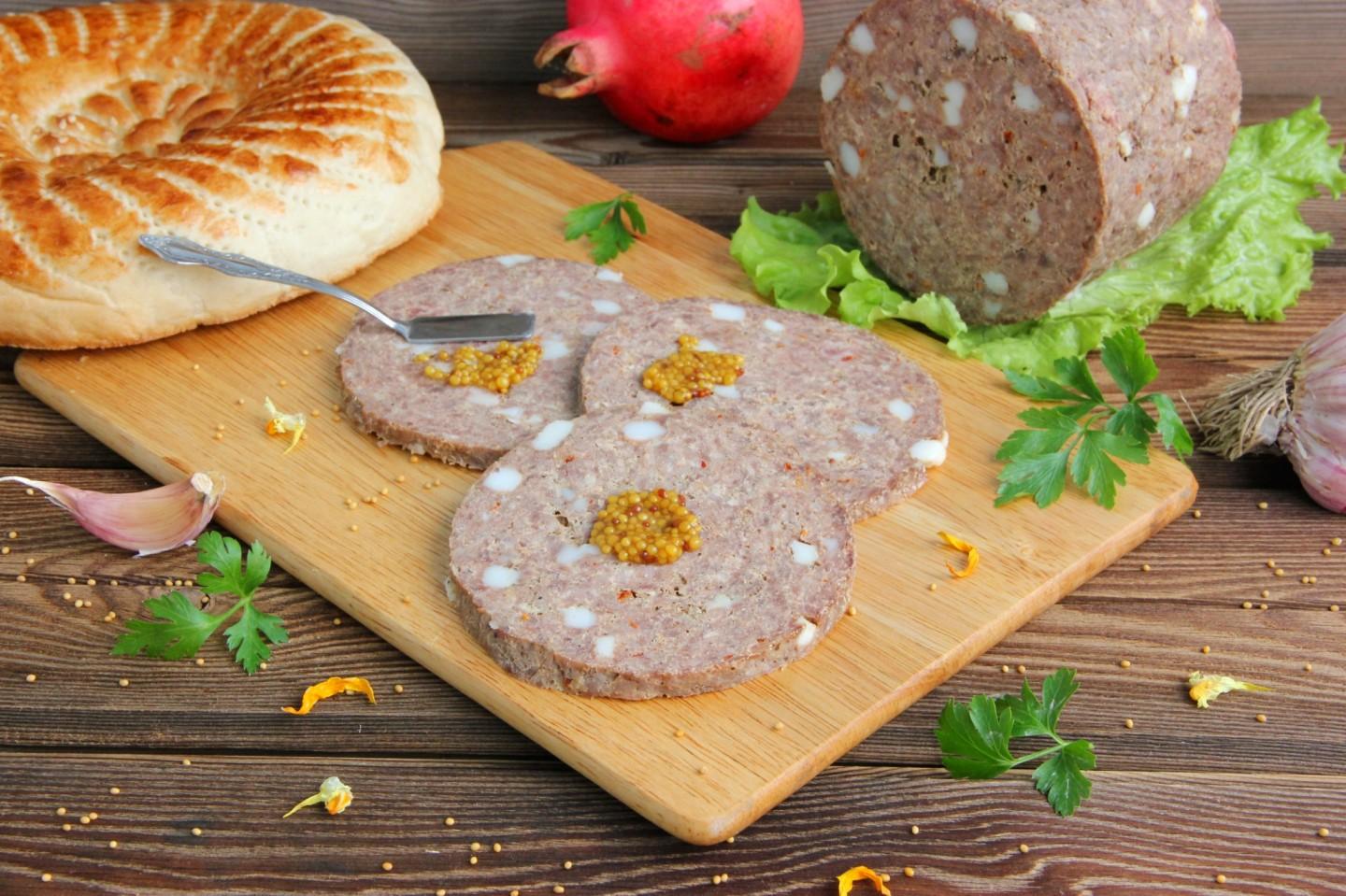
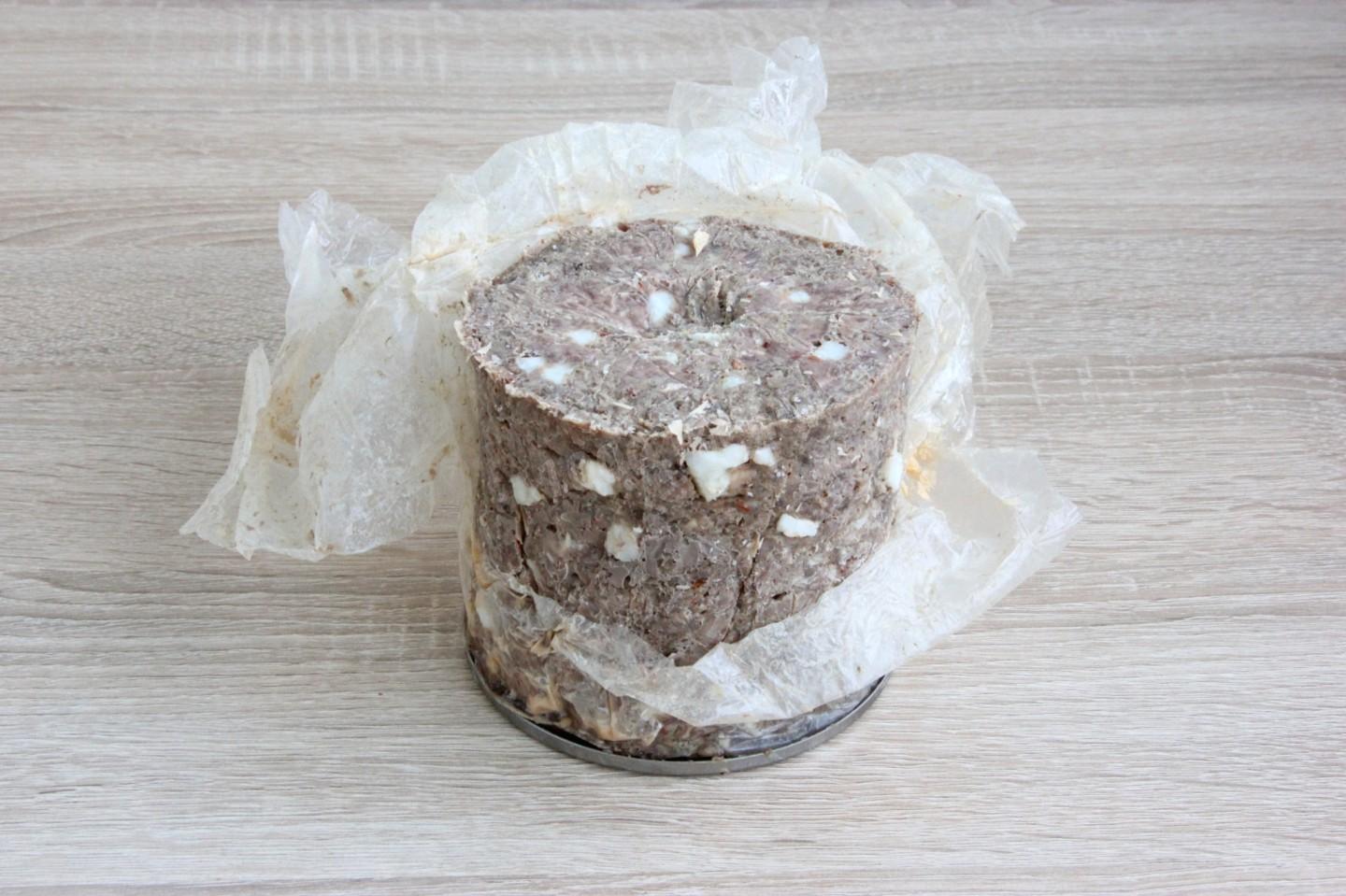
After that time, take out the ham maker and—without removing the springs—let it cool to room temperature in the open air, about 4 hours, then refrigerate it for 5–6 hours. Only then open the ham maker and remove the finished homemade sausage. It'll be an unusual grayish color, but very aromatic and tasting of real meat. It reminded me of pressed deli meat, but much tastier than store-bought. It keeps up to 3 days, though it gets eaten sooner.
- This amount of ingredients yielded 770 g of finished homemade sausage. You can add spices to the ground or chopped meat to your taste, plus herbs, olives, vegetables, or offal. Adding curing (nitrite) salt keeps the meat pinkish, but regular salt works too. Cooking in a ham maker is simple even for beginner cooks—just remember the meat shouldn't boil hard but should slowly poach. The great thing about homemade sausage is how natural it is and how much you can vary it. Add whatever ingredients you like for a new, unique flavor every time!
Caloric content of the products possible in the composition of the dish
- Pork fat - 871 kcal/100g
- Melted pork fat - 947 kcal/100g
- Pork rinds - 895 kcal/100g
- Lard - 797 kcal/100g
- Fatback - 658 kcal/100g
- Garlic - 143 kcal/100g
- Soy sauce - 51 kcal/100g
- Gelatin - 355 kcal/100g
- Salt - 0 kcal/100g
- Paprika - 289 kcal/100g
- Minced chicken - 143 kcal/100g
- Nutmeg - 556 kcal/100g
- Ground pepper mixture - 255 kcal/100g
- Minced pork beef - 236 kcal/100g