Pea Porridge with Canned Stewed Meat (Tushonka)
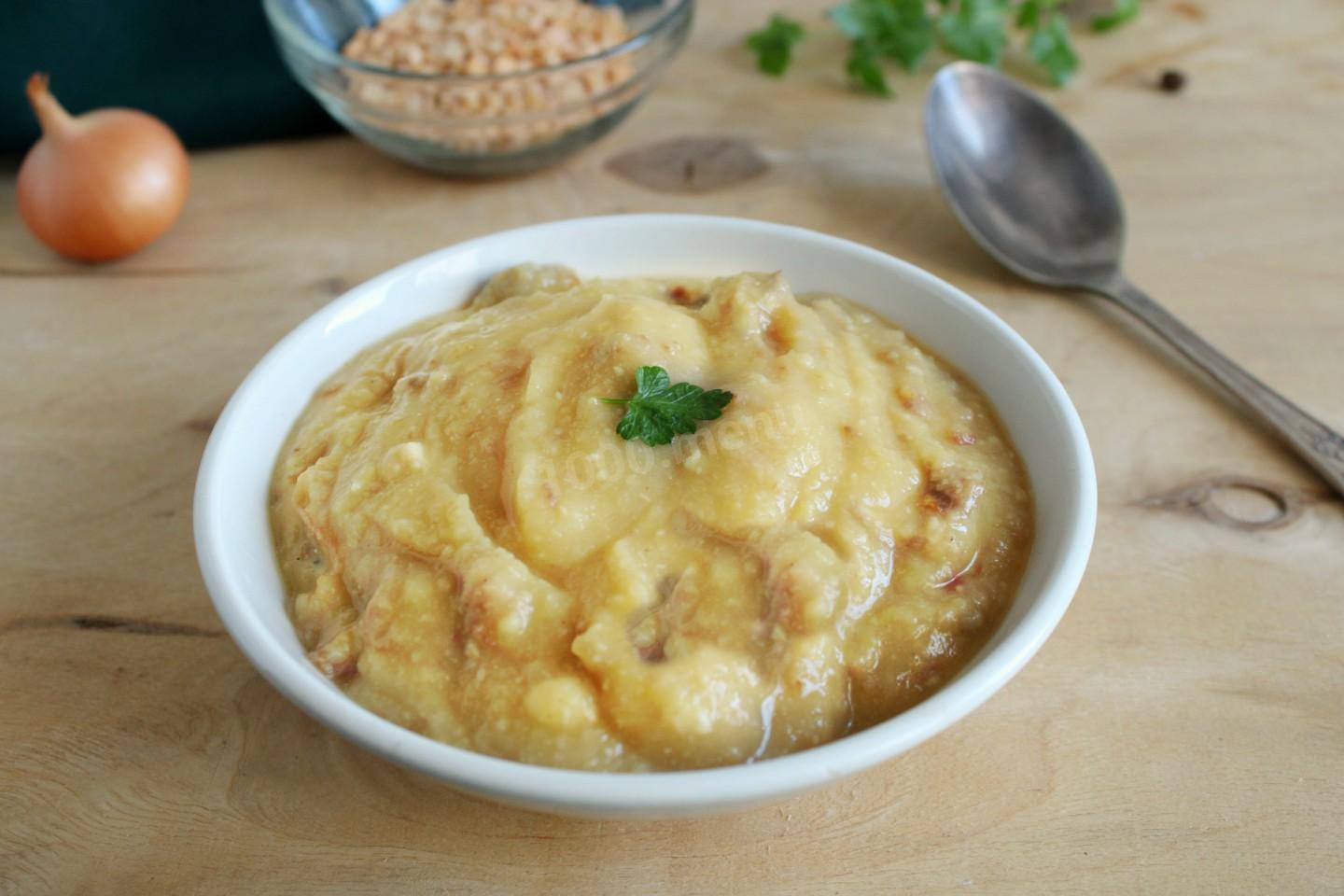
A hearty, nourishing dish for the whole family! Not so long ago, pea porridge was a popular dish; now it's almost a rarity, made only occasionally. But it's actually not just tasty — it's very good for you too.
Katya1
Recipe author
Pea Porridge with Canned Stewed Meat (Tushonka)
Nutrients and energy value of the composition of the recipe
By weight of the composition:
Proteins 27 %
8 g
Fats 30 %
9 g
Carbohydrates 43 %
13 g
168 kcal
GI:
100
/
0
/
0
- Gather your ingredients. You can make pea porridge with either water or meat broth. It's cooked with vegetables, mushrooms, meat, bacon, smoked meats, or canned stewed meat. Let's go with the last option — it's the easiest and quickest to make.
- So the peas cook faster, soak them ahead of time, ideally overnight, so they swell up well. Rinse the split peas thoroughly until the water runs clear, cover them with cold water, and leave them overnight at room temperature.
- In the morning, rinse the peas again and cover them with a fresh batch of cold water — you want twice as much water as peas. Set the pot of peas over the heat. When the water boils, reduce the heat to low and cook for about 30 minutes, until the peas are soft. The liquid should fully evaporate and the peas should cook down. Add a pat of butter and turn off the heat.
- While the peas cook, sauté the carrots and onion in vegetable oil in a skillet (grate the carrots; peel and finely chop the onion). Fry the vegetables for about 10 minutes, then add the canned stewed meat. You can use beef or pork stew, depending on your taste. Stir and simmer the meat with the vegetables over low heat for 10 minutes. Combine the meat and vegetables with the pea porridge and mix. Your pea porridge with stewed meat is ready. All that's left is to taste it.
- This dish is especially good for people doing hard physical work or working outdoors in the cold season. Enjoy!
- Peas are a very wholesome food, rich in amino acids, easily digestible protein, and the fiber and dietary roughage needed for a healthy digestive tract. They're also rich in B, A, C, E, and PP vitamins, calcium, magnesium, phosphorus, potassium, and much more that the body needs. Peas help raise hemoglobin levels in the blood, normalize blood pressure, prevent thyroid problems, and support weight loss.
Caloric content of the products possible in the composition of the dish
- Carrots - 33 kcal/100g
- Dried carrots - 275 kcal/100g
- Boiled carrots - 25 kcal/100g
- Dried whole green peas, uncooked - 340 kcal/100g
- Raw split peas, hulled - 348 kcal/100g
- Boiled split peas - 115 kcal/100g
- Dried uncooked chickpeas - 360 kcal/100g
- Dried uncooked cowpeas - 343 kcal/100g
- Dried boiled cowpeas - 76 kcal/100g
- Dried peas - 322 kcal/100g
- Peas - 298 kcal/100g
- Butter 82% - 734 kcal/100g
- Unsalted premium butter - 709 kcal/100g
- Unsalted farmhouse butter - 661 kcal/100g
- Salted farmhouse butter - 652 kcal/100g
- Clarified butter - 869 kcal/100g
- Vegetable oil - 873 kcal/100g
- Water - 0 kcal/100g
- Onion - 41 kcal/100g
- Pork stew - 349 kcal/100g
Similar recipes


Related and additional categories: