Adjika with Bell Pepper, Garlic, and Crabapples for Winter
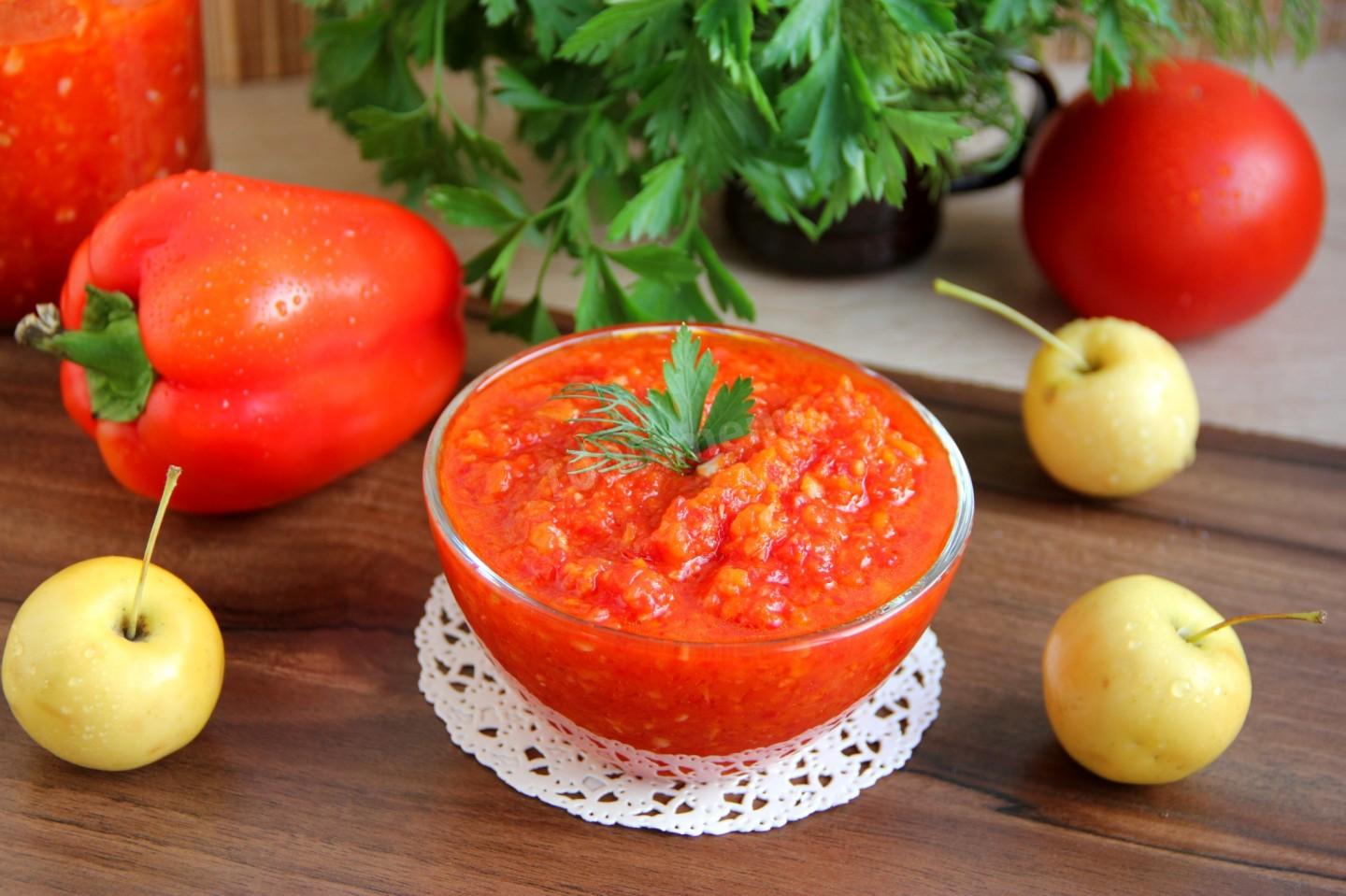
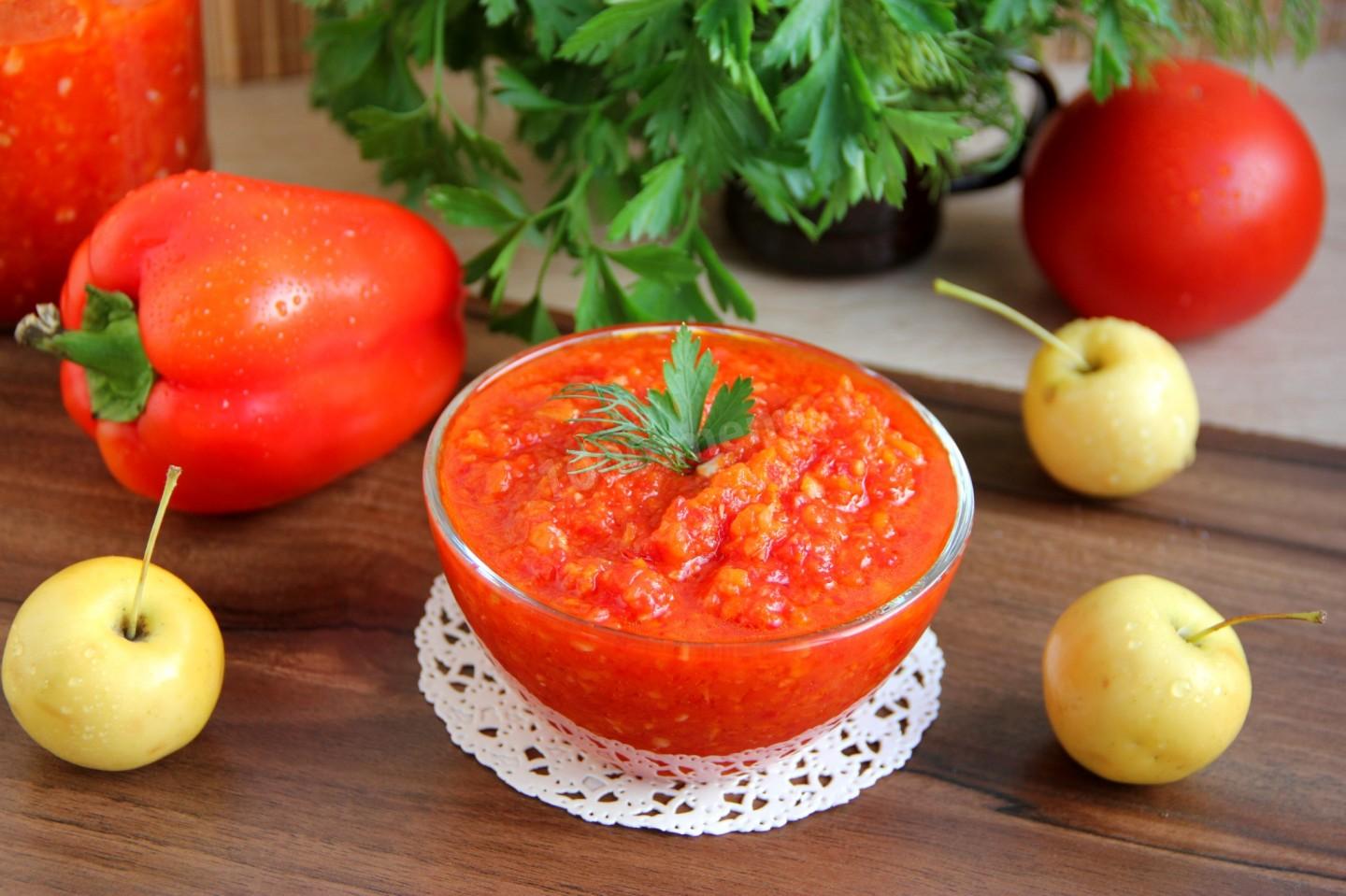
Sweet-and-sour and a little spicy, with no processing bath. It keeps well. You can dial the heat up or down by adjusting the amount of hot pepper to taste—kids happily eat the milder version. It goes great with any meat, pasta, or potatoes, and you can also stir it into gravy and other sauces, use it as part of a marinade for meat, or add it to a soup sauté.

Cooking method
-
Step 1:
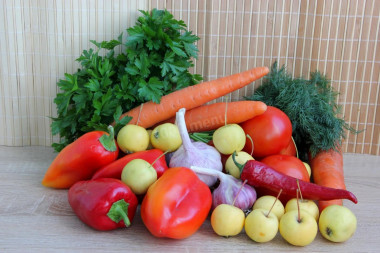
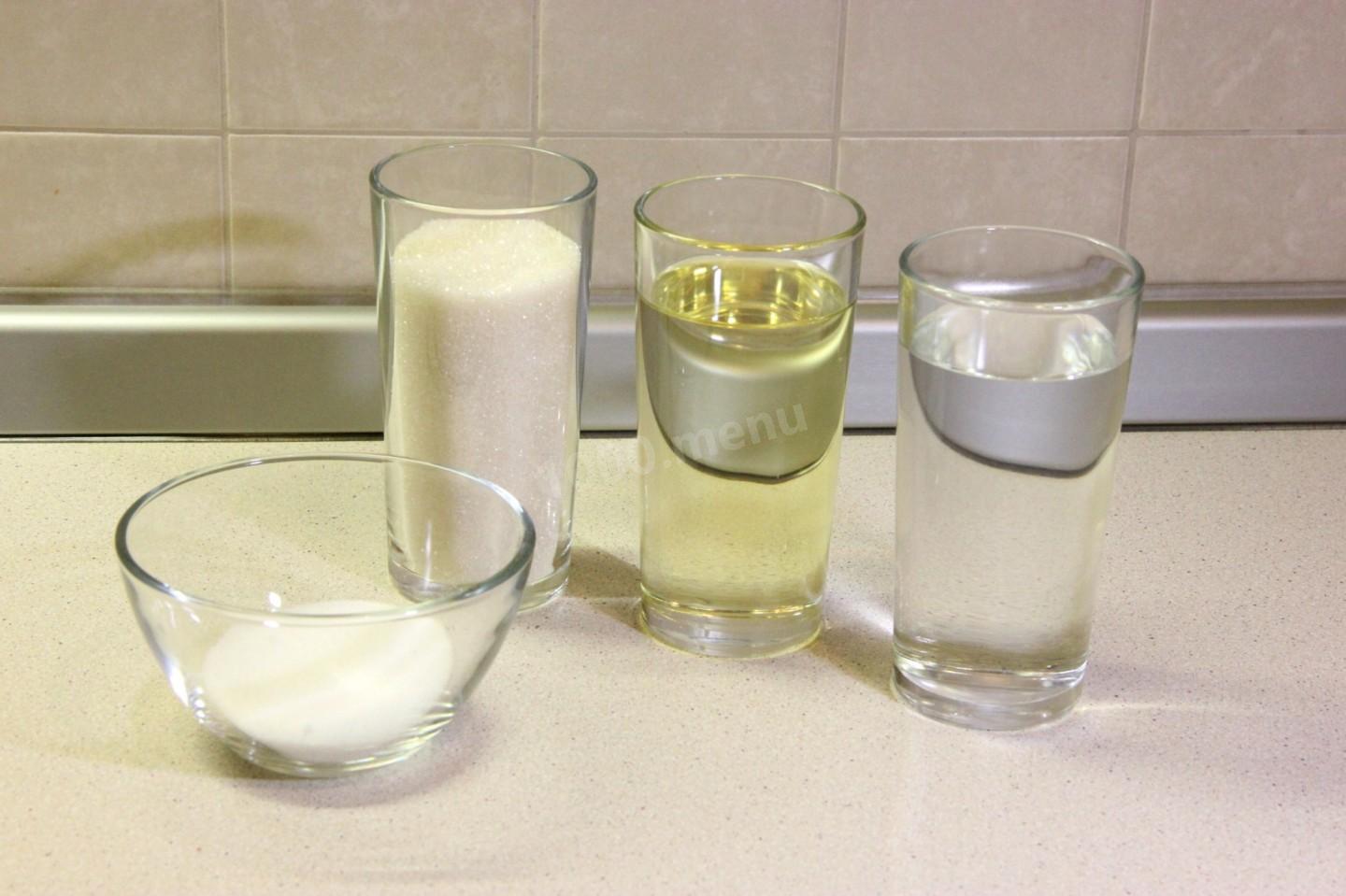
The ingredients you'll need.
-
Step 2:
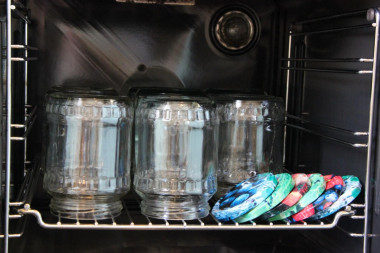
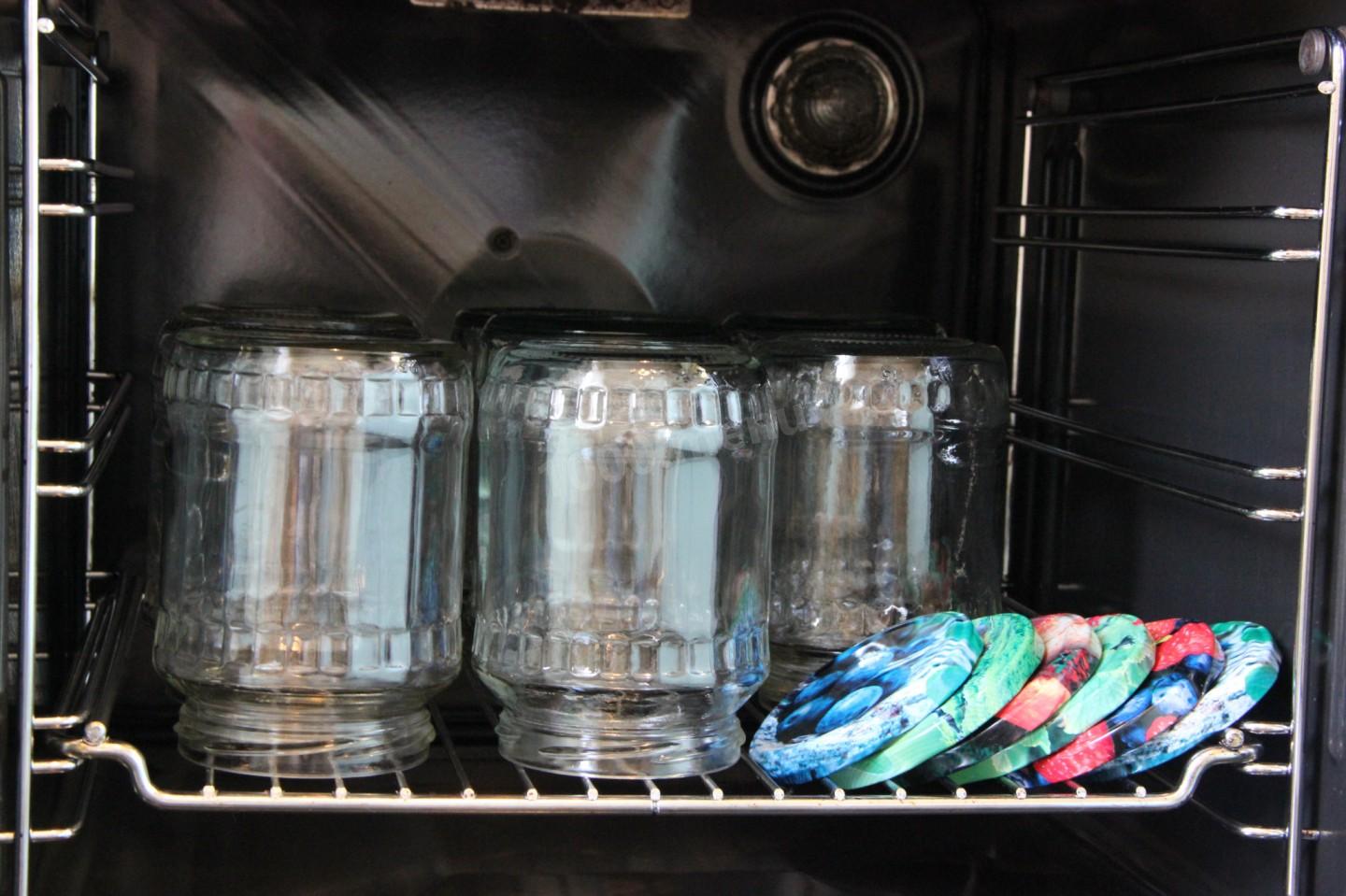
Prepare the jars: wash them with baking soda and rinse well under running water. Set them in a cold oven while still wet, neck-down, and lay out the lids too. Turn the oven to 300°F (150°C); once it reaches temperature, sterilize the jars—10 minutes for 1-pint (0.5-liter) jars, 15 minutes for 1-quart (1-liter) jars. This is the most convenient sterilizing method for me; I've used it for many years and it's never let me down.
-
Step 3:
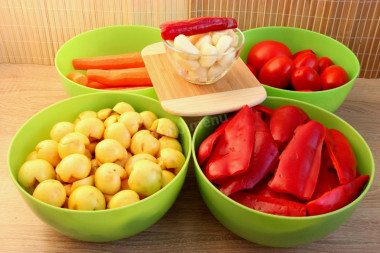
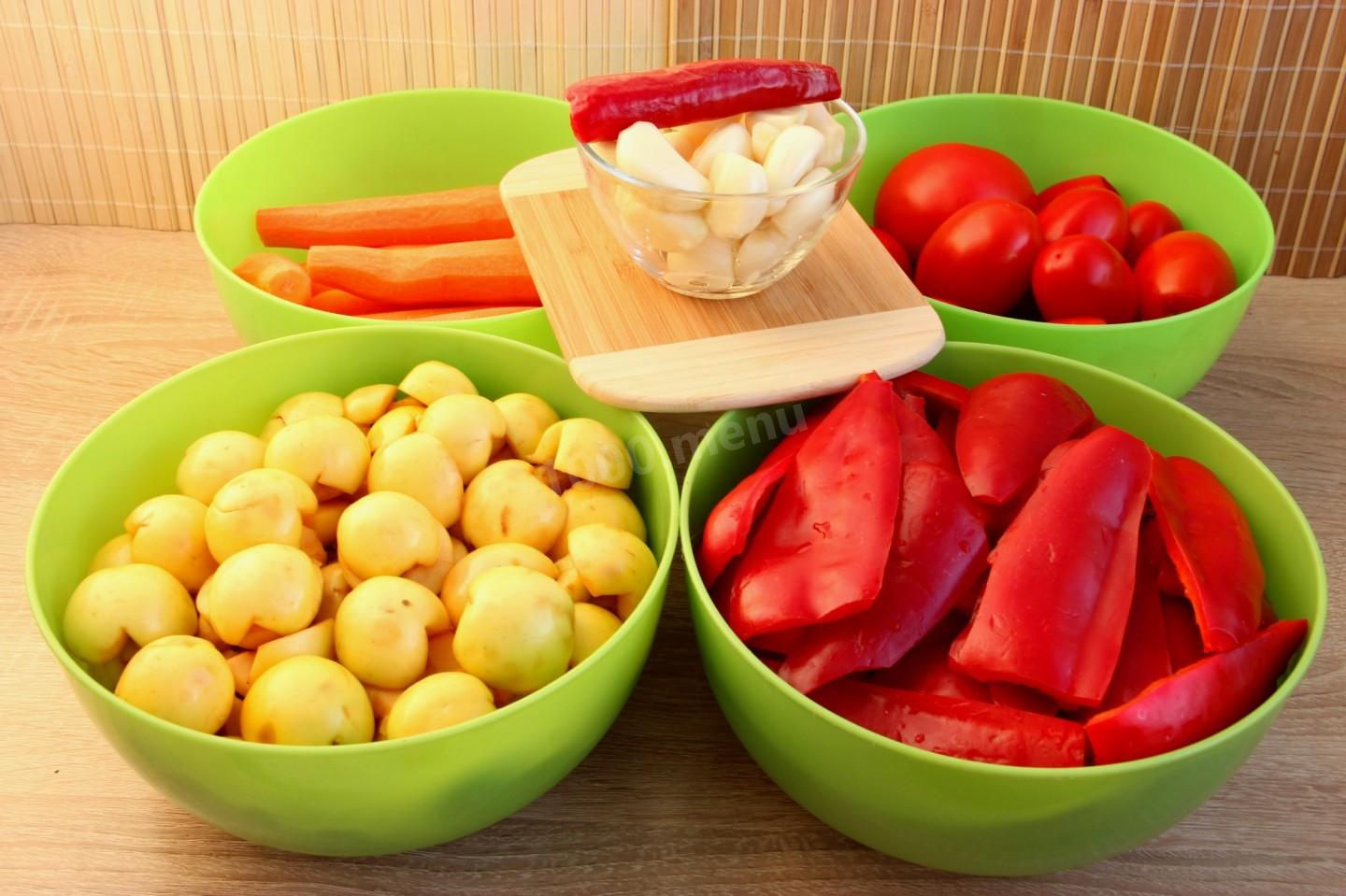
Wash all the vegetables. Peel the carrots and garlic. Seed the peppers—and don't skip the gloves when handling the hot one. I don't peel the crabapples (or apples) or the tomatoes; I just remove the stems and cut the seeds out of the crabapples. Cut everything into pieces sized to fit your meat grinder.
-
Step 4:
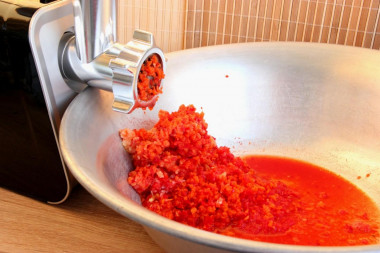
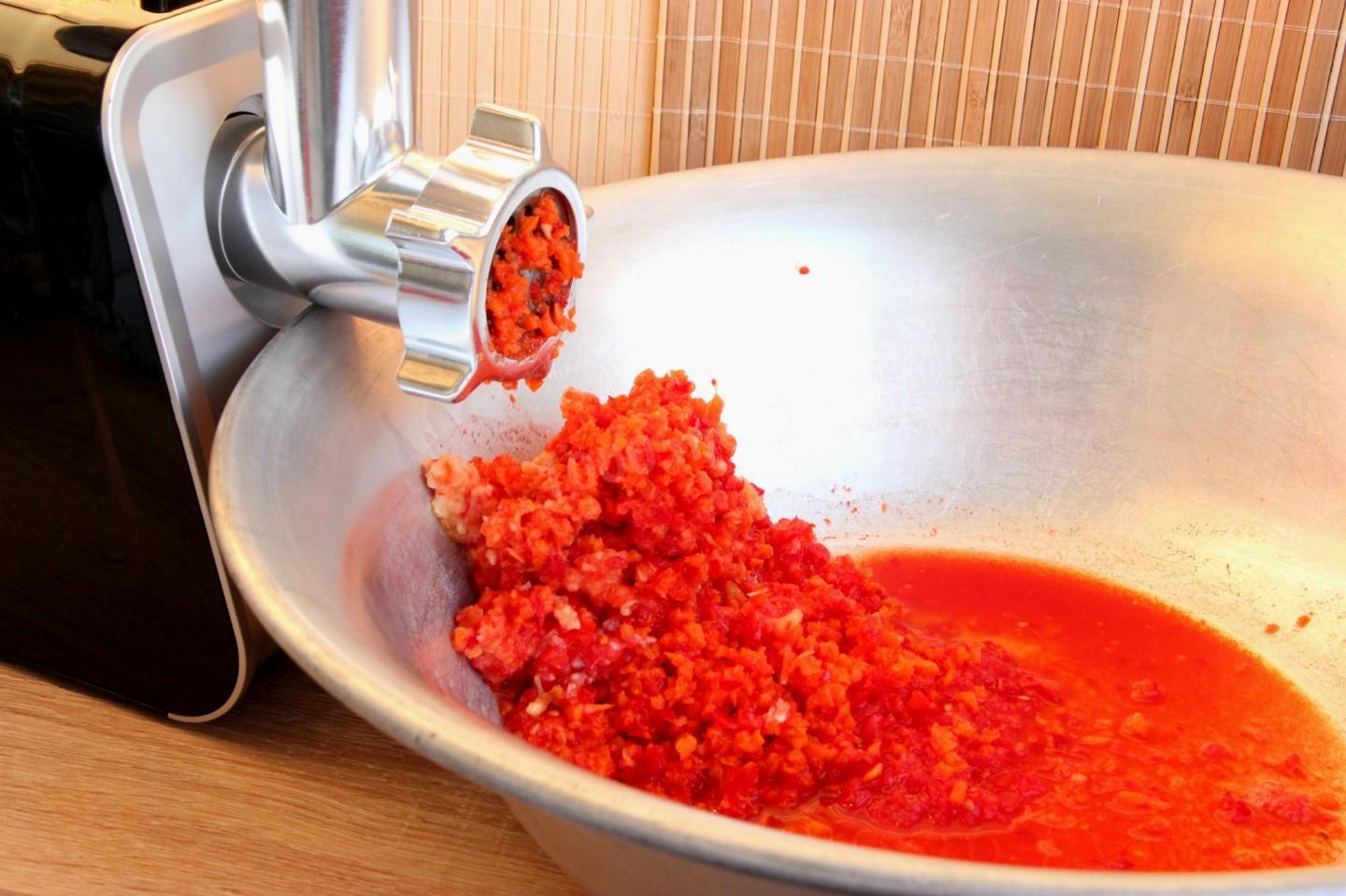
Run the garlic through a meat grinder fitted with a medium-hole plate, separately. Then grind the tomatoes, carrots, bell pepper, hot pepper, and crabapples, alternating them, all into one container. A wide cooking basin works perfectly for me.
-
Step 5:
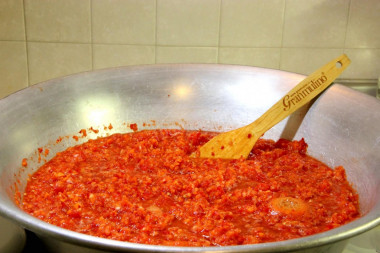
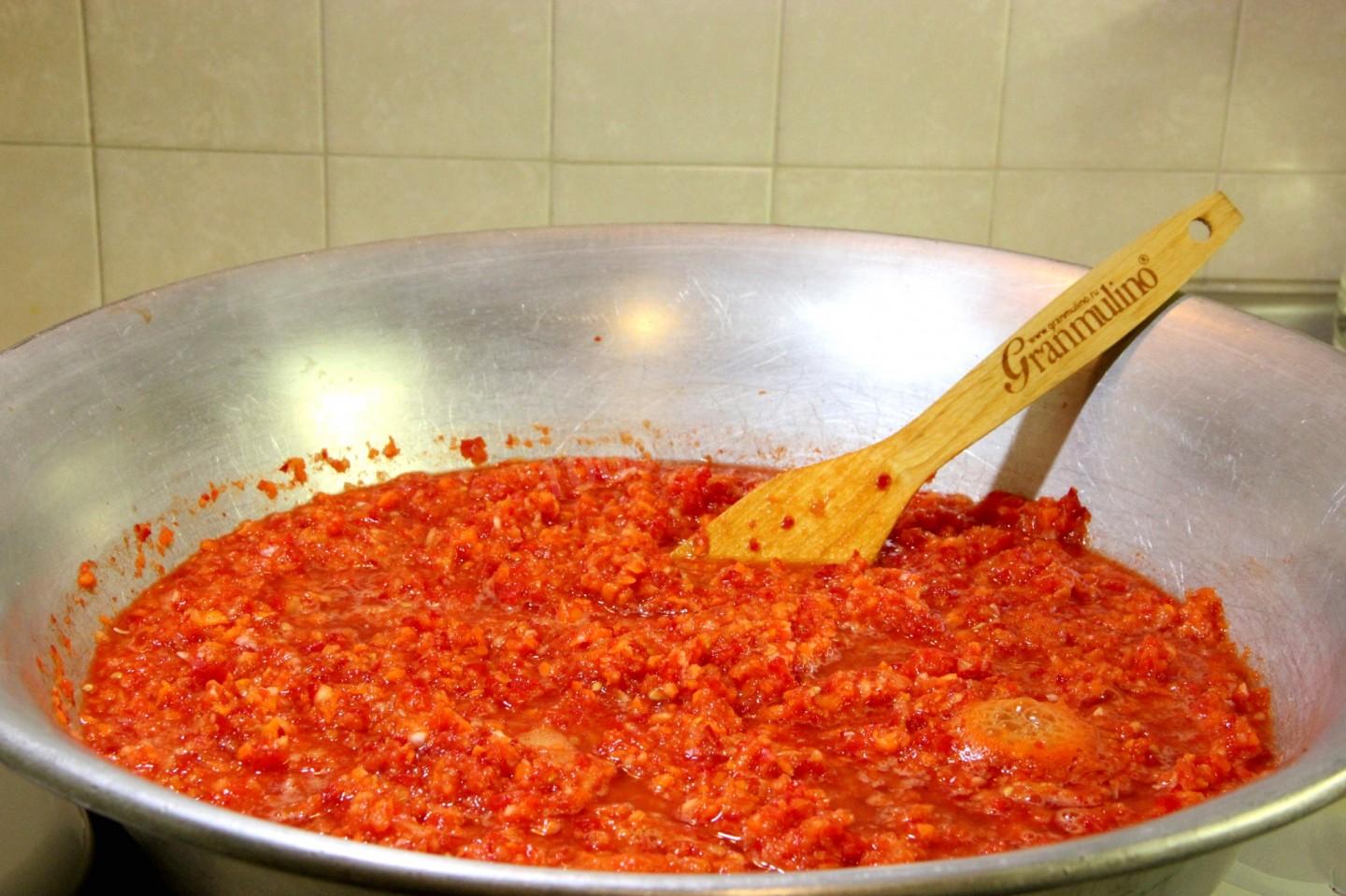
Cook the resulting purée over medium heat for 1 hour, stirring now and then so it doesn't scorch. Then turn off the heat, leaving the basin on the burner.
-
Step 6:
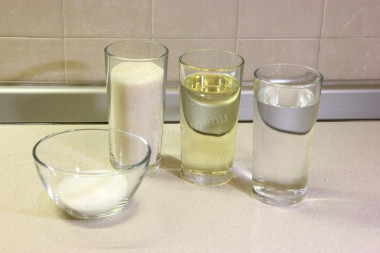
Add the garlic, sugar, salt, sunflower oil, and vinegar. (I added the garlic off-camera.) Stir, bring to a boil, and turn off the heat. Without taking the basin off the burner, ladle the adjika right away into warm, sterilized jars. (1-quart/1-liter jars are handy; the adjika keeps a long time in the fridge.) Screw on the lids. If a jar isn't filled to the top, leave it to cool uncovered—otherwise condensation forms, which is bad.
-
Step 7:
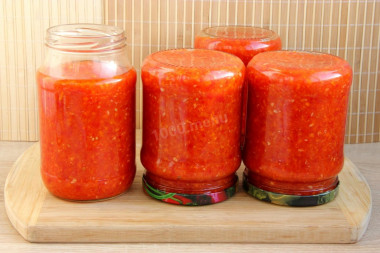
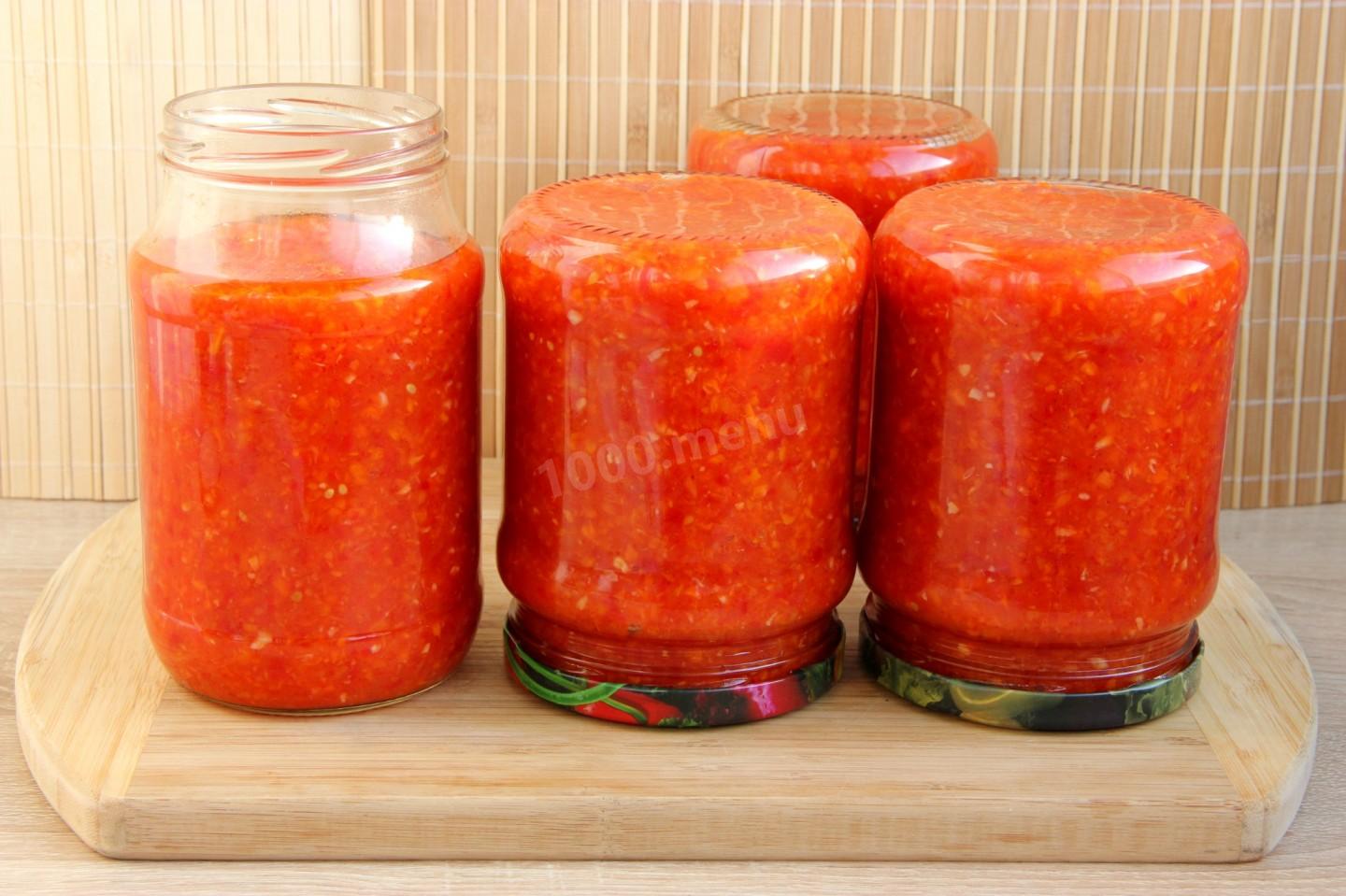
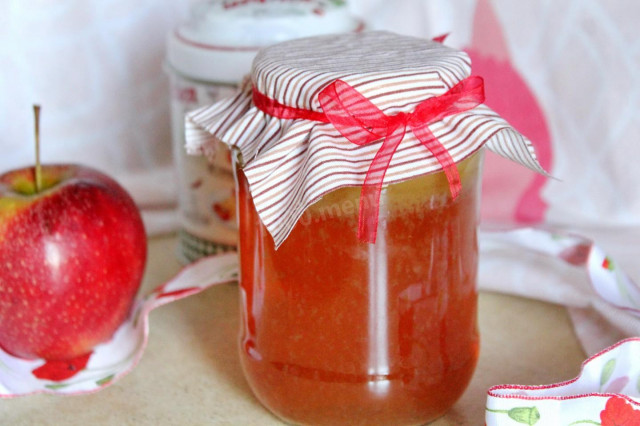
Then turn the jars upside down onto their lids, cover them with a blanket, and leave them to cool completely. Store in a dark, cool place or in the fridge. It keeps for up to two years. You can eat it right away. This amount of ingredients made almost 4 liters of adjika for me—three 0.95-liter jars and one not-quite-full 0.95-liter jar, as you can see in the photo.
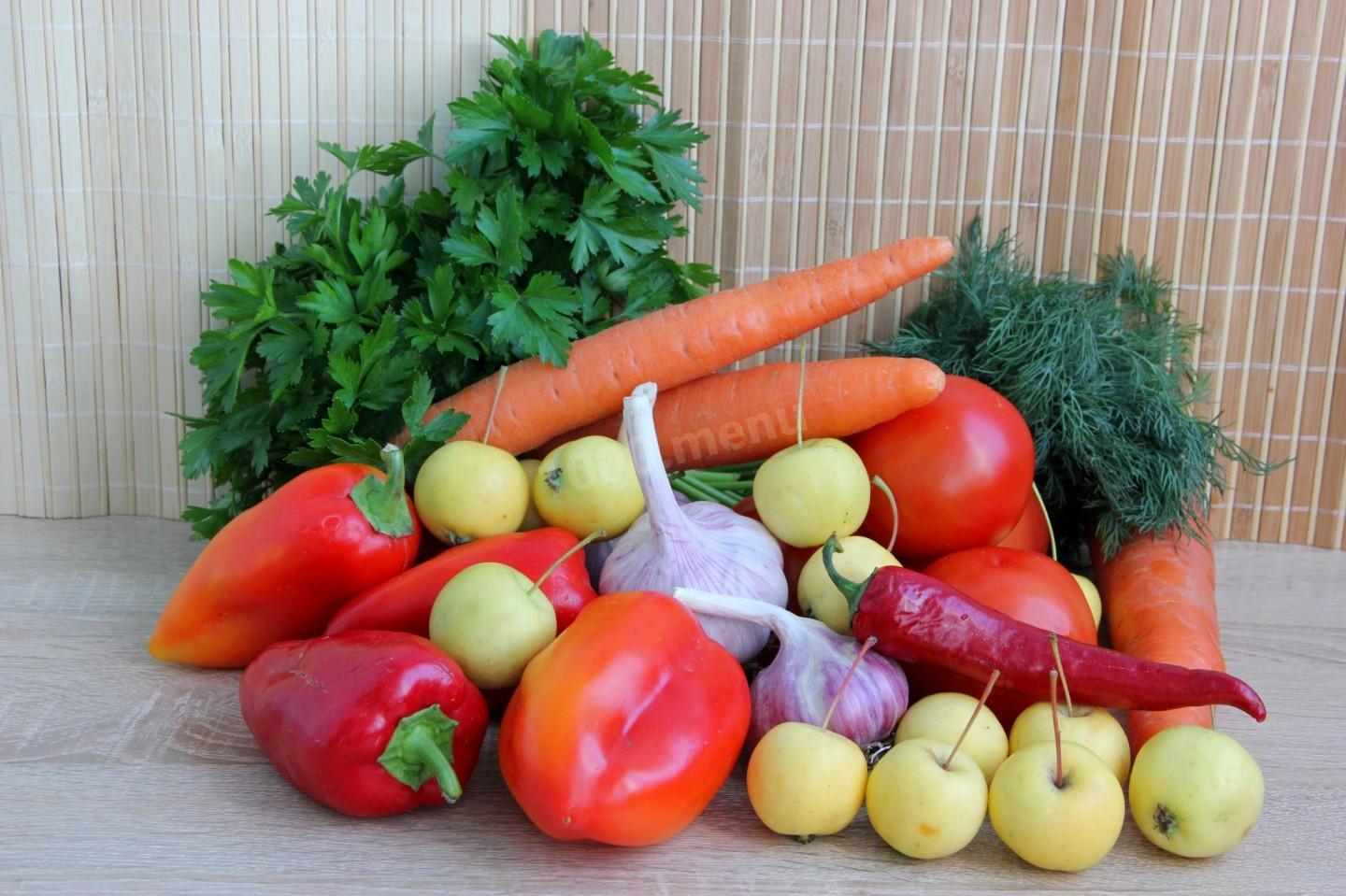
- It's simple to make and always on hand when you want something spicy and vegetable-based. A batch lasts a long time. It comes together fairly quickly, though the time given includes peeling the vegetables and cooling the jars. I added half of a large hot pepper (the one in the photo), and the flavor comes out exactly sweet-and-sour and a little spicy, but not fiery—just right for anyone who can't or doesn't like real heat. The "servings" figure refers to the number of jars.
Caloric content of the products possible in the composition of the dish
- Tomatoes - 23 kcal/100g
- Sweet pepper - 27 kcal/100g
- Carrots - 33 kcal/100g
- Dried carrots - 275 kcal/100g
- Boiled carrots - 25 kcal/100g
- Garlic - 143 kcal/100g
- Granulated sugar - 398 kcal/100g
- Sugar - 398 kcal/100g
- Vegetable oil - 873 kcal/100g
- Hot capsicum - 40 kcal/100g
- Salt - 0 kcal/100g
- Table vinegar - 11 kcal/100g
- Ranetki - 47 kcal/100g
Similar recipes

- Homemade preparations
- Vegetables
- Fruit berries
- Sweet
- Spices seasonings spices
- Fats and oils
- Garlic
- Pepper
- Salt
- Vinegar
- Vegetable oil
- Cooking
- Canning
- Without sterilization
- Vegetable blanks
- Sauce for winter
- Fruit blanks
- Marinades
- From carrots
- From tomato
- From sweet pepper
- Apples
- Vegetarianism
- Recipes for lean dishes without butter
- Sugar