Shchi (Russian Cabbage Soup) Baked in the Oven
One way to make shchi the slow, oven-baked way. Shchi is the cornerstone hot dish of Russian cooking. The forerunner of today's shchi appeared once people started growing cabbage. There's no single "correct" version—you make it from what you have on hand, following a few basic principles.
Cooking method
-
Step 1:
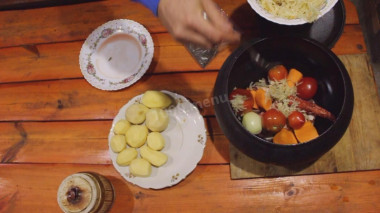
This soup is very simple to make. Of all the ingredients, only the carrot and beef brisket get cut into large pieces—everything else goes in whole. Put the brisket in the bottom of a cast-iron pot, then layer on carrot, tomatoes, sauerkraut, and finally potatoes, seasoning with salt and pepper to taste as you go.
-
Step 2:
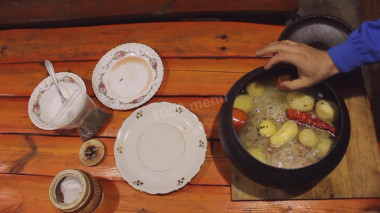
Pour in 4 liters (about 1 gallon) of water, stopping about 2 cm below the rim so the soup has room to come to a boil before braising without boiling over.
-
Step 3:
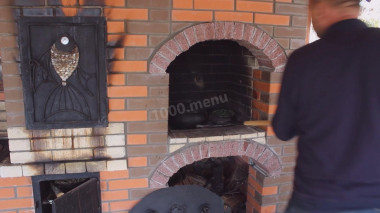
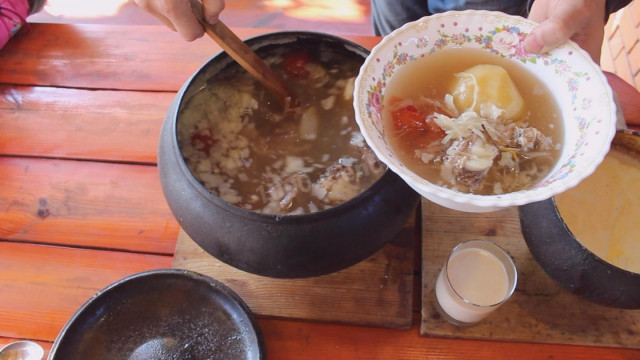
Put the full pot in the oven (or wood-fired oven) and close it up for about four hours. That's long enough for the soup to braise down into proper shchi. Enjoy!


- You can make this recipe in a wood-fired oven at a country house or in a regular oven at home. You won't get the smoky aroma in a home oven, but the result is still delicious. First set the oven hot enough to bring the soup to a boil—about 300°F (150°C)—then drop it to braising temperature, around 210°F (100°C), and let it go for about five hours. In old Russia, shchi was made from whatever was around—it was essentially a soup born of peasant scarcity. If nothing had come up in the spring garden yet, they'd even toss in nettles (that's a version of shchi too). Before potatoes reached the region, they used any root vegetables; tomatoes weren't used at all, since they weren't grown either. As for meat, people used whatever they had: if a hare came back from the hunt, in went the hare; if it was grouse or woodfowl, they used the bird. The sauerkraut here adds a tang that gives shchi its distinctive, pleasant flavor. If you'd rather skip the sourness, use plain fresh cabbage instead. Enjoy!
Caloric content of the products possible in the composition of the dish
- Onion - 41 kcal/100g
- Ripe potatoes - 80 kcal/100g
- Baked potatoes - 70 kcal/100g
- Mashed potatoes - 380 kcal/100g
- Boiled potatoes - 82 kcal/100g
- Potatoes in uniform - 74 kcal/100g
- Fried potatoes - 192 kcal/100g
- Tomatoes - 23 kcal/100g
- Carrots - 33 kcal/100g
- Dried carrots - 275 kcal/100g
- Boiled carrots - 25 kcal/100g
- Bay leaf - 313 kcal/100g
- Ground black pepper - 255 kcal/100g
- Sauerkraut - 19 kcal/100g
- Salt - 0 kcal/100g
- Water - 0 kcal/100g
- Beef brisket - 217 kcal/100g
Similar recipes

- For breakfast
- National cuisine
- Old recipes
- Soups
- Meat and meat products
- Vegetables
- Spices seasonings spices
- Other
- Bay leaf
- Pepper
- Salt
- Water
- Russian cuisine
- Cooking
- Shchi soup
- Meat soup
- Cabbage soup
- Tomato soup
- Potato soup
- Beef
- From carrots
- From potatoes
- From cabbage
- From tomato
- From onion
- No eggs
- Recipes for lean dishes without butter