
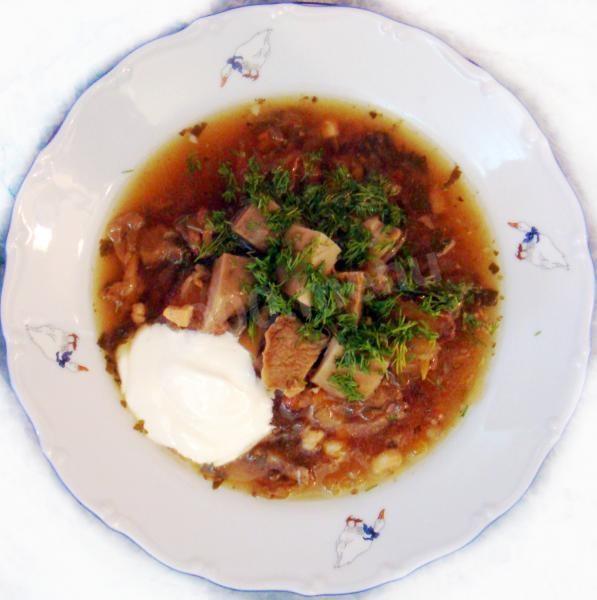
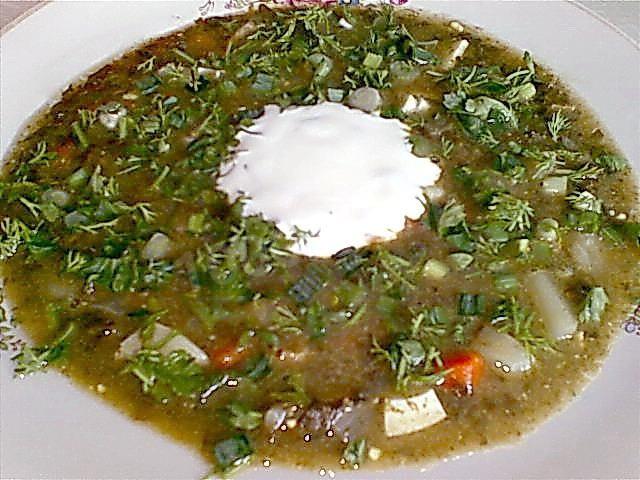
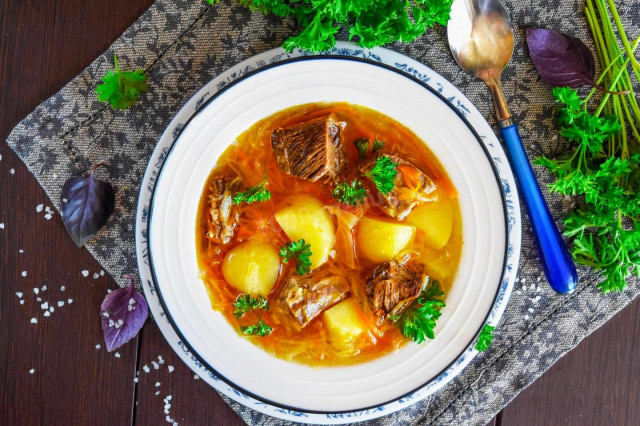
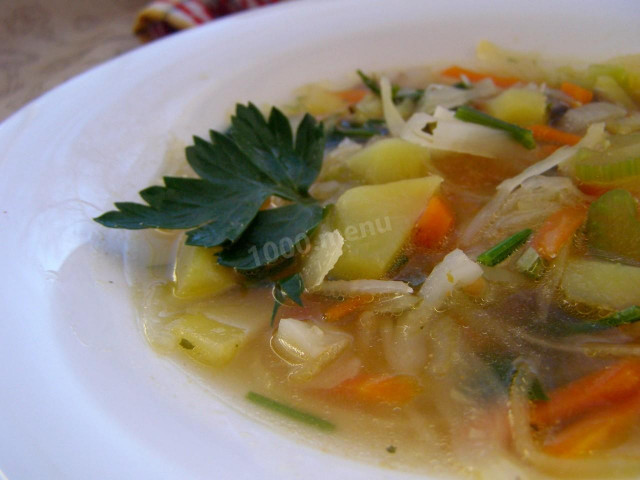

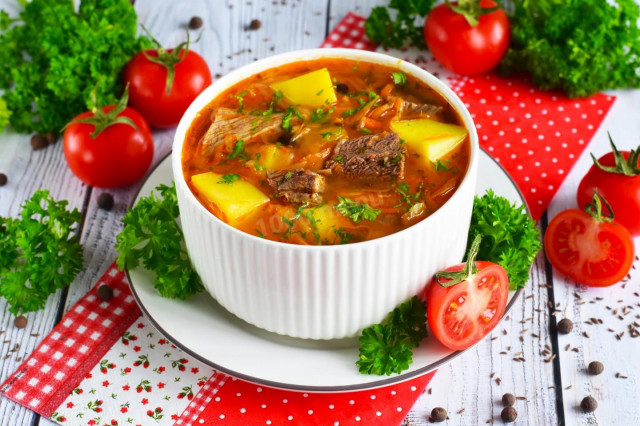
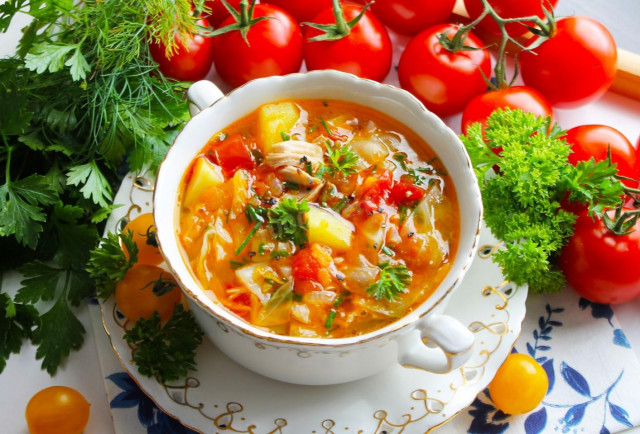
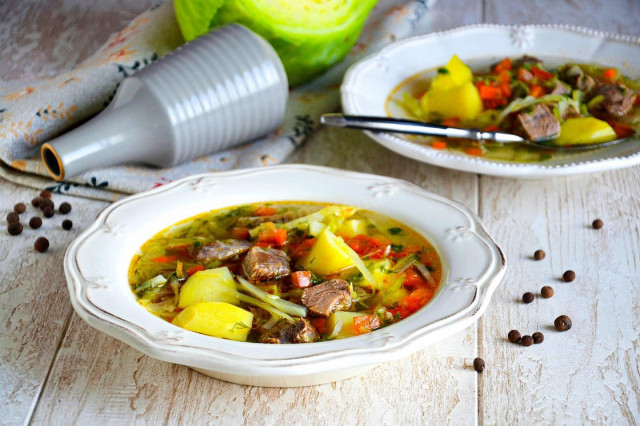
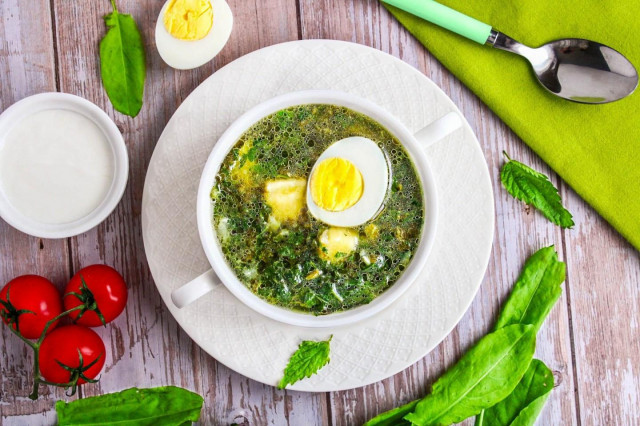
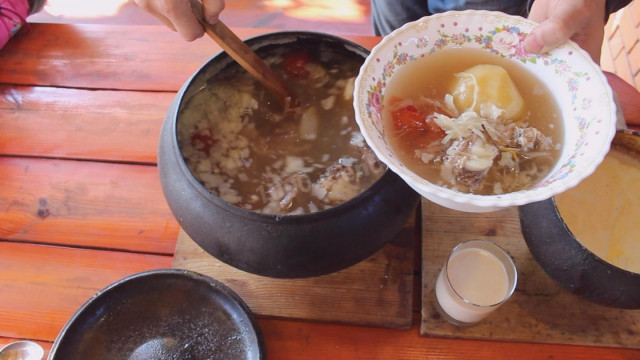
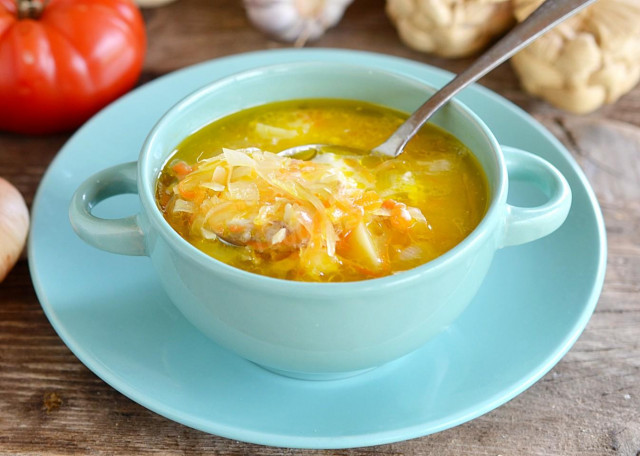
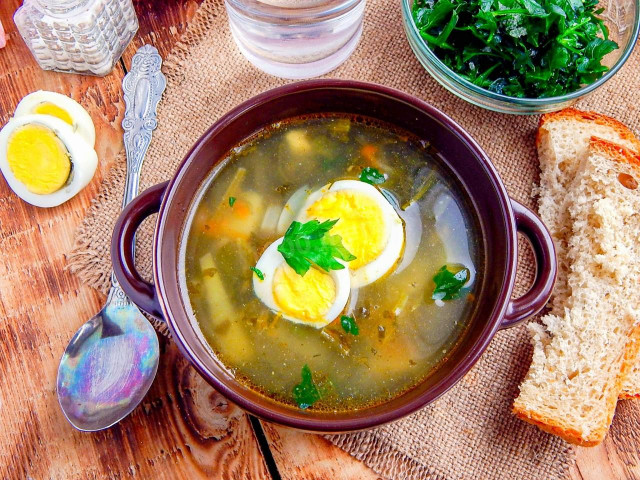
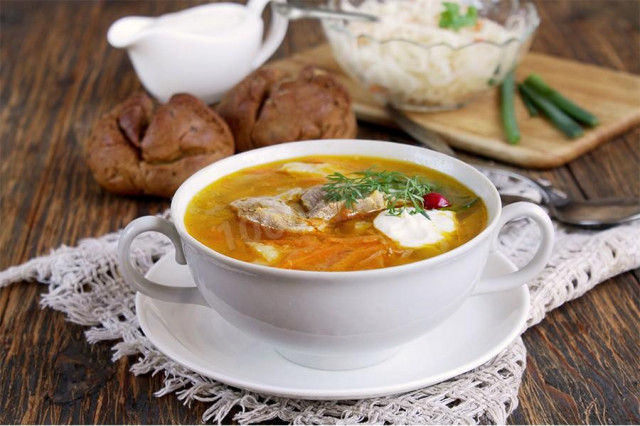
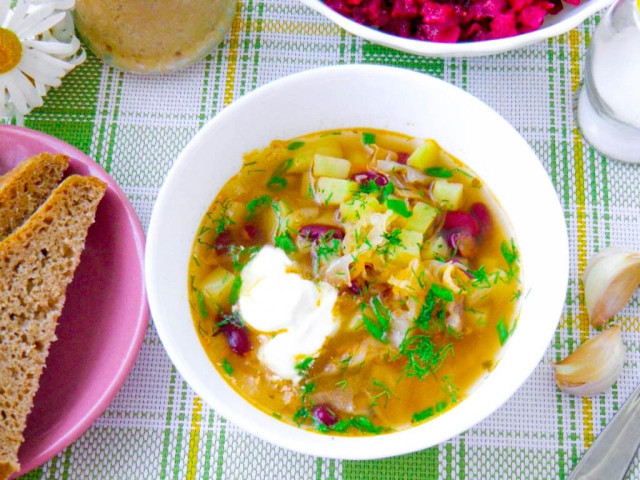
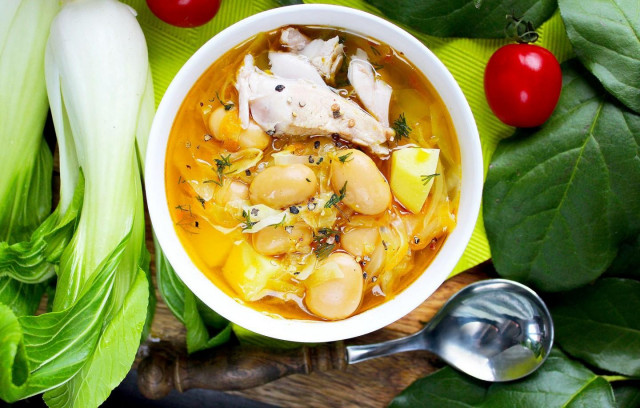
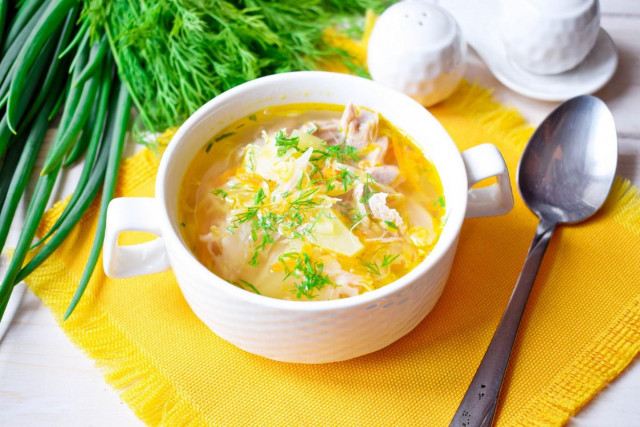
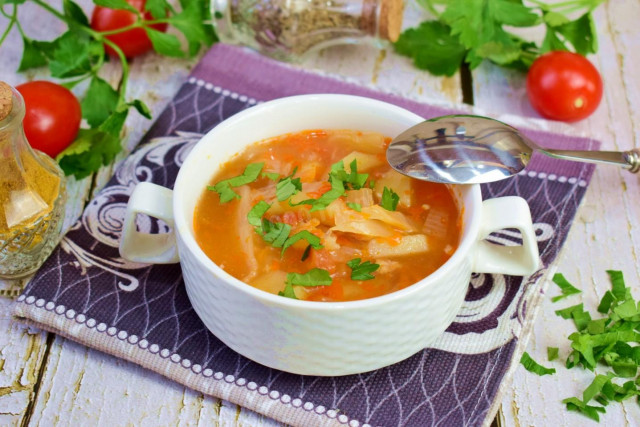
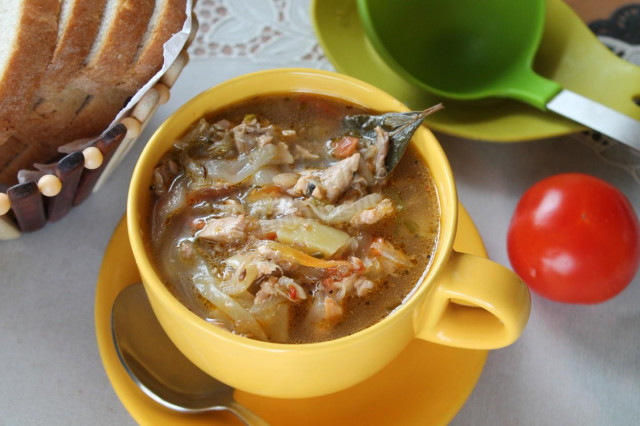
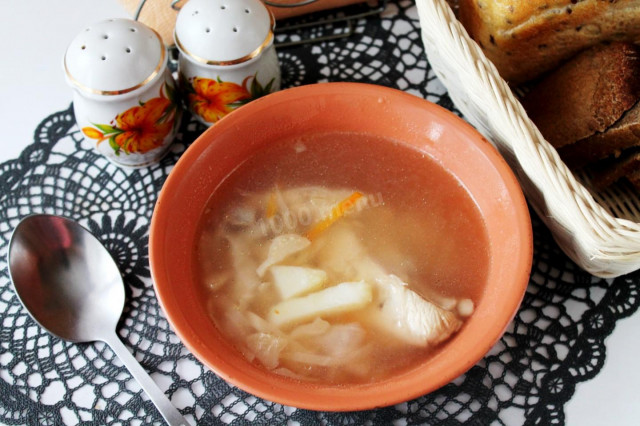
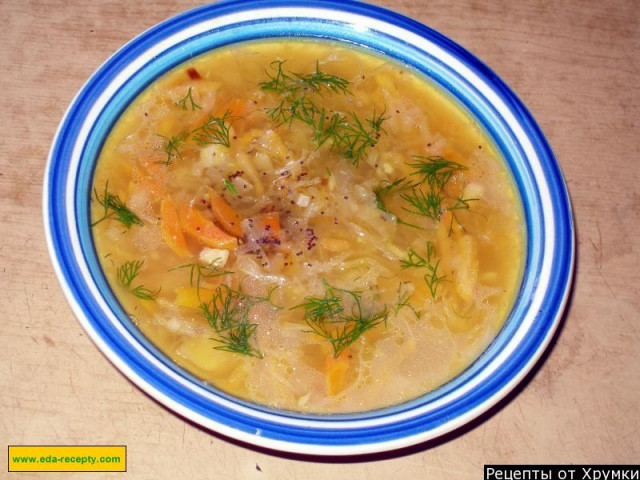
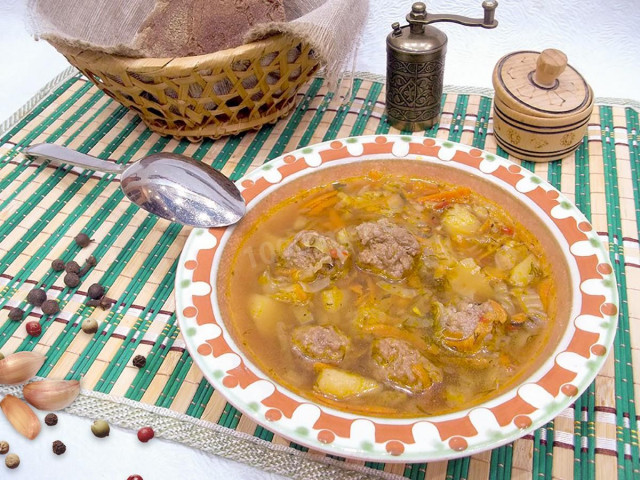
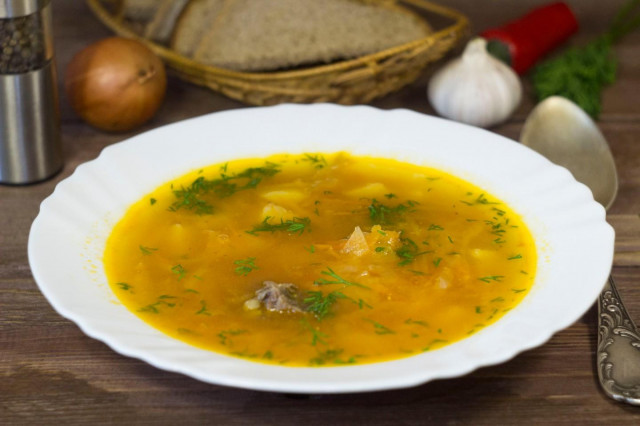
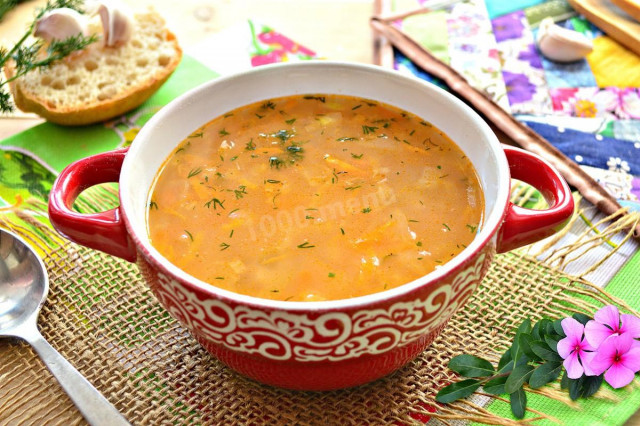
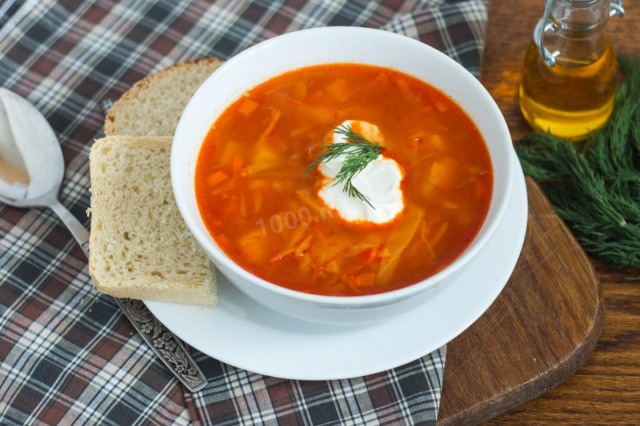
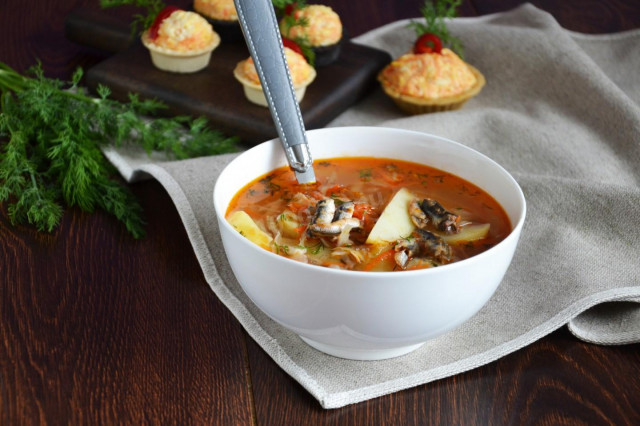
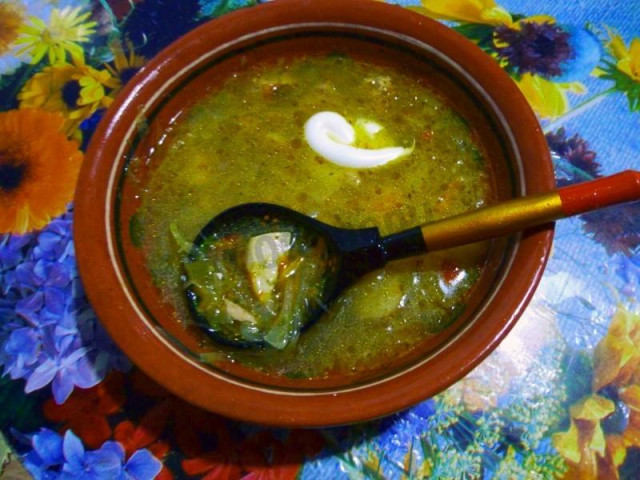
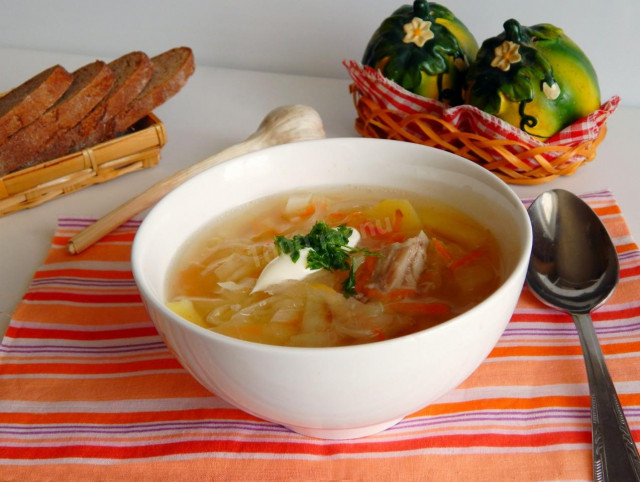
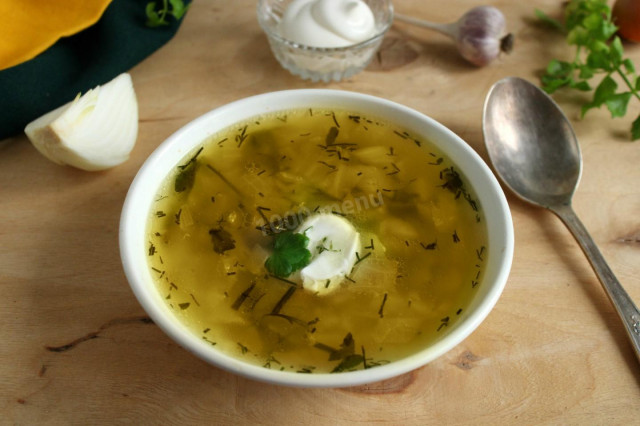
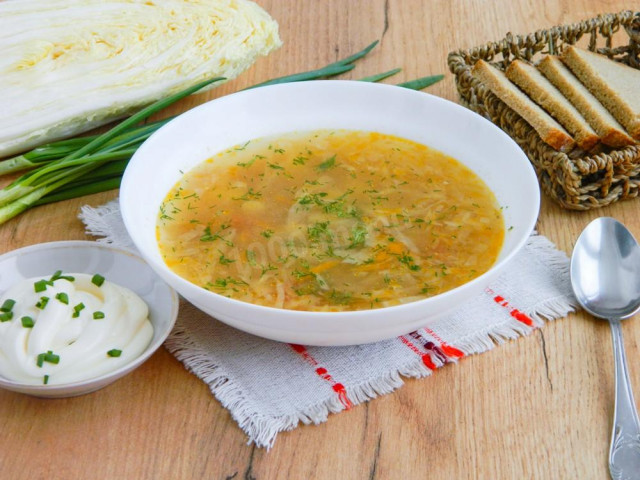
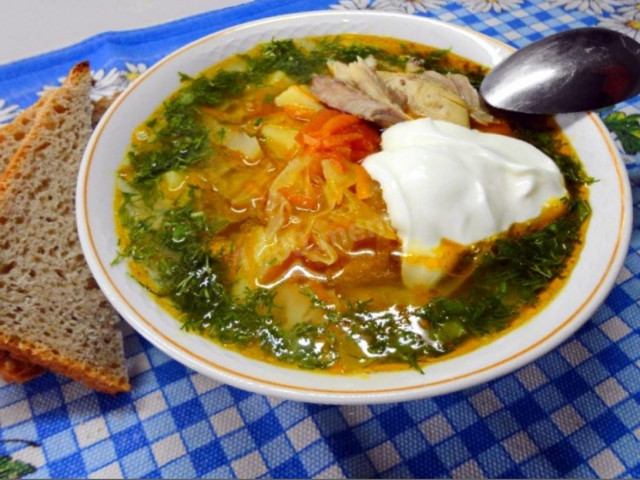
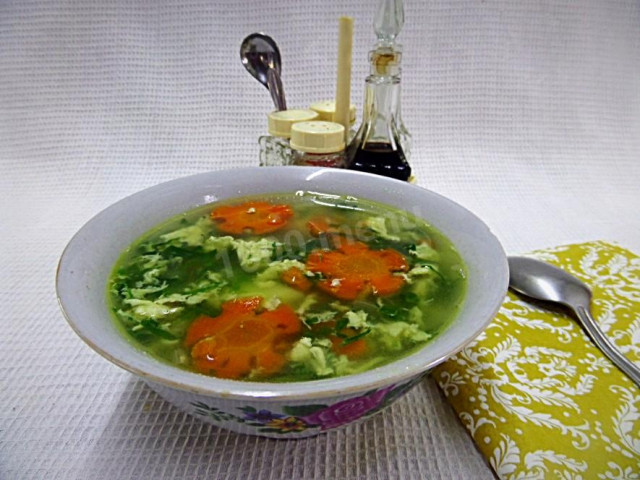
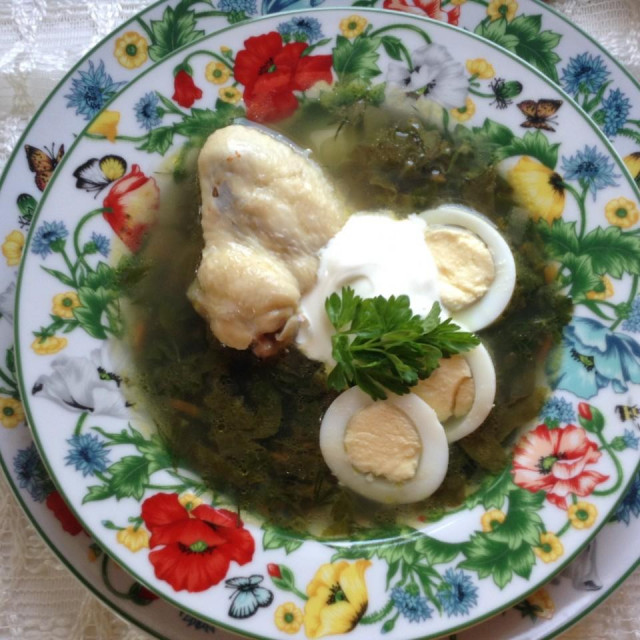
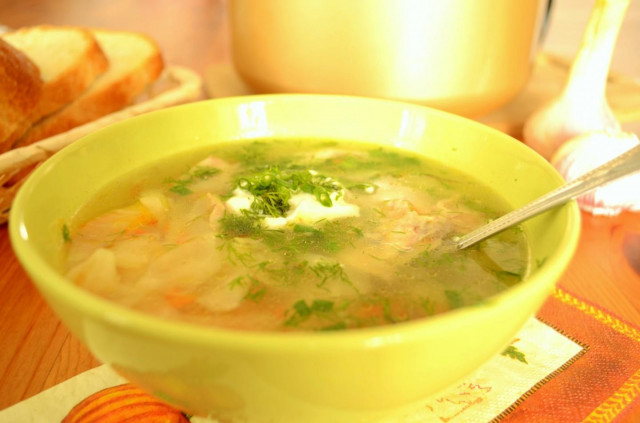
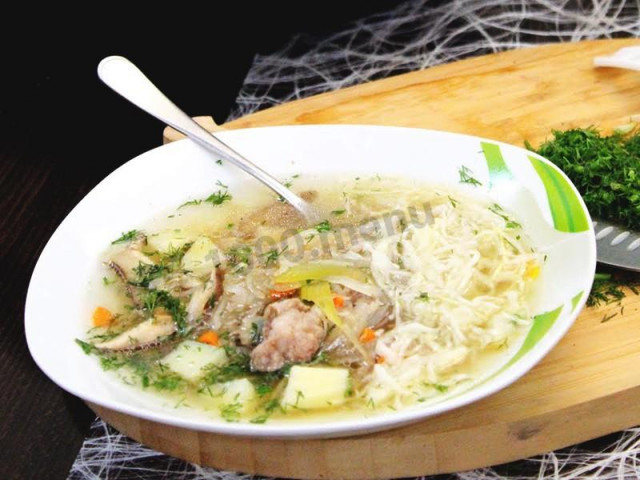
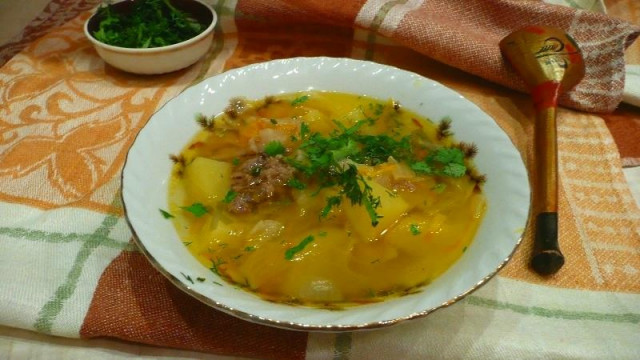
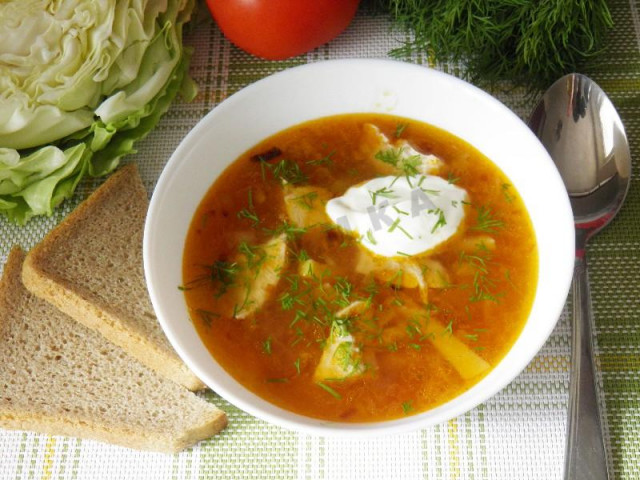
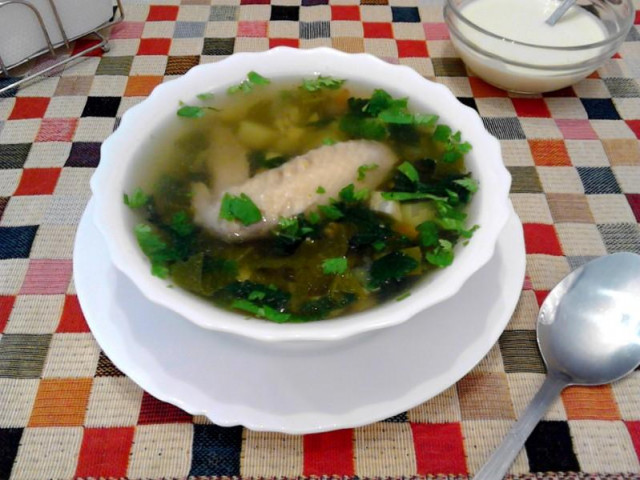
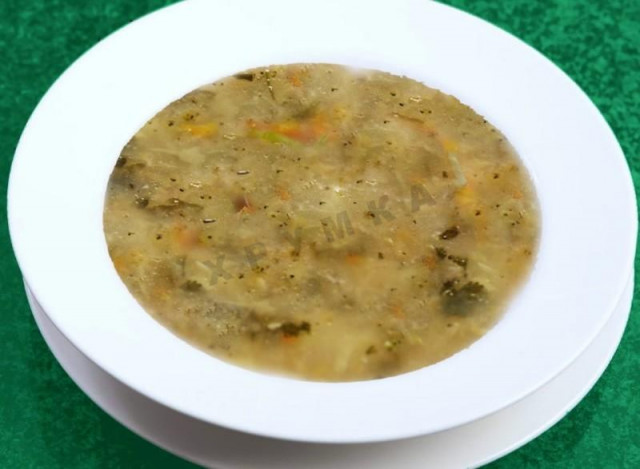

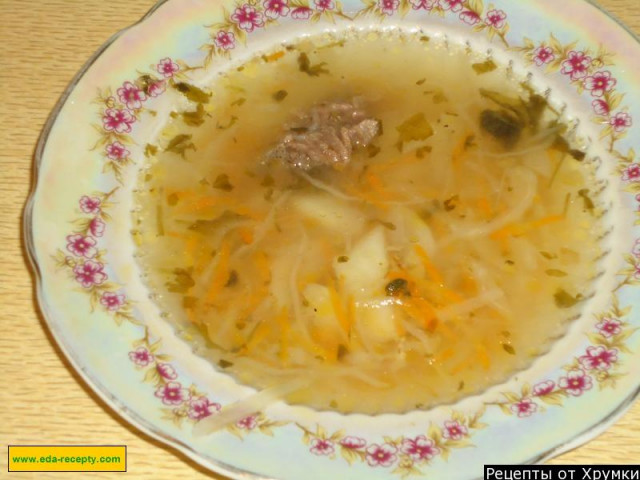
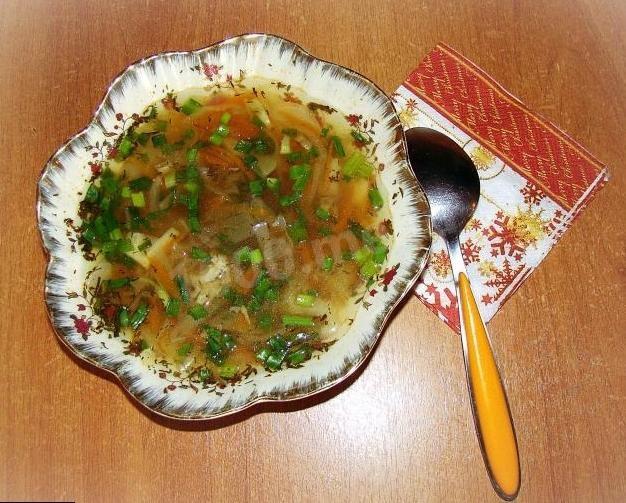
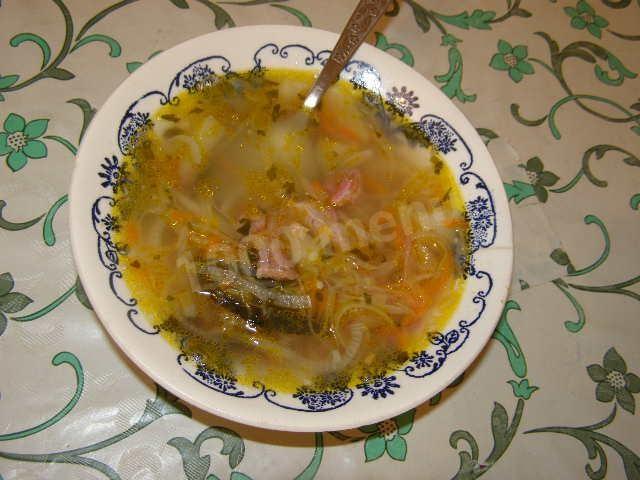
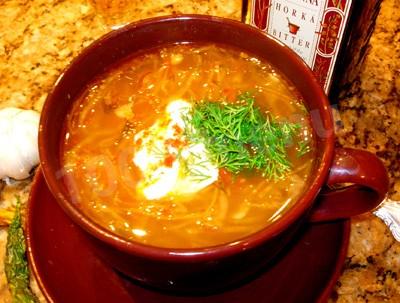
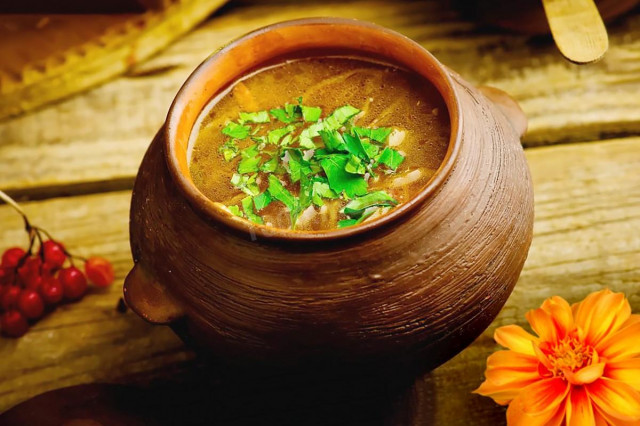
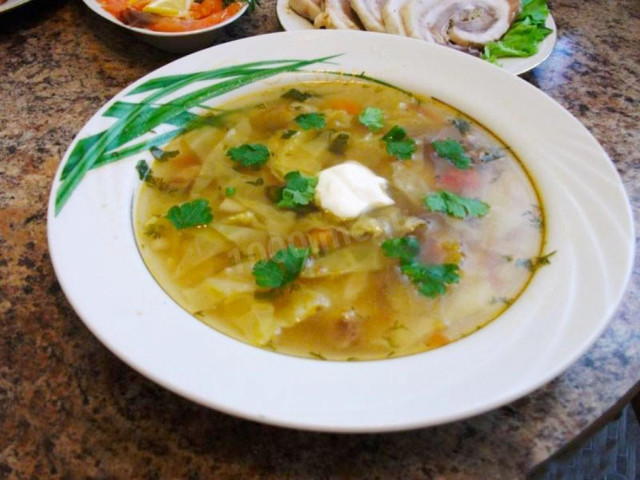
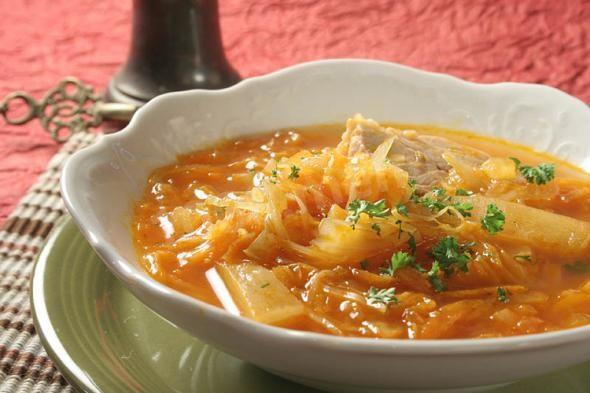
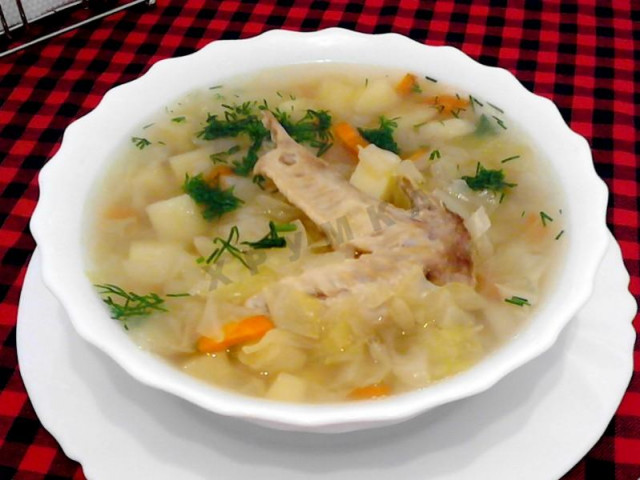
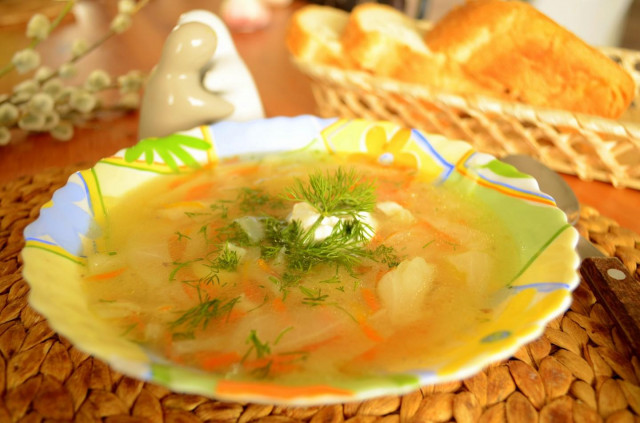
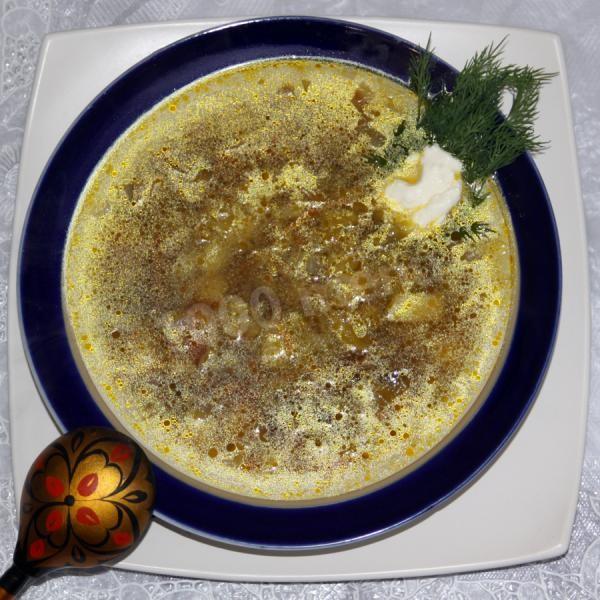
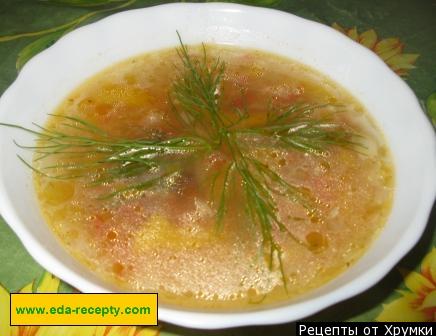
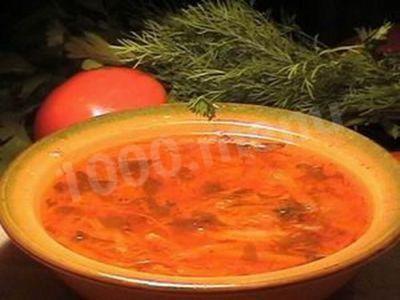
Traditionally, shchi is made from sauerkraut, which gives it its distinctive sour taste. But its presence isn't always required. There are recipes for shchi with sorrel or nettle, which are called green shchi. The base is usually a meat or fish broth. During a fast, shchi is cooked on a mushroom broth from raw or dried mushrooms, or on water, which doesn't make it any less tasty or filling.
The five most commonly used ingredients in recipes:
| Product | Calories per 100g | Protein g per 100g | Fats g per 100g | Carbohydrates g per 100g |
|---|---|---|---|---|
| Carrots | 33 | 1.3 | 0.1 | 6.9 |
| Potatoes | 80 | 2 | 0.4 | 18.1 |
| Onion | 41 | 1.4 | 0 | 10.4 |
| Sauerkraut | 19 | 1.8 | 0.1 | 4.4 |
| White cabbage | 28 | 1.8 | 0.1 | 6.8 |
Besides the sour or fresh cabbage, you add potatoes. Carrots, onion and tomatoes are added raw or fried first in vegetable oil. Salt, spices, greens and seasonings are added to taste. It's important not to forget the bay leaf — that's what gives shchi its characteristic taste and aroma. The dish should be served after a few hours. It needs to steep well and thicken slightly. Some recipes recommend waiting a day before serving. It's dressed with mayonnaise, sour cream, and sometimes cream. Smoked lard goes wonderfully with sour and spicy shchi — you can spread it on pieces of dark bread and serve it as an appetizer.