Khinkali in a Slow Cooker
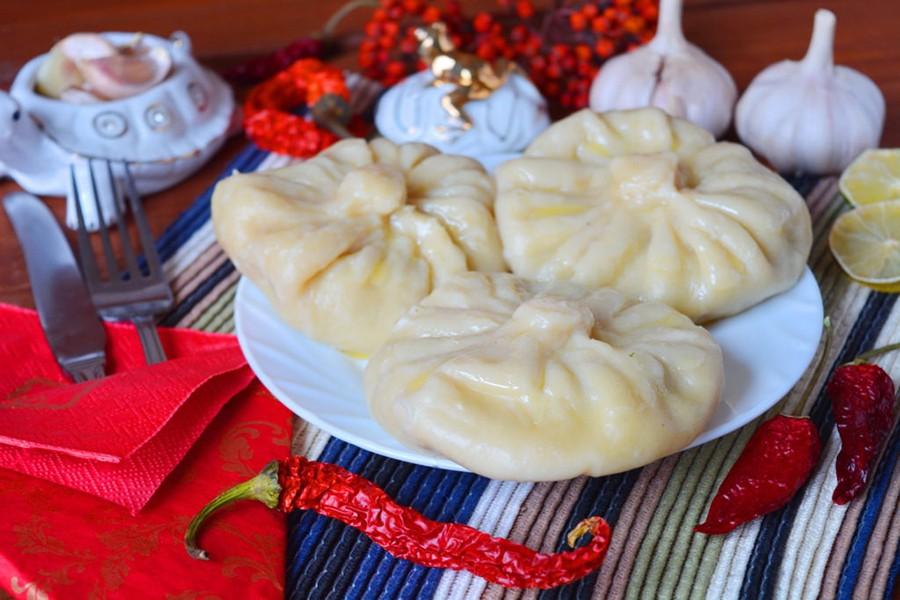
Tired of the usual dumplings? Try Georgian khinkali! What could be simpler and more satisfying than tasty meat wrapped in dough? I think nearly every culture has its own way of bringing those two together. At our house we're used to seeing pelmeni on the table. But sometimes you really want some variety — without overcomplicating the cooking. So here's my version: Georgian khinkali (soup dumplings)! Unusual, delicious, and simple. If you haven't tried them yet, go for it!
Maria
Recipe author
Khinkali in a Slow Cooker
Nutrients and energy value of the composition of the recipe
By weight of the composition:
Proteins 24 %
9 g
Fats 16 %
6 g
Carbohydrates 59 %
22 g
176 kcal
GI:
9
/
0
/
91
- Start with the dough: 1. Sift the flour into a bowl that's roomy enough for kneading. 2. Make a well in the center of the mound and pour the warm water into it. 3. Beat the egg in a separate dish and add it to the flour as well. 4. Add salt and knead the dough. It shouldn't stick to your hands, but you don't want it too stiff either, so go easy on the extra flour. Cover the bowl with a towel and let it rest for 30 minutes. Make the filling: 1. Cut the meat into very small pieces. I don't recommend using pre-ground meat or grinding the fillet yourself — spend the extra time and you'll get a juicier filling. 2. Pour the broth over the chopped meat. Chop the onion very finely too. 3. Add the spices, salt, and chopped onion to the meat. Mix everything thoroughly until well combined. Now shape the khinkali: 1. Roll out a thin, springy sheet of dough and cut out rounds using a circular form about 10 cm (4 inches) across (a saucer or a special cutter). 2. Place an even amount of filling on each round. 3. Gather the edges into a pouch, overlapping one pleat over the next. Be sure to secure the top of the pouch by twisting it into a little knot. The last step is the easiest, since cooking khinkali in a slow cooker is faster than on the stove: 1. Pour water into the slow cooker bowl and bring it to a boil on the "Cook" program. 2. Once the water starts boiling, carefully lower in the khinkali. 3. When they're done, they'll float to the surface. 4. Lift them out of the water, let them cool slightly, then serve. Drizzle the finished dish with melted butter. Enjoy this genuine Georgian dish!
Caloric content of the products possible in the composition of the dish
- Onion - 41 kcal/100g
- Rendered beef fat - 871 kcal/100g
- Fatty beef - 171 kcal/100g
- Lean beef - 158 kcal/100g
- Beef brisket - 217 kcal/100g
- Beef rump - 380 kcal/100g
- Beef, lean roast - 200 kcal/100g
- Beef shoulder - 137 kcal/100g
- Beef ribs - 233 kcal/100g
- Beef round - 104 kcal/100g
- Beef tail - 184 kcal/100g
- Boiled ham - 269 kcal/100g
- Corned beef - 216 kcal/100g
- Lean lamb - 169 kcal/100g
- Fatty lamb - 225 kcal/100g
- Lamb brisket - 533 kcal/100g
- Lamb leg - 232 kcal/100g
- Bone-in lamb chop - 380 kcal/100g
- Lamb shoulder - 284 kcal/100g
- Lamb loin - 459 kcal/100g
- Chicken egg - 157 kcal/100g
- Egg white - 45 kcal/100g
- Egg powder - 542 kcal/100g
- Egg yolk - 352 kcal/100g
- Ostrich egg - 118 kcal/100g
- Fortified whole durum wheat flour - 333 kcal/100g
- All-purpose whole durum wheat flour - 364 kcal/100g
- Fine semolina flour - 348 kcal/100g
- Flour - 325 kcal/100g
- Butter, 82% - 734 kcal/100g
- Unsalted butter (Lyubitelskoye) - 709 kcal/100g
- Unsalted butter (Krestyanskoye) - 661 kcal/100g
- Salted butter (Krestyanskoye) - 652 kcal/100g
- Ghee (clarified butter) - 869 kcal/100g
- Salt - 0 kcal/100g
- Water - 0 kcal/100g
- Dry spices - 240 kcal/100g
- Broth - 15 kcal/100g
Similar recipes
Related and additional categories: