Yomogi Daifuku (Japanese Mugwort Mochi)
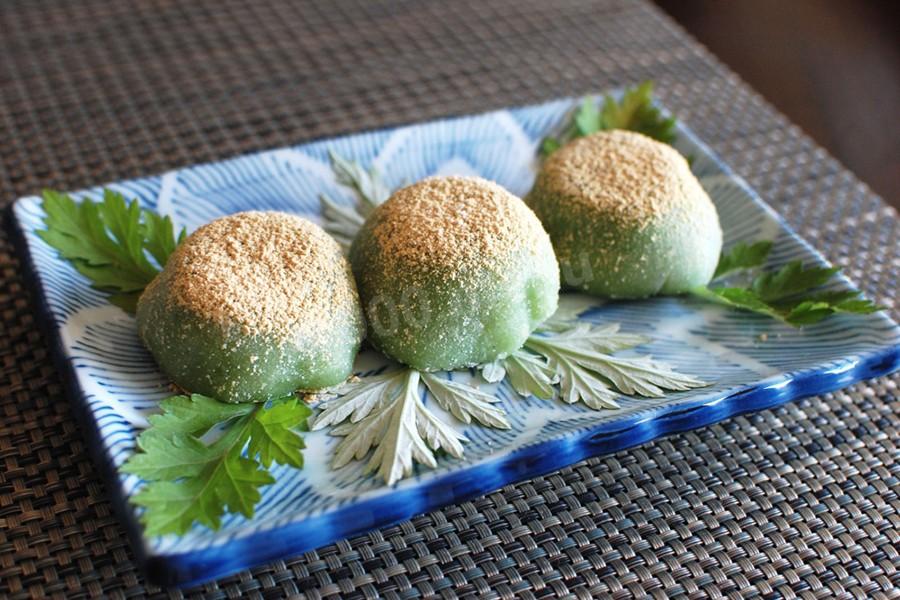
A traditional Japanese dessert with a bean filling — give it a taste! This dessert has a truly unusual flavor: chewy and sweet. In Japan it's traditionally eaten over the New Year holidays, and it's said to bring happiness and good luck. But it's popular with locals and tourists alike all year round. The mugwort is used in the dessert mainly to give the sweets a greenish tint, and you can substitute green food coloring. That said, if you can get hold of Japanese mugwort it's well worth it, since it does add a certain special flavor.
Evga
Recipe author
Yomogi Daifuku (Japanese Mugwort Mochi)
Nutrients and energy value of the composition of the recipe
By weight of the composition:
Proteins 9 %
4 g
Fats 0 %
0 g
Carbohydrates 91 %
39 g
173 kcal
GI:
8
/
0
/
92
- Here's how to make this delicious Japanese dessert: 1. Wash the fresh mugwort leaves. 2. Bring the water to a boil in a small saucepan, add the mugwort, and boil for 1–2 minutes. Let the leaves cool. 3. Meanwhile, make the anko bean paste and shape it into balls on a sheet of foil — you'll need 12 balls. To do this: rinse the beans and put them in a saucepan; cover with water to above the level of the beans and bring to a boil; then lower the heat, cover, and cook for an hour until the beans are soft; as the water cooks off, add more — the beans should always stay covered; drain the cooking liquid from the cooked beans into a separate bowl; set a small handful of beans aside and mash and press the rest through a sieve; stir the sugar and the reserved whole beans into the bean purée and mix well; cook this mixture in a saucepan over the lowest heat for 10–15 minutes until it turns dark brown or maroon; if it gets too thick while cooking, stir in some of the reserved cooking liquid; let the finished anko paste cool. 4. Blend the mugwort leaves with 3/4 of the cooking liquid until smooth. 5. Strain the blended mixture through a sieve into a measuring cup, then top it up with enough of the remaining liquid to reach 150 ml. 6. In a large microwave-safe bowl, mix the rice flour, 200 g of the sugar, the salt, and the rice vinegar. Add the 150 ml of mugwort liquid and whisk until the batter is smooth. 7. Cook the mochi dough in the microwave for 8–10 minutes on high. 8. Mix the potato starch with 40 g of sugar. Dust a cutting board with some of this mixture and carefully turn out the hot mochi from the microwave. Dust more of the starch-sugar mix on top. 9. Using the flat side of a large knife, flatten the mochi and straighten the edges into a rectangular slab. 10. Cut the mochi into 12 pieces. 11. Roll out each piece and place a ball of red bean paste in the center. Pull the edges of the mochi up and pinch them tightly closed, then dust the sealed seam with the starch-sugar mix. Flip the ball over and set it on the dusted cutting board. 12. Coat the finished filled mochi in soy flour. 13. Serve warm right away, or store in the fridge covered with plastic wrap until serving — it keeps for 2–3 days. 14. Before eating refrigerated Yomogi Daifuku, microwave it until soft. Enjoy!
Caloric content of the products possible in the composition of the dish
- Сахар-песок - 398 kcal/100g
- Сахар - 398 kcal/100g
- Соль - 0 kcal/100g
- Вода - 0 kcal/100g
- Рисовый уксус - 20 kcal/100g
- Крахмал картофельный - 300 kcal/100g
- Бобы зеленые - 33 kcal/100g
- Бобы - 33 kcal/100g
- Полынь - 32 kcal/100g
- Рисовая мука - 356 kcal/100g
- Соевая мука - 291 kcal/100g
Similar recipes


Related and additional categories:
- Festive table
- For breakfast
- Kitchen utensils
- National cuisine
- Dessert
- Flour
- Sweet
- Cereals and cereal products
- Legumes
- Spices seasonings spices
- Other
- Beans
- Wormwood
- Salt
- Vinegar
- Recipes in foil
- Water
- Starch
- Asian cuisine
- Cooking
- Recipes for March 8
- Rice flour
- Soy flour
- No eggs
- Vegetarianism
- Recipes for lean dishes without butter
- Sugar
- From rice