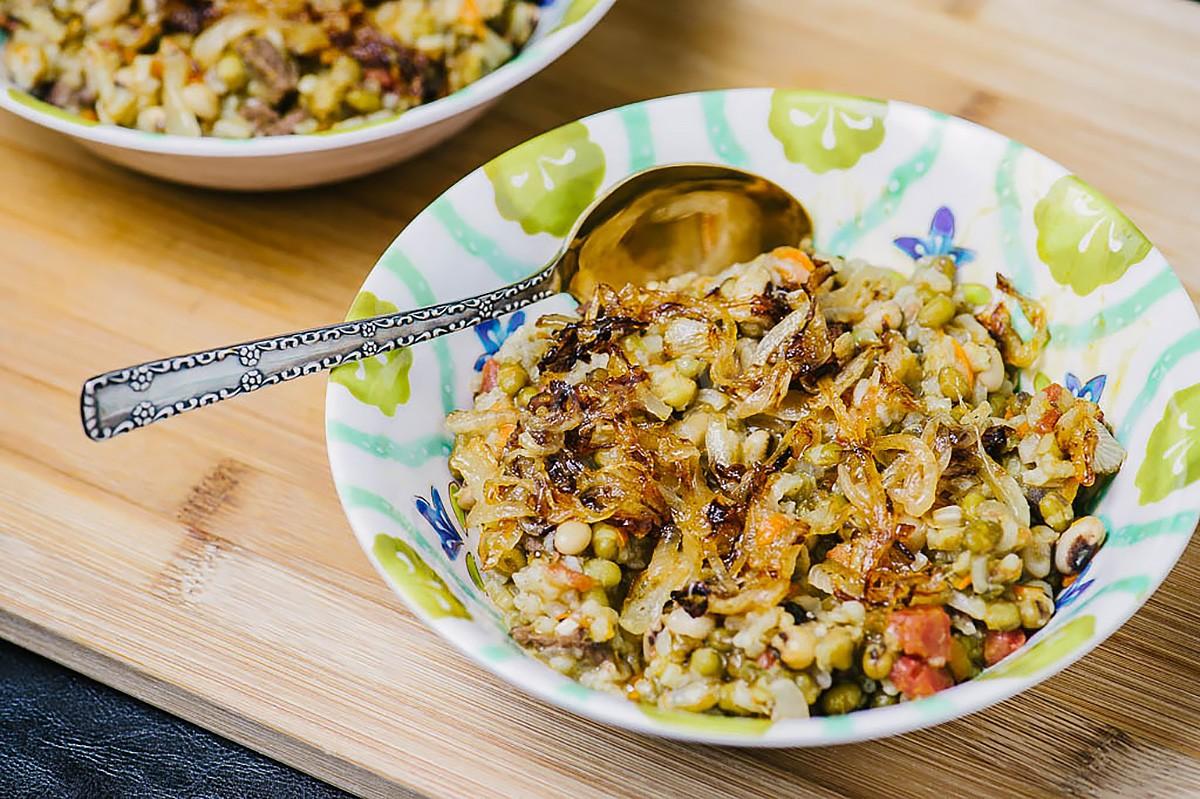
Mashkichiri (Uzbek Mung Bean and Rice Porridge)
A vibrant dish from Central Asia — make it and savor every bite! Mashkichiri is a traditional Uzbek porridge that wins everyone over. Cooked in a kazan (a heavy cast-iron pot), it turns out wonderfully fragrant, tasty, and hearty. Don't let it intimidate you — mung bean porridge is genuinely easy to make.
Yara
Recipe author
Mashkichiri (Uzbek Mung Bean and Rice Porridge)
Nutrients and energy value of the composition of the recipe
By weight of the composition:
Proteins 29 %
7 g
Fats 17 %
4 g
Carbohydrates 54 %
13 g
117 kcal
GI:
23
/
46
/
31
- Start with the prep: rinse the meat well and pat off excess moisture with paper towels, then cut it into small pieces. Peel the onion and cut it into small cubes. Peel the garlic cloves and mince them. Wash and peel the carrots, then grate them on the coarse side of a box grater. Wash and dry the tomatoes and cut them into small pieces. Rinse the mung beans and rice thoroughly until the water runs clear. You'll cook the porridge in a kazan; if you don't have one, use a roomy heavy-bottomed pot or Dutch oven. Set the kazan over high heat and add the vegetable oil and ghee. Heat them, then add the meat and fry, stirring, for about 5 minutes. Add the onion and keep cooking, stirring now and then, until the onion turns golden. Reduce the heat to medium, add the minced garlic, cook for about 10 seconds, then add the tomatoes. Stir and cook 5–6 minutes, until the tomatoes soften. Add the grated carrots and fry everything together for 2 minutes, stirring so nothing scorches. Now add the ground cumin, ground black pepper, and salt. Stir, then pour in half of the water — it should be boiling hot, not cold. Add the mung beans and bring to a boil, then reduce the heat to low, cover, and cook for 25–30 minutes. Add the rice and stir, then add the beans. Cook everything together until the rice and mung beans are done, adding more boiling water little by little if the pot gets too dry, and stirring so it doesn't stick. Cover halfway to speed things along, and cook another 15–20 minutes, until the mung beans and rice are soft. Turn off the heat sooner if you like the rice firmer, or cook longer for a softer texture. If you like, top the finished porridge with caramelized onions, though that step is optional. Serve the mashkichiri hot. Enjoy!
Caloric content of the products possible in the composition of the dish
- Onion - 41 kcal/100g
- Tomatoes - 23 kcal/100g
- Lean lamb - 169 kcal/100g
- Fatty lamb - 225 kcal/100g
- Lamb brisket - 533 kcal/100g
- Lamb leg - 232 kcal/100g
- Lamb chop (bone-in) - 380 kcal/100g
- Lamb shoulder - 284 kcal/100g
- Lamb loin - 459 kcal/100g
- Raw wild rice - 353 kcal/100g
- Raw brown rice - 360 kcal/100g
- Cooked brown rice - 119 kcal/100g
- Raw white fortified rice - 363 kcal/100g
- Cooked white fortified rice - 109 kcal/100g
- Raw parboiled long-grain white rice - 369 kcal/100g
- Cooked parboiled long-grain white rice - 106 kcal/100g
- Dry instant rice - 374 kcal/100g
- Instant rice, ready to eat - 109 kcal/100g
- Rice - 344 kcal/100g
- Carrots - 33 kcal/100g
- Dried carrots - 275 kcal/100g
- Boiled carrots - 25 kcal/100g
- Beans - 328 kcal/100g
- White beans - 352 kcal/100g
- Scarlet runner beans - 23 kcal/100g
- Frozen beans in a package (300 g) - 102 kcal/100g
- Garlic - 143 kcal/100g
- Ground black pepper - 255 kcal/100g
- Cumin - 333 kcal/100g
- Vegetable oil - 873 kcal/100g
- Salt - 0 kcal/100g
- Water - 0 kcal/100g
- Ghee - 892 kcal/100g
- Mung beans - 300 kcal/100g
Similar recipes


Related and additional categories:
- Kitchen utensils
- National cuisine
- Second course
- Meat and meat products
- Vegetables
- Cereals and cereal products
- Legumes
- Spices seasonings spices
- Fats and oils
- Other
- From beans
- Beans
- Garlic
- Pepper
- Salt
- Cumin
- Vegetable oil
- Butter
- Water
- Caucasian cuisine
- Frying
- Stewing
- In a frying pan
- Porridge recipes
- Stewed vegetables
- Meat second course
- From mutton
- From carrots
- From tomato
- From onion
- No eggs
- From rice