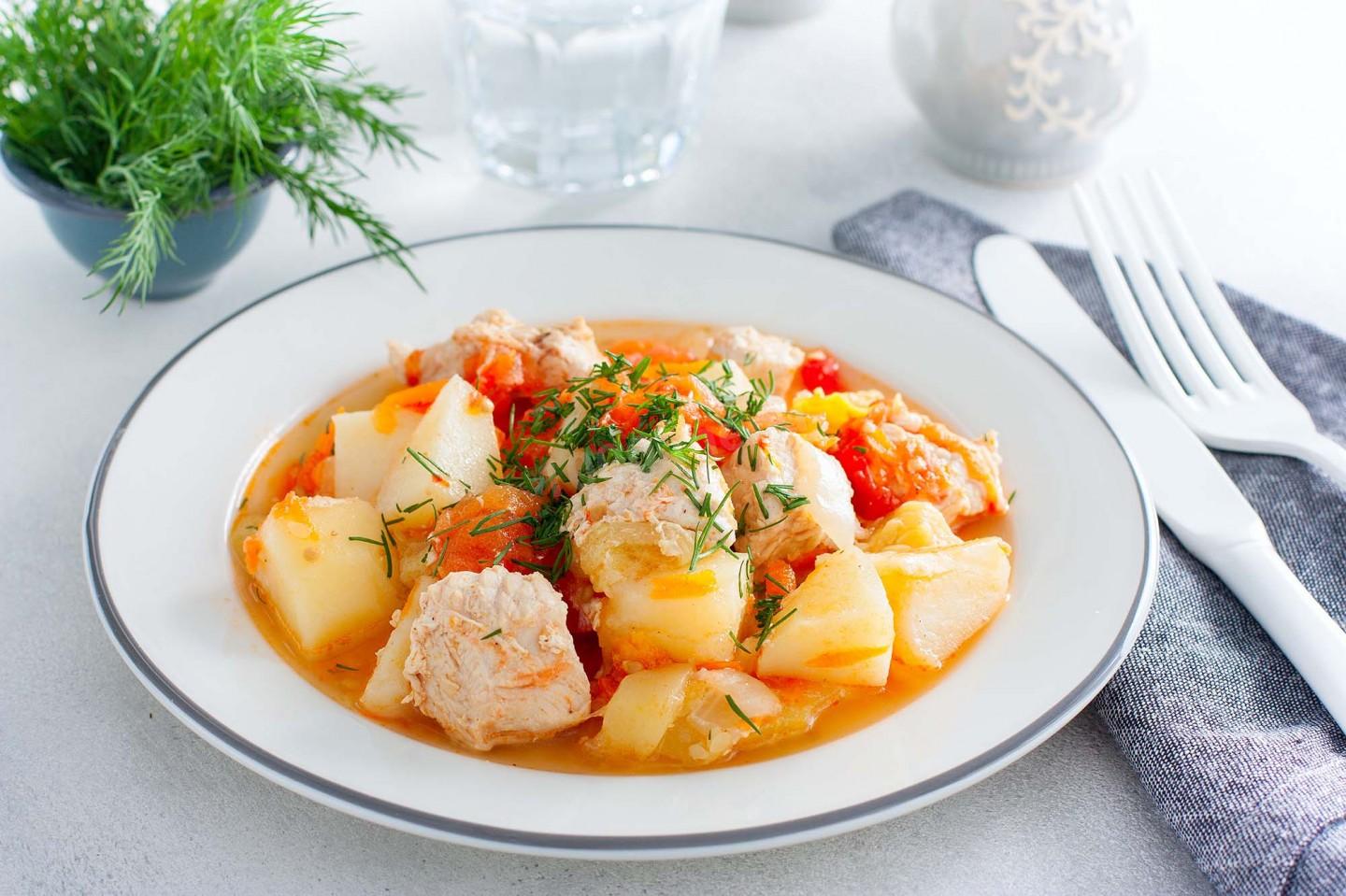
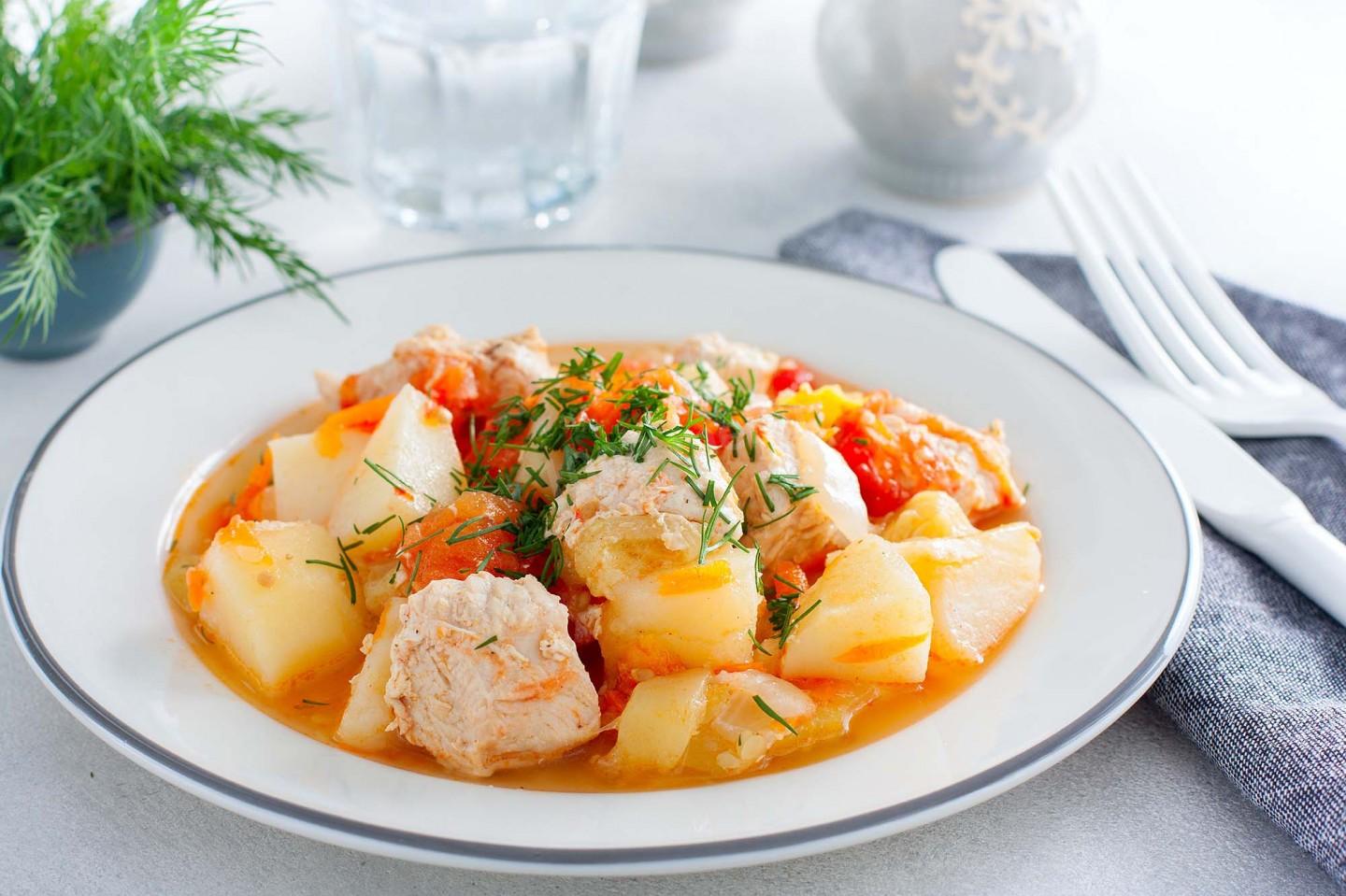
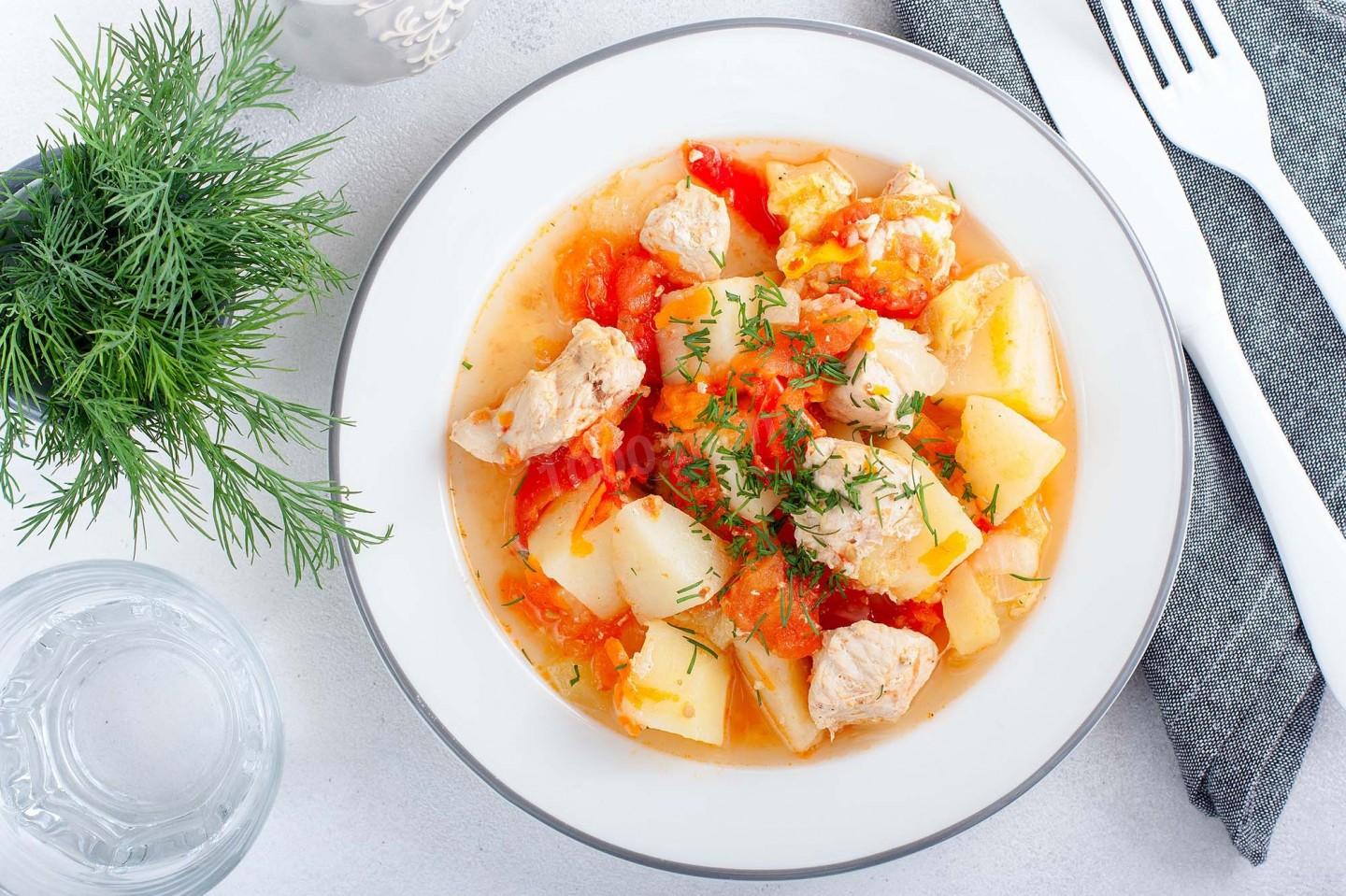
Turkey and Vegetable Stew
A light, wholesome dinner for the whole family! This is a simple recipe for a healthy dinner, good for grown-ups and kids alike. Here the vegetables braise in their own juices with barely any hands-on work.


Cooking method
-
Step 1:
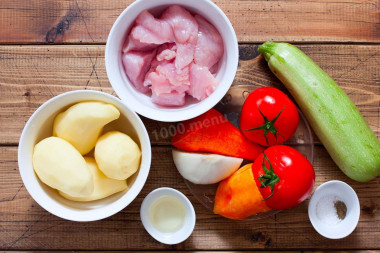
How do you make turkey and vegetable stew? Gather the ingredients. For the turkey, use boneless breast, ideally never frozen. For a healthier dinner, use fresh seasonal vegetables—young potatoes and zucchini make the stew much tastier. The vegetables can be any size, and you can add others you like, such as celery, green peas, or eggplant. Have a deep skillet with a lid ready.
-
Step 2:
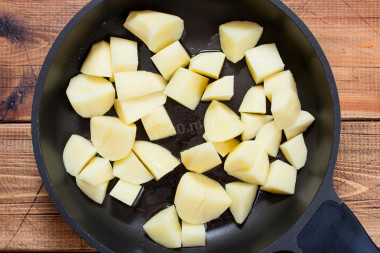
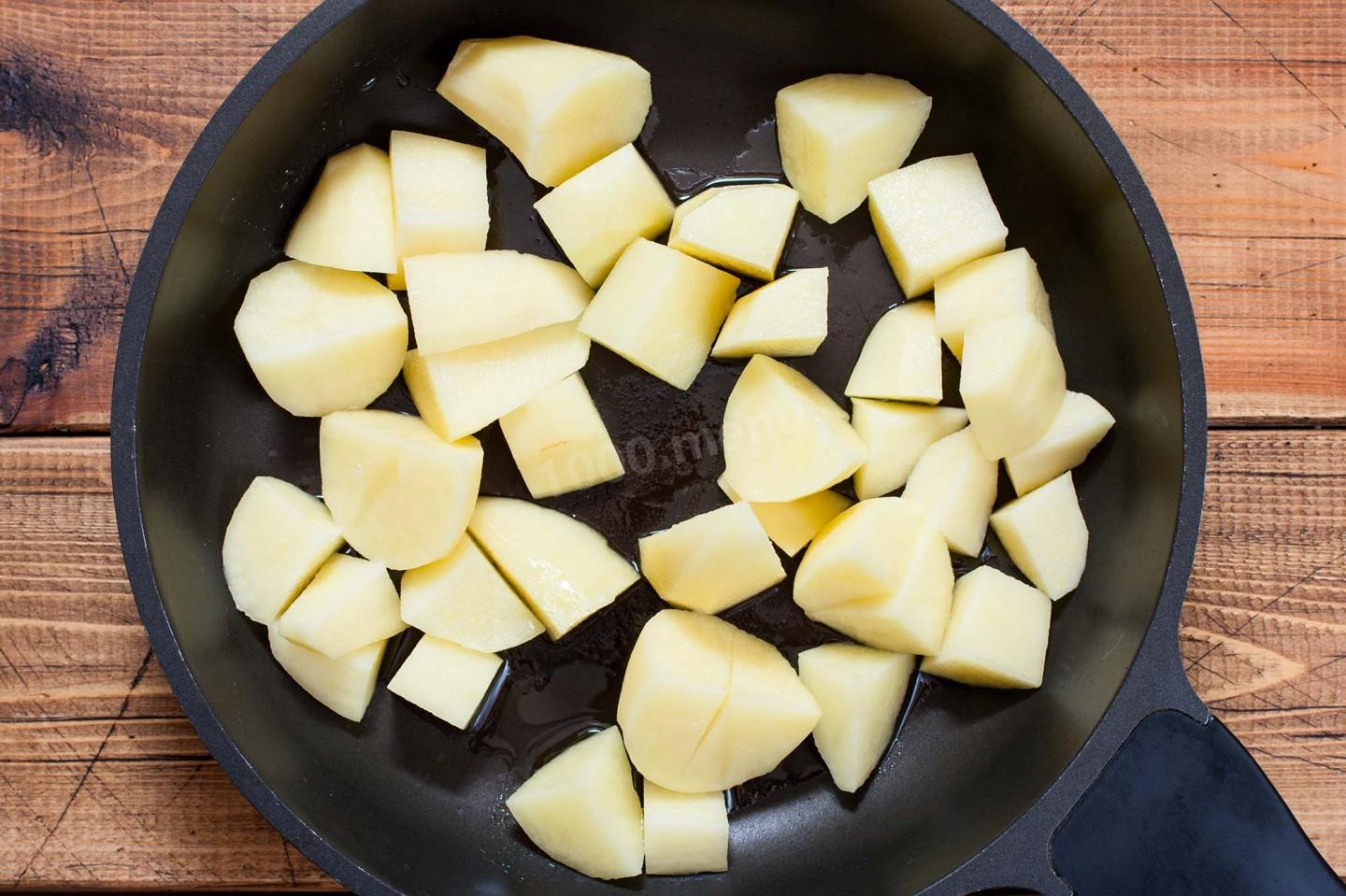
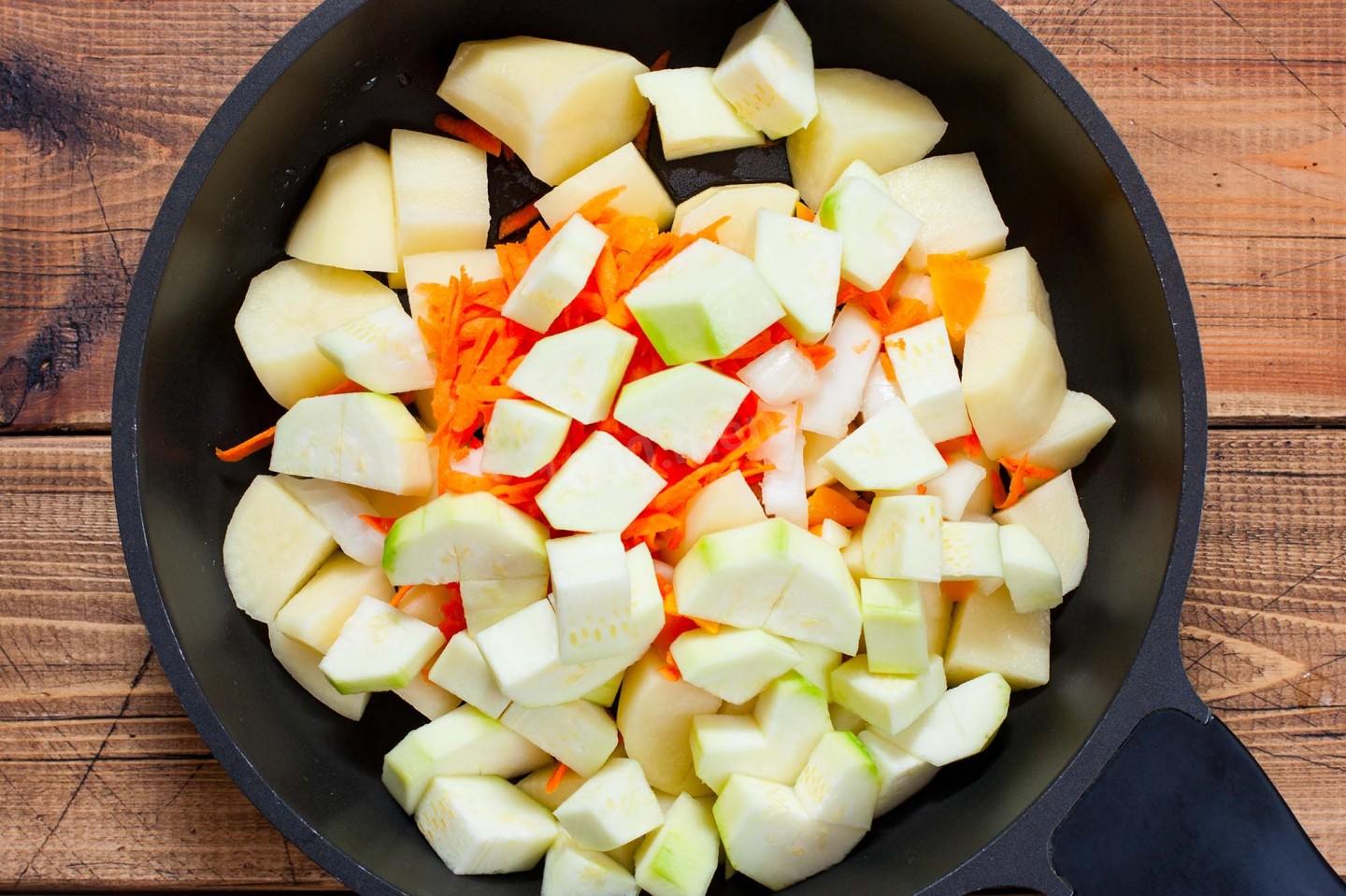
Pour the vegetable oil into your skillet and spread it evenly across the bottom. Wash and peel the potatoes. If they're young, you can leave the skins on—just scrub them well with a brush. Cut the potatoes into fairly large pieces and lay them in the skillet.
-
Step 3:
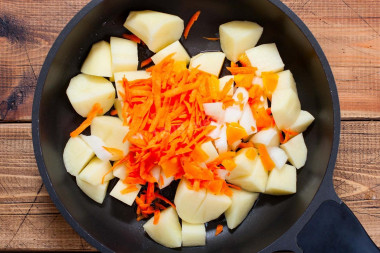
Peel the onion and carrot. Chop the onion and grate the carrot on the large holes of a box grater (or chop it finely). Rinse the bell pepper, cut off the stem, and remove the seeds. Rinse again with cold water, pat dry, and cut into medium pieces. Add the chopped vegetables to the skillet with the potatoes.
-
Step 4:
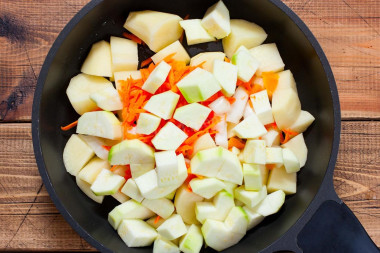
Wash the zucchini, peel it (you can leave the skin on a young one), and cut it into large cubes. Add the diced zucchini to the skillet with the other vegetables.
-
Step 5:
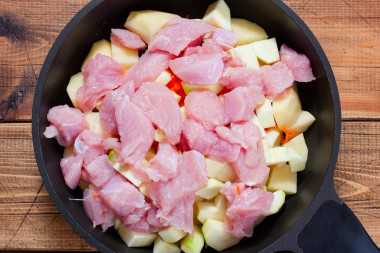
Wash the turkey breast and pat it dry with a paper towel. Cut the fillet into small pieces and add it to the skillet.
-
Step 6:
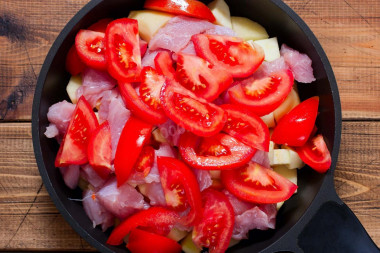
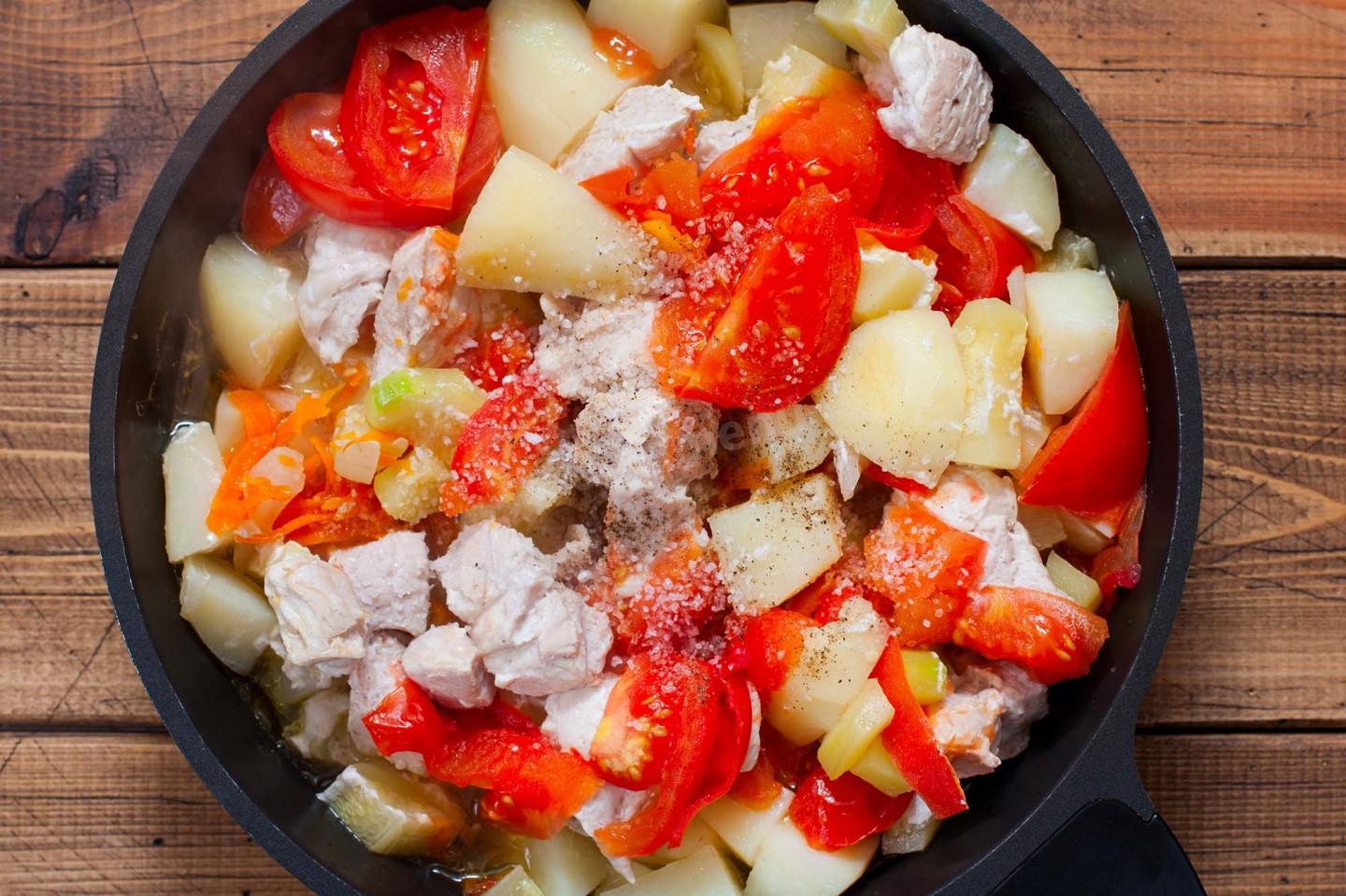
Wash and dry the tomatoes, cut out the stem end, and cut them into wedges. Add the tomatoes to the skillet. Set the skillet over low heat, cover, and let it simmer for an hour. Choose fleshy, juicy tomatoes. If you prefer, peel them first by dropping them into boiling water and slipping off the skins.
-
Step 7:
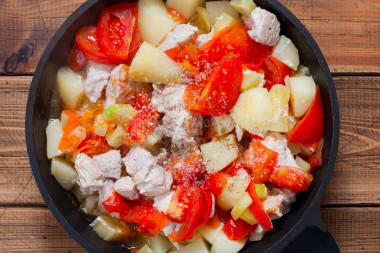
After an hour, take off the lid and add salt and ground black pepper to taste. You can also add your favorite spices—khmeli-suneli (a Georgian herb blend), dried garlic, herbes de Provence, basil, and so on. Gently stir the stew, turn off the heat, and let it rest for 10–15 minutes.
-
Step 8:
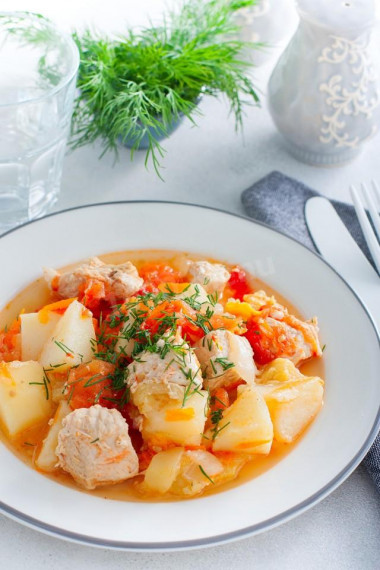
Serve the finished turkey and vegetable stew hot or warm. It's a satisfying dish all on its own. When serving, sprinkle it with freshly chopped parsley, dill, or cilantro.





- Tip: The wrong pan can ruin even the best recipe. Choosing the right skillet for the job makes a real difference.
- Every oil is good only up to a certain point—its smoke point, where it starts to burn and form harmful compounds. It's worth knowing the right temperature for frying and which oils are best (and which to skip).
- Which zucchini work best? Choose young ones with tender skin. Wash and peel them—you can leave very thin skin on. If you're using more mature zucchini, cut off the tough peel and scoop out the seedy center.
Caloric content of the products possible in the composition of the dish
- Onion - 41 kcal/100g
- Ripe potatoes - 80 kcal/100g
- Baked potatoes - 70 kcal/100g
- Mashed potatoes - 380 kcal/100g
- Boiled potatoes - 82 kcal/100g
- Potatoes in their skins - 74 kcal/100g
- Fried potatoes - 192 kcal/100g
- Tomatoes - 23 kcal/100g
- Zucchini - 23 kcal/100g
- Sweet pepper - 27 kcal/100g
- Carrots - 33 kcal/100g
- Dried carrots - 275 kcal/100g
- Boiled carrots - 25 kcal/100g
- Ground black pepper - 255 kcal/100g
- Vegetable oil - 873 kcal/100g
- Salt - 0 kcal/100g
- Turkey fillet - 84 kcal/100g
Similar recipes



- Children's recipes
- Second course
- Meat and meat products
- Vegetables
- Spices seasonings spices
- Fats and oils
- Pepper
- Salt
- Vegetable oil
- Stewing
- In a frying pan
- Turkey and potatoes
- Рагу
- Stewed vegetables
- Roast
- Meat second course
- Zucchini second course
- Poultry
- From zucchini
- From carrots
- From potatoes
- From tomato
- From sweet pepper
- From onion
- No eggs
- Balanced nutrition
- Recipes for lean dishes without butter