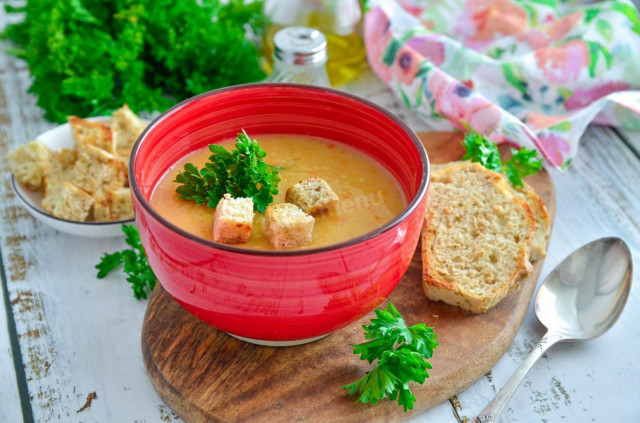
White bean soup
Made from everyday ingredients — simple, filling, and great for the whole family! Bean soup comes together very easily from affordable, inexpensive ingredients, and it turns out hearty, fragrant, and thick. A soup like this is just the thing to warm you up and fill you up in the cold season.


Cooking method
-
Step 1:
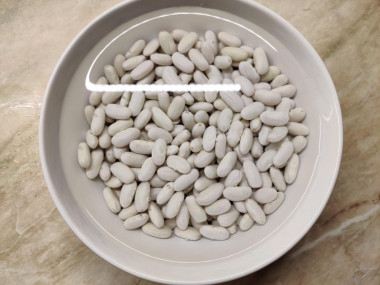
How do you make white bean soup? Rinse the white beans, cover them with a quart of cold water, and leave them to soak for at least six hours. I always soak the beans overnight — it's convenient: cover them with water in the evening, and in the morning you're ready to make the soup.
-
Step 2:
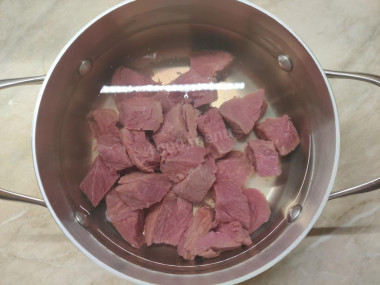
Wash the beef and trim off any membrane. Cut the meat into serving pieces with a sharp knife. Pour cold water into a separate pot and add the beef. Set it over low heat to cook. Once it boils, skim off the foam with a slotted spoon, lower the heat, and cook the meat until tender. The cooking time depends on the quality of the meat — which part of the carcass it's from and the age of the animal. Mine took about an hour.
-
Step 3:
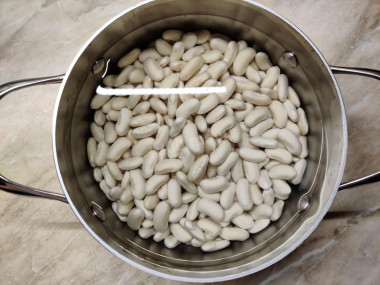
Drain off the water the beans soaked in. Pour fresh cold water into another pot and add the soaked beans. Simmer them, covered, over low heat for forty minutes from the moment they come to a boil.
-
Step 4:
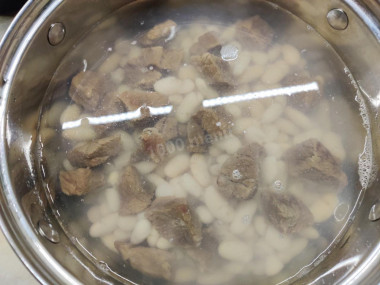
Using a slotted spoon, transfer the cooked beans into the meat broth. You can cook the beans together with the beef in one pot, but cooking them separately like this gives you a clearer broth.
-
Step 5:

Wash and peel the carrot. Cut it up however you like — grate it or use a knife. I diced it. Add the carrot to the pot and let the soup cook for another twenty minutes. You can also add onion, though my family doesn't care for it.
-
Step 6:
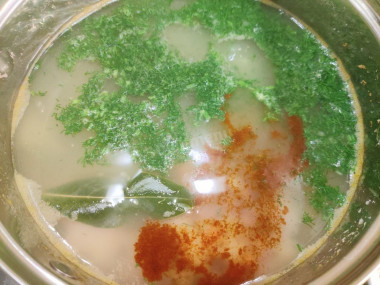
Add finely chopped fresh dill, the paprika, and the bay leaf to the soup. Season with salt and pepper to taste. Cook for another ten minutes, until done. Then turn off the heat and let the soup rest, covered, for a little while. Then serve. Enjoy!


- To speed up the soup, you can swap the dried white beans for the same amount of canned. In that case, drain the liquid from the can, rinse the beans under running water, and use them as is. Canned beans don't need soaking or long cooking, so your active cooking time drops by at least forty minutes. And here too the beans cooked down nicely (which gave the soup a pleasant, semi-puréed consistency) and their skins were soft. I served the soup with sour cream and fresh herbs. A slice of rye bread was the perfect companion to a bowl of hot, fragrant bean soup. I mostly make hearty soups like this in winter — in the cold season, it's exactly what the body needs.
- Important! Whether or not a recipe gives an exact amount of water for soup, it's best to go by your own preference (do you like a thick soup or a thinner one?), the size of your pot, and the ingredients you're using. Keep in mind that the author has their own idea of how much meat, potato, grain, and so on belongs in the soup, and it may not match yours. In practice, that means if you're making it for the first time, don't cook a whole pot at once. Make a tasting batch — enough for one or two people. To do that, scale all the ingredients down to 1–2 servings and figure the water at roughly one cup per serving for a very thick soup, up to 1.5–2 cups for a thinner one. Don't forget that some of the liquid will boil off as it cooks. After tasting that small batch, you can dial in both the amount of liquid and the proportions to your liking. Down the road, like most seasoned cooks, you'll be able to add the water and the ingredients by eye.
- You can swap the beef for any other meat you prefer. Keep in mind, though, that the cooking time, flavor, and calorie count will change. Pork and lamb are generally fattier than beef, while chicken or turkey breast is leaner. And the cooking time depends not only on the type of meat but also on which part of the carcass is used and whether the meat is older or younger.
- For cooking, it's best to use filtered or bottled water with a neutral taste. If you use tap water, keep in mind it can give the dish an off, characteristic flavor.
Caloric content of the products possible in the composition of the dish
- Melted beef fat - 871 kcal/100g
- Fat beef - 171 kcal/100g
- Lean beef - 158 kcal/100g
- Beef brisket - 217 kcal/100g
- Beef - okovalok - 380 kcal/100g
- Beef - lean roast - 200 kcal/100g
- Beef shoulder - 137 kcal/100g
- Beef - ribs - 233 kcal/100g
- Beef - ham - 104 kcal/100g
- Beef - tail - 184 kcal/100g
- Boiled ham - 269 kcal/100g
- Beef corned beef - 216 kcal/100g
- Carrots - 33 kcal/100g
- Dried carrots - 275 kcal/100g
- Boiled carrots - 25 kcal/100g
- Bay leaf - 313 kcal/100g
- Dill greens - 38 kcal/100g
- Salt - 0 kcal/100g
- Water - 0 kcal/100g
- Ground hot pepper - 21 kcal/100g
- Paprika - 289 kcal/100g
- White beans - 102 kcal/100g