Moldovan cornmeal mamaliga
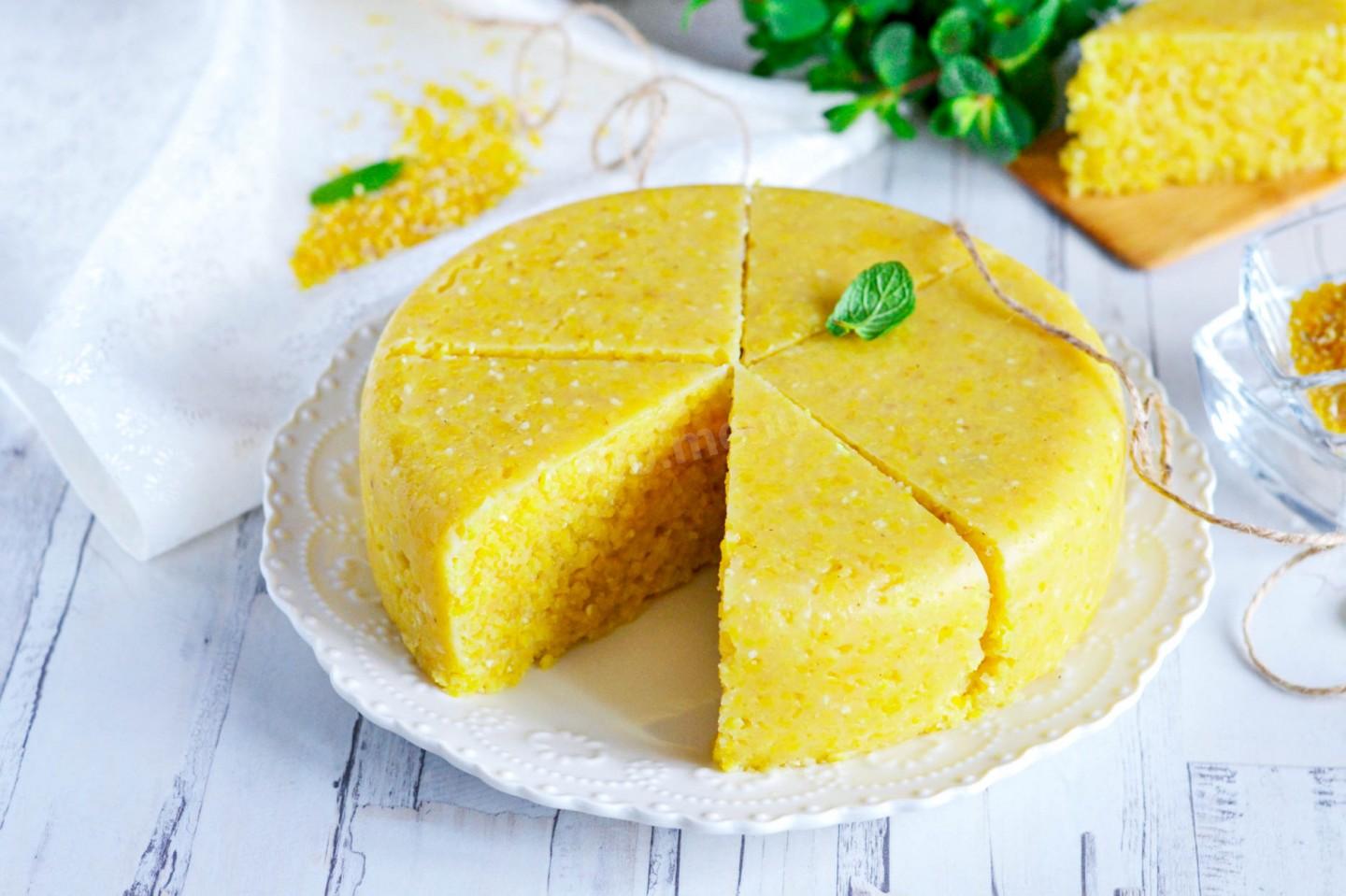
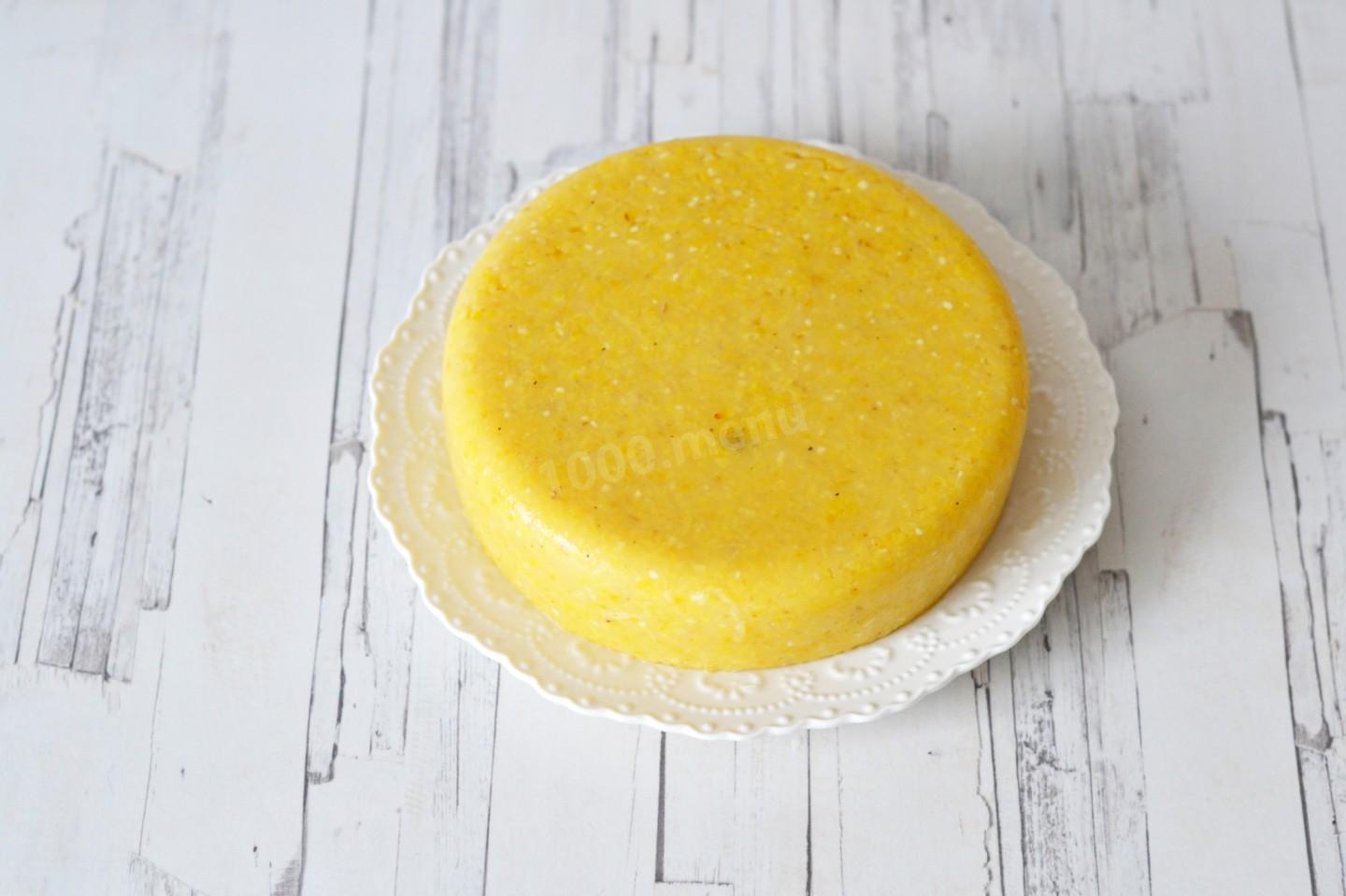
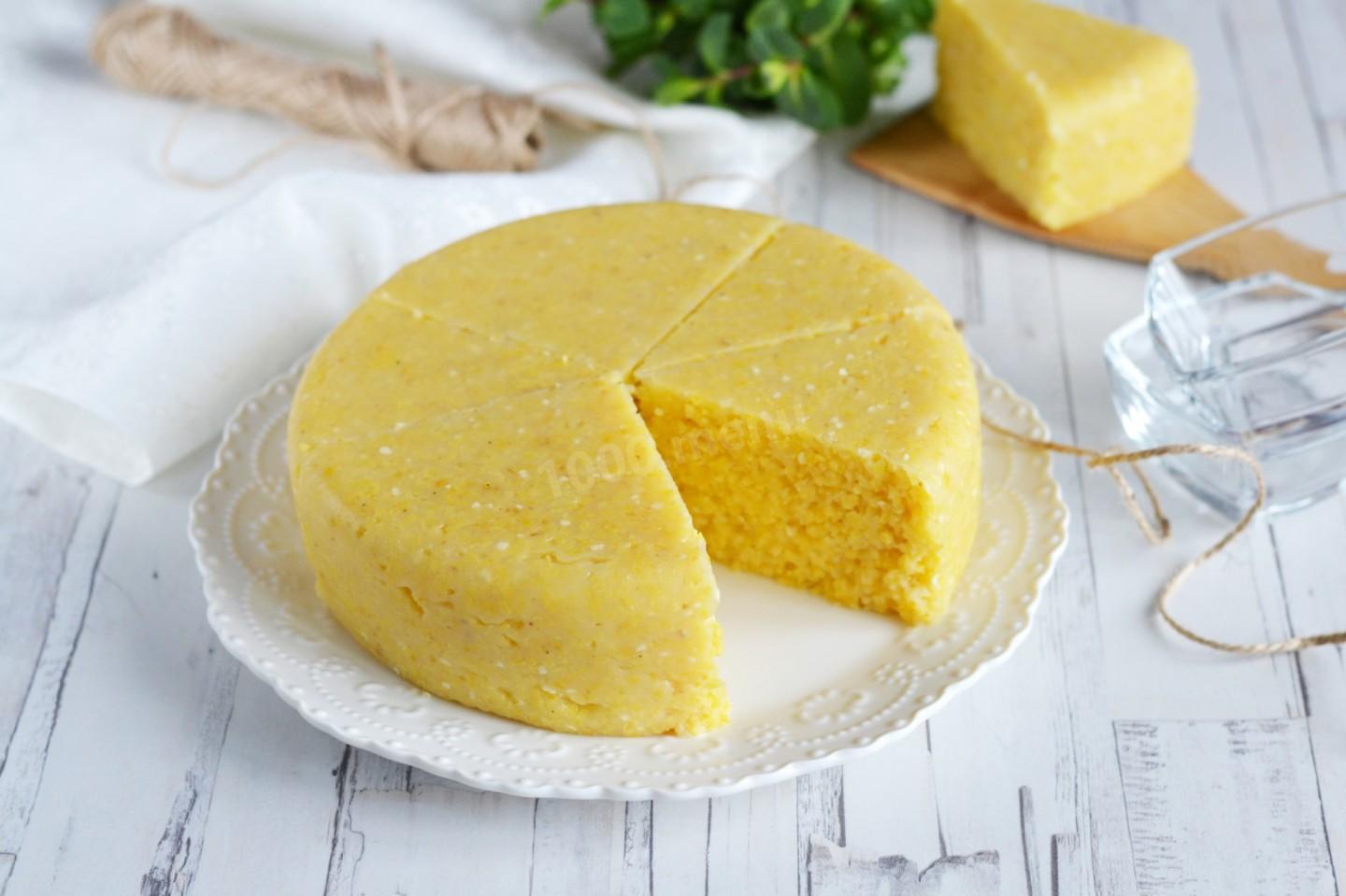
Distinctive, pretty, wholesome, and budget-friendly! Mamaliga made from corn groats is a Moldovan national dish. It's savory, not sweet, and is often served as a side with meat, fish, or poultry. You can make it from cornmeal or corn groats. The finished mamaliga is a bright golden color.

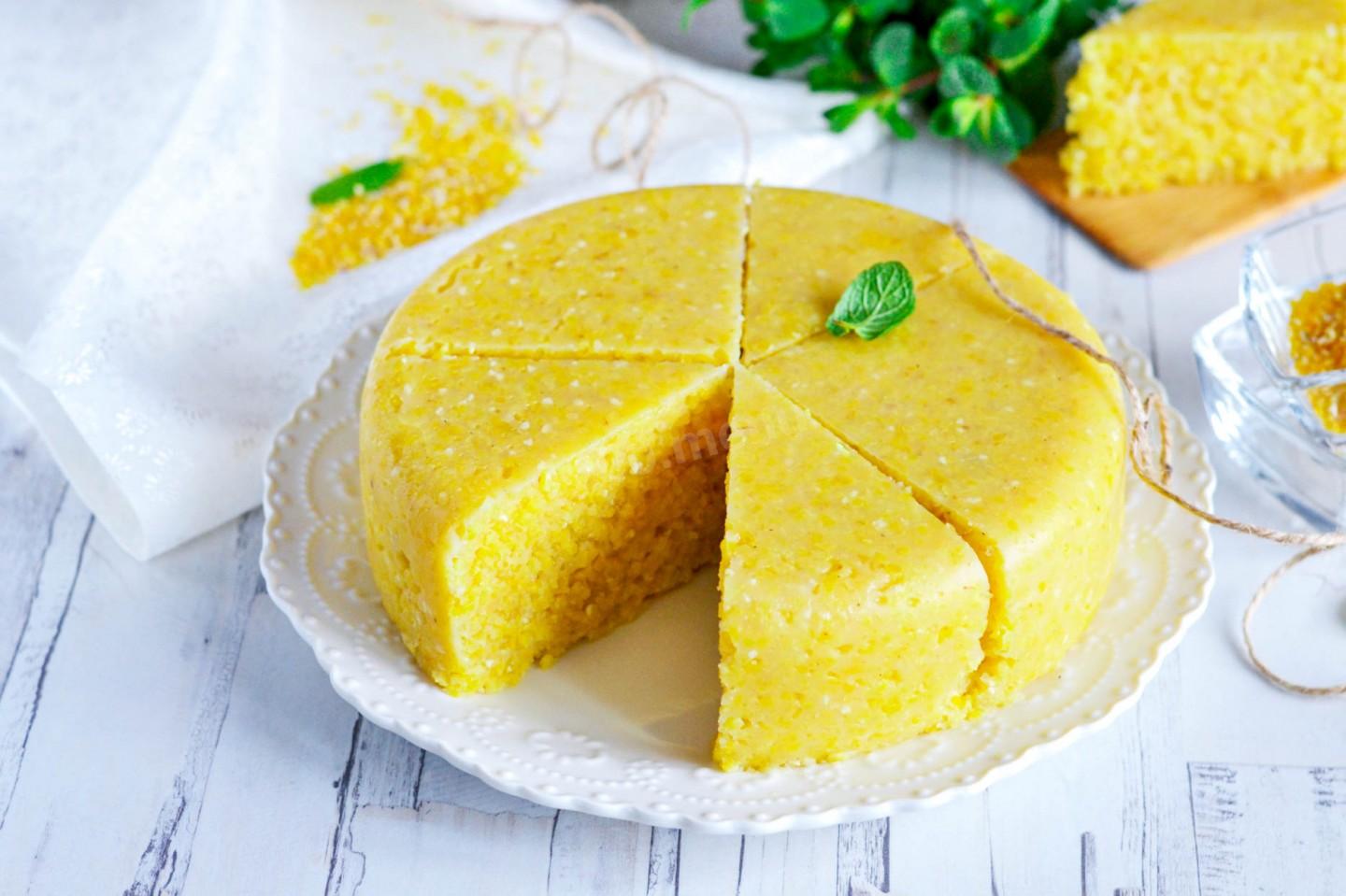
Cooking method
-
Step 1:
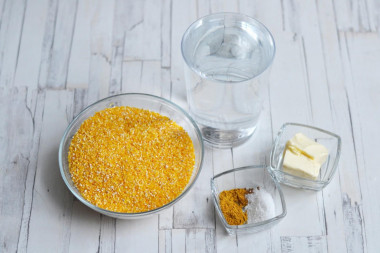
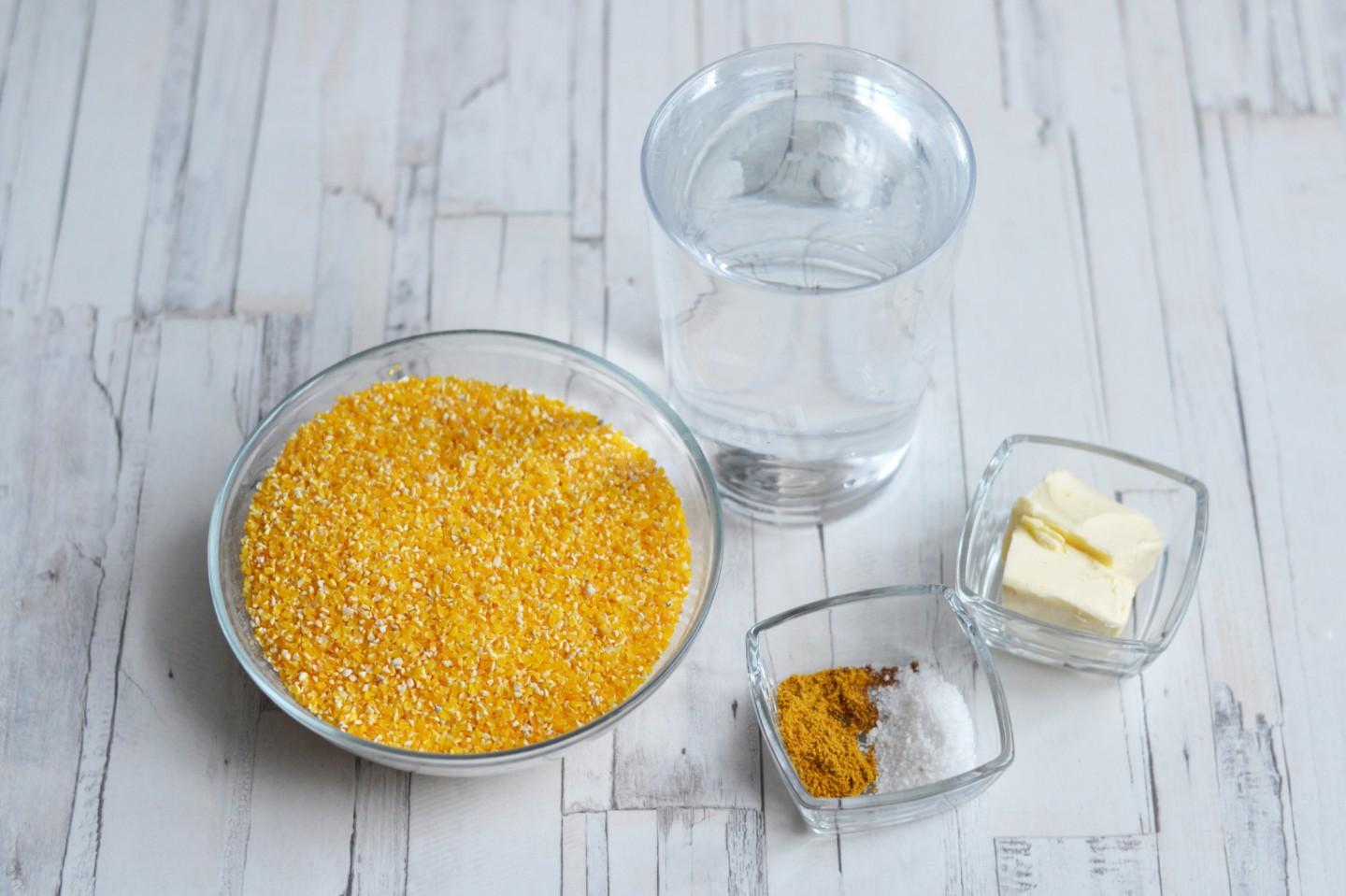
How do you cook mamaliga from corn groats? Gather your ingredients. There are very few of them — the main ones are the groats and water. Choose good-quality butter (it's added at the very end of cooking), since its flavor will carry through to the porridge. Turmeric is entirely optional; I added it for a richer color.
-
Step 2:
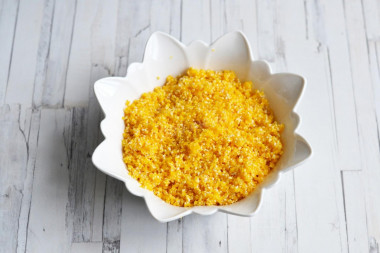
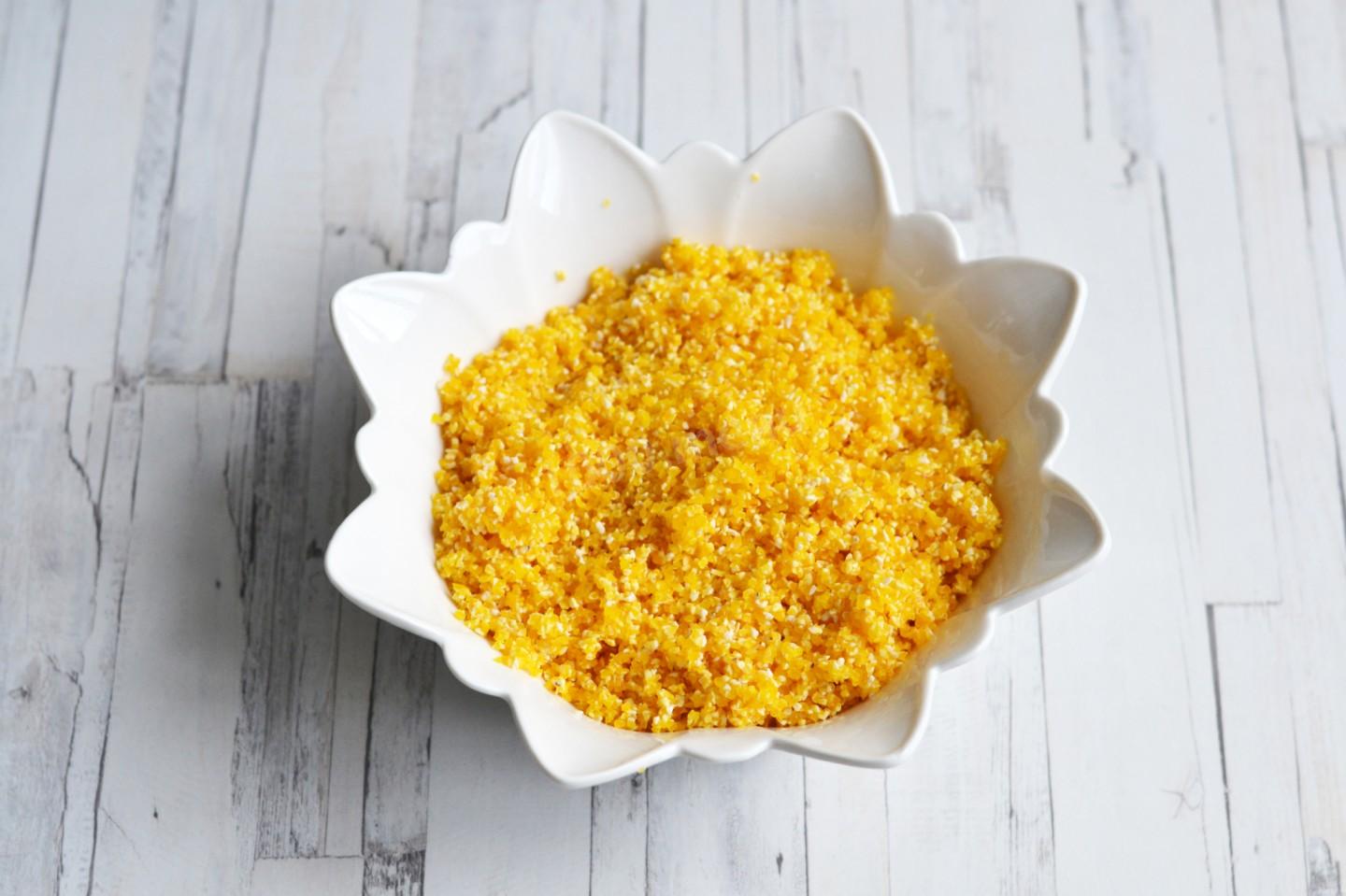
Rinse the corn groats thoroughly until the water runs clear. This is necessary to wash all the starch off the corn, otherwise the finished mamaliga will taste bitter.
-
Step 3:
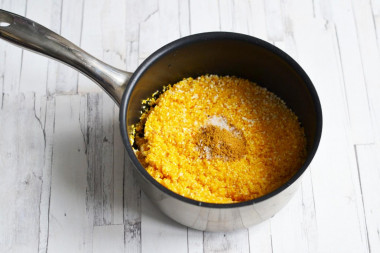
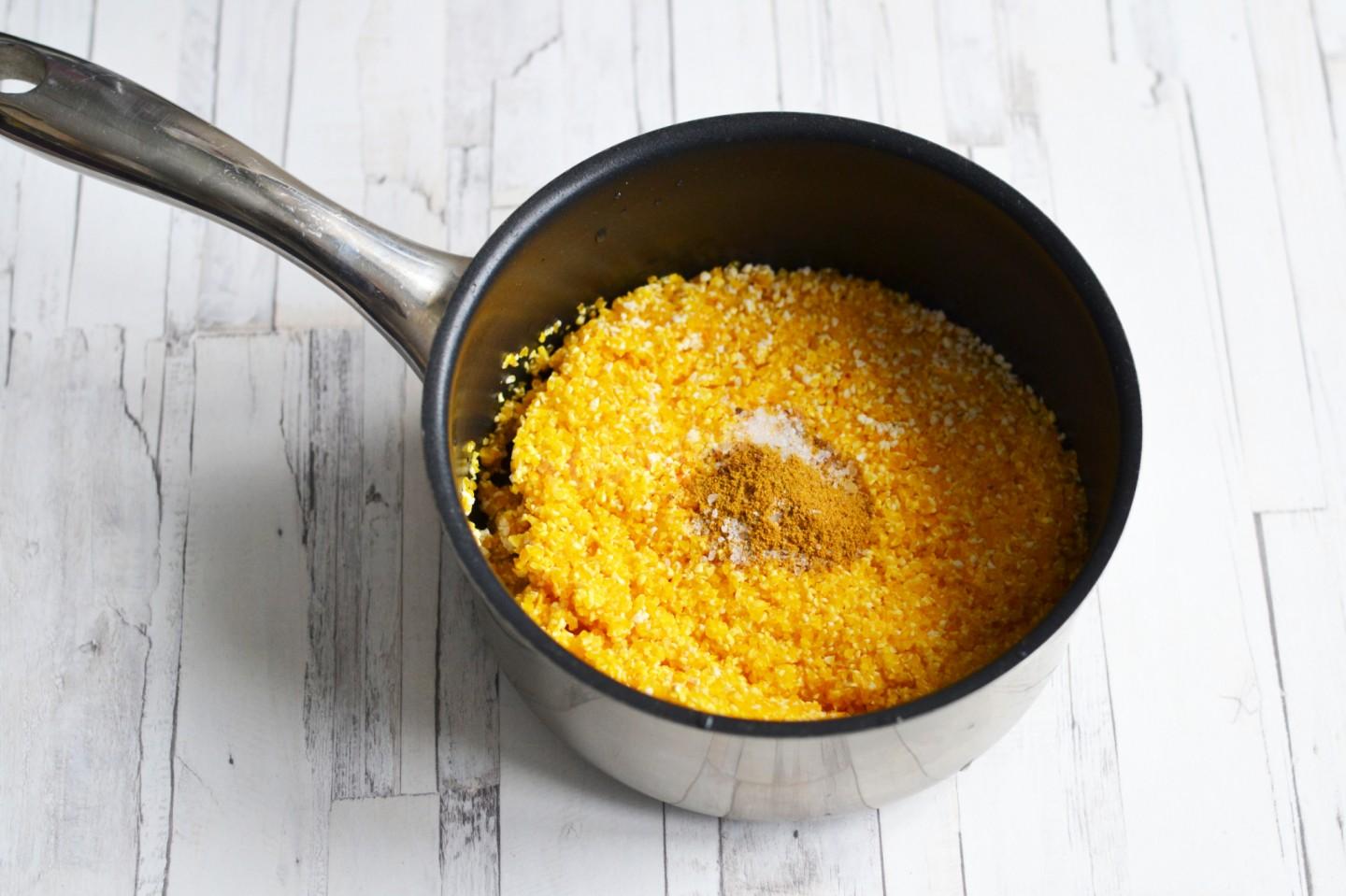
Transfer the corn groats to a heavy-bottomed saucepan or a cauldron. Add the turmeric and salt.
-
Step 4:
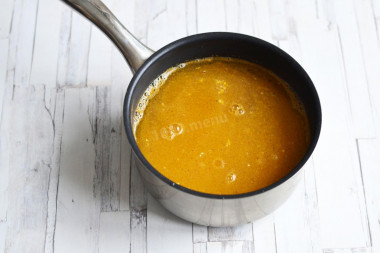
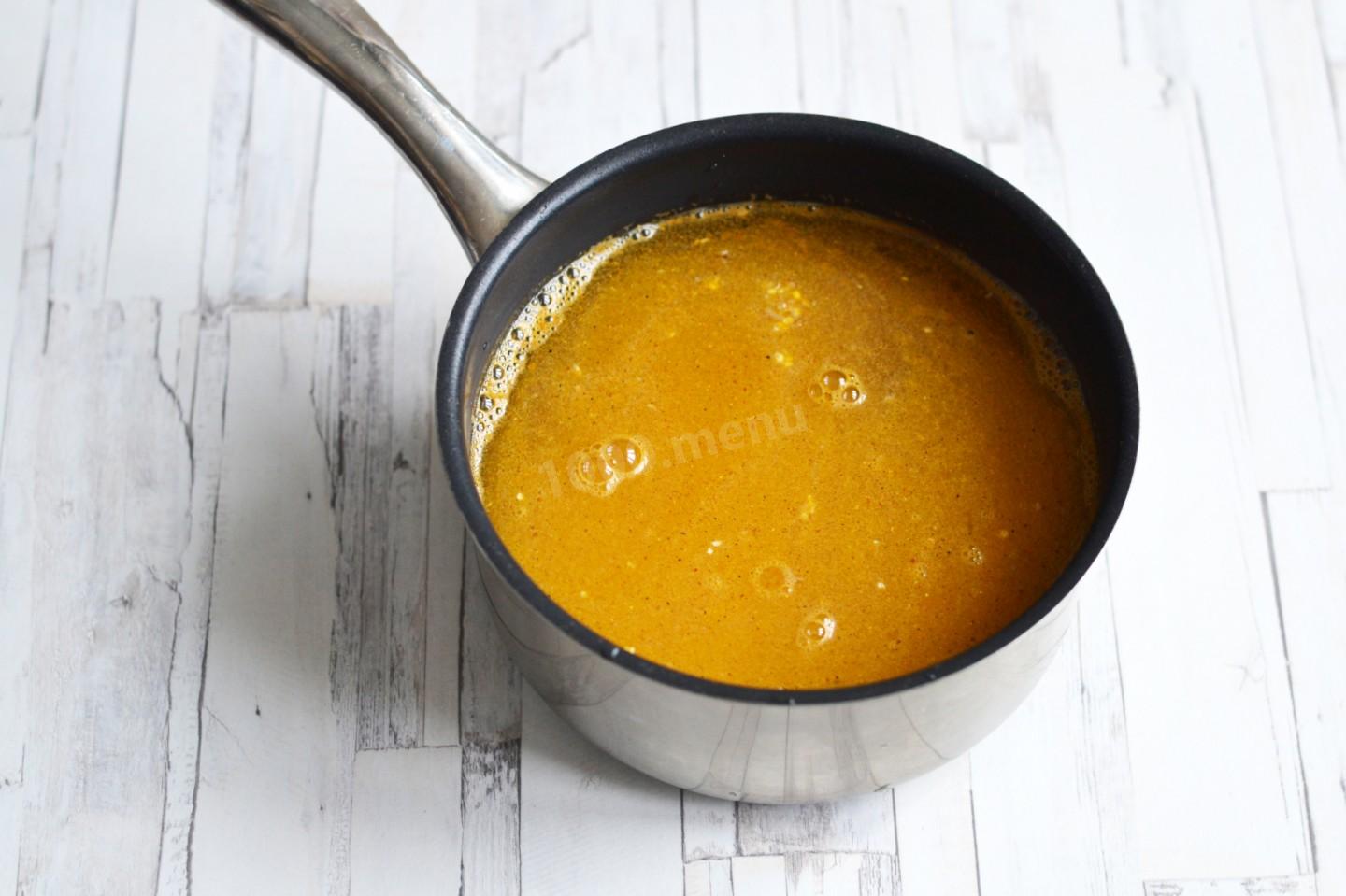
Pour in the hot water and stir.
-
Step 5:
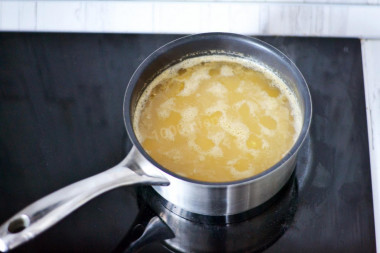
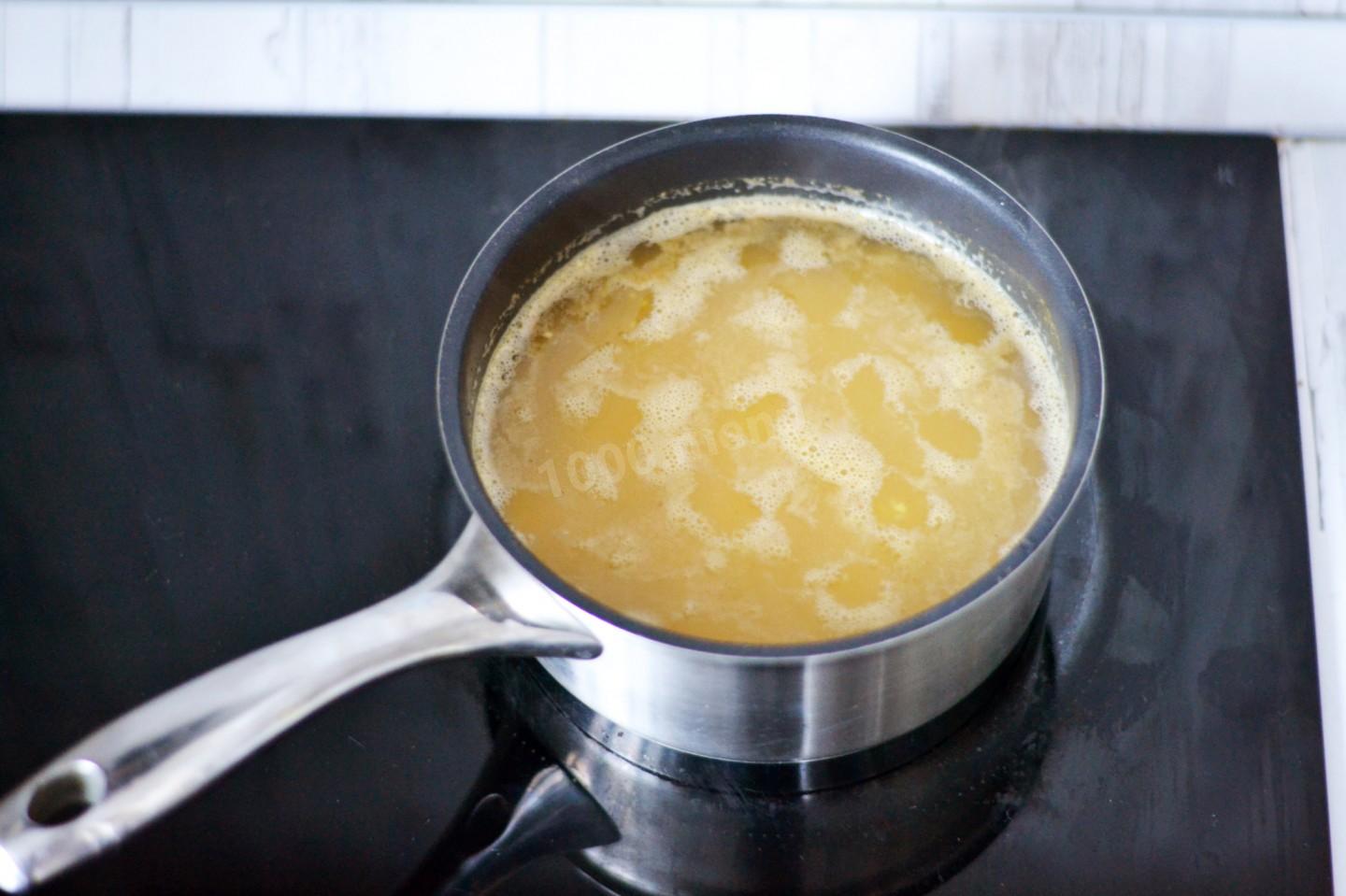
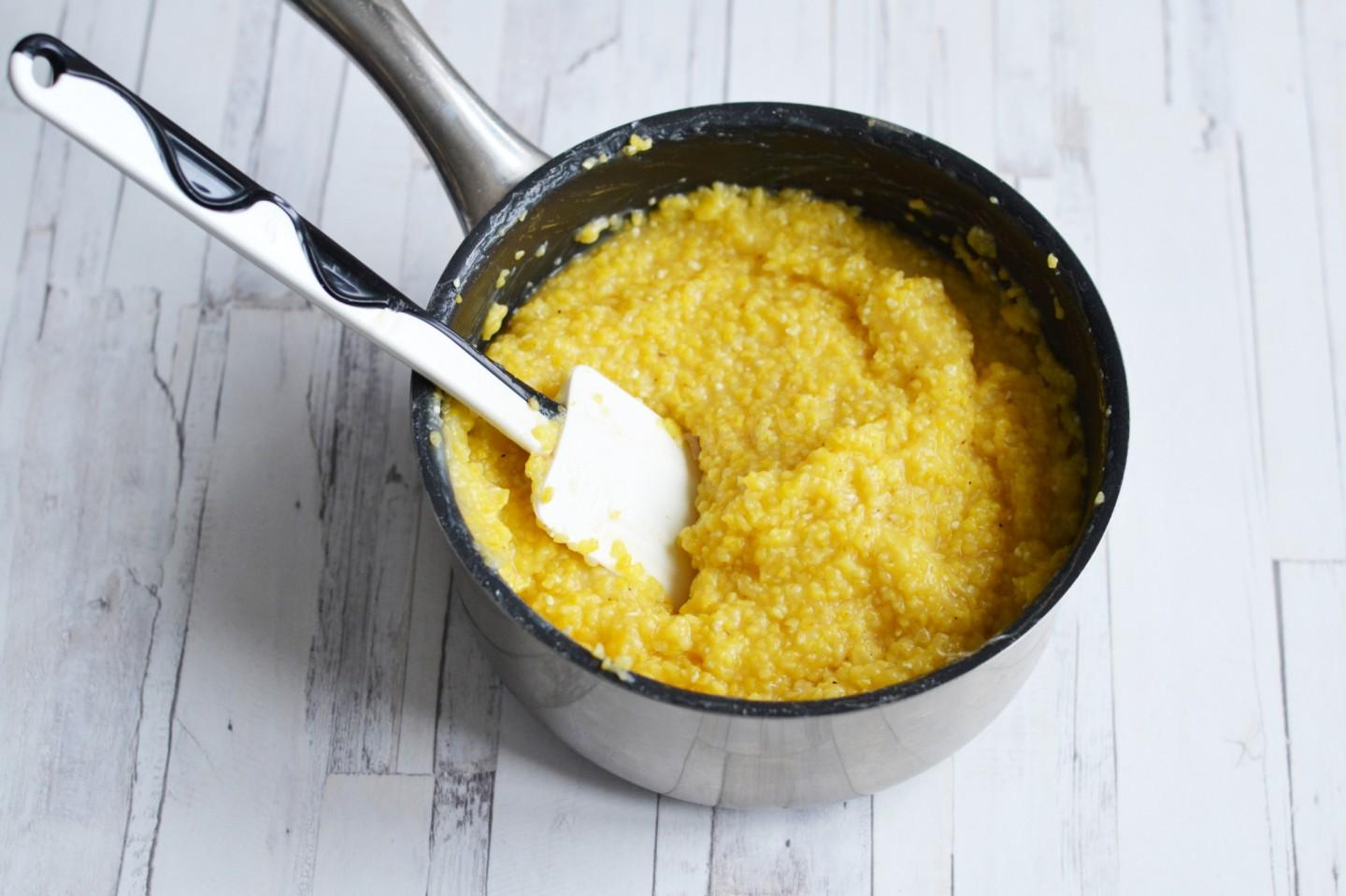
Set the saucepan over high heat and bring it to a boil. Then turn the heat down to its lowest setting. Cook the groats for about 7 minutes, stirring now and then so they don't scorch on the bottom.
-
Step 6:
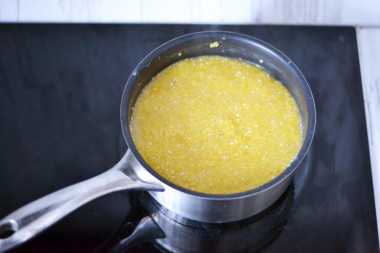
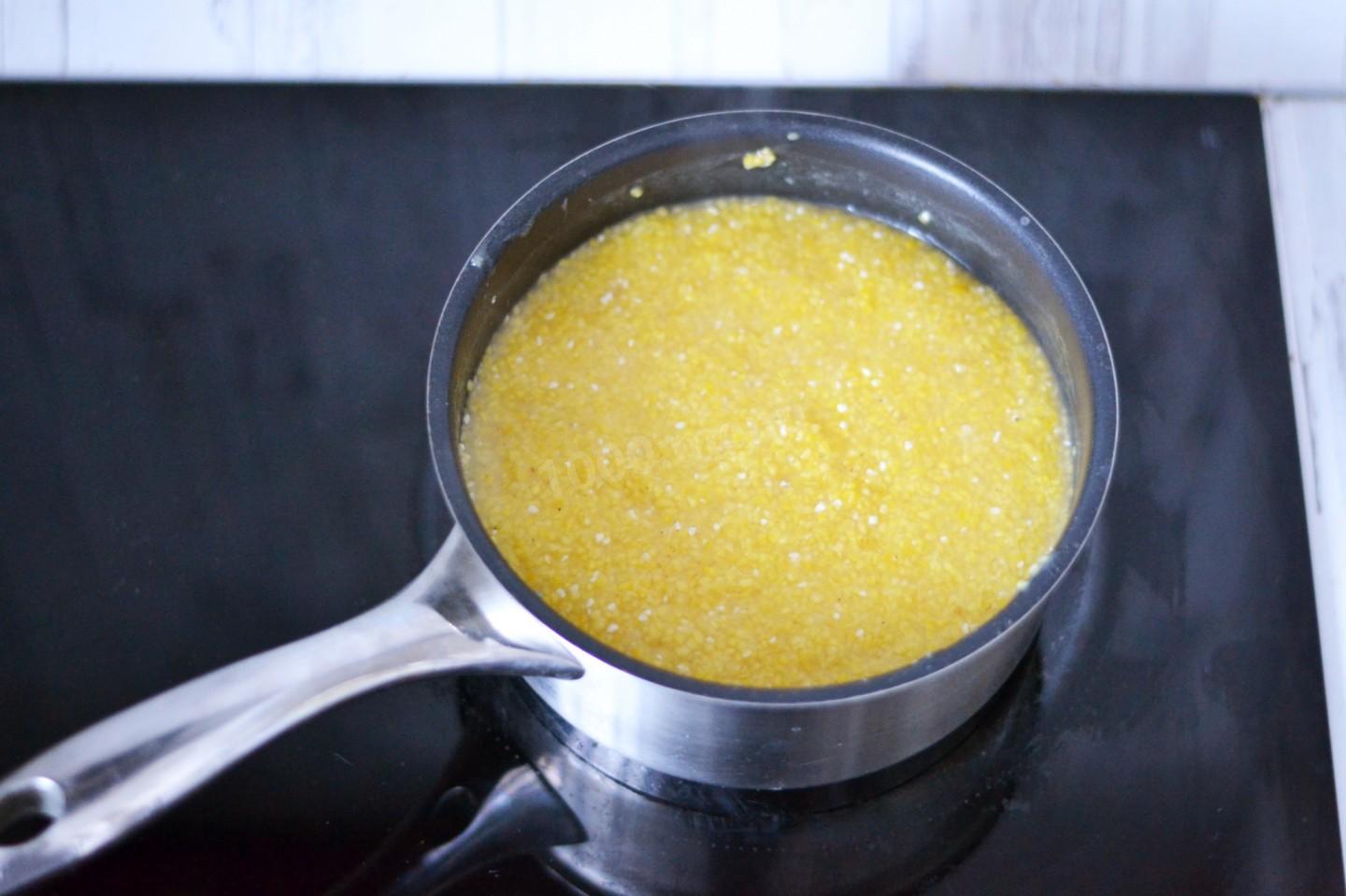
As soon as the visible liquid has cooked away and the porridge starts to bubble, begin stirring it constantly. Cook the mamaliga this way for about 10 minutes, until thick.
-
Step 7:
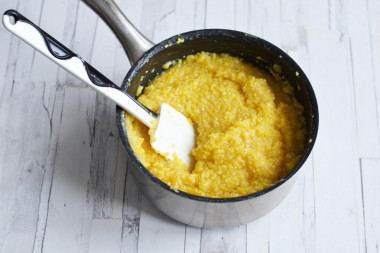
Then take the saucepan off the heat.
-
Step 8:
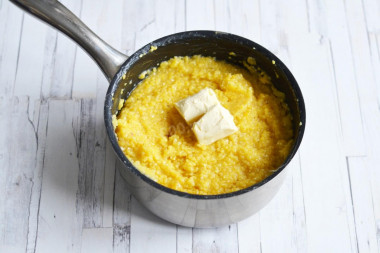
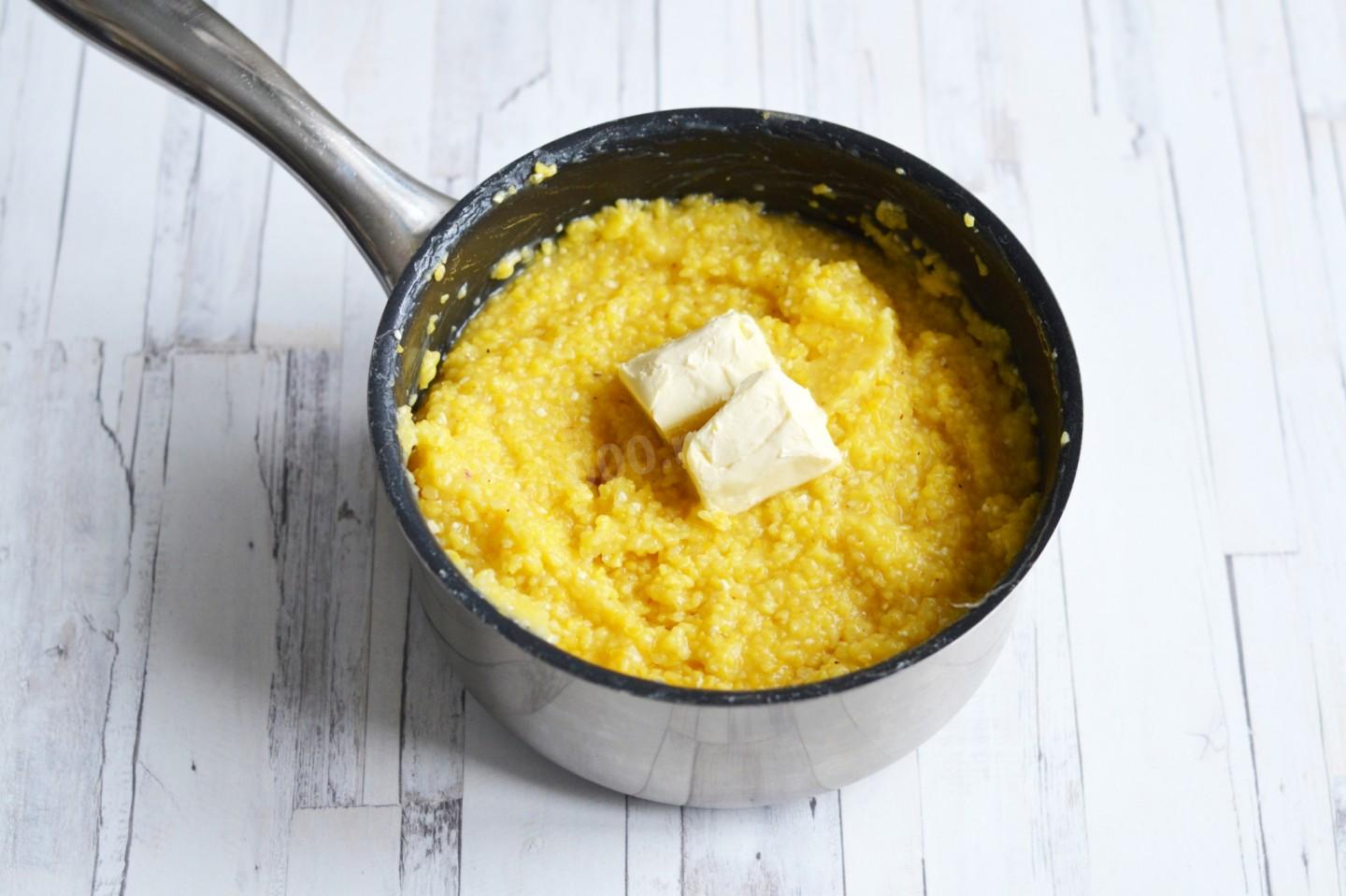
Add the butter to the mamaliga and stir it in.
-
Step 9:
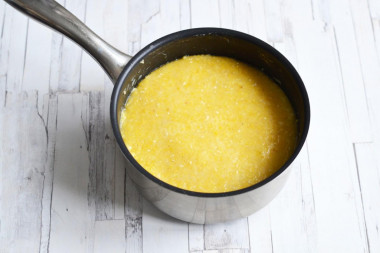
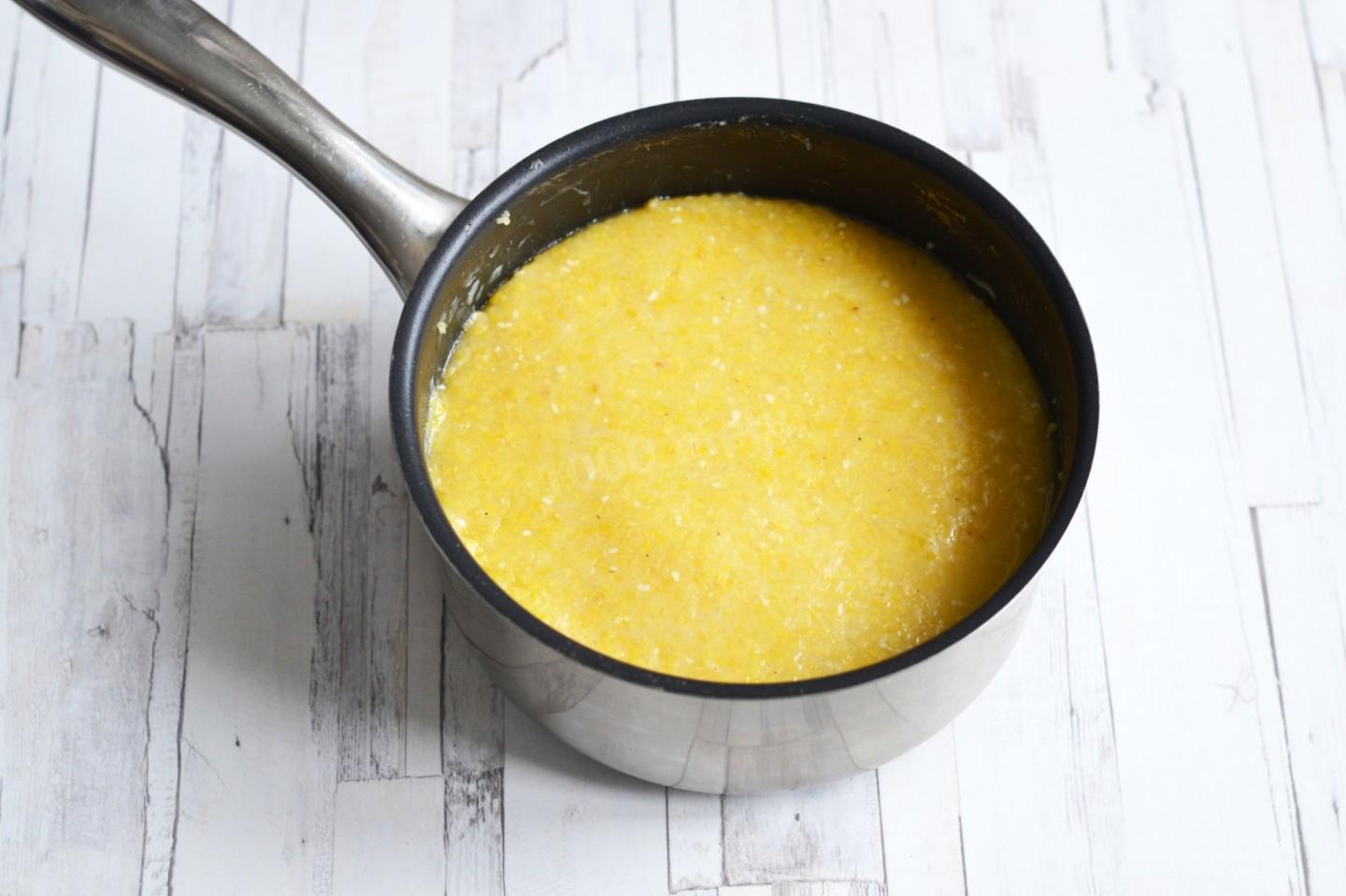
Smooth the surface of the mamaliga with a spatula.
-
Step 10:
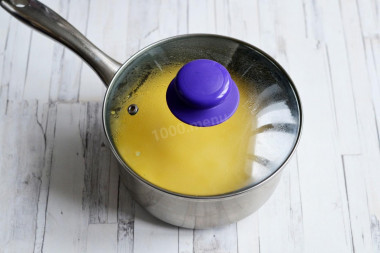
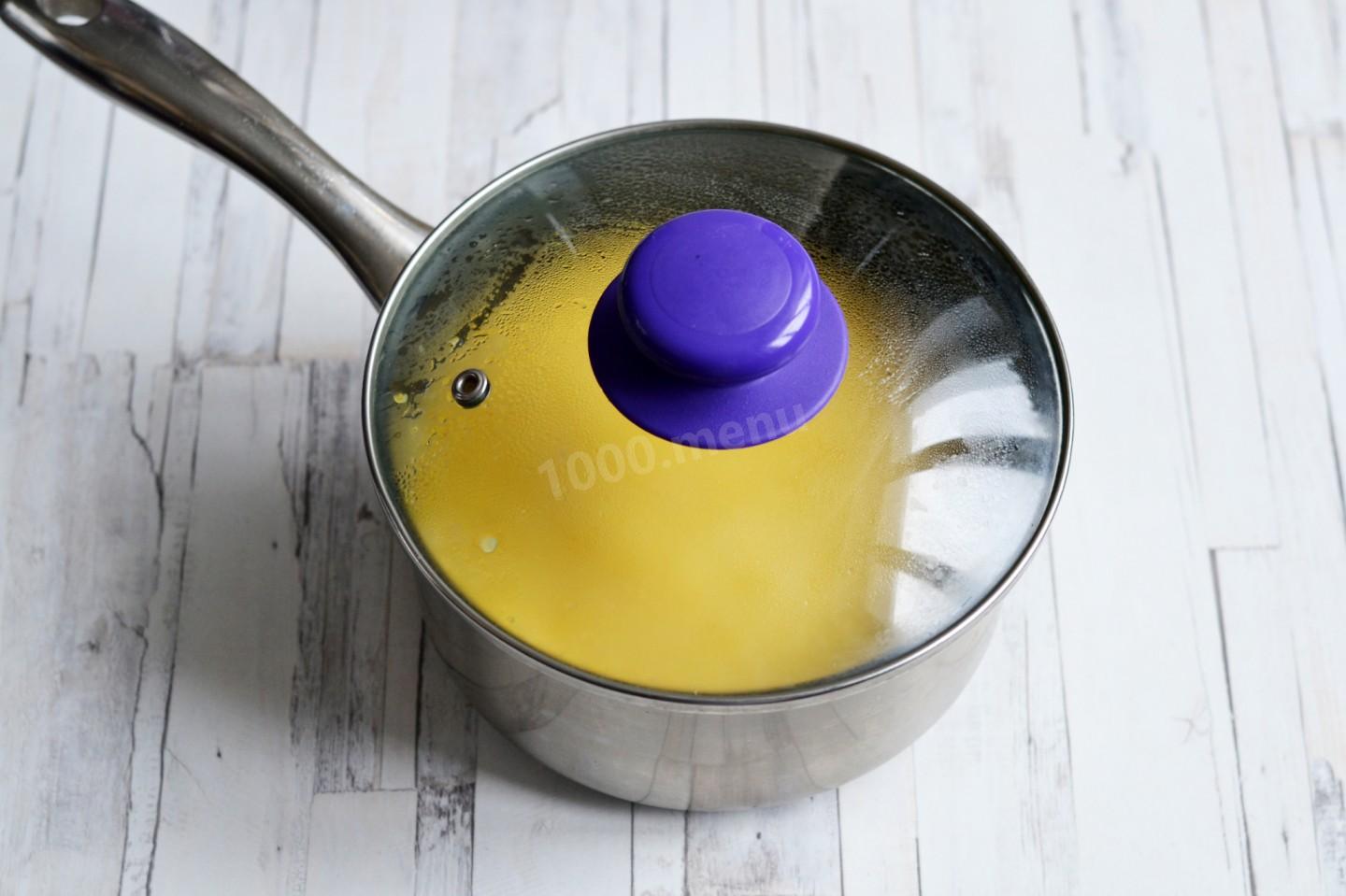
Cover the saucepan with a lid and let the porridge cool to room temperature.
-
Step 11:
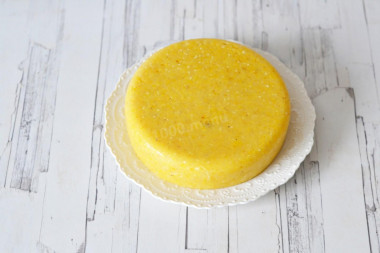
Turn the cooled porridge out onto a plate.
-
Step 12:
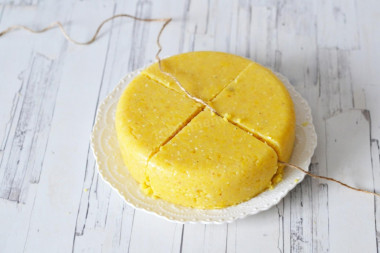
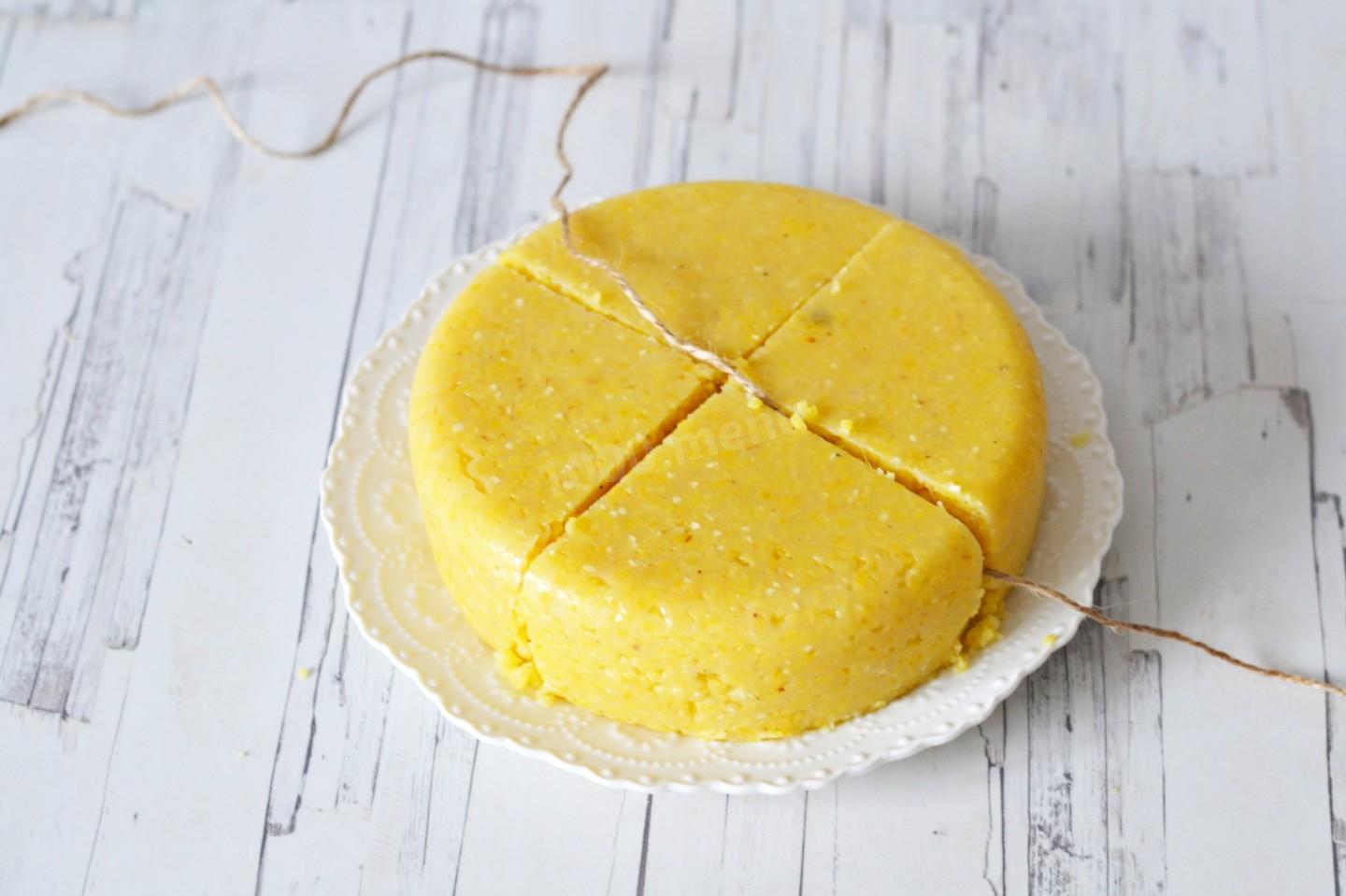
Cut the mamaliga into portions using an oiled length of thread or a knife. Be sure to oil the knife, since mamaliga sticks badly to the blade. Mamaliga is served with sour cream, brynza, cottage cheese, cracklings, or bacon.
-
Step 13:
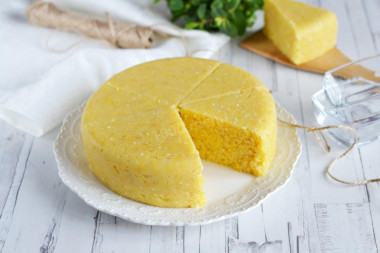
Enjoy!
- Mamaliga is a traditional dish that was once very popular among peasants, but it later became widely known not only in Romania but also in Moldova, Abkhazia, and other countries. In the Caucasus the dish is called "gomi," and in Ossetia it goes by a name that translates literally as "a little piece of life." Mamaliga used to be cooked in a cast-iron pot, made with cornmeal, salt, and water. Today the heart of the recipe is the same handful of ingredients used many years ago. The cookware and method are about all that have changed.
- Since everyone's threshold for salty, sweet, bitter, sharp, sour, and hot is different, always add spices and seasonings to your own taste! If you're using a particular seasoning for the first time, keep in mind that some spices are especially important not to overdo (chili pepper, for instance).
- Tip: read all the secrets of choosing it and the finer points of cooking it in the article on corn groats.
- For cooking, it's best to use filtered or bottled water with a neutral taste. If you use tap water, keep in mind it can give the dish an unpleasant off-flavor.
Caloric content of the products possible in the composition of the dish
- Turmeric - 325 kcal/100g
- Butter 82% - 734 kcal/100g
- Amateur unsalted butter - 709 kcal/100g
- Unsalted peasant butter - 661 kcal/100g
- Peasant salted butter - 652 kcal/100g
- Melted butter - 869 kcal/100g
- Corn groats - 337 kcal/100g
- Salt - 0 kcal/100g
- Water - 0 kcal/100g