Potato, Vegetable, and Rice Soup
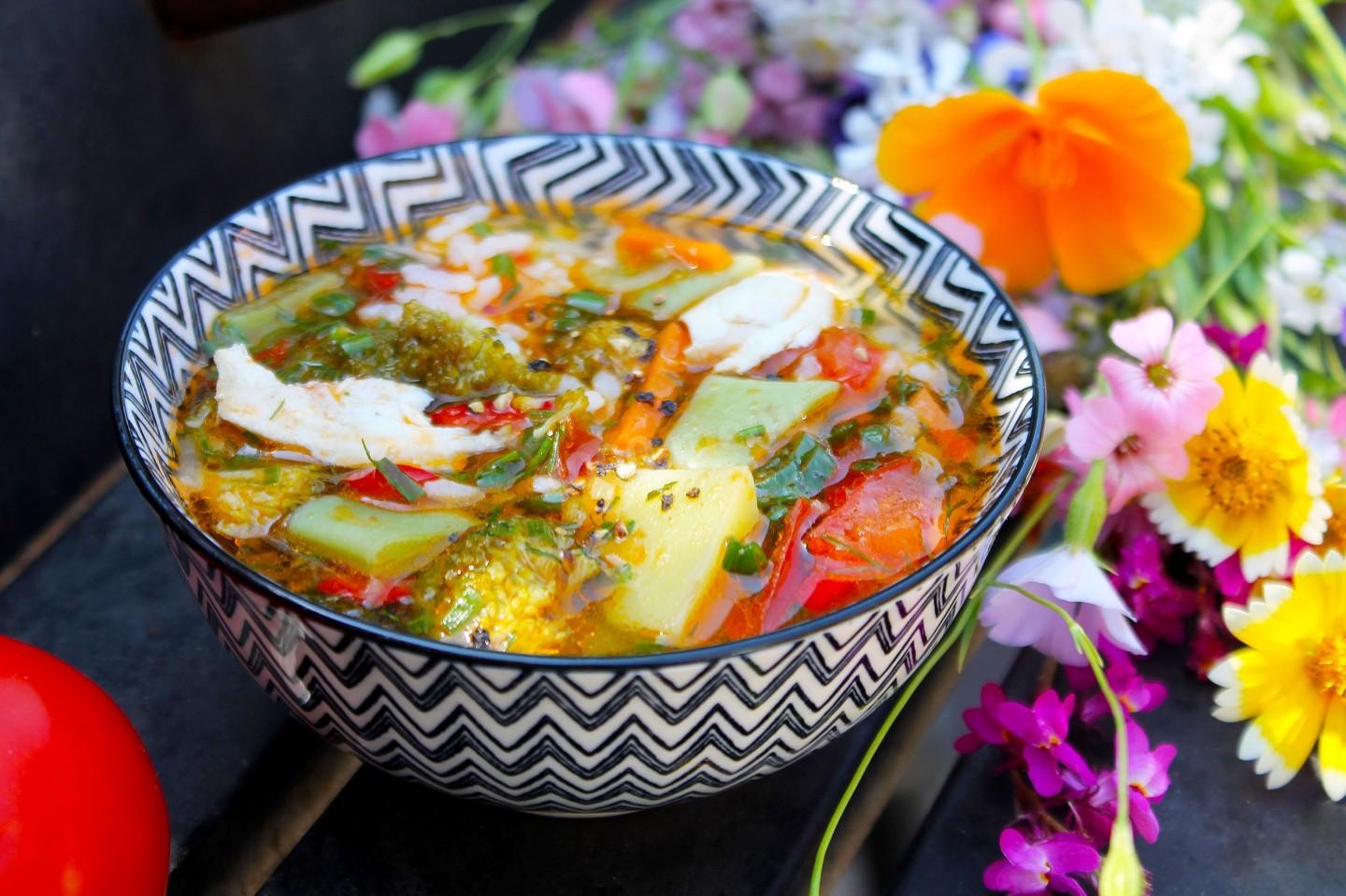
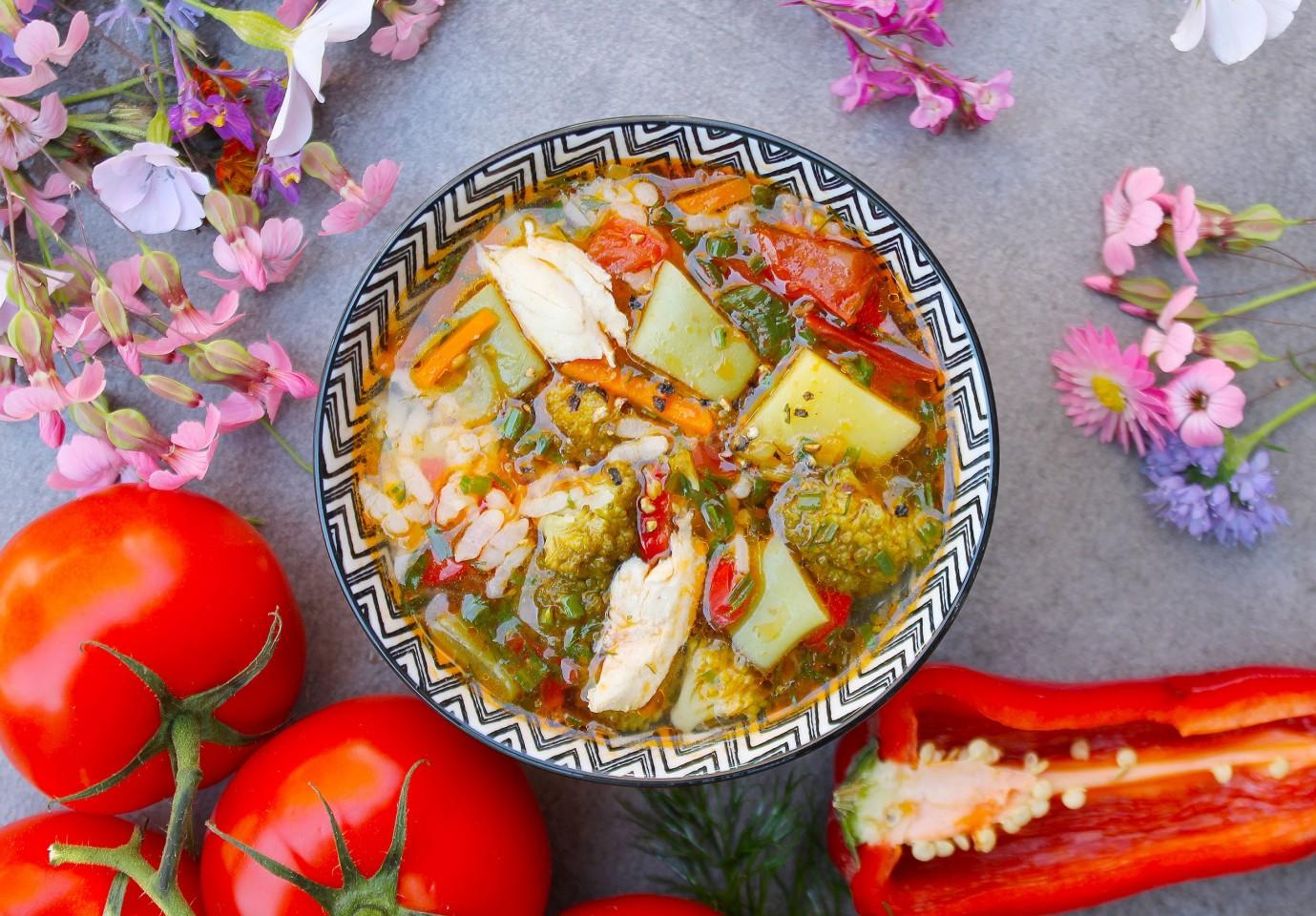
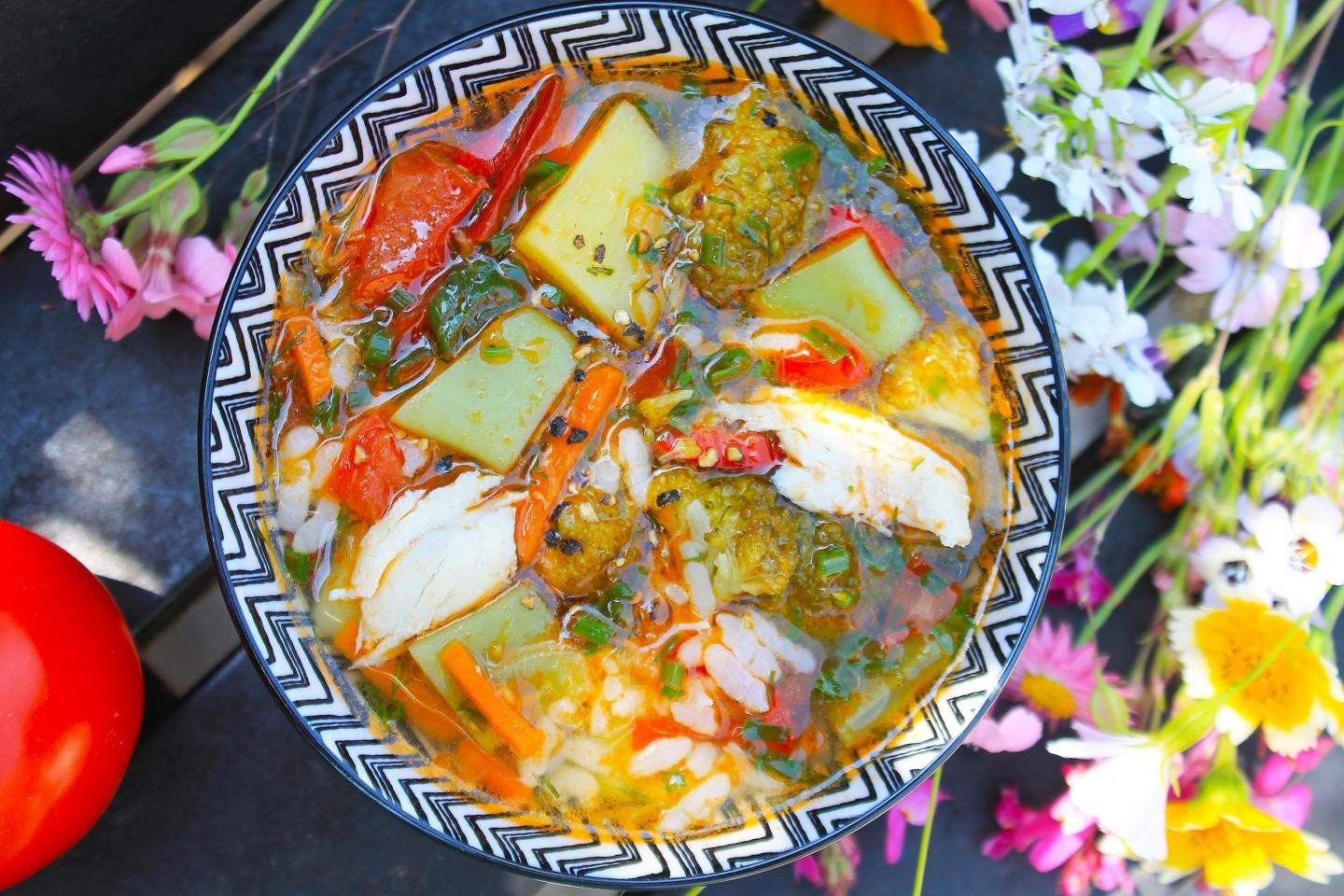
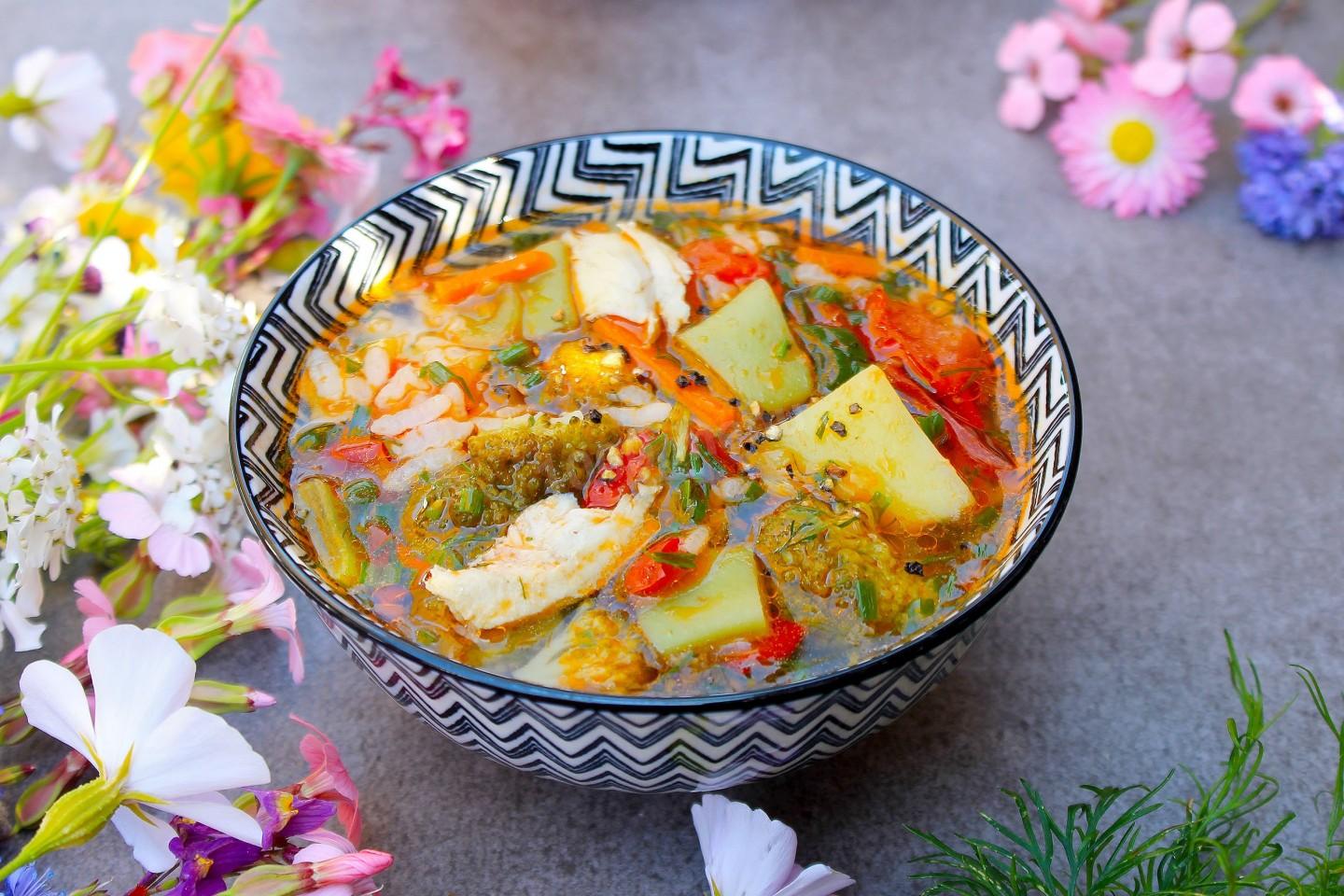
Wonderfully tasty, vitamin-rich, bright, light, and simple! This potato, vegetable, and rice soup is great on hot summer days when you want something light yet filling. Make it with chicken or any other broth, or with water. The perfect way to satisfy your hunger and load up on vitamins!

Cooking method
-
Step 1:
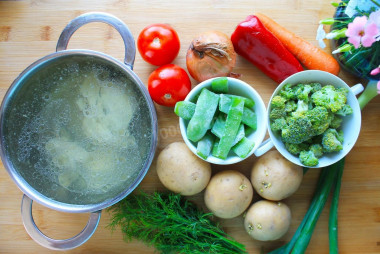
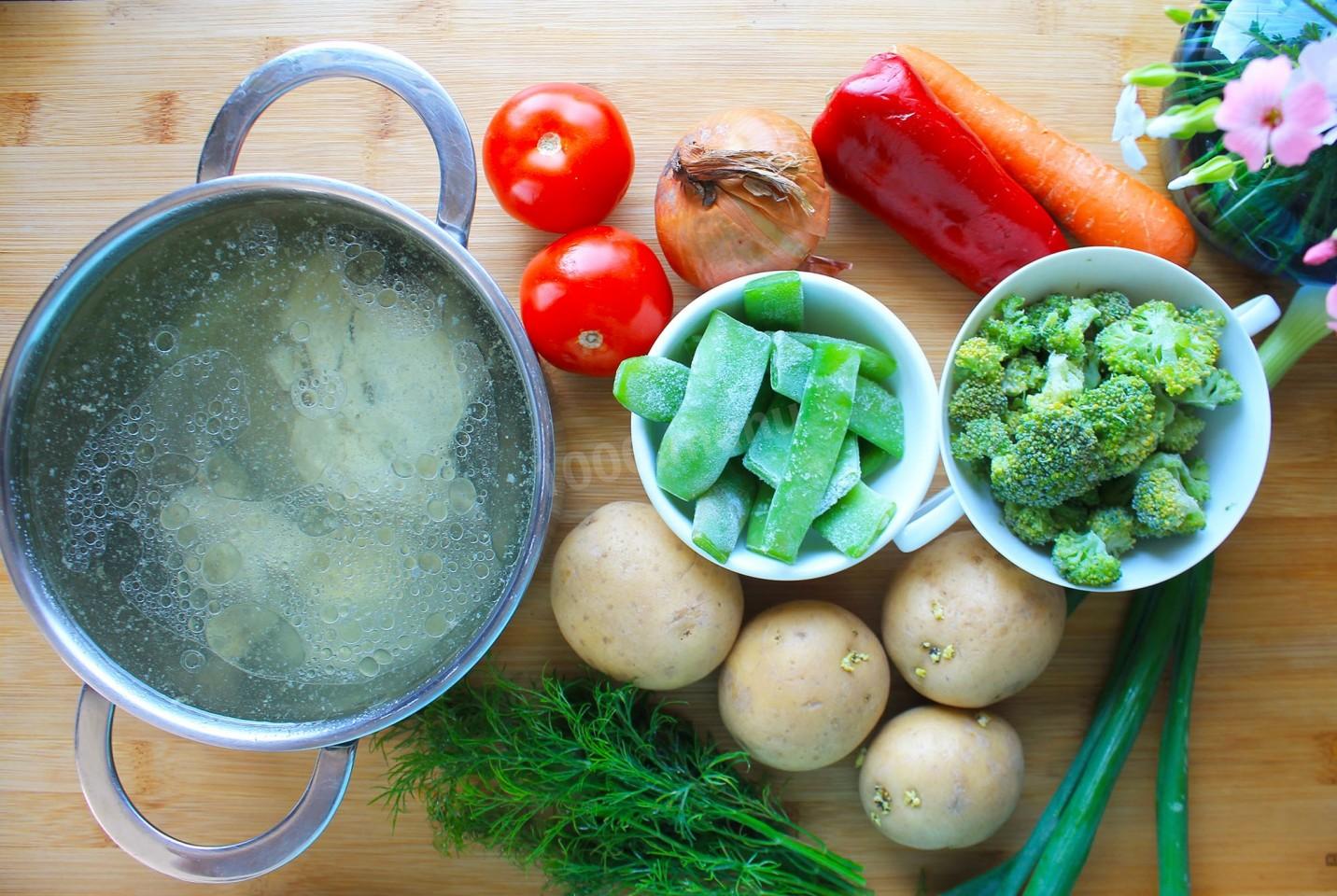
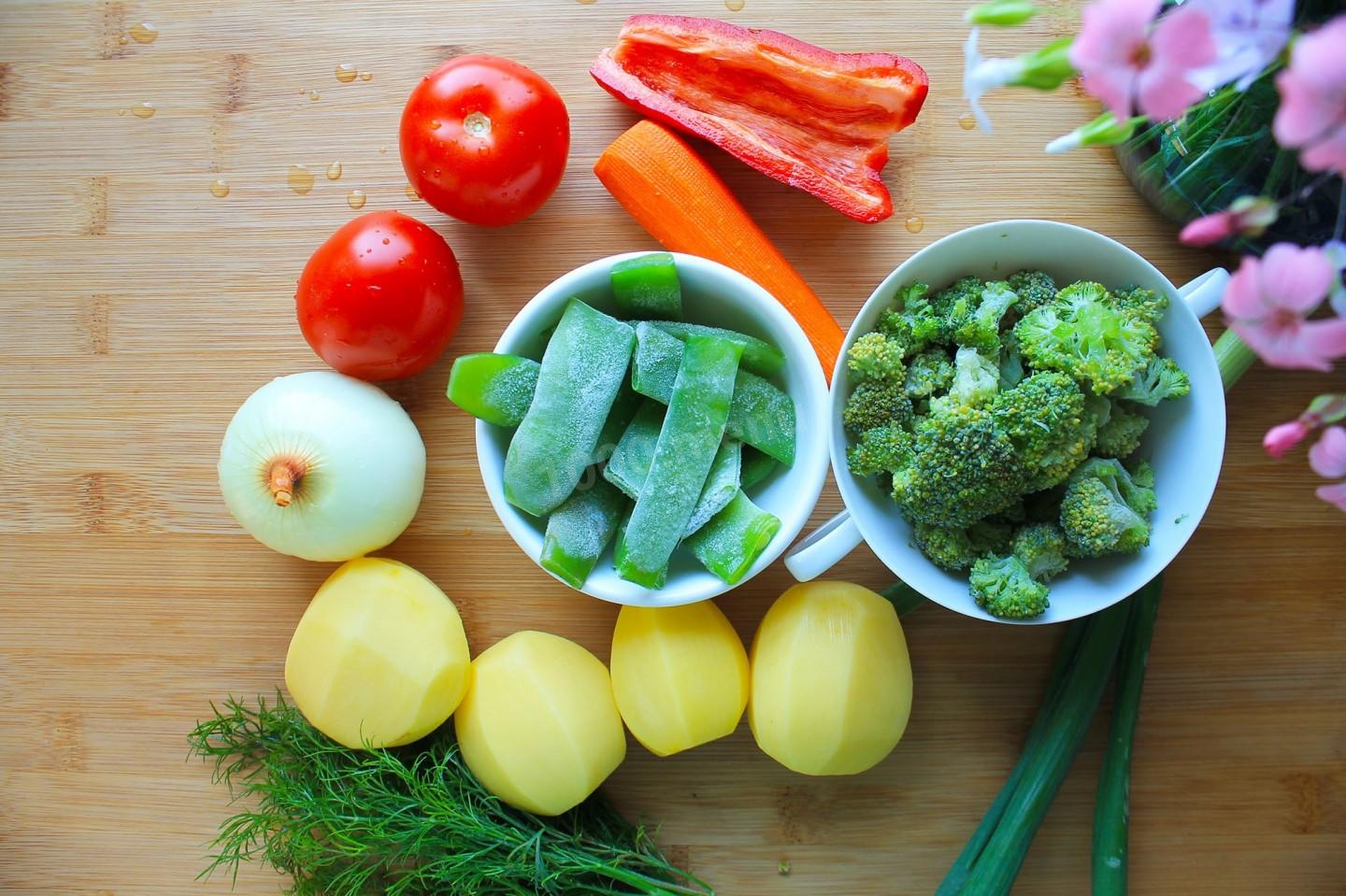
How do you make soup in chicken broth with vegetables and rice? Gather all the ingredients. First, make the chicken broth. Use any part of the bird (wings, legs, back, or even breast). Cover the meat with water, skim off the foam once it boils, add salt, lower the heat to medium, and cook until the chicken is done—30 to 50 minutes, depending on the size of the pieces.
-
Step 2:
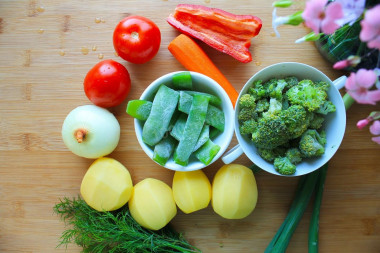
The beans and broccoli can be fresh or frozen. Peel the potatoes, onion, and carrot. Remove the stem, core, and seeds from the bell pepper. Wash all the vegetables in cold water.
-
Step 3:
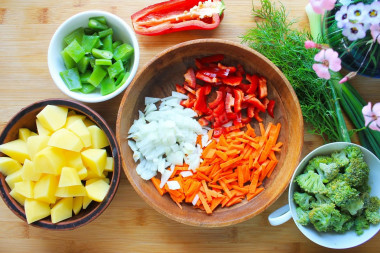
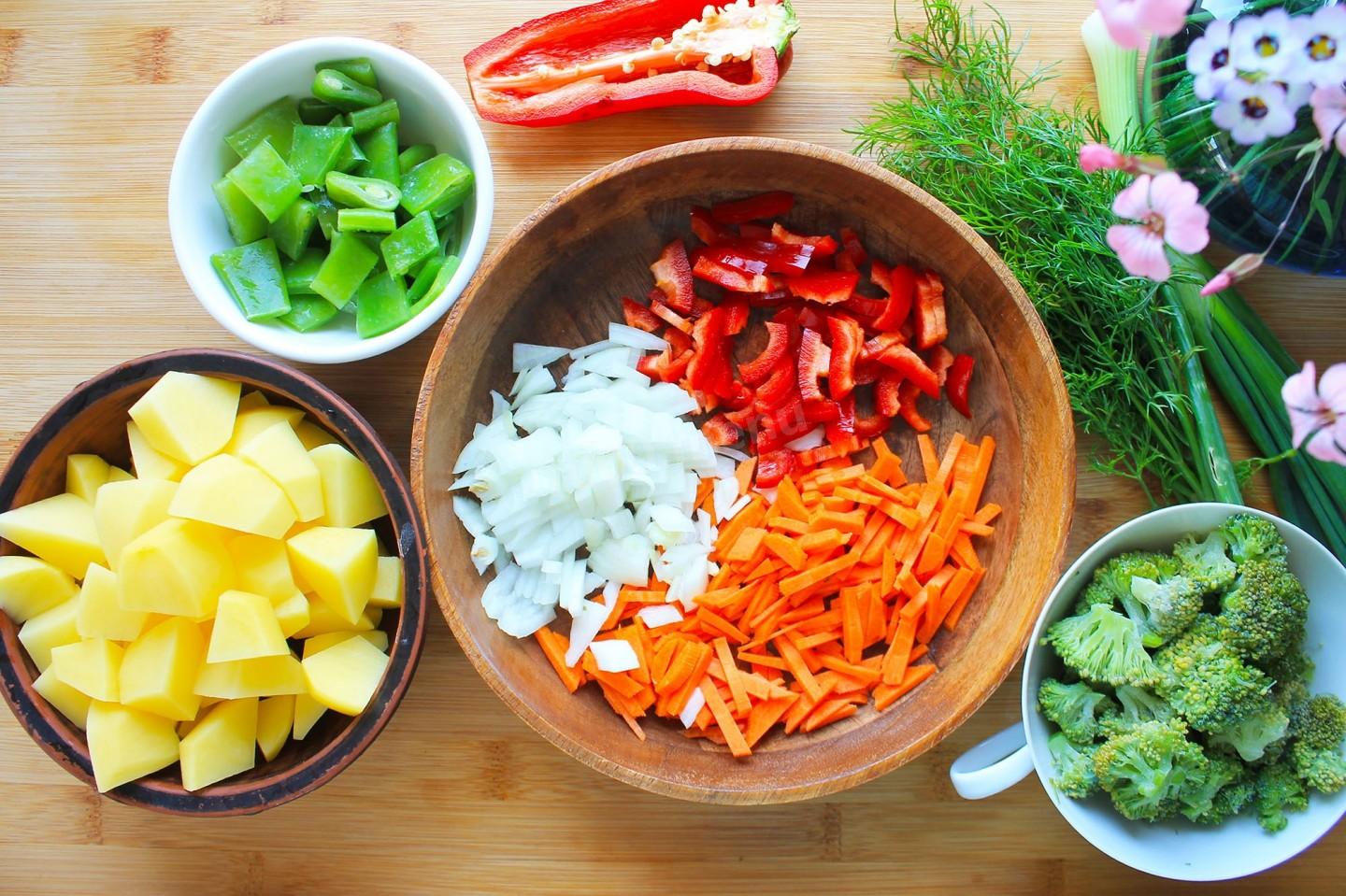
Cut the potatoes into small pieces—sticks or cubes, whichever you prefer. Chop the onion, carrot, and bell pepper roughly and not too large; for soup you can also grate the carrot on a coarse grater. Break the broccoli into small florets and cut the green beans into short pieces. If your beans are older, trim the stringy ends.
-
Step 4:
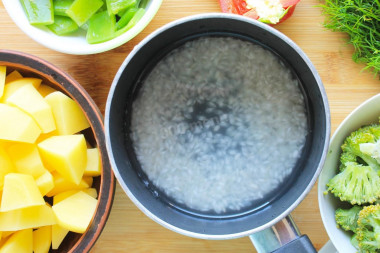
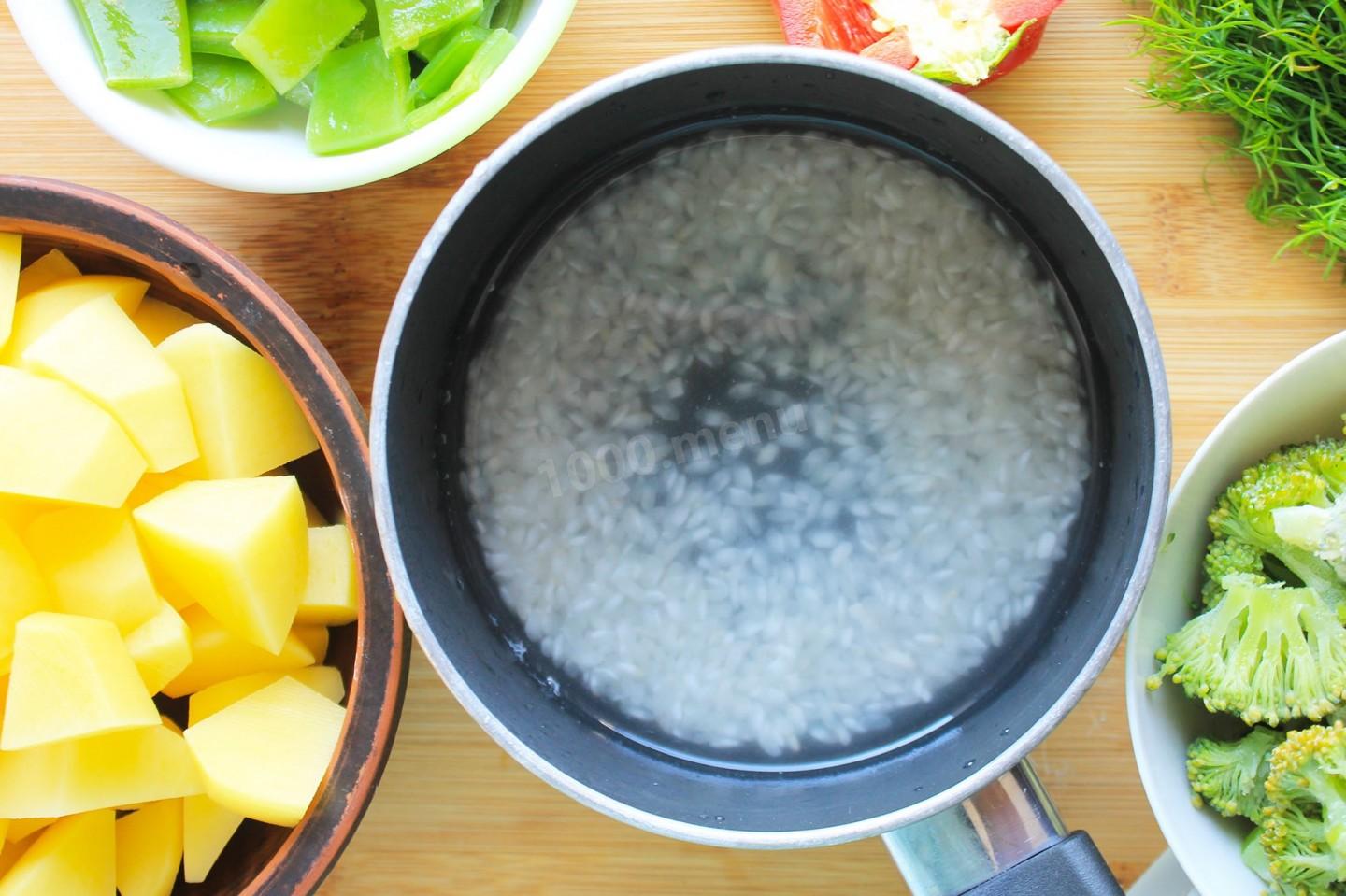
Rinse the rice until the water runs clear and boil it until tender in a small pot. You can cook the rice with the potatoes in the soup pot, but then the broth may turn cloudy.
-
Step 5:
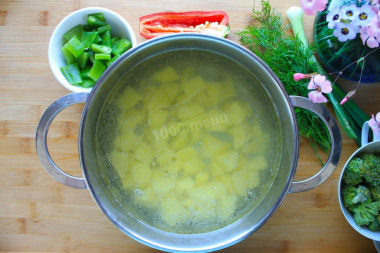
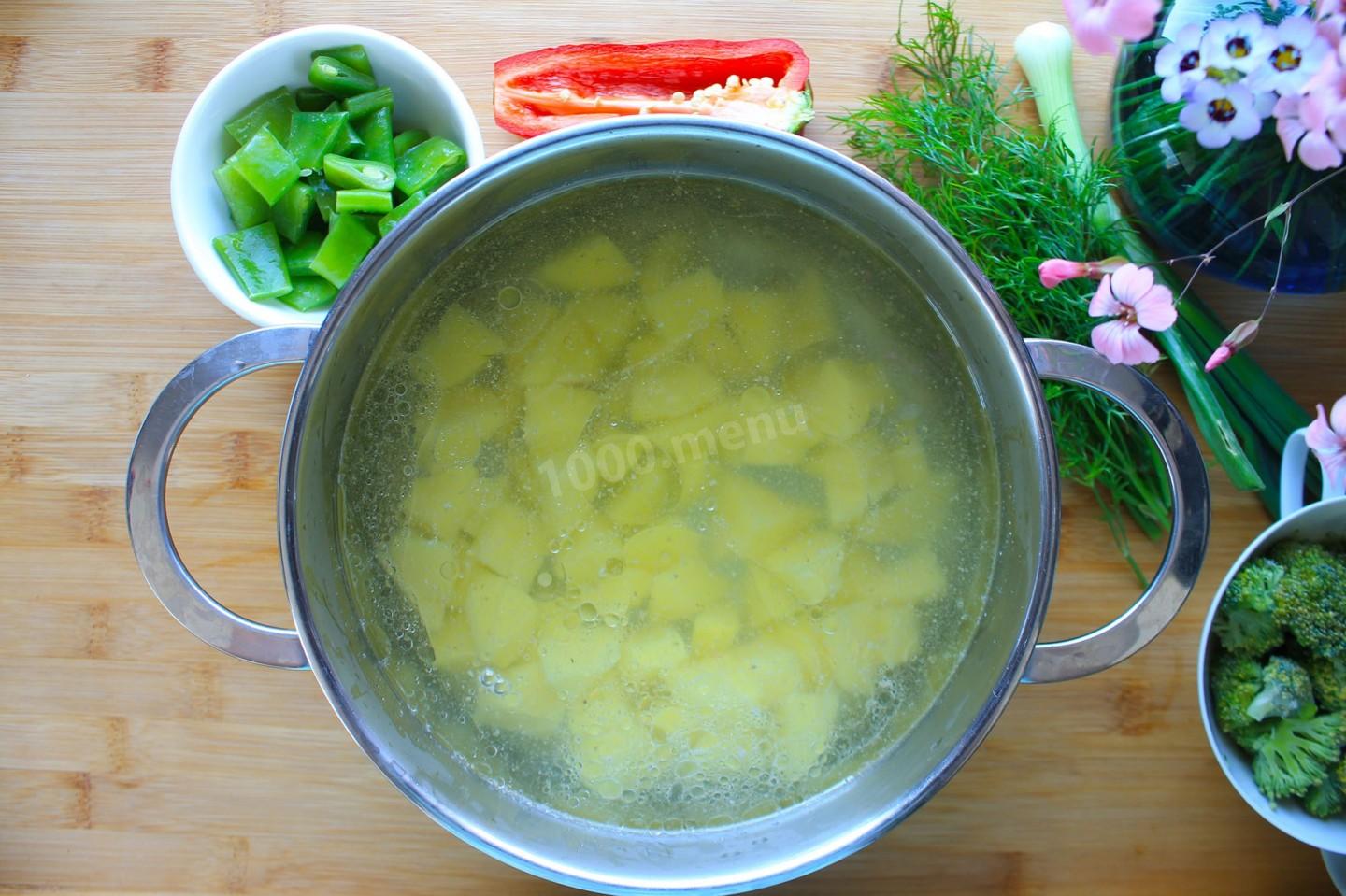
Remove the chicken from the finished broth. Add the potatoes to the pot, bring to a boil over high heat, then lower the heat and cook until the potatoes are done—about 15–20 minutes, depending on size and variety.
-
Step 6:
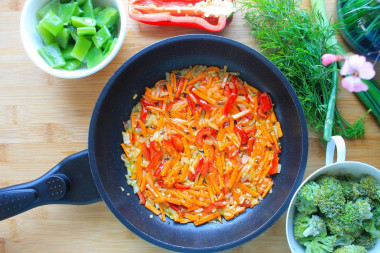
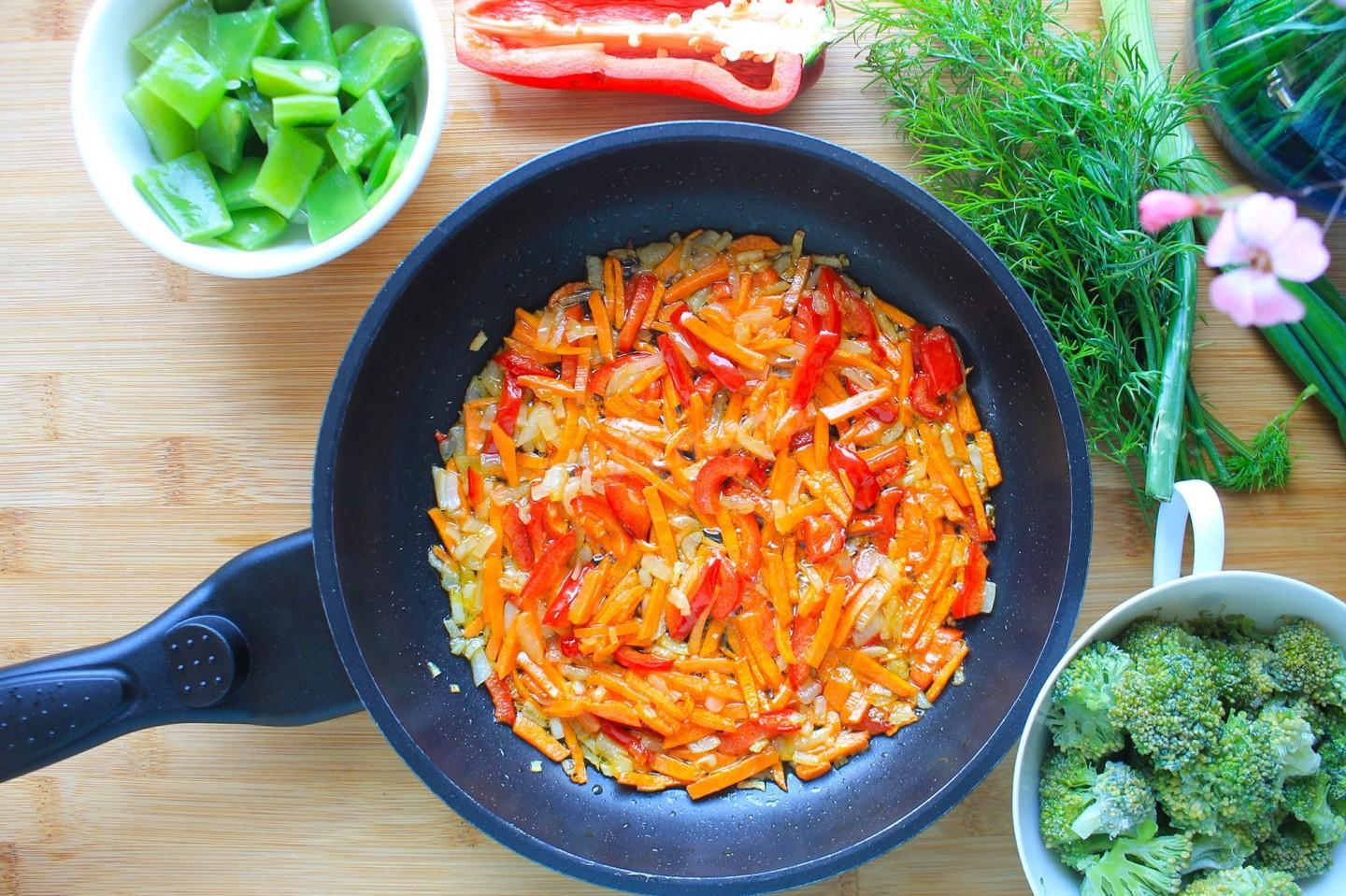
Meanwhile, make the sauté. Heat the vegetable oil in a skillet. Add the carrot, onion, and bell pepper and cook, stirring constantly, until browned to your liking.
-
Step 7:
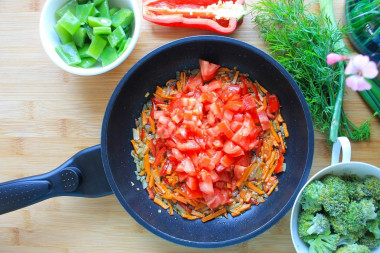
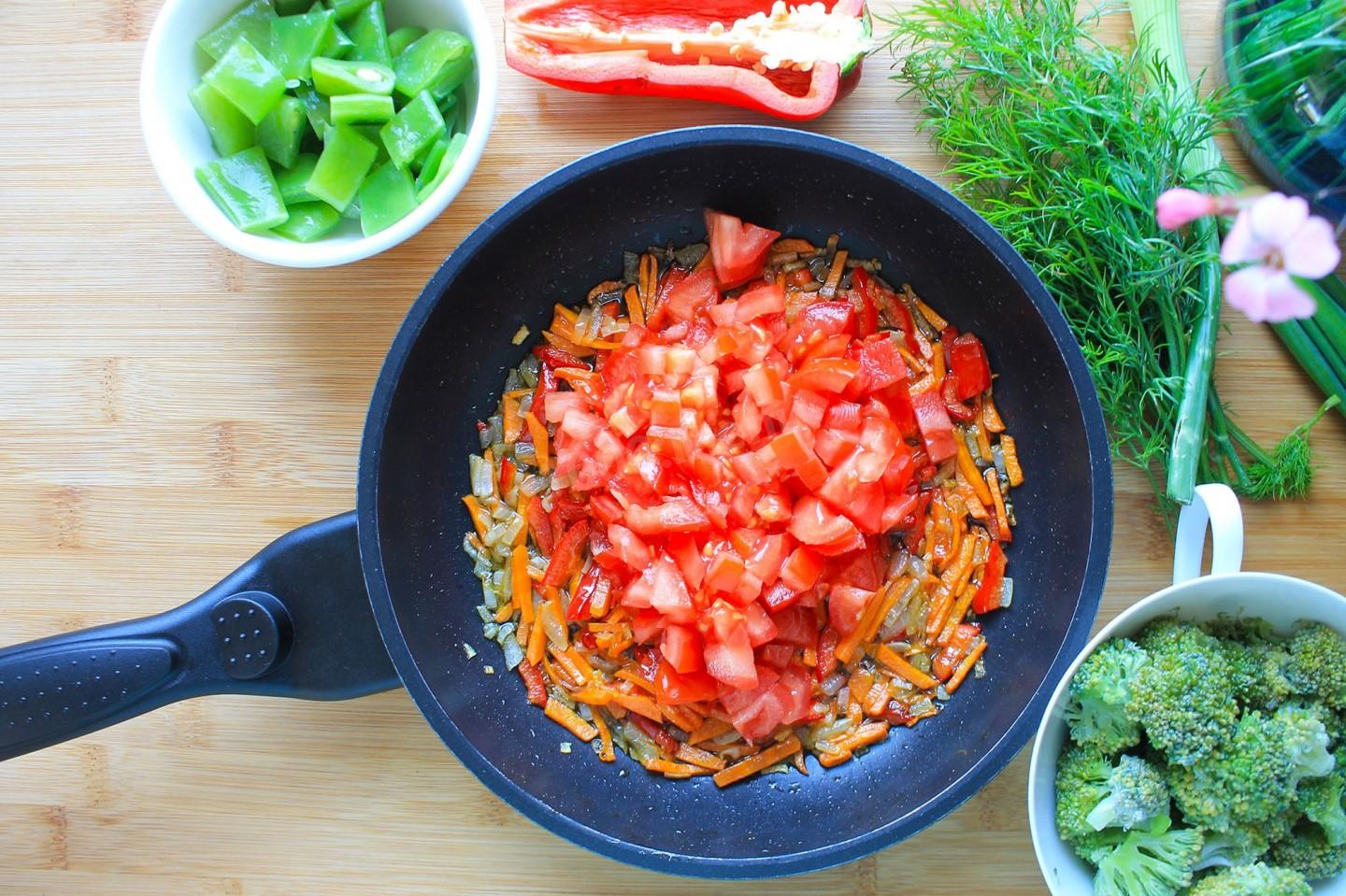
Cut the tomatoes into cubes. You can peel them first (I usually don't). Use ripe, meaty, sweet tomatoes. Stir into the sauté and cook another minute or two.
-
Step 8:
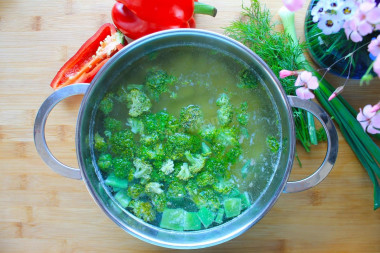
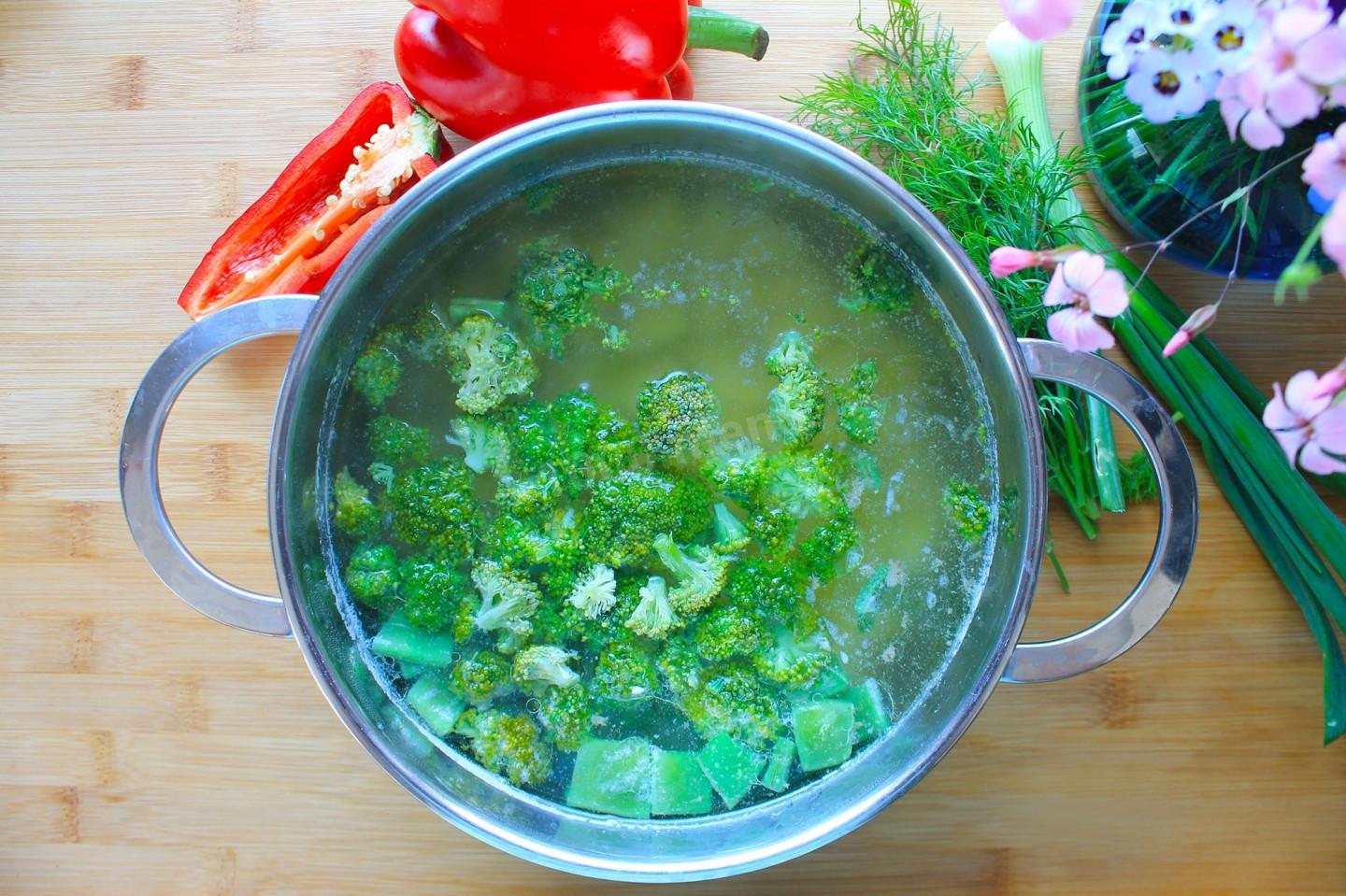
When the potatoes are done, add the beans and broccoli to the pot. Cook for about 5 minutes, until the broccoli is tender.
-
Step 9:
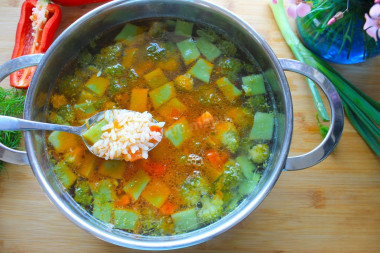
Add the sauté and the boiled rice to the pot. Taste and add salt if needed.
-
Step 10:
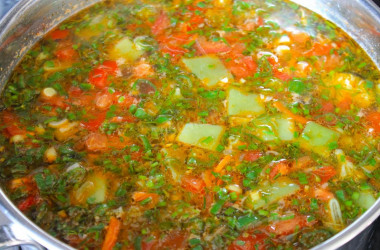
Add the finely chopped herbs and let it simmer a few seconds. Take the finished soup off the heat and let it rest for a bit.
-
Step 11:
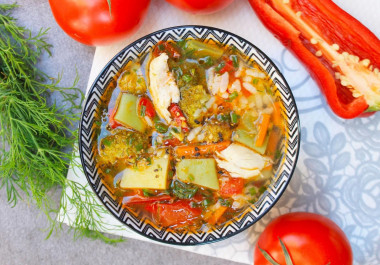
Serve the soup with pieces of the boiled chicken, fresh sour cream, and ground allspice.
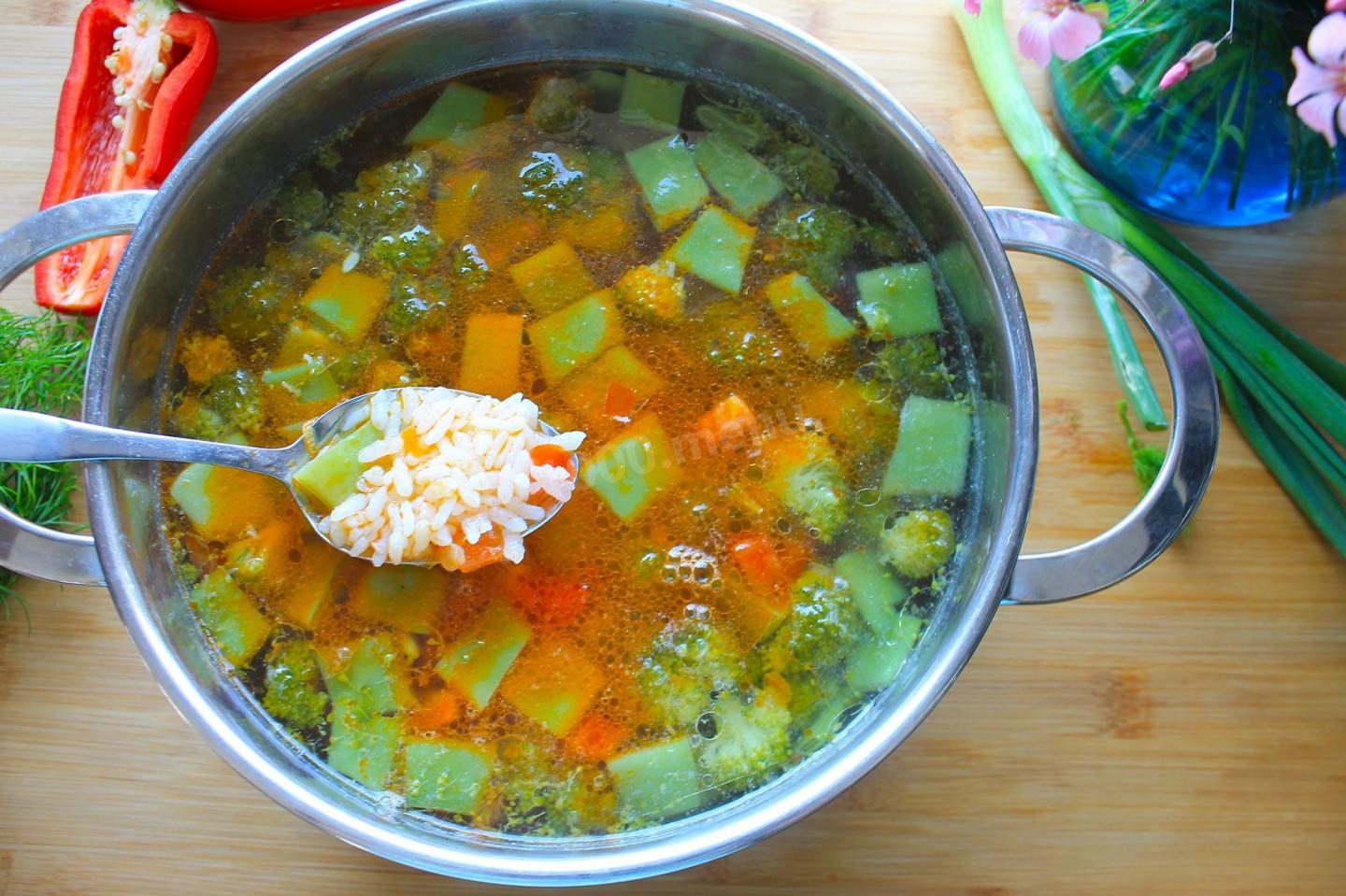
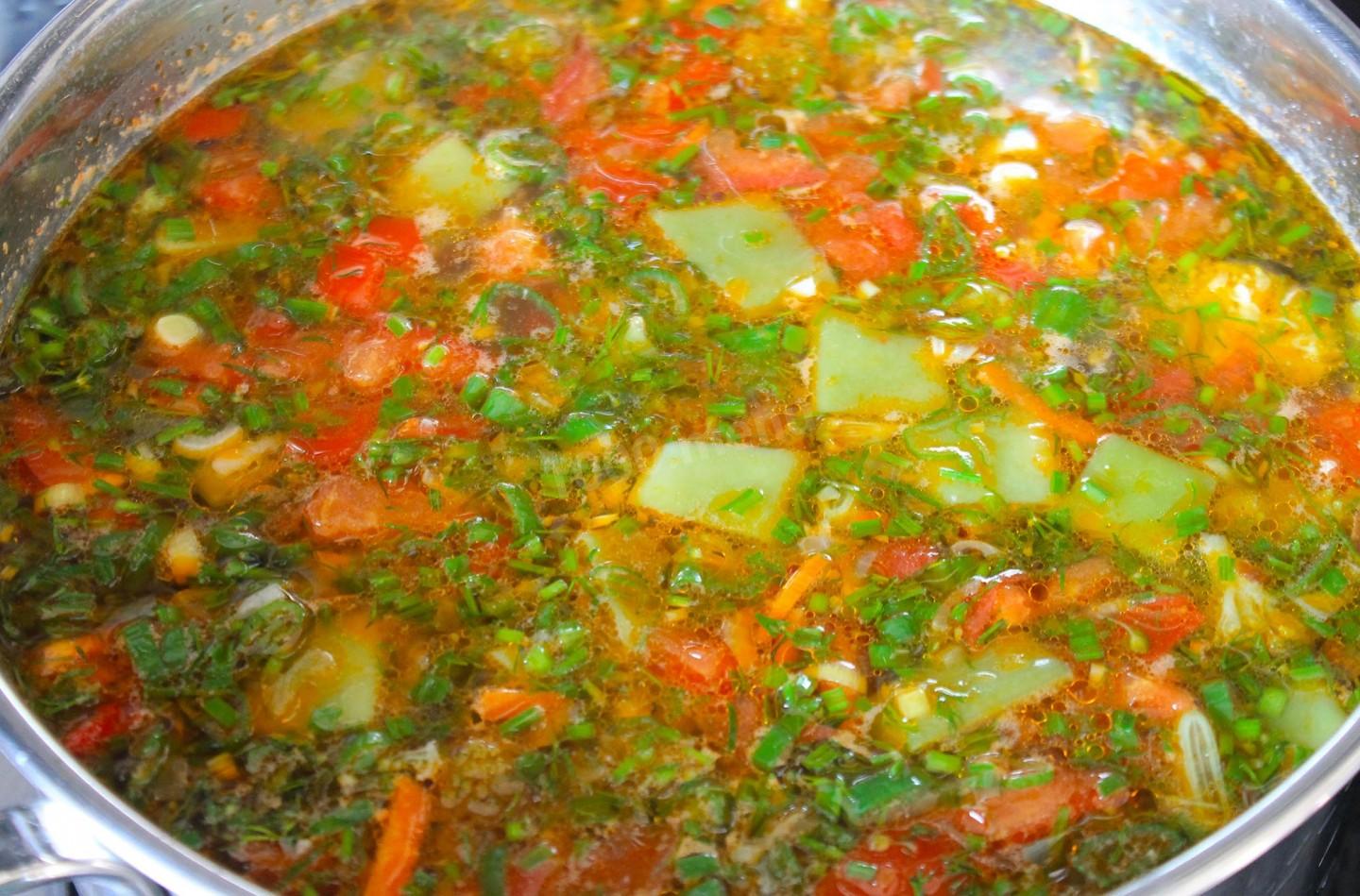
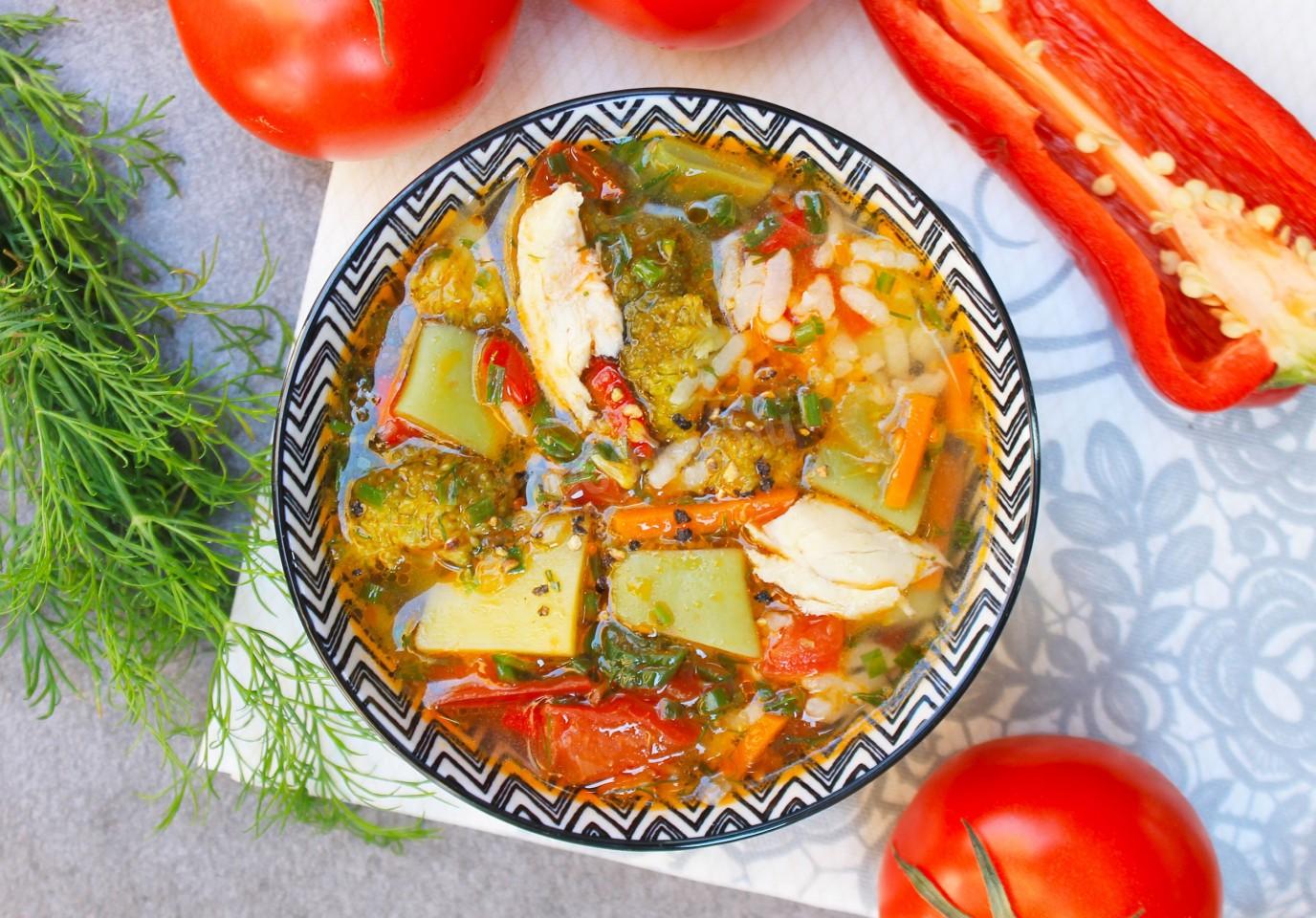
- The soup has a pronounced vegetable flavor. This amount gave me a medium-thick soup. Enjoy!
- Important! Whether or not the recipe gives an amount of water, it's best to go by your own preference (thick versus thin soup), the size of your pot, and the ingredients you're using. Keep in mind the author's idea of how much meat, potatoes, grain, and so on belongs in the soup may not match yours. In practice, if it's your first time, don't cook a whole pot at once—make a tasting batch for one or two people. Scale all the ingredients down to 1–2 servings and figure the water at about one cup per serving for a very thick soup, up to 1.5–2 cups for a thinner one. Remember that some liquid boils off as it cooks. After tasting a small batch, you can adjust both the liquid and the proportions to your taste. Before long, like most seasoned cooks, you'll be adding water and ingredients by eye.
- An easy way to peel tomatoes: wash them, score a shallow cross in the top with a sharp knife, and drop them into boiling water for 1–2 minutes. Remove, cool slightly, and slip off the skins.
- Use an oil with a high smoke point for frying! Every oil is good only up to a certain temperature—its smoke point, where it starts to burn and forms toxic compounds, including carcinogens. With rare exceptions, unrefined oils have a low smoke point; they're full of unfiltered organic particles that scorch quickly. Refined oils handle heat better. If you're cooking in the oven, in a skillet, or on the grill, make sure you use an oil with a high smoke point—the most common are refined sunflower, olive, and grapeseed oils.
Caloric content of the products possible in the composition of the dish
- Onion - 41 kcal/100g
- Ripe potatoes - 80 kcal/100g
- Baked potatoes - 70 kcal/100g
- Mashed potatoes - 380 kcal/100g
- Boiled potatoes - 82 kcal/100g
- Potatoes in uniform - 74 kcal/100g
- Fried potatoes - 192 kcal/100g
- Tomatoes - 23 kcal/100g
- Raw wild rice - 353 kcal/100g
- Brown raw rice - 360 kcal/100g
- Boiled brown rice - 119 kcal/100g
- White fortified raw rice - 363 kcal/100g
- Fortified boiled white rice - 109 kcal/100g
- White rice, steamed, with long grains raw - 369 kcal/100g
- Steamed white rice, boiled with long grains - 106 kcal/100g
- Instant dry rice - 374 kcal/100g
- Instant rice, ready to eat - 109 kcal/100g
- Fig - 344 kcal/100g
- Sweet pepper - 27 kcal/100g
- Carrots - 33 kcal/100g
- Dried carrots - 275 kcal/100g
- Boiled carrots - 25 kcal/100g
- Broccoli - 33 kcal/100g
- Vegetable oil - 873 kcal/100g
- Salt - 0 kcal/100g
- String beans - 24 kcal/100g
- Fresh frozen soup greens in a package - 41 kcal/100g
- Greenery - 41 kcal/100g
- Chicken broth - 19 kcal/100g
Similar recipes
- Soups
- Vegetables
- Cereals and cereal products
- Legumes
- Spices seasonings spices
- Fats and oils
- Other
- From beans
- Зелень
- Salt
- Vegetable oil
- Cooking
- Cabbage soup
- Vegetable soup vegetarian
- Tomato soup
- Meat-free soup
- Potato soup
- Soups with cereals
- Bean soup
- From carrots
- From potatoes
- From cabbage
- From tomato
- From sweet pepper
- From onion
- No eggs
- Recipes for lean dishes without butter
- From rice