Pan-Seared Salmon Steaks
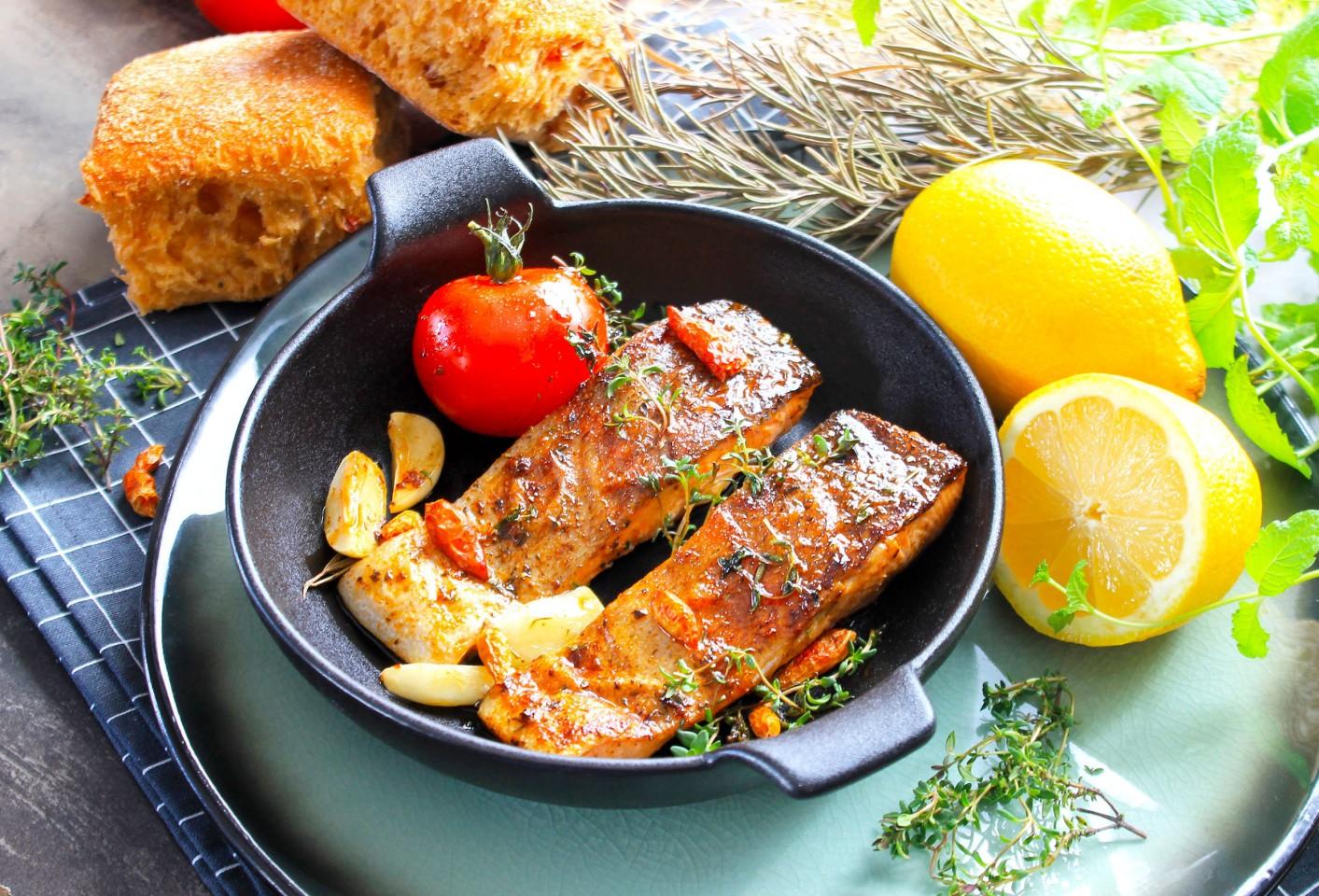
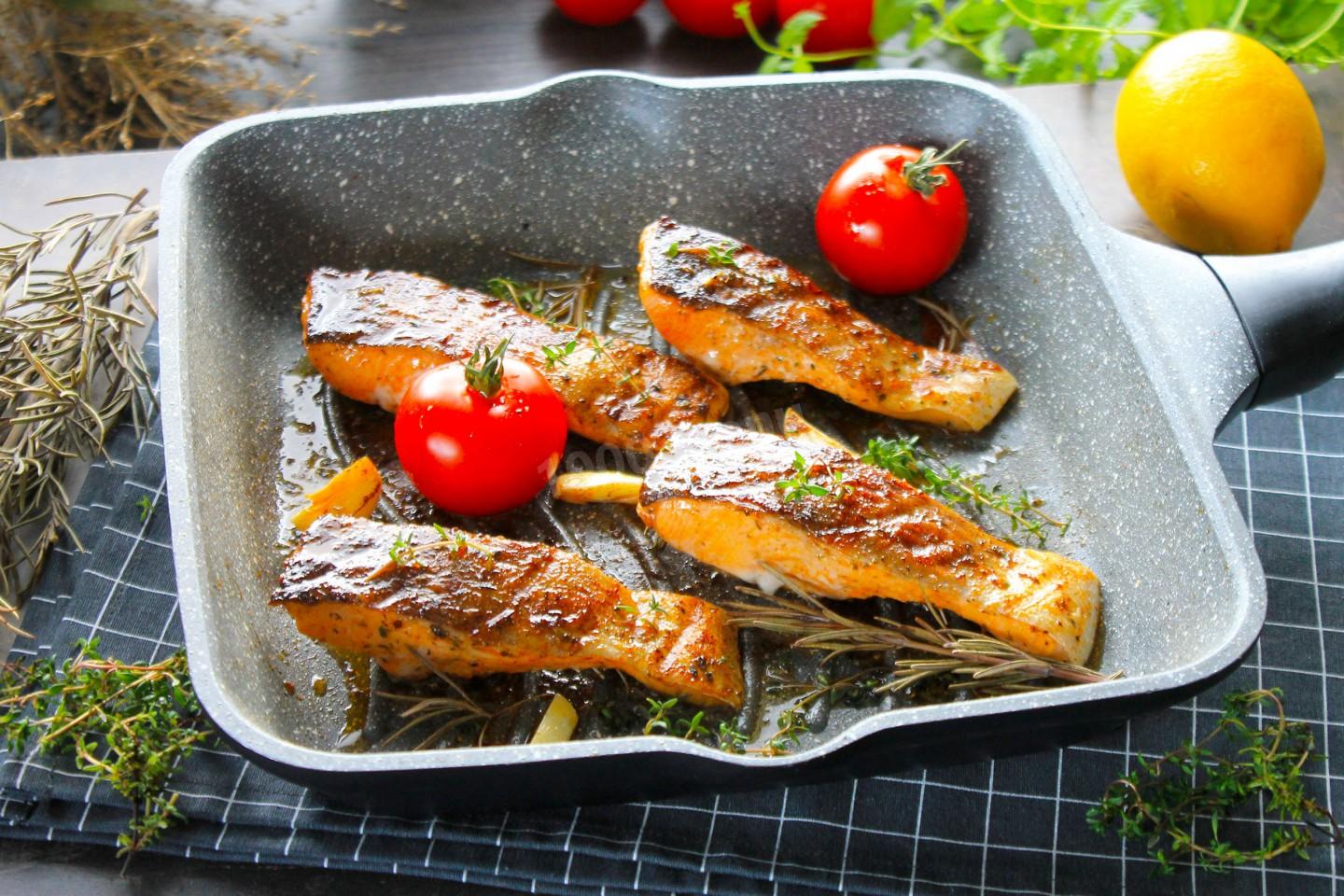
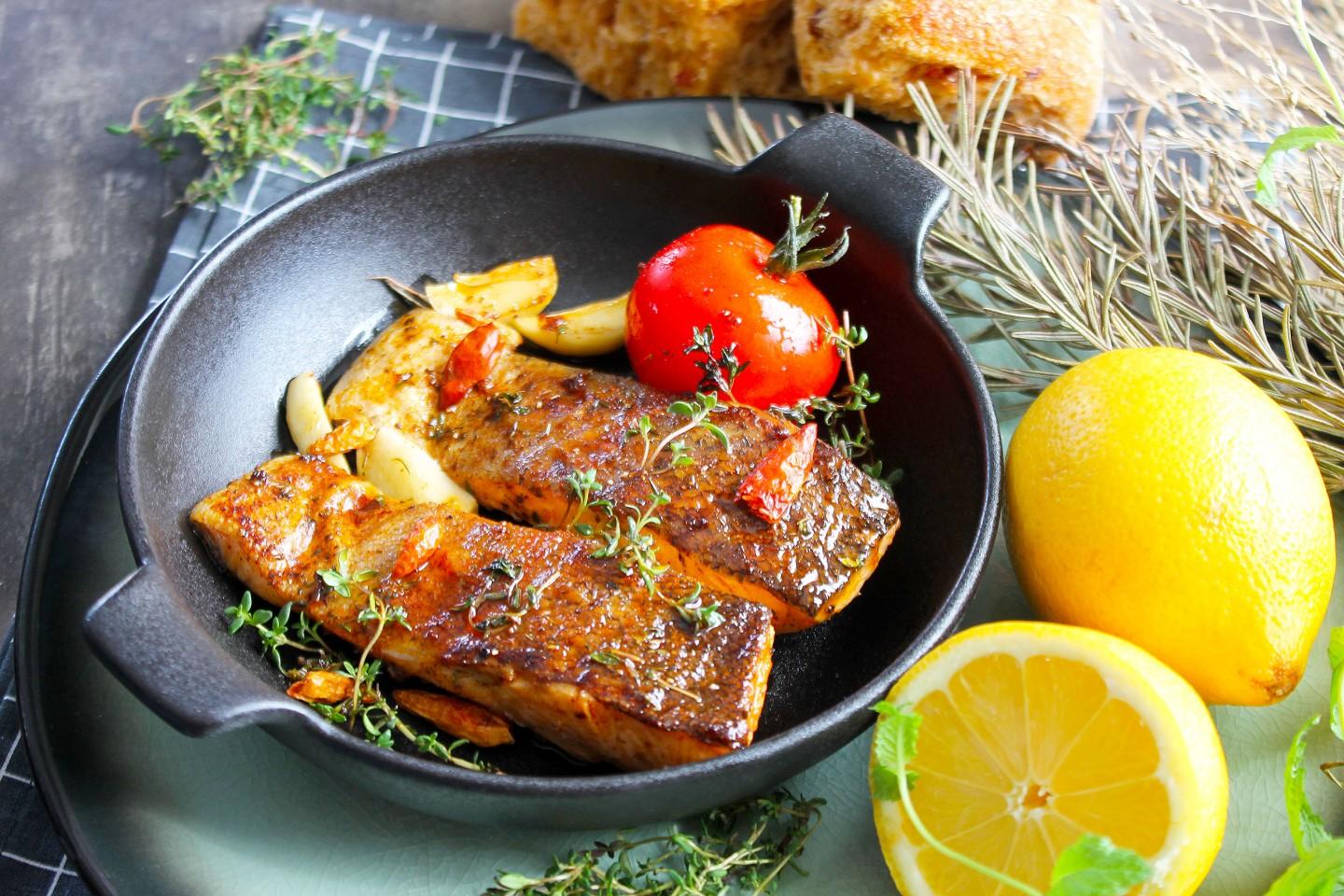
Quick, healthy, juicy, delicious, colorful, and festive! You can make these pan-seared salmon steaks in 30 minutes. Thanks to the fragrant marinade, the fish comes out vibrant and melt-in-your-mouth tender. It's the perfect choice for a romantic dinner over a glass of white wine!

Cooking method
-
Step 1:
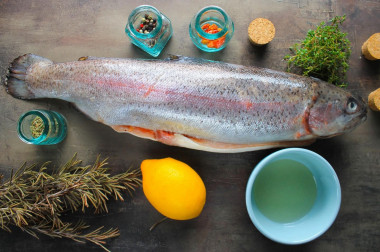
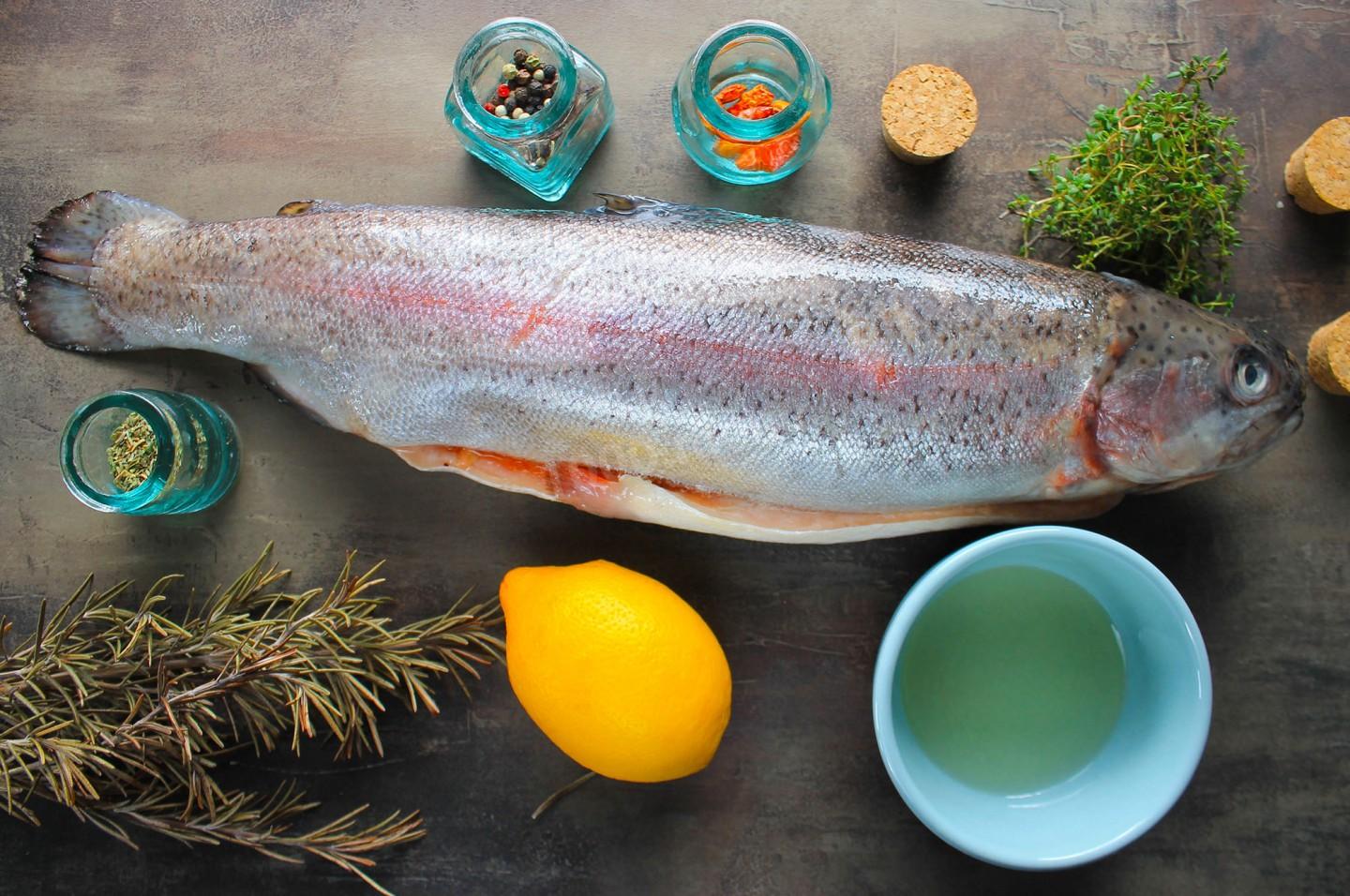
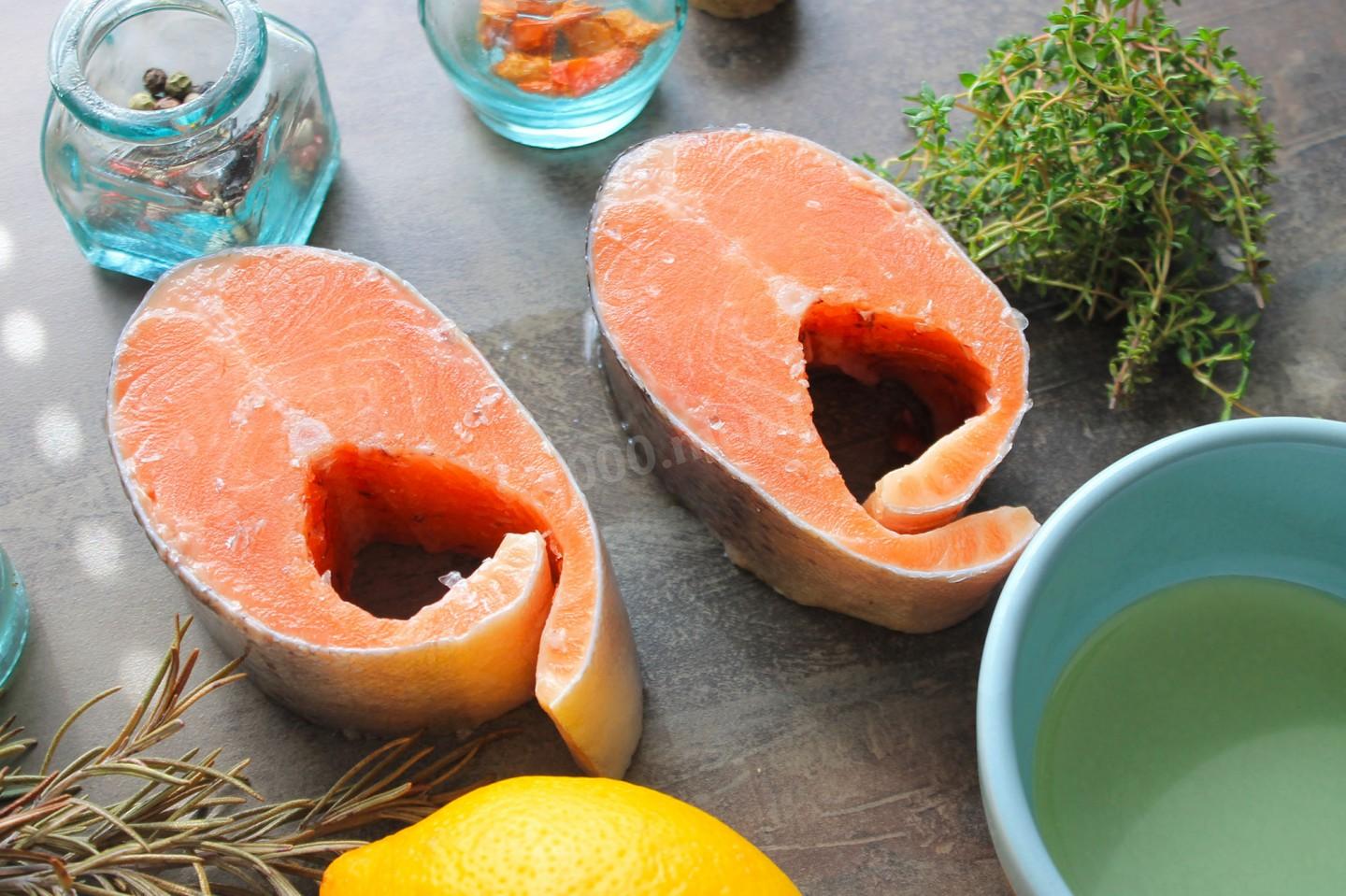
How do you sear salmon steaks in a skillet? Gather all the ingredients listed in the recipe. If your fish is frozen, or you have ready-cut steaks, take them out of the freezer and let them sit at room temperature until fully thawed. You can use any salmon or other rich fish in place of the salmon here.
-
Step 2:
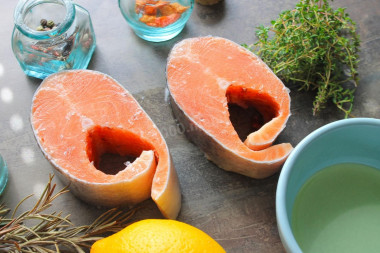
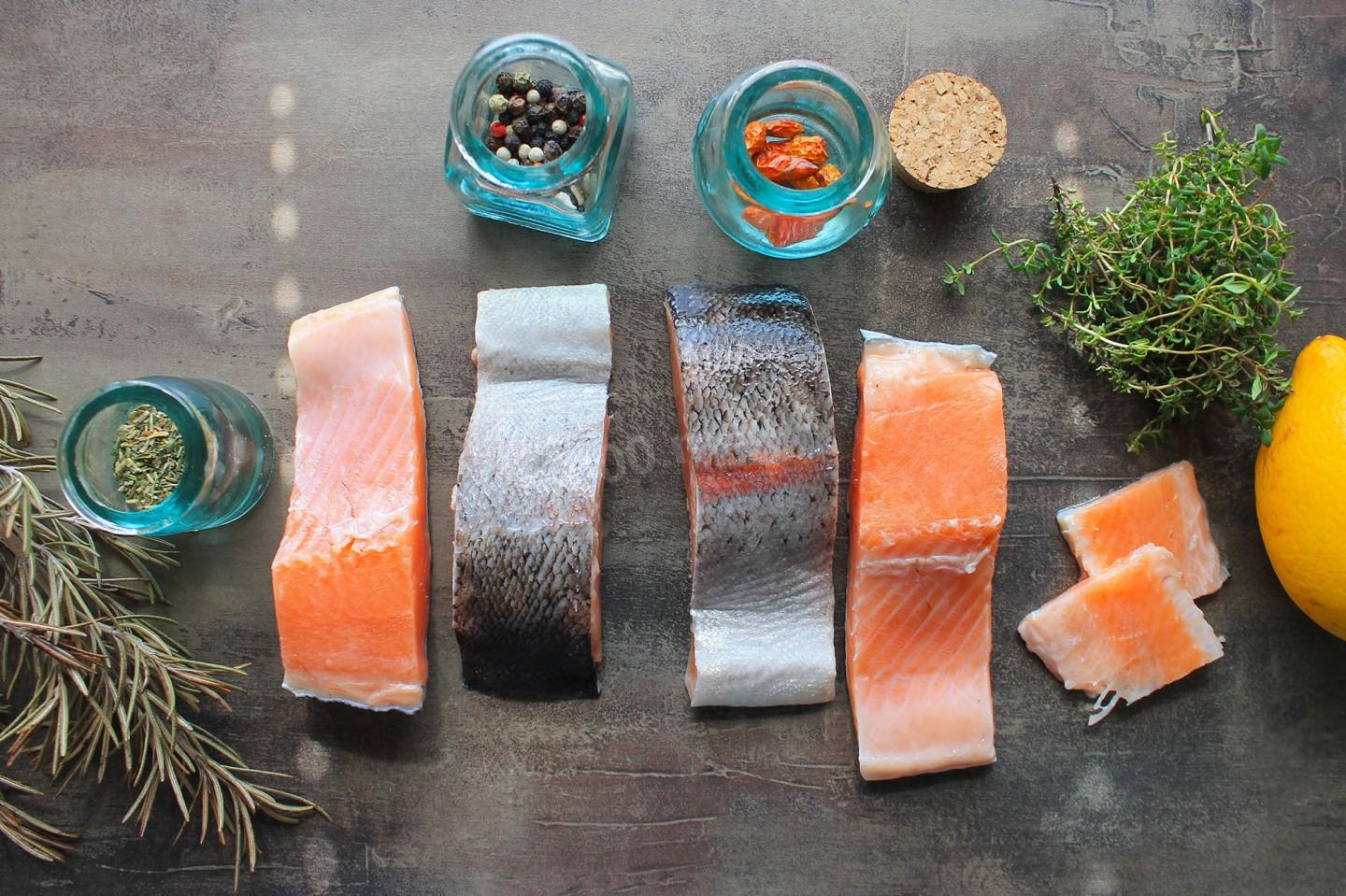
If you have a whole fish, cut it into steaks about 1 inch (2–3 cm) thick. Scale it, rinse it, and pat it dry with paper towels to remove excess water.
-
Step 3:
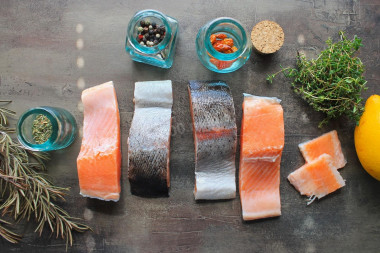
Cut each steak in half, as shown in the photo. This way the fish marinates better and cooks faster.
-
Step 4:
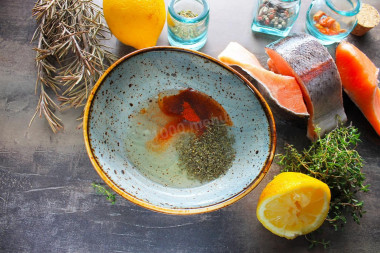
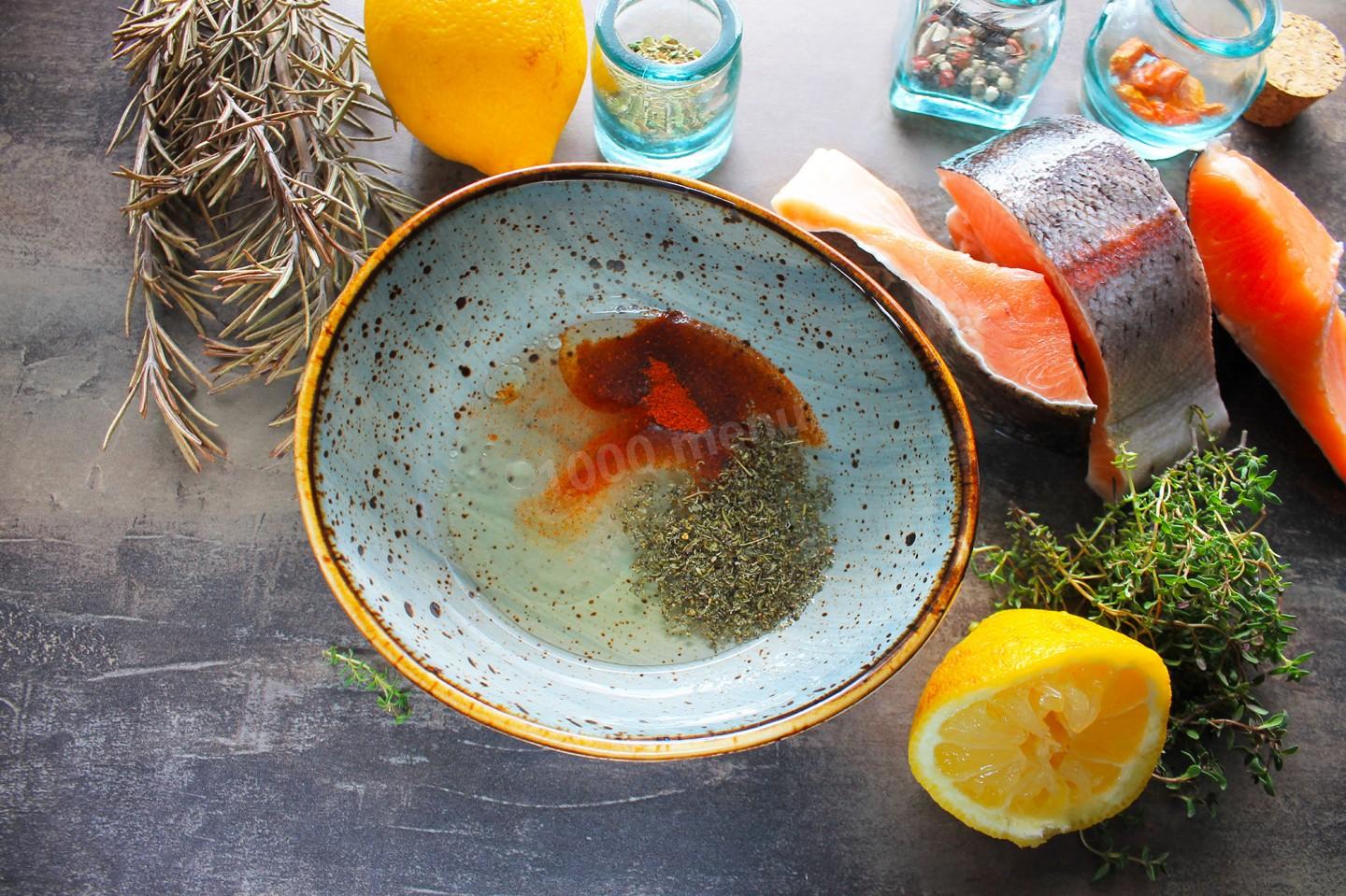
Pour the olive oil into a small deep bowl and squeeze in the lemon juice (about 2 tablespoons). Instead of olive oil, you can use sesame oil (which is more fragrant) or just plain vegetable oil (it turns out just as tasty). Add your favorite seasonings to taste — dried Italian herbs, ground paprika, allspice, basil, or oregano all work well.
-
Step 5:
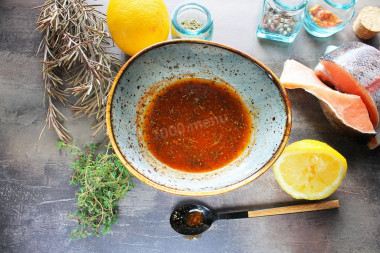
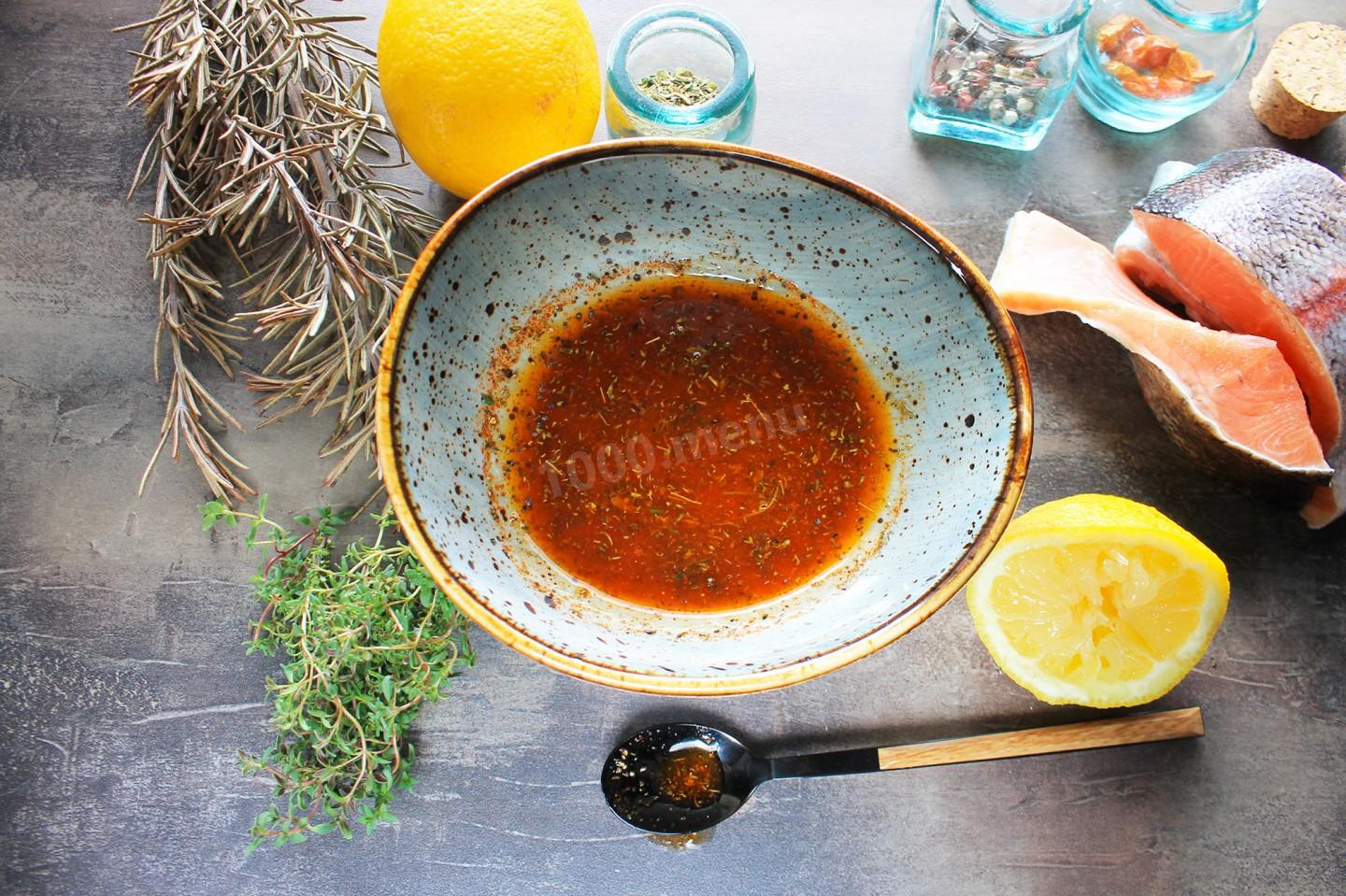
Add a pinch of salt or a splash of soy sauce to taste. Stir in some chopped fresh thyme or oregano as well. Mix everything thoroughly until smooth.
-
Step 6:
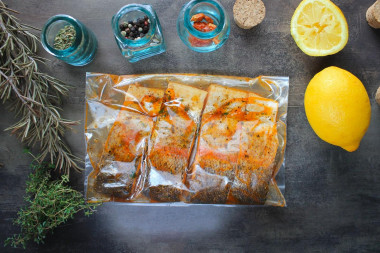
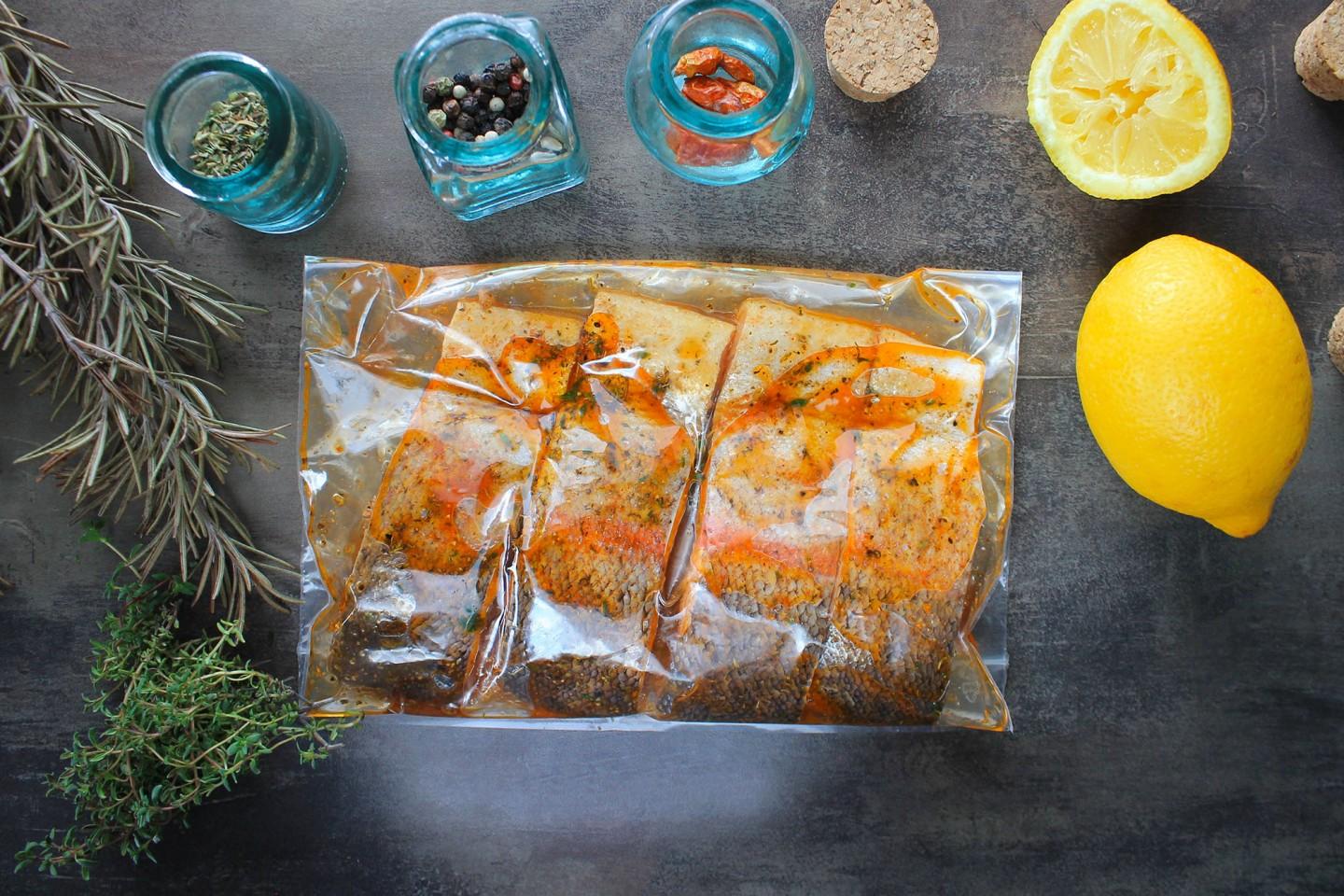
Put the salmon pieces in a zip-top bag and pour in the marinade. Seal the bag and refrigerate for 20–30 minutes. Alternatively, lay the fish out in a single layer in a food container, pour the marinade over it, and refrigerate for 15 minutes; then turn each piece over and let the salmon marinate for another 15 minutes.
-
Step 7:
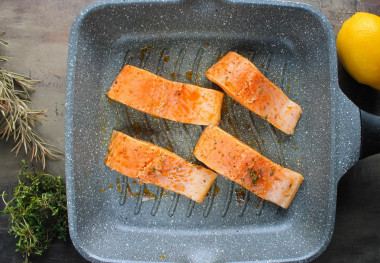
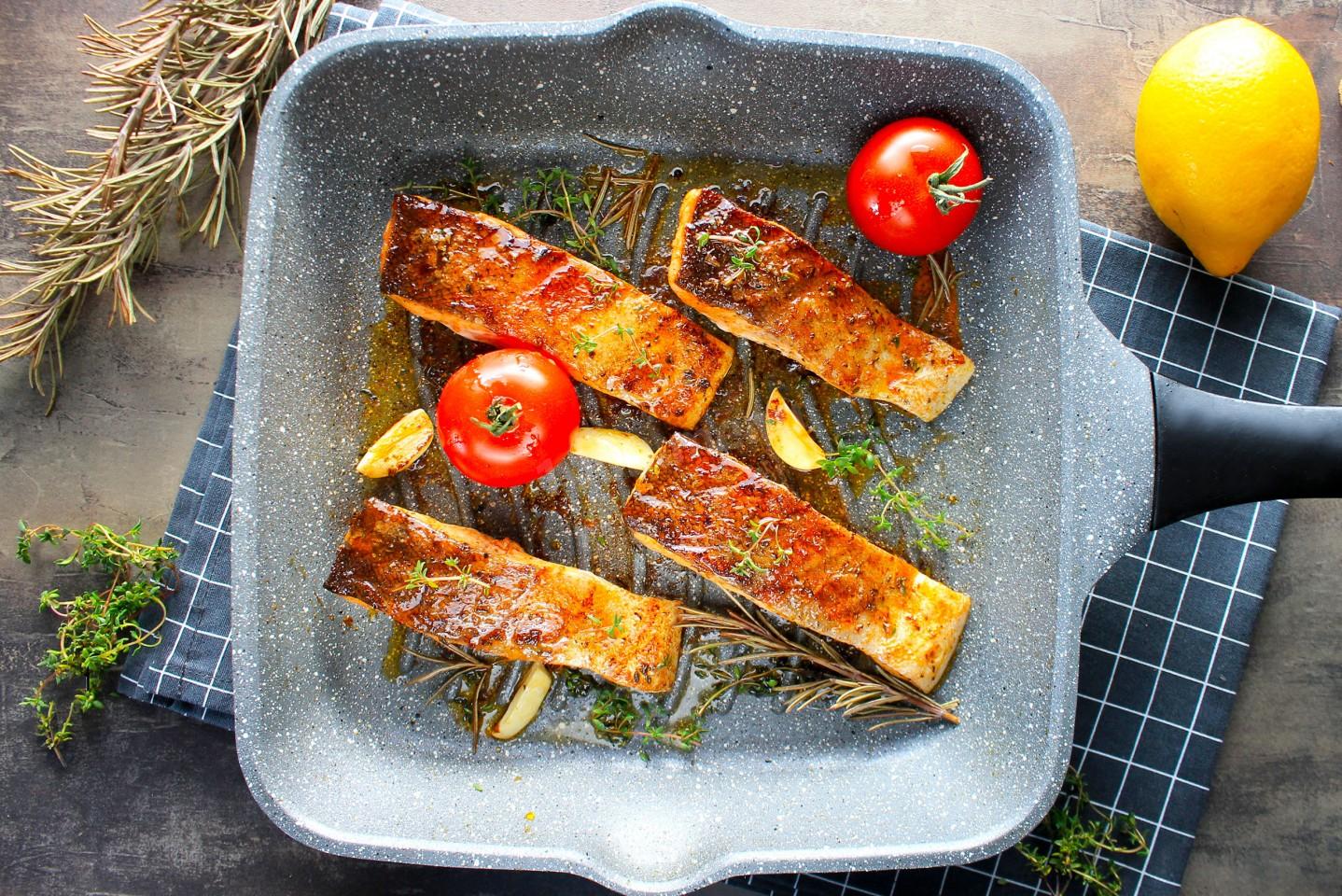
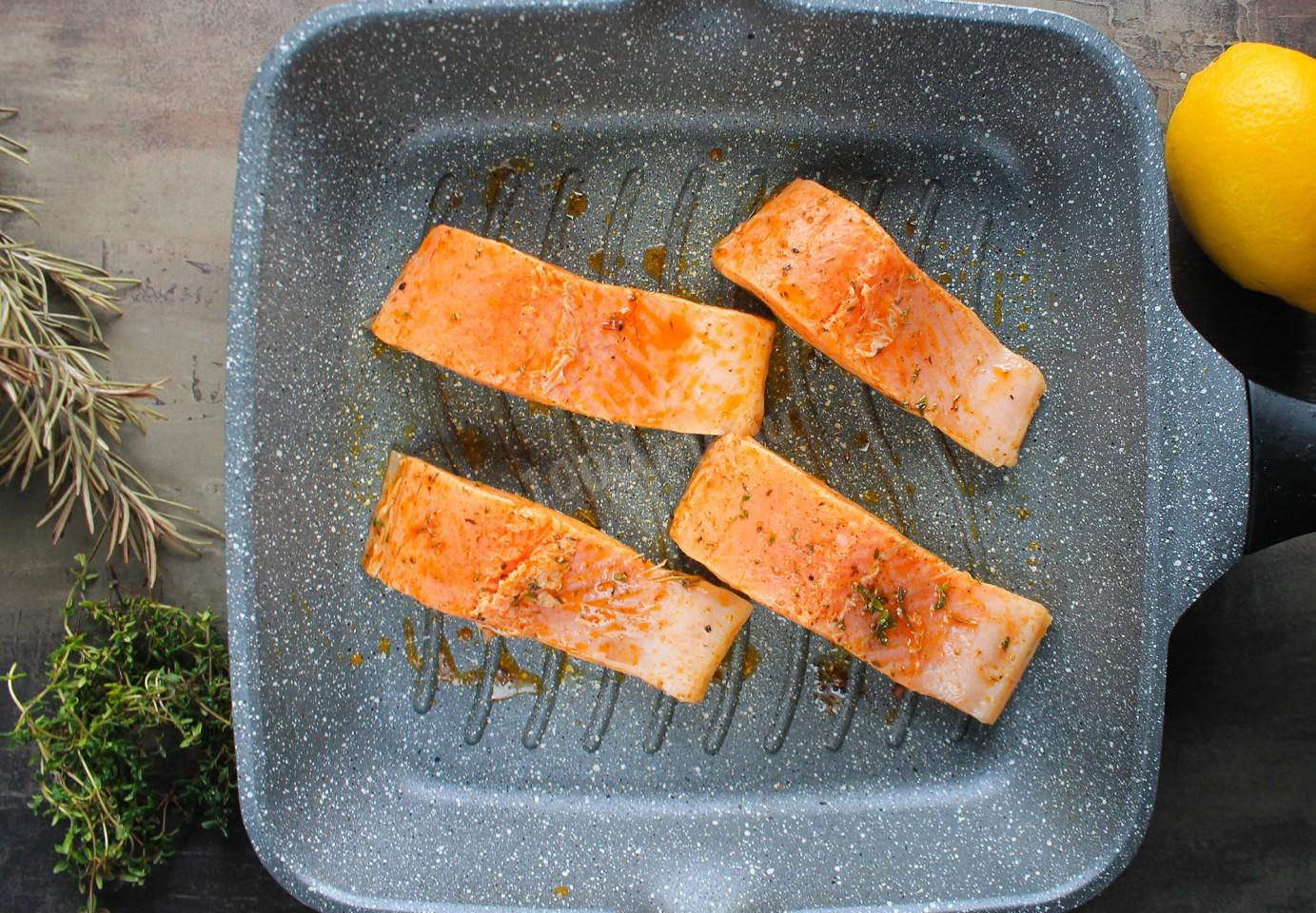
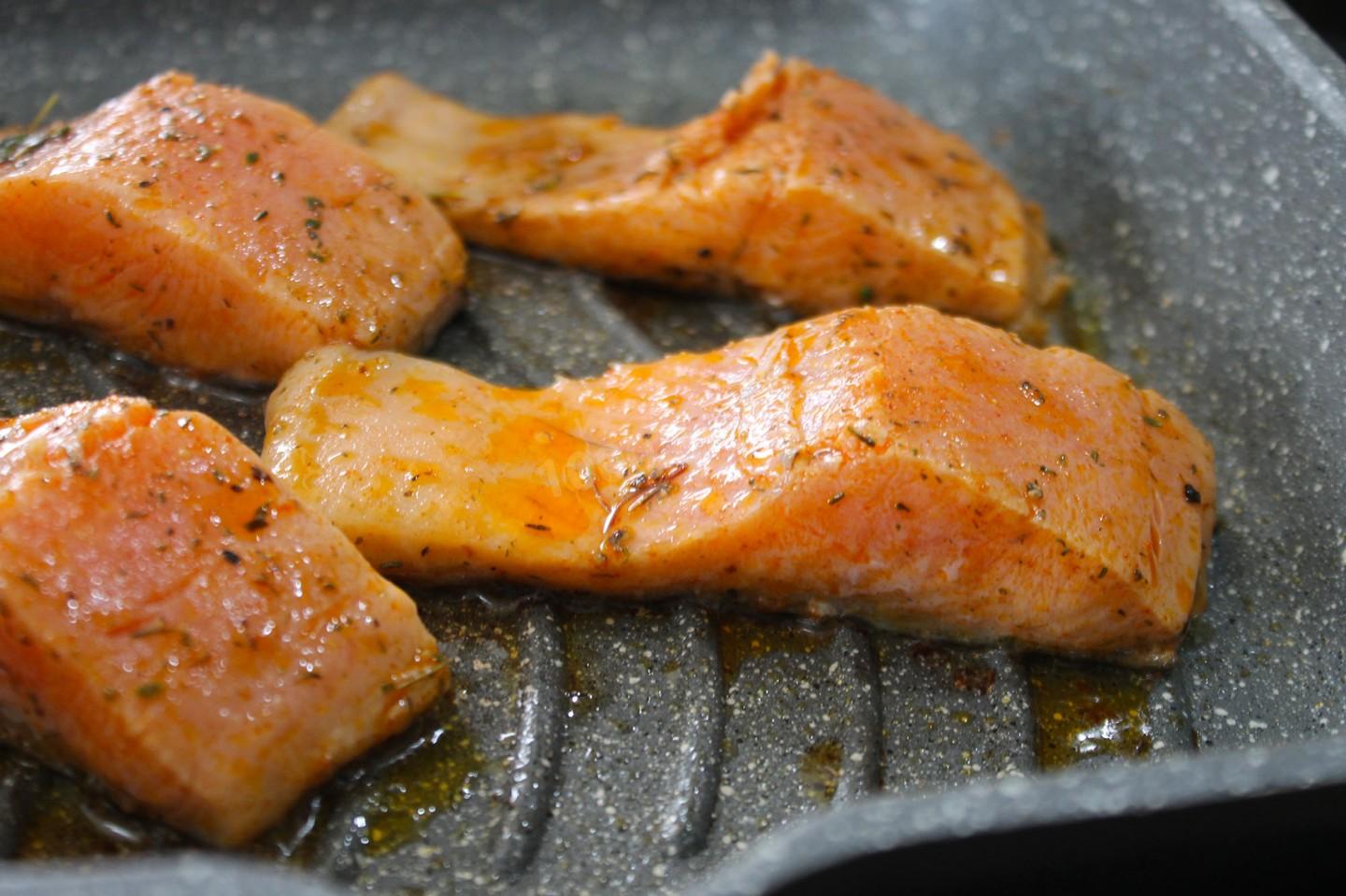
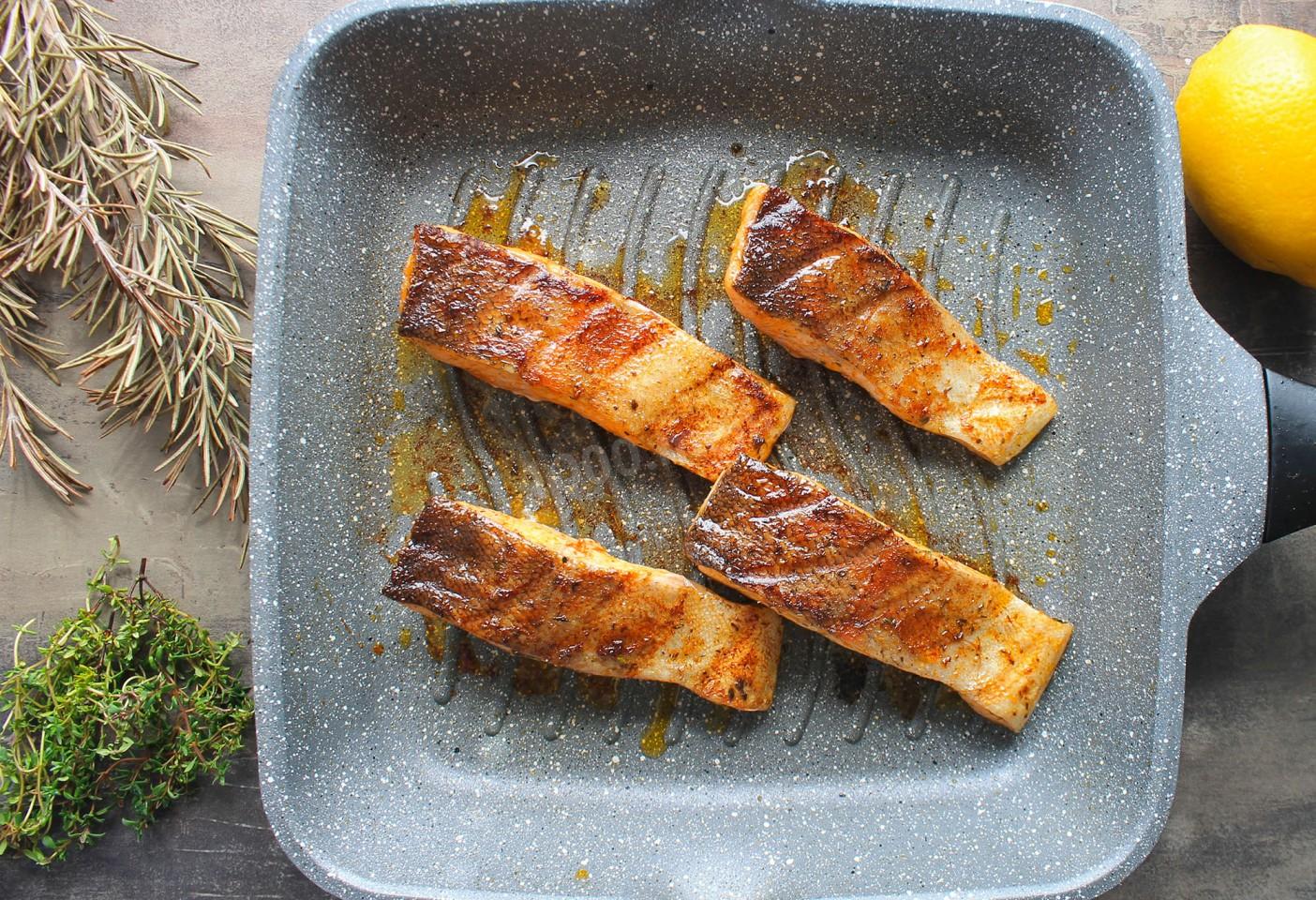
Heat a grill pan. Add the marinated pieces to sear. There's usually enough oil in the marinade for searing, but add a little vegetable oil to the pan if needed. Sear the salmon for about 2–3 minutes over medium heat.
-
Step 8:
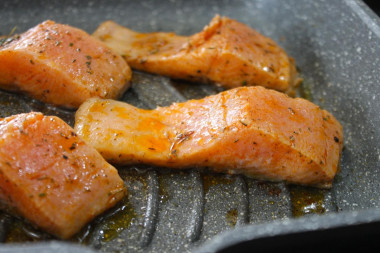
Go by the color of the flesh — it lightens as it cooks. My steaks were small, so 2 minutes per side was plenty.
-
Step 9:
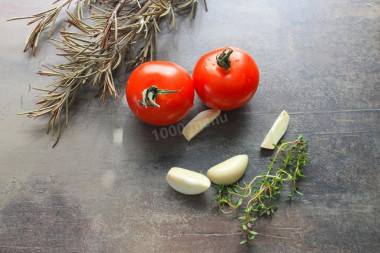
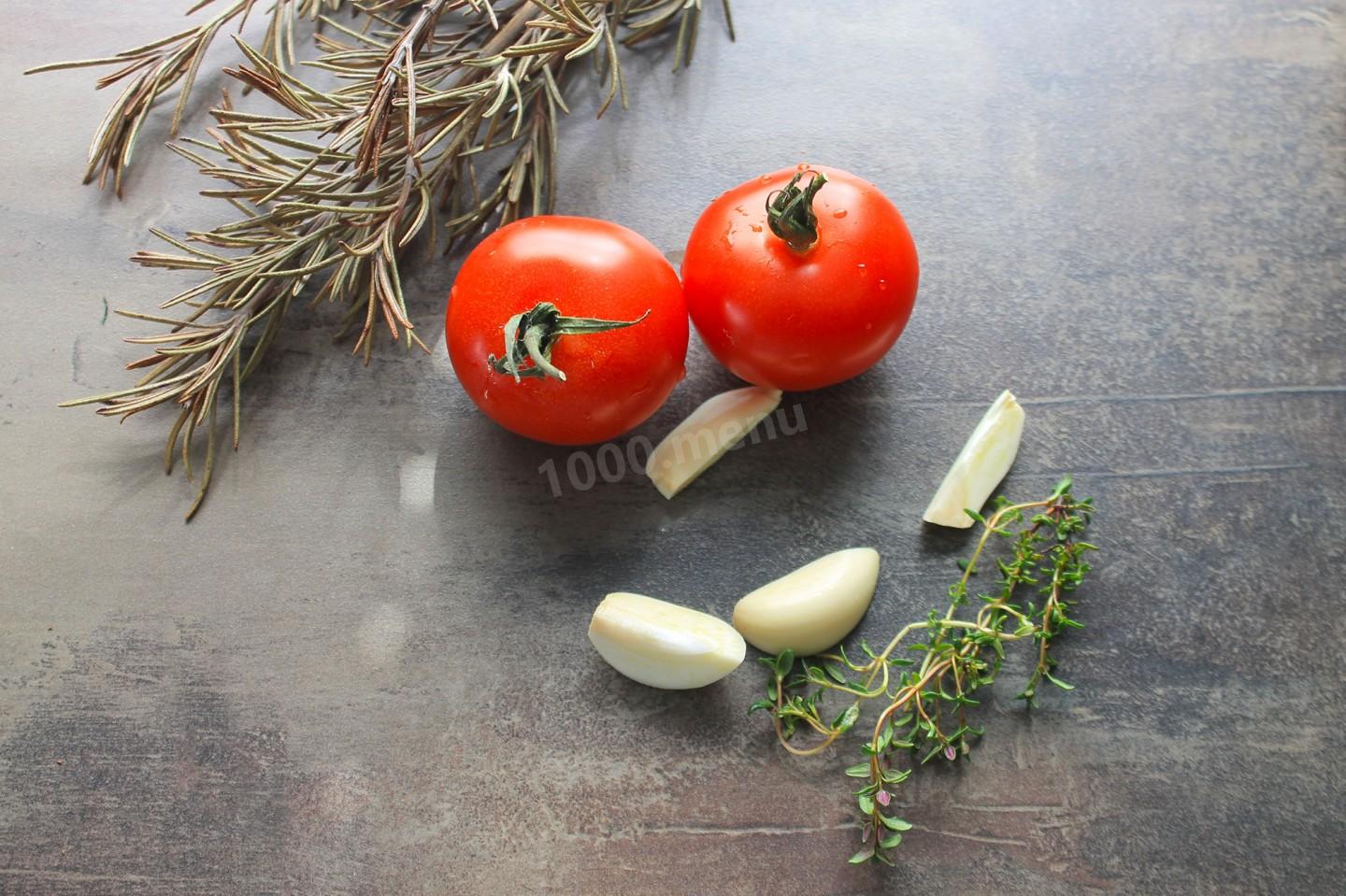
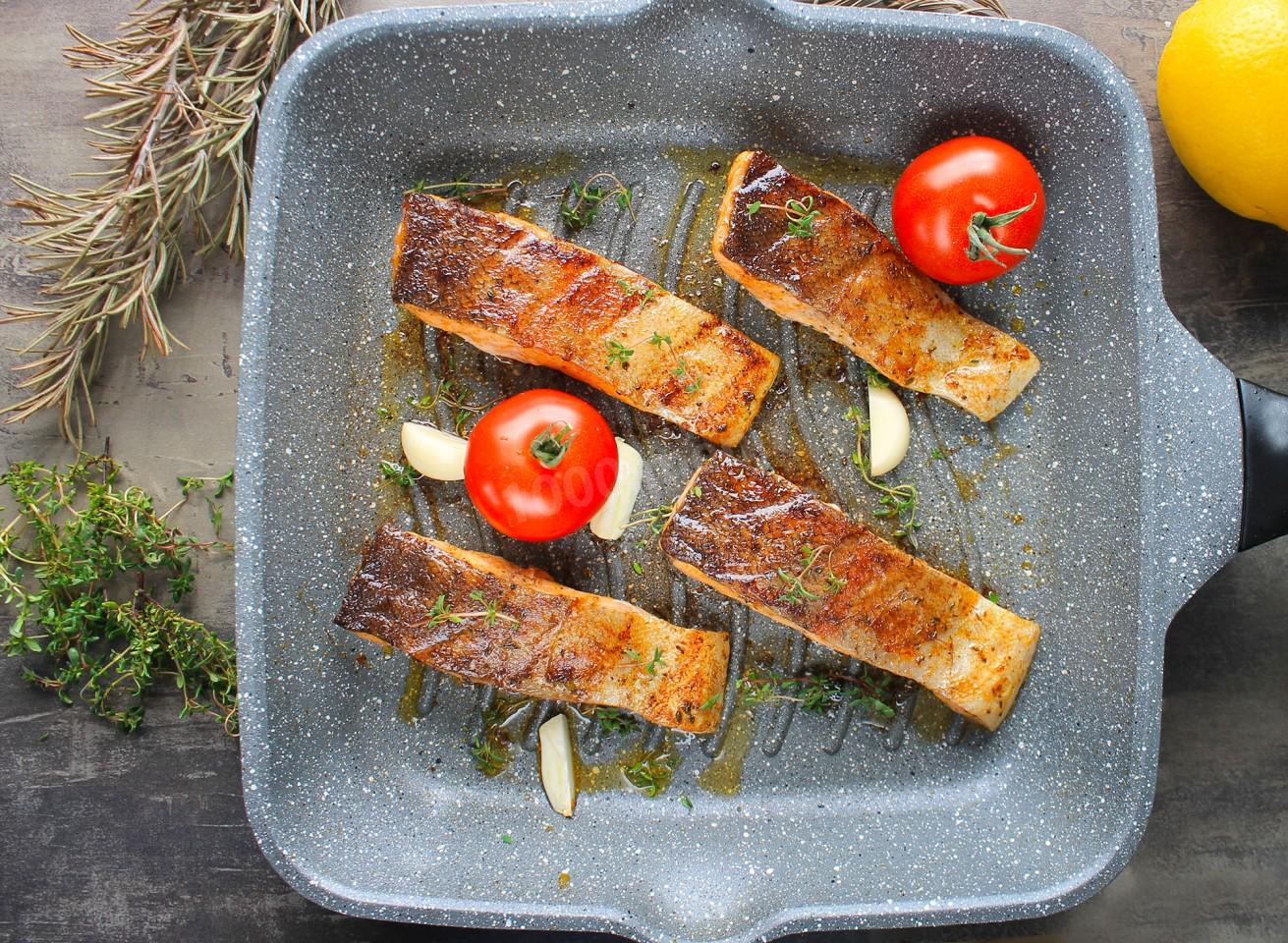
All kinds of vegetables pair beautifully with seared salmon steaks. If you have cherry tomatoes, garlic, red onion, bell pepper, zucchini, or green asparagus on hand, use them here.
-
Step 10:
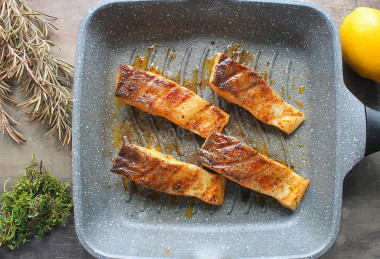
Flip the fish to the other side.
-
Step 11:
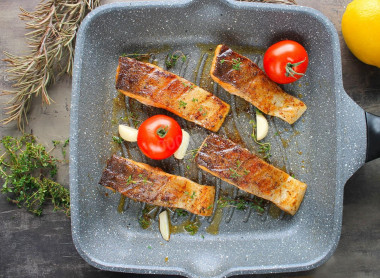
At this point, add the vegetables to the grill pan. Leave everything to cook until the fish is done — that is, until an appetizing golden crust forms. The vegetables soak up the oil the salmon fries in and turn out incredibly delicious.
-
Step 12:
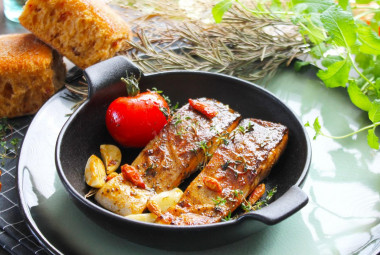
Sprinkle the finished steaks with hot pepper if you like. Serve while still hot!
-
Step 13:
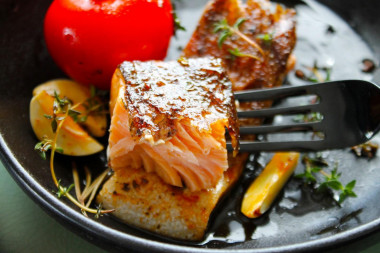
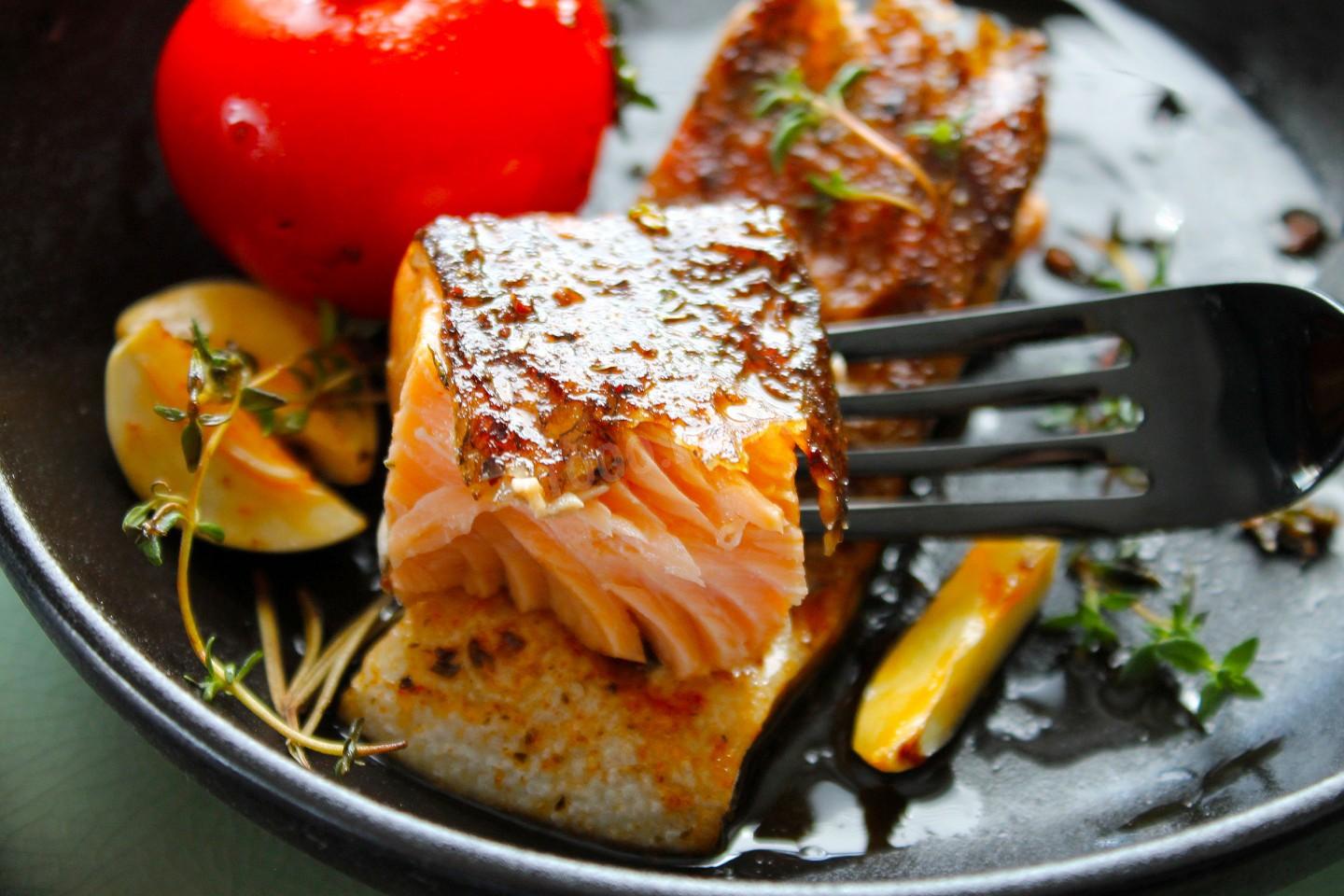
As long as you don't overcook the steaks, they come out very tender and literally melt in your mouth.
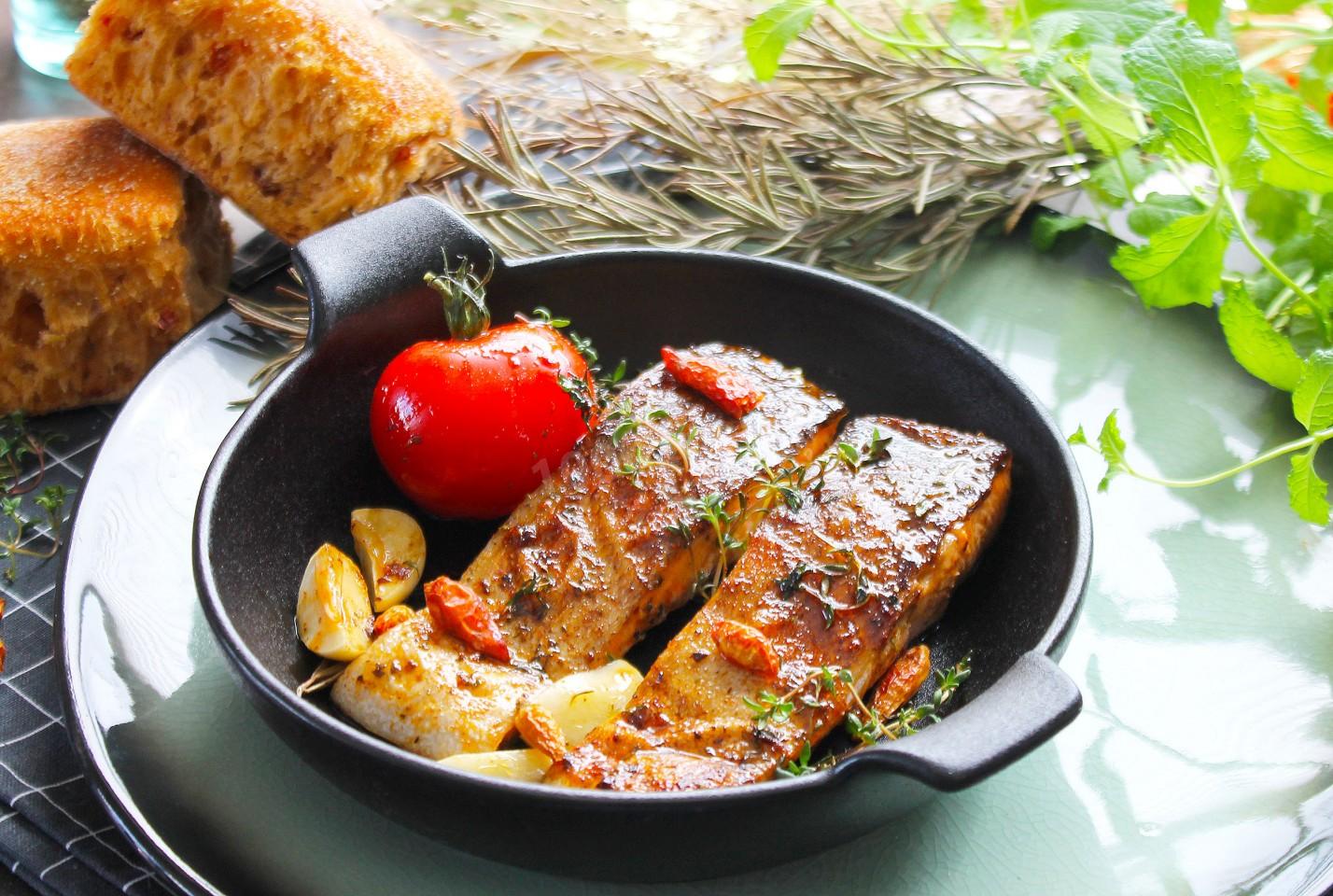
- Salmon steaks are a wonderful choice for a family or romantic dinner. Instead of cooked vegetables, you can serve the fish with fresh vegetables and all kinds of sauces. Enjoy!
- Keep in mind that the quality and flavor of the finished dish depend a lot on thawing the ingredients properly. To avoid mistakes and pick the best method, read the article on thawing.
- Since everyone's sensitivity to salt, sweetness, bitterness, heat, acidity, and spiciness is different, always add spices and seasonings to your own taste! If you're using a seasoning for the first time, keep in mind that some spices are especially easy to overdo (chili pepper, for example).
- Use an oil with a high smoke point for frying! Any oil is only good up to a certain point — its smoke point, where it starts to burn and form toxic compounds, including carcinogens. Unrefined oils, with few exceptions, have a low smoke point; they contain lots of unfiltered organic particles that start to burn quickly. Refined oils hold up better to heat and have a higher smoke point. If you're going to cook in the oven, in a skillet, or on the grill, make sure you use a high-smoke-point oil. The most common ones are refined sunflower, olive, and grapeseed.
Caloric content of the products possible in the composition of the dish
- Lemon - 16 kcal/100g
- Lemon zest - 47 kcal/100g
- Ground black pepper - 255 kcal/100g
- Thyme - 101 kcal/100g
- Dried thyme - 276 kcal/100g
- Thyme - 276 kcal/100g
- Salt - 0 kcal/100g
- Ground red pepper - 318 kcal/100g
- Olive oil - 913 kcal/100g
- Italian herbs blend - 259 kcal/100g
- Salmon steak - 142 kcal/100g