Skillet Vegetables in Soy Sauce
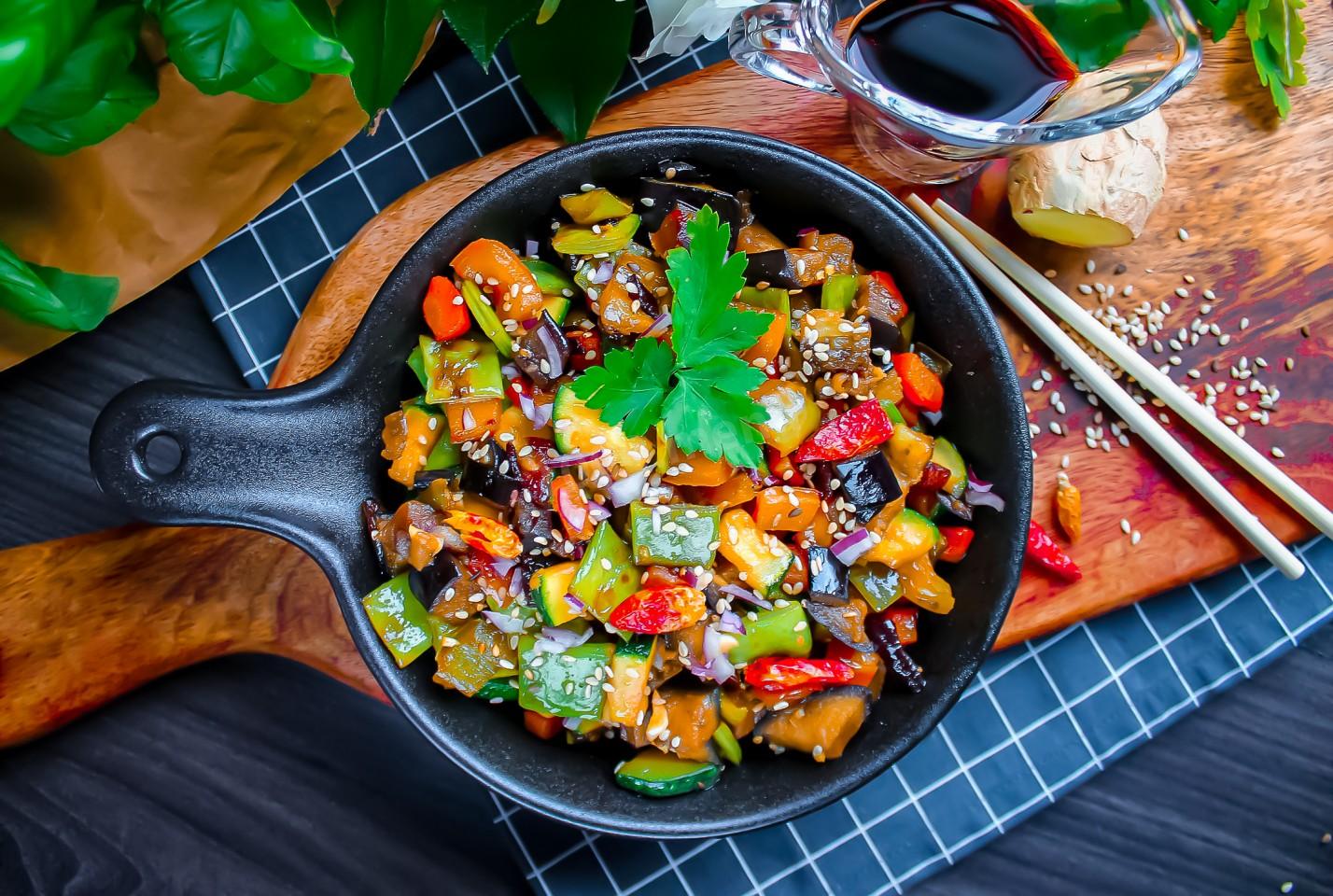
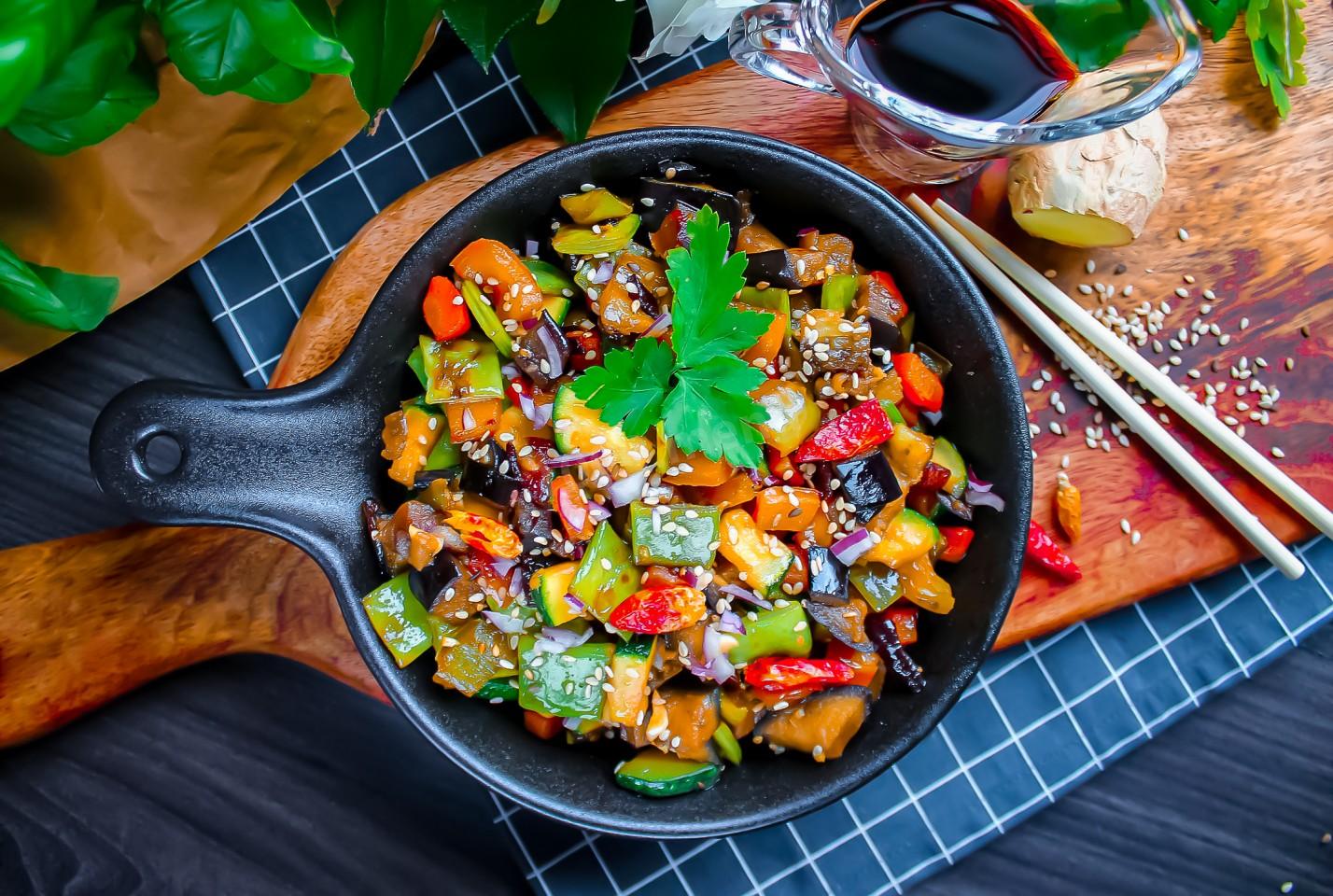
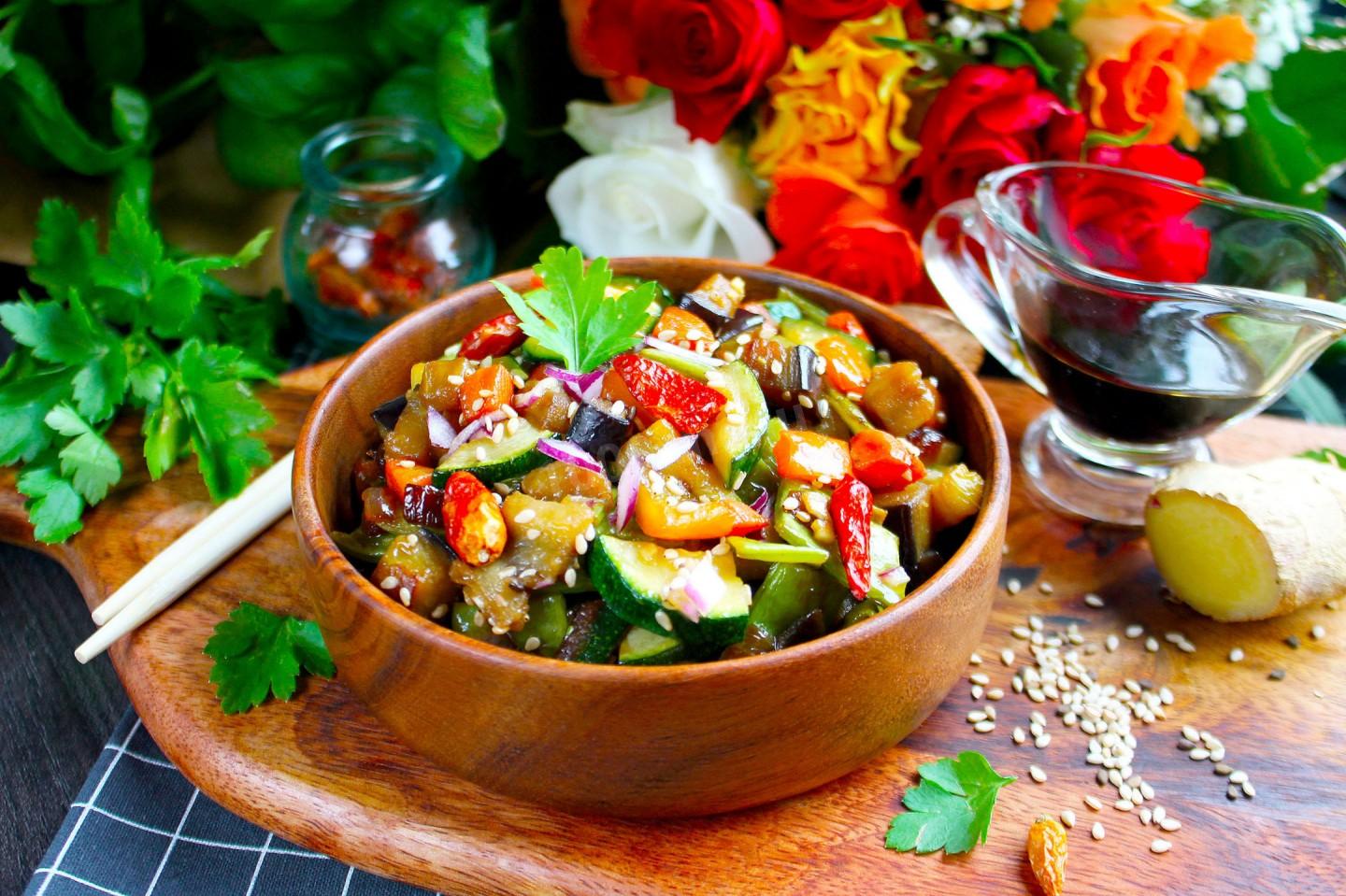
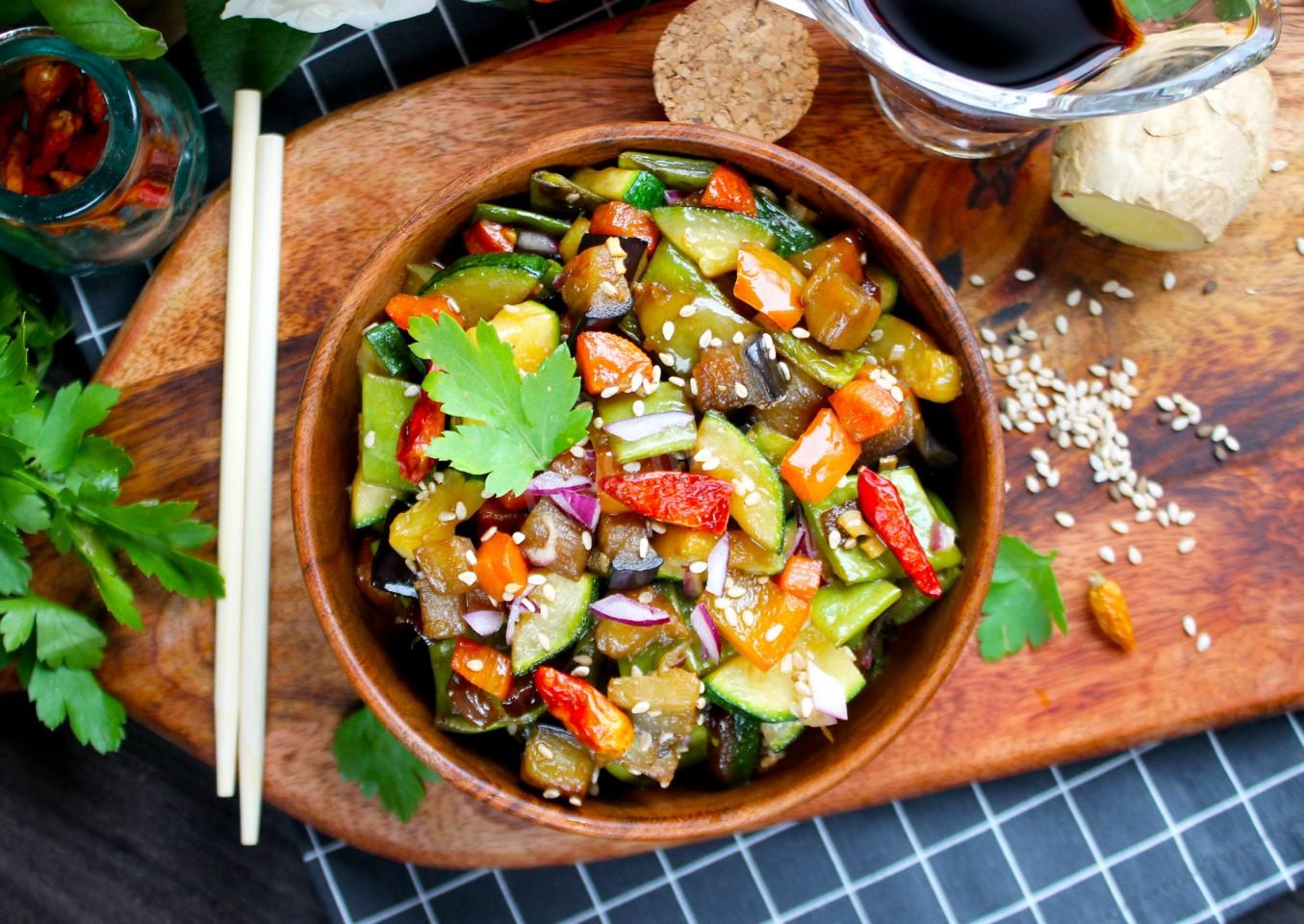
Quick, healthy, delicious — a treat any day of the week! Skillet vegetables in soy sauce come together incredibly fast and easily. Use whatever you have in the fridge, including frozen vegetables. Ginger, garlic, and soy sauce give the finished dish a wonderful savory kick.

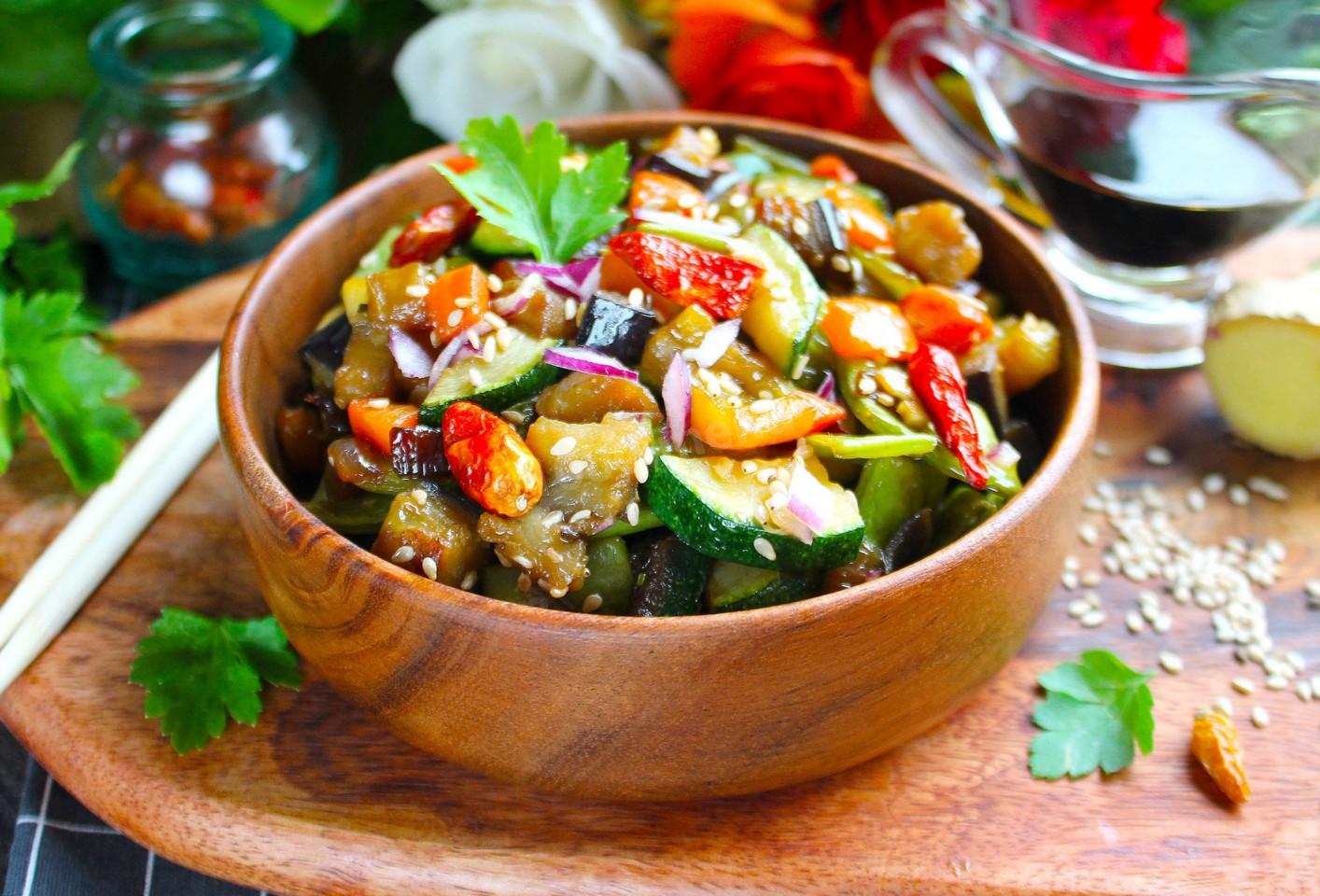
Cooking method
-
Step 1:
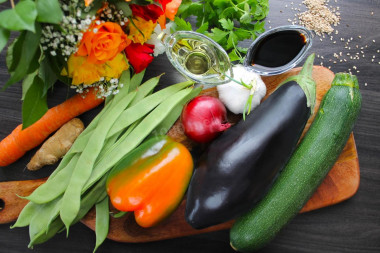
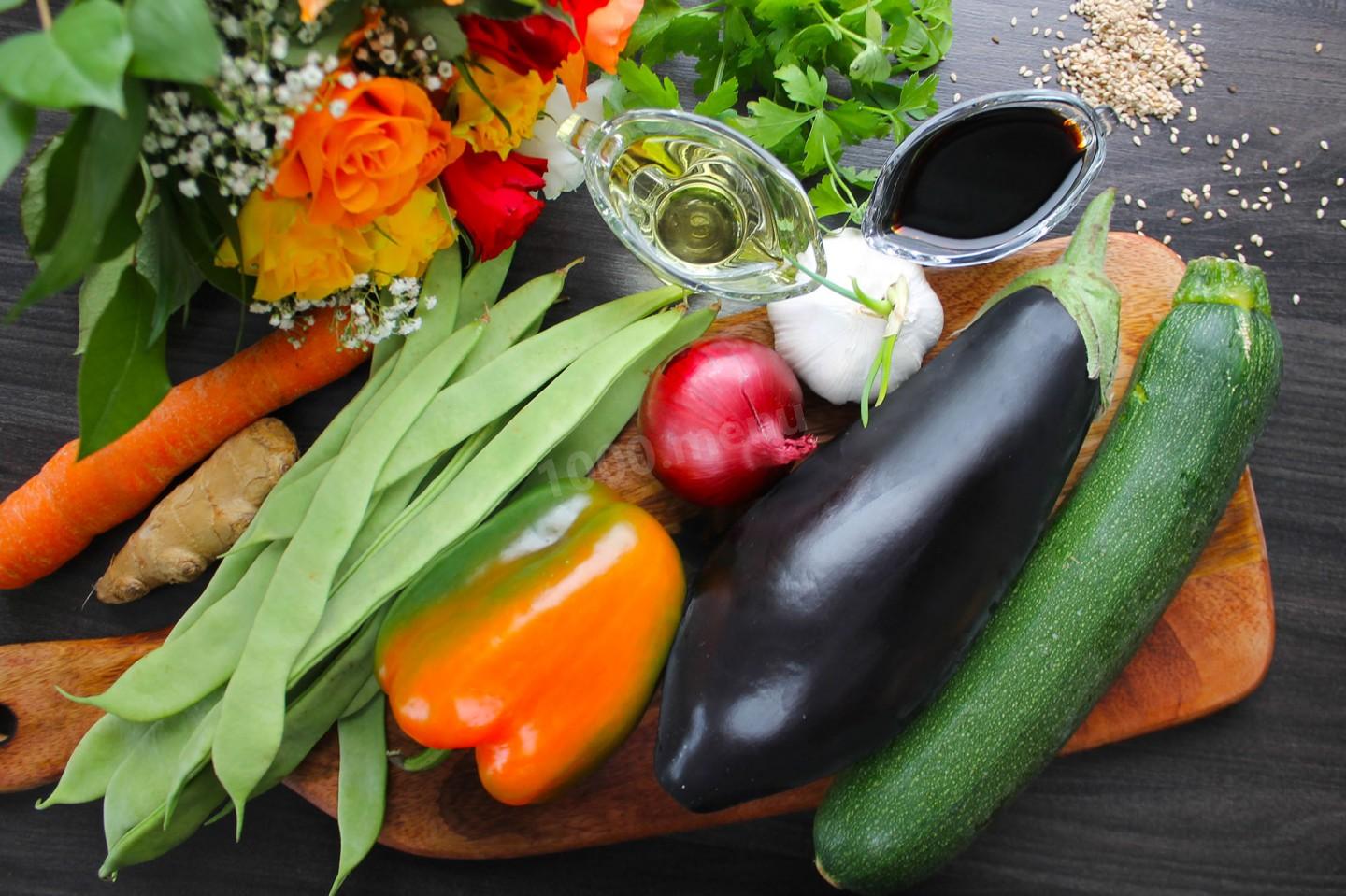
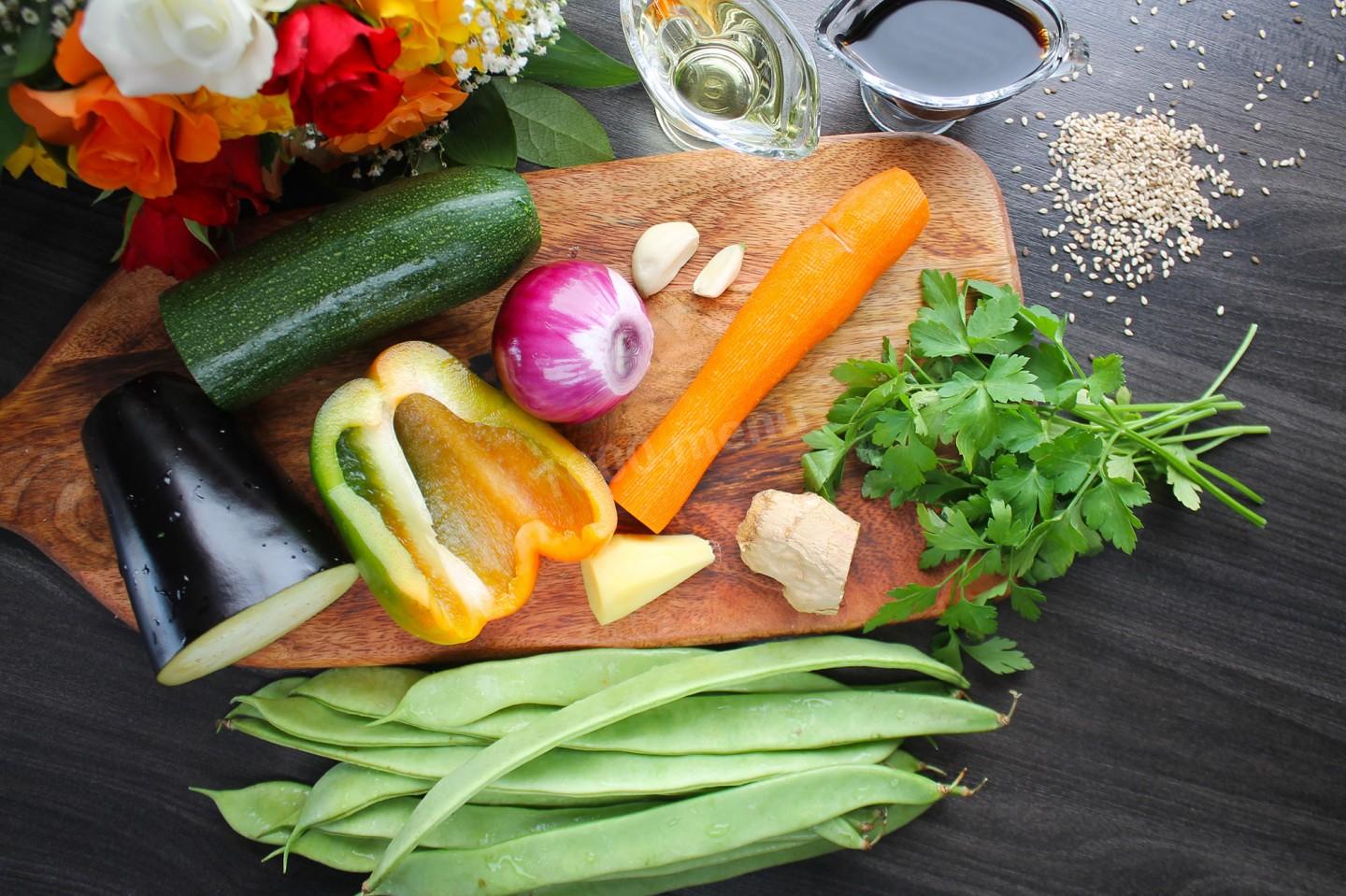
How do you make skillet vegetables in soy sauce? Gather everything on the list. Instead of string beans, you can use young pea pods. Celery stalks also fit right in with this mix of vegetables. And in place of regular onion, use a leek if you have one — it has a milder, more delicate flavor.
-
Step 2:
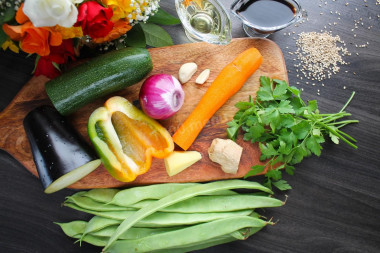
Wash, dry, and peel the carrot, garlic, and onion. Trim the stem ends off the zucchini and eggplant. If the zucchini isn't young, peel it and scoop out the seeds. Halve the bell pepper and remove the core. For the string beans, trim both ends and pull off any strings. Rinse everything well in clean water and pat dry with paper towels.
-
Step 3:
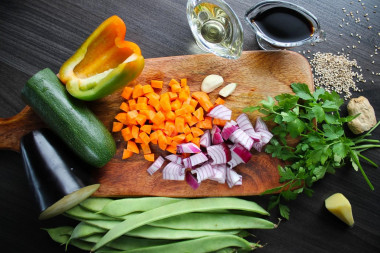
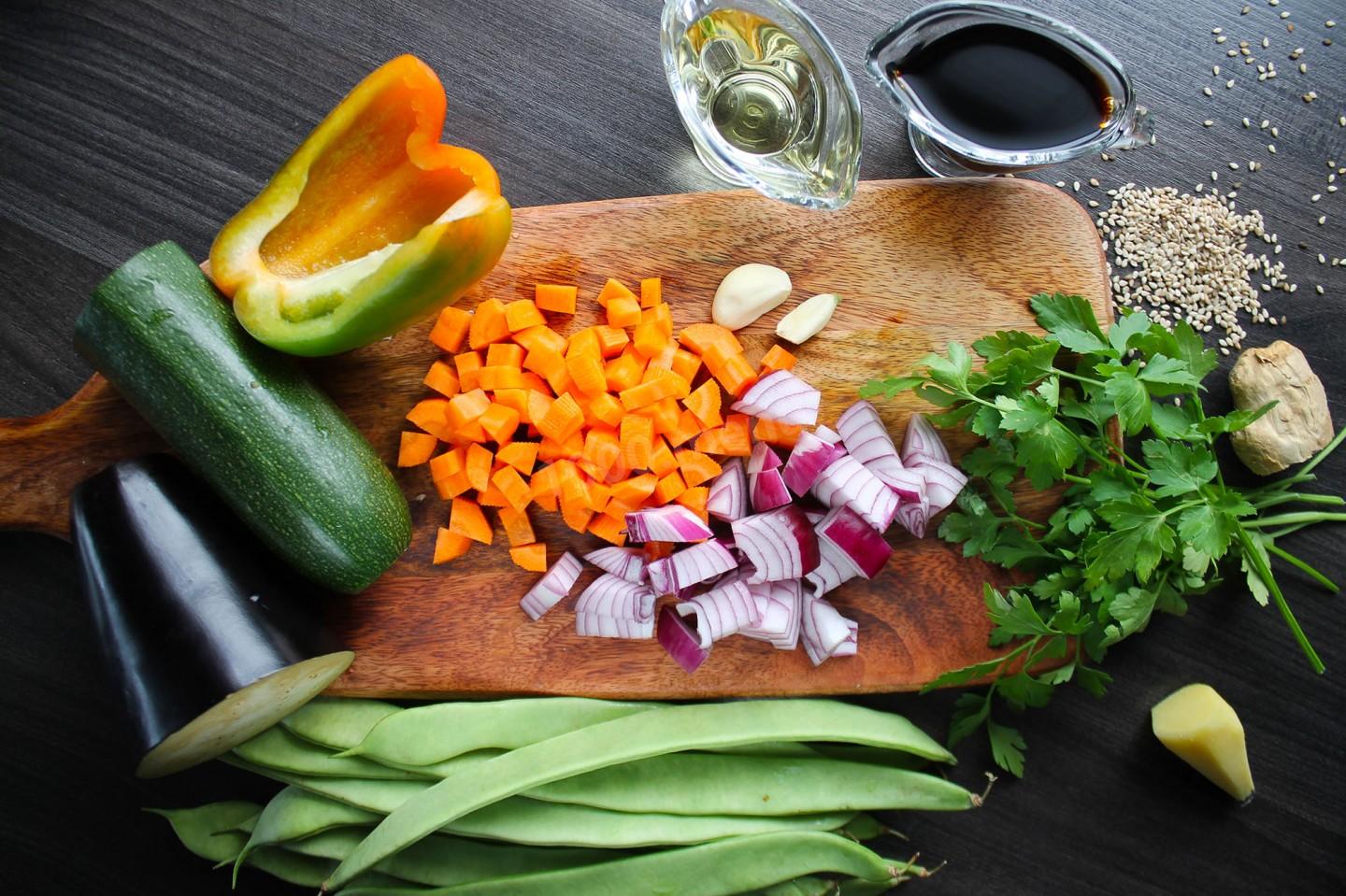
Cut the carrot and onion into large dice.
-
Step 4:
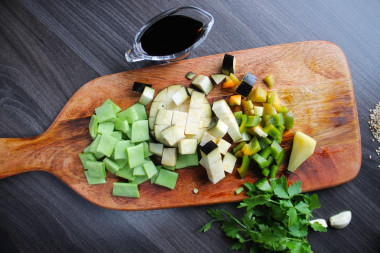
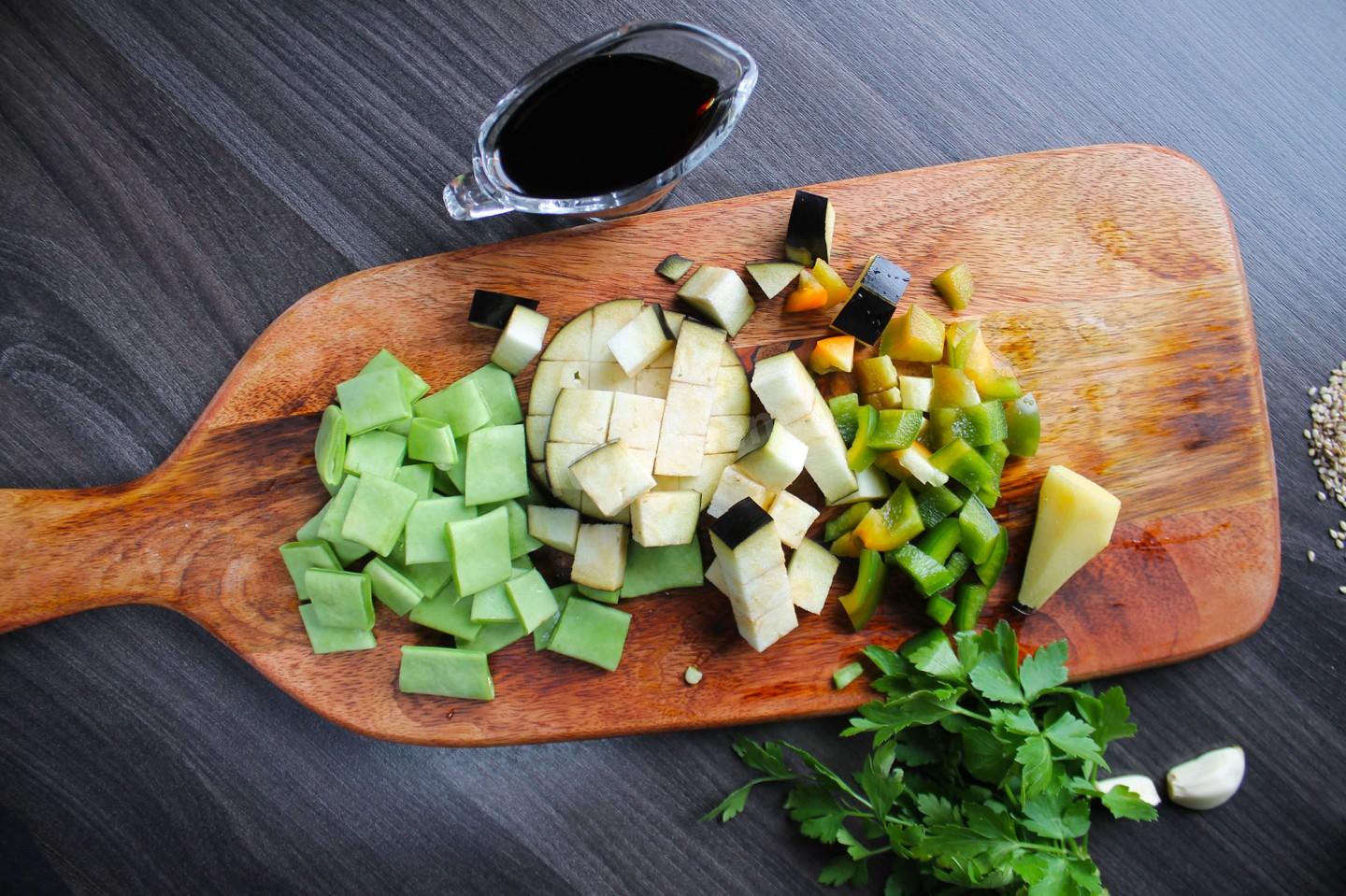
Cut the eggplant and bell pepper into the same size dice as the carrot and onion. When the vegetables are cut uniformly, they look more appetizing and attractive on the plate. Cut the bean pods into short pieces.
-
Step 5:
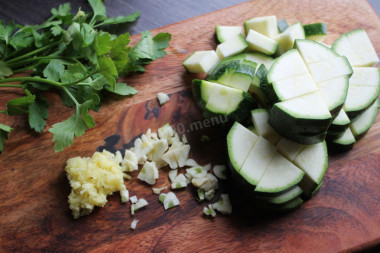
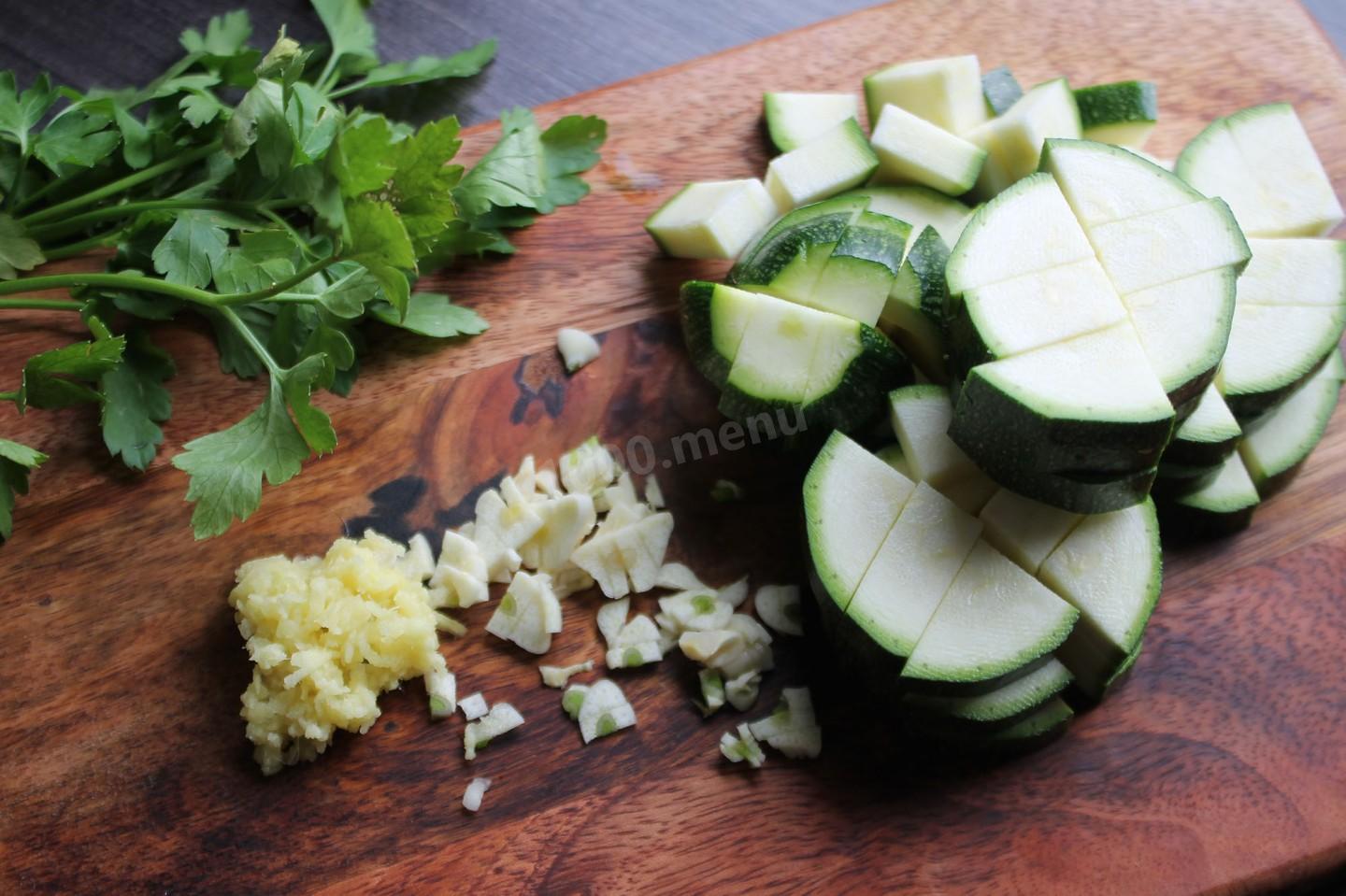
Peel the ginger and grate it on a fine grater. Mince the garlic with a knife or press it through a garlic press. Cut the zucchini into small pieces.
-
Step 6:
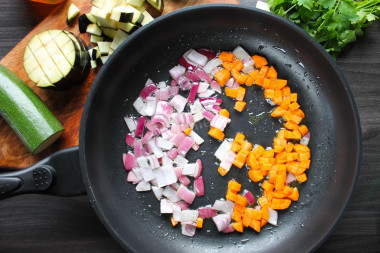
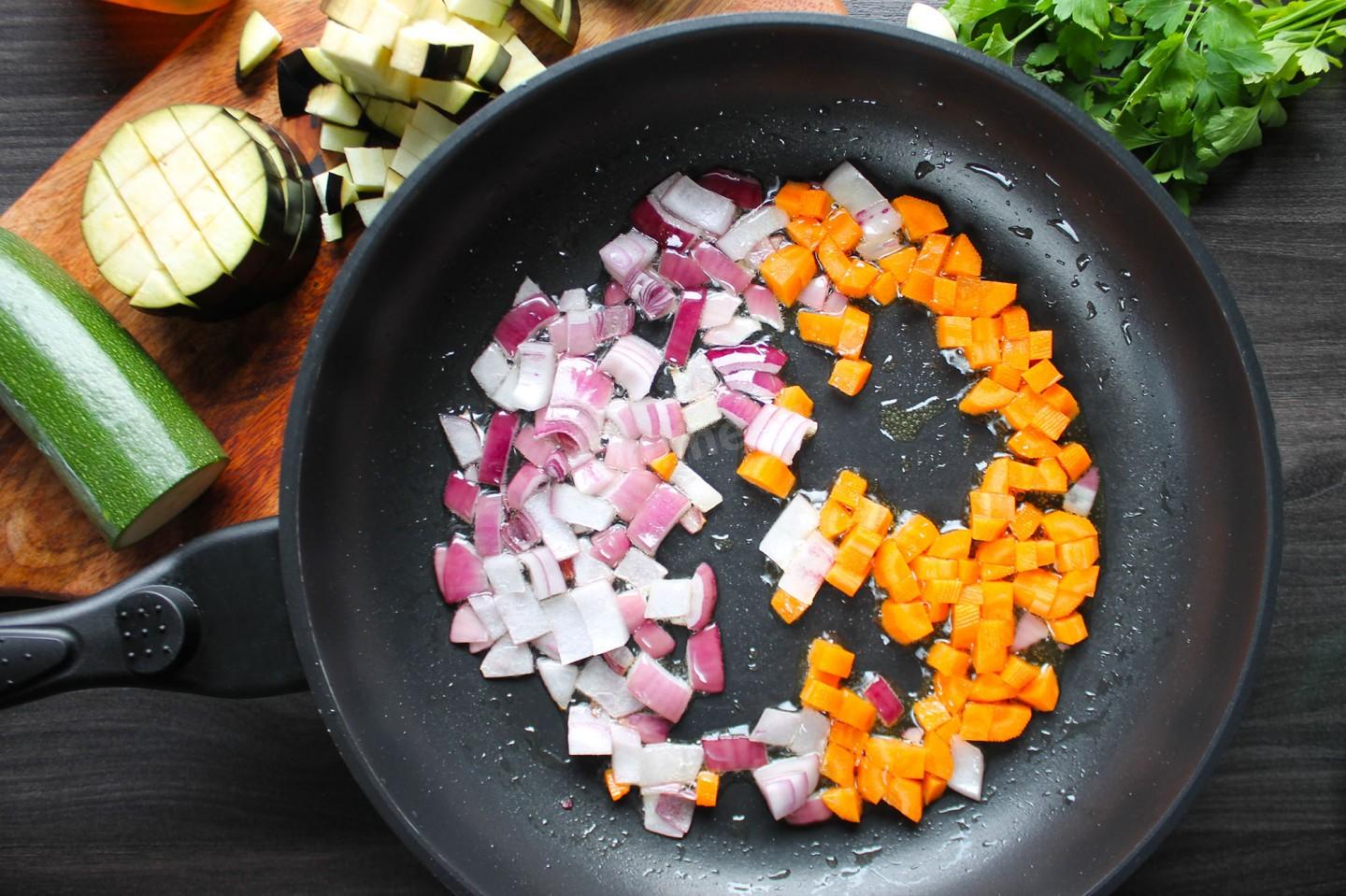
Heat the vegetable oil in a heavy-bottomed skillet. Add the onion and carrot first. Stirring constantly, cook until the onion is golden.
-
Step 7:
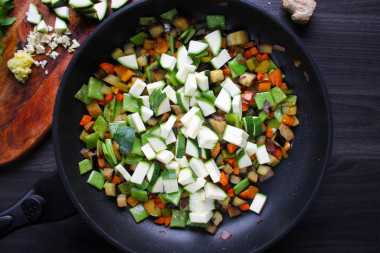
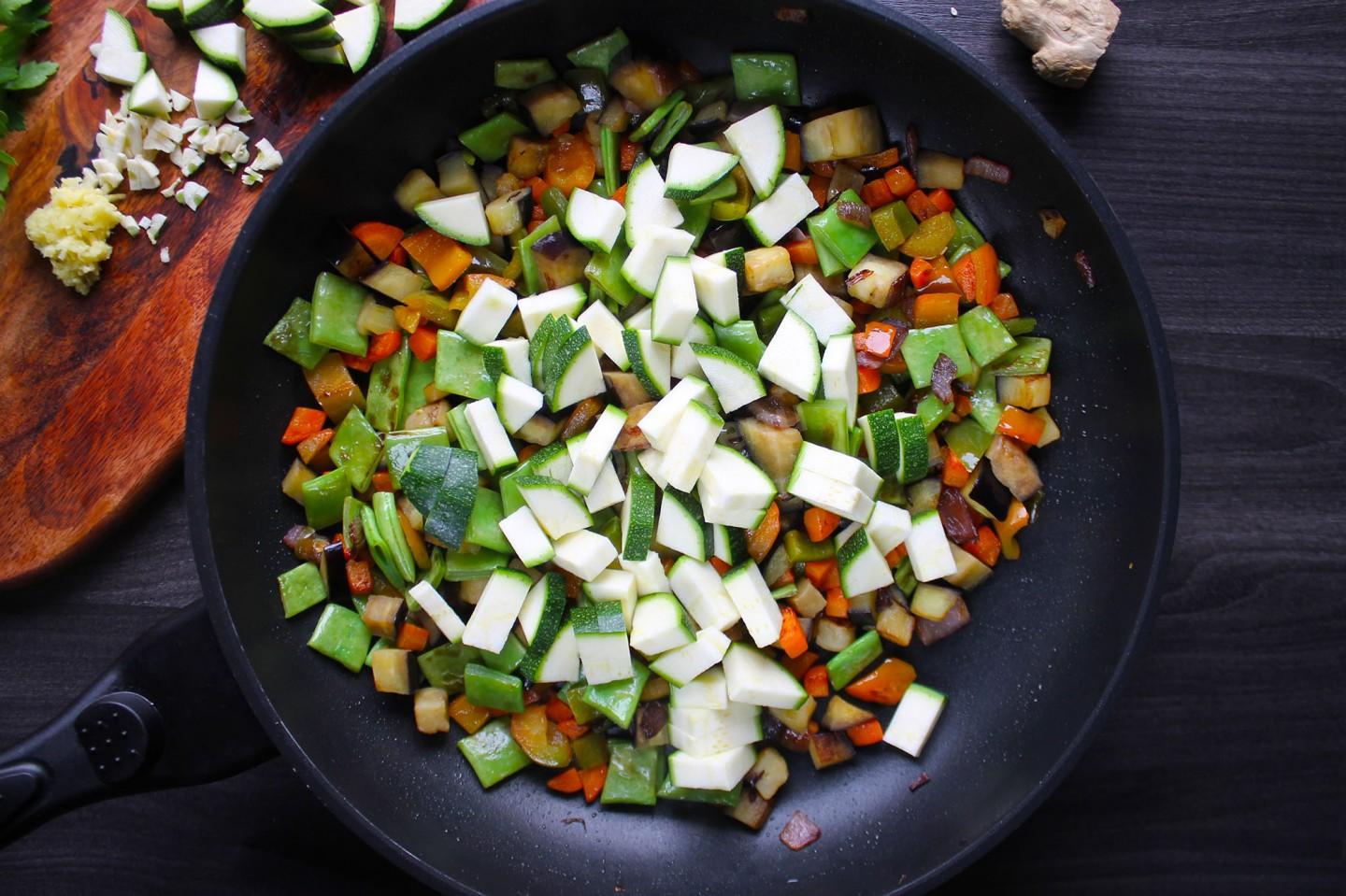
Next, add the beans, eggplant, and bell pepper. Lower the heat to just above medium and fry the vegetables for about 8 to 10 minutes. Stay close to the stove and stir the contents of the pan now and then. Once the eggplant and beans are nearly done, add the zucchini. Stir and cook for another 4 to 5 minutes. The vegetables shouldn't turn to mush — leave them slightly al dente.
-
Step 8:
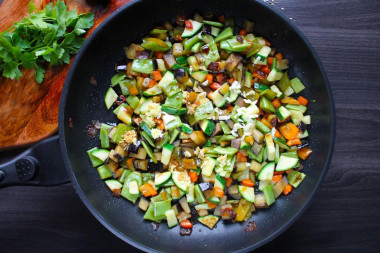
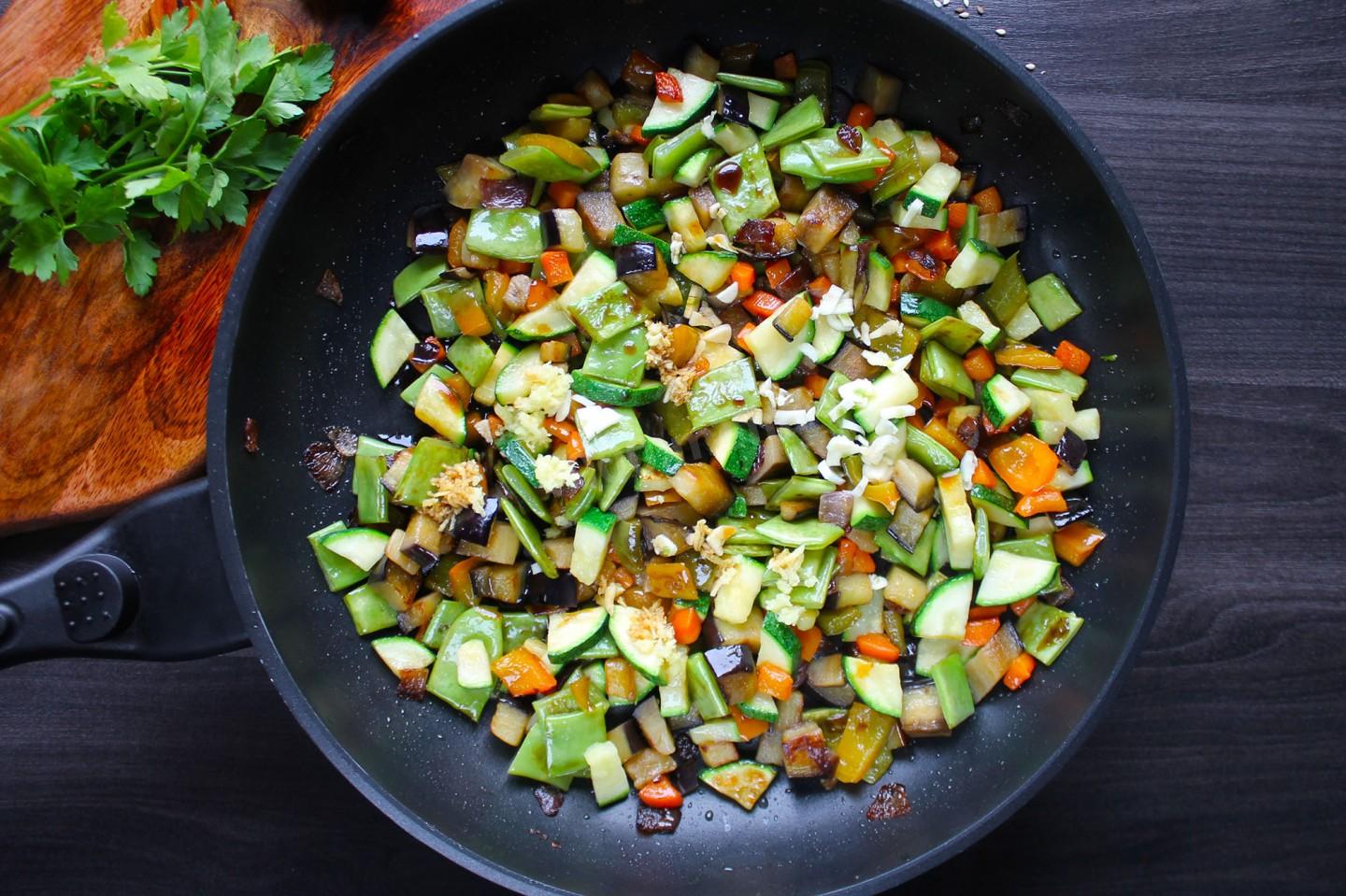
Add the garlic and ginger to the vegetables, then pour in the sesame oil and soy sauce. Stir and let it cook for a few seconds.
-
Step 9:
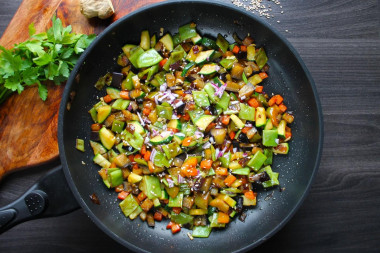
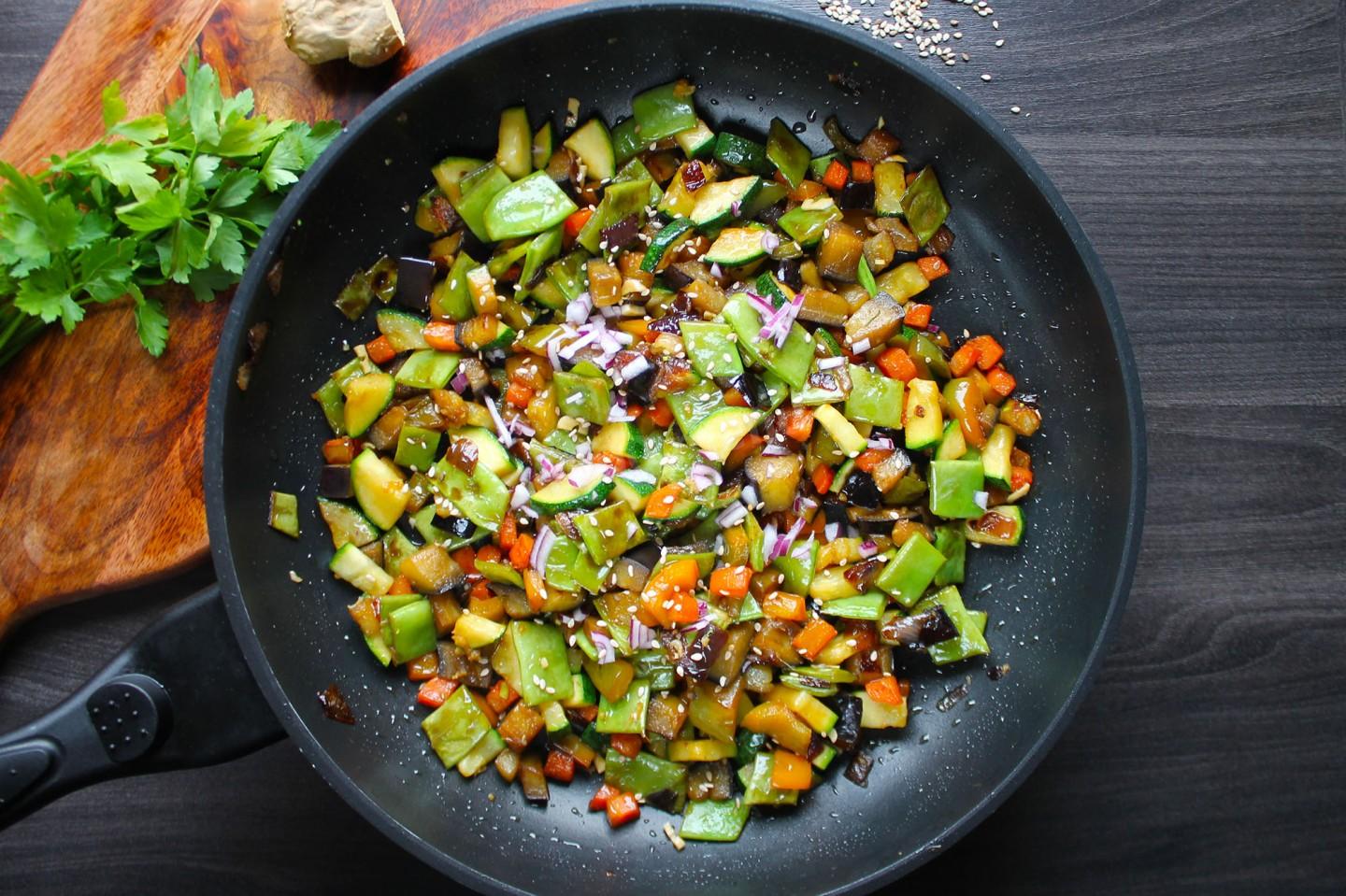
Sprinkle the finished dish with sesame seeds.
-
Step 10:
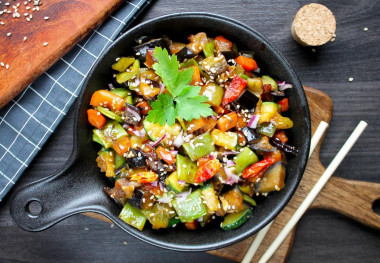
Garnish with a sprig of fresh herbs and serve!
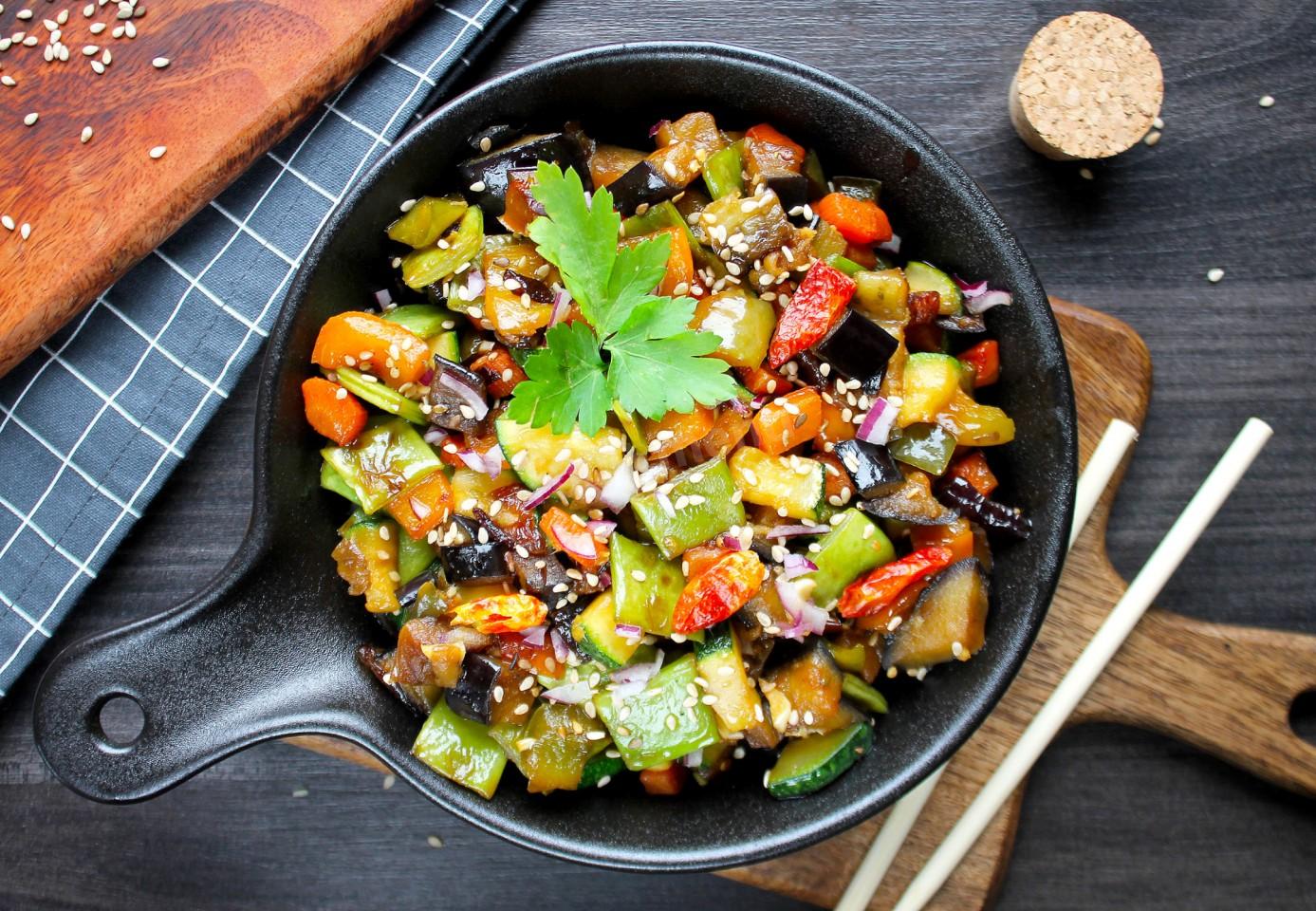
- These stir-fried vegetables in soy sauce are delicious both hot and cold. I often serve them as a side for chicken or as a dish on their own. Enjoy!
- How do you take the bitterness out of eggplant? Cut it into planks, rounds, or cubes, salt it, and let it sit for about 10 minutes until it releases its juices. Pour off the liquid, rinse the eggplant, and go ahead and cook.
- Note that you don't always need to draw out the bitterness — young eggplants usually aren't bitter, and neither are certain special varieties.
- Use an oil with a high smoke point for frying. Every oil is only healthy up to a certain temperature — its smoke point — beyond which it starts to burn and forms harmful compounds. Unrefined oils, with few exceptions, have a low smoke point: they're full of unfiltered particles that scorch quickly. Refined oils hold up better to heat and have a higher smoke point. If you're cooking in the oven, in a skillet, or on the grill, reach for a high-smoke-point oil. The most common ones are refined sunflower, olive, and grapeseed.
Caloric content of the products possible in the composition of the dish
- Onion - 41 kcal/100g
- Sweet pepper - 27 kcal/100g
- Carrots - 33 kcal/100g
- Dried carrots - 275 kcal/100g
- Boiled carrots - 25 kcal/100g
- Eggplant - 24 kcal/100g
- Garlic - 143 kcal/100g
- Ginger - 80 kcal/100g
- Dry ginger - 347 kcal/100g
- Pickled ginger - 51 kcal/100g
- Soy sauce - 51 kcal/100g
- Vegetable oil - 873 kcal/100g
- Dried whole sesame seeds - 563 kcal/100g
- Shelled sesame seed - 582 kcal/100g
- String beans - 24 kcal/100g
- Sesame oil - 899 kcal/100g
- Zucchini - 16 kcal/100g
Similar recipes


- Fast and tasty
- Festive table
- Homemade dinner
- National cuisine
- Second course
- Side dishes
- Semi-finished products
- Vegetables
- Nuts
- Legumes
- Spices seasonings spices
- Fats and oils
- From beans
- Garlic
- Ginger
- Vegetable oil
- Asian cuisine
- Frying
- Eggplant fast
- The second is fast and delicious
- Dishes in 30 minutes
- Zucchini second course
- Eggplant second course
- Side dish to fish
- Side dish to meat
- Side dish to chicken
- Side dish to steak
- Sauce
- From zucchini
- From carrots
- From eggplant
- From sweet pepper
- From onion
- No eggs
- Vegetarianism
- Recipes for lean dishes without butter
- Seeds